Results by title
413 books match the query 'New York' and 16 start with w
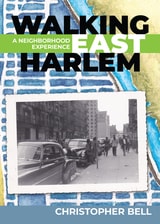
Walking East Harlem
A Neighborhood ExperienceChristopher Bell
Rutgers University Press, 2025
Now East Harlem native Christopher Bell takes you on a tour of his beloved neighborhood. He takes you on three separate walking tours, each visiting a different part of East Harlem and each full of stories about its theaters, museums, art spaces, schools, community centers, churches, mosques, and synagogues. You’ll also learn about the famous people who lived in El Barrio, such as actress Cecily Tyson, opera singer Marian Anderson, portrait artist Alice Neel, incomparable poet Julia De Burgos, and King of Latin Music Tito Puente.
Lavishly illustrated with over fifty photos, Walking East Harlem points out not only the many architectural and cultural landmarks in the neighborhood but also the historical buildings that have since been demolished. Whether you are a tourist or a resident, this guide will give you a new appreciation for El Barrio’s exciting history, cultural diversity, and continued artistic vibrancy.

Wall Street Women
Melissa S. Fisher
Duke University Press, 2012
Fisher charts the evolution of the women's careers, the growth of their political and economic clout, changes in their perspectives and the cultural climate on Wall Street, and their experiences of the 2008 financial collapse. While most of the pioneering subjects of Wall Street Women did not participate in the women's movement as it was happening in the 1960s and 1970s, Fisher argues that they did produce a "market feminism" which aligned liberal feminist ideals about meritocracy and gender equity with the logic of the market.
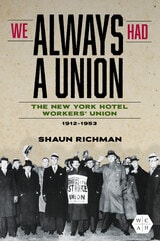
We Always Had a Union
The New York Hotel Workers' Union, 1912-1953Shaun Richman
University of Illinois Press, 2025
From the start, New York’s organized hotel workers experimented with and adapted how they organized and governed members and related to other labor unions. Richman follows union fortunes from early IWW activity through the Communist-led affiliates of the American Federation of Labor in the 1920s and 1930s, the shaping of breakthrough negotiating strategies, and the postwar era. As Richman shows, workers adopted a radicalism and militancy seldom associated with an AFL organization while openly negotiating the Communist Party’s power and influence within the union, until the Party’s eclipse in the 1950s.
An inspiring story of action and perseverance, We Always Had a Union profiles a foundational American labor union and offers lessons for today’s workers and organizers.
What the Signs Say
Language, Gentrification, and Place-Making in BrooklynShonna Trinch
Vanderbilt University Press, 2020
Shonna Trinch and Edward Snajdr, a sociolinguist and an anthropologist respectively, show how the beliefs and ideas that people take as truths about language and its speakers are deployed in these different sign types. They also present in-depth ethnographic case studies that reveal how gentrification and corporate redevelopment in Brooklyn are intimately connected to public communication, literacy practices, the transformation of motherhood and gender roles, notions of historical preservation, urban planning, and systems of privilege. Far from peripheral or irrelevant, shop signs say loud and clear that language displayed in public always matters.
This book is the recipient of the 2021 Norman L. and Roselea J. Goldberg Prize from Vanderbilt University Press for the best book in the area of art or medicine.
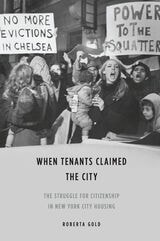
When Tenants Claimed the City
The Struggle for Citizenship in New York City HousingRoberta Gold
University of Illinois Press, 2014
In postwar America, not everyone wanted to move out of the city and into the suburbs. For decades before World War II, New York's tenants had organized to secure renters' rights. After the war, tenant activists raised the stakes by challenging the newly-dominant ideal of homeownership in racially segregated suburbs. They insisted that renters as well as owners had rights to stable, well-maintained homes, and they proposed that racially diverse urban communities held a right to remain in place--a right that outweighed owners' rights to raise rents, redevelop properties, or exclude tenants of color. Further, the activists asserted that women could participate fully in the political arenas where these matters were decided.
Grounded in archival research and oral history, When Tenants Claimed the City: The Struggle for Citizenship in New York City Housing shows that New York City's tenant movement made a significant claim to citizenship rights that came to accrue, both ideologically and legally, to homeownership in postwar America. Roberta Gold emphasizes the centrality of housing to the racial and class reorganization of the city after the war; the prominent role of women within the tenant movement; and their fostering of a concept of "community rights" grounded in their experience of living together in heterogeneous urban neighborhoods.
White Boy
A MemoirMark D. Naison
Temple University Press, 2002
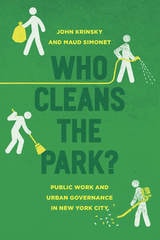
Who Cleans the Park?
Public Work and Urban Governance in New York CityJohn Krinsky and Maud Simonet
University of Chicago Press, 2017
In Who Cleans the Park? John Krinsky and Maud Simonet explain that the work of maintaining parks has intersected with broader trends in welfare reform, civic engagement, criminal justice, and the rise of public-private partnerships. Welfare-to-work trainees, volunteers, unionized city workers (sometimes working outside their official job descriptions), staff of nonprofit park “conservancies,” and people sentenced to community service are just a few of the groups who routinely maintain parks. With public services no longer being provided primarily by public workers, Krinsky and Simonet argue, the nature of public work must be reevaluated. Based on four years of fieldwork in New York City, Who Cleans the Park? looks at the transformation of public parks from the ground up. Beginning with studying changes in the workplace, progressing through the public-private partnerships that help maintain the parks, and culminating in an investigation of a park’s contribution to urban real-estate values, the book unearths a new urban order based on nonprofit partnerships and a rhetoric of responsible citizenship, which at the same time promotes unpaid work, reinforces workers’ domination at the workplace, and increases the value of park-side property. Who Cleans the Park? asks difficult questions about who benefits from public work, ultimately forcing us to think anew about the way we govern ourselves, with implications well beyond the five boroughs.
Who Occupies This House
A NovelKathleen Hill
Northwestern University Press, 2011
The narrator’s project, inspired at the outset by silences that extend backward to the untold story of the Famine, turns into a vast exploration of loss, inheritance, and the nature of memory. In a voice both stark and lyrical, the narrator calls up transformative, often tragic, moments in lives that have shaped her own. Remembering a past she never knew, she hopes to release from its sway the vanishing present.
Who Occupies This House is a strikingly beautiful account of the difficult reckoning with one’s family legacy that every adult faces. Punctuated by photographs and images that bring the narrative into sharp focus, it will draw comparisons to such divergent writers as W.G. Sebald and Kate O’Brien.
Whose Art Is It?
Jane Kramer
Duke University Press, 1994
This compelling narrative raises questions about community and public art policies, about stereotypes and multiculturalism. With wit, drama, sympathy, and circumspection, Kramer draws the reader into the multicultural debate, challenging our assumptions about art, image, and their relation to community. Her portrait of the South Bronx takes the argument to its grass roots—provocative, surprising in its contradictions and complexities and not at all easy to resolve.
Accompanied by an introduction by Catharine R. Stimpson exploring the issues of artistic freedom, "political correctness," and multiculturalism, Whose Art Is It? is a lively and accessible introduction to the ongoing debate on representation and private expression in the public sphere.
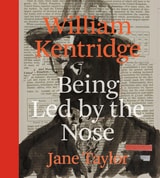
William Kentridge
Being Led by the NoseJane Taylor
University of Chicago Press, 2017
Kentridge has long been admired for his unconventional use of conventional media to produce art that is stunning, evocative, and narratively powerful—and how he works is as important as what he creates. This book is more than just a simple record of The Nose. The opera serves as a springboard into a bracing conversation about how Kentridge’s methods serve his unique mode of expression as a narrative and political artist. Taylor draws on his etchings, sculptures, and drawings to render visible the communication that occurs between his mind and hand as he thinks through the activity of making. Beautifully illustrated in color, William Kentridge offers striking insights about one of the most innovative artists of our present moment.
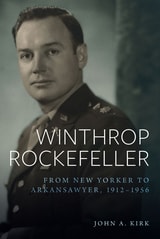
Winthrop Rockefeller
From New Yorker to Arkansawyer, 1912-1956John A. Kirk
University of Arkansas Press, 2022
Winner, 2024 J. G. Ragsdale Book Award, Arkansas Historical Association
Winner, 2024 Booker Worthen Literary Prize
Why did Winthrop Rockefeller, scion of one of the most powerful families in American history, leave New York for an Arkansas mountaintop in the 1950s? In this richly detailed biography of the former Arkansas governor, John A. Kirk delves into the historical record to fully unravel that mystery for the first time. Kirk pursues clues threaded throughout Rockefeller’s life, tracing his family background, childhood, and education; his rise in the oil industry from roustabout to junior executive; his military service in the Pacific during World War II, including his involvement in the battles of Guam, Leyte, and Okinawa; his postwar work in race relations, health, education, and philanthropy; his marriage to and divorce from Barbara “Bobo” Sears; and the birth of his only child, future Arkansas lieutenant governor Win Paul Rockefeller. This careful examination of Winthrop Rockefeller’s first forty-four years casts a powerful new light on his relationship with his adopted state, where his legacy continues to be felt more than half a century after his governorship.
Women, the New York School, and Other True Abstractions
Maggie Nelson
University of Iowa Press, 2007
Workplace Justice
Organizing Multi-Identity MovementsSharon Kurtz
University of Minnesota Press, 2002
An unheralded union battle offers new insight into identity politics.
In 1991, Columbia University’s one thousand clerical workers launched a successful campaign for justice in their workplace. This diverse union-two-thirds black and Latina, three-fourths women-was committed to creating an inclusive movement organization and to fighting for all kinds of justice. How could they address the many race and gender injustices members faced, avoid schism, and maintain the unity needed to win? Sharon Kurtz, an experienced union activist and former clerical worker herself, was welcomed into the union and pursued these questions. Using this case study and secondary studies of sister clerical unions at Yale and Harvard, she examines the challenges and potential of identity politics in labor movements.
With the Columbia strike as a point of departure, Kurtz argues that identity politics are valuable for mobilizing groups, but often exclude members and their experiences of oppression. However, Kurtz believes that identity politics should not be abandoned as a component in building movements, but should be reframed-as multi-identity politics. In the end she shows an approach to organizing with great potential impact not only for labor unions but for any social movement.
World Film Locations
New YorkEdited by Scott Jordan Harris
Intellect Books, 2011
Be they period films, cult classics, or elaborate directorial love letters, New York City has played—and continues to play—a central role in the imaginations of filmmakers and moviegoers worldwide. The stomping grounds of King Kong, it is also the place where young Jakie Rabinowitz of The Jazz Singer realizes his Broadway dream. Later, it is the backdrop against which taxi driver Travis Bickle exacts a grisly revenge.
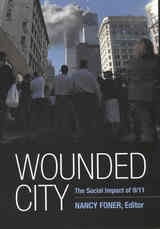
Wounded City
The Social Impact of 9/11 on New York CityNancy Foner
Russell Sage Foundation, 2005
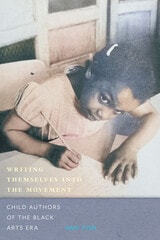
Writing Themselves into the Movement
Child Authors of the Black Arts EraAmy Fish
University of Massachusetts Press, 2024
Between 1967 and 1972, a previously obscure group of authors entered the US cultural spotlight. During this five-year period, at least thirty anthologies of poetry and prose by African American, Latinx, Asian American, and Native American children came out of adult-led workshops, classrooms, and sites of juvenile incarceration. Mass-market publishers, independent imprinters, and local mimeograph machines produced volumes with titles such as I Am Somebody! and The Me Nobody Knows: Children’s Voices from the Ghetto. These young writers actively participated in the Black Arts Movement, and some collaborated with well-known adult authors, most prominently June Jordan. Their anthologies gained national media coverage, occasionally became bestsellers, were quoted by James Baldwin, and even inspired a hit Broadway musical. While writings by children had long attracted adult attention, this flurry of youth writing and publishing was distinguished by the widespread belief that children of color from poor and working-class neighborhoods were uniquely able to speak truth about American racism and inequality.
Focusing on Black and Latinx youth authorship within New York City, and using deep archival research and elegant close readings, Amy Fish examines child-authored texts of this era within the context of their literary production and reception. These young writers were often supervised and edited by white adults, raising concerns about the authenticity and agency of their voices. Fish contends that young authors themselves shared these concerns and that they employed savvy rhetorical strategies of address, temporality, and trope to self-consciously interrogate the perils and possibilities of their adult-influenced work. Young writers thus contributed to the era’s important debates about the nature of authorship and readership within a racist society, while also using their writing as an intimate occasion of self-discovery.