Results by title
337 books match the query 'North America' and 15 start with w

We Are All Armenian
Voices from the DiasporaEdited by Aram Mrjoian
University of Texas Press, 2023
A collection of essays about Armenian identity and belonging in the diaspora.
In the century since the Armenian Genocide, Armenian survivors and their descendants have written of a vast range of experiences using storytelling and activism, two important aspects of Armenian culture. Wrestling with questions of home and self, diasporan Armenian writers bear the burden of repeatedly telling their history, as it remains widely erased and obfuscated. Telling this history requires a tangled balance of contextualizing the past and reporting on the present, of respecting a culture even while feeling lost within it.
We Are All Armenian brings together established and emerging Armenian authors to reflect on the complications of Armenian ethnic identity today. These personal essays elevate diasporic voices that have been historically silenced inside and outside of their communities, including queer, multiracial, and multiethnic writers. The eighteen contributors to this contemporary anthology explore issues of displacement, assimilation, inheritance, and broader definitions of home. Through engaging creative nonfiction, many of them question what it is to be Armenian enough inside an often unacknowledged community.

We Came Naked and Barefoot
The Journey of Cabeza de Vaca across North AmericaBy Alex D. Krieger
University of Texas Press, 2002
Second place, Presidio La Bahia Award, Sons of the Republic of Texas, 2003
Perhaps no one has ever been such a survivor as álvar Núñez Cabeza de Vaca. Member of a 600-man expedition sent out from Spain to colonize "La Florida" in 1527, he survived a failed exploration of the west coast of Florida, an open-boat crossing of the Gulf of Mexico, shipwreck on the Texas coast, six years of captivity among native peoples, and an arduous, overland journey in which he and the three other remaining survivors of the original expedition walked some 1,500 miles from the central Texas coast to the Gulf of California, then another 1,300 miles to Mexico City.
The story of Cabeza de Vaca has been told many times, beginning with his own account, Relación de los naufragios, which was included and amplified in Gonzalo Fernando de Oviedo y Váldez's Historia general de las Indias. Yet the route taken by Cabeza de Vaca and his companions remains the subject of enduring controversy. In this book, Alex D. Krieger correlates the accounts in these two primary sources with his own extensive knowledge of the geography, archaeology, and anthropology of southern Texas and northern Mexico to plot out stage by stage the most probable route of the 2,800-mile journey of Cabeza de Vaca.
This book consists of several parts, foremost of which is the original English version of Alex Krieger's dissertation (edited by Margery Krieger), in which he traces the route of Cabeza de Vaca and his companions from the coast of Texas to Spanish settlements in western Mexico. This document is rich in information about the native groups, vegetation, geography, and material culture that the companions encountered. Thomas R. Hester's foreword and afterword set the 1955 dissertation in the context of more recent scholarship and archaeological discoveries, some of which have supported Krieger's plot of the journey. Margery Krieger's preface explains how she prepared her late husband's work for publication. Alex Krieger's original translations of the Cabeza de Vaca and Oviedo accounts round out the volume.
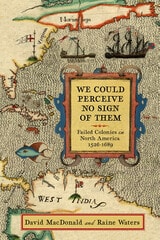
We Could Perceive No Sign of Them
Failed Colonies in North America, 1526–1689David MacDonald
Westholme Publishing, 2020
The nations of the modern Americas began as successful colonies, but not all colonies succeeded, and the margin between colonies that survived and those that failed was small. Both contribute to our understanding of the ordeals of the Europeans who first settled in the New World and of the Native Americans who had to interact with them, but with the exception of the famous lost Roanoke colony, the failed colonies of North America remain largely unknown except to specialists in colonial history. The Spanish and French repeatedly attempted to colonize parts of Georgia, Florida, and Virginia, while the Dutch, French, and English sought to establish permanent settlements along the northern waterways of the New World. The greatest problem faced by every colony was the specter of starvation. Native Americans gave food to newly arrived colonists, but such generosity could not endure. Indigenous people soon realized that colonists of every nationality were prepared to make war against Native peoples, conquer, subjugate, and even massacre whole communities unless they were cooperative and offered no resistance to the intrusion into their territory. In response, Native Americans withheld aid or resorted to retaliatory violence, dooming many European settlements.
In We Could Perceive No Sign of Them: Failed Colonies in North America, 1526–1689, historians David MacDonald and Raine Waters tell the fascinating stories of the many attempts to establish a European foothold in the New World, from the first Spanish colony in 1526 on the coast of Georgia to the final disastrous French endeavors near the arctic. Using primary source texts, the authors synthesize the shared experiences of Europeans to better understand the very fine line between success and failure and the varieties of Native American responses.

We Should Soon Become Respectable
Nashville's Own Timothy DemonbreunElizabeth Elkins
Vanderbilt University Press, 2022
Lightly called a "fur trader," he came to the city to make his fortune and fame, much like songwriters today. Looking back, it would be easy to call Demonbreun, the son of French Canadian near-royalty and brother to two nuns, a spoiled child who did what he wanted, a classic-case misogynist and polygamist, a conceited adventurer. He was a man who conned the Spanish governor out of a war, carried on graceful correspondence with Thomas Jefferson and Alexander Hamilton, owned several slaves, may have served as a spy, and was a decorated veteran. He fought in the Revolutionary War, extraordinarily so it seems, given the number of land grants he received across Kentucky and Tennessee.
He's also known around Nashville as the guy who lived in a cave.
Author Elizabeth Elkins sorts through the legends and nails down the facts in order to present the true story of "Nashville's First Citizen."

We Should Soon Become Respectable
Nashville's Own Timothy DemonbreunElizabeth Elkins
Vanderbilt University Press, 2022
Lightly called a "fur trader," he came to the city to make his fortune and fame, much like songwriters today. Looking back, it would be easy to call Demonbreun, the son of French Canadian near-royalty and brother to two nuns, a spoiled child who did what he wanted, a classic-case misogynist and polygamist, a conceited adventurer. He was a man who conned the Spanish governor out of a war, carried on graceful correspondence with Thomas Jefferson and Alexander Hamilton, owned several slaves, may have served as a spy, and was a decorated veteran. He fought in the Revolutionary War, extraordinarily so it seems, given the number of land grants he received across Kentucky and Tennessee.
He's also known around Nashville as the guy who lived in a cave.
Author Elizabeth Elkins sorts through the legends and nails down the facts in order to present the true story of "Nashville's First Citizen."
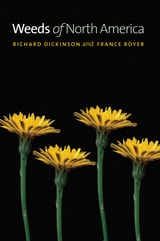
Weeds of North America
Richard Dickinson and France Royer
University of Chicago Press, 2014
Encyclopedic in scope, the book is the first to cover North American weeds at every stage of growth. The book is organized by plant family, and more than five hundred species are featured. Each receives a two-page spread with images and text identification keys. Species are arranged within family alphabetically by scientific name, and entries include vital information on seed viability and germination requirements.
Whether you believe, like Donald Culross Peattie, that “a weed is a plant out of place,” or align with Elizabeth Wheeler Wilcox’s “weeds are but unloved flowers,” Dickinson and Royer provide much-needed background on these intrusive organisms. In the battle with weeds, knowledge truly is power. Weeds of North America is the perfect tool for gardeners, as well as anyone working in the business of weed ecology and control.

Weimar Under the Palms
Pacific Palisades, German Exiles, and the Invention of HollywoodThomas Blubacher
Brandeis University Press, 2025
In the early twentieth century, Pacific Palisades was home to America’s most modern film studio of the time as well as the proposed site of the world’s largest Christian center. But by the end of the 1920s, the Los Angeles neighborhood had become the refuge of the rich and beautiful as German and Austrian filmmakers, among them Salka and Berthold Viertel, settled there. They were soon followed by cultural and intellectual giants of the Weimar Republic who were fleeing Europe, such as Max Reinhardt, Hanns Eisler, or Max Horkheimer. These great minds turned Pacific Palisades into a “Weimar under the palm trees.” Though many were successful in exile—including Vicki Baum, Thomas Mann, and Lion Feuchtwanger—others felt as if they were in a “sun prison” far from home.
Recounting a story of glamor and great minds, Thomas Blubacher tells of the history of German-speaking exiles that is still alive there today, going on a foray through the film industry, taking us on a journey to this special place that was so recently devastated by fire. Many of the homes in this book have now gone, but Marta Feuchtwanger’s Villa Aurora and the Thomas Mann house still stand as a testament to luck, resilience, and history.

When Good Jobs Go Bad
Globalization, De-unionization, and Declining Job Quality in the North American Auto IndustryRothstein, Jeffrey S
Rutgers University Press, 2016
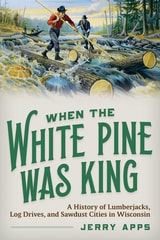
When the White Pine Was King
A History of Lumberjacks, Log Drives, and Sawdust Cities in WisconsinJerry Apps
Wisconsin Historical Society Press, 2020
For more than half a century, logging, lumber production, and affiliated enterprises in Wisconsin’s Northwoods provided jobs for tens of thousands of Wisconsinites and wealth for many individuals. The industry cut through the lives of nearly every Wisconsin citizen, from an immigrant lumberjack or camp cook in the Chippewa Valley to a Suamico sawmill operator, an Oshkosh factory worker to a Milwaukee banker.
When the White Pine Was King tells the stories of the heyday of logging: of lumberjacks and camp cooks, of river drives and deadly log jams, of sawmills and lumber towns and the echo of the ax ringing through the Northwoods as yet another white pine crashed to the ground. He explores the aftermath of the logging era, including efforts to farm the cutover (most of them doomed to fail), successful reforestation work, and the legacy of the lumber and wood products industries, which continue to fuel the state’s economy.
Enhanced with dozens of historic photos, When the White Pine Was King transports readers to the lumber boom era and reveals how the lessons learned in the vast northern forestlands continue to shape the region today.
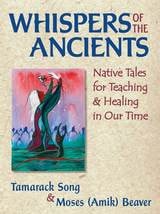
Whispers of the Ancients
Native Tales for Teaching and Healing in Our TimeTamarack Song and Moses (Amik) Beaver
University of Michigan Press, 2010
"Whispers of the Ancients helps us reconnect with the spirit of story that is a part of all our heritages. With respect for the wisdom of the past and with an eye toward the cross-cultural links that legends can make between us, Tamarack Song offers a gathering of tales and insightful comments that point the way back to the circle."
---Joseph Bruchac, author of more than 70 books for children and adults, including (with coauthor Michael J. Caduto) the best-selling Keepers of the Earth: Native American Stories and Environmental Activities for Children
It's easy to imagine yourself transported back to a time when an Elder might have told stories like those in Whispers of the Ancients around a glowing hearth. Thanks to Tamarack Song's storytelling skills, monsters, heroes, and shapeshifters come alive and open a doorway to the mysteries of life. Easily accessible to all ages, this is a book that speaks to each person at his or her own level of comprehension and need. It is as beautiful to read as it is to look at.
Stunning Aboriginal artwork by Moses (Amik) Beaver combines with provocative storytelling to renew, in all their traditional splendor, exceptional legends from around the world. Entertaining, profound, passionate, glorious---these are stories that illustrate and evoke themes common to everyone's life, with an ancient wisdom that helps the listener to cope with today's opportunities for tenderness, grief, passion, and irony.
Easily accessible to all ages, this is a book that speaks to each person at his or her own level of comprehension and need. It's as beautiful to read as it is to look at.
Tamarack Song has sought out the stories of the North African and Central Asian tribal peoples from whom he is descended, and he has listened to the tales of indigenous people from the tundra to the tropics. His books include Journey to the Ancestral Self, and he has contributed to Lois Einhorn's Forgiveness and Child Abuse. He is also a counselor, wilderness skills teacher, rites-of-passage guide, and founder of the Teaching Drum Outdoor School. Song lives in the Nicolet National Forest near Three Lakes, Wisconsin.
Moses (Amik) Beaver is an Ojibwe artist from the isolated fly-in community of Nibinamik (Summer Beaver), Ontario, three hundred miles north of Lake Superior. Grants from the Ontario Arts Council and other sources support his ongoing work with youth, and partial support for this book's illustrations comes from the District School Board of Nibinamik.
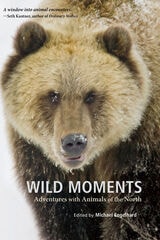
Wild Moments
Adventures with Animals of the NorthEdited by Michael Engelhard
University of Alaska Press, 2009
It is nearly impossible to live in Alaska without being influenced by its natural environment. Residents have no choice but to coexist with the Alaska wilderness and its animal inhabitants, and this extraordinary experience—along with the stunning landscape—is what often draws people to Alaska. Wild Moments offers a fascinating range of creative nonfiction essays that describe the chance meetings that bring Alaska residents face to face with their animal neighbors. These imaginative accounts speak to the ability of nature to transform the human experience, and the authors urge us through their works to protect these often threatened creatures who share our planet.
The contributors to this collection include some of Alaska’s most prestigious nature writers, such as Peggy Shumaker, Ned Rozell, Nick Jans, Debbie S. Miller, Craig Childs, Richard Nelson, and Drew Pogge. Wild Moments presents some of the best and most innovative nonfiction writing in an environmental context, and it will be of interest to all readers with a passion and concern for the natural world.
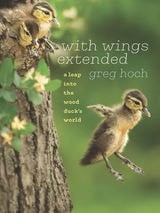
With Wings Extended
A Leap into the Wood Duck's WorldGreg Hoch
University of Iowa Press, 2020
A century ago, many people had given up on the wood duck, dooming it to extinction along with the passenger pigeon and Carolina parakeet. Today, it’s one of the most familiar and most harvested ducks in the eastern half of the country, and one of America’s great conservation success stories.
In With Wings Extended, Minnesota conservationist Greg Hoch introduces readers to a duck they probably recognize but may not know well. This book shows how almost anyone can get involved in conservation and do something for wildlife beyond writing checks to conservation organizations. Hoch illustrates the complexities of wildlife and habitat management that landowners as well as state and federal wildlife agencies deal with on a daily basis, and takes readers through the life stages of what is largely considered the most beautiful duck in the world. In this fascinating and practical read, Hoch blends the historical literature about the species with modern science, and also shows how our views of conservation have changed over the last century.
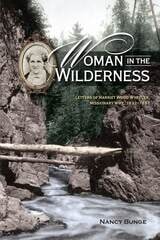
Woman in the Wilderness
Letters of Harriet Wood Wheeler, Missonary Wife, 1832-1892Nancy Bunge
Michigan State University Press, 2010
Harriet's letters reveal her experiences with actors and institutions that played pivotal roles in the history of American women: the nascent literate female work force at the mills in Lowell, Massachusetts; the Ipswich Female Seminary, which was one of the first schools for women teachers; women's associations, especially in churches; and the close and enduring ties that characterized women's relationships in the late nineteenth century.
Harriet's letters also provide an intimate view of the relationships between American Indians and Euro-Americans in the Great Lakes region, where she settled with her Christian missionary husband.
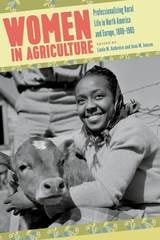
Women in Agriculture
Professionalizing Rural Life in North America and Europe, 1880-1965Linda M. Ambrose and Joan M. Jensen
University of Iowa Press, 2017
The contributors to Women in Agriculture examine how rural women’s expertise was disseminated and how it was received. Through these essays, readers meet subversively lunching ladies in Ontario and African American home demonstration agents in Arkansas. The rural sociologist Emily Hoag made a place for women at the US Department of Agriculture as well as in agricultural research. Canadian rural reformer Madge Watt, British radio broadcaster Mabel Webb, and US ethnobotanists Mary Warren English and Frances Densmore developed new ways to share and preserve rural women’s knowledge. These and the other women profiled here updated and expanded rural women’s roles in shaping their communities and the broader society. Their stories broaden and complicate the history of agriculture in North America and Western Europe.
Contributors:
Linda M. Ambrose, Maggie Andrews, Cherisse Branch-Jones, Joan M. Jensen, Amy McKinney, Anne Moore, Karen Sayer, Margreet van der Burg, Nicola Verdon

World Next Door
South Asian American LiteratureRajini Srikanth
Temple University Press, 2004
South Asian American literature, with its focus on the multiple geographies and histories of the global dispersal of South Asians, pulls back from a close-up view of the United States to reveal a wider landscape of many nations and peoples.
South Asian American poets, novelists, and playwrights depict the nation as simultaneously discrete and entwined with the urgencies of places as diverse as Bangladesh, Sri Lanka, India, Burma, Pakistan, and Trinidad. Drawing on the cosmopolitan sensibility of scholars like Anthony Appiah, Vinay Dharwadker, Martha Nussbaum, Bruce Robbins, and Amartya Sen, this book exhorts North American residents to envision connectedness with inhabitants of other lands. The world out there arrives next door.