Results by title
527 books match the query 'Novel' and 21 start with w
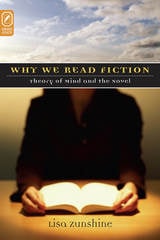
WHY WE READ FICTION
Theory of Mind and the NovelLisa Zunshine
The Ohio State University Press, 2006
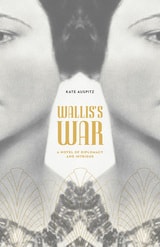
Wallis's War
A Novel of Diplomacy and IntrigueKate Auspitz
University of Chicago Press, 2015
The facts: reviled by the British as a social-climbing seductress even as Time magazine named her its 1936 Woman of the Year, Simpson was the American socialite whose affair with King Edward VIII led him to abdicate the throne on the eve of WWII. In this fanciful novel written in the form of a fictional memoir, Auspitz imagines an alternative history in which Simpson was encouraged by Allied statesmen to remove defeatist, pro-German Edward from the throne, forever altering the course of the war. A comically unreliable narrator who knows more than she realizes, and reveals more than she knows, Simpson leads us from historic treaties and military campaigns to dinner parties and cruises as she describes encounters with everyone from Duff and Diana Cooper to Charles Lindbergh, Coco Chanel, and Hitler—all the while acting as a willing but seemingly oblivious pawn of international intrigue.
A rare blend of diplomacy and dalliance, fashion and fascists, this meticulously researched satire offers witty and erudite entertainment and leaves us speculating: who really brought about the abdication and—always—what were they wearing?
Was
Annales Nomadique: A Novel Of InternetMichael Joyce
University of Alabama Press, 2007
Was is half-poem, half-narrative, a nomadic history whose main character is the fleetingness of information itself. The novel’s title figure, the word was, marks that instant of utterance outside the present; neither past nor future but rather the interstitial space of any telling. Like Ariel in flight, Was takes place before you can say ‘come’ and ‘go,'" slipping away before you can "breath twice and cry ‘so, so."
The nomadic lovers here, as any lovers, attempt to linger in the afterglow of what was, but it slips away like mist. Story begets story as if without author, events gathering into one another, as much memory as dream, their locales literally moving across the face of the globe. Continent to continent, from hemisphere to hemisphere, synaptic episodes strobe across the earth’s surface like thunderstorms seen from a satellite. Yet in these brief flashes a memorable and deeply moving procession of characters passes in vignette: lovers and children, parents and refugees, sailors, missionaries, clowns, mourners, forlorn warriors, sweet singers.
Was is a brilliant new work by the author of afternoon, a story which the New York Times calls "the granddaddy of hypertext fictions"and the Toronto Globe and Mail describes as being "to the hypertext interactive novel what the Gutenberg bible is to publishing."
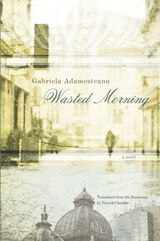
Wasted Morning
A NovelGabriela Adamesteanu
Northwestern University Press, 2011
She's a born storyteller, chatting and gossiping tirelessly. But she also listens, so it is through her that Adamesteanu is able to show us a panoramic portrait of Romanian society as the fortunes of its various strata shift violently. Rich or poor, honest (more or less) or deceitful, all of the characters in this polyphonic novel are brought vividly to life. From Bucharest's aspirations to be the Paris of Eastern Europe to the darkest days of dictatorship, the novel presents a sweeping vision of the personal and collective costs of a turbulent century.
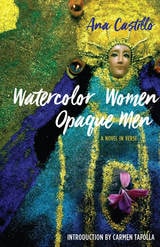
Watercolor Women Opaque Men
A Novel in VerseAna Castillo, introduction by Carmen Tafolla
Northwestern University Press, 2017
In this updated edition of Ana Castillo’s celebrated novel in verse, featuring a new introduction by Poet Laureate of Texas Carmen Tafolla, we revisit the story’s spirited heroine, known only as “Ella” or “She,” as she takes us through her own epic journey of self-actualization as an artist and a woman. With a remarkable combination of tenderness, lyricism, wicked humor, and biting satire, Castillo dramatizes Ella’s struggle through poverty as a Chicano single mother at the threshold of the twenty-first century, fighting for upward mobility while trying to raise her son to be independent and self-sufficient. Urged on by the gods of the ancients, Ella’s life interweaves with those of others whose existences are often neglected, even denied, by society’s status quo. Castillo’s strong rhythmic voice and exploration of such issues as love, sexual orientation, and cultural identity will resonate with readers today as much as they did upon the book’s original publication more than ten years ago. This expanded edition also includes a short preface by the author, as well as a glossary, a reader’s guide, and a list of additional suggested readings.
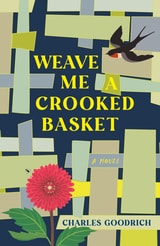
Weave Me a Crooked Basket
A NovelCharles Goodrich
University of Nevada Press, 2023
It’s the summer of 2008, and thirty-five-year-old Ursula Tunder, reeling from the breakup of a bad marriage, has abandoned her career as a botanist and moved home to the family farm to start a wholesale garden-plant greenhouse, and, perhaps more importantly, to care for her ailing father, Joe. Her younger brother, Bodie, now that a shoulder injury has ended his NFL career, comes home as well, to try his hand at organic farming. Their land at the edge of a prosperous college town is coveted by developers. Ursula wants to sell the farm to Camas Valley State University, which has promised to create a research facility on the land, but Bodie and his idealistic wife, Fleece, are committed to farming.
Enter Nu, Ursula and Bodie’s Vietnamese-American cousin by adoption, and an up-and-coming visual artist. When Nu gets arrested after a fight with a pair of dirt bikers, Joe persuades him to take refuge at the Tunder farm. Nu gets pressed into service helping Bodie with farm chores and taking care of Joe, so Ursula seizes the opportunity to get away from the farm, accepting a temporary job surveying native plants in the Cascades. But when Joe’s health plummets and Bodie’s finances crash, Ursula abandons her summer job to return home once again.
Facing bankruptcy, Ursula, Bodie, and Nu enlist a ragtag troupe of land-defenders in a festival of resistance in a last-ditch effort to save a way of life that may disappear forever.
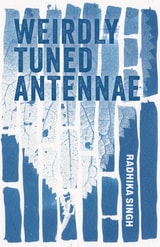
Weirdly Tuned Antennae
A NovelRadhika Singh
University of Alabama Press, 2026
WINNER OF THE SUKENICK INNOVATIVE FICTION PRIZE
A postimperialist future shaped by revolutionary struggle and healing, where plant-based technology reshapes sovereignty and intimacy
Weirdly Tuned Antennae is a coming-of-age adventure story that hums with sensory detail, political force, and the uncanny beauty of nature in a profoundly transformed world. This speculative tale traces one person’s attempt to explore how freedom is embodied, shared, and fought for, and how love can emerge from networks far older and stranger than the self.
Set in the monsoon-soaked Himalayan foothills in a near future, the story follows Navi on their quest to reconnect with their estranged mother, a freedom fighter in the ongoing battles for self-determination. Navi quickly gets entangled with a lineage of healer-witches who possess mastery over the spirit world and over the cell; a ubiquitous plant-based technology that channels energy and information, revolutionizing both political and bodily sovereignty. Navi’s journey is soon distracted by a mysterious lover driven by an interplanetary longing for home that mirrors Navi’s own search for belonging.
Rejecting the familiar arc of Western dystopia, Weirdly Tuned Antennae imagines a postimperialist future rooted in collective struggle, internationalism, and the liberation of human potential. Lush, moody, and deeply character-driven, it will resonate with readers who admire the speculative ethics of Octavia Butler and the quiet emotional force of Kazuo Ishiguro.
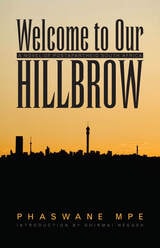
Welcome to Our Hillbrow
A Novel of Postapartheid South AfricaPhaswane Mpe
Ohio University Press, 2011
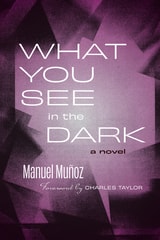
What You See in the Dark
A NovelManuel Muñoz and Charles Taylor
Northwestern University Press, 2025
A doomed love story unfolds alongside the production of Psycho in 1950s Bakersfield, California
Muñoz’s debut novel tells the story of Teresa, an aspiring singer too far away from Los Angeles to share the city’s glamour. In Dan Watson, the most desirable man in town, she believes she has found someone to help her realize those dreams. But when a famous actress arrives from Hollywood with a legendary director in tow, local gossip about Teresa and Dan turns to speculation about the celebrity visitors there to work on what will become an iconic, groundbreaking film of madness and murder at a roadside motel: Alfred Hitchcock’s Psycho. Framed by a foreword from film critic Charles Taylor, Muñoz’s haunting tale reflects “the slow winding down of everything that once seemed certain.”
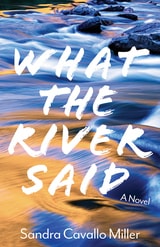
What the River Said
A Novelsandra cavallo miller
University of Nevada Press, 2021
In this riveting third book of the Dr. Abby Wilmore series, Dr. Abby returns to her medical clinic in Grand Canyon National Park. Happy to be reunited with her staff and her partner, Dr. John Pepper, Abby is back treating park visitors and personnel as well as local residents. However, a wave of heart attacks among apparently healthy hikers creates a new puzzle, and soon there are rumors of people using performance-enhancing drugs. Abby’s situation deteriorates when a new female friend suddenly disappears, and Abby berates herself for missing the woman’s depression.
As Abby struggles with the disappearance of her friend, Dr. Pepper is preoccupied by a mysterious threat from his past and becomes badly
injured in an apparent fall. While he recuperates, Abby takes over much of the clinic work while they provide a home for Pepper’s troubled teenage niece and an adopted stray dog.
Abby soon discovers that there is something more sinister behind the recent troubling events. In this exhilarating follow-up to The Color of Rock and Where Light Comes and Goes, Abby must learn to confront her past in order to stand up for the ones she loves.
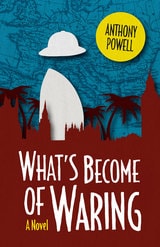
What's Become of Waring
A NovelAnthony Powell
University of Chicago Press, 2014
In What’s Become of Waring, Powell lampoons a world with which he was intimately acquainted: the inner workings of a small London publisher. But even as Powell eviscerates the publishers’ less than scrupulous plotting in his tale of wild coincidences, mistaken identity, and romance, he never strays to the far side of farce.
Written from a vantage point both high and necessarily narrow, Powell’s early novels nevertheless deal in the universal themes that would become a substantial part of his oeuvre: pride, greed, and what makes people behave as they do. Filled with eccentric characters and piercing insights, Powell’s work is achingly hilarious, human, and true.
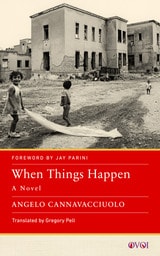
When Things Happen
A NovelAngelo Cannavacciuolo
Rutgers University Press, 2024
Michele Campo is living the bourgeois Italian dream. Now a speech pathologist in his forties, he resides in an expensive Naples home with his partner, Costanza, daughter of an upper-class family. Michele’s own family origins, however, are murkier. When he is assigned to work with five-year-old foster child Martina, he grows increasingly engrossed by her case, as his own buried family history slowly claws its way back to the surface. The first novel by acclaimed Italian writer Angelo Cannavacciuolo to be translated into English, When Things Happen tells a powerful and intriguing story of what we lose when we leave our origins behind. It presents a panoramic view of Neapolitan society unlike any in literature, revealing a city of extreme contrasts, with a glamorous center ringed by suburban squalor. Above all, it is a psychologically nuanced portrait of a man struggling to locate what he values in life and the poor vulnerable child who helps him find it.
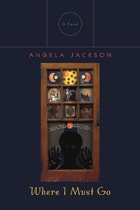
Where I Must Go
A NovelAngela Jackson
Northwestern University Press, 2009
Lyrical, penetrating, and highly charged, this novel displays a delicately tuned sense of difference and belonging. Poet Angela Jackson brings her superb sense of language and of human possibility to the story of young Magdalena Grace, whose narration takes readers through both privilege and privation at the time of the American civil rights movement.
The novel moves from the privileged yet racially exclusive atmosphere of the fictional Eden University to the black neighborhoods of a Midwestern city and to ancestral Mississippi. Magdalena’s story includes a wide range of characters—black and white, male and female, favored with opportunity or denied it, the young in love and elders wise with hope. With and through each other, they struggle to understand the history they are living and making. With dazzling perceptiveness, Jackson’s narrator Magdalena tells of the complex interactions of people around her who embody the personal and the political at a crucial moment in their own lives and in the making of America.
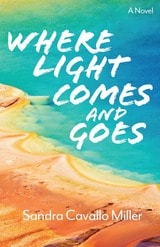
Where Light Comes and Goes
A NovelSandra Cavallo Miller
University of Nevada Press, 2020
Book 2 in the Dr. Abby Wilmore Series
Where Light Comes and Goes brings back Dr. Abby Wilmore, the young family physician who was the protagonist of Miller’s first novel, The Color of Rock. Abby has accepted the directorship of a summer clinic in Yellowstone National Park where she hopes to expand her medical skills. She arrives to find herself working above the increasingly restless Yellowstone supervolcano, treating visitors, staff, and locals, all while evading the advances of a lecherous concession manager and maintaining a long-distance relationship with her partner who stays at the Grand Canyon Clinic. As tremors in the park escalate and the lakes seethe with bubbling gases, Abby learns that some-one is mysteriously killing the bison.
What follows is an engrossing mystery unfolding in a spectacular setting with rich, quirky, and endearing characters and unexpected plot turns. While an overworked Abby makes new friends among her clinic staff and patients, tension builds as the volcano seems to be moving closer to a major eruption and the bison killings become more frequent. Soon, Abby finds herself in mortal danger as the story races to a thrilling and unexpected conclusion.
Sandra Cavallo Miller demonstrated in The Color of Rock that she is a gifted storyteller. Where Light Comes and Goes deftly combines a gripping mystery set in the accurately depicted routine of a busy medical practice amid the wonders of Yellowstone’s magnificent scenery and wildlife. This is entertaining reading at its best.
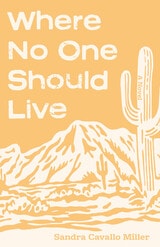
Where No One Should Live
A NovelSandra Cavallo Miller
University of Nevada Press, 2021
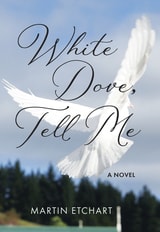
White Dove, Tell Me
A NovelMartin Etchart
University of Nevada Press, 2024
In the wake of this tragedy, Xabier learns that not only is the family ranch in jeopardy of foreclosure but his father’s death may not have been the accident it first appeared to be. Now, he must find a way to save his family’s ranch while unraveling the mysteries leading to his father’s death. Along the way, Xabier strives to adhere to his father’s memory and words—the invitation to stay true to who he is without losing his arima (soul).
In lyrical language that evokes the mythologies that have shaped the Etxeas’s worldview, White Dove, Tell Me speaks to the divided self that seeks to honor the family’s Basque heritage, while they strive for understanding in a new land.
Who Do You Love
A NovelValerie Sayers
Northwestern University Press, 2011
Who Occupies This House
A NovelKathleen Hill
Northwestern University Press, 2011
The narrator’s project, inspired at the outset by silences that extend backward to the untold story of the Famine, turns into a vast exploration of loss, inheritance, and the nature of memory. In a voice both stark and lyrical, the narrator calls up transformative, often tragic, moments in lives that have shaped her own. Remembering a past she never knew, she hopes to release from its sway the vanishing present.
Who Occupies This House is a strikingly beautiful account of the difficult reckoning with one’s family legacy that every adult faces. Punctuated by photographs and images that bring the narrative into sharp focus, it will draw comparisons to such divergent writers as W.G. Sebald and Kate O’Brien.
Wilkie Collins's The Dead Alive
The Novel, the Case, and Wrongful ConvictionsWilkie Collins
Northwestern University Press, 2005
Rob Warden, one of the nation's most eloquent and effective advocates for the wrongly convicted, reconsiders the facts of the Boorn case for what they can tell us about the systemic flaws that produced this first known miscarriage of justice-flaws that continue to riddle our system of justice today. A tale of false confessions and jailhouse snitches, of evidence overlooked, and justice more blinkered than blind, the Boorns' story reminds us of the perennial nature of the errors at the heart of American jurisprudence-and of the need to question and correct a system that regularly condemns the innocent.
Williwaw
A NovelGore Vidal
University of Chicago Press, 2003
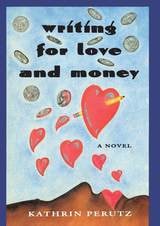
Writing for Love and Money
A NovelKathrin Perutz
University of Arkansas Press, 1991