Results by title
51 books match the query 'Ojibwa Indians' and 4 start with w
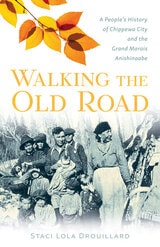
Walking the Old Road
A People's History of Chippewa City and the Grand Marais AnishinaabeStaci Lola Drouillard
University of Minnesota Press, 2019
The story of a once vibrant, now vanished off-reservation Ojibwe village—and a vital chapter of the history of the North Shore
“We do this because telling where you are from is just as important as your name. It helps tie us together and gives us a strong and solid place to speak from. It is my hope that the stories of Chippewa City will be heard, shared, and remembered, and that the story of Chippewa City and the Grand Marais Chippewa will continue to grow. By being a part of the living narrative, Bimaadizi Aadizookaan, together we can create a new story about what was, what is, and, ultimately, what will be.” —from the Prologue
At the turn of the nineteenth century, one mile east of Grand Marais, Minnesota, you would have found Chippewa City, a village that as many as 200 Anishinaabe families called home. Today you will find only Highway 61, private lakeshore property, and the one remaining village building: St. Francis Xavier Church. In Walking the Old Road, Staci Lola Drouillard guides readers through the story of that lost community, reclaiming for history the Ojibwe voices that have for so long, and so unceremoniously, been silenced.
Blending memoir, oral history, and narrative, Walking the Old Road reaches back to a time when Chippewa City, then called Nishkwakwansing (at the edge of the forest), was home to generations of Ojibwe ancestors. Drouillard, whose own family once lived in Chippewa City, draws on memories, family history, historical analysis, and testimony passed from one generation to the next to conduct us through the ages of early European contact, government land allotment, family relocation, and assimilation.
Documenting a story too often told by non-Natives, whether historians or travelers, archaeologists or settlers, Walking the Old Road gives an authentic voice to the Native American history of the North Shore. This history, infused with a powerful sense of place, connects the Ojibwe of today with the traditions of their ancestors and their descendants, recreating the narrative of Chippewa City as it was—and is and forever will be—lived.
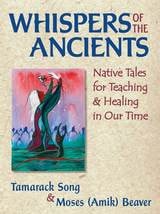
Whispers of the Ancients
Native Tales for Teaching and Healing in Our TimeTamarack Song and Moses (Amik) Beaver
University of Michigan Press, 2010
"Whispers of the Ancients helps us reconnect with the spirit of story that is a part of all our heritages. With respect for the wisdom of the past and with an eye toward the cross-cultural links that legends can make between us, Tamarack Song offers a gathering of tales and insightful comments that point the way back to the circle."
---Joseph Bruchac, author of more than 70 books for children and adults, including (with coauthor Michael J. Caduto) the best-selling Keepers of the Earth: Native American Stories and Environmental Activities for Children
It's easy to imagine yourself transported back to a time when an Elder might have told stories like those in Whispers of the Ancients around a glowing hearth. Thanks to Tamarack Song's storytelling skills, monsters, heroes, and shapeshifters come alive and open a doorway to the mysteries of life. Easily accessible to all ages, this is a book that speaks to each person at his or her own level of comprehension and need. It is as beautiful to read as it is to look at.
Stunning Aboriginal artwork by Moses (Amik) Beaver combines with provocative storytelling to renew, in all their traditional splendor, exceptional legends from around the world. Entertaining, profound, passionate, glorious---these are stories that illustrate and evoke themes common to everyone's life, with an ancient wisdom that helps the listener to cope with today's opportunities for tenderness, grief, passion, and irony.
Easily accessible to all ages, this is a book that speaks to each person at his or her own level of comprehension and need. It's as beautiful to read as it is to look at.
Tamarack Song has sought out the stories of the North African and Central Asian tribal peoples from whom he is descended, and he has listened to the tales of indigenous people from the tundra to the tropics. His books include Journey to the Ancestral Self, and he has contributed to Lois Einhorn's Forgiveness and Child Abuse. He is also a counselor, wilderness skills teacher, rites-of-passage guide, and founder of the Teaching Drum Outdoor School. Song lives in the Nicolet National Forest near Three Lakes, Wisconsin.
Moses (Amik) Beaver is an Ojibwe artist from the isolated fly-in community of Nibinamik (Summer Beaver), Ontario, three hundred miles north of Lake Superior. Grants from the Ontario Arts Council and other sources support his ongoing work with youth, and partial support for this book's illustrations comes from the District School Board of Nibinamik.
Wiijiwaaganag
More Than BrothersPeter Razor
Michigan State University Press, 2022
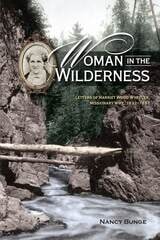
Woman in the Wilderness
Letters of Harriet Wood Wheeler, Missonary Wife, 1832-1892Nancy Bunge
Michigan State University Press, 2010
Harriet's letters reveal her experiences with actors and institutions that played pivotal roles in the history of American women: the nascent literate female work force at the mills in Lowell, Massachusetts; the Ipswich Female Seminary, which was one of the first schools for women teachers; women's associations, especially in churches; and the close and enduring ties that characterized women's relationships in the late nineteenth century.
Harriet's letters also provide an intimate view of the relationships between American Indians and Euro-Americans in the Great Lakes region, where she settled with her Christian missionary husband.