Results by title
60 books match the query 'Physical' and 5 start with w
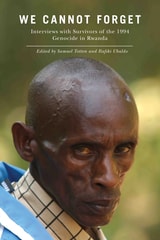
We Cannot Forget
Interviews with Survivors of the 1994 Genocide in RwandaTotten, Samuel
Rutgers University Press, 2011
During a one-hundred-day period in 1994, Hutus murdered between half a million and a million Tutsi in Rwanda. The numbers are staggering; the methods of killing were unspeakable. Utilizing personal interviews with trauma survivors living in Rwandan cities, towns, and dusty villages, We Cannot Forget relates what happened during this period and what their lives were like both prior to and following the genocide.
Through powerful stories that are at once memorable, disturbing, and informative, readers gain a critical sense of the tensions and violence that preceded the genocide, how it erupted and was carried out, and what these people faced in the first sixteen years following the genocide.
What Mean These Bones?
Studies in Southeastern BioarchaeologyEdited by Mary Lucas Powell, Patricia S. Bridges, and Ann Marie Wagner Mires
University of Alabama Press, 1991
A Dan Josselyn Memorial Publication
Until recently, archaeological projects that included analysis of human remains had often lacked active collaboration between archaeologists and physical anthropologists from the planning stages onward. During the 1980s, a conjunctive approach developed; known as "bioarchaeology," it draws on the methodological and theoretical strengths of the two subdisciplines to bridge a perceived communications gap and promote a more comprehensive understanding of prehistoric and historic cultures.
This volume addresses questions of human adaptation in a variety of cultural contexts, with a breadth not found in studies utilizing solely biological or artifactual data. These nine case studies from eight Southeastern states cover more than 4,000 years of human habitation, from Archaic hunter-gatherers in Louisiana and Alabama to Colonial planters and slaves in South Carolina. Several studies focus upon variations in health between or within late prehistoric agricultural societies. For example, the discovery that reliance upon maize as a dietary staple did not result invariably in poor health, as claimed by earlier studies, either for entire populations or, in ranked societies, for the non-elite majority, has fostered a new appreciation for the managerial wisdom of the Mississippian peoples, as well as for their agricultural skills.
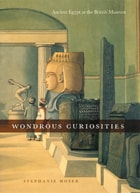
Wondrous Curiosities
Ancient Egypt at the British MuseumStephanie Moser
University of Chicago Press, 2006
When the British Museum opened its doors more than two centuries ago, scores of visitors waited eagerly outside for a first glimpse of ancient relics from Egypt, Greece, and Rome. Even today, in this age of satellite television and high-speed Internet access, museums maintain their unique allure, continuing to play a vital role in connecting us with little-known terrains and the deep mysteries of our historical past. That’s because, as Stephanie Moser argues in Wondrous Curiosities, museum displays don’t just transmit knowledge—they actually create it.
Based on her exploration of the British Museum’s world-famous collection of Egyptian antiquities, this pioneering study reveals the powerful role of museums in shaping our understanding of science, culture, and history. Drawing on guidebooks and archival documents, Moser demonstrates that this British exhibition of ancient Egyptian artifacts was central to the way we came to define the remarkable society that produced them. And she also reveals the specific strategies—such as using pattern and symmetry, juxtaposing different types of objects, and singling out particular items—that the British Museum and others used, and still use, in representing the past. With a wealth of illustrations and a detailed account of how the museum acquired and displayed its Egyptian collections, Wondrous Curiosities will fascinate curators and scholars of British history, Egyptology, art history, archaeology, and the history of science.
Writing Permitted in Designated Areas Only
Linda Brodkey
University of Minnesota Press, 1996
One teacher's dispatches from the front lines of the culture wars.
In the early 1990s, Linda Brodkey ended up on the front page of the New York Times and in the columns of George Will and other conservative pundits. The furor was over the “Writing about Difference” syllabus she helped create at the University of Texas, an effort that came to be one more casualty in the debate over multiculturalism in the academy. Writing Permitted in Designated Areas Only is made up of Brodkey’s dispatches from the front lines of the culture wars.
The essays in this book raise provocative questions about the way writing is taught in the United States. Brodkey lambastes conventional composition courses, which since their inception in the mid-nineteenth century have been the site of conflict over what “literacy” really means. She argues that such courses have institutionalized the practice of separating form and content, relegating teachers to the tasks of policing grammar and patrolling the borders of style and literature. Ultimately, this separation of structure and meaning depoliticizes the act of writing, creating an artificial distinction between what is being said and how it is expressed. Comprising specific examples of student work in addition to Brodkey’s own essays, Writing Permitted in Designated Areas Only works against this dynamic. Ranging from personal essay (“Writing on the Bias”) to hard-hitting polemic (“Writing Permitted in Designated Areas Only”) and touching on many of the major issues in the teaching of writing today, this volume explores alternatives to the standard methods for teaching composition. The result is a passionate plea for the loosing of writing to achieve its full power and potential; to unharness writing—and its teachers—from the institutional strictures that stifle both creativity and independent thought.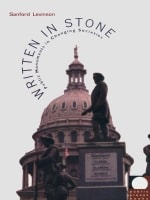
Written in Stone
Public Monuments in Changing SocietiesSanford Levinson
Duke University Press, 1998
In Written in Stone, legal scholar Sanford Levinson considers the tangled responses of ever-changing societies to the monuments and commemorations created by past regimes or outmoded cultural and political systems. Drawing on examples from Albania to Zimbabwe, from Moscow to Managua, and paying particular attention to examples throughout the American South, Levinson looks at social and legal arguments regarding the display, construction, modification, and destruction of public monuments. He asks what kinds of claims the past has on the present, particularly if the present is defined in dramatic opposition to its past values. In addition, he addresses the possibilities for responding to the use and abuse of public spaces and explores how a culture might memorialize its historical figures and events in ways that are beneficial to all its members.
Written in Stone is a meditation on how national cultures have been or may yet be defined through the deployment of public monuments. It adds a thoughtful and crucial voice into debates surrounding historical accuracy and representation, and will be welcomed by the many readers concerned with such issues.