Results by title
33 books match the query 'Forms'
A Mythology of Forms
Selected Writings on ArtCarl Einstein
University of Chicago Press, 2019
An Exaltation of Forms
Contemporary Poets Celebrate the Diversity of Their ArtAnnie Finch and Kathrine Varnes, Editors
University of Michigan Press, 2002
The forms range from hendecasyllabics to prose poetry, haiku to procedural poetry, sonnets to blues, rap to fractal verse. The range of poets included is equally impressive--from Amiri Baraka to John Frederick Nims, from Maxine Kumin to Marilyn Hacker, from Agha Shahid Ali to Pat Mora, from W. D. Snodgrass to Charles Bernstein. Achieving this level of eclecticism is a remarkable feat, especially given the strong opinions held by members of the various camps (e.g., the New Formalists, LANGUAGE poets, feminist and multicultural poets) that exist within today's poetry community. Poets who might never occupy the same room here occupy the same pages, perhaps for the first time. The net effect is a book that will surprise, inform, and delight a wide range of readers, whether as reference book, pleasure reading, or classroom text.
Poet, translator, and critic Annie Finch is director of the Stonecoast low-residency MFA program at the University of Southern Maine. She is author of The Ghost of Meter: Culture and Prosody in American Free Verse, Eve, and Calendars. She is the winner of the eleventh annual Robert Fitzgerald Prosody Award for scholars who have made a lasting contribution to the art and science of versification.
Kathrine Varnes teaches English at the University of Missouri-Columbia. She is the author of the book of poems, The Paragon. Her poems and essays have appeared in many books and journals.
Conjuring the Folk
Forms of Modernity in African AmericaDavid G. Nicholls
University of Michigan Press, 2000
In a series of revisionary readings, Nicholls studies how the "folk" is shaped by the ideology of form. He examines the presence of a spectral "folk" in Toomer's modernist pastiche, Cane. He explores how Hurston presents folklore as a contemporary language of resistance in her ethnography, Mules and Men. In Claude McKay's naturalistic romance, Banana Bottom, Nicholls discovers the figuration of an alternative modernity in the heroine's recovery of her lost "folk" identity. He unearths the individualist ethos of Booker T. Washington in two novels by George Wylie Henderson. And he reveals how Richard Wright's photo-documentary history, 12 Million BlackVoices, places the "folk" in a Marxian narrative of modernization toward class-consciousness.
A provocative rereading of the cultural politics of the Harlem Renaissance, Conjuring the Folk offers a new way of understanding literary responses to migration, modernization, and the concept of the "folk" itself.
David G. Nicholls is a post-doctoral fellow in the Center for the Study of Race, Politics, and Culture, University of Chicago.
Econophonia
Music, Value, and Forms of LifeGavin Steingo and Jairo Moreno, special issue editors
Duke University Press, 0
This issue theorizes what questions of value might contribute to our understanding of sound and music. Divesting sound and music from notions of intrinsic value, the contributors follow various avenues through which sound and music produce value in and as history, politics, ethics, epistemology, and ontology. As a result, the very question of what sound and music are—what constitutes them, as well as what they constitute—is at stake. Contributors examine the politics of music and crowds, the metaphysics of sensation, the ecological turn in music studies, and the political resistance inherent to sound; connect Karl Marx to black music and slave labor; look at Marx, the Marx Brothers, and fetishism; and explore the tension between the voice of the Worker who confronts Capital head-on and the voices of actual workers.
Contributors: Amy Cimini, Bill Dietz, Jairo Moreno, Rosalind Morris, Ana María Ochoa Gautier, Ronald Radano, Gavin Steingo, Peter Szendy, Gary Tomlinson, Naomi Waltham-Smith
Forms Of Power
From Domination to TransformationThomas Wartenberg
Temple University Press, 1991
Forms in the Abyss
A Philosophical Bridge Between Sartre and DerridaSteve Martinot
Temple University Press, 2007
Martinot argues that a bridge between these two thinkers can be constructed. He demonstrates that one can use the critical tools provided by Derrida, and the forms of discourse and reasoning developed by Sartre, to set the two in dialogue with each other. In the process, Martinot develops a theory of dialogue that incorporates both ethics and form and contributes a new way of thinking about critical and social theory. More importantly, he adds a new ethical and political imperative to postmodern thought that many dritics have often found missing in the works of thinkers like Derrida.
Forms of Association
Making Publics in Early Modern EuropePaul Yachnin
University of Massachusetts Press, 2015
In today's connected and interactive world, it is hard to imagine a time when cultural and intellectual interests did not lead people to associate with others who shared similar views and preoccupations. In this volume of essays, fifteen scholars explore how these kinds of relationships began to transform early modern European culture.
Forms of Association grows out of the “Making Publics: Media, Markets, and Association in Early Modern Europe” (MaPs) project, funded by the Social Sciences and Humanities Research Council of Canada. This scholarly initiative convened an interdisciplinary research team to consider how “publics”—new forms of association built on the shared interests of individuals—developed in Europe from 1500 to 1700. Drawing on a wide array of texts and histories, including the plays of Shakespeare, the legend of Robin Hood, paintings, and music as well as English gossip about France, the contributors develop a historical account of what publics were in early modern Europe. This collaborative study provides a dynamic way of understanding the political dimensions of artistic and intellectual works and opens the way toward a new history of early modernity.
Until his death in 2008, the great Renaissance scholar Richard Helgerson was a key participant in the MaPs project. The scholars featured in this volume originally met in Montreal to engage in a critical, commemorative conversation about Helgerson's work, the issues and questions coming out of the MaPs project, and how Helgerson's thinking advanced and could in turn be advanced by MaPs. This collection represents the fruits of that conversation.
Forms of Attention
Botticelli and HamletFrank Kermode
University of Chicago Press, 2011
Forms of Blackness
Race and Visibility in the French-Speaking WorldCécile Bishop
Duke University Press, 2025
Considering race as form across literature, theory, painting, and photography, Cécile Bishop’s Forms of Blackness explores the formal devices that make blackness both visible and recognizable. In keeping with black Francophone theorists like Édouard Glissant and Frantz Fanon, Bishop uses the ambiguities these aesthetic forms carry to explore a range of identity concepts like opacity, formlessness, and doubleness. Bishop puts blackness-as-race and blackness-as-form in dialogue, showing how race disrupts the concept of artistic autonomy and how the aesthetic challenges race as a self-evident visual phenomenon. When thought together, form does not isolate blackness from race but rather calls attention to the material substrate that turns race into a phenomenon that can be experienced through sense perception. Moving between careful analysis and experimental modes of critique, Forms of Blackness offers a new way of thinking about the politics of visibility and offers a pressing invitation to question the ways we interpret what we see.
Forms of Constraint
A HISTORY OF PRISON ARCHITECTURENorman Johnston
University of Illinois Press, 2006
Forms of Discovery
Critical and Historical Essays on the Forms of the Short Poem in EnglishYvor Winters
Ohio University Press, 1967
Forms of Expansion
Recent Long Poems by WomenLynn Keller
University of Chicago Press, 1997
Arguing that women poets no longer feel intimidated by the traditional associations of long poems with the heroic, public realm or with great artistic ambition, Keller shows how the long poem's openness to sociological, anthropological, and historical material makes it an ideal mode for exploring women's roles in history and culture. In addition, the varied forms of long poems—from sprawling free verse epics to regular sonnet sequences to highly disjunctive experimental collages—make this hybrid genre easily adaptable to diverse visions of feminism and of contemporary poetics.
Forms of Knowledge in Early Modern Asia
Explorations in the Intellectual History of India and Tibet, 1500-1800Sheldon Pollock, ed.
Duke University Press, 2011
Contributors. Muzaffar Alam, Imre Bangha, Aditya Behl, Allison Busch, Sumit Guha, Janet Gyatso, Matthew T. Kapstein, Françoise Mallison, Sheldon Pollock, Velcheru Narayana Rao, Kurtis R. Schaeffer, Sunil Sharma, David Shulman, Sanjay Subrahmanyam, Mohamad Tavakoli-Targhi
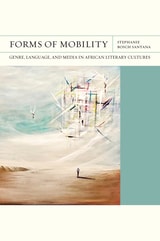
Forms of Mobility
Genre, Language, and Media in African Literary CulturesStephanie Bosch Santana
Northwestern University Press, 2025
Presents alternative categories of fiction through which to examine how contemporary writers have envisaged Africa’s changing literary terrains
Stephanie Bosch Santana analyzes southern African writers’ experimentations with literary form in periodical print and digital media since the mid-twentieth century in order to offer an alternative account of contemporary African imaginations of mobility. Based on an understudied archive of texts in English and Chichewa/Nyanja from Malawi, South Africa, Zimbabwe, and Zambia, Forms of Mobility: Genre, Language, and Media in African Literary Cultures examines new, noncanonical categories of fiction, including migrant forms, township tales, weekend stories, and digital diaries. These generically, linguistically, and geographically mobile forms map changing ideas of interconnection and belonging. By reading them “in motion,” as they travel across space, time, genre, and language and between publications and platforms, Bosch Santana limns multiple centers of literary influence and relation across southern African and Black diasporas, revealing forms of literary mobility and space making that are occluded by current models of world literature.
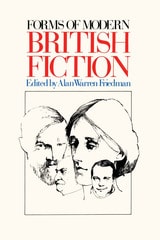
Forms of Modern British Fiction
Edited by Alan Warren Friedman
University of Texas Press, 1975
In Forms of Modern British Fiction six individualistic and strongminded critics delineate the "age of modernism" in British fiction. Dating the age and the movement from later Hardy works through the deaths of Joyce and Woolf, they present British fiction as a cohesive, self-contained unit of literary history.
Hardy appears as the first of the modern British novelists, Lawrence as the central, and Joyce and Woolf as the last. The writers and the modern movement are framed by precursors, such as Galsworthy, and by successors, Durrell, Beckett, and Henry Green—the postmoderns. The pattern of the essays suggests a growing self-consciousness on the part of twentieth-century writers as they seek not only to refine their predecessors but also to deny (and sometimes obliterate) them. The moderns thus deny the novel itself, a genre once firmly rooted in history and forms of social life. Their works do not assume that comfortable mimetic relationship between the fictive realities of art and life.
Consequently, there has now evolved a poetics of the novel that is virtually identifiable with modern fiction, a poetics still highly problematical in its attempt to denote a medium in whose name eclectic innovativeness and incessant revitalizing are proclaimed. Forms of Modern British Fiction refines and advances the discussion of the modern novel and the world it and we inhabit.
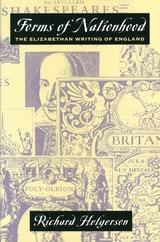
Forms of Nationhood
The Elizabethan Writing of EnglandRichard Helgerson
University of Chicago Press, 1992
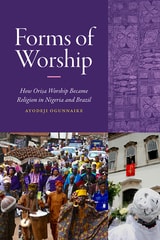
Forms of Worship
How Orisa Worship Became Religion in Nigeria and BrazilAyodeji Ogunnaike
Duke University Press, 2026
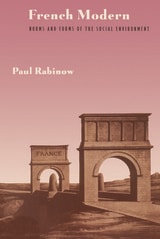
French Modern
Norms and Forms of the Social EnvironmentPaul Rabinow
University of Chicago Press, 1995

Margaret Atwood
Vision and FormsEdited by Kathryn Van Spanckeren and Jan Garden Castro. Foreword by Margaret Atwood
Southern Illinois University Press, 1988
A prolific writer and versatile social critic, Canadian novelist and poet Margaret Atwood has recently published Bluebeard’s Egg (short stories), Interlunar (poetry), and The Handmaid’s Tale a critically acclaimed best-selling novel.
This international collection of essays evaluates the complete body of her work—both the acclaimed fiction and the innovative poetry. The critics represented here—American, Australian, and Canadian—address Atwood’s handling of such themes as feminism, ecology, the gothic novel, and the political relationship between Canada and the United States.
The essays on Atwood’s novels introduce the general reader to her development as a writer, as she matures from a basically subjective, poetic vision, seen in Surfacing and The Edible Woman, to an increasingly engaged, political stance, exemplified by The Handmaid’s Tale. Other essays examine Atwood’s poetry, from her transformation of the Homeric model to her criticisms of the United States’ relationship with Canada. The last two critical essays offer a unique view of Atwood through an investigation of her use of the concept of shamanism and through a presentation of eight of her vivid watercolors.
The volume ends with Atwood presenting her own views in an interview with Jan Garden Castro and in a conversation between Atwood and students at the University of Tampa, Florida.
Navajo Architecture
Forms, History, DistributionsStephen C. Jett and Virginia E. Spencer
University of Arizona Press, 1981
Stephen C. Jett and Virginia E. Spencer have devoted years of fieldwork to studying the origin, evolution, and construction of Navajo buildings: not only hogans, houses, and summer dwellings, but also numerous other structures related to activities such as food preparation, hunting, sweat-bathing, and funerary observation. In addition, they have defined the geographic distribution of dwelling forms to reveal both utilization of local resources and local differences in degree of acculturation.
On Mount Vision
Forms of the Sacred in Contemporary American PoetryNorman Finkelstein
University of Iowa Press, 2010
Plumbing what the poet Michael Palmer calls “the dimension of the Spirit, with that troublesome, rebarbative capital letter,” Norman Finkelstein’s On Mount Vision asks how and why the sacred has remained a basic concern of contemporary experimental poets in our secular age. By charting the wandering, together and apart, of poetry and belief, Finkelstein illustrates the rich tapestry formed by the warp and woof of poetry, and the play of Gnosticism, antinomianism, spiritualism, and shamanism, which have commonly been regarded as heretical and sometimes been outright suppressed.
This beautifully written work begins with an overview of the spiritual problematics found in nineteenth- and early twentieth-century American poetry. Traveling slightly outside of the realm of the contemporary, Finkelstein’s discussions of Emerson, Whitman, and Eliot yield to close readings of the works of Robert Duncan, Jack Spicer, Ronald Johnson, Michael Palmer, Susan Howe, Nathaniel Mackey, and Armand Schwerner. In restoring verse to its place alongside scripture, Finkelstein reminds us why the sacred remains crucial to our understanding of postmodern American poetry.

Practice, Power, and Forms of Life
Sartre’s Appropriation of Hegel and MarxTerry Pinkard
University of Chicago Press, 2022
Jean-Paul Sartre’s Critique of Dialectical Reason, released to great fanfare in 1960, has since then receded in philosophical visibility. As Sartre’s reputation is now making a comeback, it is time for a reappraisal of his later work. In Practice, Power, and Forms of Life, philosopher Terry Pinkard interprets Sartre’s late work as a fundamental reworking of his earlier ideas, especially in terms of his understanding of the possibility of communal action as genuinely free, which the French philosopher had previously argued was impossible.
Pinkard reveals how Sartre was drawn back to Hegel, a move that was itself incited by Sartre’s newfound interest in Marxism. Pinkard argues that Sartre constructed a novel position on freedom that has yet to be adequately taken up and analyzed within philosophy and political theory. Through Sartre, Pinkard advances an argument that contributes to the history of philosophy as well as key debates on action and freedom.
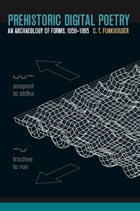
Prehistoric Digital Poetry
An Archaeology of Forms, 1959-1995C.T. Funkhouser, with a foreword by Sandy Baldwin
University of Alabama Press, 2007
Tracing the Origins of Digital Poetry Before the Web Revolution
For the last five decades, poets have had a vibrant relationship with computers and digital technology. This book is a documentary study and analytic history of digital poetry that highlights its major practitioners and the ways that they have used technology to foster a new aesthetic. Focusing primarily on programs and experiments produced before the emergence of the World Wide Web in the mid-1990s, C. T. Funkhouser analyzes numerous landmark works of digital poetry to illustrate that the foundations of today’s most advanced works are rooted in the rudimentary generative, visual, and interlinked productions of the genre’s prehistoric period.
Since 1959, computers have been used to produce several types of poetic output, including randomly generated writings, graphical works (static, animated, and video formats), and hypertext and hypermedia. Funkhouser demonstrates how hardware, programming, and software have been used to compose a range of new digital poetic forms. Several dozen historical examples, drawn from all of the predominant approaches to digital poetry, are discussed, highlighting the transformational and multi-faceted aspects of poetic composition now available to authors. This account includes many works, in English and other languages, which have never before been presented in an English-language publication.
In exploring pioneering works of digital poetry, Funkhouser demonstrates how technological constraints that would seemingly limit the aesthetics of poetry have instead extended and enriched poetic discourse. As a history of early digital poetry and a record of an era that has passed, this study aspires both to influence poets working today and to highlight what the future of digital poetry may hold.
Race and the Forms of Knowledge
Technique, Identity, and Place in Artistic ResearchBen Spatz
Northwestern University Press, 2024
Enacts a radically interdisciplinary intersectionality to position performance-based research in solidarity with decoloniality
This boldly innovative work interrogates the form and meaning of artistic research (also called practice research, performance as research, and research-creation), examining its development within the context of predominately white institutions that have enabled and depoliticized it while highlighting its radical potential when reframed as a lineage of critical whiteness practice.
Ben Spatz crafts a fluid yet critical new framework, explored via a series of case studies that includes Spatz’s own practice-as-research, to productively confront hegemonic modes of white writing and white institutionality. Ultimately taking jewishness as a paradigmatically “molecular” identity—variously configured as racial, ethnic, religious, or national—they offer a series of concrete methodological and formal proposals for working at the intersections of embodied identities, artistic techniques, and alternative forms of knowledge.
Race and the Forms of Knowledge: Technique, Identity, and Place in Artistic Research takes inspiration from recent critical studies of blackness and indigeneity to show how artistic research is always involved in the production and transformation of identity. Spatz offers a toolkit of practical methods and concepts—from molecular identities to audiovisual ethnotechnics and earthing the laboratory—for reimagining the university and other contemporary institutions.
Racial Things, Racial Forms
Objecthood in Avant-Garde Asian American PoetryJoseph Jonghyun Jeon
University of Iowa Press, 2012

Rainer Maria Rilke
The Ring of FormsFrank Wood
University of Minnesota Press, 1958
Rainer Maria Rilke was first published in 1958. Minnesota Archive Editions uses digital technology to make long-unavailable books once again accessible, and are published unaltered from the original University of Minnesota Press editions.
The German poet Rainer Maria Rilke died in 1926, and interest in his poetry has been mounting ever since. The winds of fashion, taste, or personal bias have shifted several times to affect his audience of readers. There have been, according to previous Rilke criticism, not one but many Rilkes. Thus the critics have pointed to the "early Rilke" and the "late Rilke," to the Prague poet, the Paris poet, and the Muzot poet.
Now, in a fresh approach yet one which takes full cognizance of the varying viewpoints and conflicting purposes of earlier criticism, Professor Wood carefully examines Rilke's entire poetic output. The major concern here is with the poetry itself rather than with the biographical, psychological, or philosophical questions which have dominated most previous criticism.
Through a close textual analysis of the poems, Professor Wood demonstrates that the whole body of Rilke's writing, from beginning to end, is thoroughly interrelated and interdependent. As he points out, many more published materials, both posthumous verse and correspondence, are available now than in the earlier periods of Rilke's fame, a situation which adds significance to this new evaluation.
In addition to analyzing Rilke's own poetry, Professor Wood shows the links between Rilke and such contemporary poets and writers as Gide, Proust, T.S. Eliot, and Yeats.
The excerpts quoted from Rilke's poetry are given both in the original German text and in standard English translation.

Reverberations across Small-Scale British Theatre
Politics, Aesthetics and FormsEdited by Patrick Duggan and Victor Ukaegbu
Intellect Books, 2013
Sovereign, Settler, Leaker, Lie
Forms of the Secret in US Political RhetoricAtilla Hallsby
The Ohio State University Press, 2026
In Sovereign, Settler, Leaker, Lie, Atilla Hallsby argues that secrets play a pivotal role in organizing political discourse in the United States. Hallsby takes up contemporary case studies—ranging from the Valerie Plame scandal during the George W. Bush presidency, to the use of Saul Alinsky’s name as a partisan codeword for politicizing Obama’s Blackness, to Chelsea Manning’s public naming and outing—to show how dramatic revelations increasingly fail to produce meaningful change and instead reproduce entrenched racial, gendered, and colonial hierarchies.
The core feature of these interlinked moments of crisis is the secret: a rhetorical patterning of political life organized by specific forms, each one lending a familiar shape to the shadows of American empire. These forms, theorized here as tropes, connect decades of secrets, linking the George W. Bush administration’s War on Terror to the Trump-era reemergence of “deep state” conspiracy theories. As an extension of secrecy and surveillance studies, and with the aim of attaining a more accountable and just form of US governmentality, Sovereign, Settler, Leaker, Lie explains how still-unfolding political realities in the United States emerged, transformed, and regenerate.
The Forms of the Affects
Eugenie Brinkema
Duke University Press, 2014
Offering a bold corrective to the emphasis on embodiment and experience in recent affect theory, Eugenie Brinkema develops a novel mode of criticism that locates the forms of particular affects within the specific details of cinematic and textual construction. Through close readings of works by Roland Barthes, Hollis Frampton, Sigmund Freud, Peter Greenaway, Michael Haneke, Alfred Hitchcock, Søren Kierkegaard, and David Lynch, Brinkema shows that deep attention to form, structure, and aesthetics enables a fundamental rethinking of the study of sensation. In the process, she delves into concepts as diverse as putrescence in French gastronomy, the role of the tear in philosophies of emotion, Nietzschean joy as a wild aesthetic of repetition, and the psychoanalytic theory of embarrassment. Above all, this provocative work is a call to harness the vitality of the affective turn for a renewed exploration of the possibilities of cinematic form.
The Hindu Temple
An Introduction to Its Meaning and FormsGeorge Michell
University of Chicago Press, 1988
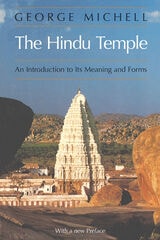
Michell's discussion of the meaning and forms of the temple in Hindu society encompasses the awe-inspiring rock-cut temples at Ellora and Elephanta, the soaring superstructures and extraordinary sexual exhibitionism of the sculptures at Khajuraho, and the colossal mortuary temple of Angkor Vat, as well as the tiny iconic shrines that many Hindus wear around their necks and the simple shrines found under trees or near ponds.
The Order of Forms
Realism, Formalism, and Social SpaceAnna Kornbluh
University of Chicago Press, 2019
Kornbluh offers a powerful argument that political formalism, by valuing forms of sociability like the city and the state in and of themselves, provides a better understanding of literary form and its political possibilities than approaches that view form as a constraint. To make this argument, she takes up the case of literary realism, showing how novels by Dickens, Brontë, Hardy, and Carroll engage mathematical formalism as part of their political imagining. Realism, she shows, is best understood as an exercise in social modeling—more like formalist mathematics than social documentation. By modeling society, the realist novel focuses on what it considers the most elementary features of social relations and generates unique political insights. Proposing both this new theory of realism and the idea of political formalism, this inspired, eye-opening book will have far-reaching implications in literary studies.
The Wedding Complex
Forms of Belonging in Modern American CultureElizabeth Freeman
Duke University Press, 2002
Freeman draws on queer theory and social history to focus on a range of texts where weddings do not necessarily lead to legal marriage but instead reflect yearnings for intimate arrangements other than long-term, state-sanctioned, domestic couplehood. Beginning with a look at the debates over gay marriage, she proceeds to consider literary works by Nathaniel Hawthorne, William Faulkner, Carson McCullers, Vladimir Nabokov, and Edgar Allan Poe, along with such Hollywood films as Father of the Bride, The Graduate, and The Godfather. She also discusses less well-known texts such as Su Friedrich’s experimental film First Comes Love and the off-Broadway, interactive dinner play Tony ‘n’ Tina’s Wedding.
Offering bold new ways to imagine attachment and belonging, and the public performance and recognition of social intimacy, The Wedding Complex is a major contribution to American studies, queer theory, and cultural studies.
Transnational Intellectual Networks
Forms of Academic Knowledge and the Search for Cultural IdentitiesEdited by Christophe Charle, Jürgen Schriewer, and Peter Wagner
Campus Verlag, 2004