Results by title
142 books match the query 'Political Advocacy' and 12 start with w
Warped Narratives
Distortion in the Framing of Gun PolicyMelissa K. Merry
University of Michigan Press, 2020
The politics of gun policy in the United States are dramatic. Against the backdrop of daily gun violence—which claims more than 33,000 lives per year—gun control groups push for stronger regulations, while gun rights groups resist infringements upon their Second Amendment rights. To illuminate the dynamics of this polarized debate, Warped Narratives examines how and why interest groups frame the gun violence problem in particular ways, exploring the implication of groups’ framing choices for policymaking and politics. Melissa K. Merry argues that the gun policy arena is warped, and that both gun control and gun rights organizations contribute to the distortion of the issue by focusing on atypical characters and settings in their policy narratives. Gun control groups emphasize white victims, child victims, and mass shootings in suburban locales, while gun rights groups focus on self-defense shootings, highlighting threats to “law-abiding” gun owners. In reality, most gun deaths are the result of suicide. Homicides occur disproportionately in urban areas, mainly affecting racial minorities. While warping makes political sense in the short term, it may lead to negative, long-term consequences, including constraints on groups’ ability to build broad-based coalitions and to reduce prospects for compromise. To demonstrate warping, Merry analyzes nearly 67,000 communications by 15 national gun policy groups between 2000 and 2017 collected from blogs, emails, Facebook posts, and press releases. This book is the first to systematically assess the role of race in gun policy groups’ framing and offers the most comprehensive examination to date of interest groups’ presentation of this issue.
We Fight To Win
Inequality and the Politics of Youth ActivismHava Rachel Gordon
Rutgers University Press, 2009
Hava Rachel Gordon compares the struggles and successes of two very different youth movements: a mostly white, middle-class youth activist network in Portland, Oregon, and a working-class network of minority youth in Oakland, California. She examines how these young activists navigate schools, families, community organizations, and the mainstream media, and employ a variety of strategies to make their voices heard on some of today's most pressing issuesùwar, school funding, the environmental crisis, the prison industrial complex, standardized testing, corporate accountability, and educational reform. We Fight to Win is one of the first books to focus on adolescence and political action and deftly explore the ways that the politics of youth activism are structured by age inequality as well as race, class, and gender.
We Make Change
Community Organizers Talk About What They Do--and WhyKristin Layng Szakos
Vanderbilt University Press, 2007
What Democracy Looks Like
The Rhetoric of Social Movements and CounterpublicsEdited by Christina R. Foust, Amy Pason, and Kate Zittlow Rogness
University of Alabama Press, 2017
Examining How Social Movements and Counterpublics Shape Democratic Change.
Recent protests around the world (such as the Arab Spring uprisings and Occupy Wall Street movements) have drawn renewed interest to the study of social change and, especially, to the manner in which words, images, events, and ideas associated with protestors can “move the social.” What Democracy Looks Like is an attempt to foster a more coherent understanding of social change among scholars of rhetoric and communication studies by juxtaposing the ideas of social movements and counterpublics—historically two key factors significant in the study of social change. Foust, Pason, and Zittlow Rogness’s volume compiles the voices of leading and new scholars who are contributing to the history, application, and new directions of these two concepts, all in conversation with a number of acts of resistance or social change.
The theories of social movements and counterpublics are related, but distinct. Social movement theories tend to be concerned with enacting policy and legislative changes. Scholars flying this flag have concentrated on the organization and language (for example, rallies and speeches) that are meant to enact social change. Counterpublic theory, on the other hand, focuses less on policy changes and more on the unequal distribution of power and resources among different protest groups, which is sometimes synonymous with subordinated identity groups such as race, gender, sexuality, and class.
Nonetheless, contributors argue that in recent years the distinctions between these two methods have become less evident. By putting the literatures of the two theories in conversation with one another, these scholars seek to promote and imagine social change outside the typical binaries.

What We Are Fighting For
A Radical Collective ManifestoEdited by Federico Campagna and Emanuele Campiglio
Pluto Press, 2012
From the pens of major figures of the anti-austerity movement, comes the first radical, collective manifesto of the new decade.
From participatory democracy to media reform, from direct action to communal living, What Are We Fighting For is a bold look at alternatives to the economic, social and political travesty of contemporary capitalism. Chapters from Owen Jones, David Graeber, John Holloway, Nina Power, Mark Fisher, Franco Berardi Bifo and Marina Sitrin show a multifaceted but collective desire for a better world.
Anarchists, communists, feminists and autonomists come together to inspire us to think beyond neoliberalism.
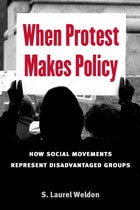
When Protest Makes Policy
How Social Movements Represent Disadvantaged GroupsS. Laurel Weldon
University of Michigan Press, 2012
"A must-read for scholars across a broad sweep of disciplines. Laurel Weldon weaves together skillfully the theoretical strands of gender equality policy, intersectionality, social movements, and representation in a multimethod/level comparative study that unequivocally places women's movements at the center of our understanding of democracy and social change."
---Amy G. Mazur, Washington State University
"Laurel Weldon's When Protest Makes Policy expands and enriches our understanding of representation by stressing social movements as a primary avenue for the representation of marginalized groups. With powerful theory backed by persuasive analysis, it is a must-read for anyone interested in democracy and the representation of marginalized groups."
---Pamela Paxton, University of Texas at Austin
"This is a bold and exciting book. There are many fine scholars who look at women's movements, political theorists who make claims about democracy, and policy analysts who do longitudinal treatments or cross-sectional evaluations of various policies. I know of no one, aside from Weldon, who is comfortable with all three of these roles."
---David Meyer, University of California, Irvine
What role do social movements play in a democracy? Political theorist S. Laurel Weldon demonstrates that social movements provide a hitherto unrecognized form of democratic representation, and thus offer a significant potential for deepening democracy and overcoming social conflict.
Through a series of case studies of movements conducted by women, women of color, and workers in the United States and other member nations of the Organisation for Economic Co-operation and Development (OECD), Weldon examines processes of representation at the local, state, and national levels. She concludes that, for systematically disadvantaged groups, social movements can be as important---sometimes more important---for the effective articulation of a group perspective as political parties, interest groups, or the physical presence of group members in legislatures.
When Protest Makes Policy contributes to the emerging scholarship on civil society as well as the traditional scholarship on representation. It will be of interest to anyone concerned with advancing social cohesion and deepening democracy and inclusion as well as those concerned with advancing equality for women, ethnic and racial minorities, the working class, and poor people.
S. Laurel Weldon is Professor of Political Science at Purdue University.
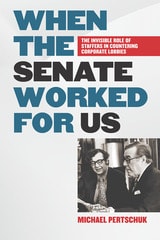
When the Senate Worked for Us
The Invisible Role of Staffers in Countering Corporate LobbiesMichael Pertschuk
Vanderbilt University Press, 2017
What has remained untold is the major behind-the-scenes contribution of entrepreneurial Congressional staff, who planted the seeds of public interest bills in their bosses' minds and maneuvered to counteract the influence of lobbyists to pass laws in consumer protection, public health, and other policy arenas crying out for effective government regulation. They infuriated Nixon's advisor, John Ehrlichman, who called them "bumblebees," a name they wore as a badge of honor.
For his insider account, Pertschuk draws on many interviews, as well as his fifteen years serving on the staff of the Senate Commerce Committee that Senator Warren Magnuson chaired and as the committee's Democratic Staff Director. That committee became, in Ralph Nader's words, "the Grand Central Station for consumer protection advocates."
Who Is Antiracist?
Beliefs, Motivations, and PoliticsGeorge Yancey and Hayoung Oh
Temple University Press, 2025
Who Is Antiracist? provides a systematic approach to understanding the motivations and intentions of racial progressives as well as the impact of political ideology on antiracism. The authors discuss the theoretical origins of contemporary antiracism and review key works of antiracism to piece together the characteristics that define it. They also create the Antiracism Attitude Scale to explore the demographic makeup and social views of those who support the type of antiracism popularized in the United States.
Acknowledging that antiracism faces powerful challenges in fully obtaining the goals articulated by its proponents, Who Is Antiracist? enlightens us about the continuing racial conflict in our society and warns against the risk of antiracism becoming just a proxy for ordinary party politics.

Why We Lost the ERA
Jane J. Mansbridge
University of Chicago Press, 1986
In March 1972 the Equal Rights Amendment to the United States Constitution-the ERA-passed the Senate of the United States with a vote of 84 to 8, seventeen votes more than the two-thirds required for constitutional amendments. In the ensuing ten years, a majority of Americans consistently told interviewers that they favored this amendment to the Constitution. Yet on June 30, 1982, the deadline for ratifying the amendment passed with only thirty-five of the required thirty-eight states having ratified.
How did this happen? In How We Lost the ERA, political scientist Jane J. Mansbridge tells the story of the ERA's rise and fall, revealing self-defeating, contradictory forces within the movement supporting the amendment and how those contributed to its demise. The surprising challenges Mansbridge uncovers here remain salient to political struggles and democratic theory today.

Women's Activism and Feminist Agency in Mozambique and Nicaragua
Jennifer Leigh Disney
Temple University Press, 2009
In Women's Activism and Feminist Agency in Mozambique and Nicaragua, Jennifer Leigh Disney investigates the contours of women’s emancipation outside the framework of liberal democracy and a market economy. She interviews 146 women and men in the two countries to explore the comparative contribution of women’s participation in subsistence and informal economies, political parties and civil society organizations. She also discusses military struggles against colonialism and imperialism in fostering feminist agency to provide a fascinating look at how each movement evolved and how it changed in a post-revolutionary climate.
Women's Activist Organizing in US History
A University of Illinois Press AnthologyCompiled by Dawn Durante; Introduction by Deborah Gray White
University of Illinois Press, 2022
Insightful and provocative, Women’s Activist Organizing in US History draws on both classic texts and recent bestsellers to reveal the breadth of activism by women in the United States in the nineteenth and twentieth centuries.
Contributors: Daina Ramey Berry, Melinda Chateauvert, Tiffany M. Gill, Nancy A. Hewitt, Treva B. Lindsey, Anne Firor Scott, Charissa J. Threat, Anne M. Valk, Lara Vapnek, and Deborah Gray White