Results by title
471 books match the query 'Power' and 17 start with w
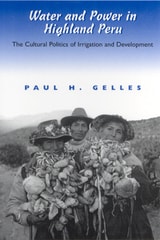
Water and Power in Highland Peru
The Cultural Politics of Irrigation and DevelopmentPaul H Gelles
Rutgers University Press, 2000
Cabanaconde, a town of 5,000 people, is located in the arid Andean highlands. It is dominated by the foreboding Hualca Hualca mountain peak that is the source of this town’s much-needed water. How the villagers obtain this water, Paul Gelles writes, is not a simple process: the politics of irrigation in this area reflect a struggle for control of vital resources, deeply rooted in the clash between local, ritualized models of water distribution and the secular model put forth by the Peruvian state. Water and Power in Highland Peru provides an insightful case study on the intense conflicts over water rights, and a framework for studying ethnic conflict and the effects of “development,” not only in Peru, but in other areas as well.
Most of the inhabitants of Cabanaconde do not identify themselves with the dominant Spanish-speaking culture found in Peru. And the Peruvian state, grounded in a racist, post-Colonial ethos, challenges the village’s long-standing, non-Western framework for organizing water management.
Gelles demonstrates that Andean culture is dynamic and adaptive, and it is a powerful source of ethnic identity, even for those who leave the village to live elsewhere. Indigenous rituals developed in this part of the world, he states, have become powerful tools of resistance against interference by local elites and the present-day Peruvian state. Most importantly, the micropolitics of Cabanaconde provide a window into a struggle that is taking place around the world.

Ways & Power Of Love
Techniques Of Moral TransformationPitirim A. Sorokin
Templeton Press, 2002
The Ways and Power of Love was originally published in 1954 when Pitirim Sorokin was in the twilight of his career and leading the Harvard Research Center in Creative Altruism. His elaborate scientific analysis of love with regard to its higher and lower forms, its causes and effects, its human and cosmic significance, and its core features constitutes the first study on this topic in world literature to date.
Sorokin was the one absolutely essential twentieth-century pioneer in the study of love at the interface of science and religion. Bringing The Ways and Power of Love back into print allows a new generation of readers to appreciate Sorokin's genius and to move forward with his endeavor at a time when civilization itself continues to be threatened by a marked inability to live up to the ideal of love for all humankind. It is certainly right to hope, with Sorokin, that progress in knowledge about love can move humanity forward to a better future. Turning the sciences toward the study of love is no easy task, but it can and must be done.
We Are in This Dance Together
Gender, Power, and Globalization at a Mexican Garment FirmPlankey-Videla, Nancy
Rutgers University Press, 2012
Changes in the global economy have real and contradictory outcomes for the everyday lives of women workers. In 2001, Nancy Plankey-Videla had a rare opportunity to witness these effects firsthand. Having secured access to one of Latin America's top producers of high-end men's suits in Mexico for participant-observer research, she labored as a machine operator for nine months on a shop floor made up, mostly, of women. The firm had recently transformed itself from traditional assembly techniques, to lean, cutting-edge, Japanese-style production methods. Lured initially into the firm by way of increased wages and benefits, workers had helped shoulder the company's increasing debts. When the company's plan for successful expansion went awry and it reneged on promises it had made to the workforce, women workers responded by walking out on strike.
Building upon in-depth interviews with over sixty workers, managers, and policy makers, Plankey-Videla documents and analyzes events leading up to the female-led factory strike and its aftermath—including harassment from managers, corrupt union officials and labor authorities, and violent governor-sanctioned police actions. We Are in This Dance Together illustrates how the women's shared identity as workers and mothers—deserving of dignity, respect, and a living wage—became the basis for radicalization and led to further civic organizing against the state, the company, and the corrupt union to demand justice.
Whispering Truth to Power
Everyday Resistance to Reconciliation in Postgenocide RwandaSusan Thomson
University of Wisconsin Press, 2013
“Reveals the lengths [to which] the current government has gone to restructure all spaces of Rwandan society, and how Rwandans continue to resist this state interference in their everyday lives.”—Ethnic and Racial Studies
“Thomson’s elegant research is praiseworthy and her arguments are forthright. . . . This important publication will be of great value to scholars of Rwanda and genocide as well as students of reconciliation politics and transitional justice.”—Human Rights Quarterly
“Sobering and disturbing. . . . The peasant peoples’ resistance to official policies of national unity and reconciliation emerged because these national schemes do not reflect the peasants’ own lived realities and experiences of state power, genocide, and day-to-day living within their communities. Instead, these official policies disrupt everyday life and endanger existing networks of mutual support and dependence.”—Canadian Journal of Development Studies
Outstanding Academic Title, Choice Magazine

Whose Game?
Gender and Power in Fantasy SportsRebecca Joyce Kissane and Sarah Winslow
Temple University Press, 2020
Fantasy sports have the opportunity to provide a sporting community in which gendered physical presence plays no role—a space where men and women can compete and interact on a level playing field. Whose Game? shows, however, that while many turn to this space to socialize with friends or participate in a uniquely active and competitive fandom, men who play also depend on fantasy sports to perform a boyhood vision of masculinity otherwise inaccessible to them. Authors Rebecca Kissane and Sarah Winslow draw on a rich array of survey, interview, and observational data to examine how gender, race, and class frame the experiences of everyday fantasy sports players.
This pioneering book examines gendered structures and processes, such as jock statsculinity—a nerdish form of masculine one-upmanship—and how women are often rendered as outsiders. Ultimately, Whose Game? demonstrates that fantasy sports are more than just an inconsequential leisure activity. This online world bleeds into participants’ social lives in gendered ways—forging and strengthening relationships but also taking participants’ time and attention to generate negative emotions, stress, discord, and unproductivity.

Wind and Power in the Anthropocene
Dominic Boyer and Cymene Howe
Duke University Press, 2019
In his volume, Energopolitics, Boyer examines the politics of wind power and how it is shaped by myriad factors, from the legacies of settler colonialism and indigenous resistance to state bureaucracy and corporate investment. Drawing on interviews with activists, campesinos, engineers, bureaucrats, politicians, and bankers, Boyer outlines the fundamental impact of energy and fuel on political power. Boyer also demonstrates how large conceptual frameworks cannot adequately explain the fraught and uniquely complicated conditions on the Isthmus, illustrating the need to resist narratives of Anthropocenic universalism and to attend to local particularities.
In her volume, Ecologics, Howe narrates how an antidote to the Anthropocene became both failure and success. Tracking the development of what would have been Latin America's largest wind park, Howe documents indigenous people's resistance to the project and the political and corporate climate that derailed its renewable energy potential. Using feminist and more-than-human theories, Howe demonstrates how the dynamics of energy and environment cannot be captured without understanding how human aspirations for energy articulate with nonhuman beings, technomaterial objects, and the geophysical forces that are at the heart of wind and power.

Witchcraft, Power and Politics
Exploring the Occult in the South African LowveldIsak Niehaus, Eliazaar Mohlala, and Kally Shokaneo
Pluto Press, 2001

Wolves within the Fold
Religious Leadership and Abuses of PowerShupe, Anson
Rutgers University Press, 1998
The power of religion as a symbolic, salvationÐpromising enterprise resides in its authority to create and shape reality for believers and command their obedience. This power can inspire tremendous acts of human kindness, charity, compassion, and hope. But witch hunts, inquisitions, crusades, and pogroms show us how religious authority can be used for far darker purposes. This abuse of power by religious authorities at the expense of their followers is termed clergy malfeasance by editor Anson Shupe and examined by the contributors to Wolves within the Fold.
The essays provide an innovative examination of behavior that is sometimes illegal and always unethical, sometimes punished but often not. Topics range from a cultural study of Aum Shinrikyo, the Japanese apocalyptic group now infamous for releasing lethal gas into the Tokyo subway system, to a sociological analysis of financial scandals among evangelical religious groups. Groups analyzed include the Roman Catholic Church, Protestant denominations, televangelists, and the Hare Krishnas.

Women Who Live Evil Lives
Gender, Religion, and the Politics of Power in Colonial GuatemalaBy Martha Few
University of Texas Press, 2002
Women Who Live Evil Lives documents the lives and practices of mixed-race, Black, Spanish, and Maya women sorcerers, spell-casters, magical healers, and midwives in the social relations of power in Santiago de Guatemala, the capital of colonial Central America. Men and women from all sectors of society consulted them to intervene in sexual and familial relations and disputes between neighbors and rival shop owners; to counter abusive colonial officials, employers, or husbands; and in cases of inexplicable illness.
Applying historical, anthropological, and gender studies analysis, Martha Few argues that women's local practices of magic, curing, and religion revealed opportunities for women's cultural authority and power in colonial Guatemala. Few draws on archival research conducted in Guatemala, Mexico, and Spain to shed new light on women's critical public roles in Santiago, the cultural and social connections between the capital city and the countryside, and the gender dynamics of power in the ethnic and cultural contestation of Spanish colonial rule in daily life.
Women and Power in Argentine Literature
Stories, Interviews, and Critical EssaysBy Gwendolyn Díaz
University of Texas Press, 2007
The astonishing talent of Argentine women writers belies the struggles they have faced—not merely as overlooked authors, but as women of conviction facing oppression. The patriarchal pressures of the Perón years, the terror of the Dirty War, and, more recently, the economic collapse that gripped the nation in 2001 created such repressive conditions that some writers, such as Luisa Valenzuela, left the country for long periods. Not surprisingly, power has become an inescapable theme in Argentine women's fiction, and this collection shows how the dynamics of power capture not only the political world but also the personal one. Whether their characters are politicians and peasants, torturers and victims, parents and children, or lovers male and female, each writer explores the effects of power as it is exercised by or against women.
The fifteen writers chosen for Women and Power in Argentine Literature include famous names such as Valenzuela, as well as authors anthologized for the first time, most notably María Kodama, widow of Jorge Luis Borges. Each chapter begins with a "verbal portrait," editor Gwendolyn Díaz's personal impression of the author at ease, formed through hours of conversation and interviews. A biographical essay and critical commentary follow, with emphasis on the work included in this anthology. Díaz's interviews, translated from Spanish, and finally the stories themselves—only three of which have been previously published in English—complete the chapters. The extraordinary depth of these chapters reflects the nuanced, often controversial portrayals of power observed by Argentine women writers. Inspiring as well as insightful, Women and Power in Argentine Literature is ultimately about women who, in Díaz's words, "choose to speak their truth regardless of the consequences."
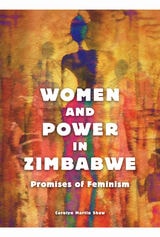
Women and Power in Zimbabwe
Promises of FeminismCarolyn Martin Shaw
University of Illinois Press, 2015
Using history, literature, participant observation, and interviews, Carolyn Martin Shaw surveys Zimbabwean feminisms from the colonial era to today. She examines how actions as clearly disparate as baking scones for self-protection, carrying guns in the liberation, and feeling morally superior to men represent sources of female empowerment. She also presents the ways women across Zimbabwean society--rural and urban, professional and domestic--accommodated or confronted post-independence setbacks. Finally, Shaw offers perspectives on the ways contemporary Zimbabwean women depart from the prevailing view that feminism is a Western imposition having little to do with African women.
The result of thirty years of experience, Women and Power in Zimbabwe addresses the promises of feminism and femininity for generations of African women.
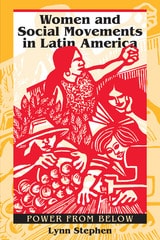
Women and Social Movements in Latin America
Power from BelowBy Lynn Stephen
University of Texas Press, 1997
Women's grassroots activism in Latin America combines a commitment to basic survival for women and their children with a challenge to women's subordination to men. Women activists insist that issues such as rape, battering, and reproductive control cannot be divorced from women's concerns about housing, food, land, and medical care.
This innovative, comparative study explores six cases of women's grassroots activism in Mexico, El Salvador, Brazil, and Chile. Lynn Stephen communicates the ideas, experiences, and perceptions of women who participate in collective action, while she explains the structural conditions and ideological discourses that set the context within which women act and interpret their experiences. She includes revealing interviews with activists, detailed histories of organizations and movements, and a theoretical discussion of gender, collective identity, and feminist anthropology and methods.
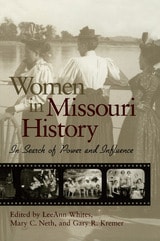
Women in Missouri History
In Search of Power and InfluenceEdited by LeeAnn Whites, Mary C. Neth, & Gary R. Kremer
University of Missouri Press, 2004
Women in Missouri History is an exceptional collection of essays surveying the history of women in the state of Missouri from the period of colonial settlement through the mid-twentieth century. The women featured in these essays come from various ethnic, economic, and racial groups, from both urban and rural areas, and from all over the state. The authors effectively tell these women’s stories through biographies and through techniques of social history, allowing the reader to learn not only about the women’s lives individually, but also about how groups of “ordinary” women shaped the history of the state.
The essays in this collection address questions that are at the center of current developments in the field of women’s history but are written in a manner that makes them accessible to general readers. Providing an excellent general overview of the history of women in Missouri, this collection makes a valuable contribution to a better understanding of the state’s past.
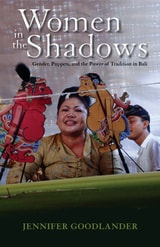
Women in the Shadows
Gender, Puppets, and the Power of Tradition in BaliJennifer Goodlander
Ohio University Press, 2016
Wayang kulit, or shadow puppetry, connects a mythic past to the present through public ritual performance and is one of most important performance traditions in Bali. The dalang, or puppeteer, is revered in Balinese society as a teacher and spiritual leader. Recently, women have begun to study and perform in this traditionally male role, an innovation that has triggered resistance and controversy.
In Women in the Shadows, Jennifer Goodlander draws on her own experience training as a dalang as well as interviews with early women dalang and leading artists to upend the usual assessments of such gender role shifts. She argues that rather than assuming that women performers are necessarily mounting a challenge to tradition, “tradition” in Bali must be understood as a system of power that is inextricably linked to gender hierarchy.
She examines the very idea of “tradition” and how it forms both an ideological and social foundation in Balinese culture. Ultimately, Goodlander offers a richer, more complicated understanding of both tradition and gender in Balinese society. Following in the footsteps of other eminent reflexive ethnographies, Women in the Shadows will be of value to anyone interested in performance studies, Southeast Asian culture, or ethnographic methods.
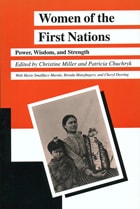
Women of the First Nations
Power, Wisdom, and StrengthChristine Miller
University of Manitoba Press, 1996

Women, Power, and Dissent in the Hills of Carolina
Mary K. Anglin
University of Illinois Press, 2002
Women, Power, and Dissent in the Hills of Carolina is a unique and impassioned exploration of gender, labor, and resistance in western North Carolina. Based on eight months of field research in a mica manufacturing plant and the surrounding rural community, as well as oral histories of women who worked in mica houses in the early twentieth century, this landmark study canvasses the history of the mica industry and the ways it came to be organized around women's labor.
Mary K. Anglin's investigation of working women's lives in the plant she calls "Moth Hill Mica Company" reveals the ways women have contributed to household and regional economies for more than a century. Without union support or recognition as skilled laborers, these women developed alternate strategies for challenging the poor working conditions, paltry wages, and corporate rhetoric of Moth Hill. Utilizing the power of memory and strong family and community ties, as well as their own interpretations of gender and culture, the women have found ways to "boss themselves."

Work, Sex, and Power
The Forces that Shaped Our HistoryWillie Thompson
Pluto Press, 2015
It expertly explores the foundations of our developing society by showing how these grand themes have recurred throughout the various phases of global history. From communities of Palaeolithic hunter-gatherers, through feudalism and onto the capitalistic machine-civilisation of recent centuries, Willie Thompson takes us on a journey that is fundamentally opposed to mainstream histories which concentrate on monarchs, politicians and military commanders.
At the centre of this book lies the interaction between humans and their environment. By exploring history in this way, it reveals a simple yet powerful materialist understanding of how we got to where we are today, and opens a door to a different reading of our world.