88 books match the query 'Prisoners' and 5 start with w

cover of Wainewright the Poisoner: The Confessions of Thomas Griffiths Wainewright

Wainewright the Poisoner

The Confessions of Thomas Griffiths Wainewright

Andrew Motion

University of Chicago Press, 2001

Andrew Motion brings all his lyricism and inventiveness to bear in this fictional autobiography of the great swindler, Thomas Griffiths Wainewright. A painter, writer, and friend of Blake, Byron, and Keats, Wainewright was almost certainly a murderer. When he died in a penal colony in Tasmania, he left behind fragments of documents and a beguiling legend which Motion uses to create an imagined confession laced with facts, telling the story as no straightforward history could.

"Thomas Griffiths Wainewright is a dream subject for either novelist or biographer. . . . Andrew Motion, Britain's poet laureate, clearly felt that neither straight biography nor pure fiction would do Wainewright's complexities justice, and so he combined the two genres. The result is stunning. The central voice is that of Wainewright himself, reflecting back on his life. After each chapter Mr. Motion has added detailed notes that inform and flesh out the narrative, giving not only his own informed opinion of Wainewright's actions but also those of Wainewright's contemporaries and the scholars and writers who have studied him over the past two centuries."—Lucy Moore, Washington Times

"Brilliantly innovative, gripping, intricately researched, Motion's biography does justice to its subject at last."—John Carey, The Sunday Times

"Engaging and convincing. . . . The trajectory of this character-from neglected and resentful child to arrogant and envious London dandy to sociopathic murderer on to an enfeebled, frightened prisoner-is indelibly imagined and drawn."—Edmund White, Financial Times

"[A] fascinating look at an evil artist, a charmer still having his way with us. We can hear him being economical with the truth, telling us and himself just what he wants to hear."—Michael Olmert, New Jersey Star Ledger

"Motion crafts a fascinating tale as complex and compelling as if Wainewright himself had written it."—Michael Spinella, Booklist

"Did he kill his servant, and possibly others as well? . . . The footnotes seem to say yes, but Wainewright adamantly argues his own case. Motion's prose is flawless, and Wainewright's voice is convincing. But in the long run, it's this ambiguity that makes Wainewright the Poisoner a fascinating and memorable read."—R.V. Schelde, Sacramento News and Review

"Who could as for a better Romantic villain than Thomas Griffiths Wainewright? . . . [The book] succeeds on many levels: as an act of ventriloquism, a work of scholarship, a psychological study, as a set of sharp portraits of famous men and an engrossing read. . . ."—Polly Shulman, Newsday

"Instead of a straightforward biography, Andrew Motion gives us Wainewright's first person, fictionalized "confession."—a document as circumspect, slyly reticent, and oeaginously smooth as the man himself. Splendid."—John Banville, Literary Review

"A genuine tour de force, and on a non-fictional level, a telling portrait of a strange, intriguing and repellant man."—Brian Fallon, Irish Times

"A marvelous literary hybrid that totters with one foot in the world of nonfiction, the other in the land of make-believe. One is alternatively swept up in Motion's dizzy imaginative pastiche, or sent crashing into a dusty stack of scholarly cogitations. . . ."—Philadelphia Inquirer

"As true a portrait of a liar as its subject could wish. Rich and strange. . . ."—Glasgow Herald
[more]
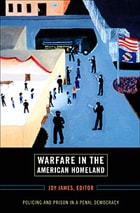
cover of Warfare in the American Homeland: Policing and Prison in a Penal Democracy

Warfare in the American Homeland

Policing and Prison in a Penal Democracy

Joy James, ed.

Duke University Press, 2007

The United States has more than two million people locked away in federal, state, and local prisons. Although most of the U.S. population is non-Hispanic and white, the vast majority of the incarcerated—and policed—is not. In this compelling collection, scholars, activists, and current and former prisoners examine the sensibilities that enable a penal democracy to thrive. Some pieces are new to this volume; others are classic critiques of U.S. state power. Through biography, diary entries, and criticism, the contributors collectively assert that the United States wages war against enemies abroad and against its own people at home.

Contributors consider the interning or policing of citizens of color, the activism of radicals, structural racism, destruction and death in New Orleans following Hurricane Katrina, and the FBI Counterintelligence Program designed to quash domestic dissent. Among the first-person accounts are an interview with Dhoruba Bin Wahad, a Black Panther and former political prisoner; a portrayal of life in prison by a Plowshares nun jailed for her antinuclear and antiwar activism; a discussion of the Puerto Rican Independence Movement by one of its members, now serving a seventy-year prison sentence for sedition; and an excerpt from a 1970 letter by the Black Panther George Jackson chronicling the abuses of inmates in California’s Soledad Prison. Warfare in the American Homeland also includes the first English translation of an excerpt from a pamphlet by Michel Foucault and others. They argue that the 1971 shooting of George Jackson by prison guards was a murder premeditated in response to human-rights and justice organizing by black and brown prisoners and their supporters.

Contributors. Hishaam Aidi, Dhoruba Bin Wahad (Richard Moore), Marilyn Buck, Marshall Eddie Conway, Susie Day, Daniel Defert, Madeleine Dwertman, Michel Foucault, Carol Gilbert, Sirène Harb, Rose Heyer, George Jackson, Joy James, Manning Marable, William F. Pinar, Oscar Lòpez Rivera, Dylan Rodríguez, Jared Sexton, Catherine vön Bulow, Laura Whitehorn, Frank B. Wilderson III
[more]
cover of Way Down in the Hole: Race, Intimacy, and the Reproduction of Racial Ideologies in Solitary Confinement

Way Down in the Hole

Race, Intimacy, and the Reproduction of Racial Ideologies in Solitary Confinement

Angela J. Hattery

Rutgers University Press, 2023

Based on ethnographic observations and interviews with prisoners, correctional officers, and civilian staff conducted in solitary confinement units, Way Down in the Hole explores the myriad ways in which daily, intimate interactions between those locked up twenty-four hours a day and the correctional officers charged with their care, custody, and control produce and reproduce hegemonic racial ideologies. Smith and Hattery explore the outcome of building prisons in rural, economically depressed communities, staffing them with white people who live in and around these communities, filling them with Black and brown bodies from urban areas and then designing the structure of solitary confinement units such that the most private, intimate daily bodily functions take place in very public ways. Under these conditions, it shouldn’t be surprising, but is rarely considered, that such daily interactions produce and reproduce white racial resentment among many correctional officers and fuel the racialized tensions that prisoners often describe as the worst forms of dehumanization. Way Down in the Hole concludes with recommendations for reducing the use of solitary confinement, reforming its use in a limited context, and most importantly, creating an environment in which prisoners and staff co-exist in ways that recognize their individual humanity and reduce rather than reproduce racial antagonisms and racial resentment.

Way Down the Hole Video 1 (https://youtu.be/UuAB63fhge0)
Way Down the Hole Video 2 (https://youtu.be/TwEuw1cTrcQ)
Way Down the Hole Video 3 (https://youtu.be/bOcBv_UnHIs​)
Way Down the Hole Video 4 (https://youtu.be/cx_l1S8D77c)
[more]
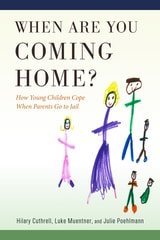
cover of When Are You Coming Home?: How Young Children Cope When Parents Go to Jail

When Are You Coming Home?

How Young Children Cope When Parents Go to Jail

Hilary Cuthrell

Rutgers University Press, 2023
As the United States approaches its 50th year of mass incarceration, more children than ever before have experienced the incarceration of a parent. The vast majority of incarceration occurs in locally operated jails and disproportionately impacts families of color, those experiencing poverty, and rural households. However, we are only beginning to understand the various ways in which children cope with the incarceration of a parent – particularly the coping of young children who are most at risk for the adversity and also the most detrimentally impacted. When Are You Coming Home?  helps answer questions about how young ones are faring when a parent is incarcerated in jail. Situated within a resilience model of development, the book presents findings related to children’s stress, family relationships, health, home environments, and visit experiences through the eyes of the children and families. This humanizing, social justice-oriented approach discusses the paramount need to support children and their families before, during, and after a parent’s incarceration while the country simultaneously grapples with strategies of reform and decarceration.
 
[more]
cover of Working for Justice: A Handbook of Prison Education and Activism

Working for Justice

A Handbook of Prison Education and Activism

Edited by Stephen John Hartnett, Eleanor Novek, and Jennifer K. Wood

University of Illinois Press, 2013

This collection documents the efforts of the Prison Communication, Activism, Research, and Education collective (PCARE) to put democracy into practice by merging prison education and activism. Through life-changing programs in a dozen states (Arizona, Colorado, Illinois, Indiana, Massachusetts, Michigan, New Jersey, Ohio, Pennsylvania, Texas, Virginia, and Wisconsin), PCARE works with prisoners, in prisons, and in communities to reclaim justice from the prison-industrial complex. Based on years of pragmatic activism and engaged teaching, the materials in this volume present a sweeping inventory of how communities and individuals both within and outside of prisons are marshaling the arts, education, and activism to reduce crime and enhance citizenship. Documenting hands-on case studies that emphasize educational initiatives, successful prison-based programs, and activist-oriented analysis, Working for Justice provides readers with real-world answers based on years of pragmatic activism and engaged teaching.
 
Contributors are David Coogan, Craig Lee Engstrom, Jeralyn Faris, Stephen John Hartnett, Edward A. Hinck, Shelly Schaefer Hinck, Bryan J. McCann, Nikki H. Nichols, Eleanor Novek, Brittany L. Peterson, Jonathan Shailor, Rachel A. Smith, Derrick L. Williams, Lesley A. Withers, Jennifer K. Wood, and Bill Yousman.

[more]