Results by title
597 books match the query 'Psychological aspects' and 26 start with w
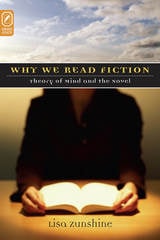
WHY WE READ FICTION
Theory of Mind and the NovelLisa Zunshine
The Ohio State University Press, 2006
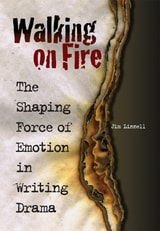
Walking on Fire
The Shaping Force of Emotion in Writing DramaJim Linnell
Southern Illinois University Press, 2011
Walking on Fire opens up new conversations about content and emotion for writers and offers exciting answers to the questions of why we make drama and why we connect to it. Linnell’s userfriendly theory and passionate approach create a framework for understanding the links between the writer’s work in creating the text, the text itself, and the audience’s engagement.

Wandering Spirits
Loneliness and Longing in GreenlandJanne Flora
University of Chicago Press, 2019
In this innovative study, Flora focuses on Inuit communities in Greenland and addresses a central puzzle: their alarmingly high suicide rate. She explores the deep connections between loneliness and modernity in the Arctic, tracing the history of Greenland and analyzing the social dynamics that shaped it. Flora’s thorough, sensitive engagement with the families that make up these communities uncovers the complex interplay between loneliness and a host of economic and environmental practices, including the widespread local tradition of hunting. Wandering Spirits offers a vivid portrait of a largely overlooked world, in all its fragility and nuance, while engaging with core anthropological concerns of kinship and the structure of social relations.
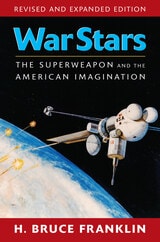
War Stars
The Superweapon and the American ImaginationH. Bruce Franklin
University of Massachusetts Press, 2008
In this new and expanded edition of an already classic work, H. Bruce Franklin brings the epic story of the superweapon and the American imagination into the ominous twenty-first century, demonstrating its continuing importance both to comprehending our current predicament and to finding ways to escape from it.
Sweeping through two centuries of American culture and military history, Franklin traces the evolution of superweapons from Robert Fulton's eighteenth-century submarine through the strategic bomber, atomic bomb, and Star Wars to a twenty-first century dominated by “weapons of mass destruction,” real and imagined. Interweaving culture, science, technology, and history, he shows how and why the American pursuit of the ultimate defensive weapon—guaranteed to end all war and bring universal triumph to American ideals—has led our nation and the world into an epoch of terror and endless war.
Water Thicker Than Blood
A Memoir of a Post-Internment ChildhoodGeorge Uba
Temple University Press, 2022
“I thought my life began in Chicago. I was mistaken. That is where my body first made its appearance, but the contours of my life…had their start much sooner.”
In Water Thicker Than Blood, poet and professor George Uba traces his life as a Japanese American born in the late 1940s, a period of insidious anti-Japanese racism. His beautiful, impressionist memoir chronicles how he, like many Sansei (and Nisei) across the United States, grappled with dislocation and trauma while seeking acceptance and belonging.
Uba’s personal account of his efforts to achieve normality and assuage guilt unfolds as racial demographics in America are shifting. He struggled with inherently violent midcentury educational and childrearing practices and a family health crisis, along with bullying. Uba describes boy scouts and yogore (community rebels and castoffs) with vivid detail, using these vignettes to show how margins were blurred and how both sets of youth experienced injury through the same ideological pressures.
Water Thicker Than Blood is not a conventional story about recovery or family reconciliation. But itoffers an intimate look at the lasting—in some ways irreversible—damage caused by post-internment ideologies of “being accepted” and “fitting in inconspicuously.” It speaks volumes for the greater Sansei post-internment experience.
Weighty Problems
Embodied Inequality at a Children’s Weight Loss CampLaura Backstrom
Rutgers University Press, 2019
Well-Being in the Library Workplace
A Handbook for ManagersBobbi L. Newman
American Library Association, 2025
- navigating the pitfalls of vocational awe, which can lead to unrealistic expectations and self-neglect;
- setting and recalibrating healthy boundaries;
- approaching difficult conversations by creating spaces for positive staff communication;
- overcoming limited budgets;
- the proper mindset for encouraging realistic performance expectations among employees;
- using recognition, appreciation, and staff professional development as tools for wellness;
- nurturing social connections and collaboration to combat loneliness;
- effective techniques for addressing sensitive issues such as disabilities, confronting anti-fat bias, and moral injury;
- emotional and invisible labor mitigation; and
- self-care methods for library leaders at risk of burnout.
What's so Funny?
The Comic Conception of Culture and SocietyMurray S. Davis
University of Chicago Press, 1993
Drawing on a vast array of jokes and the work of dozens of comedians from Jay Leno and Lenny Bruce to Steve Allen and Billy Crystal, Davis reminds us of the extraordinarily subversive power of comedy. When we laugh, we accept the truth of the comic moment: that this is the way life really is. The book is in two parts. In the first, Davis explores the cultural conventions that even simple jokes take apart—the rules of logic, language, rationality, and meaning. In the second, he looks at the social systems that have been at the root of jokes for centuries: authority figures, power relations, and institutions. Whatever their style, comedians use the tools of the trade—ambiguous meanings, missed signals, incongruous characters, unlikely events—to violate our expectations about the world.
Setting comedy within a rich intellectual tradition—from Plato to Freud, Hobbes to Kant, in philosophy as well as sociology—Davis makes a convincing case for comedy as a subtle, complex, and articulated theory of culture and society. He reveals the unsuspected ways in which comedy, with its spotlight on the gap between appearance and reality, the ideal and the actual, can be a powerful mode for understanding the world we have made.
Wheeling and Dealing
Living with Spinal Cord InjuryEsther Isabelle Wilder
Vanderbilt University Press, 2006
Meghan is a high-level quadriplegic, living alone, who uses a power wheelchair and requires daily attendant care. She laments, "There are so many people who think we're asexual, we're not pretty, and we're creeps and weirdoes." To dispel this myth, she envisions a fashion show of women in wheelchairs parading down a runway. Meghan has been involved in a number of sexual relationships since sustaining her injury. While she doesn't think her disability has diminished her sexual pleasure, she feels that it has affected her sexual performance: "Well, you can't move it. You can't, like, bump and grind."
In 32 unusually frank in-depth interviews like these, the men and women in this book freely discuss their sex lives, their beliefs about God, how they want others to treat them, and whether they want to walk again. In each chapter the author presents their complex voices and comprehensive research about different facets of spinal cord injury (SCI).
Wheeling and Dealing explores the extent to which people with spinal cord injury locate their challenges in their physical impairments or in the social environment. Some disagree with those disability activists who focus almost exclusively on the latter, but the author examines this issue in depth.
Topics include:
--Physical health from degrees of loss of function to problems like pressure sores, temperature regulation, and bladder control.
--The stages of psychological adjustment and rehabilitation.
--Obstacles to sexual intimacy, treatment of erectile dysfunction, and new sources of sexual pleasure and emotional intimacy.
--Religion and spirituality.
--Social and political beliefs, with those with SCI weighing in on everything from welfare services to embryonic stem cell research.
--Dating, marriage, and parenting.
--Friendship networks and social supports; concerns about transportation and accessibility; stigma.
--Education, employment, and economic consequences.
This book is the recipient of the 2004 Norman L. and Roselea J. Goldberg Prize from Vanderbilt University Press for the best project in the area of medicine.
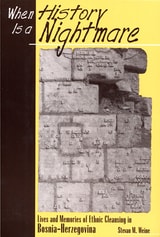
When History Is A Nightmare
Lives and Memories of Ethnic Cleansing in Bosnia-HerzegovinaStevan M. Weine, M.D.
Rutgers University Press, 1999
Weine investigates the survivors’ attempts to reconcile the contrasting, collective memories of having lived in a smoothly functioning, multiethnic society with the later memories of the ethnic atrocities. He discusses the little-known group concept of merhamet. Denoting compassion, forgiveness, and charity, merhamet was a critical cultural value for the Bosnian Muslims.
Weine also explores how ethnic cleansing was justified from the vantage point of psychiatrists who played prominent roles in instigating the horrors. He also provides personal portraits of leaders such as Jovan Raskovic and Radovan Karadzic. He concludes by describing the recovery efforts of survivors—how they work to confront the destructive nature of their memories while trying to bring about healing, both individually and collectively.

When Pain Strikes
Bill Burns, Cathy Busby, and Kim Sawchuk, Editors
University of Minnesota Press, 1998
When Pain Strikes was first published in 1998. Minnesota Archive Editions uses digital technology to make long-unavailable books once again accessible, and are published unaltered from the original University of Minnesota Press editions.
When pain strikes, do you raid the medicine cabinet? Read a self-help manual? Hit the roof? How we in North America respond to pain-what we think about it, what we say, and what we do-is the subject of this collection of writings and images.
The book's five sections contain a myriad of complex reactions to the occurrence of pain: "Measure It" discusses biomedical responses; "Scream and Yell" explores therapeutic solutions; "Cut It Open" takes up surgical interventions; "Take a Pill" looks at pharmacology; and "Intensify It" examines positions that embrace pain. Each section comprises original artwork, scholarly analyses, poetic and literary texts, and discussions by activists. Hailing from the university, the gallery, and the community organization, the authors—as TV watchers, recreational drug users, recipients of medical attention, caregivers, midwives, or the HIV positive—inhabit and reconfigure our contemporary painscape, offering a new approach to the puzzle of pain.
Contributors: Charles R. Acland; Barbara McGill Balfour; Isabelle Brabant; Stephen Busby; Millie Chen; Michael Fernandes; Bob Flanagan; Thyrza Nichols Goodeve; Marie-Paule Macdonald; Ronald Melzack; Margaret Morse; Celeste Olalquiaga; John O'Neill; Gerard Päs; Elsie Petch; D. L. Pughe; Julia Scher; Cathy Sisler; Johanne Sloan; Jana Sterbak; Fred Tomaselli; Patrick D. Wall; Theodore Wan; Gregory Whitehead; Fred Wilson.
When Pain Strikes is published in collaboration with the Banff Centre for the Arts.
When the Lamp is Shattered
Desire and Narrative in CatullusMichaela Janan
Southern Illinois University Press, 1993
The poetry of the Late Roman Republican poet Gaius Valerius Catullus, a rich document of the human heart, is the earliest-known reasonably complete body of erotic verse in the West.
Though approximately 116 poems survive, uncertainties about the condition of the fragmented manuscript and the narrative order of the poems make the Catullan text unusually problematic for the modern critic. Indeed, the poems can be arranged in a number of ways, making a multitude of different plots possible and frustrating the reader’s desire for narrative closure.
Micaela Janan contends that since unsatisfied desire structures both the experience of reading Catullus and its subject matter, critical interpretation of the text demands a "poetics of desire." Furthermore, postmodern critical theory, narratology, and psychoanalysis suggest a flexible concept of the "subject" as a site through which a multitude of social, cultural, and unconscious forces move. Human consciousness, Janan contends, is inherently incomplete and in a continuous process of transformation. She therefore proposes an original and provocative feminist reading of Catullus, a reading informed by theories of consciousness and desire as ancient as Plato and as contemporary as Freud and Lacan.
The Late Roman Republic in which Catullus lived, Janan reminds us, was a time of profound social upheaval when political and cultural institutions that had persisted for centuries were rapidly breaking down—a time not unlike our own. Catullus’ poetry provides an unusually honest look at his culture and its contradictory representations of class, gender, and power. By bringing to the study of this major work of classical literature the themes of consciousness and desire dealt with in postmodern scholarship, Janan’s book invites a new conversation among literary disciplines.

Wholehearted Librarianship
Finding Hope, Inspiration, and BalanceMichael Stephens
American Library Association, 2019
Why We Harm
Presser, Lois
Rutgers University Press, 2013
2014 Choice Outstanding Academic Title
Criminologists are primarily concerned with the analysis of actions that violate existing laws. But a growing number have begun analyzing crimes as actions that inflict harm, regardless of the applicability of legal sanctions. Even as they question standard definitions of crime as law-breaking, scholars of crime have few theoretical frameworks with which to understand the etiology of harmful action.
In Why We Harm, Lois Presser scrutinizes accounts of acts as diverse as genocide, environmental degradation, war, torture, terrorism, homicide, rape, and meat-eating in order to develop an original theoretical framework with which to consider harmful actions and their causes. In doing so, this timely book presents a general theory of harm, revealing the commonalities between actions that impose suffering and cause destruction.
Harm is built on stories in which the targets of harm are reduced to one-dimensional characters—sometimes a dangerous foe, sometimes much more benign, but still a projection of our own concerns and interests. In our stories of harm, we are licensed to do the harmful deed and, at the same time, are powerless to act differently. Chapter by chapter, Presser examines statements made by perpetrators of a wide variety of harmful actions. Appearing vastly different from one another at first glance, Presser identifies the logics they share that motivate, legitimize, and sustain them. From that point, she maps out strategies for reducing harm.
Widescreen Dreams
Growing Up Gay at the MoviesPatrick E. Horrigan
University of Wisconsin Press, 2001
Winnowing
Suzanne Matson
Duke University Press, 2026
Witchcraft, Intimacy, and Trust
Africa in ComparisonPeter Geschiere
University of Chicago Press, 2013
Geschiere begins in the forests of southeast Cameroon with the Maka, who fear “witchcraft of the house” above all else. Drawing a variety of local conceptions of intimacy into a global arc, he tracks notions of the home and family—and witchcraft’s transgression of them—throughout Africa, Europe, Brazil, and Oceania, showing that witchcraft provides powerful ways of addressing issues that are crucial to social relationships. Indeed, by uncovering the link between intimacy and witchcraft in so many parts of the world, he paints a provocative picture of human sociality that scrutinizes some of the most prevalent views held by contemporary social science.
One of the few books to situate witchcraft in a global context, Witchcraft, Intimacy, and Trust is at once a theoretical tour de force and an empirically rich and lucid take on a difficult-to-understand spiritual practice and the private spaces throughout the world it so greatly affects.

Women Reading Women Writing
Ann Louise Keating
Temple University Press, 1996
Women and Borderline Personality Disorder
Symptoms and StoriesWirth-Cauchon, Janet
Rutgers University Press, 2000
At the beginning of the twentieth century, “hysteria” was a medical or psychiatric diagnosis applied primarily to women. In fact, the term itself comes from the Greek, meaning “wandering womb.” We have since learned, however, that this diagnosis evolved from certain assumptions about women’s social roles and mental characteristics, and is no longer in use.
The modern equivalent of hysteria, however, may be borderline personality disorder, defined as “a pervasive pattern of instability of self-image, interpersonal relationships, and mood, beginning in early adulthood and present in a variety of contexts.” This diagnosis is applied to women so much more often than to men that feminists have begun to raise important questions about the social, cultural, and even the medical assumptions underlying this “illness.” Women are said to be “unstable” when they may be trying to reconcile often contradictory and conflicting social expectations.
In Women and Borderline Personality Disorder, Janet Wirth-Cauchon presents a feminist cultural analysis of the notions of “unstable” selfhood found in case narratives of women diagnosed with borderline personality disorder. This exploration of contemporary post-Freudian psychoanalytic notions of the self as they apply to women’s identity conflicts is an important contribution to the literature on social constructions of mental illness in women and feminist critiques of psychiatry in general.
Work Better, Live Better
Motivation, Labor, and Management IdeologyDavid A. Gray
University of Massachusetts Press, 2020
In the United States, a strong work ethic has long been upheld as a necessity, and tributes to motivation abound—from the motivational posters that line the walls of the workplace to the self-help gurus who draw in millions of viewers online. Americans are repeatedly told they can achieve financial success and personal well-being by adopting a motivated attitude toward work. But where did this obsession come from? And whose interests does it serve?
Work Better, Live Better traces the rise of motivational rhetoric in the workplace across the expanse of two world wars, the Great Depression, and the Cold War. Beginning in the early twentieth century, managers recognized that force and coercion—the traditional tools of workplace discipline—inflamed industrial tensions, so they sought more subtle means of enlisting workers' cooperation. David Gray demonstrates how this “motivational project” became a highly orchestrated affair as managers and their allies deployed films, posters, and other media, and drew on the ideas of industrial psychologists and advertising specialists to advance their quests for power at the expense of worker and union interests.
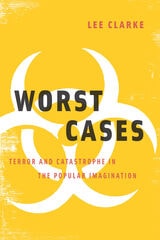
Worst Cases
Terror and Catastrophe in the Popular ImaginationLee Clarke
University of Chicago Press, 2005
We consider the few who live in fear of such scenarios to be alarmist or even paranoid. But Worst Cases shows that such individuals—like Cassandra foreseeing the fall of Troy—are more reasonable and prescient than you might think. In this book, Lee Clarke surveys the full range of possible catastrophes that animate and dominate the popular imagination, from toxic spills and terrorism to plane crashes and pandemics. Along the way, he explores how the ubiquity of worst cases in everyday life has rendered them ordinary and mundane. Fear and dread, Clarke argues, have actually become too rare: only when the public has more substantial information and more credible warnings will it take worst cases as seriously as it should.
A timely and necessary look into how we think about the unthinkable, Worst Cases will be must reading for anyone attuned to our current climate of threat and fear.
Wounded I Am More Awake
Finding Meaning after TerrorJulia Lieblich
Vanderbilt University Press, 2012
This gripping account raises questions for healers, survivors, and readers striving to understand the reality of war and the aftermath of terror. Is it possible to find meaning after enduring crimes against humanity? Can people heal after trauma?
Human rights journalist Julia Lieblich takes the reader through Boskailo's early years under Tito to the wars when friends turned on friends. She documents his harrowing experiences in the camps, where the men he once joined for coffee murder his best friend from childhood.
But the story does not end there. Boskailo moves to the United States and decides to become a psychiatrist so he can guide survivors through the long-term process of restoring hope. Today, inspired by the late psychiatrist and Holocaust survivor Viktor Frankl, Boskailo uses his own experience to help patients mourn their losses and find meaning in the aftermath of terror.
Writer's Block
The Cognitive DimensionMike Rose
Southern Illinois University Press, 1984
Writer’s block is more than a mere matter of discomfort and missed deadlines; sustained experiences of writer’s block may influence academic success and career choices. Writers in the business world, professional writers, and students all have known this most common and least studied problem with the composing process. Mike Rose, however, sees it as a limitable problem that can be precisely analyzed and remedied through instruction and tutorial programs.
Rose defines writer’s block as “an inability to begin or continue writing for reasons other than a lack of skill or commitment,” which is measured by “passage of time with limited productive involvement in the writing task.” He applies insights of cognitive psychology to reveal dimensions of the problem never before examined.
In his three-faceted approach, Rose develops and administers a questionnaire to identify writers experiencing both high and low degrees of blocking; through stimulated recall he examines the composing processes of these writers; and he proposes a cognitive conceptualization of writer’s block and of the composing process.
In drawing up his model, Rose delineates many cognitive errors that cause blocking, such as inflexible rules or conflicting planning strategies. He also discusses the practices and strategies that promote effective composition.
The reissue of this classic study of writer’s block includes a new preface by the author that advocates more mixed-methods research in rhetoric and composition, details how he conducted his writer’s block study, and discusses how his approach to a study like this would be different if conducted today.
Writing Childbirth
Women’s Rhetorical Agency in Labor and OnlineKim Hensley Owens
Southern Illinois University Press, 2015
Women seeking to express concerns about childbirth or to challenge institutionalized medicine by writing online birth plans or birth stories exercise rhetorical agency in undeniably feminist ways. In Writing Childbirth: Women’s Rhetorical Agency in Labor and Online, author Kim Hensley Owens explores how women create and use everyday rhetorics in planning for, experiencing, and writing about childbirth.
Drawing on medical texts, popular advice books, and online birth plans and birth stories, as well as the results of a childbirth writing survey, Owens considers how women’s agency in childbirth is sanctioned, and how it is not. She examines how women’s rhetorical choices in writing interact with institutionalized medicine and societal norms. Writing Childbirth reveals the contradictory messages women receive about childbirth, their conflicting expectations about it, and how writing and technology contribute to and reconcile these messages and expectations.
Demonstrating the value of extending rhetorical investigations of health and medicine beyond patient-physician interactions and the discourse of physicians, Writing Childbirth offers fresh insight into feminist rhetorical agency and technology and expands our understanding of the rhetorics of health and medicine.
Writing Performance
Poeticizing the Researcher's BodyRonald J. Pelias
Southern Illinois University Press, 1999
Ronald J. Pelias is concerned with writing about performance, from the everyday performative routines to the texts on stage. He seeks to write performatively, to offer poetic or aesthetic renderings of performance events in order to capture some sense of their nature. In his quest for the spirit of theatrical performances, Pelias asks more of the written word than the word can deliver. Yet the attempt is both desirable—and necessary. To discuss performance without some accounting for its essence as art, he asserts, is at best misleading, at worst, fraud.
Pelias divides his efforts to present performance events into three general categories: "Performing Every Day," "On Writing and Performing," and "Being a Witness." "Performing Every Day" focuses on performances ranging from the daily business of enacting roles to the telling of tales that make life meaningful. It incorporates essays about the ongoing process of presenting oneself in everyday life; the gender script that insists that men enact manly performances; the classroom performances of teachers and students; stories of gender, class, and race that mark identity; and a performance installation entitled "A Day’s Talk."
"On Writing and Performing" examines the written script and performance practices. It includes a description of a struggle between a writer and a performer as they protect their own interests; an intimate look at an apprehensive performer; a short play entitled "The Audition"; and a chronicle of performance process from the perspective of an actor.
"Being a Witness" examines performance from the perspective of the audience and the director: being an audience member; viewing theatre in the context of New York City; directing and being directed by actors’ bodies; and watching The DEF Comedy Jam.

Writing in Disguise
Academic Life in SubordinationTerry Caesar
Ohio University Press, 1998
All of these texts have in common the imperative of disguise, represented as the most crucial consequence of dominant discourse, within which subordination might speak only by knowing its place, and write only by producing hidden transcripts.
Caustic, pointed, satiric, Writing in Disguise is an engaging critique of aspects of academia involving the misuse, misappropriation, and misappreciation of verbal communication in its many guises.