74 books match the query 'Public welfare' and 9 start with w
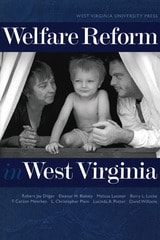
cover of WELFARE REFORM IN WEST VIRGINIA

WELFARE REFORM IN WEST VIRGINIA

ROBERT J. DILGER

West Virginia University Press, 2004
[more]
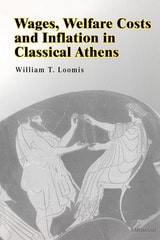
cover of Wages, Welfare Costs and Inflation in Classical Athens

Wages, Welfare Costs and Inflation in Classical Athens

William T. Loomis

University of Michigan Press, 1999

William T. Loomis examines all surviving Athenian wages, salaries, welfare payments and other labor costs to determine what people really were paid for various kinds of work and allowances. These determinations, in turn, enable the author to cast a new and authoritative light on three controversial questions: Was there a "standard wage" in Athens? Were there periods of inflation and deflation? Did Athenians have an "embedded" or a "market" economy?
Individual chapters critically examine each surviving wage or other payment in thirteen job categories, including public office holders; soldiers and sailors; priests, oracles, and seers; overseers, architects, and other salaried construction personnel; and prostitutes and pimps. Three additional chapters then consider whether there was a "standard wage," inflation and deflation in Athens, and the implications of these conclusions for the hotly debated question about the nature of the Athenian economy.
This is the first comprehensive study of Athenian labor and welfare costs since August Böckh's Die Staatshaushaltung der Athener (1886). An updated critical study has been much needed, to take account of the greatly expanded evidence (Aristotle's Constitution of the Athenians, more than a dozen other papyrus texts and hundreds of inscriptions), and the uneven quality of the sources. This collection allows William T. Loomis to argue--contrary to prevailing scholarly opinion--that there never was a "standard wage" at Athens.
"This volume will be a significant contribution to all studies of ancient Greek civilization." --Alan L. Boegehold, Brown University
William Loomis is Visiting Professor of Classics, University of Michigan.
[more]
cover of Welfare Discipline: Discourse, Governance and Globalization

Welfare Discipline

Discourse, Governance and Globalization

Sanford F. Schram

Temple University Press, 2005

For the past decade, political scientist Sanford Schram has led the academic effort to understand how Americans and their political officials talk about poverty and welfare and what impact that discourse has on policy and on the global society.

In Welfare Discipline, Schram argues that it is time to take stock of the new forms of welfare and to develop even better methods to understand them. He argues for a more contextualized approach to examining welfare policy, from the use of the idea of globalization to justify cutbacks, to the increasing employment of U.S. policy discourse overseas, to the development of asset-based approaches to helping the poor.

Stressing the importance of understanding the ways we talk about welfare, how we study it, and, critically, what we do not discuss and why, Schram offers recommendations for making welfare policy both just and effective.
[more]
cover of Welfare Reform and Political Theory

Welfare Reform and Political Theory

Lawrence M. Mead

Russell Sage Foundation, 2005
During the 1990s, both the United States and Britain shifted from entitlement to work-based systems for supporting their poor citizens. Much research has examined the implications of welfare reform for the economic well-being of the poor, but the new legislation also affects our view of democracy—and how it ought to function. By eliminating entitlement and setting behavioral conditions on aid, welfare reform challenges our understanding of citizenship, political equality, and the role of the state. In Welfare Reform and Political Theory, editors Lawrence Mead and Christopher Beem have assembled an accomplished list of political theorists, social policy experts, and legal scholars to address how welfare reform has affected core concepts of political theory and our understanding of democracy itself. Welfare Reform and Political Theory is unified by a common set of questions. The contributors come from across the political spectrum, each bringing different perspectives to bear. Carole Pateman argues that welfare reform has compromised the very tenets of democracy by tying the idea of citizenship to participation in the marketplace. But William Galston writes that American citizenship has in some respects always been conditioned on good behavior; work requirements continue that tradition by promoting individual responsibility and self-reliance—values essential to a well-functioning democracy. Desmond King suggests that work requirements draw invidious distinctions among citizens and therefore destroy political equality. Amy Wax, on the other hand, contends that ending entitlement does not harm notions of equality, but promotes them, by ensuring that no one is rewarded for idleness. Christopher Beem argues that entitlement welfare served a social function—acknowledging the social value of care—that has been lost in the movement towards conditional benefits. Stuart White writes that work requirements can be accepted only subject to certain conditions, while Lawrence Mead argues that concerns about justice must be addressed only after recipients are working. Alan Deacon is well to the left of Joel Schartz, but both say government may actively promote virtue through social policy—a stance some other contributors reject. The move to work-centered welfare in the 1990s represented not just a change in government policy, but a philosophical change in the way people perceived government, its functions, and its relationship with citizens. Welfare Reform and Political Theory offers a long overdue theoretical reexamination of democracy and citizenship in a workfare society.
[more]
cover of Welfare in America: How Social Science Fails the Poor

Welfare in America

How Social Science Fails the Poor

William M. Epstein

University of Wisconsin Press, 1997

William M. Epstein charges that most current social welfare programs are not held to credible standards in their design or their results. Rather than spending less on such research and programs, however, Epstein suggests we should spend much more, and do the job right.
     The American public and policymakers need to rely on social science research for objective, credible information when trying to solve problems of employment, affordable housing, effective health care, and family integrity. But, Epstein contends, politicians treat welfare issues as ideological battlegrounds; they demand immediate results from questionable data and implement policies long before social researchers can complete their analyses. Social scientists often play into the political agenda, supporting poorly conceived programs and doing little to test and revise them. Analyzing Aid to Families with Dependent Children (AFDC) and the recent welfare reform act, Food Stamps, Medicaid, job training, social services, and other programs, Epstein systematically challenges the conservative’s vain hope that neglect is therapeutic for the poor, as well as the liberal’s conceit that a little bit of assistance is sufficient.

[more]
cover of Why Americans Hate Welfare: Race, Media, and the Politics of Antipoverty Policy

Why Americans Hate Welfare

Race, Media, and the Politics of Antipoverty Policy

Martin Gilens

University of Chicago Press, 1999

Tackling one of the most volatile issues in contemporary politics, Martin Gilens's work punctures myths and misconceptions about welfare policy, public opinion, and the role of the media in both. Why Americans Hate Welfare shows that the public's views on welfare are a complex mixture of cynicism and compassion; misinformed and racially charged, they nevertheless reflect both a distrust of welfare recipients and a desire to do more to help the "deserving" poor.

"With one out of five children currently living in poverty and more than 100,000 families with children now homeless, Gilens's book is must reading if you want to understand how the mainstream media have helped justify, and even produce, this state of affairs." —Susan Douglas, The Progressive
"Gilens's well-written and logically developed argument deserves to be taken seriously." —Choice

"A provocative analysis of American attitudes towards 'welfare.'. . . [Gilens] shows how racial stereotypes, not white self-interest or anti-statism, lie at the root of opposition to welfare programs." -Library Journal

[more]
cover of Women and Welfare: Theory and Practice in the United States and Europe

Women and Welfare

Theory and Practice in the United States and Europe

Hirschmann, Nancy J

Rutgers University Press, 2001

The social welfare state is believed by many to be one of the great achievements of Western democracy in the twentieth century. It institutionalized for the first time a collective commitment to improving individual life chances and social well-being. However, as we move into a new century, the social welfare state everywhere has come under increasing pressure, raising serious doubts about its survival.

Featuring essays by experts from a variety of fields, including law, comparative politics, sociology, economics, cultural studies, philosophy, and political theory, Women and Welfare represents an interdisciplinary, multimethodological and multicultural feminist approach to recent changes in the welfare system of Western industrialized nations. The broad perspective, from the philosophical to the quantitative, provides an excellent overview of the subject and the most recent scholarly literature. The volume offers a crosscultural  analysis of welfare “reform” in the 1990s, visions of what a “woman-friendly” welfare state requires, and an examination of theoretical and policy questions feminists and concerned others should be asking.

[more]
cover of Women, the State, and Welfare

Women, the State, and Welfare

Edited by Linda Gordon

University of Wisconsin Press, 1990
Women, the State, and Welfare is the first collection of essays specifically about women and welfare in the United States.  As an introduction to the effects of welfare programs, it is intended for general readers as well as specialists in sociology, history, political science, social work, and women’s studies.  The book begins with a review essay by Linda Gordon that outlines current scholarship about women and welfare.  The chapters that follow explore discrimination against women inherent in many welfare programs; the ways in which welfare programs reinforce basic gender programs in society; the contribution of organized, activist women to the development of welfare programs; and differences of race and class in the welfare system.  By giving readers access to a number of perspectives about women and welfare, this book helps position gender at the center of welfare scholarship and policy making and places welfare issues at the forefront of feminist thinking and action.
[more]
cover of Work Requirements: Race, Disability, and the Print Culture of Social Welfare

Work Requirements

Race, Disability, and the Print Culture of Social Welfare

Todd Carmody

Duke University Press, 2022

Throughout the history of the United States, work-based social welfare practices have served to affirm the moral value of work. In the late nineteenth century this representational project came to be mediated by the printed word with the emergence of industrial print technologies, the expansion of literacy, and the rise of professionalization. In Work Requirements Todd Carmody asks how work, even the most debasing or unproductive labor, came to be seen as inherently meaningful during this era. He explores how the print culture of social welfare—produced by public administrators, by economic planners, by social scientists, and in literature and the arts—tasked people on the social and economic margins, specifically racial minorities, incarcerated people, and people with disabilities, with shoring up the fundamental dignity of work as such. He also outlines how disability itself became a tool of social discipline, defined by bureaucratized institutions as the inability to work. By interrogating the representational effort necessary to make work seem inherently meaningful, Carmody ultimately reveals a forgotten history of competing efforts to think social belonging beyond or even without work.
[more]