Results by title
91 books match the query 'Radio' and 8 start with w
Waveform Design and Diversity for Advanced Radar Systems
Fulvio Gini
The Institution of Engineering and Technology, 2012
Waves of Opposition
Labor and the Struggle for Democratic RadioElizabeth Fones-Wolf
University of Illinois Press, 2006
Radio sparked the massive upsurge of organized labor during the Great Depression. The powerful new medium became an important weapon in the ideological war between labor and business. Corporations used radio to sing the praises of individualism and consumerism, while unions emphasized equal rights, industrial democracy, and social justice.
Elizabeth Fones-Wolf analyzes the battle to utilize, and control, the airwaves in radio's early era. Working chronologically, she explores the advent of local labor radio stations such as WCFL and WEVD, labor's campaigns against corporate censorship, and union experiments with early FM broadcasting. Using union archives and broadcast industry records, Fones-Wolf demonstrates radio's key role in organized labor's efforts to fight business's domination of political discourse throughout the 1930s, 1940s, and 1950s. She concludes with a look at how labor's virtual disappearance from today's media helps explain why unions have become so marginalized, and offers important historical lessons for revitalizing organized labor.

What Doesn't Kill Me Makes Me Weirder and Harder to Relate To
A MemoirMary Lucia
University of Minnesota Press, 2025
An iconic rock DJ of the Twin Cities tells her harrowing story of being stalked while living her very public life
What’s it like to be in the public spotlight when it just might get you killed? For Mary Lucia, becoming a wildly popular rock DJ meant connecting with a multitude of fans through a shared love of music and deep cuts. But for one listener, that connection became a dangerous obsession, catapulting Lucia into the terrifying three-year nightmare that she chronicles in this raw, wry, and profoundly courageous memoir. With electrifying wit and anger, Lucia shares her experience of navigating constant terror while life absurdly goes on: interview rock stars, curate a radio show song list, judge high school battles of the band, kick a drug addiction cold turkey . . . all while fearing what might be waiting in her mailbox or who might be waiting on her front step or at her back door.
Lucia was no stranger to inappropriate or weird contact from fans, but things turned sinister when ten pounds of raw meat were delivered to her at work, followed by a steady stream of ominous letters, cards, packages, and messages. When the letters included threats to her dogs’ safety, she tried to get help, but without a name and return address on these communications there was nothing she could do. As the stalker’s actions escalated, Lucia felt more and more isolated. Police responding to her 911 calls were insensitive and dismissive, and even her friends implied that being stalked was just a hazard of her high-profile job and her high-energy personality. No one seemed to take seriously the danger she faced.
Inseparable from this ordeal is the story of how Mary Lucia became the notorious radio malcontent known by so many avid listeners. From the good, bad, and weird of growing up in her eccentric family to drugs, death, and dogs, Lucia finally shares her life on her own terms in What Doesn’t Kill Me Makes Me Weirder and Harder to Relate To. Applying her signature dark humor to her own traumatic experiences, Lucia’s memoir is idiosyncratic, bold, and—ironically—relatable.
Retail e-book files for this title are screen-reader friendly with images accompanied by short alt text and/or extended descriptions.
Wireless Communications Circuits and Systems
Yichuang Sun
The Institution of Engineering and Technology, 2004
Wireless Receiver Design for Digital Communications
Kevin McClaning
The Institution of Engineering and Technology, 2012

Wireless
The Crucial Decade: History of the British wireless industry 1924-34Gordon Bussey
The Institution of Engineering and Technology, 1990
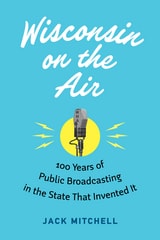
Wisconsin on the Air
100 Years of Public Broadcasting in the State That Invented ItJack Mitchell
Wisconsin Historical Society Press, 2016
On a wintry evening in 1917, university professor Earle Terry listened with guests as the popular music of the day filtered from a physics laboratory in Science Hall into a receiving set in his living room. Little did they know that one hundred years of public service broadcasting had just begun. Terry’s radio experiment blossomed into a pioneering endeavor to carry out the "Wisconsin Idea," a promise to make the university’s knowledge accessible to all Wisconsinites, in their homes, statewide, a Progressive-era principle that still guides public broadcasting in Wisconsin and throughout the nation. In 1947, television was added to this public service model with Channel 21 in Madison, produced, like radio, from the University of Wisconsin campus. By 1967, when the Public Broadcasting Act created the Public Broadcasting System (PBS) and National Public Radio (NPR), the Wisconsin stations had been broadcasting for fifty years. A history one hundred years in the making, Wisconsin on the Air introduces readers to the personalities and philosophies, the funding challenges and legislation, the original Wisconsin programming and pioneering technology that gave us public radio and television. Author Jack Mitchell, who developed All Things Considered for NPR before becoming the head of Wisconsin Public Radio, deftly maps public broadcasting’s hundred-year journey by charting Wisconsin’s transition from the early days of radio and television to educational broadcasting to the news, information, and music of Wisconsin Public Radio and Wisconsin Public Television.
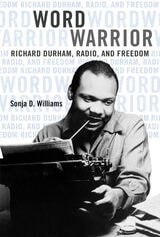
Word Warrior
Richard Durham, Radio, and FreedomSonja D. Williams
University of Illinois Press, 2015
In Word Warrior, award-winning radio producer Sonja D. Williams draws on archives and hard-to-access family records, as well as interviews with family and colleagues like Studs Terkel and Toni Morrison, to illuminate Durham's astounding career. Durham paved the way for black journalists as a dramatist and a star investigative reporter and editor for the pioneering black newspapers the Chicago Defender and Muhammed Speaks. Talented and versatile, he also created the acclaimed radio series Destination Freedom and Here Comes Tomorrow and wrote for popular radio fare like The Lone Ranger. Incredibly, his energies extended still further--to community and labor organizing, advising Chicago mayoral hopeful Harold Washington, and mentoring generations of activists.
Incisive and in-depth, Word Warrior tells the story of a tireless champion of African American freedom, equality, and justice during an epoch that forever changed a nation.