Results by title
1017 books match the query 'Reference' and 43 start with w
Ware's Victorian Dictionary of Slang and Phrase
J. Redding Ware
Bodleian Library Publishing, 2013
First published in 1909 and reproduced here with a new introduction by Oxford English Dictionary editor John Simpson, Ware’s Victorian Dictionary of Slang and Phrase reflects the rich history of unofficial English. Many of the expressions are obsolete; one is not likely to have the misfortune of encountering a “parlour jumper.” Order a “shant of bivvy” at the pub and you’ll be met with a blank stare. But some of the entries reveal the origins of expressions still in use today, such as calling someone a “bad egg” to indicate that they are dishonest or of ill-repute. While showing the significant influence of American English on Victorian slang, the Dictionary also demonstrates how impressively innovative its speakers were.
A treasure trove of everyday language of the nineteenth century, this book has much to offer in terms of insight into the intriguing history of English and will be of interest to anyone with a passion for words.
We Are Not Amused
Victorian Views on Pronunciation as Told in the Pages of PunchDavid Crystal
Bodleian Library Publishing, 2017
For We Are Not Amused, renowned English-language expert David Crystal has explored the most common pronunciation-related controversies during the reign of Queen Victoria and brought together the cartoons and articles that poked fun at them, adding insightful commentary on the context of the times. The collection brings to light a society where class distinctions ruled. Crystal explains why people felt so strongly about accents and identifies which accents were the main sources of jokes, from the dropped h’s of the Cockney working class to the upper-class tendency to drop the final g in words like “huntin’” and “fishin’.”
In this fascinating and highly entertaining book, Crystal shows that outrage over proper pronunciation is nothing new—our feelings today have their origins in the ways our Victorian predecessors thought about the subject.
What Editors Do
The Art, Craft, and Business of Book EditingEdited by Peter Ginna
University of Chicago Press, 2017
In What Editors Do, Peter Ginna gathers essays from twenty-seven leading figures in book publishing about their work. Representing both large houses and small, and encompassing trade, textbook, academic, and children’s publishing, the contributors make the case for why editing remains a vital function to writers—and readers—everywhere.
Ironically for an industry built on words, there has been a scarcity of written guidance on how to actually approach the work of editing. This book will serve as a compendium of professional advice and will be a resource both for those entering the profession (or already in it) and for those outside publishing who seek an understanding of it. It sheds light on how editors acquire books, what constitutes a strong author-editor relationship, and the editor’s vital role at each stage of the publishing process—a role that extends far beyond marking up the author’s text.
This collection treats editing as both art and craft, and also as a career. It explores how editors balance passion against the economic realities of publishing. What Editors Do shows why, in the face of a rapidly changing publishing landscape, editors are more important than ever.
What Editors Want
An Author's Guide to Scientific Journal PublishingPhilippa J. Benson and Susan C. Silver
University of Chicago Press, 2012
Research publications have always been key to building a successful career in science, yet little if any formal guidance is offered to young scientists on how to get research papers peer reviewed, accepted, and published by leading scientific journals. With What Editors Want, Philippa J. Benson and Susan C. Silver, two well-respected editors from the science publishing community, remedy that situation with a clear, straightforward guide that will be of use to all scientists.
Benson and Silver instruct readers on how to identify the journals that are most likely to publish a given paper, how to write an effective cover letter, how to avoid common pitfalls of the submission process, and how to effectively navigate the all-important peer review process, including dealing with revisions and rejection. With supplemental advice from more than a dozen experts, this book will equip scientists with the knowledge they need to usher their papers through publication.
What Every College Student Should Know
How to Find the Best Teachers and Learn the Most from ThemLepore, Ernie
Rutgers University Press, 2002
Students do months of research before choosing just the right college, but once theyre on campus, how many of them actually research the professors who are teaching their classes? To optimize your college education you need to find your schools best teachers but how?
What Every College Student Should Know is a guide to discovering the best teachers at your school and learning everything you can from them. Here, the unique writing combination of a professor and a student provides you with perspectives from both sides of the equation. You'll learn:
-
- What questions to ask in selecting an instructor
- How to evaluate professors based on the first class sessions
- What to look for in a syllabus and grading policies
- How to identify a professors teaching style and how to adapt to it
-
- Advice on how to review your exam or paper with your professor
- Ways to build a relationship with a teacher and get invaluable feedback on your work
- Tips on how to get the best recommendations from proffessors
What Every Science Student Should Know
Justin L. Bauer, Yoo Jung Kim, Andrew H. Zureick, and Daniel K. Lee
University of Chicago Press, 2016
In 2012, the White House put out a call to increase the number of STEM graduates by one million. Since then, hundreds of thousands of science students have started down the path toward a STEM career. Yet, of these budding scientists, more than half of all college students planning to study science or medicine leave the field during their academic careers.
What Every Science Student Should Know is the perfect personal mentor for any aspiring scientist. Like an experienced lab partner or frank advisor, the book points out the pitfalls while providing encouragement. Chapters cover the entire college experience, including choosing a major, mastering study skills, doing scientific research, finding a job, and, most important, how to foster and keep a love of science.
This guide is a distillation of the authors’ own experiences as recent science graduates, bolstered by years of research and interviews with successful scientists and other science students. The authorial team includes former editors-in-chief of the prestigious Dartmouth Undergraduate Journal of Science. All have weathered the ups and downs of undergrad life—and all are still pursuing STEM careers. Forthright and empowering, What Every Science Student Should Know is brimming with insider advice on how to excel as both a student and a scientist.
What Is Pastoral?
Paul Alpers
University of Chicago Press, 1997
Ranging from Virgil's Eclogues to Sarah Orne Jewett's The Country of the Pointed Firs, from Shakespeare and Cervantes to Hardy and Frost, this work brings the story of the pastoral tradition, previously limited to classical and Renaissance literature, into the twentieth century. Pastoral reemerges in this account not as a vehicle of nostalgia for some Golden Age, nor of escape to idyllic landscapes, but as a mode bearing witness to the possibilities and problems of human community and shared experience in the real world.
A rich and engrossing book, What Is Pastoral? will soon take its place as the definitive study of pastoral literature.
"Alpers succeeds brilliantly. . . . [He] offers . . . a wealth of new insight into the origins, development, and flowering of the pastoral."—Ann-Maria Contarino, Renaissance Quarterly
Where Research Begins
Choosing a Research Project That Matters to You (and the World)Thomas S. Mullaney and Christopher Rea
University of Chicago Press, 2022
Plenty of books tell you how to do research. This book helps you figure out WHAT to research in the first place, and why it matters.
The hardest part of research isn't answering a question. It's knowing what to do before you know what your question is. Where Research Begins tackles the two challenges every researcher faces with every new project: How do I find a compelling problem to investigate—one that truly matters to me, deeply and personally? How do I then design my research project so that the results will matter to anyone else?
This book will help you start your new research project the right way for you with a series of simple yet ingenious exercises. Written in a conversational style and packed with real-world examples, this easy-to-follow workbook offers an engaging guide to finding research inspiration within yourself, and in the broader world of ideas.
Read this book if you (or your students):
- have difficulty choosing a research topic
- know your topic, but are unsure how to turn it into a research project
- feel intimidated by or unqualified to do research
- worry that you’re asking the wrong questions about your research topic
- have plenty of good ideas, but aren’t sure which one to commit to
- feel like your research topic was imposed by someone else
- want to learn new ways to think about how to do research.
Under the expert guidance of award-winning researchers Thomas S. Mullaney and Christopher Rea, you will find yourself on the path to a compelling and meaningful research project, one that matters to you—and the world.
Where the Wild Books Are
A Field Guide to EcofictionJim Dwyer
University of Nevada Press, 2010
As interest in environmental issues grows, many writers of fiction have embraced themes that explore the connections between humans and the natural world. Ecologically themed fiction ranges from profound philosophical meditations to action-packed entertainments. Where the Wild Books Are offers an overview of nearly 2,000 works of nature-oriented fiction. The author includes a discussion of the precursors and history of the genre, and of its expansion since the 1970s. He also considers its forms and themes, as well as the subgenres into which it has evolved, such as speculative fiction, ecodefense, animal stories, mysteries, ecofeminist novels, cautionary tales, and others. A brief summary and critical commentary of each title is included. Dwyer’s scope is broad and covers fiction by Native American writers as well as ecofiction from writers around the world. Far more than a mere listing of books, Where the Wild Books Are is a lively introduction to a vast universe of engaging, provocative writing. It can be used to develop book collections or curricula. It also serves as an introduction to one of the most fertile areas of contemporary fiction, presenting books that will offer enjoyable reading and new insights into the vexing environmental questions of our time.
Who's a Good Human?
Practical Exercises for Living Mindfully with DogsJessica Pierce
University of Chicago Press, 2026
Most dog books focus on how to change our companion’s behavior; very few ask how we might change our own.
This workbook and journal, created by ethicist, celebrated author, and dog guardian Jessica Pierce, helps readers learn to live more mindfully with their dogs. Across ten chapters filled with exercises grounded in behavioral science and contemplative practice, Pierce invites readers to mirror their dog’s movements, savor shared silence, examine the impulse to command, reflect on past relationships with dogs, and prepare for the inevitabilities of aging and loss. She teaches readers how to view their dogs with the care of a field biologist—keeping notes, mapping relationships, and generally observing to better understand the dog’s world. She also challenges long-held assumptions about traditional dog training and asks whether our methods truly serve our dogs or simply reassure us as humans.
Many readers of Pierce’s acclaimed earlier books asked for a practical guide to help them put ideas into daily practice. For both those readers and those new to her work, this workbook is her response: a human-training manual informed by science, ethics, and lived experience. Each chapter begins with a short introduction to orient the reader, followed by self-directed exercises, reflection prompts, and shared experiences from living with her dog, Bella. Annotated further-reading sections point to both accessible books and peer-reviewed research. With its blend of gentle guidance and intellectual rigor, this workbook helps readers cultivate a more curious, collaborative, and compassionate relationship with the dogs they love.
Why Do Bees Buzz?
Fascinating Answers to Questions about BeesElizabeth Capaldi Evans and Carol A. Butler
Rutgers University Press, 2010
Why Do Bees Buzz? reports on the mysterious "colony collapse disorder" that has affected honey bee populations, as well as other captivating topics, such as their complex, highly social lives, and how other species of bees are unique and different from honey bees. Organized in chapters that cover everything from these provocative pollinators' basic biology to the aggressive nature of killer bees, this insightful question and answer guide provides a honeycomb of compelling facts.
With clarity and depth, bee biologist Elizabeth Capaldi Evans and coauthor Carol A. Butler examine the lives of honey bees, as well as other species such as orchid bees, bumblebees, and stingless bees. Accessible to readers on every level, and including the latest research and theory for the more sophisticated reader, the authors reveal more than one hundred critical answers to questions about the lives of bees.
Concepts about speciation, evolutionary adaptation and pollination, as well as historical details about topics such as Mayan beekeeping and the appearance of bees in rock art, are arranged in easy-to-follow sidebars that highlight the text. Color and black and white photographs and drawings enhance the beauty and usefulness of Why Do Bees Buzz?
Why God?
Explaining Religious PhenomenaRodney Stark
Templeton Press, 2017
Defining religion over the past century has, ironically, led to theories that exclude belief in God, proposing that all systems of thought concerning the meaning of life are religions. Of course, this makes it impossible to distinguish the village priest from the village atheist, or Communism from Catholicism. Worse yet, it makes all religious behavior irrational, presuming that, for example, people knowingly pray to an empty sky.
Renowned sociologist of religion Rodney Stark offers a comprehensive, decisive, God-centered theory of religion in his book, Why God: Explaining Religious Phenomena. While his intent is not to insist that God exists, Stark limits religions to systems of thought based on belief in supernatural beings—to Gods. With this God-focused theory, Stark explores the entire range of religious topics, including the rise of monotheism, the discovery of sin, causes of religious hostility and conflict, and the role of revelations.
Each chapter of Why God? builds a comprehensive framework, starting with the foundations of human motivations and ending with an explanation of why most people are religious. Stark ultimately settles what religion is, what it does, and why it is a universal feature of human societies.
Why God? is a much needed guide for anyone who wants a thorough understanding of religion and our relationship to it, as well as a firm refutation to those who think religion can exist without the divine.
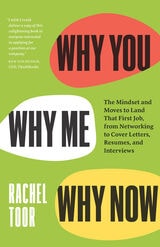
Why You, Why Me, Why Now
The Mindset and Moves to Land That First Job, from Networking to Cover Letters, Resumes, and InterviewsRachel Toor
University of Chicago Press, 2024
Searching for a job can be hard and demoralizing work. In Why You, Why Me, Why Now, Rachel Toor delivers some good news. The most important thing is within your control—a mindset that shows you know the goals of the organization you want to work for and that you’re ready and eager to contribute. Toor provides, with compassion and enthusiasm, strategies to make it easy for hiring managers to say “yes.” Through useful and funny anecdotes, she offers advice from professionals across industries and focuses on the attitude applicants can adopt to find success. Revealing traits employers seek, Toor shows how to craft winning cover letters, ways to tailor resumes for each job, and practical tips to get past AI screening. She also explains how to use LinkedIn and gives tips on preparing for interviews. Throughout, the book features Toor’s notes on writing well to help in landing a first job and beyond. Encouraging, entertaining, and blunt, this is a job-search guide like no other.
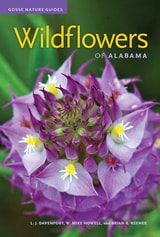
Wildflowers of Alabama
L. J. Davenport, W. Mike Howell, and Brian R. Keener
University of Alabama Press, 2027
A modern, beautifully illustrated guide revealing the hidden relationships, stories, and dazzling diversity of Alabama’s wildflowers across every corner of the state’s landscapes
Wildflowers of Alabama is a comprehensive, visually rich field guide to the state’s naturally occurring flowering plants, showcasing both familiar favorites and remarkable discoveries. Covering 125 plant families and more than 400 species, the book pairs clear, authoritative text with more than 500 color photographs that highlight the beauty, structure, and fine details of each plant across Alabama’s diverse ecosystems.
Organized using a modern, genetics-based classification system, this guide presents flowering plants according to their evolutionary relationships. Each family opens with an accessible overview, followed by detailed species accounts featuring botanical descriptions, insightful photographs, and contextual notes on names, natural history, and plant-human connections when available. A separate color key and native species list offer additional pathways for identification and discovery.
Building on decades of botanical expertise, authors L. J. Davenport, W. Mike Howell, and Brian R. Keener deliver an up-to-date, engaging resource that reflects the current state of plant science. More than a simple identification manual, Wildflowers of Alabama is an educational and inspiring celebration of the state’s extraordinary botanical diversity, designed for enthusiasts, students, and educators alike.

Winterthur Portfolio, Volume 12
A Journal of American Material CultureEdited by Ian M. G. Quimby
University of Chicago Press, 1978
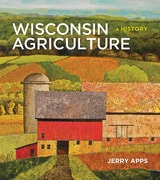
Wisconsin Agriculture
A HistoryJerry Apps
Wisconsin Historical Society Press, 2015
"I'm embarrassed to say I thought I knew anything substantial about Wisconsin agriculture or its history before I read this book. 'Wisconsin Agriculture' should be required reading in history classes from high school to the collegiate level. It makes me thankful that Jerry Apps has such a sense of commitment to Wisconsin's agricultural heritage--and to getting the story right." --Pam Jahnke, Farm Director, Wisconsin Farm Report Radio
Wisconsin has been a farming state from its very beginnings. And though it's long been known as "the Dairy State," it produces much more than cows, milk, and cheese. In fact, Wisconsin is one of the most diverse agricultural states in the nation.
The story of farming in Wisconsin is rich and diverse as well, and the threads of that story are related and intertwined. In this long-awaited volume, celebrated rural historian Jerry Apps examines everything from the fundamental influences of landscape and weather to complex matters of ethnic and pioneer settlement patterns, changing technology, agricultural research and education, and government regulations and policies. Along with expected topics, such as the cranberry industry and artisan cheesemaking, "Wisconsin Agriculture" delves into beef cattle and dairy goats, fur farming and Christmas trees, maple syrup and honey, and other specialty crops, including ginseng, hemp, cherries, sugar beets, mint, sphagnum moss, flax, and hops. Apps also explores new and rediscovered farming endeavors, from aquaculture to urban farming to beekeeping, and discusses recent political developments, such as the 2014 Farm Bill and its ramifications. And he looks to the future of farming, contemplating questions of ethical growing practices, food safety, sustainability, and the potential effects of climate change.
Featuring first-person accounts from the settlement era to today, along with more than 200 captivating photographs, "Wisconsin Agriculture" breathes life into the facts and figures of 150 years of farming history and provides compelling insights into the state's agricultural past, present, and future.
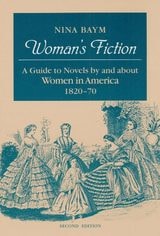
Woman's Fiction
A Guide to Novels by and about Women in America, 1820-70Nina Baym. With a New Introduction and Supplementary Bibliography
University of Illinois Press, 1993
This reissue of the pioneering and standard book on antebellum women's domestic novels contains a new introduction situating the book in the context of important recent developments in the study of women's writing. Nina Baym considers 130 novels by 48 women, focusing on the works of a dozen especially productive and successful writers.
Woman's Fiction is a major-work in nineteenth-century literature, reexamining changes in the literary canon and the meaning of sentimentalism, while responding to current critical discussions of 'the body' in literary texts.
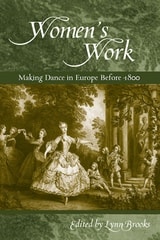
Women’s Work
Making Dance in Europe before 1800Edited by Lynn Matluck Brooks
University of Wisconsin Press, 2007
Through dance, women asserted power in spheres largely dominated by men: the court, the theater, and the church. As women’s dance worlds intersected with men’s, their lives and visions were supported or opposed, creating a complex politics of creative, spiritual, and political expression. From a women’s religious order in the thirteenth-century Low Countries that used dance as a spiritual rite of passage to the salon culture of eighteenth-century France where dance became an integral part of women’s cultural influence, the writers in this volume explore the meaning of these women’s stories, performances, and dancing bodies, demonstrating that dance is truly a field across which women have moved with finesse and power for many centuries past.
Woody Plants in Winter
by Earl L. Core and Nelle P. Ammons
West Virginia University Press, 1958
A manual to identify trees and shrubs in winter when the lack of leaves, fruits, and flowers makes them least identifiable, Woody Plants in Winter has become a classic for naturalists, botanists, gardeners, and hobbyists. Earl L. Core and Nell P. Ammons, both West Virginia University Professors of distinction, originally published this book with The Boxwood Press in 1958. Now in its fifteenth printing, the title has come home to West Virginia University Press.
Wordcraft
The Complete Guide to Clear, Powerful WritingJack Hart
University of Chicago Press, 2021
Originally published in 2006 as A Writer’s Coach, the book has been updated to address the needs of writers well beyond print journalists. Hart breaks the writing process into a series of manageable steps, from idea to polishing. Filled with real-world examples, both good and bad, Wordcraft shows how to bring such characteristics as force, brevity, clarity, rhythm, and color to any kind of writing.
Wordcraft now functions as a set with the second edition of Hart’s book Storycraft, on the art of storytelling, also available from Chicago.
Words Of Gratitude Mind Body & Soul
Robert A. Emmons
Templeton Press, 2001
"The test of all happiness,” said G.K. Chesterton, “is gratitude."
Learning to experience gratitude involves being grateful as an attitude, not as a reaction when good things occur. To be grateful, one does not need to wait until things are perfect. In fact, practicing gratitude makes one receptive to life's blessings, and these blessings continue as we continue to be thankful.
In one study, described by author Robert Emmons, participants who wrote about five things for which they were grateful experienced more positive emotional states and were more likely to help others over a period of ten weeks than were participants who wrote about the hassles and stressors they experienced during the same time.
"Love wholeheartedly,” says Brother David Steindl-Rast, “be surprised, give thanks and praise—then you will discover the fullness of your life."
Gratitude provides gifts to both the giver and the receiver, and this illuminating book will inspire readers to recognize just how truly blessed we are.
Words On Music
From Addison To BarzunJack Sullivan
Ohio University Press, 1990
Words on Music is thus the first book of its kind. Covering instrumental and vocal music from the eighteenth through the twentieth centuries, it features essays distinguished by their literary quality, their readability, and their appeal to a wide audience. Included is writing by novelists, essayists, composers, performers, cultural historians, and others who have written about music with precision and passion.
Here is George Bernard Shaw on Handel, Albert Schweitzer on Bach, Glenn Gould on Scarlatti, E. T. A. Hoffman on Beethoven, Heinrich Heine on Rossini, Aaron Copland on Mozart, George Eliot on Wagner, G. K. Chesterton on Gilbert and Sullivan, Leonard Bernstein on Mahler, Guy Davenport on Ives, Pierre Boulez on Stravinsky, Ned Rorem on Ravel, and more than fifty others. Here also are essays on broader topics—Joseph Addison on opera, Anthony Burgess on music and literature, Jacques Barzun on music criticism, H. L. Mencken on “Music an Sin”—as well as musical memoirs by such masters of the genre as Hector Berlioz, Leigh Hunt, and Ethel Smyth.
Words on Music is a uniquely literary and readable book on music. With its wide range of tones and voices, it is ideal for the general reader, the humanities educator, and the musical specialist. Each article is introduced by an informative headnote on the writer and subject. In addition, the volume offers a bibliography with valuable clues for further reading and a substantial essay introducing the elusive art of writing about music.
Words on Words
Quotations about Language and LanguagesEdited by David Crystal and Hilary Crystal
University of Chicago Press, 2000
The quotations are grouped thematically under 65 different headings, from "The Nature of Language" through the "Language of Politics" to "Quoting and Misquoting." This arrangement enables the reader to explore a topic through a variety of lenses, ancient and modern, domestic and foreign, scientific and casual, ironic and playful. Three thorough indexes—to authors, sources, and key words—provide different entry points into the collection. A valuable resource for professional writers and scholars, Words on Words is for anyone who loves language and all things linguistic.
Workbook for The ESL Writer's Handbook, 3rd Edition
Janine Carlock, Maeve Eberhardt, Jaime Horst
University of Michigan Press, 2025
CEFR Levels: B1–C2
Workbook-Essentials Of Mmpi-2
James N. Butcher
University of Minnesota Press, 2000
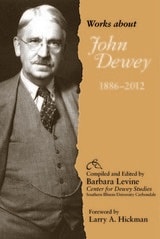
Works about John Dewey, 1886-2012
Compiled and Edited by Barbara Levine
Southern Illinois University Press, 2014
Works of John Dewey, 1886–2012 is an invaluable and meticulously compiled resource for the growing number of scholars and researchers seeking a deeper understanding of the work of the prominent American philosopher, psychologist, and educational reformer.
Dewey (1859–1952), an influential philosopher credited with the founding of pragmatism and also recognized as a pioneer in functional psychology and the progressive moment in education, was hailed by Life magazine in 1990 as one of the one hundred most important Americans of the twentieth century. This rich and continually expanding compendium of historical and more recent essays, research, and references is a testament to the growing interest in Dewey’s intellectual work and his measurable impact in the United States and throughout the world.
In Works of John Dewey, 1886–2012, some four thousand new entries are presented in ebook format, in addition to those from earlier print and electronic editions dating back to 1995. Copies of most of the works have been obtained and are stored at the Center for Dewey Studies. For the first time, users can access all items from all editions in one user-friendly format. Jump links to alphabetical sections facilitate movement through the vast collection of entries. Users can search by keyword and author.
World Communism
A History of the Communist InternationalF. Borkenau
University of Michigan Press, 1962
World Technology and Human Destiny
Edited by Raymond Aron
University of Michigan Press, 1963
Worlds of Appearance
An Introduction to Aesthetics in PracticeWalead Beshty
University of Chicago Press, 2026
An accessible primer on aesthetics in art and everyday life, written by artist and scholar Walead Beshty.
In this general guide to the foundations of aesthetics, Walead Beshty introduces the complexities of aesthetics through succinct language and real-world examples, presenting an introductory theory of how the world becomes known to us through our senses and how that knowledge in turn builds our experience of everything around us.
Considering aesthetics on both a practical and a theoretical level, Worlds of Appearance asserts that art and aesthetics are inherently political, composing a fundamental form of communication and a means by which we can imagine the very nature of what can be experienced, sensed, and expressed. Aesthetics, argues Beshty, is a corporeal and material area of study, one that reveals how we perceive the world and how we develop technologies in response. With this book, he aims to fill a gap in existing writing about aesthetics, offering a clear explanation of how it acts as a dynamic force in our daily lives, how it functions on a concrete level, and how we can understand its possibilities.
Beginning with how we transform a flood of sensations into a coherent perception of the world, the book considers the basics of aesthetic production and reception, then moves on to look at specific examples of aesthetics in practice, with a focus on art, architecture, and performance. It concludes by laying out how aesthetic literacy is key to understanding the production of wide-ranging aspects of our lives, including digitization, mass media, systems of communications, and power relations.
Write No Matter What
Advice for AcademicsJoli Jensen
University of Chicago Press, 2017
Jensen begins by busting the myth that universities are supportive writing environments. She points out that academia, an arena dedicated to scholarship, offers pressures that actually prevent scholarly writing. She shows how to acknowledge these less-than-ideal conditions, and how to keep these circumstances from draining writing time and energy. Jensen introduces tools and techniques that encourage frequent, low-stress writing. She points out common ways writers stall and offers workarounds that maintain productivity. Her focus is not on content, but on how to overcome whatever stands in the way of academic writing.
Write No Matter What draws on popular and scholarly insights into the writing process and stems from Jensen’s experience designing and directing a faculty writing program. With more than three decades as an academic writer, Jensen knows what really helps and hinders the scholarly writing process for scholars in the humanities, social sciences,and sciences.
Cut down the academic sword of Damocles, Jensen advises. Learn how to write often and effectively, without pressure or shame. With her encouragement, writers of all levels will find ways to create the writing support they need and deserve.
Write Your Way In
Crafting an Unforgettable College Admissions EssayRachel Toor
University of Chicago Press, 2017
The good news? You already have the “secret sauce” for crafting a compelling personal essay: your own experiences and your unique voice.
More than twenty million students apply to college every year; many of them look similar in terms of test scores, grades, courses taken, extracurricular activities. Admissions officers wade through piles of files. As an applicant, you need to think about what will interest an exhausted reader. What can you write that will make her argue to admit you instead of the thousands of other applicants?
A good essay will be conversational and rich in vivid details, and it could only be written by one person—you. This book will help you figure out how to find and present the best in yourself. You’ll acquire some useful tools for writing well—and may even have fun—in the process.
Writing Abroad
A Guide for TravelersPeter Chilson and Joanne B. Mulcahy
University of Chicago Press, 2017
Writing Abroad is meant for travelers of all backgrounds and writing levels: a student embarking on overseas study; a retiree realizing a dream of seeing China; a Peace Corps worker in Kenya. All can benefit from documenting their adventures, whether on paper or online. Through practical advice and adaptable exercises, this guide will help travelers hone their observational skills, conduct research and interviews, choose an appropriate literary form, and incorporate photos and videos into their writing.
Writing about travel is more than just safeguarding memories—it can transform experiences and tease out new realizations. With Writing Abroad, travelers will be able to deepen their understanding of other cultures and write about that new awareness in clear and vivid prose.
Writing Ethnographic Fieldnotes, Second Edition
Robert M. Emerson, Rachel I. Fretz, and Linda L. Shaw
University of Chicago Press, 2011
Writing Fiction, Tenth Edition
A Guide to Narrative CraftJanet Burroway, with Elizabeth Stuckey-French, and Ned Stuckey-French
University of Chicago Press, 2019
A creative writer’s shelf should hold at least three essential books: a dictionary, a style guide, and Writing Fiction. Janet Burroway’s best-selling classic is the most widely used creative writing text in America, and for more than three decades it has helped hundreds of thousands of students learn the craft. Now in its tenth edition, Writing Fiction is more accessible than ever for writers of all levels—inside or outside the classroom.
This new edition continues to provide advice that is practical, comprehensive, and flexible. Burroway’s tone is personal and nonprescriptive, welcoming learning writers into the community of practiced storytellers. Moving from freewriting to final revision, the book addresses “showing not telling,” characterization, dialogue, atmosphere, plot, imagery, and point of view. It includes new topics and writing prompts, and each chapter now ends with a list of recommended readings that exemplify the craft elements discussed, allowing for further study. And the examples and quotations throughout the book feature a wide and diverse range of today’s best and best-known creators of both novels and short stories.
This book is a master class in creative writing that also calls on us to renew our love of storytelling and celebrate the skill of writing well. There is a very good chance that one of your favorite authors learned the craft with Writing Fiction. And who knows what future favorite will get her start reading this edition?
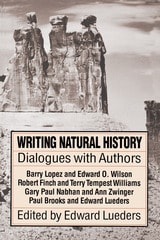
Writing Natural History
Dialogue with AuthorsEdward Lueders
University of Utah Press, 1989
Writing Natural History is the edited record of four public dialogues held at the University of Utah in 1988 between eminent writers in the fields of natural history. In these interchanges the writers discussed their traditions, perspectives, values, purposes, techniques, and personal insights. Their conversations, like their work, link the sciences with the humanities in surprising ways, enhancing our understanding and appreciation of both. This volume maintains the vitality of the spoken dialogues and conveys a lively sense of each speaker’s concern with the processes of the natural world and our human position in it.
Half of the authors began as professionals in the natural sciences before becoming recognized for their literary skills; the other half are established writers whose works reflect their vital human affinity with and respect for nature. Writing Natural History will appeal to all readers involved in conservation, nature study, creative writing, environmental issues, the natural sciences, the outdoors, and the ecological politics of Earth.
Authors dialogues feature Barry Lopez and Edward O. Wilson, Robert Finch and Terry Tempest Williams, Gary Paul Nabhan and Ann Zwinger, Paul Brooks and Edward Lueders.
Writing Science in Plain English
Anne E. Greene
University of Chicago Press, 2013
Writing Science in Plain English, Second Edition
Anne E. Greene
University of Chicago Press, 2025
Scientific writing is often dry, wordy, and difficult to understand. But, as biologist and experienced teacher of scientific writing Anne E. Greene shows in Writing Science in Plain English, writers from all scientific disciplines can learn to produce clear, concise prose by mastering just a few simple principles. This short, focused guide presents roughly a dozen such principles based on what readers need to understand complex information, including concrete subjects, strong verbs, consistent terms, organized paragraphs, and correct sentence structure. Greene illustrates each principle with real-life examples of both good and bad writing and shows how bad writing might be improved. She ends each chapter with revision exercises (and provides suggested answers in a separate key) so that readers can come away with new writing skills after just one sitting. To help readers understand the grammatical terms used in the book, an appendix offers a refresher course on basic grammar.
For this second edition, Greene has incorporated the latest research on what makes writing effective and engaging and has revised or replaced exercises and exercise keys where needed. She has also added new features that make it easier to navigate the book. A new resource for instructors who use Writing Science in Plain English in their classes is a free, online teacher’s guide. Drawn from Greene’s long experience teaching students how to write science clearly, the teacher’s guide provides additional lectures, assignments, and activities that will inform and enliven any class.
Writing Your Journal Article in Twelve Weeks, Second Edition
A Guide to Academic Publishing SuccessWendy Laura Belcher
University of Chicago Press, 2019
With this new edition, Belcher expands her advice to reach beginning scholars in even more disciplines. She builds on feedback from professors and graduate students who have successfully used the workbook to complete their articles. A new chapter addresses scholars who are writing from scratch. This edition also includes more targeted exercises and checklists, as well as the latest research on productivity and scholarly writing.
Writing Your Journal Article in Twelve Weeks is the only reference to combine expert guidance with a step-by-step workbook. Each week, readers learn a feature of strong articles and work on revising theirs accordingly. Every day is mapped out, taking the guesswork and worry out of writing. There are tasks, templates, and reminders. At the end of twelve weeks, graduate students, recent PhDs, postdoctoral fellows, adjunct instructors, junior faculty, and international faculty will feel confident they know that the rules of academic publishing and have the tools they need to succeed.
Writing for Social Scientists, Third Edition
How to Start and Finish Your Thesis, Book, or ArticleHoward S. Becker
University of Chicago Press, 2020
This is not a book about sociological writing. Instead, Becker applies his sociologist’s eye to some of the common problems all academic writers face, including trying to get it right the first time, failing, and therefore not writing at all; getting caught up in the trappings of “proper” academic writing; writing to impress rather than communicate with readers; and struggling with the when and how of citations. He then offers concrete advice, based on his own experiences and those of his students and colleagues, for overcoming these obstacles and gaining confidence as a writer.
While the underlying challenges of writing have remained the same since the book first appeared, the context in which academic writers work has changed dramatically, thanks to rapid changes in technology and ever greater institutional pressures. This new edition has been updated throughout to reflect these changes, offering a new generation of scholars and students encouragement to write about society or any other scholarly topic clearly and persuasively.
As Becker writes in the new preface, “Nothing prepared me for the steady stream of mail from readers who found the book helpful. Not just helpful. Several told me the book had saved their lives; less a testimony to the book as therapy than a reflection of the seriousness of the trouble writing failure could get people into.” As academics are being called on to write more often, in more formats, the experienced, rational advice in Writing for Social Scientists will be an important resource for any writer’s shelf.
Writing for Social Scientists
How to Start and Finish Your Thesis, Book, or ArticleHoward S. Becker
University of Chicago Press, 1986
Both the means and the reasons for writing a thesis or article or book are socially structured by the organization of graduate study, the requirements for publication, and the conditions for promotion, and the pressures arising from these situations create the writing style so often lampooned and lamented. Drawing on his thirty-five years' experience as a researcher, writer, and teacher, Becker exposes the foibles of the academic profession to the light of sociological analysis and gentle humor. He also offers eminently useful suggestions for ways to make social scientists better and more productive writers. Among the topics discussed are how to overcome the paralyzing fears of chaos and ridicule that lead to writer's block; how to rewrite and revise, again and again; how to adopt a persona compatible with lucid prose; how to deal with that academic bugaboo, "the literature." There is also a chapter by Pamela Richards on the personal and professional risks involved in scholarly writing.
In recounting his own trials and errors Becker offers his readers not a model to be slavishly imitated but an example to inspire. Throughout, his focus is on the elusive work habits that contribute to good writing, not the more easily learned rules of grammar and punctuation. Although his examples are drawn from sociological literature, his conclusions apply to all fields of social science, and indeed to all areas of scholarly endeavor. The message is clear: you don't have to write like a social scientist to be one.
Writing for Social Scientists
How to Start and Finish Your Thesis, Book, or Article: Second EditionHoward S. Becker
University of Chicago Press, 2007
Sociologist Howard S. Becker has written the classic book on how to conquer these pressures and simply write. First published nearly twenty years ago, Writing for Social Scientists has become a lifesaver for writers in all fields, from beginning students to published authors. Becker’s message is clear: in order to learn how to write, take a deep breath and then begin writing. Revise. Repeat.
It is not always an easy process, as Becker wryly relates. Decades of teaching, researching, and writing have given him plenty of material, and Becker neatly exposes the foibles of academia and its “publish or perish” atmosphere. Wordiness, the passive voice, inserting a “the way in which” when a simple “how” will do—all these mechanisms are a part of the social structure of academic writing. By shrugging off such impediments—or at the very least, putting them aside for a few hours—we can reform our work habits and start writing lucidly without worrying about grades, peer approval, or the “literature.”
In this new edition, Becker takes account of major changes in the computer tools available to writers today, and also substantially expands his analysis of how academic institutions create problems for them. As competition in academia grows increasingly heated, Writing for Social Scientists will provide solace to a new generation of frazzled, would-be writers.
Writing, Directing, and Producing Documentary Films and Digital Videos
Alan Rosenthal and Ned Eckhardt
Southern Illinois University Press, 2016
All twenty-four chapters of the volume have been revised to reflect the latest advances in documentary filmmaking. Rosenthal and Eckhardt discuss the myriad ways in which technological changes have impacted the creation process of documentary films, including how these evolving technologies both complicate and enrich filmmaking today. The book provides crucial insights for the filmmaker from the film’s conception to distribution of the finished film. Topics include creating dynamic proposals, writing narration, and navigating the murky world of contracts. Also included are many practical tips for first-time filmmakers. To provide context and to illustrate techniques, Rosenthal and Eckhardt reference more than one hundred documentaries in detail.
A new appendix, “Using the Web and Social Media to Prepare for Your Career,” guides filmmakers through the process of leveraging social media and crowdsourcing for success in filmmaking, fund-raising, and promotion. A day-to-day field manual packed with invaluable lessons, this volume is essential reading for both novice and experienced documentary filmmakers.
Writing, Directing, and Producing Documentary Films and Videos, Fourth Edition
Alan Rosenthal
Southern Illinois University Press, 2007
In response to technological advances and the growth of the documentary hybrid in the past five years, Rosenthal reconsiders how one approaches documentary filmmaking in the twenty-first century. Simply and clearly, he explains how to tackle day-to-day problems, from initial concept through distribution. He demonstrates his ideas throughout the book with examples from key filmmakers’ work.
New aspects of this fourth edition include a vital new chapter titled "Making Your First Film," and a considerable enlargement of the section for producers, "Staying Alive," which includes an extensive discussion of financing, marketing, festivals, and distribution. This new edition offers a revised chapter on nonlinear editing, more examples of precise and exacting proposals, and the addition of a complex budget example with explanation of the budgeting process. Discussion of documentary hybrids, with suggestions for mastering changes and challenges, has also been expanded, while the “Family Films” chapter includes updated information that addresses rapid expansion in this genre.