95 books match the query 'Rivers' and 8 start with w
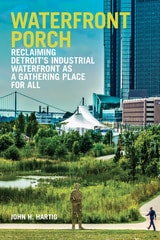
cover of Waterfront Porch: Reclaiming Detroit's Industrial Waterfront as a Gathering Place for All

Waterfront Porch

Reclaiming Detroit's Industrial Waterfront as a Gathering Place for All

John H. Hartig

Michigan State University Press, 2019
Detroit was the epicenter of the fur trade era, an unparalleled leader of shipbuilding for one hundred years, the Silicon Valley of the industrial age, and the unquestioned leader of the arsenal of democracy. This unique history depicts Detroit as a city of innovation, resilience, and leadership in responding to change, and examines the current sustainability paradigm shift to which Detroit is responding, pivoting as the city has done in the past to redefine itself and lead the nation and world down a more sustainable path. This book details the building of a new waterfront porch alongside the Detroit River called the Detroit RiverWalk to help revitalize the city and region and promote sustainability practices. It is a story of one of the largest, by scale, urban waterfront redevelopment projects in the United States, and gives hope and proves that Detroit and its metropolitan region have a bright future.
[more]
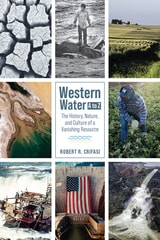
cover of Western Water A to Z: The History, Nature, and Culture of a Vanishing Resource

Western Water A to Z

The History, Nature, and Culture of a Vanishing Resource

by Robert R. Crifasi

University Press of Colorado, 2022

Western Water A to Z is the first ever field guide to Western water. Reinventing this twentieth-century genre for a twenty-first-century audience, Robert R. Crifasi answers questions about rivers, water projects, the culture of water, the ecosystems water projects have created or destroyed, and the reliance of cities, farms, and industries on this critical resource.
 
Organized as a collection of terms, the book addresses the most salient water issues and provides helpful background information regarding their origins and implications. Photographs serve a vital role in the cultural dialogue on water and stand as an equal partner to the text. Each subject is covered in about one page and is accompanied by one or two striking images from famous photographers like Margaret Bourke-White, Carleton E. Watkins, Arthur Rothstein, William Henry Jackson, and Dorothea Lang as well as Crifasi’s own work. Water often finds itself at the center of our cultural discourse in art, cinema, and literature, which play essential roles in shaping our understanding and experience of Western water. Crifasi also engages personalities that are nearly synonymous with Western water—John Wesley Powell, Elwood Mead, and Floyd Dominy, among others—to show how their lives intertwined with and often influenced the course of water development across the region.
 
Travelers, adventurers, students, and anyone interested in water will find Western Water A to Z a handy and entertaining reference guide.
 
[more]
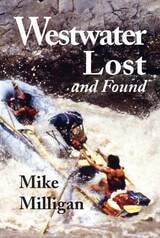
cover of Westwater Lost and Found

Westwater Lost and Found

Mike Milligan

Utah State University Press, 2004
Upstream from Moab on the Colorado River, near the Colorado state line, there is a relatively short, deep canyon that has become one of the most popular river-running destinations in America. The canyon is known as Westwater. Its popularity is largely due to the thrill provided by possibly the most, certainly one of the most, dangerous and challenging stretches of white water on the Colorado-Skull Rapid. Near the head of the canyon are the remnants of the tiny town of Westwater, which has had an interesting and eventful history of its own, partly because of the river and canyon, partly because of the railroad that passes through it, and partly because of its remoteness. It has attracted over the years more than its fair share of colorful characters-government explorers and agents, boosters and get-rich-quick dreamers, cattle and sheep men, outlaws and bootleggers, and, of course, river runners. Mike Milligan, who came to know the area as a river guide, has written a thorough history of this out-of-the-way place. While it has a colorful history that makes its story interesting in and of itself, Westwater's significance derives more from a phenomenon of the modern West-thousands of recreational river runners. They have pushed a backwater place into the foreground of modern popular culture in the West. Westwater seems to represent one common sequence in western history: the late opening of unexplored territories; sporadic, ultimately often unsuccessful attempts to develop them; renewed obscurity when development doesn't succeed; their attraction of a marginal society of misfits or loners; and modern rediscovery of them due to new cultural motives, especially outdoors recreation, which has brought a great number of people into thousands of remote corners of the West.
[more]
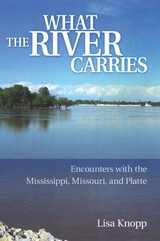
cover of What the River Carries: Encounters with the Mississippi, Missouri, and Platte

What the River Carries

Encounters with the Mississippi, Missouri, and Platte

Lisa Knopp

University of Missouri Press, 2012

In this informed and lyrical collection of interwoven essays, Lisa Knopp explores the physical and cultural geography of the Mississippi, Missouri, and Platte, rivers she has come to understand and cherish. At the same time, she contemplates how people experience landscape, identifying three primary roles of environmental perception: the insider, the outsider, and the outsider seeking to become an insider. Viewing the waterways through these approaches, she searches for knowledge and meaning.

Because Knopp was born and raised just a few blocks away, she considers the Mississippi from the perspective of a native resident, a “dweller in the land.” She revisits places she has long known:  Nauvoo, Illinois, the site of two nineteenth-century utopias, one Mormon, one Icarian; Muscatine, Iowa, once the world’s largest manufacturer of pearl (mussel shell) buttons; and the mysterious prehistoric bird- and bear-shaped effigy mounds of northeastern Iowa. On a downriver trip between the Twin Cities and St. Louis, she meditates on what can be found in Mississippi river water—state lines, dissolved oxygen, smallmouth bass, corpses, family history, wrecked steamboats, mayfly nymphs, toxic perfluorinated chemicals, philosophies.

Knopp first encountered the Missouri as a tourist and became acquainted with it through literary and historical documents, as well as stories told by longtime residents. Her journey includes stops at Fort Bellefontaine, where Lewis and Clark first slept on their sojourn to the Pacific; Little Dixie, Missouri’s slaveholding, hemp-growing region, as revealed through the life of Jesse James’s mother; Fort Randall Dam and Lake Francis Case, the construction of which destroyed White Swan on the Yankton Sioux Reservation; and places that produced unique musical responses to the river, including Native American courting flutes, indie rock, Missouri River valley fiddling, Prohibition-era jazz jam sessions, and German folk music.

Knopp’s relationship with the Platte is marked by intentionality: she settled nearby and chose to develop deep and lasting connections over twenty years’ residence. On this adventure, she ponders the half-million sandhill cranes that pass through Nebraska each spring, the ancient varieties of Pawnee corn growing at the Great Platte River Road Archway Monument, a never-broken tract of tallgrass prairie, the sugar beet industry, and the changes in the river brought about by the demands of irrigation.
In the final essay, Knopp undertakes the science of river meanders, consecutive loops of water moving in opposite directions, which form around obstacles but also develop in the absence of them. What initiates the turning that results in a meander remains a mystery. Such is the subtle and interior process of knowing and loving a place. What the River Carries asks readers to consider their own relationships with landscape and how one can most meaningfully and responsibly dwell on the earth’s surface.
[more]
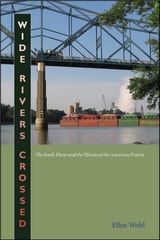
cover of Wide Rivers Crossed: The South Platte and the Illinois of the American Prairie

Wide Rivers Crossed

The South Platte and the Illinois of the American Prairie

Ellen E. Wohl

University Press of Colorado, 2013

 In Wide Rivers Crossed, Ellen Wohl tells the stories of two rivers—the South Platte on the western plains and the Illinois on the eastern—to represent the environmental history and historical transformation of major rivers across the American prairie. Wohl begins with the rivers’ natural histories, including their geologic history, physical characteristics, ecological communities, and earliest human impacts, and follows a downstream and historical progression from the use of the rivers’ resources by European immigrants through increasing population density of the twentieth century to the present day.

During the past two centuries, these rivers changed dramatically, mostly due to human interaction. Crops replaced native vegetation; excess snowmelt and rainfall carried fertilizers and pesticides into streams; and levees, dams, and drainage altered distribution. These changes cascaded through networks, starting in small headwater tributaries, and reduced the ability of rivers to supply the clean water, fertile soil, and natural habitats they had provided for centuries. Understanding how these rivers, and rivers in general, function and how these functions have been altered over time will allow us to find innovative approaches to restoring river ecosystems.

The environmental changes in the South Platte and the Illinois reflect the relentless efforts by humans to control the distribution of water: to enhance surface water in the arid western prairie and to limit the spread of floods and drain the wetlands along the rivers in the water-abundant east. Wide Rivers Crossed looks at these historical changes and discusses opportunities for much-needed protection and restoration for the future.
[more]
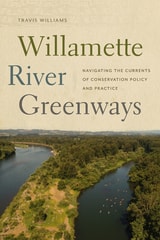
cover of Willamette River Greenways: Navigating the Currents of Conservation Policy and Practice

Willamette River Greenways

Navigating the Currents of Conservation Policy and Practice

Travis Williams

Oregon State University Press, 2021

The Willamette River Greenway Program, first proposed in 1966 by future Oregon governor Bob Straub, envisioned a nearly two-hundred-mile assemblage of public lands along the Willamette River for public use and environmental protection. While the Greenway Program fell far short of Straub’s original proposal, today it provides for significant riverside lands with a range of public benefits. The Greenway Program also offers a useful lens through which to view the successes and failures of Oregon’s environmental protection policies over the past few decades.

Travis Williams, executive director of Willamette Riverkeeper, has spent countless hours paddling the Willamette, becoming familiar with its flora, fauna, and human neighbors. In Willamette River Greenways, he combines personal narrative about his experiences on the river with nuanced consideration of the controversies and challenges of the Greenway Program. Williams sheds light on current land stewardship practices, revealing the institutional and leadership failures that endanger the river’s water quality and habitat, and looks to the program’s future. He also takes readers with him onto the water, sharing what it’s like to travel the river by canoe, paying homage to the river’s natural beauty and the host of wildlife species that call it home.

Part policy analysis, part advocacy, and all love letter to one of Oregon’s great rivers, Willamette River Greenways offers valuable perspective to policymakers, land use managers, and recreational river users alike.
[more]
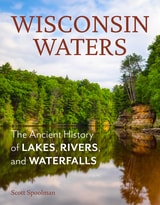
cover of Wisconsin Waters: The Ancient History of Lakes, Rivers, and Waterfalls

Wisconsin Waters

The Ancient History of Lakes, Rivers, and Waterfalls

Scott Spoolman

Wisconsin Historical Society Press, 2022
Every Wisconsin waterway has a story, from the Great Lakes and the Mighty Mississippi to thousands of interior lakes, rivers, and trout streams. Wisconsin Waters takes readers on an epic tour of the geologic, natural, and human stories that have shaped these aquatic landscapes over millions of years.
     In this companion to his popular Wisconsin State Parks book, Scott Spoolman journeys to the distant past to examine the origins of Wisconsin’s lakes, rivers, waterfalls, and wetlands. In his accessible storytelling style, Spoolman details the natural forces—volcanic eruptions, ancient seas, erosion, glaciers, and more—that created these bodies of water and the resulting habitats for the state’s flora, fauna, and early peoples.
     More than a geology or natural history book, Wisconsin Waters invites readers to visit waterways in four regions of the state, where they can view the modern-day evidence of how they were formed. Nineteen travel guides suggest ways to explore a selection of Wisconsin waterscapes, providing a better understanding of the land’s history that will enhance readers’ enjoyment of and appreciation for our freshwater resources.
[more]
cover of Working with Water: Wisconsin Waterways

Working with Water

Wisconsin Waterways

Bobbie Malone and Jefferson J. Gray

Wisconsin Historical Society Press, 2001

"Water, water, everywhere . . ." Working with Water, the latest in the popular New Badger History series, teaches young readers about the many ways water has shaped Wisconsin’s history, from glaciers to stewardship. It touches on geography and hydrography; transportation networks of Indians and fur traders; the Erie Canal; shipwrecks, lighthouses, shipping, and shipbuilding; fishing, ricing, "pearling" (clamming), and cranberry cultivation; lumbering, milling, and papermaking; recreation, resorts, tourism, and environmentalism.

The companion Teacher’s Guide and Student Materials engages students in hands-on exploration. It highlights historical processes and encourages multiple learning styles.

[more]