Results by title
63 books match the query 'Scientists' and 3 start with w
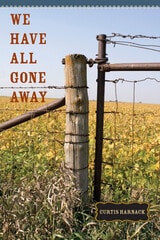
We Have All Gone Away
Curtis Harnack
University of Iowa Press, 1973
In We Have All Gone Away, his emotionally moving memoir, Curtis Harnack tells of growing up during the Great Depression on an Iowa farm among six siblings and an extended family of relatives. With a directness and a beauty that recall Thoreau, Harnack balances a child’s impressions with the knowledge of an adult looking back to produce what Publishers Weekly called “a country plum of a book, written with genuine affection and vivid recall.”
In a community related by blood and harvest, rural life could be bountiful even when hard economic times threatened. The adults urged children to become educated and to keep an eye on tomorrow. “We were all taught to lean enthusiastically into the future,” Harnack recalls, which would likely be elsewhere, in distant cities. At the same time, the children were cultivating a resiliency that would serve them well in the unknown world of the second half of the twentieth century.
Inevitably, the Midwest’s small, diversified family farm gave way to large-scale agriculture, which soon changed the former intimate way of life. “Our generation, using the mulched dead matter of agrarian life like projectile fuel for our thrust into the future, became part of that enormous vitality springing out of rural America,” notes Harnack. Both funny and elegiac, We Have All Gone Away is a masterful memoir of the joys and sorrows of Iowa farm life at mid-century, a world now gone “by way of learning, wars, and marriage” but still a lasting part of America’s heritage.
[more]
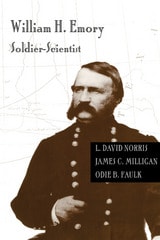
William H. Emory
Soldier-ScientistL. David Norris, James C. Milligan, and Odie B. Faulk
University of Arizona Press, 1998
Soldier and explorer William H. Emory traveled the length and breadth of the United States and participated in some of the most significant events of the nineteenth century. This first complete biography of Emory offers new insights into an often-overlooked military figure and provides an important view of an expanding America.
Born in Maryland in 1811, Emory was a West Point graduate who resigned his commission to become a civil engineer and join the newly formed Corps of Topographical Engineers. After working along the Canadian boundary, he was selected to accompany Stephen Watts Kearny and the Army of the West in their trek to California in 1846, and his map from that expedition helped guide Forty-Niners bound for the goldfields.
Emory worked for nine years on the new border between the United States and Mexico after the Treaty of Guadalupe Hidalgo and the Gadsden Purchase and was responsible for the survey and marking of the boundary. When the Civil War broke out, Emory refused a commission in the Confederate Army, instead commanding a regiment defending Washington, D.C. Later he saw action at Manassas, in the Red River campaign, and in the Shenandoah Valley, where he served under Phil Sheridan.
This biography draws on Emory’s personal papers to reveal other significant episodes of his life. While commanding a cavalry unit in Indian Territory, he was the only officer to bring an entire command out of insurrectionary territory. In hostile action of a different kind, he was a major witness in the impeachment trial of Andrew Johnson and offered testimony that helped save the president.
William H. Emory: Soldier-Scientist is an important resource for scholars of western expansion and the Civil War. More than that, it is a rousing story of an unsung but distinguished hero of his time.
[more]
Wizards and Scientists
Explorations in Afro-Cuban Modernity and TraditionStephan Palmié
Duke University Press, 2002
In Wizards and Scientists Stephan Palmié offers a corrective to the existing historiography on the Caribbean. Focusing on developments in Afro-Cuban religious culture, he demonstrates that traditional Caribbean cultural practices are part and parcel of the same history that produced modernity and that both represent complexly interrelated hybrid formations. Palmié argues that the standard narrative trajectory from tradition to modernity, and from passion to reason, is a violation of the synergistic processes through which historically specific, moral communities develop the cultural forms that integrate them.
Highlighting the ways that Afro-Cuban discourses serve as a means of moral analysis of social action, Palmié suggests that the supposedly irrational premises of Afro-Cuban religious traditions not only rival Western rationality in analytical acumen but are integrally linked to rationality itself. Afro-Cuban religion is as “modern” as nuclear thermodynamics, he claims, just as the Caribbean might be regarded as one of the world’s first truly “modern” locales: based on the appropriation and destruction of human bodies for profit, its plantation export economy anticipated the industrial revolution in the metropolis by more than a century. Working to prove that modernity is not just an aspect of the West, Palmié focuses on those whose physical abuse and intellectual denigration were the price paid for modernity’s achievement. All cultures influenced by the transcontinental Atlantic economy share a legacy of slave commerce. Nevertheless, local forms of moral imagination have developed distinctive yet interrelated responses to this violent past and the contradiction-ridden postcolonial present that can be analyzed as forms of historical and social analysis in their own right.
Highlighting the ways that Afro-Cuban discourses serve as a means of moral analysis of social action, Palmié suggests that the supposedly irrational premises of Afro-Cuban religious traditions not only rival Western rationality in analytical acumen but are integrally linked to rationality itself. Afro-Cuban religion is as “modern” as nuclear thermodynamics, he claims, just as the Caribbean might be regarded as one of the world’s first truly “modern” locales: based on the appropriation and destruction of human bodies for profit, its plantation export economy anticipated the industrial revolution in the metropolis by more than a century. Working to prove that modernity is not just an aspect of the West, Palmié focuses on those whose physical abuse and intellectual denigration were the price paid for modernity’s achievement. All cultures influenced by the transcontinental Atlantic economy share a legacy of slave commerce. Nevertheless, local forms of moral imagination have developed distinctive yet interrelated responses to this violent past and the contradiction-ridden postcolonial present that can be analyzed as forms of historical and social analysis in their own right.
[more]