Results by title
4038 books match the query 'Social aspects' and 161 start with w

W Stands for Women
How the George W. Bush Presidency Shaped a New Politics of GenderMichaele L. Ferguson and Lori J. Marso, eds.
Duke University Press, 2007
In W Stands for Women ten feminist scholars analyze various aspects of Bush’s persona, language, and policy to show how his administration has shaped a new politics of gender. One contributor points out the shortcomings of “compassionate conservatism,” a political philosophy that requires a weaker class to be the subject of compassion. Another examines Lynndie England’s participation in the abuse of prisoners at Abu Ghraib in relation to the interrogation practices elaborated in the Army Field Manual, practices that often entail “feminizing” detainees by stripping them of their masculine gender identities. Whether investigating the ways that Bush himself performs masculinity or the problems with discourse that positions non-Western women as supplicants in need of saving, these essays highlight the far-reaching consequences of the Bush administration’s conflation of feminist rhetoric, conservative gender ideology, and neoconservative national security policy.
Contributors. Andrew Feffer, Michaele L. Ferguson, David S. Gutterman, Mary Hawkesworth, Timothy Kaufman-Osborn, Lori Jo Marso, Danielle Regan, R. Claire Snyder, Iris Marion Young, Karen Zivi
Michaela Ferguson and Karen Zivi appeared on KPFA’s Against the Grain on September 11, 2007. Listen to the audio.
Michaela Ferguson and Lori Jo Marso appeared on WUNC’s The State of Things on August 30, 2007. Listen to the audio.
WPAing in a Pandemic and Beyond
Revision, Innovation, and AdvocacyTodd Ruecker
Utah State University Press, 2025
The chapters in this collection include a variety of voices who have been involved in writing program administration in recent years to reflect on the work done in this moment of crisis. Through both short vignettes and longer chapters, this book explores the complicated interactions between WPA work and navigating times of crisis to provide insights for moving forward. Authors explore a variety of topics including professional development, curricular change, advocating in the face of intransigent administrations and others, caring for students, and taking time for self-care. Pointing to specific actions for continued advocacy, WPAing in a Pandemic and Beyond will be of great interest to WPAs and writing studies scholars.
Wages Against Artwork
Decommodified Labor and the Claims of Socially Engaged ArtLeigh Claire La Berge
Duke University Press, 2019
Waikiki Dreams
How California Appropriated Hawaiian Beach CulturePatrick Moser
University of Illinois Press, 2024
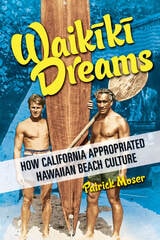
Despite a genuine admiration for Native Hawaiian culture, white Californians of the 1930s ignored authentic relationships with Native Hawaiians. Surfing became a central part of what emerged instead: a beach culture of dressing, dancing, and acting like an Indigenous people whites idealized.
Patrick Moser uses surfing to open a door on the cultural appropriation practiced by Depression-era Californians against a backdrop of settler colonialism and white nationalism. Recreating the imagined leisure and romance of life in Waikīkī attracted people buffeted by economic crisis and dislocation. California-manufactured objects like surfboards became a physical manifestation of a dream that, for all its charms, emerged from a white impulse to both remove and replace Indigenous peoples. Moser traces the rise of beach culture through the lives of trendsetters Tom Blake, John “Doc” Ball, Preston “Pete” Peterson, Mary Ann Hawkins, and Lorrin “Whitey” Harrison while also delving into California’s control over images of Native Hawaiians via movies, tourism, and the surfboard industry.
Compelling and innovative, Waikīkī Dreams opens up the origins of a defining California subculture.
Waiting for Rain
The Politics and Poetry of Drought in Northeast BrazilNicholas Gabriel Arons
University of Arizona Press, 2004
In order to understand the impact of drought and the phenomenon of drought politics, Nicholas Gabriel Arons goes beyond traditional social-science scholarship to sources such as novels, poetry, popular art, and oral history. For many people in the region, these artistic renditions of life are, ironically, a better reflection of reality than political rhetoric, government archives, and newspaper accounts—even though they are infused with myth or hyperbole.
Drawing on interviews with artists and poets and on his own experiences in the Brazilian Northeast, Arons has written a poignant account of how drought has impacted the region’s culture. He intertwines ecological, social, and political issues with the words of some of Brazil’s most prominent authors and folk poets to show how themes surrounding drought—hunger, migration, endurance, nostalgia for the land—have become deeply embedded in Nordeste identity. Through this tapestry of sources, Arons shows that what is often thought of as a natural phenomenon is actually the result of centuries of social inequality, political corruption, and unsustainable land use.
Waiting for Rain dramatically depicts a region still suffering from austere social and political realities, where drought—even during rainy seasons—is ubiquitous in the hearts and minds of its residents. A book of hope and resistance, myth and reality, and suffering and salvation, it is also a personal narrative of self-discovery, tracing a young man’s struggle to understand how human tragedy on a grand scale can exist alongside natural beauty.
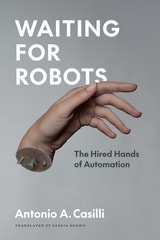
Waiting for Robots
The Hired Hands of AutomationAntonio A. Casilli
University of Chicago Press, 2025
Artificial Intelligence fuels both enthusiasm and panic. Technologists are inclined to give their creations leeway, pretend they’re animated beings, and consider them efficient. As users, we may complain when these technologies don’t obey, or worry about their influence on our choices and our livelihoods. And yet, we also yearn for their convenience, see ourselves reflected in them, and treat them as something entirely new. But when we overestimate the automation of these tools, award-winning author Antonio A. Casilli argues, we fail to recognize how our fellow humans are essential to their efficiency. The danger is not that robots will take our jobs, but that humans will have to do theirs.
In this bracing and powerful book, Casilli uses up-to-the-minute research to show how today’s technologies, including AI, continue to exploit human labor—even ours. He connects the diverse activities of today’s tech laborers: platform workers, like Uber drivers and Airbnb hosts; “micro workers,” including those performing atomized tasks like data entry on Amazon Mechanical Turk; and the rest of us, as we evaluate text or images to show we’re not robots, react to Facebook posts, or approve or improve the output of generative AI. As Casilli shows us, algorithms, search engines, and voice assistants wouldn’t function without unpaid or underpaid human contributions. Further, he warns that if we fail to recognize this human work, we risk a dark future for all human labor.
Waiting for Robots urges us to move beyond the simplistic notion that machines are intelligent and autonomous. As the proverbial Godot, robots are the bearers of a messianic promise that is always postponed. Instead of bringing prosperity for all, they discipline the workforce, so we don’t dream of a world without drudgery and exploitation. Casilli’s eye-opening book makes clear that most “automation” requires human labor—and likely always will—shedding new light on today’s consequences and tomorrow’s threats of failing to recognize and compensate the “click workers” of today.
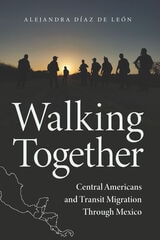
Walking Together
Central Americans and Transit Migration Through MexicoAlejandra Díaz de León
University of Arizona Press, 2023
Migrants in transit form several types of social networks, develop trust, and engage in acts of solidarity. The need to be recognized and grieved, compounded by the practical use of pooling information and resources, leads migrants to form small, strong groups called road families. Through the generalized sharing of information and small items such as food and blankets, migrants also form a transient community that includes everyone on the road at the same time. Sociologist Alejandra Díaz de León shows the trajectories of families that left together, showing, surprisingly, that families might not be the best social arrangement in transit.
Drawing on multisited research, this work contributes to debates on the role of social networks in clandestine migration processes and to discussions on how people create social networks and trust under violent and stressful situations. The detailed ethnographic narratives and accessible writing weave together theory with empirical observations to highlight and humanize the migrant experience.
Sitting at the intersection of border studies, immigration studies, and Latinx studies, this concise volume shows how Central American migrants in transit through Mexico survive the precarious and unpredictable road by forming different types of social ties.

Walking on the Wild Side
Long-Distance Hiking on the Appalachian TrailFondren, Kristi M
Rutgers University Press, 2015
The most famous long-distance hiking trail in North America, the 2,181-mile Appalachian Trail—the longest hiking-only footpath in the world—runs along the Appalachian mountain range from Georgia to Maine. Every year about 2,000 individuals attempt to “thru-hike” the entire trail, a feat equivalent to hiking Mount Everest sixteen times. In Walking on the Wild Side, sociologist Kristi M. Fondren traces the stories of forty-six men and women who, for their own personal reasons, set out to conquer America’s most well known, and arguably most social, long-distance hiking trail.
In this fascinating in-depth study, Fondren shows how, once out on the trail, this unique subculture of hikers lives mostly in isolation, with their own way of acting, talking, and thinking; their own vocabulary; their own activities and interests; and their own conception of what is significant in life. They tend to be self-disciplined, have an unwavering trust in complete strangers, embrace a life of poverty, and reject modern-day institutions. The volume illuminates the intense social intimacy and bonding that forms among long-distance hikers as they collectively construct a long-distance hiker identity. Fondren describes how long-distance hikers develop a trail persona, underscoring how important a sense of place can be to our identity, and to our sense of who we are. Indeed, the author adds a new dimension to our understanding of the nature of identity in general.
Anyone who has hiked—or has ever dreamed of hiking—the Appalachian Trail will find this volume fascinating. Walking on the Wild Side captures a community for whom the trail is a sacred place, a place to which they have become attached, socially, emotionally, and spiritually.
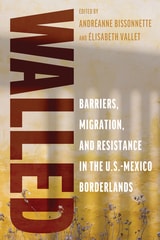
Walled
Barriers, Migration, and Resistance in the U.S.-Mexico BorderlandsEdited by Andréanne Bissonnette and Élisabeth Vallet
University of Arizona Press, 2025
From the bustling San Diego–Tijuana region to the borderlands of Brownsville-Matamoros, the U.S.-Mexico border is marked by extensive stretches of walls. Over the past thirty years, these walls have evolved from purely physical barriers into multifaceted systems encompassing administrative, legal, legislative, and biometric components. This volume invites readers to reflect on the transformations of the border since the construction of the initial fourteen miles of wall, and the subsequent addition of 1,940 miles. It provides a comprehensive exploration of the border’s evolution, and its profound and lasting impacts.
Bringing together recognized scholars in border studies, Walled delves into the varied manifestations and lived experiences associated with U.S.-Mexico border walls. The introduction by Andréanne Bissonnette and Élisabeth Vallet offers a thorough review of the border walls’ thirty-year history, placing it within a global context. Contributions offer diverse perspectives of the border experience, from state policies and migrant experiences to the daily lives of border residents. Topics such as militarization, migration, artistic resistance, and humanitarian aid are carefully examined. This volume is an essential resource for policymakers, activists, scholars, and anyone seeking to understand the intricate realities of border communities and the far-reaching consequences of border policies.
Contributors
Susana Báez-Ayala
Andréanne Bissonnette
Mathilde Bourgeon
Silvia M. Chávez-Baray
Irasema Coronado
Thalia D’Aragon-Giguère
Erin Hoekstra
Anthony Jimenez
T. Mark Montoya
Eva M. Moya
Scott Nicol
Héctor Antonio Padilla Delgado
Lisa Sun-Hee Park
Tony Payan
Patricia Ravelo-Blancas
David A. Shirk
Allyson Teague
Élisabeth Vallet
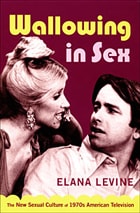
Wallowing in Sex
The New Sexual Culture of 1970s American TelevisionElana Levine
Duke University Press, 2007
Wallowing in Sex is a lively analysis of the key role of commercial television in the new sexual culture of the 1970s. Elana Levine explores sex-themed made-for-TV movies; female sex symbols such as the stars of Charlie’s Angels and Wonder Woman; the innuendo-driven humor of variety shows (The Sonny and Cher Comedy Hour, Laugh-In), sitcoms (M*A*S*H, Three’s Company), and game shows (Match Game); and the proliferation of rape plots in daytime soap operas. She also uncovers those sexual topics that were barred from the airwaves. Along with program content, Levine examines the economic motivations of the television industry, the television production process, regulation by the government and the tv industry, and audience responses. She demonstrates that the new sexual culture of 1970s television was a product of negotiation between producers, executives, advertisers, censors, audiences, performers, activists, and many others. Ultimately, 1970s television legitimized some of the sexual revolution’s most significant gains while minimizing its more radical impulses.

Walls
Enclosure and Ethics in the Modern LandscapeThomas Oles
University of Chicago Press, 2014
In Walls, Oles shows how our minds and our politics are shaped by–and shape–our divisions in the landscape. He traces the rich array of practices and meanings connected to the making and marking of boundaries across history and prehistory, and he describes how these practices have declined in recent centuries. The consequence, he argues, is all around us in the contemporary landscape, riven by walls shoddy in material and mean in spirit. Yet even today, Oles demonstrates, every wall remains potentially an opening, a stage, that critical place in the landscape where people present themselves and define their obligations to one another. In an evocative epilogue, Oles brings to life a society of productive, intentional, and ethical enclosure—one that will leave readers more hopeful about the divided landscapes of the future.
Walmart in the Global South
Workplace Culture, Labor Politics, and Supply ChainsEdited by Carolina Bank Muñoz, Bridget Kenny,and Antonio Stecher
University of Texas Press, 2018
As the largest private employer in the world, Walmart dominates media and academic debate about the global expansion of transnational retail corporations and the working conditions in retail operations and across the supply chain. Yet far from being a monolithic force conquering the world, Walmart must confront and adapt to diverse policies and practices pertaining to regulation, economy, history, union organization, preexisting labor cultures, and civil society in every country into which it enters. This transnational aspect of the Walmart story, including the diversity and flexibility of its strategies and practices outside the United States, is mostly unreported.
Walmart in the Global South presents empirical case studies of Walmart’s labor practices and supply chain operations in a number of countries, including Chile, Brazil, Argentina, Nicaragua, Mexico, South Africa, and Thailand. It assesses the similarities and differences in Walmart’s acceptance into varying national contexts, which reveals when and how state regulation and politics have served to redirect company practice and to what effect. Regulatory context, state politics, trade unions, local cultures, and global labor solidarity emerge as vectors with very different force around the world. The volume’s contributors show how and why foreign workers have successfully, though not uniformly, driven changes in Walmart’s corporate culture. This makes Walmart in the Global South a practical guide for organizations that promote social justice and engage in worker struggles, including unions, worker centers, and other nonprofit entities.

Wandering Spirits
Loneliness and Longing in GreenlandJanne Flora
University of Chicago Press, 2019
In this innovative study, Flora focuses on Inuit communities in Greenland and addresses a central puzzle: their alarmingly high suicide rate. She explores the deep connections between loneliness and modernity in the Arctic, tracing the history of Greenland and analyzing the social dynamics that shaped it. Flora’s thorough, sensitive engagement with the families that make up these communities uncovers the complex interplay between loneliness and a host of economic and environmental practices, including the widespread local tradition of hunting. Wandering Spirits offers a vivid portrait of a largely overlooked world, in all its fragility and nuance, while engaging with core anthropological concerns of kinship and the structure of social relations.
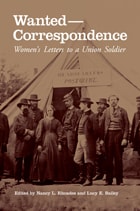
Wanted—Correspondence
Women’s Letters to a Union SoldierNancy L. Rhoades
Ohio University Press, 2009
A unique collection of more than 150 letters written to an Ohio serviceman during the American Civil War that offers glimpses of women’s lives as they waited, worked, and wrote from the Ohio home front. The letters reveal fascinating details of the lives of mostly young, single women—friends, acquaintances, love interests, and strangers who responded to one Union soldier’s advertisement for correspondents. Almost all of the women who responded to Lieutenant Edwin Lewis Lybarger’s lonely-hearts newspaper advertisement lived in Ohio and supported the Union. Lybarger carried the collection of letters throughout three years of military service, preserved them through his life, and left them to be discovered in an attic trunk more than a century after Lee’s surrender.
Women’s letter writing functioned as a form of “war work” that bolstered the spirits of enlisted men and “kinship work” that helped forge romantic relationships and sustain community bonds across the miles. While men’s letters and diaries abound in Civil War history, less readily available are comprehensive collections of letters from middle-class and rural women that survived the weathering of marches, camp life, and battles to emerge unscathed from men’s knapsacks at war’s end.
The collection is accompanied by a detailed editorial introduction that highlights significant themes in the letters. Together, they contribute to the still-unfolding historical knowledge concerning Northern women’s lives and experiences during this significant period in American history.
War Stories
Suffering and Sacrifice in the Civil War NorthFrances M. Clarke
University of Chicago Press, 2011
The American Civil War is often seen as the first modern war, not least because of its immense suffering. Yet unlike later conflicts, it did not produce an outpouring of disillusionment or cynicism, as most people continued to portray the war in highly sentimental and patriotic terms. While scholars typically dismiss this everyday writing as simplistic or naïve, Frances M. Clarke argues that we need to reconsider the letters, diaries, songs, and journalism penned by Union soldiers and their caregivers to fully understand the war’s impact and meaning.
In War Stories, Clarke revisits the most common stories that average Northerners told in hopes of redeeming their suffering and loss—stories that enabled people to make sense of their hardship, and to express their beliefs about religion, community, and personal character. From tales of Union soldiers who died heroically to stories of tireless volunteers who exemplified the Republic’s virtues, War Stories sheds new light on this transitional moment in the history of war, emotional culture, and American civic life.
War and Public Memory
Case Studies in Twentieth-Century EuropeDavid A. Messenger
University of Alabama Press, 2020
In order to understand the history of twentieth-century Europe, we must first appreciate and accept how different societies and cultures remember their national conflicts. We must also be aware of the ways that those memories evolve over time. In War and Public Memory: Case Studies in Twentieth-Century Europe, Messenger outlines the relevant history of war and its impact on different European nations and assesses how and where the memory of these conflicts emerges in political and public discourse and in the public sphere and public spaces of Europe.
The case studies presented emphasize the major wars fought on European soil as well as the violence perpetrated against civilian populations. Each chapter begins with a brief overview of the conflict and then proceeds with a study of how memory of that struggle has entered into public consciousness in different national societies. The focus throughout is on collective social, cultural, and public memory, and in particular how memory has emerged in public spaces throughout Europe, such as parks, museums, and memorial sites.
Messenger discusses memories of the First World War for both the victors and the vanquished as well as their successor states. Other events discussed include the Bolshevik Revolution and subsequent conflicts in the former Soviet Union, the Armenian genocide, the collapse of Yugoslavia, the legacy of the civil war in Spain, Germanys reckoning with its Nazi past, and the memory of occupation and the Holocaust in France and Poland.
War on Autism
On the Cultural Logic of Normative ViolenceAnne McGuire
University of Michigan Press, 2016
Warring Genealogies
Race, Kinship, and the Korean WarJoo Ok Kim
Temple University Press, 2022
Warring Genealogies examines the elaboration of kinships between Chicano/a and Asian American cultural production, such as the 1954 proxy adoption of a Korean boy by Leavenworth prisoners. Joo Ok Kim considers white supremacist expressions of kinship—in prison magazines, memorials, U.S. military songbooks—as well as critiques of such expressions in Chicana/o and Korean diasporic works to conceptualize racialized formations of kinship emerging from the Korean War.
Warring Genealogies unpacks writings by Rolando Hinojosa (Korean Love Songs, The Useless Servants) and Luis Valdez (I Don’t Have to Show You No Stinking Badges, Zoot Suit) to show the counter-representations of the Korean War and the problematic depiction of the United States as a benevolent savior. Kim also analyzes Susan Choi’s The Foreign Student as a novel that proposes alternative temporalities to dominant Korean War narratives. In addition, she examines Chicano military police procedurals, white supremacist women’s organizations, and the politics of funding Korean War archives.
Kim’s comparative study Asian American and Latinx Studies makes insightful connections about race, politics, and citizenship to critique the Cold War conception of the “national family.”
Wasted Wombs
Navigating Reproductive Interruptions in CameroonErica van der Sijpt
Vanderbilt University Press, 2017
Providing an intimate look into these processes, Wasted Wombs shows how Gbigbil women constantly shift their interpretations of when a pregnancy starts, what it contains, and what is lost in case of a reproductive interruption, in contrast to Western conceptions of fertility and loss. Depending on the context and on their life aspirations—be it marriage and motherhood, or an educational trajectory and employment, or profitable sexual affairs with so-called "big fish"—women negotiate and manipulate the meanings and effects of reproductive interruptions. Paradoxically, they often do so while portraying themselves as powerless. Wasted Wombs carefully analyzes such tactics in relation to the various social predicaments that emerge around reproductive interruptions, as well as the capricious workings of women's physical bodies.
Wastelanding
Legacies of Uranium Mining in Navajo CountryTraci Brynne Voyles
University of Minnesota Press, 2015
Wastelanding tells the history of the uranium industry on Navajo land in the U.S. Southwest, asking why certain landscapes and the peoples who inhabit them come to be targeted for disproportionate exposure to environmental harm. Uranium mines and mills on the Navajo Nation land have long supplied U.S. nuclear weapons and energy programs. By 1942, mines on the reservation were the main source of uranium for the top-secret Manhattan Project. Today, the Navajo Nation is home to more than a thousand abandoned uranium sites. Radiation-related diseases are endemic, claiming the health and lives of former miners and nonminers alike.
Traci Brynne Voyles argues that the presence of uranium mining on Diné (Navajo) land constitutes a clear case of environmental racism. Looking at discursive constructions of landscapes, she explores how environmental racism develops over time. For Voyles, the “wasteland,” where toxic materials are excavated, exploited, and dumped, is both a racial and a spatial signifier that renders an environment and the bodies that inhabit it pollutable. Because environmental inequality is inherent in the way industrialism operates, the wasteland is the “other” through which modern industrialism is established.
In examining the history of wastelanding in Navajo country, Voyles provides “an environmental justice history” of uranium mining, revealing how just as “civilization” has been defined on and through “savagery,” environmental privilege is produced by portraying other landscapes as marginal, worthless, and pollutable.
Watching Our Weights
The Contradictions of Televising Fatness in the “Obesity Epidemic”Zimdars, Melissa
Rutgers University Press, 2019
Watching Our Weights explores the competing and contradictory fat representations on television that are related to weight-loss and health, medicalization and disease, and body positivity and fat acceptance. While television—especially reality television—is typically understood to promote individual self-discipline and expert interventions as necessary for transforming fat bodies into thin bodies, fat representations and narratives on television also create space for alternative as well as resistant discourses of the body. Melissa Zimdars thus examines the resistance inherent within TV representations and narratives of fatness as a global health issue, the inherent and overt resistance found across stories of medicalized fatness, and programs that actively avoid dieting narratives in favor of less oppressive ways of thinking about the fat body. Watching Our Weights weaves together analyses of media industry lore and decisions, communication and health policies, medical research, activist projects, popular culture, and media texts to establish both how television shapes our knowledge of fatness and how fatness helps us better understand contemporary television.
Watching Vesuvius
A History of Science and Culture in Early Modern ItalySean Cocco
University of Chicago Press, 2012
Watching While Black Rebooted!
The Television and Digitality of Black AudiencesBeretta E. Smith-Shomade
Rutgers University Press, 2024
Chapters rethink such historically significant programs as Roots and Underground, such seemingly innocuous programs as Soul Food, and such contemporary and culturally complicated programs as Being Mary Jane and Atlanta. The book makes a case for the centrality of these programs while always recognizing the racial dynamics that continue to shape Black representation on the small screen. Painting a decidedly introspective portrait across forty years of Black television, Watching While Black Rebooted sheds much-needed light on under examined demographics, broadens common audience considerations, and gives deference to the preferences of audiences and producers of Black-targeted programming.

Watching While Black
Centering the Television of Black AudiencesSmith-Shomade, Beretta E
Rutgers University Press, 2013
2013 Choice Outstanding Academic Title
Television scholarship has substantially ignored programming aimed at Black audiences despite a few sweeping histories and critiques. In this volume, the first of its kind, contributors examine the televisual diversity, complexity, and cultural imperatives manifest in programming directed at a Black and marginalized audience.
Watching While Black considers its subject from an entirely new angle in an attempt to understand the lives, motivations, distinctions, kindred lines, and individuality of various Black groups and suggest what television might be like if such diversity permeated beyond specialized enclaves. It looks at the macro structures of ownership, producing, casting, and advertising that all inform production, and then delves into television programming crafted to appeal to black audiences—historic and contemporary, domestic and worldwide.
Chapters rethink such historically significant programs as Roots and Black Journal, such seemingly innocuous programs as Fat Albert and bro’Town, and such contemporary and culturally complicated programs as Noah’s Arc, Treme, and The Boondocks. The book makes a case for the centrality of these programs while always recognizing the racial dynamics that continue to shape Black representation on the small screen. Painting a decidedly introspective portrait across forty years of Black television, Watching While Black sheds much-needed light on under-examined demographics, broadens common audience considerations, and gives deference to the the preferences of audiences and producers of Black-targeted programming.
Water and Power in Highland Peru
The Cultural Politics of Irrigation and DevelopmentPaul H Gelles
Rutgers University Press, 2000
Cabanaconde, a town of 5,000 people, is located in the arid Andean highlands. It is dominated by the foreboding Hualca Hualca mountain peak that is the source of this town’s much-needed water. How the villagers obtain this water, Paul Gelles writes, is not a simple process: the politics of irrigation in this area reflect a struggle for control of vital resources, deeply rooted in the clash between local, ritualized models of water distribution and the secular model put forth by the Peruvian state. Water and Power in Highland Peru provides an insightful case study on the intense conflicts over water rights, and a framework for studying ethnic conflict and the effects of “development,” not only in Peru, but in other areas as well.
Most of the inhabitants of Cabanaconde do not identify themselves with the dominant Spanish-speaking culture found in Peru. And the Peruvian state, grounded in a racist, post-Colonial ethos, challenges the village’s long-standing, non-Western framework for organizing water management.
Gelles demonstrates that Andean culture is dynamic and adaptive, and it is a powerful source of ethnic identity, even for those who leave the village to live elsewhere. Indigenous rituals developed in this part of the world, he states, have become powerful tools of resistance against interference by local elites and the present-day Peruvian state. Most importantly, the micropolitics of Cabanaconde provide a window into a struggle that is taking place around the world.
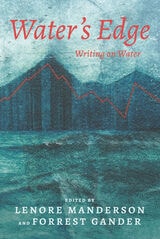
Water's Edge
Writing on WaterEdited by Lenore Manderson and Forrest Gander
Northwestern University Press, 2023
A wide-ranging consideration of water’s plenitude and paucity—and of our relationship to its many forms
Water is quotidian, ubiquitous, precious, and precarious. With their roots in this element, the authors of Water’s Edge reflect on our natural environment: its forms, textures, and stewardship. Born from a colloquium organized by the editors at the Institute at Brown for Environment and Society, the anthology features a diverse group of writers and artists from half a dozen countries, from different fields of scholarship and practice: artists, biologists, geologists, poets, ecocritics, actors, and anthropologists. The contributors explore and celebrate water while reflecting on its disturbances and pollution, and their texts and art play with the boundaries by which we differentiate literary forms.
In the creative nonfiction, poetry, and visual art collected here, water moves from backdrop to subject. Ashley Dawson examines the effects of industrial farming on the health of local ecosystems and economies. Painter Kulvinder Kaur Dhew captures water’s brilliance and multifaceted reflections through a series of charcoal pieces that interlace the collection. Poet Arthur Sze describes the responsibility involved in the careful management of irrigation ditches in New Mexico. Rather than concentrating their thoughts into a singular, overwhelming argument, the authors circulate moments of apprehension, intimation, and felt experience. They are like tributaries, each carrying, in a distinctive style, exigent and often intimate reports concerning a substance upon which all living organisms depend.
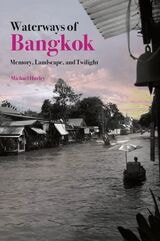
Waterways of Bangkok
Memory, Landscape and TwilightMichael Hurley
National University of Singapore Press, 2025
This ethnographic study explores memory along the waterways, a realm of boats and hovels, merchants and war captives, temples and ghosts. The river also flows into the dissonant realities of Thailand, a country of deep conflicts over power and national ideology. Based on research in a time of political turmoil, centered on the late years of the long-reigning monarch, Rama IX, this book invites readers to look beyond established images of Thai society. More broadly, this work will speak to readers interested in water, cities, and the bonds of memory and landscape.

Way Up North in Dixie
A Black Family's Claim to the Confederate AnthemHoward L. Sacks and Judith Rose Sacks
University of Illinois Press, 2003
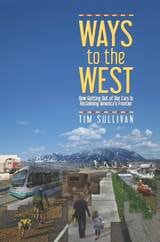
Ways to the West
How Getting Out of Our Cars Is Reclaiming America's FrontierTim Sullivan
Utah State University Press, 2015
In Ways to the West, Tim Sullivan embarks on a car-less road trip through the Intermountain West, exploring how the region is taking on what may be its greatest challenge: sustainable transportation. Combining personal travel narrative, historical research, and his professional expertise in urban planning, Sullivan takes a critical yet optimistic and often humorous look at how contemporary Western cities are making themselves more hospitable to a life less centered on the personal vehicle.
The modern West was built by the automobile, but so much driving has jeopardized the West’s mystic hold on the American future. At first, automobility heightened the things that made the West great, but love became dependence, and dependence became addiction. Via his travels by bicycle, bus, and train through Las Vegas, Phoenix, Denver, Boise, Salt Lake City, and Portland, Sullivan captures the modern transportation evolution taking place across the region and the resulting ways in which contemporary Western communities are reinterpreting classic American values like mobility, opportunity, adventure, and freedom.
Finding a West created, lost, and reclaimed, Ways to the West will be of great interest to anyone curious about sustainable transportation and the history, geography, and culture of the American West.
Wayward Reproductions
Genealogies of Race and Nation in Transatlantic Modern ThoughtAlys Eve Weinbaum
Duke University Press, 2004
Gracefully traversing a wide range of discourses––including literature, evolutionary theory, early anthropology, Marxism, feminism, and psychoanalysis––Weinbaum traces a genealogy of the race/reproduction bind within key intellectual formations of the late nineteenth and twentieth centuries. She examines two major theorists of genealogical thinking—Friedrich Nietzsche and Michel Foucault—and unearths the unacknowledged ways their formulations link race and reproduction. She explores notions of kinship and the replication of racial difference that run through Charlotte Perkins Gilman’s work; Marxist thinking based on Friedrich Engel’s The Origin of the Family; Charles Darwin’s theory of sexual selection; and Sigmund Freud’s early studies on hysteria. She also describes W. E. B. Du Bois’s efforts to transcend ideas about the reproduction of race that underwrite citizenship and belonging within the United States. In a coda, Weinbaum brings the foregoing analysis to bear on recent genomic and biotechnological innovations.
We Are All Equal
Student Culture and Identity at a Mexican Secondary School, 1988–1998Bradley A. U. Levinson
Duke University Press, 2001
Exploring how students develop a cultural “game of equality” that enables them to identify—across typical class and social boundaries—with their peers, the school, and the nation, Levinson considers such issues as the organizational and discursive resources that students draw on to maintain this culture. He also engages cultural studies, media studies, and globalization theory to examine the impact of television, music, and homelife on the students and thereby better comprehend—and problematize—the educational project of the state. Finding that an ethic of solidarity is sometimes used to condemn students defined as different or uncooperative and that little attention is paid to accommodating the varied backgrounds of the students—including their connection to indigenous, peasant, or working class identities—Levinson reveals that their “schooled identity” often collapses in the context of migration to the United States or economic crisis in Mexico. Finally, he extends his study to trace whether the cultural game is reinforced or eroded after graduation as well as its influence relative to the forces of family, traditional gender roles, church, and global youth culture.
We Are All Equal will be of particular interest to educators, sociologists, Latin Americanists, and anthropologists.
We Are Civic Media
Sangita Shresthova, Dan Sinker, Pratik Nyaupane, Sophie Madej, and Colin Maclay
Northwestern University Press, 2025
“Civic media” is the use of contemporary technologies to connect communities, inspire action, build civic capacity, and sustain social change efforts. Written by artists, creators, storytellers, organizers, and others working at the intersections of technology, social justice, and culture, this book summons civic media through the lived experiences of its contributors.
Latoya Peterson delves into the therapeutic power of gaming; Akilah Hughes discusses identity and community through the lens of her campaign to change her high school's racist mascot; and Tyree Boyd-Pates emphasizes the potential power of museum curation to challenge power dynamics and bridge digital and physical realms. Through the experiences of these grassroots practitioners and many others, We Are Civic Media offers accessible insights for those interested in understanding, respecting, and practicing civic media.
We Are Having This Conversation Now
The Times of AIDS Cultural ProductionAlexandra Juhasz and Theodore Kerr
Duke University Press, 2022
We Are Left without a Father Here
Masculinity, Domesticity, and Migration in Postwar Puerto RicoEileen J. Suárez Findlay
Duke University Press, 2015
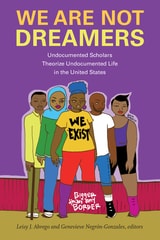
We Are Not Dreamers
Undocumented Scholars Theorize Undocumented Life in the United StatesLeisy J. Abrego and Genevieve Negrón-Gonzales, editors
Duke University Press, 2020
Contributors. Leisy J. Abrego, Gabrielle Cabrera, Gabriela Garcia Cruz, Lucía León, Katy Joseline Maldonado Dominguez, Grecia Mondragón, Gabriela Monico, Genevieve Negrón-Gonzales, Maria Liliana Ramirez, Joel Sati, Audrey Silvestre, Carolina Valdivia
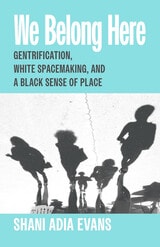
We Belong Here
Gentrification, White Spacemaking, and a Black Sense of PlaceShani Adia Evans
University of Chicago Press, 2025
In We Belong Here, sociologist Shani Adia Evans offers an intimate look at gentrification from the inside, documenting the reactions of Albina residents as the racial demographics of their neighborhood shift. As White culture becomes centered in Northeast, Black residents recount their experiences with what Evans refers to as “White watching,” the questioning look on the faces of White people they encounter, which conveys an exclusionary message: “What are you doing here?” This, Evans shows, is a prime example of what she calls “White spacemaking”: the establishment of White space—spaces in which Whiteness is assumed to be the norm and non-Whites are treated with suspicion—in formerly non-White neighborhoods. Evans also documents Black residents’ efforts to create and maintain places for Black belonging in White-dominated Portland. While gentrification typically describes socioeconomic changes that may have racial implications, White spacemaking allows us to understand racism as a primary mechanism of neighborhood change. We Belong Here illuminates why gentrification and White spacemaking should be examined as intersecting, but not interchangeable, processes of neighborhood change.

We Gotta Get Out of This Place
The Soundtrack of the Vietnam WarDoug Bradley
University of Massachusetts Press, 2015
Rolling Stone's #1 Music Book of 2015
For a Kentucky rifleman who spent his tour trudging through Vietnam's Central Highlands, it was Nancy Sinatra's “These Boots Are Made for Walkin'.” For a “tunnel rat” who blew smoke into the Viet Cong's underground tunnels, it was Jimi Hendrix's “Purple Haze.” For a Black Marine distraught over the assassination of Martin Luther King Jr., it was Aretha Franklin's “Chain of Fools.” And for countless other Vietnam vets, it was “I Feel Like I'm Fixin' to Die,” “Who'll Stop the Rain,” or the song that gives this book its title.
In We Gotta Get Out of This Place, Doug Bradley and Craig Werner place popular music at the heart of the American experience in Vietnam. They explore how and why U.S. troops turned to music as a way of connecting to each other and the World back home and of coping with the complexities of the war they had been sent to fight. They also demonstrate that music was important for every group of Vietnam veterans—black and white, Latino and Native American, men and women, officers and “grunts”—whose personal reflections drive the book's narrative. Many of the voices are those of ordinary soldiers, airmen, seamen, and marines. But there are also “solo” pieces by veterans whose writings have shaped our understanding of the war—Karl Marlantes, Alfredo Vea, Yusef Komunyakaa, Bill Ehrhart, Arthur Flowers—as well as songwriters and performers whose music influenced soldiers' lives, including Eric Burdon, James Brown, Bruce Springsteen, Country Joe McDonald, and John Fogerty. Together their testimony taps into memories—individual and cultural—that capture a central if often overlooked component of the American war in Vietnam.
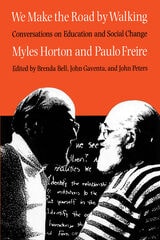
We Make the Road by Walking
Conversations on Education and Social ChangeMyles Horton
Temple University Press, 1990
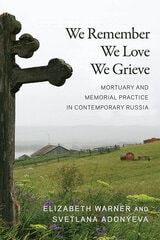
We Remember, We Love, We Grieve
Mortuary and Memorial Practice in Contemporary RussiaElizabeth Warner and Svetlana Adonyeva
University of Wisconsin Press, 2021
“We remember, we love, we grieve” is a common epitaph in this part of the world. As contemporary Russia contends with the Soviet Union’s legacy of dismantling older ways of life, the phrase ripples beyond individual loss—it encapsulates communities’ determination to preserve their customs when faced with oppression. This volume offers insight into a core cultural practice, exploring the dynamism of tradition.
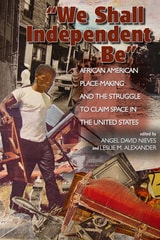
We Shall Independent Be
African American Place-Making and the Struggle to Claim Space in the United StatesAngel David Nieves
University Press of Colorado, 2008
Contributors define space to include physical, social, and intellectual sites throughout the Northern and Southern regions of the United States, ranging from urban milieus to the suburbs and even to swamps and forests. They explore under-represented locations such as burial grounds, courtrooms, schools, and churches. Moreover, contributors demonstrate how Black consciousness and ideology challenged key concepts of American democracy - such as freedom, justice, citizenship, and equality - establishing African American space in social and intellectual areas.
Ultimately, "We Shall Independent Be " recovers the voices of African American men and women from the antebellum United States through the present and chronicles their quest to assert their right to a place in American society. By identifying, examining, and telling the stories of contested sites, this volume demonstrates the power of African American self-definition and agency in the process of staking a physical and ideological claim to public space
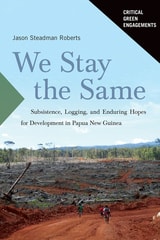
We Stay the Same
Subsistence, Logging, and Enduring Hopes for Development in Papua New GuineaJason Steadman Roberts
University of Arizona Press, 2024
Following a long history of smaller-scale and largely unsuccessful resource development efforts, New Hanover became the site of three multinational-controlled special agricultural and business leases (SABLs) that combined to cover over 75 percent of the island for ninety-nine-year lease terms. These agroforestry projects were part of a national effort to encourage “sustainable” rural development by tapping into the growing global demand for agricultural lands and crops like oil palm and biofuels. They were supposed to succeed where the smaller-scale projects of the past had failed. Unfortunately, these SABLs resulted in significant forest loss and livelihood degradation, while doing little to promote the type of economic development that many Lavongai had been hoping for.
It is within this context that We Stay the Same grounds questions of hope for transformative economic change within Lavongai assessments of the inequitable relationships between global processes of resource development and the local lives that have become increasingly defined by the necessities and failures of these processes. Written in a clear and relatable style for students, We Stay the Same combines ethnographic and ecological research to show how the Lavongai continue to survive and make meaningful lives in a situation where their own hopes for a better future have often been used against them as a mechanism of a more distantly profitable dispossession.
We Take Care of Our Own
Faith, Class, and Politics in the Art of Bruce SpringsteenJune Skinner Sawyers
Rutgers University Press, 2024
We
Reviving Social HopeRonald Aronson
University of Chicago Press, 2017
Beneath today’s crisis Aronson examines our heartbreaking story: a century of catastrophic violence and the bewildering ambiguity of progress—all of which have contributed to the evaporation of social hope. As he shows, we are now in a time when hope is increasingly privatized, when—despite all the ways we are connected to each other—we are desperately alone, struggling to weather the maelstrom around us, demoralized by the cynicism that permeates our culture and politics, and burdened with finding personal solutions to social problems.
Yet, Aronson argues, even at a time when false hopes are rife, social hope still persists. Carefully exploring what we mean when we say we “hope” and teasing hope apart from its dangerously misconstrued sibling, “progress,” he locates seeds of real change. He argues that always underlying our experience—even if we completely ignore it—is the fact of our social belonging, and that this can be reactivated into a powerful collective force, an active we. He looks to various political movements, from the massive collective force of environmentalists to the movements around Sanders and Jeremy Corbyn, as powerful examples of socially energized, politically determined, and actionably engaged forms of hope. Even in this age of Donald Trump, the result is an illuminating and inspiring call that anyone can clearly hear: we can still create a better future for everyone, but only if we resist false hopes and act together.
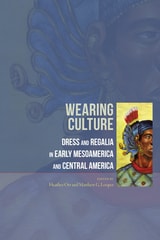
Wearing Culture
Dress and Regalia in Early Mesoamerica and Central AmericaHeather Orr
University Press of Colorado, 2014
Documenting the elaborate practices of costume, adornment, and body modification in Panama, Costa Rica, Nicaragua, Honduras, Oaxaca, the Soconusco region of southern Mesoamerica, the Gulf Coast Olmec region (Olman), and the Maya lowlands, this book demonstrates that adornment was used as a tool for communicating status, social relationships, power, gender, sexuality, behavior, and political, ritual, and religious identities. Despite considerable formal and technological variation in clothing and ornamentation, the early indigenous cultures of these regions shared numerous practices, attitudes, and aesthetic interests. Contributors address technological development, manufacturing materials and methods, nonfabric ornamentation, symbolic dimensions, representational strategies, and clothing as evidence of interregional sociopolitical exchange.
Focusing on an important period of cultural and artistic development through the lens of costuming and adornment, Wearing Culture will be of interest to scholars of pre-Hispanic and pre-Columbian studies.
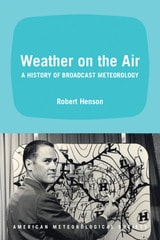
Weather on the Air
A History of Broadcast MeteorologyRobert Henson
American Meteorological Society, 2010
From low humor to high drama, TV weather reporting has encompassed an enormous range of styles and approaches, triggering chuckles, infuriating the masses, and at times even saving lives. In Weather on the Air,meteorologist and science journalist Robert Henson covers it all—the people, technology, science, and show business that combine to deliver the weather to the public each day.
The first comprehensive history of its kind, Weather on the Air explores the many forces that have shaped weather broadcasts over the years, including the long-term drive to professionalize weathercasting, the complex relations between government and private forecasters, and the effects of climate-change science and the Internet on today’s broadcasts. Dozens of photos and anecdotes accompany Henson’s more than two decades of research to document the evolution of weathercasts, from their primitive beginnings on the radio to the high-gloss, graphics-laden segments we watch on television every morning.
This engaging study will be an invaluable tool for students of broadcast meteorology and mass communication and an entertaining read for anyone fascinated by the public face of weather.
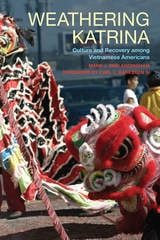
Weathering Katrina
Culture and Recovery among Vietnamese AmericansMark J. VanLandingham
Russell Sage Foundation, 2017
In 2005, Hurricane Katrina devastated New Orleans. The principal Vietnamese-American enclave was a remote, low-income area that flooded badly. Many residents arrived decades earlier as refugees from the Vietnam War and were marginally fluent in English. Yet, despite these poor odds of success, the Vietnamese made a surprisingly strong comeback in the wake of the flood. In Weathering Katrina, public health scholar Mark VanLandingham analyzes their path to recovery, and examines the extent to which culture helped them cope during this crisis.
Contrasting his longitudinal survey data and qualitative interviews of Vietnamese residents with the work of other research teams, VanLandingham finds that on the principal measures of disaster recovery—housing stability, economic stability, health, and social adaptation—the Vietnamese community fared better than other communities. By Katrina’s one-year anniversary, almost 90 percent of the Vietnamese had returned to their neighborhood, higher than the rate of return for either blacks or whites. They also showed much lower rates of post-traumatic stress disorder than other groups. And by the second year after the flood, the employment rate for the Vietnamese had returned to its pre-Katrina level.
While some commentators initially attributed this resilience to fairly simple explanations such as strong leadership or to a set of vague cultural strengths characteristic of the Vietnamese and other “model minorities”, VanLandingham shows that in fact it was a broad set of factors that fostered their rapid recovery. Many of these factors had little to do with culture. First, these immigrants were highly selected—those who settled in New Orleans enjoyed higher human capital than those who stayed in Vietnam. Also, as a small, tightly knit community, the New Orleans Vietnamese could efficiently pass on information about job leads, business prospects, and other opportunities to one another. Finally, they had access to a number of special programs that were intended to facilitate recovery among immigrants, and enjoyed a positive social image both in New Orleans and across the U.S., which motivated many people and charities to offer the community additional resources. But culture—which VanLandingham is careful to define and delimit—was important, too. A shared history of overcoming previous challenges—and a powerful set of narratives that describe these successes; a shared set of perspectives or frames for interpreting events; and a shared sense of symbolic boundaries that distinguish them from broader society are important elements of culture that provided the Vietnamese with some strong advantages in the post-Katrina environment.
By carefully defining and disentangling the elements that enabled the swift recovery of the Vietnamese in New Orleans, Weathering Katrina enriches our understanding of this understudied immigrant community and of why some groups fare better than others after a major catastrophe like Katrina.
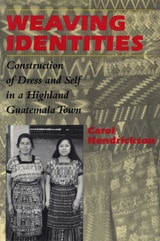
Weaving Identities
Construction of Dress and Self in a Highland Guatemala TownBy Carol Hendrickson
University of Texas Press, 1995
Traje, the brightly colored traditional dress of the highland Maya, is the principal visual expression of indigenous identity in Guatemala today. Whether worn in beauty pageants, made for religious celebrations, or sold in tourist markets, traje is more than "mere cloth"—it plays an active role in the construction and expression of ethnicity, gender, education, politics, wealth, and nationality for Maya and non-Maya alike.
Carol Hendrickson presents an ethnography of clothing focused on the traje—particularly women's traje—of Tecpán, Guatemala, a bi-ethnic community in the central highlands. She covers the period from 1980, when the recent round of violence began, to the early 1990s, when Maya revitalization efforts emerged.
Using a symbolic analysis informed by political concerns, Hendrickson seeks to increase the value accorded to a subject like weaving, which is sometimes disparaged as "craft" or "women's work." She examines traje in three dimensions—as part of the enduring images of the "Indian," as an indicator of change in the human life cycle and cloth production, and as a medium for innovation and creative expression.
From this study emerges a picture of highland life in which traje and the people who wear it are bound to tradition and place, yet are also actively changing and reflecting the wider world. The book will be important reading for all those interested in the contemporary Maya, the cultural analysis of material culture, and the role of women in culture preservation and change.
Webs of Reality
Social Perspectives on Science and ReligionStahl, William
Rutgers University Press, 2002
Science and religion are often thought to be advancing irreconcilable goals and thus to be mutually antagonistic. Yet in the often acrimonious debates between the scientific and religions communities, it is easy to lose sight of the fact that both science and religion are systems of thought and knowledge that aim to understand the world and our place in it.
Webs of Reality is a rare examination of the interrelationship between religion and science from a social science perspective, offering a broader view of the relationship, and posing practical questions regarding technology and ethics. Emphasizing how science and religion are practiced instead of highlighting the differences between them, the authors look for the subtle connections, tacit understandings, common history, symbols, and implicit myths that tie them together. How can the practice of science be understood from a religious point of view? What contributions can science make to religious understanding of the world? What contributions can the social sciences make to understanding both knowledge systems? Looking at religion and science as fields of inquiry and habits of mind, the authors discover not only similarities between them but also a wide number of ways in which they complement each other.
Welcome to the Dreamhouse
Popular Media and Postwar SuburbsLynn Spigel
Duke University Press, 2001
The volume considers not only how the media portrayed suburban family life, but also how both middle-class ideals and a perceived division between private and public worlds helped to shape the visual forms, storytelling practices, and reception of postwar media and consumer culture. Spigel also explores those aspects of suburban culture that media typically render invisible. She looks at the often unspoken assumptions about class, nation, ethnicity, race, and sexual orientation that underscored both media images (like those of 1960s space missions) and social policies of the mass-produced suburb. Issues of memory and nostalgia are central in the final section as Spigel considers how contemporary girls use television reruns as a source for women’s history and then analyzes the current nostalgia for baby boom era family ideals that runs through contemporary images of new household media technologies.
Containing some of Spigel’s well-known essays on television’s cultural history as well as new essays on a range of topics dealing with popular visual culture, Welcome to the Dreamhouse is important reading for students and scholars of media and communications studies, popular culture, American studies, women’s studies, and sociology.
Welfare Discipline
Discourse, Governance and GlobalizationSanford F. Schram
Temple University Press, 2005
In Welfare Discipline, Schram argues that it is time to take stock of the new forms of welfare and to develop even better methods to understand them. He argues for a more contextualized approach to examining welfare policy, from the use of the idea of globalization to justify cutbacks, to the increasing employment of U.S. policy discourse overseas, to the development of asset-based approaches to helping the poor.
Stressing the importance of understanding the ways we talk about welfare, how we study it, and, critically, what we do not discuss and why, Schram offers recommendations for making welfare policy both just and effective.