Results by title
1861 books match the query 'Social life and customs' and 73 start with w

WHITE TATTOO
A COLLECTION OF SHORT STORIESWilliam J. Cobb
The Ohio State University Press, 2002
The White Tattoo is a smart, always surprising collection of American stories. William J. Cobb knows and loves his character and places. His first collection of short stories, The White Tattoo, revels in the undeniable allure of the physical world even as it is juxtaposed with the twists and kinks of psychological and emotional pain. At one extreme is the tense, torturous psychology of “Motel Ice,” whose narrative voice emerges from the mind of a mentally disturbed Jehovah’s Witness gazing out on a world of temptation and redemption. Similarly hyperdramatic in its conclusion and its arc of betrayal and violent aftermath, “For All You Dorks, Blah Blah Blah” conjures up a sleepwalking, murderous father who is less culpable in the harm he causes but all the while most destructive.
Stylistically, the stories crackle, snap, and zing. Several of them, including “The Wishes,” “The Atmosphere of Vienna,” and “Dark Matter,” use an idiosyncratic, Tilt-O-Whirl narrative marked by a swirling, shifting focus and point of view, trying to create a multifaceted, complex vision of the world by dipping in and out of the consciousness of various characters.

Wake of the Unseen Object
Travels through Alaska's Native LandscapesTom Kizzia
University of Alaska Press, 2020
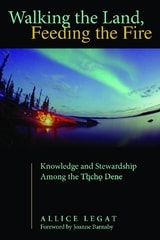
Walking the Land, Feeding the Fire
Knowledge and Stewardship Among the Tlicho DeneBy Allice Legat; Foreword by Joanne Barnaby
University of Arizona Press, 2012
In the Dene worldview, relationships form the foundation of a distinct way of knowing. For the Tlicho Dene, indigenous peoples of Canada's Northwest Territories, as stories from the past unfold as experiences in the present, so unfolds a philosophy for the future. Walking the Land, Feeding the Fire vividly shows how—through stories and relationships with all beings—Tlicho knowledge is produced and rooted in the land.
Tlicho-speaking people are part of the more widespread Athapaskan-speaking community, which spans the western sub-arctic and includes pockets in British Columbia, Alberta, California, and Arizona. Anthropologist Allice Legat undertook this work at the request of Tlicho Dene community elders, who wanted to provide younger Tlicho with narratives that originated in the past but provide a way of thinking through current critical land-use issues. Legat illustrates that, for the Tlicho Dene, being knowledgeable and being of the land are one and the same.
Walking the Land, Feeding the Fire marks the beginning of a new era of understanding, drawing both connections to and unique aspects of ways of knowing among other Dene peoples, such as the Western Apache. As Keith Basso did with his studies among the Western Apache in earlier decades, Legat sets a new standard for research by presenting Dene perceptions of the environment and the personal truths of the storytellers without forcing them into scientific or public-policy frameworks. Legat approaches her work as a community partner—providing a powerful methodology that will impact the way research is conducted for decades to come—and provides unique insights and understandings available only through traditional knowledge.

Wallbangin'
Graffiti and Gangs in L.A.Susan A. Phillips
University of Chicago Press, 1999
Anthropologist Susan Phillips enters the lives of the African-American and Chicano gang members to write a comprehensive guide to their symbolic and visual expression. She not only decodes the graffiti—explaining how, for instance, gang boundaries are visually delimited and how "memorial" graffiti functions—but she also places it in the context of the changing urban landscapes within the city. Graffiti, she argues, is inextricably linked to political change, to race, and to art, and she demonstrates how those connections are played out in contemporary L.A. Wallbangin' is, on this level, an iconography of street imagery. But it is also a very personal narrative about entering the world of L.A. street gangs—a world of pride, enemies, affirmation, and humanity where gang members use graffiti to redefine their social and political position in society.
To many outsiders, graffiti is cryptic, senseless scribbling. But Phillips explains it as an ingenious and creative solution to the disenfranchisement felt by those who produce it. With personal narratives, provocative photography, and contemporary voices, Wallbangin' unlocks the mysteries behind street-level ideologies and their visual manifestations.
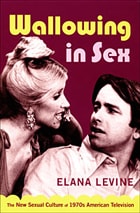
Wallowing in Sex
The New Sexual Culture of 1970s American TelevisionElana Levine
Duke University Press, 2007
Wallowing in Sex is a lively analysis of the key role of commercial television in the new sexual culture of the 1970s. Elana Levine explores sex-themed made-for-TV movies; female sex symbols such as the stars of Charlie’s Angels and Wonder Woman; the innuendo-driven humor of variety shows (The Sonny and Cher Comedy Hour, Laugh-In), sitcoms (M*A*S*H, Three’s Company), and game shows (Match Game); and the proliferation of rape plots in daytime soap operas. She also uncovers those sexual topics that were barred from the airwaves. Along with program content, Levine examines the economic motivations of the television industry, the television production process, regulation by the government and the tv industry, and audience responses. She demonstrates that the new sexual culture of 1970s television was a product of negotiation between producers, executives, advertisers, censors, audiences, performers, activists, and many others. Ultimately, 1970s television legitimized some of the sexual revolution’s most significant gains while minimizing its more radical impulses.
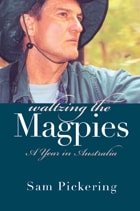
Waltzing the Magpies
A Year in AustraliaSam Pickering
University of Michigan Press, 2004
"The art of the essay as delivered by Mr. Pickering is the art of the front porch ramble."
---The New York Times Book Review
"Reading Pickering . . . is like taking a walk with your oldest, wittiest friend."
---Smithsonian
"What a joy it is to 'mess around' with Professor Sam Pickering!"
---The Chattanooga Times
"Pickering is a barefoot observer of the quotidian who revels in the spectacle and its gift for surprise, prefers the rumpled to the starched, has raised puttering and messing about to an art form, and wrings from it more than a pennyworth of happiness and a life well lived."
---Kirkus Reviews
The movie Dead Poets Society is where most Americans first met Sam Pickering, the University of Connecticut English professor. Robin Williams plays the lead character (loosely based on Pickering), an idiosyncratic instructor who employs some over-the-top teaching methods to keep his subjects fresh and his students learning.
Fewer know that Pickering is the author of more than 16 books and nearly 200 articles, or that he's inspired thousands of university students to think in new ways. And, while Williams may have captured Pickering's madcap classroom antics, he didn't uncover the other side of the author-Sam Pickering as one of our great American men of letters. Like the music of Mozart, the painting of Picasso, or the poetry of Emily Dickinson, you can spot Pickering's writing a mile away; there's no mistaking the Pickering pen. As an ample demonstration of the author's literary gifts, Waltzing the Magpies is his unabashedly lush and Technicolor travelogue from Down Under.
On the face of it, Waltzing is the chronicle of a sabbatical year spent with family in Australia. Yet beneath the surface Pickering's big themes-family, nature, seizing the moment-move in a powerful current that frequently bursts out in moments of ecstatic revelation and intense sensual flourish. Through it all Pickering weaves stories from his fictional Southern town of Carthage, Tennessee, especially when the goings of the outside world get rough.
Waltzing the Magpies is classic Pickering at the height of his literary powers, and places him in the company of such great American essayists as E. B. White and James Thurber, but with an irony and observational prowess that is pure Pickering.
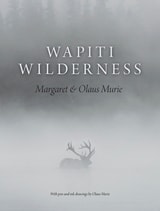
Wapiti Wilderness
Margaret Murie
University Press of Colorado, 1987
For over 37 years, Margaret and Olaus Murie made their home in the mountainous wilderness of the Tetons, where Olaus Murie conducted his famous studies of the American elk: the wapiti. Through these years their home was almost a nature-conservation shrine to thousands of Americans interested in outdoors, animals, and nature. Wapiti Wilderness, begun by Mrs. Murie as a sequel to her book Two in the Far North, which told of the Muries' life and expeditions in Alaska, became a collaborative effort by both the Muries.
In alternate chapters, Olaus tells of his work as a field biologist for the old U.S. Bureau of Biological Survey and recounts stories of his studies of not only elk but also other great animals. And Mrs. Murie, from her side, describes their life together on the trail and in the various camps and nature adventures in that wilderness during all four seasons. The book is replete with stories of Jackson Hole residents, “pioneer poets,” and the wild creatures that made their way into the Murie household. Olaus Murie's evocative pen-and-ink drawings illuminate each chapter, and four pages of photographs help complete the picture of what life was like in the wapiti wilderness.

Was This Heaven?
A Self-Portrait of Iowa on Early PostcardsLyell D. Jr. Henry
University of Iowa Press, 1995
In the early decades of the twentieth century, Iowans all across the Hawkeye State succumbed to the nationwide craze for exchanging photographic postcards, mailing each other thousands of images—serious and whimsical—of Uncle Bob and Baby Dora, the Sunday school outing, train wrecks, the Fourth of July celebration, the merchants' carnival, the record-setting blizzard following the bin-busting harvest, the new courthouse, Ackley's Sauer-Kraut Band. Now, thanks to the generosity of David A. Wilson, whose ample collection of photographic cards would be the envy of those early Iowans, Lyell Henry has organized more than two hundred postcards into eight reflective chapters that create a beguiling collective portrait of Iowa life and culture from 1905 to 1919.
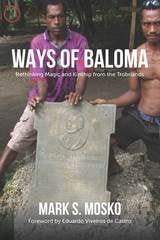
Ways of Baloma
Rethinking Magic and Kinship From the TrobriandsMark S. Mosko
HAU, 2017
Informed by a synthesis of Strathern’s model of “dividual personhood” and Lévy-Bruhl’s theory of “participation,” Mosko upends a century of discussion and debate extending from Malinowski to anthropology’s other leading thinkers. His account of the intimate interdependencies of humans and spirits in the cosmic generation and coordination of “life” (momova) and “death” (kaliga) strikes at the nexus of anthropology’s received wisdom, and Ways of Baloma will inevitably lead practitioners and students to reflect anew on the discipline’s multifold theories of personhood, ritual agency, and sociality.
We Are All Armenian
Voices from the DiasporaEdited by Aram Mrjoian
University of Texas Press, 2023
A collection of essays about Armenian identity and belonging in the diaspora.
In the century since the Armenian Genocide, Armenian survivors and their descendants have written of a vast range of experiences using storytelling and activism, two important aspects of Armenian culture. Wrestling with questions of home and self, diasporan Armenian writers bear the burden of repeatedly telling their history, as it remains widely erased and obfuscated. Telling this history requires a tangled balance of contextualizing the past and reporting on the present, of respecting a culture even while feeling lost within it.
We Are All Armenian brings together established and emerging Armenian authors to reflect on the complications of Armenian ethnic identity today. These personal essays elevate diasporic voices that have been historically silenced inside and outside of their communities, including queer, multiracial, and multiethnic writers. The eighteen contributors to this contemporary anthology explore issues of displacement, assimilation, inheritance, and broader definitions of home. Through engaging creative nonfiction, many of them question what it is to be Armenian enough inside an often unacknowledged community.
We Are a People in This World
The Lakota Sioux and the Massacre at Wounded KneeConger Beasley Jr.
University of Arkansas Press, 1997
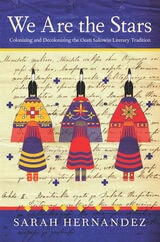
We Are the Stars
Colonizing and Decolonizing the Oceti Sakowin Literary TraditionSarah Hernandez
University of Arizona Press, 2023
Women and land form the core themes of the book, which brings tribal and settler colonial narratives into comparative analysis. Divided into two parts, the first section of the work explores how settler colonizers used the printing press and boarding schools to displace Oceti Sakowin women as traditional culture keepers and culture bearers with the goal of internally and externally colonizing the Dakota, Nakota, and Lakota nations. The second section focuses on decolonization and explores how contemporary Oceti Sakowin writers and scholars have started to reclaim Dakota, Nakota, and Lakota literatures to decolonize and heal their families, communities, and nations.
We Have All Gone Away
Curtis Harnack
University of Iowa Press, 1973
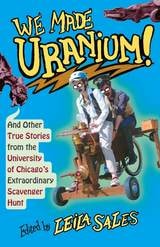
We Made Uranium!
And Other True Stories from the University of Chicago's Extraordinary Scavenger HuntEdited by Leila Sales
University of Chicago Press, 2018
Item #74: Enter a lecture class in street clothes. Receive loud phone call. Shout “I NEED TO GO, THE CITY NEEDS ME!” Remove street clothes to reveal superhero apparel. Run out for the good of the land.
Item #293: Hypnotizing a chicken seems easy, but if the Wikipedia article on the practice is to be believed, debate on the optimal method is heated. Do some trials on a real chicken and submit a report . . . for science of course.
Item #234: A walking, working, people-powered but preferably wind-powered Strandbeest.
Item #188: Fattest cat. Points per pound.
The University of Chicago’s annual Scavenger Hunt (or “Scav”) is one of the most storied college traditions in America. Every year, teams of hundreds of competitors scramble over four days to complete roughly 350 challenges. The tasks range from moments of silliness to 1,000-mile road trips, and they call on participants to fully embrace the absurd. For students it is a rite of passage, and for the surrounding community it is a chance to glimpse the lighter side of a notoriously serious university.
We Made Uranium! shares the stories behind Scav, told by participants and judges from the hunt’s more than thirty-year history. The twenty-three essays range from the shockingly successful (a genuine, if minuscule, nuclear reaction created in a dorm room) to the endearing failures (it’s hard to build a carwash for a train), and all the chicken hypnotisms and permanent tattoos in between. Taken together, they show how a scavenger hunt once meant for blowing off steam before finals has grown into one of the most outrageous annual traditions at any university. The tales told here are absurd, uplifting, hilarious, and thought-provoking—and they are all one hundred percent true.

We Wanna Boogie
The Rockabilly Roots of Sonny Burgess and the PacersMarvin Schwartz
Butler Center for Arkansas Studies, 2014
We'll Always Have Paris
American Tourists in France since 1930Harvey Levenstein
University of Chicago Press, 2004
Harvey Levenstein takes us back to the 1930s, when, despite the Great Depression, France continued to be the stomping ground of the social elite of the eastern seaboard. After World War II, wealthy and famous Americans returned to the country in droves, helping to revive its old image as a wellspring of sophisticated and sybaritic pleasures. At the same time, though, thanks in large part to Communist and Gaullist campaigns against U.S. power, a growing sensitivity to French anti-Americanism began to color tourists' experiences there, strengthening the negative images of the French that were already embedded in American culture. But as the century drew on, the traditional positive images were revived, as many Americans again developed an appreciation for France's cuisine, art, and urban and rustic charms.
Levenstein, in his colorful, anecdotal style, digs into personal correspondence, journalism, and popular culture to shape a story of one nation's relationship to another, giving vivid play to Americans' changing response to such things as France's reputation for sexual freedom, haute cuisine, high fashion, and racial tolerance. He puts this tumultuous coupling of France and the United States in historical perspective, arguing that while some in Congress say we may no longer have french fries, others, like Humphrey Bogart in Casablanca, know they will always have Paris, and France, to enjoy and remember.
Weaving A Legacy - Paper
Indian Baskets and the People of Owens Valley, CaliforniaSharon Dean
University of Utah Press, 2005
Situated on the western edge of the Great Basin between the Sierra Nevada and White-Inyo mountain ranges, Owens Valley has been home for thousands of years to the Owens Valley Paiute and their southern neighbors, the Panamint Shoshone. The willow baskets both groups created are noteworthy for their complex construction and durability, and their materials and designs reflected available resources as well as the seminomadic existence that characterized life in the Great Basin for generations.
Since the mid-nineteenth-century arrival of non-Indians into the Valley, the baskets have changed. Weaving a Legacy places those changes in the context of the region’s dramatic social history. In addition, the volume closely examines basketry techniques and technology, historic weavers and their lineages, contemporary weavers, and basket collectors.
The text is extensively illustrated with black-and-white photographs of people, landscapes, and baskets. Among the legacies of these baskets are the stories they evoke, many of which the authors recount in this beautiful work.
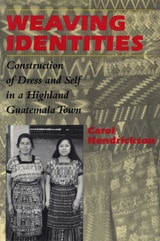
Weaving Identities
Construction of Dress and Self in a Highland Guatemala TownBy Carol Hendrickson
University of Texas Press, 1995
Traje, the brightly colored traditional dress of the highland Maya, is the principal visual expression of indigenous identity in Guatemala today. Whether worn in beauty pageants, made for religious celebrations, or sold in tourist markets, traje is more than "mere cloth"—it plays an active role in the construction and expression of ethnicity, gender, education, politics, wealth, and nationality for Maya and non-Maya alike.
Carol Hendrickson presents an ethnography of clothing focused on the traje—particularly women's traje—of Tecpán, Guatemala, a bi-ethnic community in the central highlands. She covers the period from 1980, when the recent round of violence began, to the early 1990s, when Maya revitalization efforts emerged.
Using a symbolic analysis informed by political concerns, Hendrickson seeks to increase the value accorded to a subject like weaving, which is sometimes disparaged as "craft" or "women's work." She examines traje in three dimensions—as part of the enduring images of the "Indian," as an indicator of change in the human life cycle and cloth production, and as a medium for innovation and creative expression.
From this study emerges a picture of highland life in which traje and the people who wear it are bound to tradition and place, yet are also actively changing and reflecting the wider world. The book will be important reading for all those interested in the contemporary Maya, the cultural analysis of material culture, and the role of women in culture preservation and change.
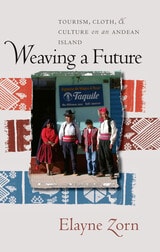
Weaving a Future
Tourism, Cloth, and Culture on an Andean IslandElayne Zorn
University of Iowa Press, 2004
The people of Taquile Island on the Peruvian side of beautiful Lake Titicaca, the highest navigable lake in the Americas, are renowned for the hand-woven textiles that they both wear and sell to outsiders. One thousand seven hundred Quechua-speaking peasant farmers, who depend on potatoes and the fish from the lake, host the forty thousand tourists who visit their island each year. Yet only twenty-five years ago, few tourists had even heard of Taquile. In Weaving a Future: Tourism, Cloth, and Culture on an Andean Island, Elayne Zorn documents the remarkable transformation of the isolated rocky island into a community-controlled enterprise that now provides a model for indigenous communities worldwide.
Over the course of three decades and nearly two years living on Taquile Island, Zorn, who is trained in both the arts and anthropology, learned to weave from Taquilean women. She also learned how gender structures both the traditional lifestyles and the changes that tourism and transnationalism have brought. In her comprehensive and accessible study, she reveals how Taquileans used their isolation, landownership, and communal organizations to negotiate the pitfalls of globalization and modernization and even to benefit from tourism. This multi-sited ethnography set in Peru, Washington, D.C., and New York City shows why and how cloth remains central to Andean society and how the marketing of textiles provided the experience and money for Taquilean initiatives in controlling tourism.
The first book about tourism in South America that centers on traditional arts as well as community control, Weaving a Future will be of great interest to anthropologists and scholars and practitioners of tourism, grassroots development, and the fiber arts.
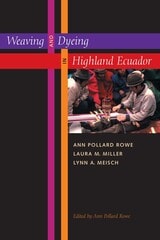
Weaving and Dyeing in Highland Ecuador
By Ann Pollard Rowe, Laura M. Miller, and Lynn A. Meisch
University of Texas Press, 2007
Although less well known than its much-admired counterparts in Peru and Bolivia, highland Ecuadorian weaving is an Andean tradition that has relationships with these more southern areas. A world away from the industrialized textile manufacturing of Euro-American society, these handmade pieces reflect the history and artistry of an ancient culture.
This comprehensive study, edited by Ann Pollard Rowe, is unrivaled in its detail and includes not only descriptions of the indigenous weaving and dyeing technology, but also an interpretation of its historical significance, as well as hundreds of photographs, drawings, and maps that inform the understanding of the process.
The principal focus is on backstrap-loom weaving, a major pre-Hispanic technology. Ecuadorian backstrap looms, which differ in various ways from those found elsewhere in the Andes, have previously only been treated in general terms. Here, the basic operation of this style of loom is covered, as are a variety of patterning techniques including warp-resist (ikat) dyeing, weaving belts with twill, and supplementary- and complementary-warp patterning. Spanish colonial treadle-loom weaving is also covered. The weaving techniques are explained in detail, so the reader can replicate them if desired.
Textiles have been an important art form among Andean peoples from remote prehistory up to the present. A greater understanding of their creation process can yield a more meaningful appreciation of the art itself.
Weird City
Sense of Place and Creative Resistance in Austin, TexasBy Joshua Long
University of Texas Press, 2010
Austin, Texas, at the beginning of the twenty-first century, is experiencing one of the most dynamic periods in its history. Wedged between homogenizing growth and a long tradition of rebellious nonconformity, many Austinites feel that they are in the midst of a battle for the city's soul.
From this struggle, a movement has emerged as a form of resistance to the rapid urban transformation brought about in recent years: "Keep Austin Weird" originated in 2000 as a grassroots expression of place attachment and anti-commercialization. Its popularity has led to its use as a rallying cry for local business, as a rhetorical tool by city governance, and now as the unofficial civic motto for a city experiencing rapid growth and transformation.
By using "Keep Austin Weird" as a central focus, Joshua Long explores the links between sense of place, consumption patterns, sustainable development, and urban politics in Austin. Research on this phenomenon considers the strong influence of the "Creative Class" thesis on Smart Growth strategies, gentrification, income inequality, and social polarization made popular by the works of Richard Florida. This study is highly applicable to several emerging "Creative Cities," but holds special significance for the city considered the greatest creative success story, Austin.

Welcome 2 Houston
Hip Hop Heritage in Hustle TownLangston Collin Wilkins
University of Illinois Press, 2023
A vivid journey through a southern hip hop bastion, Welcome 2 Houston offers readers an inside look at a unique musical culture.
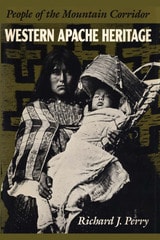
Western Apache Heritage
People of the Mountain CorridorBy Richard J. Perry
University of Texas Press, 1991
Mention "Apaches," and many Anglo-Americans picture the "marauding savages" of western movies or impoverished reservations beset by a host of social problems. But, like most stereotypes, these images distort the complex history and rich cultural heritage of the Apachean peoples, who include the Navajo, as well as the Western, Chiricahua, Mescalero, Jicarilla, Lipan, and Kiowa Apaches. In this pioneering study, Richard Perry synthesizes the findings of anthropology, ethnology, linguistics, archaeology, and ethnohistory to reconstruct the Apachean past and offer a fuller understanding of the forces that have shaped modern Apache culture.
While scholars generally agree that the Apacheans are part of a larger group of Athapaskan-speaking peoples who originated in the western Subarctic, there are few archaeological remains to prove when, where, and why those northern cold dwellers migrated to the hot deserts of the American Southwest. Using an innovative method of ethnographic reconstruction, however, Perry hypothesizes that these nomadic hunters were highly adaptable and used to exploiting the resources of a wide range of mountainous habitats. When changes in their surroundings forced the ancient Apacheans to expand their food quest, it was natural for them to migrate down the "mountain corridor" formed by the Rocky Mountain chain.
This reconstruction of Apachean history and culture sheds much light on the origins, dispersions, and relationships of Apache groups. Perry is the first researcher to attempt such an extensive reconstruction, and his study is the first to deal with the full range of Athapaskan-speaking peoples. His method will be instructive to students of other cultures who face a similar lack of historical and archaeological data.
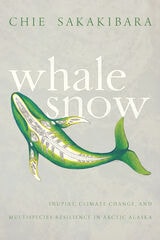
Whale Snow
Iñupiat, Climate Change, and Multispecies Resilience in Arctic AlaskaChie Sakakibara
University of Arizona Press, 2014
Using multispecies ethnography, Whale Snow explores how everyday the relatedness of the Iñupiat of Arctic Alaska and the bowhead whale forms and transforms “the human” through their encounters with modernity. Whale Snow shows how the people live in the world that intersects with other beings, how these connections came into being, and, most importantly, how such intimate and intense relations help humans survive the social challenges incurred by climate change. In this time of ecological transition, exploring multispecies relatedness is crucial as it keeps social capacities to adapt relational, elastic, and resilient.
In the Arctic, climate, culture, and human resilience are connected through bowhead whaling. In Whale Snow we see how climate change disrupts this ancient practice and, in the process, affects a vital expression of Indigenous sovereignty. Ultimately, though, this book offers a story of hope grounded in multispecies resilience.
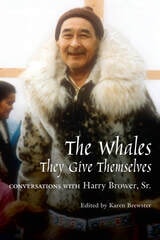
Whales, They Give Themselves
Conversations with Harry Brower, Sr.Karen Brewster
University of Alaska Press, 2004
Brower was deeply committed to Native culture, and his life history is a moving expression of the Inupiaq way of life. He was also influential in traditionally non-Native arenas in which Native and non-Native values sometimes collided. Acting as a mediator between Inupiaq whalers and non-Native scientists, Brower communicated a vast understanding of bowhead whales and whaling that became the basis for a scientific research program and helped protect Inupiaq subsistence whaling. He was a central architect of the Arctic Slope Regional Corporation boundaries, and served for over twenty years as a consultant to scientists at the Naval Arctic Research Laboratory. Brower's role in this collaborative research serves as one of the earliest and best examples of how scientists and Native experts can work together to advance knowledge. Such approaches are now promoted by researchers around the world.
The Whales, They Give Themselves not only conveys Brower's life story, but also is a cross-cultural journey of wisdom and friendship. Whereas academic oral historians once strove to erase the presence of the interviewer in the name of objectivity, Brewster recognizes the influence her specific relationship with Brower had on the way he narrated his life. This volume is a major contribution to our understanding of northern peoples, and a testament to the immense value of collaborative oral history.

What Are You Afraid Of?
Michael Hyde
University of North Texas Press, 2005
What Begins with Bird
FictionsFlournoy Holland
University of Alabama Press, 2005
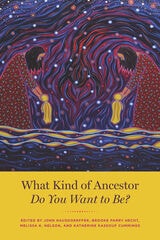
What Kind of Ancestor Do You Want to Be?
Edited by John Hausdoerffer, Brooke Parry Hecht, Melissa K. Nelson, and Katherine Kassouf Cummings
University of Chicago Press, 2021
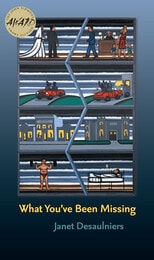
What You've Been Missing
Janet Desaulniers
University of Iowa Press, 2004
Vividly portraying the possible horrors and detours that can mark anyone’s life, Desaulniers beautifully captures the vast and often conflicting emotions that humans endure at times of loss and sorrow—loneliness, pain, desperation, desire. Yet this balletic push and pull of emotions will challenge, wound, and ultimately enlighten her characters, transporting them to a place beyond individual sorrow.
At times unbearably heartbreaking, What You’ve Been Missing is not just another set of stories about bad things happening to good people. At its heart, this award-winning collection is about people continuing to talk—rather than shutting down—as bad things happen to them. As the recently divorced Liza thinks in “The Good Fight”: “Words do ease us. They comfort us. Maybe they protect us in a way, rescue us from the agony of what our bodies feel.”
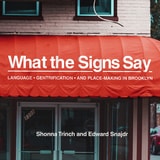
What the Signs Say
Language, Gentrification, and Place-Making in BrooklynShonna Trinch
Vanderbilt University Press, 2020
Shonna Trinch and Edward Snajdr, a sociolinguist and an anthropologist respectively, show how the beliefs and ideas that people take as truths about language and its speakers are deployed in these different sign types. They also present in-depth ethnographic case studies that reveal how gentrification and corporate redevelopment in Brooklyn are intimately connected to public communication, literacy practices, the transformation of motherhood and gender roles, notions of historical preservation, urban planning, and systems of privilege. Far from peripheral or irrelevant, shop signs say loud and clear that language displayed in public always matters.
This book is the recipient of the 2021 Norman L. and Roselea J. Goldberg Prize from Vanderbilt University Press for the best book in the area of art or medicine.
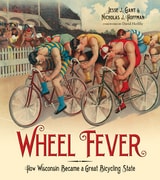
Wheel Fever
How Wisconsin Became a Great Bicycling StateJesse J. Gant
Wisconsin Historical Society Press, 2013
Many early riders embraced the bicycle as a solution to the age-old problem of how to get from here to there in the quickest and easiest way possible. Yet for every supporter of the “poor man’s horse,” there were others who wanted to keep the rights and privileges of riding to an elite set. Women, the working class, and people of color were often left behind as middle- and upper-class white men benefitted from the “masculine” sport and all-male clubs and racing events began to shape the scene. Even as bikes became more affordable and accessible, a culture defined by inequality helped create bicycling in its own image, and these limitations continue to haunt the sport today.
Wheel Fever is about the origins of bicycling in Wisconsin and why those origins still matter, but it is also about our continuing fascination with all things bicycle. From “boneshakers” to high-wheels, standard models to racing bikes, tandems to tricycles, the book is lushly illustrated with never-before-seen images of early cycling, and the people who rode them: bloomer girls, bicycle jockeys, young urbanites, and unionized workers.
Laying the foundations for a much-beloved recreation, Wheel Fever challenges us to imagine anew the democratic possibilities that animated cycling’s early debates.
Wheeling's Polonia
Reconstructing Polish Community in a West Virginia Steel TownWilliam Hal Gorby
West Virginia University Press, 2020
Wheeling was a center of West Virginia’s labor movement, and Polish immigrants became a crucial element within the city’s active working-class culture. Arriving at what was also the center of the state’s Roman Catholic Diocese, Poles built religious and fraternal institutions to support new arrivals and to seek solace in times of economic strain and family hardship. The city’s history of crime and organized vice also affected new immigrants, who often lived in neighborhoods targeted for selective enforcement of Prohibition.
At once a deeply textured evocation of the city’s ethnic institutions and an engagement with larger questions about belonging, change, and justice, Wheeling’s Polonia is an inspiring account of a diverse working-class culture and the immigrants who built it.

When Grandpa Delivered Babies and Other Ozarks Vignettes
Benjamin G. Rader
University of Illinois Press, 2024
An alluring blend of remembering and reflection, When Grandpa Delivered Babies and Other Ozarks Vignettes provides a vivid portrait of a fading time.

When Mexicans Could Play Ball
Basketball, Race, and Identity in San Antonio, 1928–1945By Ignacio M. García
University of Texas Press, 2014
Winner, Al Lowman Memorial Prize, Texas State Historical Association, 2014
In 1939, a team of short, scrappy kids from a vocational school established specifically for Mexican Americans became the high school basketball champions of San Antonio, Texas. Their win, and the ensuing riot it caused, took place against a backdrop of shifting and conflicted attitudes toward Mexican Americans and American nationalism in the WWII era. “Only when the Mexicans went from perennial runners-up to champs,” García writes, “did the emotions boil over.”
The first sports book to look at Mexican American basketball specifically, When Mexicans Could Play Ball is also a revealing study of racism and cultural identity formation in Texas. Using personal interviews, newspaper articles, and game statistics to create a compelling narrative, as well as drawing on his experience as a sports writer, García takes us into the world of San Antonio’s Sidney Lanier High School basketball team, the Voks, which became a two-time state championship team under head coach William Carson “Nemo” Herrera. An alumnus of the school himself, García investigates the school administrators’ project to Americanize the students, Herrera’s skillful coaching, and the team’s rise to victory despite discrimination and violence from other teams and the world outside of the school. Ultimately, García argues, through their participation and success in basketball at Lanier, the Voks players not only learned how to be American but also taught their white counterparts to question long-held assumptions about Mexican Americans.

When Women Rule the Court
Gender, Race, and Japanese American BasketballWillms, Nicole
Rutgers University Press, 2017
For nearly one hundred years, basketball has been an important part of Japanese American life. Women’s basketball holds a special place in the contemporary scene of highly organized and expansive Japanese American leagues in California, in part because these leagues have produced numerous talented female players. Using data from interviews and observations, Nicole Willms explores the interplay of social forces and community dynamics that have shaped this unique context of female athletic empowerment. As Japanese American women have excelled in mainstream basketball, they have emerged as local stars who have passed on the torch by becoming role models and building networks for others.
When Worlds Collide
Hunter-Gatherer World-System Change in the 19th Century Canadian ArcticT. Max Friesen
University of Arizona Press, 2013
Max Friesen has adapted and expanded world-system theory in order to develop a model that explains how hunter-gatherer interaction networks, or world-systems, are structured—and why they change. He has utilized this model to better understand the development of Inuvialuit society in the western Canadian Arctic over a 500-year span, from the pre-contact period to the early twentieth century.
As Friesen combines local archaeological data with more extensive ethnographic and archaeological evidence from the surrounding region, a picture emerges of a dynamic Inuvialuit world-system characterized by bounded territories, trade, warfare, and other forms of interaction. This world-system gradually intensified as the impacts of Euroamerican colonial activities increased. This intensification, Friesen suggests, was based on pre-existing Inuvialuit social and economic structures rather than on patterns imposed from outside. Ultimately, this intense interacting network collapsed near the end of the nineteenth century. When Worlds Collide offers a new way to comprehend small-scale world-systems from the point of view of indigenous people. Its approach will prove valuable for understanding hunter-gatherer societies around the globe.
When the Bones Speak
The Living, the Dead, and the Sacrifice of Contemporary OkinawaChristopher T. Nelson
Duke University Press, 2025
When the Devil Knocks
The Congo Tradition and the Politics of Blackness in Twentieth-Century PanamaRenée Alexander Craft
The Ohio State University Press, 2015
When the Devil Knocks analyzes the Congo tradition as a dynamic cultural, ritual, and identity performance that tells an important story about a Black cultural past while continuing to create itself in a Black cultural present. This book examines “Congo” within the history of twentieth century Panamanian etnia negra culture, politics, and representation, including its circulation within the political economy of contemporary tourism.
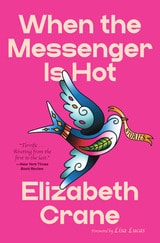
When the Messenger Is Hot
StoriesElizabeth Crane, foreword by Lisa Lucas
Northwestern University Press, 2026
A beloved, smart, and bold story collection surges back to life in a new print edition
Hailed as “revolutionary fiction,” When the Messenger Is Hot gleefully upends the short-story form, rendering the absurdities and possibilities of modern urban life with disarming humor and keen perception as Crane weaves through grief and womanhood. The women in Elizabeth Crane’s world are fierce and kind, damaged and optimistic. They are jilted lovers, absent daughters, twelve-steppers, and smart-asses, recovering from loss, addiction, or betrayal. From a woman who decides to live on the rooftop of her friend’s apartment (why not?), to a writer whose identity is compromised by the actress who portrays her, to a daughter who believes her deceased mother is still alive and living at the bus depot, these characters experience love and loss in a way that is both profoundly universal and uniquely theirs.
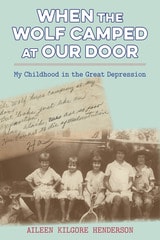
When the Wolf Camped at Our Door
My Childhood in the Great DepressionAileen Kilgore Henderson
University of Alabama Press, 2022
Recounts the hardships and joys the Kilgore family and their neighbors experienced in a close-knit southern rural community during the Great Depression
As the Great Depression tightened its grip on the world, six members of the Kilgore family were living in a cramped farmhouse in Brookwood, Alabama. Crops didn’t grow well, food was scarce, shoes were in short supply, and the few clothes they had were all hand-me-downs. The Kilgores struggled to make ends meet, cobbling together odd jobs and working the land by hand.
Despite all of this, young Aileen thought life was full of hope. She longed to hold on to it and scribbled down daily events on whatever odds and ends of paper she could find. In her new memoir, When the Wolf Camped at Our Door, Aileen Kilgore Henderson creates a vivid portrait of what life was like for so many living in the rural South during the Depression. The book begins when Aileen is ten years old and follows her into her teenage years over the course of twenty-seven episodic chapters. Drawing on her girlhood diaries and told through the charismatic voice of her younger self, Henderson’s nuanced storytelling sheds light on the common struggle for survival during a time when people were at their most vulnerable.
Against the backdrop of a world where hard work and harsh conditions like hunger, privation, sickness, and early death were everyday realities, Henderson’s stories are nevertheless tinged with young Aileen’s lively sense of humor and optimistic faith in people and in the promise of life despite trying circumstances. We follow her rambles in the woods, her visits with friends, a trip to a fortune teller, and a search for the Howton Horror, a mysterious monster rumored to live deep in the Alabama backwoods.
Where Love Leaves Us
Renee Manfredi
University of Iowa Press, 1994
These nine superbly crafted stories, set primarily in Pittsburgh's Italian American neighborhoods, concentrate on families, on the poignant nature of father-daughter relationships, and on the fate of those who are refugees from their physical or spiritual communities. “Love is born only out of wreckage,” Manfredi's characters declare bravely. Her vigorous families are both the wrecking crews and the architects of the human foundation.
In “The Projectionist,” a displaced Sicilian is forced to confront the family he lost in war-torn Italy at the same time that his current family is disintegrating; his disillusionment with the American dream overwhelms him when his oldest daughter exchanges Old World values for the hippie-inspired climate of permissiveness. Ten-year-old Elena, in “Bocci,” takes the teachings of her strict Catholic upbringing to the extreme, and it is her devoutness that is cruelly used against her when violence compels her to reject becoming “a nun or a saint.” The father in “Tall Pittsburgh” sends his daughter to charm school at Sears, then enters her in a beauty pageant for tall women. Distraught in spite of her second-place win, he begins to relive his grief over the death of his beautiful wife.
Many of Manfredi's vital, luminous characters are outsiders, dispossessed by their inability to bridge the gap between the self and others, forced to deal with loss through death and lapse of faith, yet always managing to survive despite their place on the bewildering margins. Manfredi reveals an affirmation, finally, that hope is a permanent possession of every human spirit.
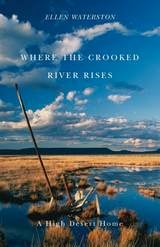
Where the Crooked River Rises
A High Desert HomeEllen Waterston
Oregon State University Press, 2010
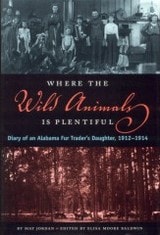
Where the Wild Animals Is Plentiful
Diary of an Alabama Fur Trader's Daughter, 1912-1914May Jordan
University of Alabama Press, 2006
This rare find--a journal of a young backwoods woman--provides a unique picture of rural life in southwestern Alabama early in the 20th century.
"I am a little Alabama girl living on the frontier where the wild animals is plentiful," wrote May Jordan in 1912. During the hunting season her father traveled Washington County buying furs, and May--already 23--accompanied him on two of these trips, cooking meals, helping out with the business, and recording their experiences.
May's diary of these trips from December 1912 to March 1914 describes the routine of the fur trade and provides a vivid portrait of wilderness travel and social customs. Through May's eyes, readers can experience the sights and sounds of pine forests and swamps, the difficulty of wading through waist-deep mud, and the neighborliness of the people living in this isolated area. May also shares both the solace of religious faith and her love of laughter as reflected in the jokes she records.
Elisa Moore Baldwin provides an introduction that traces Jordan family history and describes economic, social, and political conditions during the period. Baldwin also includes annotations based on court records, census rolls, and other primary sources and photographs of many of the characters in May's narrative to provide a vivid picture of the times. Because few first-person accounts exist of the life of poor whites, this diary will be invaluable to students of southern and women's history; no comparable work exists for this part of Alabama during this era. May's journal takes us to another world and teaches us about the lively human spirit in the face of hardship and loneliness.
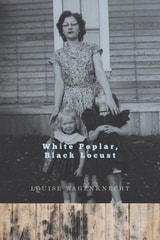
White Poplar, Black Locust
Louise Wagenknecht
Oregon State University Press, 2021
Originally published by the University of Nebraska Press in 2003, this first book in Louise Wagenknecht’s trilogy about life in the Klamath Mountains is now available through Oregon State University Press, together with Light on the Devils (2011) and Shadows on the Klamath (2021).
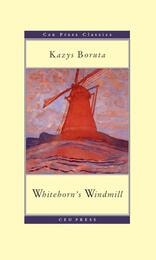
Whitehorn's Windmill
Kazys Boruta
Central European University Press, 2009
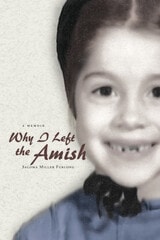
Why I Left the Amish
A MemoirSaloma Miller Furlong
Michigan State University Press, 2011
There are two ways to leave the Amish—one is through life and the other through death. When Saloma Miller Furlong’s father dies during her first semester at Smith College, she returns to the Amish community she had left twenty four years earlier to attend his funeral. Her journey home prompts a flood of memories. Now a mother with grown children of her own, Furlong recalls her painful childhood in a family defined by her father’s mental illness, her brother’s brutality, her mother’s frustration, and the austere traditions of the Amish—traditions Furlong struggled to accept for years before making the difficult decision to leave the community. In this personal and moving memoir, Furlong traces the genesis of her desire for freedom and education and chronicles her conflicted quest for independence. Eloquently told, Why I Left the Amish is a revealing portrait of life within—and without—this frequently misunderstood community.
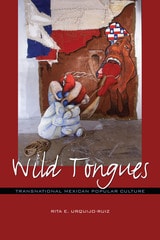
Wild Tongues
Transnational Mexican Popular CultureBy Rita E. Urquijo-Ruiz
University of Texas Press, 2012
Tracing the configuration of the slapstick, destitute Peladita/Peladito and the Pachuca/Pachuco (depicted in flashy zoot suits) from 1928 to 2004, Wild Tongues is an ambitious, extensive examination of social order in Mexican and Chicana/o cultural productions in literature, theater, film, music, and performance art.
From the use of the Peladita and the Peladito as stock characters who criticized various aspects of the Mexican government in the 1920s and 1930s to contemporary performance art by María Elena Gaitán and Dan Guerrero, which yields a feminist and queer-studies interpretation, Rita Urquijo-Ruiz emphasizes the transnational capitalism at play in these comic voices. Her study encompasses both sides of the border, including the use of the Pachuca and the Pachuco as anti-establishment, marginal figures in the United States. The result is a historically grounded, interdisciplinary approach that reimagines the limitations of nation-centered thinking and reading.
Beginning with Daniel Venegas’s 1928 novel, Las aventuras de don Chipote o Cuando los pericos mamen, Rita Urquijo-Ruiz’s Wild Tongues demonstrates early uses of the Peladito to call attention to the brutal physical demands placed on the undocumented Mexican laborer. It explores Teatro de Carpa (tent theater) in-depth as well, bringing to light the experience of Mexican Peladita Amelia Wilhelmy, whose “La Willy” was famous for portraying a cross-dressing male soldier who criticizes the failed Revolution. In numerous other explorations such as these, the political, economic, and social power of creativity continually takes center stage.

Willard Z. Park's Notes on the Northern Paiute of Western Nevada, 1933-1940
UUAP 114Catherine S. Fowler
University of Utah Press, 1989
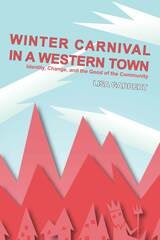
Winter Carnival in a Western Town
Identity, Change and the Good of the CommunityLisa Gabbert
Utah State University Press, 2011
Held annually, the McCall, Idaho, winter carnival has become a modern tradition. A festival and celebration, it is also a source of community income and opportunity for shared community effort; a chance to display the town attractively to outsiders and to define and assert McCall's identity; and consequently, a source of disagreement among citizens over what their community is, how it should be presented, and what the carnival means.
Though rooted in the broad traditions of community festival, annual civic events, often sponsored by chambers of commerce, such as that in McCall, are as much expressions of popular culture and local commerce as of older traditions. Yet they become dynamic, newer community traditions, with artistic, informal, and social meanings and practices that make them forms of folklore as well as commoditized culture. Winter Carnival is the first volume in a new Utah State University Press series titled Ritual, Festival, and Celebration and edited by folklorist Jack Santino.
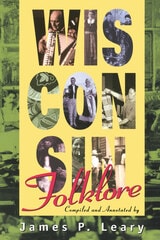
Wisconsin Folklore
Edited by James P. Leary
University of Wisconsin Press, 1999
Highly entertaining and richly informative, Wisconsin Folklore offers the first comprehensive collection of writings about the surprisingly varied folklore of Wisconsin. Beginning with a historical introduction to Wisconsin's folklore and concluding with an up-to-date bibliography, this anthology offers more than fifty annotated and illustrated entries in five sections: "Terms and Talk," "Storytelling," "Music, Song, and Dance," "Beliefs and Customs," and "Material Traditions and Folklife."
The various contributors, from 1884 to 1997, are anthropologists, ethnomusicologists, historians, journalists, museologists, ordinary citizens reminiscing, sociologists, students, writers of fiction, practitioners of folklore, and folklorists. Their interests cover an enormous range of topics: from Woodland Indian place names and German dialect expressions to Welsh nicknames and the jargon of apple-pickers, brewers, and farmers; from Ho-Chunk and Ojibwa mythological tricksters and Paul Bunyan legends to stories of Polish strongmen and Ole and Lena jokes; from Menominee dances and Norwegian fiddling and polka music to African-American gospel groups and Hmong musicians; from faith healers and wedding and funeral customs to seasonal ethnic festivities and tavern amusements; and from spearing decoys and needlework to church dinners, sacred shrines, and the traditional work practices of commercial fishers, tobacco growers, and pickle packers.
For general readers, teachers, librarians, and scholars alike, Wisconsin Folklore exemplifies and illuminates Wisconsin's cultural traditions, and establishes the state's significant but long neglected contributions to American folklore.