Results by title
171 books match the query 'True Crime' and 14 start with w
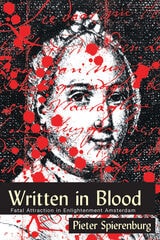
WRITTEN IN BLOOD
FATAL ATTRACTION IN ENLIGHTENMENT AMSTERDAMPieter Spierenburg
The Ohio State University Press, 2004
Pieter Spierenburg narrates two sensational murder cases among intimates in eighteenth-century Amsterdam. The cases recounted here both resulted from fatal attraction. They represented the darker side of the eighteenth-century revolution in love. This period witnessed great cultural changes affecting personal relationships and emotions. The new ideal of love demanded that couples spend much of their time together and explore each other’s feelings. But this new ideal was meant for married and engaged couples only; for others it meant disaster. Love gone wrong was the theme of the sentimental novels of the age, but it also happened to real people, with fatal consequences.
Written in Blood traces the lives and ultimate fate of Nathaniel Donker, who, together with the help of his mistress, brutally murders and dismembers the wife. The second tale focuses on J. B. F. van Gogh, who falls in love with a prostitute; she later rejects him and, when a letter written with his own blood fails to change her mind, he stabs her to death in a fit of passionate rage.
In Written in Blood, the reader gets two stories for the price of one. And, whereas earlier microhistories have been situated in a village or a small town, the scene here is Amsterdam and its canals. Spierenburg reveals in detail what concepts like honor and gender roles came down to in individual lives. He also shows that these murders produced a strange mixture of modern romantic feelings and traditional notions of honor and shame.
What Happened to Christopher
An American Family's Story of Shaken Baby SyndromeAnn-Janine Morey. Foreword by M. Joan McDermott
Southern Illinois University Press, 1998
A tragedy and a trial placed Ann-Janine Morey in an ideal position to write this wrenching exploration of the havoc wreaked on a family by Shaken Baby Syndrome. As an alternate juror in a 1995 murder trial in Murphysboro, Illinois, she observed a case that has become too common: that of an adult caregiver shaking to death a baby. A seasoned researcher and published scholar, in this book Morey witnesses the court proceedings firsthand, comes to know the families of the toddler intimately, and augments her observations and interviews through research into Shaken Baby Syndrome. The result is an agonizingly human tale supported by the evidence of science, sociology, and criminology.
Morey's What Happened to Christopher memorializes the short life of nineteen-month-old Christopher Attig (1992–1994). To reveal what Christopher meant to those closest to him, Morey conducts extensive interviews with the child's parents and grand-parents. She also interviews the officials involved in the case to set the scene from a legal and police angle. Gary Lynn Gould, who was convicted of and imprisoned for killing Christopher, did not answer Morey's requests for interviews.
Morey characterizes her investigation as a "story of quiet horror because it takes place in a way and a setting that could be any town and many families." Nonetheless, Morey's narrative skill transforms Christopher into much more than an ordinary child, senselessly slain. He is Christopher, irreplaceable and unique. And by the time she reconstructs Christopher's final days and the aftermath of his murder, Morey has depicted the principals in the case so deftly and imbued them with such humanity that we experience their torment and their hope.
Morey also provides a juror's insight into the trial. By showing what happened to Christopher Attig and by presenting the accumulated findings relative to Shaken Baby Syndrome, she seeks through education to help prevent future deaths like Christopher's.
What They Stole
A Familicide Rooted in Intercountry AdoptionPaige Towers
University of Iowa Press, 2026
The Sueppels were among the families profoundly shaped by the legacy of the Holt Adoption Program. To their suburban Iowa City community, Steven and Sheryl Sueppel were kind and charitable, humble yet magnetic—seemingly ideal candidates to adopt. But in 2008, when Steven found himself facing federal embezzlement and money laundering charges, he murdered Sheryl and their adopted children before ending his own life.
Paige Towers traces the interwoven histories of the Holts and the Sueppels, exploring the deeper, often hidden complexities of intercountry adoption: the ethical gray zones, the influences of religion and race, and the global inequalities that made such large-scale child migration possible. Meticulously researched and sensitive with its storytelling, What They Stole examines how good intentions can coexist with systemic harm—and how the consequences of systems like the Holts’ can reverberate across generations.
Wheat Flour Messiah
Eric Jansson of Bishop HillPaul Elmen
Southern Illinois University Press, 1997
Wheat Flour Messiah follows the career of Eric Jansson from his boyhood on a farm near Biskopskulla (Bishop’s Hill) in Sweden until his murder in Illinois by a crazed follower in 1850. He was an untutored but brilliant charismatic leader, who by sheer insolence and self-confidence defied both the Swedish state church and the secular government and persuaded some twelve hundred of his wheat flour customers to throw in their lot with him. The essence of his teaching was that anyone who so desired could receive the grace of God in such rich measure that he would instantly be freed of sin and live in angelic innocence from then on. This doctrine was an imperfectly understood version of Methodist perfectionism, held without Wesleyan safeguards, and it doomed his followers to civil war against the Lutheran church.
Jansson went north to Hälsingland in Sweden to sell wheat flour, but his deeper intention was to hold large religious services in the farmyards of followers. On three occasions he and his followers burned all the allegedly heretical books written by such men as Luther, Nohrborg, and Arndt, singing hymns while the flames "destroyed the works of the Devil." Jansson was jailed six times, and six times he was freed. After his last trial, as he was being escorted to jail, he escaped and later arranged passage to America. His disciples followed him in a series of Atlantic crossings during 1847–49 and settled the utopian colony of Bishop Hill, 150 miles west of Chicago. They built impressive buildings, plowed the virgin prairie, and began some successful industry making wagons and weaving rugs.
Two fateful events spelled the doom of this utopian dream. The first, the cholera epidemic of 1849,killed over two hundred of the colonists. The other was the arrival of John Root, who subsequently married Jansson’s cousin, Charlotte, and who, after a series of altercations with Jansson over Charlotte, shot him to death in Cambridge, Illinois. The colony did not long survive without its Prophet, and ten years later the utopian dream ended. Today Bishop Hill remains little changed from a century ago—a colorful memory of American beginnings, a vivid reminder of its fascinating past.
Dr. Elmen’s book tells for the first time the life story of a folk hero, Eric Jansson. The Bishop Hill Colony was clearly the lengthened shadow of this extraordinary man. Students of utopian colonies, teachers and students of American history and religious movements will find here a definitive account of this piece of the American past. Any reader interested in the American Dream will enjoy this account of a vanished people who thought they could find somewhere on earth a great, good place, and who had to learn after much suffering that one cannot express in waking reality the character of man in his dreams.
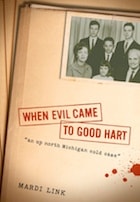
When Evil Came to Good Hart
Mardi Link
University of Michigan Press, 2008
"The murder mystery that has confounded and fascinated people for over forty years has been given a whole new life. When Evil Came to Good Hart is a well-researched and well-written piece of nonfiction that holds the reader in its spell, just as it has the many writers, reporters, and law officers who have puzzled over it. My highest praise for Mardi Link's book is to say that it reads like a good novel, a real page-turner."
—Judith Guest, author of Ordinary People and The Tarnished Eye
In this page-turning true-life whodunit, author Mardi Link details all the evidence to date. She crafts her book around police and court documents and historical and present-day statements and interviews, in addition to exploring the impact of the case on the community of Good Hart and the stigma that surrounds the popular summer getaway. Adding to both the sense of tragic history and the suspense, Link laces her tale with fascinating bits of local and Indian lore, while dozens of colorful characters enter and leave the story, spicing the narrative.
During the years of investigation of the murders, officials considered hundreds of tips and leads as well as dozens of sources, among them former secretaries who worked for murder victim Dick Robison; Robison's business associates; John Norman Collins, perpetrator of the "Co-Ed Murders" that took place in Washtenaw County between 1967 and 1969; and an inmate in federal prison in Leavenworth, Kansas, who said he knew who killed the Robison family.
Despite the exhaustive investigative efforts of numerous individuals, decades later the case lies tantalizingly out of reach. It is still an unsolved cold case, yielding, in Link's words, forty years worth of "dead-end leads, anonymous tips, a few hard facts, and countless cockamamie theories."
When Evil Came to Good Hart, 10th Anniversary Edition
Mardi Link
University of Michigan Press, 2018
In this page-turning true-life whodunit, author Mardi Link looks into the cold-case files of the murders of a wealthy Detroit-area family in their northern Michigan cabin in 1968, detailing and reviewing all the evidence to date. She crafts her book around police and court documents and historical and present-day statements and interviews, in addition to exploring the impact of the case on the community of Good Hart and the stigma that surrounds the popular summer getaway. Adding to both the sense of tragic history and the suspense, Link laces her tale with fascinating bits of local and Indian lore, while dozens of colorful characters enter and leave the story, spicing the narrative.
During the years of investigation of the murders, officials considered hundreds of tips and leads as well as dozens of sources, among them former secretaries who worked for murder victim Dick Robison; Robison's business associates; John Norman Collins, perpetrator of the "Co-Ed Murders" that took place in Washtenaw County between 1967 and 1969; and an inmate in federal prison in Leavenworth, Kansas, who said he knew who killed the Robison family. Despite the exhaustive investigative efforts of numerous individuals, decades later the case lies tantalizingly out of reach as an unsolved cold case.
This edition, published at the 50th anniversary of the murder, includes a new Afterword by Mardi Link. In it, Link discusses information that’s come to light since the book’s original publication and reflects on how the Robison murders might have been handled differently today.
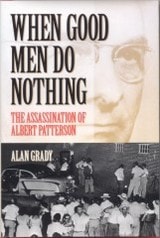
When Good Men Do Nothing
The Assassination Of Albert PattersonAlan Grady
University of Alabama Press, 2003
A true crime classic, the definitive account of the notorious 1954 assassination of Alabama Attorney General Albert Patterson
On June 18, 1954, just a few weeks after being elected Alabama's Attorney General, Albert Patterson was assassinated outside his law office in Phenix City, Alabama. His campaign promised hope and inspired reform to law-abiding citizens of Phenix City, which was notorious for organized crime, prostitution, gambling, bootlegging, and political corruption. Patterson's stance on cleaning up Phenix City had been met with threats and intimidation. With millions of dollars in illegal income and hundreds of political and professional careers at stake, the motive for his killing seemed apparent. The primary investigation surrounding Patterson's shooting focused on who pulled the trigger.
Alan Grady has exhaustively mined the state's original murder case files; the papers of John Patterson, Albert's son; records from the Office of Alabama Attorney General (who directed the murder investigation); the case files of the Alabama Department of Toxicology and Criminal Investigation; National Guard reports; and more than 30 interviews with eyewitnesses and interested parties.
Grady takes a complex story of multiple dimensions—a large cast of judicial, criminal, and political players; a web of alliances and allegiances; and a knotted sequence of investigative revelations and dead ends—and transforms it into a readable, incisive analysis of the powers and loyalties that governed, and corrupted to the core, the body politic of the state. Readers will be enthralled and educated by this authoritative account of the most compelling crime drama in Alabama during the 20th century.
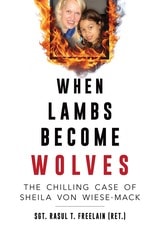
When Lambs Become Wolves
The Chilling Case of Sheila von Wiese-MackSgt. Rasul T. Freelain (Ret.)
Southern Illinois University Press, 2026
A bold firsthand account of the circumstances surrounding the notorious Bali “Suitcase Murder” and the human cost of overlooking child-to-parent violence and abuse
On August 12, 2014, the body of 62-year-old Sheila von Wiese-Mack—the wealthy Oak Park, Illinois, widow of famed composer James L. Mack—was found stuffed inside a suitcase in the trunk of a taxi in Bali. Back in the Midwest, listening to the radio, Sgt. Rasul Freelain of the Oak Park Police Department pulled his car over to absorb the unthinkable news. Amid his shock, one coherent thought surfaced: “Heather did this.”
Freelain had met the Macks more than three years earlier, when Sheila first reached out to the police for help with her increasingly volatile daughter. Although Heather Mack was just a teenager, she had already displayed a disturbing pattern of escalating violence. Freelain did everything he could to intervene. But as the abuse worsened, he found himself sidelined by a justice system unprepared to deal with child-to-parent violence and abuse (CPVA).
In this gripping and empathetic memoir, Freelain traces the Mack family’s descent from privilege to tragedy, bringing overdue attention to CPVA as a critical yet overlooked public health crisis. He recounts the glamorous but troubled world of the Macks—the parties, the talent, the dysfunction—and his efforts to support both mother and daughter. With rare insight into the web of trauma, race, wealth, and grief that surrounded them, he shows how the system failed them both—and how, even after Sheila’s death, he remained committed to seeking justice and change.
When Lambs Become Wolves moves beyond sensational headlines to examine the roots of one of America’s most hidden forms of domestic violence. While media coverage fixated on the exotic setting and shocking brutality of the crime, along with the growing notoriety of the teenage killer, Freelain urges readers—and institutions in law enforcement, child welfare, and mental health—to focus instead on those harmed. Sheila was more than a victim; she was a sharp, compassionate, creative woman who loved her daughter to the very end. Through meticulous research and raw personal reflection, Freelain explores how abuse cycles form, how institutions look away, and what it means to try—and fail—to protect someone in crisis.
This memoir, with a foreword by Sheila’s brother William Wiese, is a call to action, offering a rare blend of true crime, compassion, and advocacy. This deeply human account of a police officer caught in an impossible situation shows the price of ignoring the violence that starts at home.
Why Do They Kill?
Men Who Murder Their Intimate PartnersDavid Adams
Vanderbilt University Press, 2007
Key turning points of these relationships include the first emergence of the man's violence, his blaming of the victim, her attempts to resist, his escalation, her attempts to end the relationship, and his punishment for her defiance. Critical perspective on the men's accounts comes from interviews with victims of attempted homicide (standing in for the murder victims) who survived shootings, stabbings, and strangulation. These women detail their partner's escalating patterns of child abuse, sexual violence, terroristic threats, and stalking. The section on help-seeking patterns of victims helps to dispel notions of learned helplessness among victims.
Wicked Takes the Witness Stand
A Tale of Murder and Twisted Deceit in Northern MichiganMardi Link
University of Michigan Press, 2015
Wilkie Collins's The Dead Alive
The Novel, the Case, and Wrongful ConvictionsWilkie Collins
Northwestern University Press, 2005
Rob Warden, one of the nation's most eloquent and effective advocates for the wrongly convicted, reconsiders the facts of the Boorn case for what they can tell us about the systemic flaws that produced this first known miscarriage of justice-flaws that continue to riddle our system of justice today. A tale of false confessions and jailhouse snitches, of evidence overlooked, and justice more blinkered than blind, the Boorns' story reminds us of the perennial nature of the errors at the heart of American jurisprudence-and of the need to question and correct a system that regularly condemns the innocent.
With Blood in Their Eyes
Thomas Cobb
University of Arizona Press, 2013
Winner, Spur Award for Best Western Long Novel (Western Writers of America) and Southwest Book Award (Border Regional Library Association)
On February 10, 1918, John Power woke to the sound of bells and horses’ hooves. He was sharing a cabin near the family mine with his brother Tom and their father Jeff; hired man Tom Sisson was also nearby. Then gunfire erupted, and so began the day when the Power brothers engaged the Graham County Sheriff’s Department in the bloodiest shootout in Arizona history.
Now Thomas Cobb, author of Crazy Heart and Shavetail, has taken up the story in this powerful and meticulously researched nonfiction novel. What seems at first a simple tale of crime and pursuit takes on much greater meaning and complexity as the story traces the past lives of the main characters and interconnects them—all leading back to the deadly confrontation that begins the book. Cobb cunningly weaves the story of the Power brothers’ escape with flashbacks of the boys’ father’s life and his struggle to make a living ranching, logging, and mining in the West around the turn of the century. Deftly drawn characters and cleverly concealed motivations work seamlessly to blend a compelling family history with a desperate story of the brothers as they attempt to escape.
Grappling with themes of loyalty, masculinity, technology, and honor, this sweeping saga reveals the passion and brutality of frontier life in Arizona a hundred years ago. Richly authentic and beautifully written, With Blood in Their Eyes breathes dramatic new life into this nearly forgotten episode of the American West.
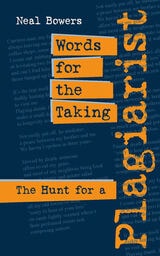
Words for the Taking
The Hunt for a PlagiaristNeal Bowers
Southern Illinois University Press, 2007
In January 1992, poet Neal Bowers received a phone call that changed his life. He learned his poems had been stolen and published under another name. Bowers hired a copyright lawyer and a private detective, and they began the agonizing hunt to track down the person who stole his creative work.
Bowers was dealing with more than the theft of words. He uncovered the plagiarist’s unsavory past when he found convicted child molester David Jones, who published the poems using the name David Sumner.
Determined to hold the plagiarist accountable, Bowers is drawn into a bizarre game of catch-me-if-you-can. His odyssey introduces him to the legal system and a sympathetic female detective, reveals the reactions of fellow poets, and provokes a flood of nationwide publicity and a deluge of letters from strangers interested in the case. Letters from Bowers’s attorney to Jones and phone conversations between the two produce unsatisfactory results. In the end, the plagiarist is not punished, and Bowers deals with the loss of friends, derision from his colleagues, and trouble in his marriage.
Words for the Taking: The Hunt for a Plagiarist, first published in 1997, is as much a commentary on our cultural view of plagiarism as it is a real-life detective story. Bowers’s wry and disturbing account of being the victim of a serial plagiarist offers unexpected twists and startling revelations. This updated edition presents a final consideration of the bizarre case and remains the only book to offer a personal account of the effects of plagiarism.
Ten years after the original publication, Neal Bowers finds his life as a writer altered in ways he could never have foreseen. His responses to the series of events show his vulnerability as an artist and his adjustment to being a victim. In a new chapter, Bowers describes his renewed quest in 2006 for a resolution and explains why he chose to give up writing poetry.
This beautifully written case study about the discovery and attempted resolution of an intellectual crime will appeal to academicians and general readers alike who care about language, the state of poetry, and intellectual property in contemporary America.