Results by title
107 books match the query 'Water' and 25 start with w
Water Distribution in Ancient Rome
The Evidence of FrontinusHarry B. Evans
University of Michigan Press, 1997
Water and Agriculture in Colorado and the American West
First in Line for the Rio GrandeDavid Stiller
University of Nevada Press, 2021
David Stiller’s thoughtful study focuses on the history of agricultural water use of the Rio Grande in Colorado’s San Luis Valley. After surveying the practices of early farmers in the region, he focuses on the impacts of Euro-American settlement and the ways these new agrarians endeavored to control the river. Using the Rio Grande as a case study, Stiller offers an informed and accessible history of the development of practices and technologies to store, distribute, and exploit water in Colorado and other western states, as well as an account of the creation of water rights and laws that govern this essential commodity throughout the West to this day. Stiller’s work ranges from meticulously monitored fields of irrigated alfalfa and potatoes to the local and state water agencies and halls of Congress. He also includes perceptive comments on the future of western water as these arid states become increasingly urbanized during a period of worsening drought and climate change.
An excellent read for anyone curious about important issues in the West, Water and Agriculture in Colorado and the American West offers a succinct summary and analysis of Colorado’s use of water by agricultural interests, in addition to a valuable discussion of the past, present, and future of struggles over this necessary and endangered resource.
Water and Climate in the Western United States
W Lewis
University Press of Colorado, 2003
Water and Light
A Diver's Journey to a Coral ReefBy Stephen Harrigan
University of Texas Press, 1999
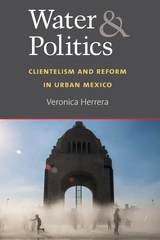
Water and Politics
Clientelism and Reform in Urban MexicoVeronica Herrera
University of Michigan Press, 2017
Most of the world’s population lives in cities in developing countries, where access to basic public services, such as water, electricity, and health clinics, is either inadequate or sorely missing. Water and Politics shows how politicians benefit politically from manipulating public service provision for electoral gain. In many young democracies, politicians exchange water service for votes or political support, rewarding allies or punishing political enemies. Surprisingly, the political problem of water provision has become more pronounced, as water service represents a valuable political currency in resource-scarce environments.
Water and Politics finds that middle-class and industrial elites play an important role in generating pressure for public service reforms.
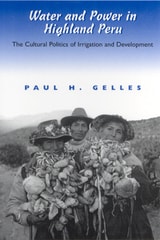
Water and Power in Highland Peru
The Cultural Politics of Irrigation and DevelopmentPaul H Gelles
Rutgers University Press, 2000
Cabanaconde, a town of 5,000 people, is located in the arid Andean highlands. It is dominated by the foreboding Hualca Hualca mountain peak that is the source of this town’s much-needed water. How the villagers obtain this water, Paul Gelles writes, is not a simple process: the politics of irrigation in this area reflect a struggle for control of vital resources, deeply rooted in the clash between local, ritualized models of water distribution and the secular model put forth by the Peruvian state. Water and Power in Highland Peru provides an insightful case study on the intense conflicts over water rights, and a framework for studying ethnic conflict and the effects of “development,” not only in Peru, but in other areas as well.
Most of the inhabitants of Cabanaconde do not identify themselves with the dominant Spanish-speaking culture found in Peru. And the Peruvian state, grounded in a racist, post-Colonial ethos, challenges the village’s long-standing, non-Western framework for organizing water management.
Gelles demonstrates that Andean culture is dynamic and adaptive, and it is a powerful source of ethnic identity, even for those who leave the village to live elsewhere. Indigenous rituals developed in this part of the world, he states, have become powerful tools of resistance against interference by local elites and the present-day Peruvian state. Most importantly, the micropolitics of Cabanaconde provide a window into a struggle that is taking place around the world.
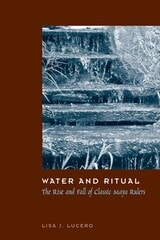
Water and Ritual
The Rise and Fall of Classic Maya RulersBy Lisa J. Lucero
University of Texas Press, 2006
In the southern Maya lowlands, rainfall provided the primary and, in some areas, the only source of water for people and crops. Classic Maya kings sponsored elaborate public rituals that affirmed their close ties to the supernatural world and their ability to intercede with deities and ancestors to ensure an adequate amount of rain, which was then stored to provide water during the four-to-five-month dry season. As long as the rains came, Maya kings supplied their subjects with water and exacted tribute in labor and goods in return. But when the rains failed at the end of the Classic period (AD 850-950), the Maya rulers lost both their claim to supernatural power and their temporal authority. Maya commoners continued to supplicate gods and ancestors for rain in household rituals, but they stopped paying tribute to rulers whom the gods had forsaken.
In this paradigm-shifting book, Lisa Lucero investigates the central role of water and ritual in the rise, dominance, and fall of Classic Maya rulers. She documents commoner, elite, and royal ritual histories in the southern Maya lowlands from the Late Preclassic through the Terminal Classic periods to show how elites and rulers gained political power through the public replication and elaboration of household-level rituals. At the same time, Lucero demonstrates that political power rested equally on material conditions that the Maya rulers could only partially control. Offering a new, more nuanced understanding of these dual bases of power, Lucero makes a compelling case for spiritual and material factors intermingling in the development and demise of Maya political complexity.
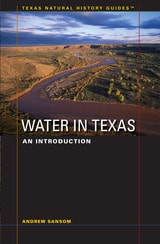
Water in Texas
An IntroductionBy Andrew Sansom
University of Texas Press, 2008
No natural resource issue has greater significance for the future of Texas than water. The state's demand for water for municipal, industrial, agricultural, and recreational uses continues to grow exponentially, while the supply from rivers, lakes, aquifers, and reservoirs is limited. To help Texans manage their water resources today and plan for future needs, one of Texas's top water experts has compiled this authoritative overview of water issues in Texas.
Water in Texas covers all the major themes in water management and conservation:
- Living with a Limited Resource
- The Molecule that Moves Mountains
- A Texas Water Journey
- The Gulf Shores of Texas
- Who's Who in Water
- Texas Water Law: A Blend of Two Cultures
- Does Texas Have Enough Water?
- Planning for the Future
- What's in Your Water?
- How Much is Water Worth?
- Water is Our Legacy
Illustrated with color photographs and maps, Water in Texas will be the essential resource for landowners, citizen activists, policymakers, and city planners.
Water in the Hispanic Southwest
A Social and Legal History, 1550-1850Michael C. Meyer
University of Arizona Press, 1984
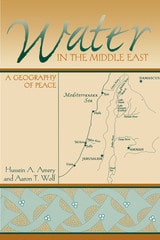
Water in the Middle East
A Geography of PeaceEdited by Hussein A. Amery and Aaron Wolf
University of Texas Press, 2000
Finding "streams in the desert" has never been more urgent for the peoples of the Middle East. Rapid population growth and a rising standard of living are driving water demand inexorably upward, while the natural supply has not increased since Biblical times. Ensuring a fair and adequate distribution of water in the region is vitally important for building a lasting peace among the nations of the Middle East.
Addressing water needs from a geographical perspective, the contributors to this book analyze and assess the impact of scarce water resources in the Jordan River basin countries and territories (Israel, Jordan, Lebanon, Palestine, and Syria) as these long-time antagonists work toward peace. After geographical and historical overviews, the authors envision the future-what the water issues may be when Israel and Syria begin negotiating, the "hydro-security" needs of each nation, and the difficulties of planning for uncertainty. Without proposing any one ideal scheme, they discuss the possibilities for cooperative sharing of water resources, while honestly acknowledging the political constraints that may limit such projects. The final essay speaks to the needs of the one party so rarely represented at the negotiating table—the Jordan River itself.

Water in the West
A High Country News ReaderChar Miller
Oregon State University Press, 2000
Water the Rocks Make
David McElroy
University of Alaska Press, 2021
Set primarily in Alaska, where author David McElroy has lived most of his life, the real action in these poems is in thought—the mind coming to terms (words) with consciousness, the mixing and rendering of reality and imagination. McElroy delves down the many rapid turns toward meaning through these contemplations on personification of a long-tailed boat in Asia; Adam tasked with naming the creatures; synthesizing the agony of accident, disease, and death; Descartes musing about an oilfield bridge; the excitement of sensual love; or the history and creativity emerging from a landfill.
There is sadness here, but through the rigorous manipulation of imagery, rhythm, and sound, Water the Rocks Make strives to “…contribute their daily/ details in our remarkable trick of happiness…to rise from the mulch/ of dreams like seedling teak goofy with life/ and floppy leaves.”
Water's Edge
Writing on WaterEdited by Lenore Manderson and Forrest Gander
Northwestern University Press, 2023
A wide-ranging consideration of water’s plenitude and paucity—and of our relationship to its many forms
Water is quotidian, ubiquitous, precious, and precarious. With their roots in this element, the authors of Water’s Edge reflect on our natural environment: its forms, textures, and stewardship. Born from a colloquium organized by the editors at the Institute at Brown for Environment and Society, the anthology features a diverse group of writers and artists from half a dozen countries, from different fields of scholarship and practice: artists, biologists, geologists, poets, ecocritics, actors, and anthropologists. The contributors explore and celebrate water while reflecting on its disturbances and pollution, and their texts and art play with the boundaries by which we differentiate literary forms.
In the creative nonfiction, poetry, and visual art collected here, water moves from backdrop to subject. Ashley Dawson examines the effects of industrial farming on the health of local ecosystems and economies. Painter Kulvinder Kaur Dhew captures water’s brilliance and multifaceted reflections through a series of charcoal pieces that interlace the collection. Poet Arthur Sze describes the responsibility involved in the careful management of irrigation ditches in New Mexico. Rather than concentrating their thoughts into a singular, overwhelming argument, the authors circulate moments of apprehension, intimation, and felt experience. They are like tributaries, each carrying, in a distinctive style, exigent and often intimate reports concerning a substance upon which all living organisms depend.
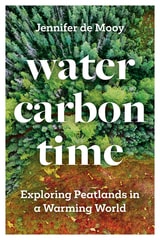
Water, Carbon, Time
Exploring Peatlands in a Warming WorldJennifer de Mooy
University of Minnesota Press, 2026
Revealing the hidden worlds of peatlands and their potential to fight climate change
Bogs, fens, mires, moors, muskegs, and pocosins—they are found in nearly all the world’s climatic zones but are easily overlooked in our landscapes. Yet these murky ecosystems formed of decay are both full of life and crucial to our planetary wellbeing: covering only about three percent of the earth’s surface, peatlands store more carbon than all the world’s forests combined. In Water, Carbon, Time, Jennifer de Mooy shares her personal discovery of these natural wonders in all their variety and understated beauty, bringing much-needed attention to the restorative possibilities of their spongy depths.
De Mooy first encountered peatlands on a trip to Ireland with her father, but her later work on climate change policy in the United States motivated her to investigate options for reducing greenhouse gases in the atmosphere. Her interest was practical: could peatlands combat global warming? To deepen her understanding of these unique wetlands, she embarked on a quest from bogs and fens in Minnesota and Maine to bofedales in Peru and muskegs in Canada and Alaska. A vivid account of her journey, Water, Carbon, Time describes these peatlands in all their richness and mystery: what they are and how to find them, the diversity of ecological life they support, and how their hidden systems promote climate resilience.
As she learns more about the importance of peatlands, de Mooy emphasizes all we lose when they are damaged by drainage, fire, and the broader sweep of climate change. When peatlands are threatened, we risk releasing stored carbon from their soil, where it has accumulated over millennia, into the atmosphere. In parts a travelogue, an ecological history, and a call to action, Water, Carbon, Time demonstrates there is still hope for these precious ecosystems—and their potential as a natural climate solution right beneath our feet.
Retail e-book files for this title are screen-reader friendly with images accompanied by short alt text and/or extended descriptions.
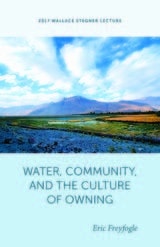
Water, Community, and the Culture of Owning
Eric T. Freyfogle
University of Utah Press, 2018
Building on these cultural critiques, Freyfogle takes up the issue of private property rights, highlighting the longstanding flexibility of this key American institution as well as the moral imperative to ensure that property rights aren’t used in ways that harm communities. Outdated understandings about private property, he concludes, have further confused our understanding and made sensible solutions to water problems even harder to imagine. Water-policy reform won’t happen, Freyfogle argues, until we reconsider how we understand nature and take charge of the institution of ownership, recasting it so as to increase the benefits it generates for everyone. If we can do that, solutions to water troubles could prove easier than we expect. The work concludes with an original, sweeping policy proposal to resolve the West’s water shortages and meet environmental needs in ways fair to all.
This lecture was presented on March 22, 2017, at the 22nd annual symposium sponsored by the Wallace Stegner Center for Land, Resources and the Environment at the S. J. Quinney College of Law, University of Utah.
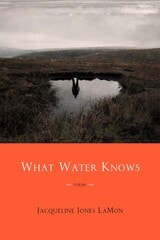
What Water Knows
PoemsJacqueline Jones LaMon
Northwestern University Press, 2021
LaMon’s skillful embodiment of character and her signature use of personae invite the reader to experience the unfathomable. Prepare to go over Niagara Falls in a barrel. Prepare to feel the force of a fire hose on your bare legs. Prepare to experience what happens when greed gets in the way of reason. What Water Knows is a canonical poetic achievement that will remind us of what it means to be human in a world that often forgets.
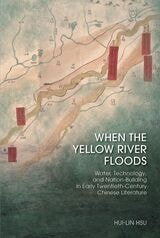
When the Yellow River Floods
Water, Technology, and Nation-Building in Early Twentieth-Century Chinese LiteratureHui-Lin Hsu
Hong Kong University Press, 2024
When the Yellow River Floods explores the relationship between environmental degradation, hydraulic engineering, and nation-building in the context of Liu E’s The Travels of Lao Can. This book provides a unique perspective on modern Chinese literary history that goes beyond conventional narratives that focus solely on political and cultural factors. The main areas covered include the role of water management in literary nation-building and the connections between the novel’s various themes, such as river engineering, medical and political discourses, national sentiment, and landscape description.
By offering a comprehensive analysis of The Travels of Lao Can, this book broadens the understanding of nation-building in early twentieth-century China, highlighting the impact of environmental crises and hydraulics on the formation of national literature and consciousness. When the Yellow River Floods provides a new perspective on the environmental roots of modern Chinese literature, making it an essential read for those seeking to understand the complex interplay between literature, the environment, and national identity in China. This book will be of interest to scholars and students of Chinese literature, history, and environmental studies.
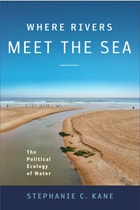
Where Rivers Meet the Sea
The Political Ecology of WaterStephanie Kane
Temple University Press, 2012
Where fresh water appears to be abundant and generally accessible, chronic pollution may be relatively ignored as a public issue. Yet there are those whose lives, livelihoods, and traditions are touched directly by the destructive albeit essential relationship between humans and water.
In her passionate and persuasively argued Where Rivers Meet the Sea, Stephanie Kane compares two cities and nations—Salvador, Brazil and Buenos Aires, Argentina—as she tells the stories of those who organize in the streets, petition the courts, and challenge their governments to implement and enforce existing laws designed to protect springs, lakes, harbors, and rivers.
Illuminating the complex and distinctive cultural forces in the South Atlantic that shape conflicts and collaborations pertaining to particular waterfront settings, Kane shows the dilemmas, inventiveness, and persistence that provide the foundation for environmental and social justice movements writ large.
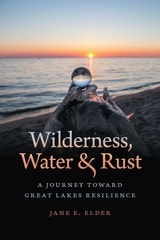
Wilderness, Water, and Rust
A Journey toward Great Lakes ResilienceJane Elder
Michigan State University Press, 2024
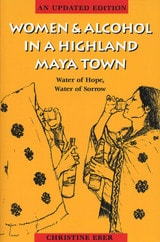
Women and Alcohol in a Highland Maya Town
Water of Hope, Water of SorrowBy Christine Eber
University of Texas Press, 1995
Healing roles and rituals involving alcohol are a major source of power and identity for women and men in Highland Chiapas, Mexico, where abstention from alcohol can bring a loss of meaningful roles and of a sense of community. Yet, as in other parts of the world, alcohol use sometimes leads to abuse, whose effects must then be combated by individuals and the community.
In this pioneering ethnography, Christine Eber looks at women and drinking in the community of San Pedro Chenalhó to address the issues of women’s identities, roles, relationships, and sources of power. She explores various personal and social strategies women use to avoid problem drinking, including conversion to Protestant religions, membership in cooperatives or Catholic Action, and modification of ritual forms with substitute beverages.
The book’s women-centered perspective reveals important data on women and drinking not reported in earlier ethnographies of Highland Chiapas communities. Eber’s reflexive approach, blending the women’s stories, analyses, songs, and prayers with her own and other ethnographers’ views, shows how Western, individualistic approaches to the problems of alcohol abuse are inadequate for understanding women’s experiences with problem and ritual drinking in a non-Western culture.
In a new epilogue, Christine Eber describes how events of the last decade, including the Zapatista uprising, have strengthened women's resolve to gain greater control over their lives by controlling the effects of alcohol in the community.
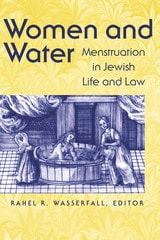
Women and Water
Menstruation in Jewish Life and LawEdited by Rahel Wasserfall
Brandeis University Press, 1999
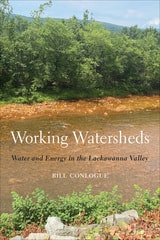
Working Watersheds
Water and Energy in the Lackawanna ValleyWilliam Conlogue
Temple University Press, 2025
Offering a fresh way to think about the Anthropocene, this distinctive history of water and coal in the Lackawanna Valley discusses how both water abundance and scarcity might play out as global temperatures rise. Working Watersheds is designed to trigger debates about the nature of history, the significance of literature, and the importance of linking person, place, and planet in an era of climate change.
Working with Water
Wisconsin WaterwaysBobbie Malone and Jefferson J. Gray
Wisconsin Historical Society Press, 2001
"Water, water, everywhere . . ." Working with Water, the latest in the popular New Badger History series, teaches young readers about the many ways water has shaped Wisconsin’s history, from glaciers to stewardship. It touches on geography and hydrography; transportation networks of Indians and fur traders; the Erie Canal; shipwrecks, lighthouses, shipping, and shipbuilding; fishing, ricing, "pearling" (clamming), and cranberry cultivation; lumbering, milling, and papermaking; recreation, resorts, tourism, and environmentalism.
The companion Teacher’s Guide and Student Materials engages students in hands-on exploration. It highlights historical processes and encourages multiple learning styles.
Writing on Water
The Sounds of Jewish PrayerJudit Niran Frigyesi
Central European University Press, 2018
Writing on Water grasps the phenomenon of sound in prayer, that is, a meaning in sounds and soundscapes, and a musical essence in the act of praying.
The impetus for the book arose from the author’s fieldwork among traditional Jews during the era of communism in Budapest and Prague. In that period the Jewish religion and Jewishness in general were supressed and rituals became semi-secret and turned inward. The book is a witness to these communities and their rituals, but it goes beyond documentation. The uniqueness of the sounds of the rituals compelled the author to try to comprehend how melodies and soundscapes became the sustaining/protective environment, as well as the vehicle, for the expression of a world-orientation—in a situation where open discourse was inconceivable.
The book is based on extensive interviews, musical recordings, photographs and scholarly analyses. It is unique in its choice of communities, its wealth of original documents, and its novel interpretation of sound.
Writing on Water is creative non-fiction. The presentation is evocative and poetic, but at the same time it transmits knowledge. The book can aid research and serve in courses in philosophy, religion, music, ethnomusicology, anthropology, aesthetics, Jewish studies, folklore, oral history, and performance studies. It is also a work of art and literature.
Written in Water, Written in Stone
Twenty Years of Poets on PoetryMartin Lammon, Editor
University of Michigan Press, 1996
Included are selections from, among others, Robert Bly, Hayden Carruth, Amy Clampitt, Robert Creeley, Tess Gallagher, Donald Hall, Robert Hayden, Galway Kinnell, Richard Kostelanetz, Maxine Kumin, Philip Levine, Marge Piercy, Anne Sexton, Charles Simic, Louis Simpson, William Stafford, Diane Wakoski, Charles Wright, and James Wright. This diverse collection of popular contemporary poets is sure to appeal to a wide range of readers.
Martin Lammon teaches creative writing at Fairmont State College. He is a poet and editor of the literary magazine Kestrel.