Results by title
301 books match the query 'West (U.S.)' and 35 start with w
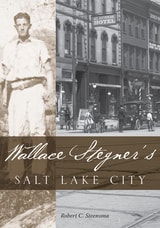
Wallace Stegners Salt Lake City
Robert C. Steensma
University of Utah Press, 2007
As he was later to say in his essay 'At Home in the Fields of the Lord,' he eventually realized that, if he had to have a hometown, it was Salt Lake City. He came to use the 'City of the Saints' for settings in three novels: The Big Rock Candy Mountain, Recapitulation, and The Preacher and the Slave (later retitled Joe Hill). His years in Utah helped develop the environmental ethic he espoused so eloquently in his famous 'Wilderness Letter.'
Robert Steensma has meticulously searched through archival photographs, quotations from Stegner’s writings, and interpretive essays in order to recreate the Salt Lake City of the 1920s and 1930s, the city of Stegner’s youth and young adulthood. This is a book that will appeal to all who have been moved by Stegner’s novels, nonfiction, or his urgent appeals for conservation.
Walter Van Tilburg Clark
CritiquesCharlton Laird
University of Nevada Press, 1983
Beginning in 1849, Alfred Doten recorded his life in minute detail for more than 54 years. His revealing daily accounts of the West's lusty mining frontier included tales of lynching, vigilante justice, shootings in the street, grand opera and theatre, stock manipulations, seances, musical soirees, and general "jollifications." Clark selected and edited the most valuable portions of Doten's massive diaries. He said he knew of no other account, fact or fiction, that so graphically presented the tragic course of a single representative life through the violent transformations brought about by the California Gold Rush and the Nevada Silver Boom.
Wandering Time
Western NotebooksLuis Alberto Urrea
University of Arizona Press, 1999
Fleeing a failed marriage and haunted by ghosts of his past, Luis Alberto Urrea jumped into his car and headed west. Driving cross-country with a cat named Rest Stop, Urrea wandered the West from one year’s spring through the next.
Hiking into aspen forests where leaves “shiver and tinkle like bells” and poking alongside creeks in the Rockies, he sought solace and wisdom. In the forested mountains he learned not only the names of trees—he learned how to live. As nature opened Urrea’s eyes, writing opened his heart. In journal entries that sparkle with discovery, Urrea ruminates on music, poetry, and the landscape. With wonder and spontaneity, he relates tales of marmots, geese, bears, and fellow travelers. He makes readers feel mountain air “so crisp you feel you could crunch it in your mouth” and reminds us all to experience the magic and healing of small gestures, ordinary people, and common creatures.
Urrea has been heralded as one of the most talented writers of his generation. In poems, novels, and nonfiction, he has explored issues of family, race, language, and poverty with candor, compassion, and often astonishing power. Wandering Time offers his most intimate work to date, a luminous account of his own search for healing and redemption.

Wanted Dead or Alive
THE AMERICAN WEST IN POPULAR CULTUREEdited by Richard Aquila
University of Illinois Press, 1996
Wanted Dead or Alive presents the first-ever comprehensive look at how the American West has been depicted in popular culture. Following Richard Aquila's introduction, which examines the birth and growth of the pop culture West in the context of American history, noted experts explore developments in popular Western fiction, major forms of live Western entertainment, trends in Western movies and television shows, images of the West in popular music, and visual images of the West in popular art and advertising. For the reader on the trail of even more information, each section of the book concludes with suggestions for further reading.
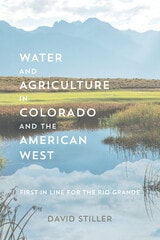
Water and Agriculture in Colorado and the American West
First in Line for the Rio GrandeDavid Stiller
University of Nevada Press, 2021
David Stiller’s thoughtful study focuses on the history of agricultural water use of the Rio Grande in Colorado’s San Luis Valley. After surveying the practices of early farmers in the region, he focuses on the impacts of Euro-American settlement and the ways these new agrarians endeavored to control the river. Using the Rio Grande as a case study, Stiller offers an informed and accessible history of the development of practices and technologies to store, distribute, and exploit water in Colorado and other western states, as well as an account of the creation of water rights and laws that govern this essential commodity throughout the West to this day. Stiller’s work ranges from meticulously monitored fields of irrigated alfalfa and potatoes to the local and state water agencies and halls of Congress. He also includes perceptive comments on the future of western water as these arid states become increasingly urbanized during a period of worsening drought and climate change.
An excellent read for anyone curious about important issues in the West, Water and Agriculture in Colorado and the American West offers a succinct summary and analysis of Colorado’s use of water by agricultural interests, in addition to a valuable discussion of the past, present, and future of struggles over this necessary and endangered resource.
Water and Climate in the Western United States
W Lewis
University Press of Colorado, 2003

Water in the West
A High Country News ReaderChar Miller
Oregon State University Press, 2000
Water, Community, and the Culture of Owning
Eric T. Freyfogle
University of Utah Press, 2018
Building on these cultural critiques, Freyfogle takes up the issue of private property rights, highlighting the longstanding flexibility of this key American institution as well as the moral imperative to ensure that property rights aren’t used in ways that harm communities. Outdated understandings about private property, he concludes, have further confused our understanding and made sensible solutions to water problems even harder to imagine. Water-policy reform won’t happen, Freyfogle argues, until we reconsider how we understand nature and take charge of the institution of ownership, recasting it so as to increase the benefits it generates for everyone. If we can do that, solutions to water troubles could prove easier than we expect. The work concludes with an original, sweeping policy proposal to resolve the West’s water shortages and meet environmental needs in ways fair to all.
This lecture was presented on March 22, 2017, at the 22nd annual symposium sponsored by the Wallace Stegner Center for Land, Resources and the Environment at the S. J. Quinney College of Law, University of Utah.
Wayne Aspinall and the Shaping of the American West
Steven C. Schulte
University Press of Colorado, 2002
In Wayne Aspinall and the Shaping of the American West, Steven C. Schulte details a political career that encompassed some of the most crucial years in the development of the twentieth-century West. As chairman of the House Interior and Insular Affairs Committee from 1959 to 1973, Aspinall shaped the nation's reclamation, land, wilderness, and natural resource policies. His crusty and dtermined personality was at the enter of some of the key environmental battles of the twentieth century, including the Echo Park Dam fight, the struggle for the Wilderness Act, and the long controversy over the Central Arizona Project.
Ways to the West
How Getting Out of Our Cars Is Reclaiming America's FrontierTim Sullivan
Utah State University Press, 2015
In Ways to the West, Tim Sullivan embarks on a car-less road trip through the Intermountain West, exploring how the region is taking on what may be its greatest challenge: sustainable transportation. Combining personal travel narrative, historical research, and his professional expertise in urban planning, Sullivan takes a critical yet optimistic and often humorous look at how contemporary Western cities are making themselves more hospitable to a life less centered on the personal vehicle.
The modern West was built by the automobile, but so much driving has jeopardized the West’s mystic hold on the American future. At first, automobility heightened the things that made the West great, but love became dependence, and dependence became addiction. Via his travels by bicycle, bus, and train through Las Vegas, Phoenix, Denver, Boise, Salt Lake City, and Portland, Sullivan captures the modern transportation evolution taking place across the region and the resulting ways in which contemporary Western communities are reinterpreting classic American values like mobility, opportunity, adventure, and freedom.
Finding a West created, lost, and reclaimed, Ways to the West will be of great interest to anyone curious about sustainable transportation and the history, geography, and culture of the American West.
West
Fire : ArchiveIris Jamahl Dunkle
University Press of Colorado, 2021
West of 98
Living and Writing the New American WestEdited by Lynn Stegner and Russell Rowland
University of Texas Press, 2011
What does it mean to be a westerner? With all the mythology that has grown up about the American West, is it even possible to describe "how it was, how it is, here, in the West—just that," in the words of Lynn Stegner? Starting with that challenge, Stegner and Russell Rowland invited several dozen members of the western literary tribe to write about living in the West and being a western writer in particular. West of 98 gathers sixty-six literary testimonies, in essays and poetry, from a stellar collection of writers who represent every state west of the 98th parallel—a kind of Greek chorus of the most prominent voices in western literature today, who seek to "characterize the West as each of us grew to know it, and, equally important, the West that is still becoming."
In West of 98, western writers speak to the ways in which the West imprints itself on the people who live there, as well as how the people of the West create the personality of the region. The writers explore the western landscape—how it has been revered and abused across centuries—and the inescapable limitations its aridity puts on all dreams of conquest and development. They dismantle the boosterism of manifest destiny and the cowboy and mountain man ethos of every-man-for-himself, and show instead how we must create new narratives of cooperation if we are to survive in this spare and beautiful country. The writers seek to define the essence of both actual and metaphoric wilderness as they journey toward a West that might honestly be called home.
A collective declaration not of our independence but of our interdependence with the land and with each other, West of 98 opens up a whole new panorama of the western experience.
West of Center
Art and the Counterculture Experiment in America, 1965–1977Elissa Auther
University of Minnesota Press, 2012
In the heady and hallucinogenic days of the 1960s and ’70s, a diverse range of artists and creative individuals based in the American West—from the Pacific coast to the Rocky Mountains and the Southwest—broke the barriers between art and lifestyle and embraced the new, hybrid sensibilities of the countercultural movement. Often created through radically collaborative artistic practices, such works as Paolo Soleri’s earth homes, the hand-built architecture of the Drop City and Libre communes, Yolanda López’s political posters, the multisensory movement workshops of Anna and Lawrence Halprin, and the immersive light shows and video-based work by the Ant Farm and Optic Nerve collectives were intended to generate new life patterns that pointed toward social and political emancipation.
In West of Center, Elissa Auther and Adam Lerner bring together a prominent group of scholars to elaborate the historical and artistic significance of these counterculture projects within the broader narrative of postwar American art, which skews heavily toward New York’s avant-garde art scene. This west of center countercultural movement has typically been associated with psychedelic art, but the contributors to this book understand this as only one dimension of the larger, artistically oriented, socially based phenomenon. At the same time, they reveal the disciplinary, geographic, and theoretical biases and assumptions that have led to the dismissal of countercultural practices in the history of art and visual culture, and they detail how this form of cultural and political activity found its place in the West.
A companion to an exhibition originating at the Museum of Contemporary Art Denver, this book illuminates how, in the western United States, the counterculture’s unique integration of art practices, political action, and collaborative life activities serves as a linchpin connecting postwar and contemporary artistic endeavors.
West of the Border
The Multicultural Literature of the Western American FrontiersNoreen Groover Lape
Ohio University Press, 2000
Expanding the scope of American borderland and frontier literary scholarship, West of the Border examines the writings of nineteenth- and turn-of-the-century Native, African, Asian, and Anglo American frontier writers. This book views frontiers as “human spaces” where cultures make contact as it considers multicultural frontier writers who speak from “west of the border.”
James P. Beckwourth, a half-black fur trader; Sarah Winnemucca Hopkins, a Paiute translator; Salishan author Mourning Dove; Cherokee novelist John Rollin Ridge; Sui Sin Far, an Anglo-Chinese short story writer, and her sister, romance novelist Onoto Watanna; and Mary Austin, a white southwestern writer- each of these intercultural writers faces a rite of passage into a new social order. Their writings negotiate their various frontier ordeals: the encroachment of pioneers on the land; reservation life; assimilation; Christianity; battles over territories and resources; exclusion; miscegenation laws; and the devastation of the environment.
In West of the Border, Noreen Groover Lape raises issues inherent in American pluralism today by broaching timely concerns about American frontier politics, conceptualizing frontiers as intercultural contact zones, and expanding the boundaries of frontier literary studies by giving voice to minority writers.
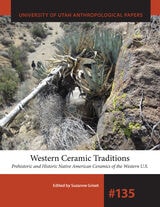
Western Ceramic Traditions
Prehistoric and Historic Native American Ceramics of the Western U.S.Edited by Suzanne Griset
University of Utah Press, 2021
This volume is dedicated to studies of plainwares—the undecorated ceramics that make up the majority of prehistoric ceramic assemblages worldwide. Early analyses of ceramics focused on changes in decorative design elements to establish chronologies and cultural associations. With the development of archaeometric techniques that allow direct dating of potsherds and identification of their elemental composition and residues, plainwares now provide a new source of information about the timing, manufacture, distribution, and use of ceramics.
This book investigates plainwares from the far west, stretching into the Great Basin and the northwestern and southwestern edges of Arizona. Contributors use and explain recent analytical methods, including neutron activation, electron microprobe analysis, and thin-section optical mineralogy. They examine native ceramic traditions and how they were influenced by the Spanish mission system, and they consider the pros and cons of past approaches to ware typology, presenting a vision of how plainware analysis can be improved by ignoring the traditional “typological” approach of early ceramicists working with decorated wares.
This work provides a much-needed update to plainware studies, with new hypotheses and data that will help set the stage for future research.
Western Journeys
Teow Lim Goh
University of Utah Press, 2022
In Western Journeys, Teow Lim Goh charts her journeys immigrating from Singapore and spending the last fifteen years living in and exploring the American West. Goh chronicles her lived experiences while building on the longer history of immigrants from Asia during the nineteenth and twentieth centuries, bringing new insights to places, the historical record, and memory. These vital essays consider how we access truth in the face of erasure. In exploring history, nature, politics, and art, Goh asks, “What does it mean for an immigrant to be at home?”
Looking beyond the captivating landscapes of the American West, Goh uncovers stories of the Chinese people who came to America during the era of Chinese Exclusion Act, as well as the stories of the Indigenous peoples who have been written out of popular narratives, and various others. She examines the links between the transcontinental railroad, the cowboy myth, and the anti-Chinese prejudice that persists today. These essays explore the early efforts to climb Colorado’s highest peaks, the massacre of Chinese miners in Rock Springs, Wyoming, and the increasingly destructive fire seasons in the West. Goh’s essays create a complex, varied, and sometimes contradictory story of people and landscapes, a tapestry of answers and questions.
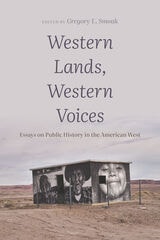
Western Lands, Western Voices
Essays on Public History in the American WestEdited by Gregory E. Smoak
University of Utah Press, 2021
Inspired by the fiftieth anniversary of the University of Utah’s American West Center, the oldest regional studies center in the United States, Western Lands, Western Voices explores the many dimensions of public history. This collection of thirteen essays is rooted in the real-world experiences of the authors and is the first volume to focus specifically on regional public history.
Contributors include tribal government officials, state and federal historians, independent scholars and historical consultants, and academics. Some are distinguished historians of the American West and others are emerging voices that will shape publicly engaged scholarship in the years to come. Among the issues they address are community history and public interpretation, tribal sovereignty, and the importance of historical research for land management. The volume will be indispensable to researchers and general readers interested in museum studies, Native American studies, and public lands history and policy.
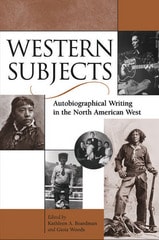
Western Subjects
Autobiographical Writing In North American WestGioia Woods
University of Utah Press, 2005
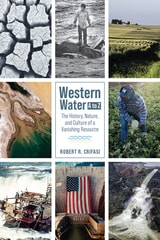
Western Water A to Z
The History, Nature, and Culture of a Vanishing Resourceby Robert R. Crifasi
University Press of Colorado, 2022
Organized as a collection of terms, the book addresses the most salient water issues and provides helpful background information regarding their origins and implications. Photographs serve a vital role in the cultural dialogue on water and stand as an equal partner to the text. Each subject is covered in about one page and is accompanied by one or two striking images from famous photographers like Margaret Bourke-White, Carleton E. Watkins, Arthur Rothstein, William Henry Jackson, and Dorothea Lang as well as Crifasi’s own work. Water often finds itself at the center of our cultural discourse in art, cinema, and literature, which play essential roles in shaping our understanding and experience of Western water. Crifasi also engages personalities that are nearly synonymous with Western water—John Wesley Powell, Elwood Mead, and Floyd Dominy, among others—to show how their lives intertwined with and often influenced the course of water development across the region.
Travelers, adventurers, students, and anyone interested in water will find Western Water A to Z a handy and entertaining reference guide.
Westerns
Making the Man in Fiction and FilmLee Clark Mitchell
University of Chicago Press, 1996
Few genres are so closely identified with America as the Western. In this wide-ranging examination of the Western and its appeal, Lee Clark Mitchell ranges from the novels of James Fenimore Cooper to Louis L'Amour, and from classic films like Stagecoach to spaghetti Westerns like A Fistful of Dollar to show how Westerns helped assuage a series of crises in American culture. This landmark book shows that the Western owes its perennial appeal not to unchanging conventions but to the deftness with which it responds to the obsessions and fears of its audience. And no obsession, Lee Mitchell argues, has figured more prominently in the Western than what it means to be a man.
Where the Wind Dreams of Staying
Searching for Purpose and Place in the WestEric Dieterle
Oregon State University Press, 2016
Dieterle’s journey leads from the plateau of eastern Washington through the landscapes of seven states, ending in the shadow of the San Francisco peaks in northern Arizona. Readers will find rich, detailed explorations of western landscapes balanced with stories of personal reflection, determination, doubt, and fulfillment.
Whiskey River Ranger
The Old West Life of Baz OutlawBob Alexander
University of North Texas Press, 2016
Wide Skies
Finding a Home in the WestGary Holthaus
University of Arizona Press, 1997
A true place in the world: how many people have looked for it and how many have finally found it in the American West? Here, with writer Gary Holthaus, readers will reflect upon their own sense of place as they travel the lands and enter the lives of people in small towns and on ranches all over the West from Utah to Oregon to Alaska. Farmers and merchants, writers and teachers, truckers and trappers: their stories ring with hope and fear as their wide-open spaces increasingly come under siege.
Here are reflections on a long journey, together with notes of a personal odyssey and a plea for preserving the West's natural beauty-its meadows and mountains, its bears and Golden Eagles, its antelope and wolverines. This is important, says Holthaus, because if the region is home for him and for others, too, then it is crucial for newcomers and old-timers alike not to "further foul a nest that is becoming increasingly crowded." As he finds his way and adjusts his eyes to modern realities of greed and indifference, he also comes to grips with loss and learns to balance "the harm one inevitably does" with acts of compassion and positive change.
Deep in the national consciousness, the mythical West of film and fiction continues to shape our vision of ourselves as Americans. This book is a view not from the media, not from think tanks or legislators or policy makers, but from Westerners themselves, who tell us about the circumstances of their lives. Their West is indisputably the real West, and only as we come to understand better its realities will we come to know ourselves both as individuals and as a nation.
Wild Horse Annie
Velma Johnston and Her Fight to Save the MustangAlan J. Kania
University of Nevada Press, 2013
Wild horses have been a subject of bitter controversy in the West for decades. To some, they are symbols of the West’s wild, free heritage. To others, they are rapacious grazers that destroy habitat and compete with domestic livestock and indigenous wildlife for scanty food and water. For years, free-ranging horses and burros were rounded up and shipped to slaughterhouses to be killed and turned into pet food. This practice provided an income for the “mustangers” who trapped and sold them, but it also involved horrendous cruelty and abuse of the animals.
Velma Johnston, who became known as “Wild Horse Annie,” undertook to stop the removal of wild horses and burros from US public lands and protect them from the worst aspects of mustanging. Her campaign attracted nationwide attention, as it led her from her rural Nevada County to state offices and finally to Washington, DC. Author Alan J. Kania worked closely with Johnston for seven years, and his biography provides unique insight into Wild Horse Annie’s life and her efforts to save the West’s wild horse herds through the passage of protective legislation.
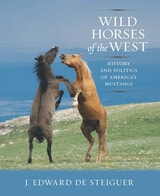
Wild Horses of the West
History and Politics of America's MustangsJ. Edward de Steiguer
University of Arizona Press, 2011
In Wild Horses of the West, J. Edward de Steiguer provides an entertaining and well-researched look at one of the most controversial animal welfare issues of our time—the protection of free-roaming horses on the West’s public lands. This is the first book in decades to include the entire story of these magnificent animals, from their evolution and biology to their historical integration into conquistador, Native American, and cowboy cultures. And the story isn’t over. De Steiguer goes on to address the modern issues— ecology, conservation, and land management—surrounding wild horses in the West today.
Featuring stunning color photographs of wild horses, this extremely thorough and engaging blend of history, science, and politics will appeal to students of the American West, conservation activists, and anyone interested in the beauty and power of these striking animals.
Wilderness Journey
The Life of William ClarkWilliam E. Foley
University of Missouri Press, 2005
Coinciding with the bicentennial in 2004 of the departure of Lewis and Clark’s famed Corps of Discovery, Wilderness Journey fills a major gap in scholarship. Intended for the general reader, as well as for specialists in the field, this fascinating book provides a well-balanced and thorough account of one of America’s most significant frontiersmen.
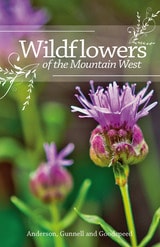
Wildflowers of the Mountain West
Richard M. Anderson, Jay Dee Gunnell, Jerry L. Goodspeed
Utah State University Press, 2012
Many recreational hikers have stopped along the trail to admire a wildflower only to wonder what, exactly, they are looking at. Wildflowers of the Mountain West is a useful field guide that makes flower identification easy for the general outdoor enthusiast.
Many available plant guides are too technical or cumbersome for non-specialists to embrace. Covering New Mexico, Colorado, Wyoming, Idaho, Utah, Nevada and Oregon, this book is perfect for the enthusiasts who has little botanical knowledge but would like to know more about the wildflowers they are seeing. Organized by flower color for easy reference, plant records include the common and scientific names, a description of typical characteristics, habitat information and distribution maps, look-alike species, color photographs, and informative commentary. In addition, the book provides a useful introduction to the Mountain West region, along with line drawings to illustrate basic flower parts, shapes, and arrangements; a glossary of common botanical terms; a quick search key; and an index.
The book is spiral-bound, making it easy to bring along while hiking, backpacking, or biking, and stunning full color photographs make visual confirmation of flower type simple and straightforward.
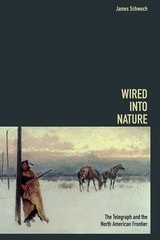
Wired into Nature
The Telegraph and the North American FrontierJames Schwoch
University of Illinois Press, 2018
Merging new research with bold interpretation, James Schwoch details the unexplored dimensions of the frontier telegraph and its impact. The westward spread of telegraphy entailed encounters with environments that challenged Americans to acquire knowledge of natural history, climate, and a host of other fields. Telegraph codes and ciphers, meanwhile, became important political, military, and economic secrets. Schwoch shows how the government's use of commercial networks drove a relationship between the two sectors that served increasingly expansionist aims. He also reveals the telegraph's role in securing high ground and encouraging surveillance. Both became vital aspects of the American effort to contain, and conquer, the West's indigenous peoples—and part of a historical arc of concerns about privacy, data gathering, and surveillance that remains pertinent today.
Entertaining and enlightening, Wired into Nature explores an unknown history of the West.
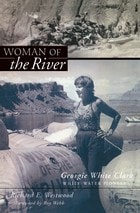
Woman Of The River
Georgie White Clark, Whitewater PioneerRichard Westwood
Utah State University Press, 1997
Georgie White Clark-adventurer, raconteur, eccentric--first came to know the canyons of the Colorado River by swimming portions of them with a single companion. She subsequently hiked and rafted portions of the canyons, increasingly sharing her love of the Colorado River with friends and acquaintances. At first establishing a part-time guide service as a way to support her own river trips, she went on to become perhaps the canyons' best-known river guide, introducing their rapids to many others-on the river, via her large-capacity rubber rafts, and across the nation, via magazine articles and movies. Georgie Clark saw the river and her sport change with the building of Glen Canyon Dam, enormous increases in the popularity of river running, and increased National Park Service regulation of rafting and river guides. Adjusting, though not always easily, to the changes, she helped transform an elite adventure sport into a major tourist activity.
Women Writers of the American West, 1833-1927
Nina Baym
University of Illinois Press, 2012
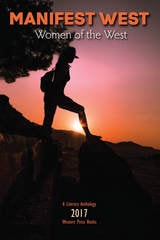
Women of the West
Caleb Seeling
University Press of Colorado, 2017
The 2017 volume in the Manifest West series, Women of the West, delves into the rich mixing pot created in the West, derived from assorted cultures and ethnicities and from a variety of beliefs and traditions across the world, all manifested in today’s Western culture.
There is no one type of Western woman. They are beautifully diverse in race, religion, and sexual orientation, yet they are bonded through the shared experiences and approaches to life that identify them as distinctly Western. Like individual squares of a quilt, women’s interactions with the culture, landscape, and geography of the West, as well as with their families and one another, offer us a unified variety.
In this collection of poems, short stories, and creative nonfiction, twenty-five writers and poets present a broad understanding of the Western woman, sometimes defying and sometimes reinforcing expectations and stereotypes. Perspectives vary from daughters grieving the loss of fathers whose rugged ways resonated with them to mothers striving to share an adoration for the delicacy of nature with their sons. For every woman seeking to conquer the wilderness, another yearns to be tamed by it. These are the stories of natives and Natives, of immigrants from around the world, spanning from eastern states of America to Vietnam in the East. From historical figures toting guns and whips to those who must overcome today’s manifestations of violence against women, these ladies, and so many more, are the Women of the West.
Manifest West is Western Press Books’ literary anthology series. The press, affiliated with Western State Colorado University, produces one anthology annually and focuses on Western regional writing.
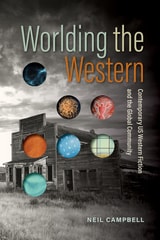
Worlding the Western
Contemporary US Western Fiction and the Global CommunityNeil Campbell
University of Nevada Press, 2022
Diversity, disparity, and opposition are central to the dynamic frictional fiction considered in this book. The American West provides a powerful test case in which these features are present and yet, historically, have often been masked or denied in the rush toward unanimity and nation building. Worlding is, therefore, a positive, critical concept through which to view the notion of a single world under pressure.
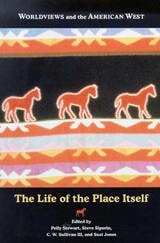
Worldviews And The American West
The Life of the Place ItselfPolly Stewart, Steve Siporin, C. W. Sullivan III, and Suzi Jones
Utah State University Press, 2003
A diverse group of writers and scholars follow the lead of noted folklorist Barre Toelken and consider, from the inside, the ways in which varied cultures in the American West understand and express their relations to the world around them. As Barre Toelken puts it in The Dynamics of Folklore, "'Worldview' refers to the manner in which a culture sees and expresses its relation to the world around it." In Worldviews and the American West, seventeen notable authors and scholars, employing diverse approaches and styles, apply Toelken's ideas about worldview to the American West. While the contributors represent a range of voices, methods, and visions, they are integrated through their focus on the theme of worldview in one region. Worldviews and the American West includes essays by Margaret K. Brady, Hal Cannon, Nora Marks Dauenhauer and Richard Dauenhauer, James S. Griffith, Barry Lopez, Robert McCarl, Elliott Oring, Twilo Scofield, Steve Siporin, Kim Stafford, C. W. Sullivan III, Jeannie B. Thomas, George Venn, George B. Wasson, and William A. Wilson. Each of the authors in this collection attempts to get inside one or more of the worldviews of the many cultures that have come to share and interpret the American West. The result is a lively mix of styles and voices as the authors' own worldviews interact with the multiple perspectives of the diverse peoples (and, in Barry Lopez's "The Language of Animals," other species) of the West. This diversity matches the geography of the region they all call home and gives varied life and meaning to its physical and cultural landscape.
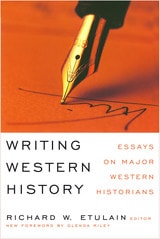
Writing Western History
Essays on Major Western HistoriansRichard W. Etulain
University of Nevada Press, 2002
Writing the Trail
Five Women's Frontier NarrativesDeborah Lawrence
University of Iowa Press, 2006