Results by title
91 books match the query 'West Virginia' and 8 start with w

WELFARE REFORM IN WEST VIRGINIA
ROBERT J. DILGER
West Virginia University Press, 2004
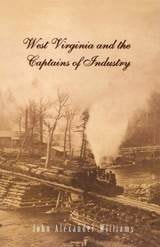
West Virginia and the Captains of Industry
John A. Williams
West Virginia University Press, 2003
The first period of the twentieth century - that stretch of years beginning in the 1870s and ending with the United States' entry into World War I - is known as the Gilded Age. This was the era of the "Robber Barons" and the origin of modern America. These were the years in which developments in coal, steam, oil, and gas forged our national infrastructure. West Virginia and the Captains of Industry show how the excesses of the Gilded Age and the latitude our government accorded industrialists of the time created an impact on the fragile economy of our new state that accounts for much of the political and economic landscape of modern West Virginia. Gracefully written and thoroughly researched, West Virginia and the Captains of Industry has become a classic work of West Virginia history since its first publication by the West Virginia University Press in 1975. Anyone interested in the history of our state must read this revised edition; then again, so must anyone interested in the future of West Virginia.
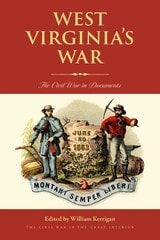
West Virginia's War
The Civil War in DocumentsWilliam Kerrigan
Ohio University Press, 2025
This book explores the unique history of West Virginia, the only state born out of the Civil War. Western Virginians faced a dual crisis of allegiance and identity, torn between their historical ties to the secessionist state of Virginia and their loyalty to the Union. The population included a significant number of enslaved people, for whom the conflict’s outcome would have major consequences. Many Civil War narratives focus on major battles, but William Kerrigan shifts attention to the civilians of Western Virginia—both free and enslaved—who endured military occupation, raids, and guerrilla warfare. Civilians faced loyalty oaths, arrests, property destruction, and invasions by soldiers and partisans from both sides. Enslaved individuals played an active role, providing intelligence and assistance to Union forces and risking their lives for their freedom. At the same time, political leaders grappled with complex legal and political questions, first rejecting secession from the Union and subsequently pursuing their own secession from Virginia to form the new state of West Virginia. Their challenges included framing a new government, defining the state’s borders, addressing the future of slavery, and securing federal recognition. Postwar reconstruction in West Virginia presented its own challenges, distinct from those of other border states, as the return of defeated Confederates threatened the stability of the new state. The book highlights how the experiences of Western Virginia’s noncombatants, political leaders, and enslaved people contributed to the region’s turbulent transformation during and after the Civil War.

West Virginia
A HistoryJohn A. Williams
West Virginia University Press, 2003
John Alexander Williams's West Virginia: A History is widely considered one of the finest books ever written about our state. In his clear, eminently readable style, Williams organizes the tangled strands of West Virginia's past around a few dramatic events-the battle of Point Pleasant, John Brown's insurrection in Harper's Ferry, the Paint Creek labor movement, the Hawk's Nest and Buffalo Creek disasters, and more. Williams uses these pivotal events as introductions to the larger issues of statehood, Civil War, unionism, and industrialization. Along the way, Williams conveys a true feel for the lives of common West Virginians, the personalities of the state's memorable characters, and the powerful influence of the land itself on its own history.
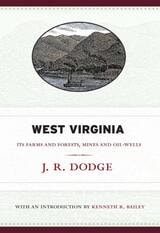
West Virginia
Its Farms and Forests, Mines and Oil-WellsJ. R. Dodge
West Virginia University Press, 2011
West Virginia: Its Farms and Forests, Mines and Oil-Wells celebrates the state of West Virginia. Originally published in 1865 as a series of studies on mineral resources, observations on agriculture, and interviews with businessmen, West Virginia details the industrial statistics, terrain, and population of a state during its infancy. With no record of natural wealth or reported transactions of agriculture or geography prior to this overview, West Virginia sparked the curiosity of non-residents, enticing investment and settlement through descriptions of abundant natural resources and an agreeable industrial condition. With an introduction by Kenneth R. Bailey, this new edition reminds us of the state’s alluring beginning and rich, yet often exploited development.
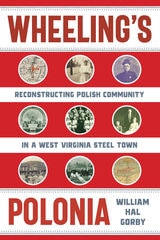
Wheeling's Polonia
Reconstructing Polish Community in a West Virginia Steel TownWilliam Hal Gorby
West Virginia University Press, 2020
Wheeling was a center of West Virginia’s labor movement, and Polish immigrants became a crucial element within the city’s active working-class culture. Arriving at what was also the center of the state’s Roman Catholic Diocese, Poles built religious and fraternal institutions to support new arrivals and to seek solace in times of economic strain and family hardship. The city’s history of crime and organized vice also affected new immigrants, who often lived in neighborhoods targeted for selective enforcement of Prohibition.
At once a deeply textured evocation of the city’s ethnic institutions and an engagement with larger questions about belonging, change, and justice, Wheeling’s Polonia is an inspiring account of a diverse working-class culture and the immigrants who built it.

Witches, Ghosts, and Signs
Folklore of the Southern AppalachiansPatrick W. Gainer
West Virginia University Press, 2008
Witches, Ghosts, and Signs: Folklore of the Southern Appalachians by the renowned West Virginia folklorist and former West Virginia University English professor Patrick W. Gainer not only highlights stories that both amuse and raise goosebumps, but also begins with a description of the people and culture of the state. Based on material Gainer collected from over fifty years of field research in West Virginia and the region, Witches, Ghosts, and Signs presents the rich heritage of the southern Appalachians in a way that has never been equaled. Strange and supernatural tales of ghosts, witches, hauntings, disappearances, and unexplained murders that have been passed down from generation to generation from as far back as the earliest settlers in the region are included in this collection that will send chills down the spine.

Working Class Radicals
The Socialist Party in West Virginia, 1898-1920Frederick A. Barkey
West Virginia University Press, 2012
Working Class Radicals: The Socialist Party in West Virginia, 1898-1920 examines the rise and fall of organized socialism in West Virginia through an exploration of the demographics of membership, oral interview material gathered in the 1960s from party members, and the collapse of the party in the wake of the Paint Creek-Cabin Creek coal-mining strike of 1912. The first local branch of the West Virginia Socialist Party was established in Wheeling in 1901 and by 1914 several thousand West Virginians were dues-paying members of local branches. By 1910 local Socialists began to elect candidates to office and in 1912 more than 15,000 West Virginian voters cast their ballots for Socialist presidential candidate Eugene Debs. The progress that West Virginia socialists achieved on the electoral front was a reflection of the party’s strategy of increasing class-consciousness by working with existing unions to build the power of the labor movement. The party appealed to a fairly broad cross section of wage earners and its steady growth also owed much to the fact that many members of the middle class were attracted to the cause. Several factors combined to send the party into rapid decline, most importantly deep fissures between class and craft factions of the party and 1915 legislation making third party political participation difficult. Working Class Radicals offers insight into the various internal and external forces that doomed the party and serves as a cautionary tale to contemporary political leaders and organizers.