Results by title
2285 books match the query 'Women' and 321 start with w

W Stands for Women
How the George W. Bush Presidency Shaped a New Politics of GenderMichaele L. Ferguson and Lori J. Marso, eds.
Duke University Press, 2007
In W Stands for Women ten feminist scholars analyze various aspects of Bush’s persona, language, and policy to show how his administration has shaped a new politics of gender. One contributor points out the shortcomings of “compassionate conservatism,” a political philosophy that requires a weaker class to be the subject of compassion. Another examines Lynndie England’s participation in the abuse of prisoners at Abu Ghraib in relation to the interrogation practices elaborated in the Army Field Manual, practices that often entail “feminizing” detainees by stripping them of their masculine gender identities. Whether investigating the ways that Bush himself performs masculinity or the problems with discourse that positions non-Western women as supplicants in need of saving, these essays highlight the far-reaching consequences of the Bush administration’s conflation of feminist rhetoric, conservative gender ideology, and neoconservative national security policy.
Contributors. Andrew Feffer, Michaele L. Ferguson, David S. Gutterman, Mary Hawkesworth, Timothy Kaufman-Osborn, Lori Jo Marso, Danielle Regan, R. Claire Snyder, Iris Marion Young, Karen Zivi
Michaela Ferguson and Karen Zivi appeared on KPFA’s Against the Grain on September 11, 2007. Listen to the audio.
Michaela Ferguson and Lori Jo Marso appeared on WUNC’s The State of Things on August 30, 2007. Listen to the audio.

WORLDS OF MEDIEVAL WOMEN
"CREATIVITY, INFLUENCE, AND IMAGINATION"CONSTANCE H. BERMAN
West Virginia University Press, 1985
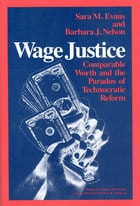
Wage Justice
Comparable Worth and the Paradox of Technocratic ReformSara M. Evans and Barbara N. Nelson
University of Chicago Press, 1991
"A perceptive and judicious analysis of comparable worth."—Wendy Kaminer, New York Times Book Review
"Very well-crafted. . . . Wage Justice has admirably launched the scholarly evaluation of pay equity, revealing the unforeseen complexities of this key feminist public policy innovation."—Maurine Weiner Greenwald, Journal of American History
"An insightful glimpse of the policy process."—Marian Lief Palley, American Political Science Review

Wages for Housework
A History of an International Feminist Movement, 1972-77Pluto Press, 2018
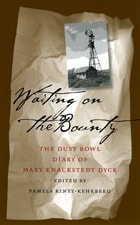
Waiting On The Bounty
Dust Bowl Diary Mary DyckPamela Riney-Kehrberg
University of Iowa Press, 1999
Though she had only a fifth-grade education, Mary Knackstedt Dyck faithfully kept a diary. Written with pencil on lined notebook paper, her daily notations tell the story of farm life on the far western border of Kansas during the grim Dust Bowl years. Manuscript diaries from this era and region are extremely rare, and those written by farm women are even more so. From the point of view of a wife, mother, and partner in the farming enterprise, Dyck recorded the everyday events as well as the frustrations of living with drought and dust storms and the sadness of watching one's children leave the farm.
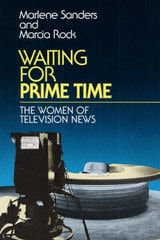
Waiting for Prime Time
THE WOMEN OF TELEVISION NEWSMarlene Sanders and Marcia Rock
University of Illinois Press, 1988
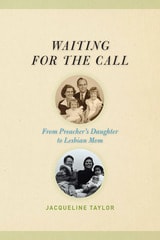
Waiting for the Call
From Preacher's Daughter to Lesbian MomJacqueline Taylor
University of Michigan Press, 2007
“Well-written, absorbing, and a great pleasure to read . . . will appeal to Christians struggling to square their traditional beliefs with acceptance of homosexuality as well as to all those interested in adoption, lesbian marriage, and the changing shape of America’s families.”
—Elizabeth C. Fine, Virginia Tech University
Waiting for the Call takes readers from the foothills of the Appalachians—where Jacqueline Taylor was brought up in a strict evangelical household—to contemporary Chicago, where she and her lesbian partner are raising a family. In a voice by turns comic and loving, Taylor recounts the amazing journey that took her in profoundly different directions from those she or her parents could have ever envisioned.
Taylor’s father was a Southern Baptist preacher, and she struggled to deal with his strictures as well as her mother’s manic-depressive episodes. After leaving for college, Taylor finds herself questioning her faith and identity, questions that continue to mount when—after two divorces, a doctoral degree, and her first kiss with a woman—she discovers her own lesbianism and begins a most untraditional family that grows to include two adopted children from Peru.
Even as she celebrates and cherishes this new family, Taylor insists on the possibility of maintaining a loving connection to her religious roots. While she and her partner search for the best way to explain adoption to their children and answer the inevitable question, “Which one is your mom?” they also seek out a church that will unite their love of family and their faith. Told in the great storytelling tradition of the American South, full of deep feeling and wry humor, Waiting for the Call engagingly demonstrates how one woman bridged the gulf between faith and sexual identity without abandoning her principles.

Waiting for the Cool Moon
Anti-imperialist Struggles in the Heart of Japan's EmpireWendy Matsumura
Duke University Press, 2024
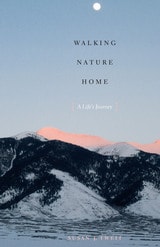
Walking Nature Home
A Life's JourneyBy Susan J. Tweit
University of Texas Press, 2009
Without a map, navigate by the stars. Susan Tweit began learning this lesson as a young woman diagnosed with an autoimmune disease that was predicted to take her life in two to five years. Offered no clear direction for getting well through conventional medicine, Tweit turned to the natural world that was both her solace and her field of study as a plant ecologist. Drawing intuitive connections between the natural processes and cycles she observed and the functions of her body, Tweit not only learned healthier ways of living but also discovered a great truth—love can heal. In this beautifully written, moving memoir, she describes how love of the natural world, of her husband and family, and of life itself literally transformed and saved her own life.
In tracing the arc of her life from young womanhood to middle age, Tweit tells stories about what silence and sagebrush, bird bones and sheep dogs, comets, death, and one crazy Englishman have to teach us about living. She celebrates making healthy choices, the inner voices she learned to hear on days alone in the wilderness, the joys of growing and eating an organic kitchen garden, and the surprising redemption in restoring a once-blighted neighborhood creek. Linking her life lessons to the stories she learned in childhood about the constellations, Tweit shows how qualities such as courage, compassion, and inspiration draw us together and bind us into the community of the land and of all living things.
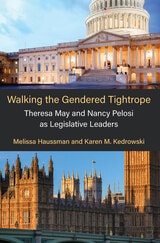
Walking the Gendered Tightrope
Theresa May and Nancy Pelosi as Legislative LeadersMelissa Haussman and Karen M. Kedrowski
University of Michigan Press, 2023
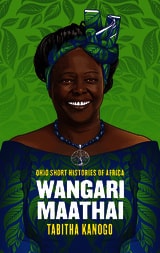
Wangari Maathai
Tabitha Kanogo
Ohio University Press, 2020
Wangari Muta Maathai is one of Africa’s most celebrated female activists. Originally trained as a scientist in Kenya and abroad, Professor Maathai returned to her home country of Kenya with a renewed political consciousness. There, she began her long career as an activist, campaigning for environmental and social justice while speaking out against government corruption. In 2004, Maathai was awarded the Nobel Peace Prize for her leadership of the Green Belt Movement, a conservation effort that resulted in the restoration of African forests decimated during the colonial era.
In this biography, Tabitha Kanogo follows Wangari Maathai from her modest, rural Kenyan upbringing to her rise as a national figure campaigning for environmental and ecological conservation, sustainable development, democracy, human rights, gender equality, and the eradication of poverty until her death in 2011.
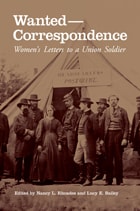
Wanted—Correspondence
Women’s Letters to a Union SoldierNancy L. Rhoades
Ohio University Press, 2009
A unique collection of more than 150 letters written to an Ohio serviceman during the American Civil War that offers glimpses of women’s lives as they waited, worked, and wrote from the Ohio home front. The letters reveal fascinating details of the lives of mostly young, single women—friends, acquaintances, love interests, and strangers who responded to one Union soldier’s advertisement for correspondents. Almost all of the women who responded to Lieutenant Edwin Lewis Lybarger’s lonely-hearts newspaper advertisement lived in Ohio and supported the Union. Lybarger carried the collection of letters throughout three years of military service, preserved them through his life, and left them to be discovered in an attic trunk more than a century after Lee’s surrender.
Women’s letter writing functioned as a form of “war work” that bolstered the spirits of enlisted men and “kinship work” that helped forge romantic relationships and sustain community bonds across the miles. While men’s letters and diaries abound in Civil War history, less readily available are comprehensive collections of letters from middle-class and rural women that survived the weathering of marches, camp life, and battles to emerge unscathed from men’s knapsacks at war’s end.
The collection is accompanied by a detailed editorial introduction that highlights significant themes in the letters. Together, they contribute to the still-unfolding historical knowledge concerning Northern women’s lives and experiences during this significant period in American history.
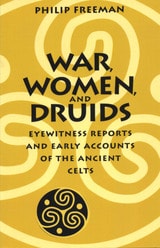
War, Women, and Druids
Eyewitness Reports and Early Accounts of the Ancient CeltsBy Philip Freeman
University of Texas Press, 2002
"The ancient Celts capture the modern imagination as do few other people of classical times. Naked barbarians charging the Roman legions, Druids performing sacrifices of unspeakable horror, women fighting beside their men and even leading armies—these, along with stunning works of art, are the images most of us call to mind when we think of the Celts," observes Philip Freeman. "And for the most part, these images are firmly based in the descriptions handed down to us by the Greek and Roman writers."
This book draws on the firsthand observations and early accounts of classical writers to piece together a detailed portrait of the ancient Celtic peoples of Europe and the British Isles. Philip Freeman groups the selections (ranging from short statements to longer treatises) by themes—war, feasting, poetry, religion, women, and the Western Isles. He also presents inscriptions written by the ancient Celts themselves. This wealth of material, introduced and translated by Freeman to be especially accessible to students and general readers, makes this book essential reading for everyone fascinated by the ancient Celts.
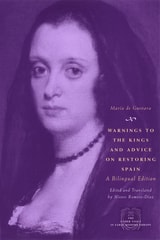
Warnings to the Kings and Advice on Restoring Spain
A Bilingual EditionMaría de Guevara
University of Chicago Press, 2007
Guevara’s provocative writings call on Spanish women to bear the responsibility equally with men for restoring Spain’s power in Europe and elsewhere. The collection also includes examples of Guevara’s shorter writings that exemplify her ability to speak on matters of state, network with dignitaries, and govern family affairs. Witty, ironic, and rhetorically sophisticated, Guevara’s essays provide a fresh perspective on the possibilities for women in the public sphere in seventeenth-century Spain.
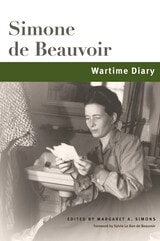
Wartime Diary
Simone de Beauvoir; Translation and Notes by Anne Deing Cordero; Edited by Margaret A. Simons and Sylvie Le Bon de Beauvoir; Foreword by Sylvie Le Bon de Beauvoir
University of Illinois Press, 2021
Provocative insights into Beauvoir's philosophical and personal development during wartime
Written from September 1939 to January 1941, Simone de Beauvoir’s Wartime Diary gives English readers unabridged access to a scandalous text that threatened to overturn traditional views of Beauvoir’s life and work.
Beauvoir's clandestine affair with Jacques Bost and sexual relationships with various young women challenge the conventional picture of Beauvoir as the devoted companion of Jean-Paul Sartre. At the same time, her account of completing her novel She Came to Stay at a time when Sartre had just begun Being and Nothingness questions the traditional view of Beauvoir’s novel as merely illustrating Sartre’s philosophy.
Wartime Diary also traces Beauvoir's philosophical transformation as she broke from the prewar solipsism of She Came to Stay in favor of the postwar political engagement of The Second Sex. Beauvoir's emerging existentialist ethics reflect the dramatic collective experiences of refugees fleeing German invasion and life under Nazi occupation. The evolution of her thought also reveals the courageous reaffirmation of her individuality in constructing a humanist ethics of freedom and solidarity.
This edition also features previously unpublished material, including her musings about consciousness and order, recommended reading lists, and notes on labor unions. In providing new insights into Beauvoir’s philosophical development, the Wartime Diary promises to rewrite a crucial chapter of Western philosophy and intellectual history.

Wartime Washington
The Civil War Letters of Elizabeth Blair LeeEdited by Virginia Jeans Laas
University of Illinois Press, 1991
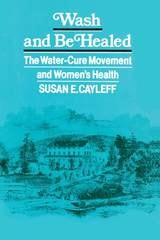
Wash and Be Healed
The Water-Cure Movement and Women's HealthSusan E. Cayleff
Temple University Press, 1991
In a century characterized by dramatic health-care remedies—bloodletting, purging, and leeching, for example—hydropathy was one of the most celebrated alternative forms of medical care. Unlike these other cures, however, hydropathy, which entailed various applications of cold water, also staunchly advocated the reformation of such personal habits as diet, exercise, dress, and way of life. Susan E. Cayleff explores the relationship between this fascinating sect of nineteenth-century medicine and the women who took the cure.
Wash and Be Healed investigates the theories, practices, medical and social philosophies, institutions, and the most prominent proponents of the water-cure movement and studies them in relation to the diverse reform networks of the nineteenth century. Documenting the popularity and importance of hydropathy among female activists, Cayleff argues that the water-cure movement was overpowered by allopathic (or orthodox) medicine which viewed hydropathy as a crackpot therapeutic largely because of its close association with nineteenth-century social activism. The book gives us an alternative view of social and sexual relationships which should contribute to the growing awareness among scholars that the history of health and healing must be more than the history of allopathic medicine.
Wasted Wombs
Navigating Reproductive Interruptions in CameroonErica van der Sijpt
Vanderbilt University Press, 2017
Providing an intimate look into these processes, Wasted Wombs shows how Gbigbil women constantly shift their interpretations of when a pregnancy starts, what it contains, and what is lost in case of a reproductive interruption, in contrast to Western conceptions of fertility and loss. Depending on the context and on their life aspirations—be it marriage and motherhood, or an educational trajectory and employment, or profitable sexual affairs with so-called "big fish"—women negotiate and manipulate the meanings and effects of reproductive interruptions. Paradoxically, they often do so while portraying themselves as powerless. Wasted Wombs carefully analyzes such tactics in relation to the various social predicaments that emerge around reproductive interruptions, as well as the capricious workings of women's physical bodies.
Water Mask
Monica Devine
University of Alaska Press, 2019
Ways to Disappear
StoriesVictoria Lancelotta, Foreword by Cristina Rivera Garza
University of Alabama Press, 2023
Winner of FC2’s Catherine Doctorow Prize in Innovative Fiction
Some disappearances are chosen. Others are survived.
The stories in Victoria Lancelotta’s Ways to Disappear excavate the unexamined places between dread and desire, promise and threat, where the body is both prison and salvation. Populated by the grieving and the exultant and those who see no difference between the two, by men and women who are only a little bit broken and boys and girls who can’t wait to be, by souls untethered, rootless, yet bound by blood and flesh, Lancelotta’s characters are driven by the irresistible need to be a bigger part of the worlds they each inhabit, by turns strange and commonplace. In language lush and jagged, never sentimental, these stories scrutinize the exhaustion and enchantment of the everyday: houses seething with resentment and devotion, cars dream-full and hurtling the children in them into a world they think they know but can’t imagine; front porches, back yards, luxury hotels, and truck stops. Lancelotta understands that sometimes people check their wounds not to see if they’ve healed, but to be sure they’re still there.
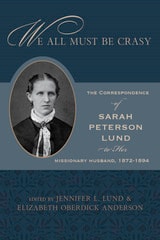
We All Must Be Crasy
The Correspondence of Sarah Peterson Lund to Her Missionary Husband, 1872–1894Jennifer L. Lund and Elizabeth Oberdick Anderson
University of Utah Press, 2026
While Latter-day Saint missionary work has been extensively studied, the experiences of the wives left behind remain relatively absent from the scholarship. We All Must Be Crasy helps fill this gap, offering a glimpse into the lived experiences of Mormon women and families during the late nineteenth century.
Through more than one hundred candid letters to her missionary husband, Sarah (Sanie) Peterson Lund reveals the private costs of missionization: strained marriages, economic hardship, shifting gender roles, and the constant need for community support. Sanie’s correspondence conveys her frustrations, anxieties, and fears alongside her pride in her children, devotion to her family, and longing for her absent husband. Her letters also show daily life in Ephraim, Utah: town gossip, vulnerabilities and ethnic tensions among residents, and reflections on plural marriage. This collection illuminates experiences only previously sketched in broad strokes, enriching our understanding of women, faith, and community in the American West.
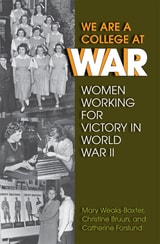
We Are a College at War
Women Working for Victory in World War IIMary Weaks-Baxter, Christine Bruun, and Catherine Forslund
Southern Illinois University Press, 2010
We Are a College at War weaves together the individual World War II experiences of students and faculty at the all-female Rockford College (now Rockford University) in Rockford, Illinois, to draw a broader picture of the role American women and college students played during this defining period in U.S. history. It uses the Rockford community’s letters, speeches, newspaper stories, and personal recollections to demonstrate how American women during the Second World War claimed the right to be everywhere—in factories and other traditionally male workplaces, and even on the front lines—and links their efforts to the rise of feminism and the fight for women’s rights in the 1960s and 1970s.
We Defy Augury
Hélène Cixous
Seagull Books, 2020
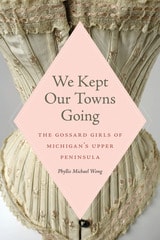
We Kept Our Towns Going
The Gossard Girls of Michigan's Upper PeninsulaPhyllis Michael Wong
Michigan State University Press, 2022
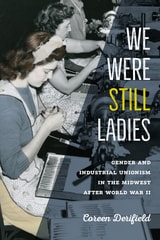
We Were Still Ladies
Gender and Industrial Unionism in the Midwest after World War IICoreen Derifield
University of Iowa Press, 2025
How did this transition into industrial work affect a woman’s sense of self? How did this new workforce change the dynamic of families and communities? While women choosing to work outside of the home may seem to have been a mundane decision, it caused tremendous change within families and with household roles. These alterations in daily life rippled throughout midwestern culture and society, even changing the landscape of small towns into decentralized industrial centers.

Wet Earth and Dreams
A Narrative of Grief and RecoveryJane Lazarre
Duke University Press, 1998
As she contends with the pain and many indignities of her treatment for cancer, Lazarre realizes that successful medical treatment will only be part of her healing process. Her own illness becomes the vehicle for coming to terms with key moments of loss and grief—the death of a beloved therapist from breast cancer, her brother-in-law’s death from AIDS, a traumatic disappointment in her work life, and the unresolved pain of being a motherless child. The gift of Lazarre’s writing is her ability to transform her narratives of grief and loss into a story whose power to heal lies in its ability to penetrate the unconscious and give voice to the elusive truths hidden there. Through her writing, Lazarre is able to embrace grief—even her own inarticulate grief as a child—and find her way through the story to a restored sense of wholeness.
In Wet Earth and Dreams Jane Lazarre once again proves herself to be both companion and guide through some of the most difficult challenges life has to offer. As always, she draws strength not only from sustaining friendship and love, but also from her own faith in the power of storytelling to make bearable the seemingly unbearable. Lazarre’s bravely and beautifully written account of grief, illness, and death is at the last a celebration of the redemptive possibilities of the creative spirit.
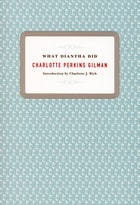
What Diantha Did
Charlotte Perkins Gilman
Duke University Press, 2005
In her introduction to the novel, Charlotte J. Rich highlights Gilman’s engagement with such hotly debated Progressive Era issues as the “servant question,” the rise of domestic science, and middle-class efforts to protect and aid the working girl. She illuminates the novel’s connections to Gilman’s other feminist works, including “The Yellow Wall-Paper” and Herland; to her personal life; and to her commitment to women’s social and economic freedom. Rich contends that the novel’s engagement with class and race makes it particularly significant to the newly complex understanding of Gilman that has emerged in recent scholarship. What Diantha Did provides essential insight into Charlotte Perkins Gilman’s important legacy of social thought.
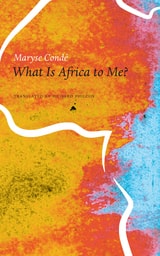
What Is Africa to Me?
Fragments of a True-to-Life AutobiographyMaryse Condé
Seagull Books, 2017
What Is Africa to Me? traces the late 1950s to 1968, chronicling Condé’s life in Sékou Touré’s Guinea to her time in Kwame N’Krumah’s Ghana, where she rubbed shoulders with Malcolm X, Che Guevara, Julius Nyerere, and Maya Angelou. Accusations of subversive activity resulted in Condé’s deportation from Ghana. Settling down in Sénégal, Condé ended her African years with close friends in Dakar, including filmmakers, activists, and Haitian exiles, before putting down more permanent roots in Paris.
Condé’s story is more than one of political upheaval, however; it is also the story of a mother raising four children as she battles steep obstacles, of a Guadeloupean seeking her identity in Africa, and of a young woman searching for her freedom and vocation as a writer. What Is Africa to Me? is a searing portrait of a literary genius—it should not be missed.
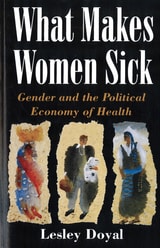
What Makes Women Sick
Gender and the Political Economy of HealthLesley Doyal
Rutgers University Press, 1995
What makes women sick? To an Ecuadorean woman, it’s nervios from constant worry about her children’s illnesses. To a woman working in a New Mexico electronics factory, it’s the solvents that leave her with a form of dementia. To a Ugandan woman, it’s HIV from her husband's sleeping with the widow of an AIDS patient. To a Bangladeshi woman, it’s a fatal infection following an IUD insertion. What they all share is a recognition that their sickness is somehow caused by situations they face every day at home and at work.
In this clearly written and compelling book, Lesley Doyal investigates the effects of social, economic, and cultural conditions on women’s health. The “fault line” of gender that continues to divide all societies has, Doyal demonstrates, profound and pervasive consequences for the health of women throughout the world. Her broad synthesis highlights variations between men and women in patterns of health and illness, and it identifies inequalities in medical care that separate groups of women from each other. Doyal’s wide-ranging arguments, her wealth of data, her use of women’s voices from many cultures—and her examples of women mobilizing to find their own solutions—make this book required reading for everyone concerned with women’s health.
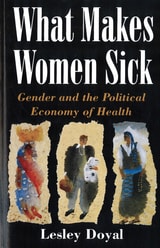
What Makes Women Sick
Gender and the Political Economy of HealthLesley Doyal
Rutgers University Press, 1995
What makes women sick? To an Ecuadorean woman, it’s nervios from constant worry about her children’s illnesses. To a woman working in a New Mexico electronics factory, it’s the solvents that leave her with a form of dementia. To a Ugandan woman, it’s HIV from her husband's sleeping with the widow of an AIDS patient. To a Bangladeshi woman, it’s a fatal infection following an IUD insertion. What they all share is a recognition that their sickness is somehow caused by situations they face every day at home and at work.
In this clearly written and compelling book, Lesley Doyal investigates the effects of social, economic, and cultural conditions on women’s health. The “fault line” of gender that continues to divide all societies has, Doyal demonstrates, profound and pervasive consequences for the health of women throughout the world. Her broad synthesis highlights variations between men and women in patterns of health and illness, and it identifies inequalities in medical care that separate groups of women from each other. Doyal’s wide-ranging arguments, her wealth of data, her use of women’s voices from many cultures—and her examples of women mobilizing to find their own solutions—make this book required reading for everyone concerned with women’s health.
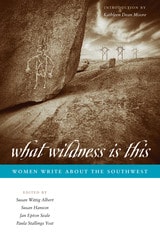
What Wildness Is This
Women Write about the SouthwestEdited by Susan Wittig Albert, Susan Hanson, Jan Epton Seale, and Paula Stallings Yost
University of Texas Press, 2007
Winner, WILLA Literary Award for Creative Nonfiction, 2008
How do women experience the vast, arid, rugged land of the American Southwest? The Story Circle Network, a national organization dedicated to helping women write about their lives, posed this question, and nearly three hundred women responded with original pieces of writing that told true and meaningful stories of their personal experiences of the land. From this deep reservoir of writing—as well as from previously published work by writers including Joy Harjo, Denise Chávez, Diane Ackerman, Naomi Shihab Nye, Leslie Marmon Silko, Gloria Anzaldua, Terry Tempest Williams, and Barbara Kingsolver—the editors of this book have drawn nearly a hundred pieces that witness both to the ever-changing, ever-mysterious life of the natural world and to the vivid, creative, evolving lives of women interacting with it.
Through prose, poetry, creative nonfiction, and memoir, the women in this anthology explore both the outer landscape of the Southwest and their own inner landscapes as women living on the land—the congruence of where they are and who they are. The editors have grouped the writings around eight evocative themes:
- The way we live on the land
- Our journeys through the land
- Nature in cities
- Nature at risk
- Nature that sustains us
- Our memories of the land
- Our kinship with the animal world
- What we leave on the land when we are gone
From the Gulf Coast of Texas to the Pacific Coast of California, and from the southern borderlands to the Great Plains and the Rocky Mountains, these intimate portraits of women's lives on the land powerfully demonstrate that nature writing is no longer the exclusive domain of men, that women bring unique and transformative perspectives to this genre.
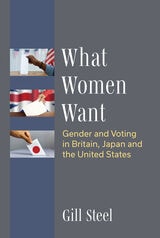
What Women Want
Gender and Voting in Britain, Japan and the United StatesGill Steel
University of Michigan Press, 2022
What Women Want analyzes decades of voting preferences, values, and policy preferences to debunk some of the media and academic myths about gender gaps in voting and policy preferences. Findings show that no single theory explains when differences in women’s and men’s voting preferences emerge, when they do not, or when changes—or the lack thereof—occur over time. Steel extends existing theories to create a broader framework for thinking about gender and voting behavior to provide more analytical purchase in understanding gender and its varying effects on individual voters’ preferences. She incorporates the long-term effects of party identification and class politics on political decision-making, particularly in how they influence preferences on social provision and on expectations of the state. She also points to the importance of symbolic politics
What the River Said
A Novelsandra cavallo miller
University of Nevada Press, 2021
In this riveting third book of the Dr. Abby Wilmore series, Dr. Abby returns to her medical clinic in Grand Canyon National Park. Happy to be reunited with her staff and her partner, Dr. John Pepper, Abby is back treating park visitors and personnel as well as local residents. However, a wave of heart attacks among apparently healthy hikers creates a new puzzle, and soon there are rumors of people using performance-enhancing drugs. Abby’s situation deteriorates when a new female friend suddenly disappears, and Abby berates herself for missing the woman’s depression.
As Abby struggles with the disappearance of her friend, Dr. Pepper is preoccupied by a mysterious threat from his past and becomes badly
injured in an apparent fall. While he recuperates, Abby takes over much of the clinic work while they provide a home for Pepper’s troubled teenage niece and an adopted stray dog.
Abby soon discovers that there is something more sinister behind the recent troubling events. In this exhilarating follow-up to The Color of Rock and Where Light Comes and Goes, Abby must learn to confront her past in order to stand up for the ones she loves.
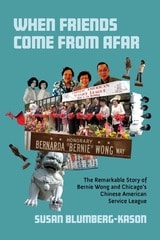
When Friends Come From Afar
The Remarkable Story of Bernie Wong and Chicago's Chinese American Service LeagueSusan Blumberg-Kason
University of Illinois Press, 2024
At once intimate and broad in scope, When Friends Come from Afar uses one woman’s life to illuminate a bedrock Chicago institution.

When Grandma Gatewood Took a Hike
Michelle Houts
Ohio University Press, 2016
It took her two tries, but in 1955, sixty-seven-year-old Emma “Grandma” Gatewood became the first woman to solo hike the entire length of the Appalachian Trail in one thru-hike. Gatewood, who left an abusive marriage after raising eleven children, has become a legend for those who hike the trail, and in her home state of Ohio, where she helped found the Buckeye Trail. In recent years, she has been the subject of a bestselling biography and a documentary film.
In When Grandma Gatewood Took a Hike, Michelle Houts brings us the first children’s book about her feat, which she accomplished without professional gear or even a tent. Houts chronicles the spirit of a seasoned outdoorswoman and mother of eleven whose grit and determination helped her to hike over two thousand miles. Erica Magnus’s vibrant illustrations capture the wild animals, people from all walks of life, and unexpected challenges that this strong-willed woman encountered on the journey she initially called a “lark.”
Children ages 4–10 will delight in this narrative nonfiction work as they accompany Emma Gatewood on the adventure of a lifetime and witness her transformation from grandmother to hiking legend, becoming “Grandma” to all.
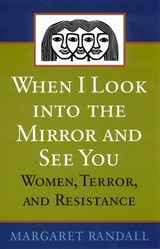
When I Look into the Mirror and See You
Women, Terror, and ResistanceMargaret Randall
Rutgers University Press, 2002
In the early 1980s, in the midst of Central America’s decades of dirty wars, Nora Miselem of Honduras and Maria Suárez Toro of Costa Rica were kidnapped and subjected to rape and other tortures. Of the nearly two hundred disappeared persons in Honduras in those years, they are, remarkably, two of only five survivors. Fourteen years after their ordeal, Suárez and Miselem’s chance meeting at a conference on human rights was witnessed by and is now retold in Margaret Randall’s When I Look into the Mirror andSee You.
Through direct testimony, vivid prose, and evocative photographs, Randall recounts the terror, resistance, and survival of Suárez and Miselem. The book details the abuses suffered by them, the ruses they used to foil their captors, the support that they gave each other while imprisoned, the means they used to escape, and their attempts to reconstruct their lives. For the first time, Suárez and Miselem explore the pain and trauma of their past and Randall has done the service of adding these remarkable voices to the global campaign to bring the world’s attention to women’s human rights.
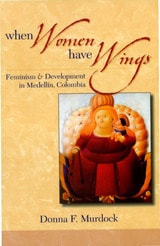
When Women Have Wings
Feminism and Development in Medellin, ColombiaDonna F. Murdock
University of Michigan Press, 2008
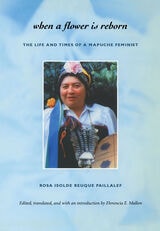
When a Flower Is Reborn
The Life and Times of a Mapuche FeministRosa Isolde Reuque Paillalef, Edited, translated, and with an introduction by Florencia E. Mallon
Duke University Press, 2002
A leading activist during the Pinochet dictatorship, Reuque—a woman, a Catholic, and a Christian Democrat—often felt like an outsider within the male-dominated, leftist Mapuche movement. This sense of herself as both participant and observer allows for Reuque’s trenchant, yet empathetic, critique of the Mapuche ethnic movement and of the policies regarding indigenous people implemented by Chile’s post-authoritarian government. After the 1990 transition to democratic rule, Reuque collaborated with the government in the creation of the Indigenous Development Corporation (CONADI) and the passage of the Indigenous Law of 1993. At the same time, her deepening critiques of sexism in Chilean society in general, and the Mapuche movement in particular, inspired her to found the first Mapuche feminist organization and participate in the 1996 International Women’s Conference in Beijing. Critical of the democratic government’s inability to effectively address indigenous demands, Reuque reflects on the history of Mapuche activism, including its disarray in the early 1990s and resurgence toward the end of the decade, and relates her hopes for the future.
An important reinvention of the testimonial genre for Latin America’s post-authoritarian, post-revolutionary era, When a Flower Is Reborn will appeal to those interested in Latin America, race and ethnicity, indigenous people’s movements, women and gender, and oral history and ethnography.
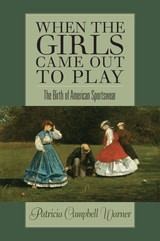
When the Girls Came Out to Play
The Birth Of American SportswearPatricia C. Warner
University of Massachusetts Press, 2006
A study of the evolution of American women's clothing, When the Girls Came Out to Play traces the history of modern sportswear as a universal style that broke down traditional gender roles. Patricia Warner shows how this profound cultural shift, which did not reach fruition until World War II, originated during the previous century with the gradual expansion of socially acceptable physical activity for women. Behind this development was a growing interest in sports and exercise that was further nurtured by the establishment of schools of higher education for women. The participation of women in athletic pursuits previously reserved for men began with the relatively genteel sports of croquet and tennis. With the founding of women's colleges, these “ladylike” games were supplemented by more vigorous activities and competitive team sports, from gymnastics to swimming to basketball. At first, Warner points out, women literally had nothing to wear for these activities. Whereas such fashionable attire as corsets, petticoats, hats, and gloves could be worn while playing outdoor lawn games, more strenuous athletic endeavors required less physically restrictive clothing. Even so, change came only gradually, as women's colleges, shielded from public scrutiny and prying male eyes, permitted the adoption of looser, more comfortable apparel for physical education. Many of these new outfits featured trousers, garments considered taboo for women, though they often remained hidden beneath voluminous skirts.
Over time, however, the practicality and versatility of such clothing led to social acceptance, laying the foundation for the emergence of the now ubiquitous yet distinctly American style known as sportswear. Although we take it for granted, Warner observes, this is the first time in the history of the world that such universality has existed in clothing, and it has lasted now for well over half a century—in itself a marvel, considering the speed of fashion change in an era of instant messages and images.
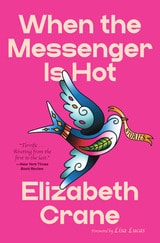
When the Messenger Is Hot
StoriesElizabeth Crane, foreword by Lisa Lucas
Northwestern University Press, 2026
A beloved, smart, and bold story collection surges back to life in a new print edition
Hailed as “revolutionary fiction,” When the Messenger Is Hot gleefully upends the short-story form, rendering the absurdities and possibilities of modern urban life with disarming humor and keen perception as Crane weaves through grief and womanhood. The women in Elizabeth Crane’s world are fierce and kind, damaged and optimistic. They are jilted lovers, absent daughters, twelve-steppers, and smart-asses, recovering from loss, addiction, or betrayal. From a woman who decides to live on the rooftop of her friend’s apartment (why not?), to a writer whose identity is compromised by the actress who portrays her, to a daughter who believes her deceased mother is still alive and living at the bus depot, these characters experience love and loss in a way that is both profoundly universal and uniquely theirs.
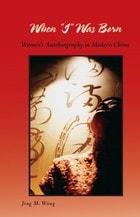
When “I” Was Born
Women’s Autobiography in Modern ChinaJing M. Wang
University of Wisconsin Press, 2008
When “I” Was Born: Women’s Autobiography in Modern China reclaims the voices of these particular writers, voices that have been misinterpreted and overlooked for decades. Tracing women writers as they move from autobiographical fiction, often self-revelatory and personal, to explicit autobiographies that focused on women’s roles in public life, Jing M. Wang reveals the factors that propelled this literary movement, the roles that liberal translators and their renditions of Western life stories played, and the way in which these women writers redefined writing and gender in the stories they told. But Wang reveals another story as well: the evolving history and identity of women in modern Chinese society. When “I” Was Born adds to a growing body of important work in Chinese history and culture, women’s studies, and autobiography in a global context.
Writers discussed include Xie Bingying, Zhang Ailing, Yu Yinzi, Fei Pu, Lu Meiyen, Feng Heyi, Ye Qian, Bai Wei, Shi Wen, Fan Xiulin, Su Xuelin, and Lu Yin.
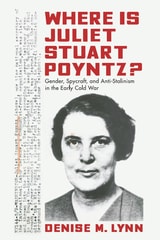
Where Is Juliet Stuart Poyntz?
Gender, Spycraft, and Anti-Stalinism in the Early Cold WarDenise Lynn
University of Massachusetts Press, 2021
In Where Is Juliet Stuart Poyntz?, Denise M. Lynn argues that Poyntz's sudden disappearance was the final straw for many on the American political left, who then abandoned Marxism and began to embrace anti-communism. In the years to follow, the left crafted narratives of her disappearance that became central to the Cold War. While scholars have thoroughly analyzed the influence of the political right in the anti-communism of this era, this captivating and compelling study is unique in exploring the influence of the political left.

Where Light Comes and Goes
A NovelSandra Cavallo Miller
University of Nevada Press, 2020
Book 2 in the Dr. Abby Wilmore Series
Where Light Comes and Goes brings back Dr. Abby Wilmore, the young family physician who was the protagonist of Miller’s first novel, The Color of Rock. Abby has accepted the directorship of a summer clinic in Yellowstone National Park where she hopes to expand her medical skills. She arrives to find herself working above the increasingly restless Yellowstone supervolcano, treating visitors, staff, and locals, all while evading the advances of a lecherous concession manager and maintaining a long-distance relationship with her partner who stays at the Grand Canyon Clinic. As tremors in the park escalate and the lakes seethe with bubbling gases, Abby learns that some-one is mysteriously killing the bison.
What follows is an engrossing mystery unfolding in a spectacular setting with rich, quirky, and endearing characters and unexpected plot turns. While an overworked Abby makes new friends among her clinic staff and patients, tension builds as the volcano seems to be moving closer to a major eruption and the bison killings become more frequent. Soon, Abby finds herself in mortal danger as the story races to a thrilling and unexpected conclusion.
Sandra Cavallo Miller demonstrated in The Color of Rock that she is a gifted storyteller. Where Light Comes and Goes deftly combines a gripping mystery set in the accurately depicted routine of a busy medical practice amid the wonders of Yellowstone’s magnificent scenery and wildlife. This is entertaining reading at its best.

Where No One Should Live
A NovelSandra Cavallo Miller
University of Nevada Press, 2021
Where Women Run
Gender and Party in the American StatesKira Sanbonmatsu
University of Michigan Press, 2010
“Kira Sanbonmatsu has done a masterful job of linking the representation of women in elective office to the activities of party organizations in the states. She combines qualitative and quantitative data to show how women are navigating the campaign process to become elected leaders and the changing role of party organizations in their recruitment and election. It is a significant contribution to the study of representative democracy.”
--Barbara Burrell, Northern Illinois University
“Sanbonmatsu has produced an excellent study that will invigorate research on the role of political parties and the recruitment of women candidates. Using a variety of methods and data sources, she has crafted a tightly constructed, clearly argued, and exceedingly well-written study. A commendable and convincing job.”
--Gary Moncrief, Boise State University
“Sanbonmatsu offers important insights in two neglected areas of American politics: the role of political parties in recruiting candidates and the continued under-representation of women in elected office. Connecting the two subjects through careful qualitative and statistical methods, insightful interpretation of the literature and interesting findings, the book is a significant new addition to scholarship on parties, gender, and political recruitment.”
--Linda Fowler, Dartmouth College
Kira Sanbonmatsu is Associate Professor of Political Science at Rutgers University and Senior Scholar at the Eagleton Institute of Politics’ Center for American Women and Politics (CAWP). She was previously associate professor at Ohio State University. She is the author of Democrats, Republicans, and the Politics of Women’s Place.
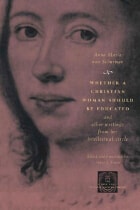
Whether a Christian Woman Should Be Educated and Other Writings from Her Intellectual Circle
Anna Maria van Schurman
University of Chicago Press, 1998
Gathered here in meticulous translation are Anna Maria van Schurman's defense of women's education, her letters to other learned women, and her own account of her early life, as well as responses to her work from male contemporaries, and rare writings by Schurman's mentor, Voetius. This volume will interest the general reader as well as students of women's, religious, and social history.
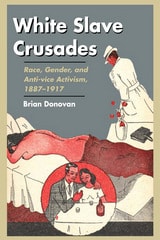
White Slave Crusades
Race, Gender, and Anti-vice Activism, 1887-1917Brian Donovan
University of Illinois Press, 2005
Focusing on the intersection of race, gender, and sex in the antiprostitution campaigns, Brian Donovan analyzes the reactions of native-born whites to new immigrant groups in Chicago, to African Americans in New York City, and to Chinese immigrants in San Francisco. Donovan shows how reformers employed white slavery narratives of sexual danger to clarify the boundaries of racial categories, allowing native-born whites to speak of a collective "us" as opposed to a "them." These stories about forced prostitution provided an emotionally powerful justification for segregation, as well as other forms of racial and sexual boundary maintenance in urban America.

White Wolf
Sixteen StoriesKrisztina Tóth
Seagull Books, 2026
“Every home is a different story,” says one narrator in White Wolf while looking for her own childhood home. Every unhappy home is unhappy in its own way—and so are the stories in Krisztina Tóth’s new volume, in which the writer’s voice is darker and more radical than ever.
These are stories of trauma, oppression, submission, exclusion, stigma, and violence. Many of them tell of childhood abuses, unpunished crimes, lost children—suffering that goes without punishment, apology, and forgiveness. Her mostly nameless heroes are everywhere around us, stepping into the same elevator, running behind us on the staircase. Many of them are so wounded or tormented that they behave in strange ways. In White Wolf, Tóth observes these characters with acute sensitivity and attentiveness to detail.
Who Cares? Women, Care, and Culture
Julia T. Wood
Southern Illinois University Press, 1994
At a time when studies suggest the average American woman spends seventeen years caring for children and eighteen years caring for aging parents, Julia T. Wood examines how culture creates and sustains our definitions of caring, determines who cares along gender lines, and assigns the diminished value that caring has in our society.
Wood argues that America’s expanding need for caring is currently being met at an unacceptably high cost to caregivers. It is time, she believes, to examine caregiving roles and the personal, political, and social issues that surround the question of who cares. Caring must be recognized and promoted as an activity that commands the respect and participation of all members of our society—men and women alike.
Only by implementing changes in the basic fabric of American culture, affecting both the structure and the policies of our society and government, can we, Wood concludes, carve out a system of caring that will recognize caring as everyone’s responsibility.
Who Runs?
The Masculine Advantage in Candidate EmergenceSarah Oliver and Meredith Conroy
University of Michigan Press, 2020
Meredith Conroy and Sarah Oliver focus on the candidate emergence process (recruitment, perceived qualifications, and ambition), and investigate the affects of individuals’ gender personality on these variables to improve theories of women’s underrepresentation in government. They argue that since politics and masculinity are congruent, we should observe more precise variation in the candidate emergence process along gender differences, than along sex differences in isolation. Individuals who are more masculine will be more likely to be recruited, perceive of themselves as qualified, and express political ambition, than less masculine individuals. This differs from studies that look at sex differences, because it accepts that some women defy gender norms and break into politics. By including a measure of gender personality we can more fully grapple with women’s progress in American politics, and consider whether this progress rests on masculine behaviors and attributes. Who Runs? The Masculine Advantage in Candidate Emergence explores this possibility and the potential ramifications.