Results by title
331 books match the query 'World Literature' and 16 start with w
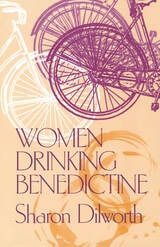
WOMEN DRINKING BENEDICTINE
Sharon Dilworth
The Ohio State University Press, 1998
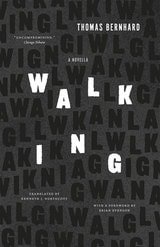
Walking
A NovellaThomas Bernhard
University of Chicago Press, 2003
Thomas Bernhard is “one of the masters of contemporary European fiction” (George Steiner); “one of the century’s most gifted writers” (Newsday); “a virtuoso of rancor and rage” (Bookforum). And although he is favorably compared with Franz Kafka, Samuel Beckett, and Robert Musil, it is only in recent years that he has gained a devoted cult following in America.
A powerful, compact novella, Walking provides a perfect introduction to the absurd, dark, and uncommonly comic world of Bernhard, showing a preoccupation with themes—illness and madness, isolation, tragic friendships—that would obsess Bernhard throughout his career. Walking records the conversations of the unnamed narrator and his friend Oehler while they walk, discussing anything that comes to mind but always circling back to their mutual friend Karrer, who has gone irrevocably mad. Perhaps the most overtly philosophical work in Bernhard’s highly philosophical oeuvre, Walking provides a penetrating meditation on the impossibility of truly thinking.
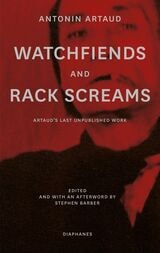
Watchfiends and Rack Screams
Artaud’s Last Unpublished WorkAntonin Artaud
Diaphanes, 2024
Antonin Artaud’s last large-scale work, published in its complete form in English for the first time.
Drawings on texts and letters dating from 1946, some of them written while he was still confined at the Rodez psychiatric hospital, Artaud devoted the months of November 1946 to February 1947 to completing his book through a long series of vocal improvisations titled Interjections, dictated at his pavilion on the edge of Paris. He cursed the assassins he believed were on their way there to steal his semen, to make his brain go “up in smoke as under the action of one of those machines created to suck up filth from the floor,” and finally to erase him. The publisher who had commissioned the book, Louis Broder, was horrified at reading its incandescent, fiercely obscene, and anti-religious manuscript and refused to publish it. Ambitious and experimental in scale, fragmentary and ferocious in intent, it was not published until 1978, in an edition prepared by Artaud’s close friend Paule Thévenin. Artaud commented that it was an “impossible” book, and that “nobody has ever read it from end to end, not even its own author.”
Clayton Eshleman, together with his translation collaborators such as David Rattray, began to work soon after 1978 on an English-language edition, with extracts appearing especially in Eshleman’s poetry magazine, Sulfur. This volume presents his translations with additional ones by Paul Buck, and Catherine Petit it in its complete form in English for the first time.
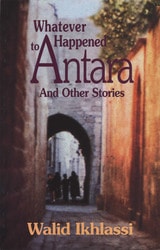
Whatever Happened to Antara?
And Other StoriesBy Walid Ikhlassi
University of Texas Press, 2004
Walid Ikhlassi evokes the individual's struggle for dignity and significance in the Syrian city of Aleppo during the French mandate of the forties and fifties. His characters' seeking of personal fulfillment parallels the struggle of the nation for self-definition. The changing political and cultural landscape of Syria challenges individuals in their attempts to live lives of integrity, as Ikhlassi provides analytical insights into the civil society of Syria, the axis of his writing.
From the boy Antara who personifies the Arab legend of a half-African slave warrior/hero to everyday middle-aged lovers, Ikhlassi's characters fight colonial oppression and corruption from the newly formed government. Foreign and internal forces challenge the evolution of a modern nation rooted in traditional Arab values. Its strong and determined men and women refuse to accept victimhood. The introduction by author and critic Elizabeth Warnock Fernea places the stories in their historical and literary context.
An avowed experimentalist, Ikhlassi portrays the modern human situation through techniques as widely divergent as realism, surrealism, interior monologue, and stream-of-consciousness. Selections of his work have been translated into English, Russian, French, German, Dutch, Armenian, and other languages.
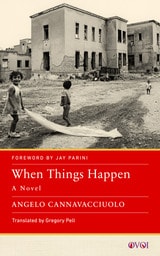
When Things Happen
A NovelAngelo Cannavacciuolo
Rutgers University Press, 2024
Michele Campo is living the bourgeois Italian dream. Now a speech pathologist in his forties, he resides in an expensive Naples home with his partner, Costanza, daughter of an upper-class family. Michele’s own family origins, however, are murkier. When he is assigned to work with five-year-old foster child Martina, he grows increasingly engrossed by her case, as his own buried family history slowly claws its way back to the surface. The first novel by acclaimed Italian writer Angelo Cannavacciuolo to be translated into English, When Things Happen tells a powerful and intriguing story of what we lose when we leave our origins behind. It presents a panoramic view of Neapolitan society unlike any in literature, revealing a city of extreme contrasts, with a glamorous center ringed by suburban squalor. Above all, it is a psychologically nuanced portrait of a man struggling to locate what he values in life and the poor vulnerable child who helps him find it.
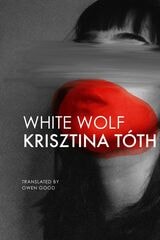
White Wolf
Sixteen StoriesKrisztina Tóth
Seagull Books, 2026
“Every home is a different story,” says one narrator in White Wolf while looking for her own childhood home. Every unhappy home is unhappy in its own way—and so are the stories in Krisztina Tóth’s new volume, in which the writer’s voice is darker and more radical than ever.
These are stories of trauma, oppression, submission, exclusion, stigma, and violence. Many of them tell of childhood abuses, unpunished crimes, lost children—suffering that goes without punishment, apology, and forgiveness. Her mostly nameless heroes are everywhere around us, stepping into the same elevator, running behind us on the staircase. Many of them are so wounded or tormented that they behave in strange ways. In White Wolf, Tóth observes these characters with acute sensitivity and attentiveness to detail.
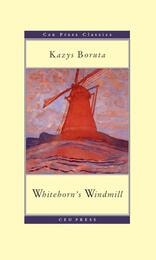
Whitehorn's Windmill
Kazys Boruta
Central European University Press, 2009
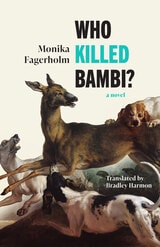
Who Killed Bambi?
Monika Fagerholm, translated by Bradley Harmon
University of Wisconsin Press, 2026
Set in a fictional, affluent suburb of Helsinki, the main narrative follows Gusten Grippe, a successful realtor haunted by his role as one of the four teenage rapists—the only one to report the crime and admit his guilt. When, a decade afterward, an acquaintance plans to make a movie about what happened, Gusten attempts to atone for his past in the face of the community’s stoic silence and misguided consideration for reputation. Released at the height of the #MeToo movement and translated into a dozen languages, Who Killed Bambi? remains highly relevant in a world grappling with the ubiquity of sexual violence, toxic masculinity, and gender discrimination.
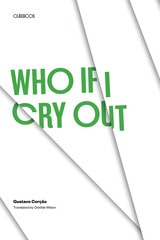
Who if I Cry Out
By Gustavo Corção
University of Texas Press, 1967
Three months to live.
José Maria, a contemplative engineer in late middle age, and now a victim of leukemia, has received a death sentence from his doctor. His life has been a frustrating nonfulfillment of his early hopes, and his musings are many and varied as his life wanes.
The Brazilian writer Corção's remarkable novel is the diary of this thoughtful man facing the imminent prospect of death and trying to find the meaning of life—and of death—while evaluating his own existence.
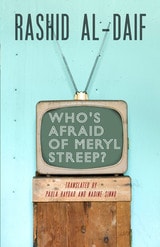
Who's Afraid of Meryl Streep?
By Rashid al-Daif Translated by Paula Haydar and Nadine Sinno
University of Texas Press, 2014
Rashid al-Daif’s provocative novel Who’s Afraid of Meryl Streep? takes an intimate look at the life of a recently married Lebanese man. Rashoud and his wife struggle as they work to negotiate not only their personal differences but also rapidly changing attitudes toward sex and marriage in Lebanese culture. As their fragile bond disintegrates, Rashoud finds television playing a more prominent role in his life; his wife uses the presence of a television at her parents’ house as an excuse to spend time away from her new home. Rashoud purchases a television in the hopes of luring his wife back home, but in a pivotal scene, he instead finds himself alone watching Kramer vs. Kramer. Without the aid of subtitles, he struggles to make sense of the film, projecting his wife’s behavior onto the character played by Meryl Streep, who captivates him but also frightens him in what he sees as an effort to take women’s liberation too far.
Who’s Afraid of Meryl Streep? offers a glimpse at evolving attitudes toward virginity, premarital sex, and abortion in Lebanon and addresses more universal concerns such as the role of love and lust in marriage. The novel has found wide success in Arabic and several European languages and has also been dramatized in both Arabic and French.

Windy McPherson's Son
Sherwood Anderson
University of Illinois Press, 1993

Women on a Journey
Between Baghdad and LondonBy Haifa Zangana
University of Texas Press, 2006
Exiled, displaced, tortured, and grieving—each of the five Iraqi women whose lives and losses come to us through Haifa Zangana's skillfully wrought novel is searching in her own way for peace with a past that continually threatens to swallow up the present.
Majda, the widow of a former Ba'ath party official who was killed by the government he served. Adiba, a political dissident tortured under Saddam Hussein's regime. Um Mohammed, a Kurdish refugee who fled her home for political asylum. Iqbal, a divorced mother whose family in Iraq is suffering the effects of Western economic sanctions. And Sahira, the wife of a Communist politician, struggling with his disillusionment and her own isolation. Bound to one another by a common Iraqi identity and a common location in 1990s London, these women come together across differences in politics, ethnic and class background, age, and even language. In narrating the friendship that develops among them, Zangana captures their warmth and humor as well as their sadness, their feelings of despair along with their search for hope, their sense of uprootedness, and their yearnings for home.
Weaving between the women's memories of Iraq—nostalgic and nightmarish—and their lives as exiles in London, Zangana's novel gives voice to the richness and complexity of Iraqi women's experiences. Through their stories, the novel represents a powerful critique of the violence done to ordinary people by those who hold power both in Iraq and in the West.
Words Are Something Else
David Albahari
Northwestern University Press, 1996
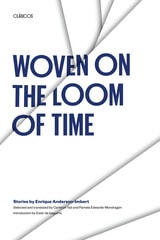
Woven on the Loom of Time
Stories by Enrique Anderson-ImbertSelected and translated by Carleton Vail and Pamela Edwards-Mondragón
University of Texas Press, 1990
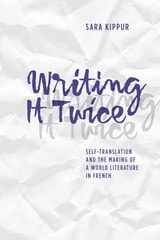
Writing It Twice
Self-Translation and the Making of a World Literature in FrenchSara Kippur
Northwestern University Press, 2015
Though the practice of self-translation long predates modernity, it has found new forms of expression in the global literary market of the late twentieth and early twenty-first century. The international renown of self-translating authors Samuel Beckett, Joseph Brodsky, and Vladimir Nabokov has offered motivation to a new generation of writers who actively translate themselves.
Intervening in recent debates in world literature and translation studies, Writing It Twice establishes the prominence and vitality of self-translation in contemporary French literature. Because of its intrinsic connection to multiple literary communities, self-translation prompts a reexamination of the aesthetics and politics of reading across national lines. Kippur argues that self-translated works should be understood as the paradigmatic example of world literature and, as such, crucial for interpreting the dynamics of literary circulation into and out of French.
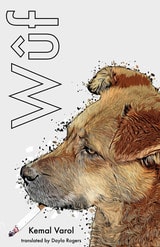
Wûf
By Kemal Varol; translated by Dayla Rogers
University of Texas Press, 2020
Told through the voice of a canine narrator, Wûf is a surrealist wartime love story set in Turkey in the 1990s. The novel follows Mikasa, a street dog who recounts a tale of tragic wartime love at a kennel where he finds solace in storytelling and cigarettes. A book that took the Turkish literary world by storm, Kemal Varol’s Wûf tackles universal themes of love and loss with both humor and pathos. Translated by PEN/Heim Award winner Dayla Rogers, the novel renders in English a one-of-a-kind love story with a narrator its readers won’t soon forget.