Results by title
141 books match the query 'World War I' and 11 start with w
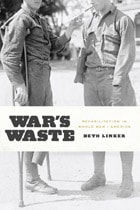
War's Waste
Rehabilitation in World War I AmericaBeth Linker
University of Chicago Press, 2011
With US soldiers stationed around the world and engaged in multiple conflicts, Americans will be forced for the foreseeable future to come to terms with those permanently disabled in battle. At the moment, we accept rehabilitation as the proper social and cultural response to the wounded, swiftly returning injured combatants to their civilian lives. But this was not always the case, as Beth Linker reveals in her provocative new book, War’s Waste.
Linker explains how, before entering World War I, the United States sought a way to avoid the enormous cost of providing injured soldiers with pensions, which it had done since the Revolutionary War. Emboldened by their faith in the new social and medical sciences, reformers pushed rehabilitation as a means to “rebuild” disabled soldiers, relieving the nation of a monetary burden and easing the decision to enter the Great War. Linker’s narrative moves from the professional development of orthopedic surgeons and physical therapists to the curative workshops, or hospital spaces where disabled soldiers learned how to repair automobiles as well as their own artificial limbs. The story culminates in the postwar establishment of the Veterans Administration, one of the greatest legacies to come out of the First World War.
[more]
Wellington Koo
ChinaJonathan Clements
Haus Publishing, 2010
Gu Weijun, a.k.a. Wellington Koo (1887-1985). Born in Shanghai and raised in the city's International Settlement, Koo became fluent in English during his postgraduate studies abroad - he got a PhD in Law from Columbia in 1912. He was recalled soon afterwards to become the English Secretary to the newly formed Republic of China, and became ambassador to the United States in 1915. He achieved notoriety at the Paris Peace Conference where he sternly resisted Japanese attempts to hold onto seized German colonial territory in mainland China. In protest at their treatment, the Chinese were the only delegates not to sign the subsequent Treaty of Versailles. Koo was China's first representative to the League of Nations, and ended up as acting president of Republican China during the unrest of the period 1926-7. He subsequently served briefly as a Foreign Minister during the peak of the Warlord Era, before returning to Europe, first as a delegate at the League of Nations, and then as China's ambassador to France. With the Nazi occupation, Koo fled to Britain, where he became the Chinese ambassador to the UK until 1946. A founder member of the United Nations, Koo was instrumental in maintaining the position of Republican China on the Security Council -by this time, 'Republican China' was limited solely to the island of Taiwan, while the Communists proclaimed themselves to be the new rulers of China itself. Retiring from the diplomatic service in 1956, the venerable Koo went on to become a judge at the International Court of Justice at the Hague, rising to vice-president before his retirement, aged 80, in 1967. He settled in New York, where his final years were tormented by 'Republican' China's loss of its seat on the United Nations Security Council to the Communists, following Nixon's famous visit to China.
[more]
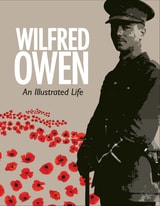
Wilfred Owen
An Illustrated LifeJane Potter
Bodleian Library Publishing, 2014
Wilfred Owen is the “Poet of Pity,” whose realistic portrayals of war gave voice to the soldier wounded, captured, or killed—not just in the Great War but in every war since, so great is the evocative power of his work. Although he saw only five poems published during his lifetime, Owen left behind a wealth of letters and poetry that together form a powerful legacy.
This generously illustrated book tells the story of Owen’s life and work, from his birth in 1893 to his tragic death just one week before the signing of the armistice that would end the war. The shocking realism of poems such as “Strange Meeting” and the angry disillusionment of “Anthem for Doomed Youth” reveal Owen’s transformation from a romantic youth steeped in the poetry of Keats to a mature soldier awakened to the horrors of the Western Front.
Drawing on numerous manuscripts, artifacts, and family photographs, this book gives a comprehensive view of the relationship between the poet’s lived experience and his writing that will appeal equally to both those well-versed in Owen’s work and those seeking a well-researched, accessible introduction.
[more]
William Hughes
AustraliaCarl Bridge
Haus Publishing, 2010
The First World War marked the emergence of the Dominions on the world stage as independent nations, none more so than Australia. The country's sacrifice at Gallipoli in 1915, and the splendid combat record of Australian troops on the Western Front not only created a national awakening at home, but also put Great Britain in their debt, ensuring them greater influence at the Peace Conferences. Australia was represented at Versailles by the Prime Minister, the colourful Billy Hughes, whom Woodrow Wilson called 'a pestiferous varmint' after their repeated clashes over Australia's claims to the Pacific Islands its troops had taken from Germany during the War. Hughes was also the most vociferous (though by no means at all the only) opponent of the racial equality clause put forward by Japan. Indeed, it was fear of Japanese expansion that drove Australia's territorial demands in the Pacific.
[more]
William Massey
New ZealandJames Watson
Haus Publishing, 2010
The Great War profoundly affected both New Zealand and its Prime Minister William Massey (1856-1925). 'Farmer Bill' oversaw the despatch of a hundred thousand New Zealanders, including his own sons, to Middle Eastern and European battlefields. In 1919 he led the New Zealand delegation to the Paris Peace Conference, where it was represented both in its own right and as part of the British Empire. This symbolised its staunch loyalty to Empire and the fact that it had its own particular interests. Massey was largely satisfied with the Versailles Treaty, as New Zealand gained a mandate over Western Samoa, Germany forfeited its other Pacific colonies, and control over Nauru's valuable phosphate deposits was shared between Britain, Australia and New Zealand, rather than simply being given to Australia. He believed that the apparent confirmation of British power improved New Zealand's security, and had little faith in the League of Nations. However, the opposition Labour Party came to believe the League could prevent a major war and made that a cornerstone of their foreign policy in government after 1935. Their belief that Versailles was unfair to Germany partly influenced them to favour negotiations with Hitler even after the outbreak of war in 1939.
[more]
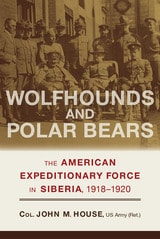
Wolfhounds and Polar Bears
The American Expeditionary Force in Siberia, 1918–1920Col. John M. House, US Army (Ret.)
University of Alabama Press, 2016
Details the military aspects of the American Expeditionary Force's (AEF) deployment to Siberia following World War I to protect the Trans-Siberian Railroad
In the final months of World War I, President Woodrow Wilson and many US allies decided to intervene in Siberia in order to protect Allied wartime and business interests, among them the Trans-Siberian Railroad, from the turmoil surrounding the Russian Revolution. American troops would remain until April 1920 with some of our allies keeping troops in Siberia even longer.
Few American citizens have any idea that the United States ever deployed soldiers to Siberia and that those soldiers eventually played a role in the Russian revolution while protecting the Trans-Siberian Railroad. Wolfhounds and Polar Bears relies on the detailed reports of the American Expeditionary Force (AEF) as well as on personal stories to bring this rarely discussed expedition to life.
Initial chapters recount the period in World War I when conditions in Russia pointed to the need for intervention as well as the varied reasons for that decision. A description of the military forces and the geographic difficulties faced by those forces operating in Siberia provide the baseline necessary to understand the AEF’s actions in Siberia. A short discussion of the Russian Railway Service Corps explains their essential and sometimes overlooked role in this story, and subsequent chapters provide a description of actual operations by the AEF.
Wolfhounds and Polar Bears: The American Expeditionary Force in Siberia, 1918–1920 may well be the most detailed study of the military aspects of the American intervention in Siberia ever undertaken, offering a multitude of details not available in any other book-length history.
[more]

Women at The Hague
The International Congress of Women and Its ResultsJane Addams, Emily G. Balch, and Alice Hamilton
University of Illinois Press, 2003
In the midst of World War I, from April 28 to May 1, 1915, more than a thousand women from Europe and North America gathered in The Hague to discuss proposals for a peaceful end to the war. As one of the founders of the Woman's Peace Party, Jane Addams was among the attendees at the International Congress of Women, along with fellow social reformers and peace activists Emily G. Balch and Alice Hamilton. This book contains their journalistic accounts of the Congress's proceedings and results as well as their personal reflections on peace, war, politics, and the central role of women in the preservation of peace.
Following the conference in The Hague, Addams and Balch traveled around Europe as members of delegations visiting various governmental leaders to demand an end to the war. In this book they describe the activities of these delegations, painting a vivid portrait of the emerging women's peace movement.
With the continuing growth of the peace movement, the essays in Women at the Hague remain as timely as they were when first published in 1915. Addams, Balch, and Hamilton write compellingly about the organizing methods and collaborative spirit of the women's peace movement, conveying a strong awareness of the responsibility of women to protect the global community from the devastating effects of war.
[more]
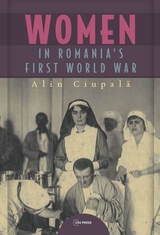
Women in Romania’s First World War
Alin Ciupalã
Central European University Press, 2025
In August 1916, the Kingdom of Romania (Wallachia and Moldova) entered the First World War, leading in 1918 to a union with Transylvania and Bessarabia. Alin Ciupalã’s book considers the contribution of women to the achievement of the Romanian national project, including the role of bourgeois and middle-class women, the position of women in rural areas, and love, sex, and eroticism in wartime. He presents portraits of female figures, including Queen Marie, who organized field hospitals, supported civilians, promoted Romania abroad, and visited soldiers, and Ecaterina Teodoroiu, Romania’s only female officer, who died leading troops in battle.
Beyond women’s contribution to the war, the book also examines the effects of the First World War on gender roles in Romania. Feminist leaders expected that a wartime “training service” would entitle women to a life with full rights as citizens. Yet after the war, the situation returned to “normal,” and women largely continued to be excluded from the public sphere.
Beyond women’s contribution to the war, the book also examines the effects of the First World War on gender roles in Romania. Feminist leaders expected that a wartime “training service” would entitle women to a life with full rights as citizens. Yet after the war, the situation returned to “normal,” and women largely continued to be excluded from the public sphere.
[more]
Woodrow Wilson
USABrian Morton
Haus Publishing, 2008
Woodrow Wilson (1856-1924). It is September 1919 - a meeting hall in a small mid-Western city. A thin man is speaking to a sceptical audience about peace. He has already met the city fathers and has been warned that 'out here' what happens in Europe means very little. Even the late war scarcely impinged on the place, though it had been recognised that it hadn't been altogether good for trade and one or two local boys had died on the fields of France in the very last days of the conflict. The speaker was obviously impassioned, with a preacher's cadence to his voice, and particularly so when he promoted the idea of an international League of Nations to guarantee future peace and ensure that the war into which America had been lured in 1917 really was 'a war to end all wars'. It is noticed that the man is sweating and pale and that he pauses frequently to dab his lips. The price of his campaign for peace - and peace conducted with principle - seems to be a terrible struggle between strong belief on the one hand and failing reserves on the other. Woodrow Wilson will live for another five years, but his battle to convince America to join the League is lost and much of the vigour that marked his time as President of his country, as president of Princeton University, even as an enthusiastic college football coach, was left behind in the Hall of Mirrors at Versailles. This book will look at the life of Wilson, from his early years during the American Civil War, through his academic and political career and America's involvement in the First World War, to Wilson's role at Versailles, including the construction of his Fourteen Points, his principles for the reformation of Europe, and the consequences of Versailles for America and on later conflicts.
[more]
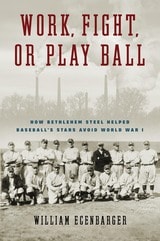
Work, Fight, or Play Ball
How Bethlehem Steel Helped Baseball's Stars Avoid World War IEcenbarger, William
Temple University Press, 2024
In 1918, Bethlehem Steel started the world’s greatest industrial baseball league. Appealing to Major League Baseball players looking to avoid service in the Great War, teams employed “ringers” like Babe Ruth, Rogers Hornsby, and Shoeless Joe Jackson in what became scornfully known as “safe shelter” leagues. In Work, Fight, or Play Ball, William Ecenbarger fondly recounts this little-known story of how dozens of athletes faced professional conflicts and a difficult choice in light of public perceptions and war propaganda.
Some players used the steel mill and shipyard leagues to avoid wartime military duty, irking Major League owners, who saw their rosters dwindling. Bethlehem Steel President Charles Schwab (no relation to the financier) saw the league as a means to stave off employee and union organizing. Most fans loudly criticized the ballplayers, but nevertheless showed up to watch the action on the diamond.
Ecenbarger traces the 1918 Steel League’s season and compares the fates of the players who defected to industry or continued to play stateside with the travails of the Major Leaguers, such as Christy Mathewson, Ty Cobb, and Grover Cleveland Alexander, who served during the war.
Work, Fight, or Play Ball reveals the home field advantage brought on by the war, which allowed companies to profit from Major League players.
[more]
World War 1 in Outline
B. H. Liddell Hart
Westholme Publishing, 1936
A Concise Account of All the Major Battles, Innovations, and Political Events of the First World War by an Important Military Analyst
An abridgement of the author’s History of the World War, 1914–1918, and first published in 1936, World War I in Outline is a compact but comprehensive history of the “war to end all wars.” Divided into five parts representing each year of the war, Liddell Hart discusses the war on land, at sea, and in the air while skillfully incorporating the political events occurring at the same time. From his own experiences in the war and through studying the conflict in detail, the author developed and expressed his most important observation about military principles: direct attacks against an enemy firmly in position should not be attempted. He also put forth the notion that battles are more often decided by the commander’s actions and not the armies themselves. A lively and engrossing read, World War I in Outline is an ideal overview in time for the centennial of one of the major wars in history.
An abridgement of the author’s History of the World War, 1914–1918, and first published in 1936, World War I in Outline is a compact but comprehensive history of the “war to end all wars.” Divided into five parts representing each year of the war, Liddell Hart discusses the war on land, at sea, and in the air while skillfully incorporating the political events occurring at the same time. From his own experiences in the war and through studying the conflict in detail, the author developed and expressed his most important observation about military principles: direct attacks against an enemy firmly in position should not be attempted. He also put forth the notion that battles are more often decided by the commander’s actions and not the armies themselves. A lively and engrossing read, World War I in Outline is an ideal overview in time for the centennial of one of the major wars in history.
[more]