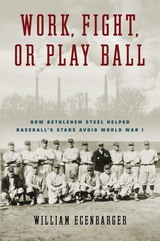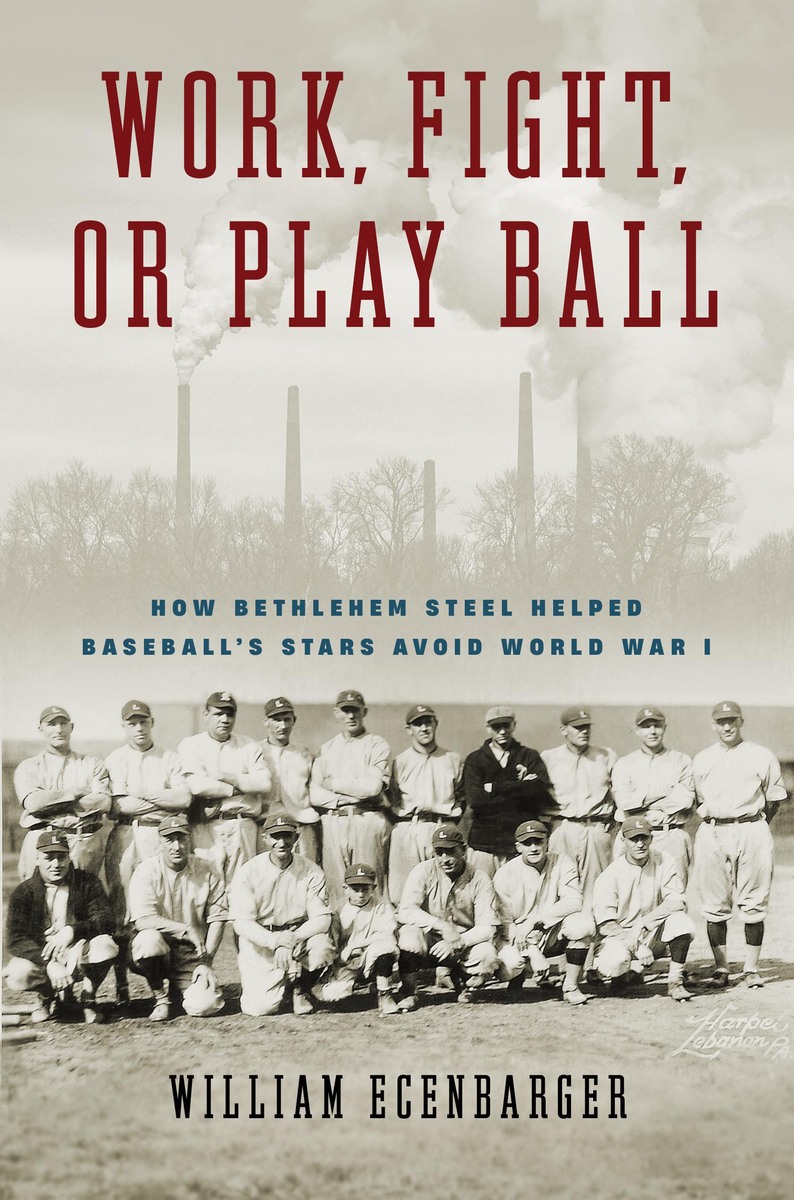
Work, Fight, or Play Ball: How Bethlehem Steel Helped Baseball's Stars Avoid World War I
Temple University Press, 2024
eISBN: 978-1-4399-2519-5 | Cloth: 978-1-4399-2517-1
Library of Congress Classification GV863.A1E33 2024
Dewey Decimal Classification 796.35709730904
eISBN: 978-1-4399-2519-5 | Cloth: 978-1-4399-2517-1
Library of Congress Classification GV863.A1E33 2024
Dewey Decimal Classification 796.35709730904
ABOUT THIS BOOK | AUTHOR BIOGRAPHY | REVIEWS | TOC | REQUEST ACCESSIBLE FILE
ABOUT THIS BOOK
In 1918, Bethlehem Steel started the world’s greatest industrial baseball league. Appealing to Major League Baseball players looking to avoid service in the Great War, teams employed “ringers” like Babe Ruth, Rogers Hornsby, and Shoeless Joe Jackson in what became scornfully known as “safe shelter” leagues. In Work, Fight, or Play Ball, William Ecenbarger fondly recounts this little-known story of how dozens of athletes faced professional conflicts and a difficult choice in light of public perceptions and war propaganda.
Some players used the steel mill and shipyard leagues to avoid wartime military duty, irking Major League owners, who saw their rosters dwindling. Bethlehem Steel President Charles Schwab (no relation to the financier) saw the league as a means to stave off employee and union organizing. Most fans loudly criticized the ballplayers, but nevertheless showed up to watch the action on the diamond.
Ecenbarger traces the 1918 Steel League’s season and compares the fates of the players who defected to industry or continued to play stateside with the travails of the Major Leaguers, such as Christy Mathewson, Ty Cobb, and Grover Cleveland Alexander, who served during the war.
Work, Fight, or Play Ball reveals the home field advantage brought on by the war, which allowed companies to profit from Major League players.
Some players used the steel mill and shipyard leagues to avoid wartime military duty, irking Major League owners, who saw their rosters dwindling. Bethlehem Steel President Charles Schwab (no relation to the financier) saw the league as a means to stave off employee and union organizing. Most fans loudly criticized the ballplayers, but nevertheless showed up to watch the action on the diamond.
Ecenbarger traces the 1918 Steel League’s season and compares the fates of the players who defected to industry or continued to play stateside with the travails of the Major Leaguers, such as Christy Mathewson, Ty Cobb, and Grover Cleveland Alexander, who served during the war.
Work, Fight, or Play Ball reveals the home field advantage brought on by the war, which allowed companies to profit from Major League players.
See other books on: Baseball | Baseball players | United States. Army | World War I | World War, 1914-1918
See other titles from Temple University Press