Results by title
22279 books match the query 'Social Science' and 963 start with w
Women and Comedy
Rewriting the British Theatrical TraditionSusan Carlson
University of Michigan Press, 1991
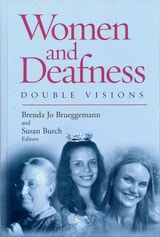
Women and Deafness
Double VisionsBrenda Jo Brueggemann
Gallaudet University Press, 2006
This new collection bridges two dynamic academic fields: Women’s Studies and Deaf Studies. The 14 contributors to this interdisciplinary volume apply research and methodological approaches from sociology, ethnography, literary/film studies, history, rhetoric, education, and public health to open heretofore unexplored territory.
Part One: In and Out of the Community addresses female dynamics within deaf schools; Helen Keller’s identity as a deaf woman; deaf women’s role in Deaf organizations; and whether or not the inequity in education and employment opportunities for deaf women is bias against gender or disability. Part Two: (Women’s) Authority and Shaping Deafness explores the life of 19th-century teacher Marcelina Ruis Y Fernandez; the influence of single, hearing female instructors in deaf education; the extent of women’s authority over oralist educational dictates during the 1900s; and a deaf daughter’s relationship with her hearing mother in the late 20th century.
Part Three: Reading Deaf Women considers two deaf sisters’ exceptional creative freedom from 1885 to 1920; the depictions of deaf or mute women in two popular films; a Deaf woman’s account of blending the public-private, deaf-hearing, and religious-secular worlds; how five Deaf female ASL teachers define “gender,” “feminism,” “sex,” and “patriarchy” in ASL and English; and 20th-century American Deaf beauty pageants that emphasize physicality while denying Deaf identity, yet also challenge mainstream notions of “the perfect body.”
Women and Dieting Culture
Inside a Commercial Weight Loss GroupKandi Stinson
Rutgers University Press, 2001
American women invest millions of dollars, as well as much time and energy, in a quest for a body that meets our culture’s standard of beauty—slenderness. Since we define a woman’s sexual attractiveness as essential to her social worth, it is no wonder that “fat is a feminist issue.”
Commercial weight loss organizations have come under attack from feminist scholars for perpetuating the very social values that cause women to obsess about their weight. In Women and Dieting Culture, sociologist Kandi Stinson asks how these values are transmitted and how the women who join such organizations actually think about their bodies and weight loss. As part of her research, Stinson fully participated in a national, commercial weight-loss organization as a paying member. Her acute analysis and sensitive insider’s portrayal vividly illustrate the central roles dieting and body image play in women’s lives.
As she experiences the program and interviews other members, Stinson discovers that the women view the causes and cures of being overweight according to five distinct, though often overlapping, concepts: self-help, work, religion, addiction, and feminism. Drawing extensively on the dieters’ own words, Stinson explores each of these concepts and outlines how they form interrelated patterns which, when analyzed, yield an exciting new perspective on the transmission of cultural values.
Armed with fresh insights into how women feel about weight and their bodies, Stinson finally ponders the question: Can one be a feminist and still wish to lose weight?
Women and Discourse in the Fiction of Marguerite Duras
Love, Legends, LanguageSusan D. Cohen
University of Massachusetts Press, 1993
One of the most famous living French writers, Marguerite Duras is renowned for her provocative and hauntingly beautiful works of fiction, drama, and cinema. This book offers the first comprehensive study of the narrative and stylistic characteristics of Duras's fiction. Susan D. Cohen examines the entire range of Duras's works, combining close textual analyses with a more general discussion of narrativity and its connections with gender, class, and race. The focus throughout is on language, representation, and difference, which Duras explores on every structural level.
Cohen shows how Duras's writings, even the controversial “erotic” works, expose and subvert the repression of women in traditional, dominant discourse and at the same time present an alternative, nonrepressive discursive model. She formulates a concept of creative “ignorance,” which she identifies as the generative principle of Duras's textual production and the approach to language it proposes. Cohen also explores the distinctive features of Duras's prose, describing how the writer achieves the ritual, legendary aura that characterizes her work.
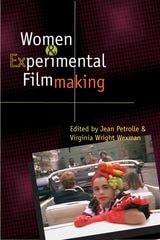
Women and Experimental Filmmaking
Edited by Jean Petrolle and Virginia Wright Wexman
University of Illinois Press, 2005
The introduction sets out by addressing the basic difficulties of both historiography and definition before providing a historical overview of how these particular filmmakers have helped shape moviemaking traditions. The essays explore the major theoretical controversies that have arisen around the work of groundbreaking women such as Leslie Thornton, Su Friedrich, Nina Menkes, and Faith Hubley. With the filmmakers re-presentations of women's subjectivity ranging across film, video, digital media, ethnography, animation, and collage, Women and Experimental Filmmaking represents the full spectrum of genres, techniques, and modes. Taken together, these essays comprise a sustained analysis of the conjunction of aesthetics and politics in the work of both pioneer and contemporary experimental women filmmakers.
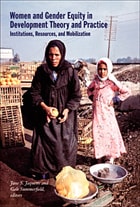
Women and Gender Equity in Development Theory and Practice
Institutions, Resources, and MobilizationJane S. Jaquette and Gale Summerfield, eds.
Duke University Press, 2006
Highlighting key institutional issues, contributors analyze the two approaches that dominate the field: women in development (WID) and gender and development (GAD). They assess the results of gender mainstreaming, the difficulties that development agencies have translating gender rhetoric into equity in practice, and the conflicts between gender and the reassertion of indigenous cultural identities. Focusing on resource allocation, contributors explore the gendered effects of land privatization, the need to challenge cultural traditions that impede women’s ability to assert their legal rights, and women’s access to bureaucratic levers of power. Several essays consider women’s mobilizations, including a project to provide Internet access and communications strategies to African NGOs run by women. In the final essay, Irene Tinker, one of the field’s founders, reflects on the interactions between policy innovation and women’s organizing over the three decades since women became a focus of development work. Together the contributors bridge theory and practice to point toward productive new strategies for women and gender in development.
Contributors. Maruja Barrig, Sylvia Chant, Louise Fortmann, David Hirschmann, Jane S. Jaquette, Diana Lee-Smith, Audrey Lustgarten, Doe Mayer, Faranak Miraftab, Muadi Mukenge, Barbara Pillsbury, Amara Pongsapich, Elisabeth Prügl, Kirk R. Smith, Kathleen Staudt, Gale Summerfield, Irene Tinker, Catalina Hinchey Trujillo
Women and Knowledge in Mesoamerica
From East L.A. to AnahuacPaloma Martinez-Cruz
University of Arizona Press, 2011
The few works looking at the knowledge of women in Mesoamerica generally examine only the written—even academic—world, accessible only to the most elite segments of (customarily male) society. These works have consistently excluded the essential repertoire and performed knowledge of women who think and work in ways other than the textual. And while two of the book’s chapters critique contemporary novels, Martinez-Cruz also calls for the exploration of non-textual knowledge transmission. In this regard, the book's goals and methods are close to those of performance scholarship and anthropology, and these methods reveal Mesoamerican women to be public intellectuals. In Women and Knowledge in Mesoamerica, fieldwork and ethnography combine to reveal women healers as models of agency.
Her multidisciplinary approach allows Martinez-Cruz to disrupt Euro-based intellectual hegemony and to make a case for the epistemic authority of Native women. Written from a Chicana perspective, this study is learned, personal, and engaging for anyone who is interested in the wisdom that prevailing analytical cultures have deemed “unintelligible.” As it turns out, those who are unacquainted with the sometimes surprising extent and depth of wisdom of indigenous women healers simply haven’t been looking in the right places—outside the texts from which they have been consistently excluded.
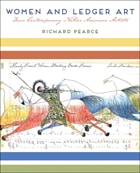
Women and Ledger Art
Four Contemporary Native American ArtistsRichard Pearce
University of Arizona Press, 2013
Women and Ledger Art calls attention to the extraordinary achievements of these strong women who have chosen to express themselves through ledger art. Author Richard Pearce foregrounds these contributions by focusing on four contemporary women ledger artists: Sharron Ahtone Harjo (Kiowa), Colleen Cutschall (Oglala Lakota), Linda Haukaas (Sicangu Lakota), and Dolores Purdy Corcoran (Caddo). Pearce spent six years in continual communication with the women, learning about their work and their lives. Women and Ledger Art examines the artists and explains how they expanded Plains Indian history.
With 46 stunning images of works in various mediums—from traditional forms on recovered ledger pages to simulated quillwork and sculpture, Women in Ledger Art reflects the new life these women have brought to an important transcultural form of expression.
Women and Men in Late Eighteenth-Century Egypt
By Afaf Lutfi al-Sayyid Marsot
University of Texas Press, 1995
In the late eighteenth century, decentralized and chaotic government in Egypt allowed women a freedom of action that has not been equaled until recent times. Delving extensively into archival sources, Afaf Marsot presents the first comprehensive picture of women's status and opportunities in this period.
Marsot makes important connections between forms of government, economic possibilities, and gender relations, showing how political instability allowed women to acquire property, independent of males, as a hedge against political uncertainty. She traces the linkages that women formed among themselves and with the ulama (non-Ottoman native elites) who aided and supported them. The book concludes with a comparison of women's status in the nineteenth century, when the introduction of European institutions that did not recognize their legal existence marginalized women, causing them to have to rely on men as major breadwinners. These important findings about the relationship between forms of government and the status of women will be of interest to a wide audience.
Women and Migration in the U.S.-Mexico Borderlands
A ReaderDenise A. Segura and Patricia Zavella, eds.
Duke University Press, 2007
This reader includes twenty-three essays—two of which are translated from the Spanish—that illuminate women’s engagement with diverse social and cultural challenges. One contributor critiques the statistical fallacy of nativist discourses within the United States that portray Chicana and Mexican women’s fertility rates as “out of control.” Other contributors explore the relation between sexual violence and women’s migration from rural areas to urban centers within Mexico, the ways that undocumented migrant communities challenge conventional notions of citizenship, and young Latinas’ commemorations of the late, internationally renowned singer Selena. Several essays address workplace intimidation and violence, harassment and rape by U.S. border patrol agents and maquiladora managers, sexual violence, and the brutal murders of nearly two hundred young women near Ciudad Juárez. This rich collection highlights both the structural inequities faced by Mexican women in the borderlands and the creative ways they have responded to them.
Contributors. Ernestine Avila, Xóchitl Castañeda, Sylvia Chant, Leo R. Chavez, Cynthia Cranford, Adelaida R. Del Castillo, Sylvanna M. Falcón, Gloria González-López, Maria de la Luz Ibarra, Jonathan Xavier Inda, Rosa Linda Fregoso, Jennifer S. Hirsch, Pierrette Hondagneu-Sotelo, Eithne Luibheid, Victoria Malkin, Faranak Miraftab, Olga Nájera-Ramírez, Norma Ojeda de la Peña, Deborah Paredez, Leslie Salzinger, Felicity Schaeffer-Grabiel, Denise A. Segura, Laura Velasco Ortiz, Melissa W. Wright, Patricia Zavella
Women and Music in Cross-Cultural Perspective
Edited by Ellen Koskoff
University of Illinois Press, 1989

Women and Musical Salons in the Enlightenment
Rebecca Cypess
University of Chicago Press, 2022
In eighteenth-century Europe and America, musical salons—and the women who hosted and made music in them—played a crucial role in shaping their cultural environments. Musical salons served as a testing ground for new styles, genres, and aesthetic ideals, and they acted as a mediating force, bringing together professional musicians and their audiences of patrons, listeners, and performers. For the salonnière, the musical salon offered a space between the public and private spheres that allowed her to exercise cultural agency.
In this book, musicologist and historical keyboardist Rebecca Cypess offers a broad overview of musical salons between 1760 and 1800, placing the figure of the salonnière at its center. Cypess then presents a series of in-depth case studies that meet the salonnière on her own terms. Women such as Anne-Louise Brillon de Jouy in Paris, Marianna Martines in Vienna, Sara Levy in Berlin, Angelica Kauffman in Rome, and Elizabeth Graeme in Philadelphia come to life in multidimensional ways. Crucially, Cypess uses performance as a tool for research, and her interpretations draw on her experience with the instruments and performance practices used in eighteenth-century salons. In this accessible, interdisciplinary book, Cypess explores women’s agency and authorship, reason and sentiment, and the roles of performing, collecting, listening, and conversing in the formation of eighteenth-century musical life.
Women and New Hollywood
Gender, Creative Labor, and 1970s American CinemaAaron Hunter
Rutgers University Press, 2023
Women and New Hollywood revises our understanding of this important era in American film by examining the contributions that women made not only as directors, but also as screenwriters, editors, actors, producers, and critics. Including essays on film history, film texts, and the decade’s film theory and criticism, this collection showcases the rich and varied cinematic products of women’s creative labor, as well as the considerable barriers they faced. It considers both women working within and beyond the Hollywood film industry, reconceptualizing New Hollywood by bringing it into dialogue with other American cinemas of the 1970s. By valuing the many forms of creative labor involved in film production, this collection offers exciting alternatives to the auteurist model and new ways of appreciating the themes and aesthetics of 1970s American film.
Women and Politics in Latin America
Craske, Nikki
Rutgers University Press, 1999
This book provides a comprehensive view of women's political participation in Latin America. Focusing on the latter half of the twentieth century, it examines five different arenas of action and debate: political institutions, workplaces, social movements, revolutions, and feminisms. Nikki Craske explores the ways in which women have become more effective in the public arena as the context of politics has altered.
Craske demonstrates how gender relations shape political institutions and practices while simultaneously being shaped by them. She examines the moments when women's action has challenged received ideas, and had a significant impact on the political life of Latin American nations. Women remain heavily underrepresented in political lie, despite their important role in popular movements against authoritarianism, Craske states, and posits that the economy is a substantial constraint on women's political participation. This powerful book analyzes the gains made since the 1950s while scrutinizing the challenges and difficulties which still constrain women's political participation.
Women and Politics in the Age of the Democratic Revolution
Harriet B. Applewhite and Darline G. Levy, Editors
University of Michigan Press, 1993

Women and Politics
An International PerspectiveVicky Randall
University of Chicago Press, 1988
Women and Power in Zimbabwe
Promises of FeminismCarolyn Martin Shaw
University of Illinois Press, 2015
Using history, literature, participant observation, and interviews, Carolyn Martin Shaw surveys Zimbabwean feminisms from the colonial era to today. She examines how actions as clearly disparate as baking scones for self-protection, carrying guns in the liberation, and feeling morally superior to men represent sources of female empowerment. She also presents the ways women across Zimbabwean society--rural and urban, professional and domestic--accommodated or confronted post-independence setbacks. Finally, Shaw offers perspectives on the ways contemporary Zimbabwean women depart from the prevailing view that feminism is a Western imposition having little to do with African women.
The result of thirty years of experience, Women and Power in Zimbabwe addresses the promises of feminism and femininity for generations of African women.
Women and Public Life in Early Meiji Japan
The Development of the Feminist MovementMara Patessio
University of Michigan Press, 2011
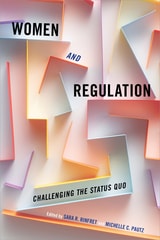
Women and Regulation
Challenging the Status QuoEdited by Sara R. Rinfret and Michelle C. Pautz
Temple University Press, 2026
Are female food safety inspectors treated differently than men? What do women contribute to the creation and implementation of public policy in the United States? The editors of and contributors to Women in Regulation, all experts in public policy and public administration, analyze the role women (and stakeholders) play in bureaucracies in environmental, budgetary, and other sectors of the U.S. federal, state, and local governments, plus relevant examples from around the world.
Women in Regulation examines the impact of regulatory policy delegation, as well as the actors and processes involved in administrative rulemaking, compliance, and implementation. The book considers representative bureaucracy, organizational stereotypes, emotional labor, and advancement barriers to argue why studying women and regulation is of value. Regulatory case studies focus on topics ranging from water and energy to executive leadership. Chapters also include reflective exercises and prompts for classroom engagement that challenge readers to consider implications for regulatory policy in the future.
Amplifying the underheard voices in policy and implementation, Women in Regulation provides a more holistic picture of regulatory practices.
Contributors: Saman Afshan, Ashley English, Katherine Hoener, Nicole Humphrey, Ekaterina Levintova, Li-Yin Liu, Sean McCandless, Bruce D. McDonald III, Denise Scheberle, Natalie L. Smith, Manuel P. Teodoro, and the editors
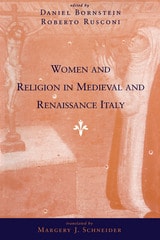
Women and Religion in Medieval and Renaissance Italy
Edited by Daniel Bornstein and Roberto Rusconi
University of Chicago Press, 1996
These essays explore the involvement of women in religious life throughout northern and central Italy and trace the evolution of communities of pious women as they tried to achieve their devotional goals despite the strictures of the ecclesiastical hierarchy. The contributors examine relations between holy women, their devout followers, and society at large.
Including contributions from leading figures in a new generation of Italian historians of religion, this book shows how women were able to carve out broad areas of influence by carefully exploiting the institutional church and by astutely manipulating religious percepts.

Women and Rhetoric between the Wars
Ann George, M. Elizabeth Weiser, and Janet Zepernick
Southern Illinois University Press, 2013
In Women and Rhetoric between the Wars, editors Ann George, M. Elizabeth Weiser, and Janet Zepernick have gathered together insightful essays from major scholars on women whose practices and theories helped shape the field of modern rhetoric. Examining the period between World War I and World War II, this volume sheds light on the forgotten rhetorical work done by the women of that time. It also goes beyond recovery to develop new methodologies for future research in the field.
Collected within are analyses of familiar figures such as Jane Addams, Amelia Earhart, Helen Keller, and Bessie Smith, as well as explorations of less well known, yet nevertheless influential, women such as Zitkala-Ša, Jovita González, and Florence Sabin. Contributors evaluate the forces in the civic, entertainment, and academic scenes that influenced the rhetorical praxis of these women. Each essay presents examples of women’s rhetoric that move us away from the “waves” model toward a more accurate understanding of women’s multiple, diverse rhetorical interventions in public discourse. The collection thus creates a new understanding of historiography, the rise of modern rhetorical theory, and the role of women professionals after suffrage. From celebrities to scientists, suffragettes to academics, the dynamic women of this volume speak eloquently to the field of rhetoric studies today.
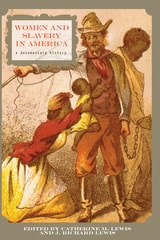
Women and Slavery in America
A Documentary HistoryCatherine M. Lewis
University of Arkansas Press, 2011
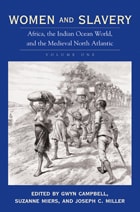
Women and Slavery, Volume One
Africa, the Indian Ocean World, and the Medieval North AtlanticGwyn Campbell
Ohio University Press, 2007
Women enslaved in the Americas came to bear highly gendered reputations among whites—as “scheming Jezebels,” ample and devoted “mammies,” or suffering victims of white male brutality and sexual abuse—that revealed more about the psychology of enslaving than about the courage and creativity of the women enslaved. These strong images of modern New World slavery contrast with the equally expressive virtual invisibility of the women enslaved in the Old—concealed in harems, represented to meddling colonial rulers as “wives” and “nieces,” taken into African families and kin-groups in subtlely nuanced fashion.
Women and Slavery presents papers developed from an international conference organized by Gwyn Campbell.
Volume 1 Contributors: Sharifa Ahjum, Richard B. Allen, Katrin Bromber, Gwyn Campbell, Catherine Coquery-Vidrovitch, Jan-Georg Deutsch, Timothy Fernyhough, Philip J. Havik, Elizabeth Grzymala Jordan, Martin A. Klein, George Michael La Rue, Paul E. Lovejoy, Fred Morton, Richard Roberts, Kirsten A. Seaver
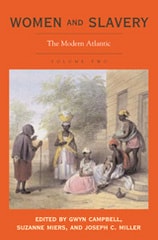
Women and Slavery, Volume Two
The Modern AtlanticGwyn Campbell
Ohio University Press, 2008
Women enslaved in the Americas came to bear highly gendered reputations among whites—as “scheming Jezebels,” ample and devoted “mammies,” or suffering victims of white male brutality and sexual abuse—that revealed more about the psychology of enslaving than about the courage and creativity of the women enslaved. These strong images of modern New World slavery contrast with the equally expressive virtual invisibility of the women enslaved in the Old—concealed in harems, represented to meddling colonial rulers as “wives” and “nieces,” taken into African families and kin-groups in subtlely nuanced fashion.
Volume 2 Contributors: Henrice Altin,k Laurence Brown, Myriam Cottias, Laura F. Edwards, Richard Follett, Tara Inniss, Barbara Krauthamer, Joseph C. Miller, Bernard Moitt, Kenneth Morgan, Claire Robertson, Marsha Robinson, Felipe Smith, and Mariza de Carvalho Soares.
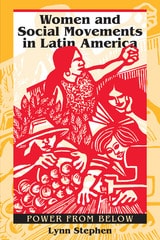
Women and Social Movements in Latin America
Power from BelowBy Lynn Stephen
University of Texas Press, 1997
Women's grassroots activism in Latin America combines a commitment to basic survival for women and their children with a challenge to women's subordination to men. Women activists insist that issues such as rape, battering, and reproductive control cannot be divorced from women's concerns about housing, food, land, and medical care.
This innovative, comparative study explores six cases of women's grassroots activism in Mexico, El Salvador, Brazil, and Chile. Lynn Stephen communicates the ideas, experiences, and perceptions of women who participate in collective action, while she explains the structural conditions and ideological discourses that set the context within which women act and interpret their experiences. She includes revealing interviews with activists, detailed histories of organizations and movements, and a theoretical discussion of gender, collective identity, and feminist anthropology and methods.

Women and Sports in the United States
A Documentary ReaderEdited by Jaime Schultz, Jean O’Reilly, and Susan K. Cahn
Dartmouth College Press, 2018

Women and Stepfamilies
Voices of Anger and Loveedited by Nan Bauer Maglin and Nancy Schniedewind
Temple University Press, 1990
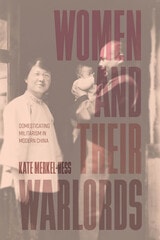
Women and Their Warlords
Domesticating Militarism in Modern ChinaKate Merkel-Hess
University of Chicago Press, 2024
In Women and Their Warlords, historian Kate Merkel-Hess examines the lives and personalities of the female relatives of the military rulers who governed regions of China from 1916 to 1949. Posing for candid photographs and sitting for interviews, these women did not merely advance male rulers’ agendas. They advocated for social and political changes, gave voice to feminist ideas, and shaped how the public perceived them. As the first publicly political partners in modern China, the wives and concubines of Republican-era warlords changed how people viewed elite women’s engagement in politics. Drawing on popular media sources, including magazine profiles and gossip column items, Merkel-Hess draws unexpected connections between militarism, domestic life, and state power in this insightful new account of gender and authority in twentieth-century China.
Women and War
Jean Bethke Elshtain
University of Chicago Press, 1995

Women and Water
Menstruation in Jewish Life and LawEdited by Rahel Wasserfall
Brandeis University Press, 1999
Women and Welfare
Theory and Practice in the United States and EuropeHirschmann, Nancy J
Rutgers University Press, 2001
The social welfare state is believed by many to be one of the great achievements of Western democracy in the twentieth century. It institutionalized for the first time a collective commitment to improving individual life chances and social well-being. However, as we move into a new century, the social welfare state everywhere has come under increasing pressure, raising serious doubts about its survival.
Featuring essays by experts from a variety of fields, including law, comparative politics, sociology, economics, cultural studies, philosophy, and political theory, Women and Welfare represents an interdisciplinary, multimethodological and multicultural feminist approach to recent changes in the welfare system of Western industrialized nations. The broad perspective, from the philosophical to the quantitative, provides an excellent overview of the subject and the most recent scholarly literature. The volume offers a crosscultural analysis of welfare “reform” in the 1990s, visions of what a “woman-friendly” welfare state requires, and an examination of theoretical and policy questions feminists and concerned others should be asking.
Women and Work
A ReaderEdited by Paula J. Dubeck and Kathryn Borman
Rutgers University Press, 1997
A variety of perspectives are used to investigate women's work experience at individual, organizational, and societal levels. Some of the essays focus on how women fare in a variety of occupations, summarizing women's representation in different jobs, and discussing the unique problems they face. Others examine the influences of religious and educational institutions on women's career choices. Women and Work also reviews the history of protective legislation.
The contributors consider current research on women's work interests, commitment, and satisfaction, and examine sexual discrimination, harassment and coercion, as well as gender bias in job evaluations and personnel decisions. They also explore various strategies for reducing or eliminating discrimination, harassment, and wage discrimination.
Issues surrounding the work/family intersection are addressed, including when to have children, the difficulties that arise from the competing demands of work and child care, the consequences for women's careers, research examining the effects of mothers' employment on children's development, and issues surrounding eldercare.
The volume surveys the status of women in an international framework, analyzing women and work in selected countries, arranged to reflect the varying levels of development. Women and Work is a valuable reference book, providing a thoughtful overview of the issues facing working women.
Women and Work
Feminism, Labour, and Social ReproductionSusan Ferguson
Pluto Press, 2019
Feminism is once again on the political agenda. Across the world women are taking to the streets to protest unfair working conditions, abortion laws, and sexual violence. They are demanding decent wages, better schools and free childcare.
But why do some feminists choose to fight for more women CEOs, while others fight for a world without CEOs?
To understand these divergent approaches, Susan Ferguson looks at the ideas that have inspired women to protest, exploring the ways in which feminists have placed work at the center of their struggle for emancipation. Two distinct trajectories emerge: “equality feminism” and “social reproduction feminism.” Ferguson argues that socialists have too often embraced the “liberal” tendencies of equality feminism, while neglecting the insights of social reproduction feminism. Engaging with feminist anti-work critiques, She proposes that women's emancipation depends upon a radical reimagining of all labor and advocates for a renewed social reproduction framework as a powerful basis for an inclusive feminist politics. Chapters here include;
*The Rational-Humanist Roots of Equality Feminism
*Socialist Feminism: Two Approaches to Understanding Women's Work
*Equal Work for and against Capital
*Anti-Racist Feminism and Women's Work
*A Political Economy of 'Women's Work': Producing Patriarchal Capitalism
*Renewing Social Reproduction Feminism
*The Social Reproduction Strike: Life-Making Beyond Capitalism
Women and Work offers a timely and important look at the intersectionality of feminism and workers rights. Scholars and students will both find valuable insights into the history of feminist theory and social movement.
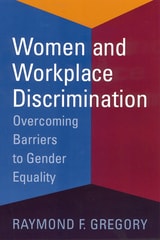
Women and Workplace Discrimination
Overcoming Barriers to Gender EqualityGregory, Raymond F
Rutgers University Press, 2002
Attorney Raymond F. Gregory addresses the millions of women who think they might be facing sexual discrimination and explains federal measures enacted to assist workers in contesting unlawful employer conduct. He presents actual court cases to demonstrate the ways that women have challenged their employers. The cases illustrate legal principles in real-life experiences. Many of the cases relate compelling stories of workers caught up in a web of employer discriminatory conduct. Gregory has eliminated legal jargon, ensuring that all concepts are clear to his readers. Individuals will turn to this book again and again to obtain authoritative background on this important topic.
Topics covered include:
- The increasing incidence of sexual harassment in the workplace
- Common forms of sex discrimination
- Discrimination against older women
- Discrimination against women of color
- Discrimination against women in the professions
- Discrimination against pregnant women
- Discrimination against women with children
- Sex discrimination in hiring, promotion, termination
- Employer liability for workplace sexual harassment
- Employer retaliation against workers
- Proving sex discrimination in the courtroom
- Compensatory and punitive damages
- Back pay, front pay, and other remedies
Women and Workplace Discrimination
Overcoming Barriers to Gender EqualityGregory, Raymond F
Rutgers University Press, 2002
Attorney Raymond F. Gregory addresses the millions of women who think they might be facing sexual discrimination and explains federal measures enacted to assist workers in contesting unlawful employer conduct. He presents actual court cases to demonstrate the ways that women have challenged their employers. The cases illustrate legal principles in real-life experiences. Many of the cases relate compelling stories of workers caught up in a web of employer discriminatory conduct. Gregory has eliminated legal jargon, ensuring that all concepts are clear to his readers. Individuals will turn to this book again and again to obtain authoritative background on this important topic.
Topics covered include:
- The increasing incidence of sexual harassment in the workplace
- Common forms of sex discrimination
- Discrimination against older women
- Discrimination against women of color
- Discrimination against women in the professions
- Discrimination against pregnant women
- Discrimination against women with children
- Sex discrimination in hiring, promotion, termination
- Employer liability for workplace sexual harassment
- Employer retaliation against workers
- Proving sex discrimination in the courtroom
- Compensatory and punitive damages
- Back pay, front pay, and other remedies

Women and the Ancestors
BLACK CARIB KINSHIP AND RITUALVirginia Kerns
University of Illinois Press, 1997
This classic study of Black
Carib culture and its preservation through ancestral rituals organized
by older women now includes a foreword by Constance R. Sutton and an afterword
by the author.
"One of the outstanding
studies of this genre. . . . Refreshingly, the book has good photographs,
as well as strong endnotes and bibliography, and very useful tables, figures,
maps, and index." -- Choice
"An outstanding contribution
to the literature on female-centered bilateral kinship and residence."
-- Grant D. Jones, American Ethnologist
"A richly detailed account
of a contemporary culture in which older women are important, valued,
and self-respecting."
-- Anthropology and Humanism Quarterly
"A combination of competent
research, interwoven themes, and an easily readable, sometimes beautifully
evocative, prose style." -- Heather Strange, The Gerontologist

Women and the Animal Rights Movement
Emily Gaarder
Rutgers University Press, 2011
Animal rights is one of the fastest growing social movements today. Women greatly outnumber men as activists, yet surprisingly, little has been written about the importance and impact of gender on the movement. Women and the Animal Rights Movement combats stereotypes of women activists as mere sentimentalists by exploring the political and moral character of their advocacy on behalf of animals.
Emily Gaarder analyzes the politics of gender in the movement, incorporating in-depth interviews with women and participant observation of animal rights organizations, conferences, and protests to describe struggles over divisions of labor and leadership. Controversies over PETA advertising campaigns that rely on women's sexuality to "sell" animal rights illustrate how female crusaders are asked to prioritize the cause of animals above all else. Gaarder underscores the importance of a paradigm shift in the animal liberation movement, one that seeks a more integrated vision of animal rights that connects universally to other issues--gender, race, economics, and the environment--highlighting that many women activists recognize and are motivated by the connection between the oppression of animals and other social injustices.
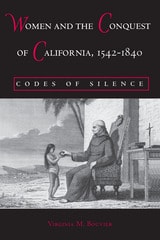
Women and the Conquest of California, 1542-1840
Codes of SilenceVirginia M. Bouvier
University of Arizona Press, 2001

Women and the Everyday City
Public Space in San Francisco, 1890–1915Jessica Ellen Sewell
University of Minnesota Press, 2011
Focusing on women's everyday use of streetcars, shops, restaurants, and theaters, Sewell reveals the impact of women on these public places-what women did there, which women went there, and how these places were changed in response to women's presence. Using the diaries of three women in San Francisco-Annie Haskell, Ella Lees Leigh, and Mary Eugenia Pierce, who wrote extensively on their everyday experiences-Sewell studies their accounts of day trips to the city and combines them with memoirs, newspapers, maps, photographs, and her own observations of the buildings that exist today to build a sense of life in San Francisco at this pivotal point in history.
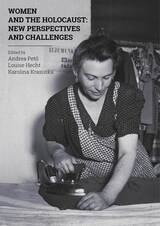
Women and the Holocaust
New Perspectives and ChallengesAndrea Pető
Central European University Press, 2015
Women and Holocaust: New Perspectives and Challenges expands the existing scholarship on women and the Holocaust adopting current approaches to gender studies and focusing on the texts and context from Central-Eastern Europe. The authors complicate earlier approaches by considering the intersections of gender, region, nationa, and sexuality, often within specifically delineated national settings, including the Czech/German, Hungarian, Hungarian/Austrian, Lithuanian, Polish/Israeli, Romanian/US-American, and Slovak. In these essays, the communist regimes after WWII often provide a productive framework for studying women and the Holocaust. This truly international volume features contributions by eminent authors, including pioneers in the field, as well as upcoming literary scholars and historians who delve into previously unmapped archives, explore cinematic representations and digital testimonies.

Women and the Law
Susan Atkins and Brenda Hoggett
University of London Press, 2018
Women and the Press
The Struggle for EqualityPatricia Bradley
Northwestern University Press, 2005

Women as Healers
Cross-Cultural PerspectivesMcClain, Carol Shepherd
Rutgers University Press, 1989
In Women as Healers, thirteen contributors explore the intersection of feminist anthropology and medical anthropology in eleven case studies of women in traditional and emergent healing roles in diverse parts of the world. In a spectrum of healing roles ranging from family healers to shamans, diviner-mediums, and midwives, women throughout the world pursue strategic ends through healing, manipulate cultural images to effect cures and explain misfortune, and shape and are shaped by the social and political contexts in which they work. In an introductory chapter, Carol Shepherd McClain traces the evolution of ideas in medical anthropology and in the anthropology of women that have both constrained and expanded our understanding of the significance of gender to healing-one of the most fundamental and universal of human activities.
The contributors include Carol Shepherd McClain, Ruthbeth Finerman, Carolyn Nordstrom, Carole H. Browner, William Wedenoja, Marjery Foz, Barbara Kerewsky-Halpern, Laurel Kendall, Merrill Signer, Roberto Garcia, Edward C. Green, Carolyn Sargent, and Margaret Reid.
Women at Michigan
The "Dangerous Experiment," 1870s to the PresentRuth Bordin
University of Michigan Press, 2001

Women at Work in Twenty-First-Century European Cinema
Barbara Mennel
University of Illinois Press, 2019
Barbara Mennel delves into the ways these films about female labor capture the tension between feminist advances and their appropriation by capitalism in a time of ongoing transformation. Looking at independent and genre films from a cross-section of European nations, Mennel sees a focus on economics and work adapted to the continent's varied kinds of capitalism and influenced by concepts in second-wave feminism. More than ever, narratives of work put female characters front and center--and female directors behind the camera. Yet her analysis shows that each film remains a complex mix of progressive and retrogressive dynamics as it addresses the changing nature of work in Europe.

Women for President
Media Bias in Eight CampaignsErika Falk
University of Illinois Press, 2007
When Hillary Clinton announced her 2008 bid for president she was the Democratic front-runner. Despite this, she received less coverage than Barack Obama, who trailed her in the polls. Such a disparity is indicative of the gender bias the media has demonstrated in covering women candidates since the first woman ran for America’s highest office in 1872. Tracing the campaigns of eight women who ran for president through 2004--Victoria Woodhull, Belva Lockwood, Margaret Chase Smith, Shirley Chisholm, Patricia Schroeder, Lenora Fulani, Elizabeth Dole, and Carol Moseley Braun--Erika Falk finds little progress in the fair treatment of women candidates. A thorough comparison of the women’s campaigns to those of their male opponents reveals a worrisome trend of sexism in press coverage--a trend that still persists today.
While women have been elected to the highest offices in countries such as England, Germany, and India, the idea that a woman could be president of the United States provokes scoffs and ridicule. The press portrays female candidates as unviable, unnatural, and incompetent, and often ignores or belittles women instead of reporting their ideas and intent. Since voters learn most details about presidential candidates through media outlets, Falk asserts that this prevailing bias calls into question the modern democratic assumption that men and women have comparable access to positions of power.
Women for President
Media Bias in Nine CampaignsErika Falk
University of Illinois Press, 2010
Newly updated to examine Hillary Clinton's formidable 2008 presidential campaign, Women for President analyzes the gender bias the media has demonstrated in covering women candidates since the first woman ran for America's highest office in 1872. Tracing the campaigns of nine women who ran for president through 2008--Victoria Woodhull, Belva Lockwood, Margaret Chase Smith, Shirley Chisholm, Patricia Schroeder, Lenora Fulani, Elizabeth Dole, Carol Moseley Braun, and Hillary Clinton--Erika Falk finds little progress in the fair treatment of women candidates. The press portrays female candidates as unviable, unnatural, and incompetent, and often ignores or belittles women instead of reporting their ideas and intent. This thorough comparison of men's and women's campaigns reveals a worrisome trend of sexism in press coverage--a trend that still persists today.
Women in 1900
Gateway to the Political Economy of the 20th CenturyChristine E. Bose
Temple University Press, 2001
Women in Academe
Progress and ProspectsMariam K. Chamberlain
Russell Sage Foundation, 1988
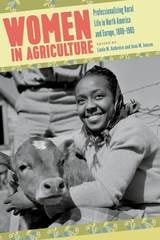
Women in Agriculture
Professionalizing Rural Life in North America and Europe, 1880-1965Linda M. Ambrose and Joan M. Jensen
University of Iowa Press, 2017
The contributors to Women in Agriculture examine how rural women’s expertise was disseminated and how it was received. Through these essays, readers meet subversively lunching ladies in Ontario and African American home demonstration agents in Arkansas. The rural sociologist Emily Hoag made a place for women at the US Department of Agriculture as well as in agricultural research. Canadian rural reformer Madge Watt, British radio broadcaster Mabel Webb, and US ethnobotanists Mary Warren English and Frances Densmore developed new ways to share and preserve rural women’s knowledge. These and the other women profiled here updated and expanded rural women’s roles in shaping their communities and the broader society. Their stories broaden and complicate the history of agriculture in North America and Western Europe.
Contributors:
Linda M. Ambrose, Maggie Andrews, Cherisse Branch-Jones, Joan M. Jensen, Amy McKinney, Anne Moore, Karen Sayer, Margreet van der Burg, Nicola Verdon