Results by title
3258 books match the query 'Art' and 137 start with w

Who's Who in Research
Visual ArtsIntellect Books
Intellect Books, 2013
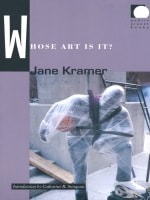
Whose Art Is It?
Jane Kramer
Duke University Press, 1994
This compelling narrative raises questions about community and public art policies, about stereotypes and multiculturalism. With wit, drama, sympathy, and circumspection, Kramer draws the reader into the multicultural debate, challenging our assumptions about art, image, and their relation to community. Her portrait of the South Bronx takes the argument to its grass roots—provocative, surprising in its contradictions and complexities and not at all easy to resolve.
Accompanied by an introduction by Catharine R. Stimpson exploring the issues of artistic freedom, "political correctness," and multiculturalism, Whose Art Is It? is a lively and accessible introduction to the ongoing debate on representation and private expression in the public sphere.
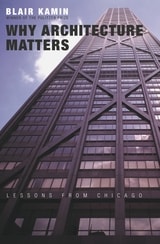
Why Architecture Matters
Lessons from ChicagoBlair Kamin
University of Chicago Press, 2001
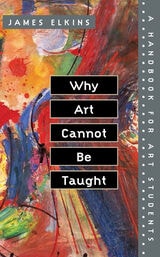
Why Art Cannot Be Taught
A Handbook for Art StudentsJames Elkins
University of Illinois Press, 2001
"Art can be taught, but it seems as if it can't be since so few students become outstanding artists."
"Art cannot be taught, but it can be fostered or helped along."
"Art cannot be taught or even nourished, but it is possible to teach right up to the beginnings of art so that students are ready to make art the moment they graduate."
"Great art cannot be taught, but more run-of-the-mill art can be."
Elkins traces the development (or invention) of the modern art school and considers how issues such as the question of core curriculum and the intellectual isolation of art schools affect the teaching and learning of art. He also addresses the phenomenon of art critiques as a microcosm for teaching art as a whole and dissects real-life critiques, highlighting presuppositions and dynamics that make them confusing and suggesting ways to make them more helpful.
Elkins's no-nonsense approach clears away the assumptions about art instruction that are not borne out by classroom practice. For example, he notes that despite much talk about instilling visual acuity and teaching technique, in practice neither teachers nor students behave as if those were their principal goals. He addresses the absurdity of pretending that sexual issues are absent from life-drawing classes and questions the practice of holding up great masters and masterpieces as models for students capable of producing only mediocre art. He also discusses types of art--including art that takes time to complete and art that isn't serious--that cannot be learned in studio art classes.
Why Art Cannot Be Taught is a response to Elkins's observation that "we know very little about what we do" in the art classroom. His incisive commentary illuminates the experience of learning art for those involved in it, while opening an intriguing window for those outside the discipline.
Why We Make Art
And Why it is TaughtRichard Hickman
Intellect Books, 2010
Governments around the world spend millions on art and cultural institutions, evidence of a basic human need for what the author refers to as “creating aesthetic significance.” Yet what function or purpose does art satisfy in today’s society? In this thorough and accessible text, Richard Hickman rejects the current vogue for social and cultural accounts of the nature of art-making in favor of a largely psychological approach aimed at addressing contemporary developmental issues in art education. Bringing to bear current ideas about evolutionary psychology, this second edition will be an important resource for anyone interested in arts education.
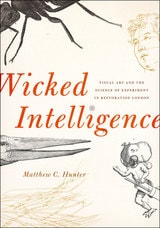
Wicked Intelligence
Visual Art and the Science of Experiment in Restoration LondonMatthew C. Hunter
University of Chicago Press, 2013
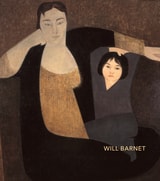
Will Barnet
Will Barnet
The Artist Book Foundation, 2024
The first monograph on Will Barnet in nearly 40 years, this title reflect's the artist's unique interpretation of the world's evolving genres.
Will Barnet’s artistic career as a painter and printmaker spanned nearly eight decades of continuous creativity. Few artists, other than perhaps Picasso or Monet, can claim such an extended period of uninterrupted and innovative art making. From the darkness of the Great Depression to the opening decade of the twenty-first century, his oeuvre reflects his unique interpretation of the art world’s evolving genres: Social Realism, Modernism, Abstract Expressionism, and ultimately representational Minimalism with the human figure as his primary subject.
This book is the first comprehensive monograph on Will Barnet in nearly 40 years. With scholarly essays by the four distinguished authors, an extensive plate section, a comprehensive chronology, lists of awards and exhibitions, and a detailed bibliography, this monograph is a thorough presentation of Barnet's iconic images and consistently evolving style while celebrating his unquenchable joie de vivre.
Barnet was devoted to making art every day and worked diligently even at the very end of his life. "The Old Masters are still alive after 400 years, and that's what I want to be," he once said. "At the age of 10 or 12, I discovered that being an artist would give me an ability to create something which would live on after death." Live on it does; in addition to his acclaimed body of work, he influenced a broad spectrum of artists such as Jackson Pollock, Mark Rothko, James Rosenquist, Cy Twombly, and Ethel Fisher.
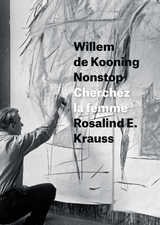
Willem de Kooning Nonstop
Cherchez la femmeRosalind E. Krauss
University of Chicago Press, 2016
Krauss demonstrates that contrary to popular conceptions of de Kooning as an artist who painted chaotically only to finish abruptly, he was in fact constantly reworking the same subject based on a compositional template. This template informed all of his art and included a three-part vertical structure; the projection of his male point of view into the painting or sculpture; and the near-universal inclusion of the female form, which was paired with her redoubled projection onto his work. Krauss identifies these elements throughout de Kooning’s oeuvre, even in his paintings of highways, boats, and landscapes: Woman is always there. A thought-provoking study by one of America’s greatest art critics, Willem de Kooning Nonstop revolutionizes our understanding of de Kooning and shows us what has always been hiding in plain sight in his work.
Willem de Rooij - Dirk Valkenburg
Karwan Fatah-Black
Amsterdam University Press, 2026
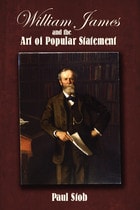
William James and the Art of Popular Statement
Paul Stob
Michigan State University Press, 2013
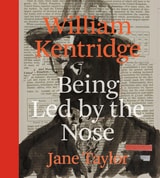
William Kentridge
Being Led by the NoseJane Taylor
University of Chicago Press, 2017
Kentridge has long been admired for his unconventional use of conventional media to produce art that is stunning, evocative, and narratively powerful—and how he works is as important as what he creates. This book is more than just a simple record of The Nose. The opera serves as a springboard into a bracing conversation about how Kentridge’s methods serve his unique mode of expression as a narrative and political artist. Taylor draws on his etchings, sculptures, and drawings to render visible the communication that occurs between his mind and hand as he thinks through the activity of making. Beautifully illustrated in color, William Kentridge offers striking insights about one of the most innovative artists of our present moment.
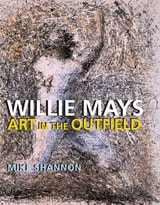
Willie Mays
Art in the OutfieldMike Shannon
University of Alabama Press, 2007
As much as any other sports figure, Willie Mays embodies the changes that racial integration brought to America’s game fields and its larger culture in the mid-20th century. Playing baseball with grace, skill, flair, and obvious delight, Willie Mays broke color barriers for more than just himself. He combined the ability to stroke majestic home runs while with an equal ability to outrun and catch what would have been home runs for opponents most famously when he turned Vic Wertz’s titantic blast into a long out in the 1954 World Series. As is often said of great players but never more true than in his case, Willie Mays could do it all.
Assembled in this work are 40 representations of how contemporary artists respond to and portray the skill, fame, and sheer love of the game that make Mays so remarkable and memorable. The art includes a broad range of styles and media from impressionistic graphite pencil drawings on paper through realistic Kodachrome photographic prints to expressionistic colored acrylics on canvas or glass. Mike Shannon offers a perceptive introductory essay on Mays’s long career and places the art in the context of his times. First curated as a traveling exhibit to honor Willie Mays’s 75th birthday, the exhibit opened at the Louisville Slugger Museum in Louisville, Kentucky, and is currently on tour.

Winterthur Portfolio, Volume 12
A Journal of American Material CultureEdited by Ian M. G. Quimby
University of Chicago Press, 1978
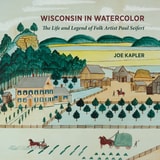
Wisconsin in Watercolor
The Life and Legend of Folk Artist Paul SeifertJoe Kapler
Wisconsin Historical Society Press, 2018
In 1867, German immigrant Paul Seifert settled in the Driftless Area of southwestern Wisconsin and began capturing the distinctive farms and landscapes of his new home in vivid, detailed watercolors. Today, these paintings are coveted by American folk art collectors across the country, but Seifert’s life remains shrouded in mystery.
In this first book written about Paul Seifert, author Joe Kapler examines the life of this enigmatic artist and provides context for his extraordinary art. The book features high-quality reproductions of twenty-two Seifert watercolors (more than half of which have never been published) and many close-ups of his characteristic details, from horses and hay wagons to dogs and dinner bells. Part art history treatment, part coffee table book, part research memoir, and part love letter to the Driftless Area, Wisconsin in Watercolor shines a long-awaited light on Seifert and the land he so carefully rendered over a hundred years ago.
Without Empathy
Irony and the Satirical Impulse in Eight Major FilmmakersMK Raghavendra
Intellect Books, 2025
In Without Empathy, MK Raghavendra investigates how irony and satire function in cinema by focusing on the work of eight visionary directors—Luis Buñuel, R.W. Fassbinder, Stanley Kubrick, Robert Altman, Paul Verhoeven, Aki Kaurismäki, Aleksei Balabanov, and David Lynch. At a time when irony is increasingly scrutinized as a mode of expression, this book reconsiders its role in film, revealing how these auteurs deploy wit and subversion in ways that unsettle audience expectations.
Through close readings of selected works, Raghavendra identifies layers of meaning beneath the surface of films often misread. The book situates these directors within broader traditions of cinematic satire, while simultaneously interrogating what their work has to say about society, culture, and human folly. Without Empathy is a lucid read for scholars and students of film studies and communication, providing a provocative lens on how satirical intent is not always recognizable today and how its actual targets can make society uncomfortable.
Without Model
Parva AestheticaTheodor W. Adorno
Seagull Books, 2023
Essays by Theodor W. Adorno on art and cinema.
In Without Model, Theodor W. Adorno strikingly demonstrates the intellectual range for which he is known. Taking the premise of the title as his guiding principle, that artistic and philosophical thought must eschew preconceptions and instead adapt itself to its time, circumstances, and object, Adorno presents a series of essays reflecting on culture at different levels, from the details of individual products to the social conditions of their production. He shows his more nostalgic side in the childhood reminiscences of ‘Amorbach’, but also his acute sociocultural analysis of the central topic of the culture industry. He criticizes attempts to maintain tradition in music and visual art, arguing against a restorative approach by stressing the modernity and individuality of historical works in the context of their time. In all of these essays, available for the first time in English, Adorno displays the remarkable thinking of one both steeped in tradition and dedicated to seeing beyond it.
Womb Fantasies
Subjective Architectures in Postmodern Literature, Cinema, and ArtCaroline Rupprecht
Northwestern University Press, 2013
Women Artists of the Great Basin
Mary Lee Fulkerson
University of Nevada Press, 2017
Fulkerson and Mantle, longtime artists and residents of the Great Basin themselves, offer a behind-the-scenes intimate glimpse into these women’s lives and artwork—showing not only what they create, but why they create it. Too often overlooked, the women covered here prove there is much richness, life, and creativity in what has often been dismissed as a barren desert. Their stories of overcoming great obstacles unfold right alongside images of their art. Many circle outside the conventional world of galleries, museums, and art publications and have created varied paths to their success. They are indeed true originals, rooted in a land of unique geography, a stew of cultures, and stories like no other.
Women Artists on the Leading Edge
Visual Arts at Douglass CollegeJoan M. Marter
Rutgers University Press, 2020
How do students develop a personal style from their instruction in a visual arts program? Women Artists on the Leading Edge explores this question as it describes the emergence of an important group of young women artists from an innovative post-war visual arts program at Douglass College.
The women who studied with avant-garde artists at Douglas were among the first students in the nation to be introduced to performance art, conceptual art, Fluxus, and Pop Art. These young artists were among the first to experience new approaches to artmaking that rejected the predominant style of the 1950s: Abstract Expressionism. The New Art espoused by faculty including Robert Watts, Allan Kaprow, Roy Lichtenstein, Geoffrey Hendricks, and others advocated that art should be based on everyday life. The phrase “anything can be art” was frequently repeated in the creation of Happenings, multi-media installations, and video art. Experimental approaches to methods of creation using a remarkable range of materials were investigated by these young women. Interdisciplinary aspects of the Douglass curriculum became the basis for performances, videos, photography, and constructions. Sculpture was created using new technologies and industrial materials. The Douglass women artists included in this book were among the first to implement the message and direction of their instructors.
Ultimately, the artistic careers of these young women have reflected the successful interaction of students with a cutting-edge faculty. From this BA and MFA program in the Visual Arts emerged women such as Alice Aycock. Rita Myers, Joan Snyder, Mimi Smith, and Jackie Winsor, who went on to become lifelong innovators. Camaraderie was important among the Douglass art students, and many continue to be instructors within a close circle of associates from their college years. Even before the inception of the women’s art movement of the 1970s, these women students were encouraged to pursue professional careers, and to remain independent in their approach to making art. The message of the New Art was to relate one’s art production to life itself and to personal experiences. From these directions emerged a “proto-feminist” art of great originality identified with women’s issues. The legacy of these artists can be found in radical changes in art instruction since the 1950s, the promotion of non-hierarchical approaches to media, and acceptance of conceptual art as a viable art form.
Women Together/Women Apart
Portraits of Lesbian ParisLatimer, Tirza True
Rutgers University Press, 2005
What does it mean to look like a lesbian? Though it remains impossible to conjure a definitive image that captures the breadth of this highly nuanced term, today at least we are able to consider an array of visual representations that have been put into circulation by lesbians themselves over the last six or seven decades. In the early twentieth century, though, no notion of lesbianism as a coherent social or cultural identity yet existed.
In Women Together/Women Apart, Tirza True Latimer explores the revolutionary period between World War I and World War II when lesbian artists working in Paris began to shape the first visual models that gave lesbians a collective sense of identity and allowed them to recognize each other. Flocking to Paris from around the world, artists and performers such as Romaine Brooks, Claude Cahun, Marcel Moore, and Suzy Solidor used portraiture to theorize and visualize a "new breed" of feminine subject. The book focuses on problems of feminine and lesbian self-representation at a time and place where the rights of women to political, professional, economic, domestic, and sexual autonomy had yet to be acknowledged by the law. Under such circumstances, same-sex solidarity and relative independence from men held important political implications.
Combining gender theory with visual, cultural, and historical analysis, Latimer draws a vivid picture of the impact of sexual politics on the cultural life of Paris during this key period. The book also illuminates the far-reaching consequences of lesbian portraiture on contemporary constructions of lesbian identity.
Women and Ledger Art
Four Contemporary Native American ArtistsRichard Pearce
University of Arizona Press, 2013
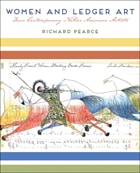
Women and Ledger Art calls attention to the extraordinary achievements of these strong women who have chosen to express themselves through ledger art. Author Richard Pearce foregrounds these contributions by focusing on four contemporary women ledger artists: Sharron Ahtone Harjo (Kiowa), Colleen Cutschall (Oglala Lakota), Linda Haukaas (Sicangu Lakota), and Dolores Purdy Corcoran (Caddo). Pearce spent six years in continual communication with the women, learning about their work and their lives. Women and Ledger Art examines the artists and explains how they expanded Plains Indian history.
With 46 stunning images of works in various mediums—from traditional forms on recovered ledger pages to simulated quillwork and sculpture, Women in Ledger Art reflects the new life these women have brought to an important transcultural form of expression.
Women's Culture
American Philanthropy and Art, 1830-1930Kathleen D. McCarthy
University of Chicago Press, 1991

Women, Work, and Representation
Needlewomen in Victorian Art and LiteratureLynn M. Alexander
Ohio University Press, 2003
In Victorian England, virtually all women were taught to sew; needlework was allied with images of domestic economy and with traditional female roles of wife and mother- with home rather than factory. The professional seamstress, however, labored long hours for very small wages creating gowns for the upper and middle classes. In her isolation and helplessness, she provided social reformers with a powerful image of working-class suffering that appealed to the sensibilities of the upper classes and helped galvanize public opinion around the need for reform.
Women, Work, and Representation addresses the use of that image in the reform movement, underscoring the shock to the Victorian public when reports revealed that the profession of needlework was extremely hazardous, even deadly.
Author Lynn M. Alexander traces the development of the symbol of the seamstress through a variety of presentations, drawing from the writings of Charles Dickens, Elizabeth Gaskell, Charlotte Elizabeth Tonna, and George W. M. Reynolds, and on visual representations by Richard Redgrave, Thomas Benjamin Kennington, John Everett Millais, John Leech, John Tenniel, and Hubert von Herkomer.
Written to appeal to Victorian scholars, women's studies scholars, and those interested in semiotics and aestheticism, Women, Work, and Representation includes twenty illustrations, most from periodicals of the day, providing new insights into the lives of working women throughout the Victorian era.
Wonder Woman
Bondage and Feminism in the Marston/Peter Comics, 1941-1948Berlatsky, Noah
Rutgers University Press, 2015
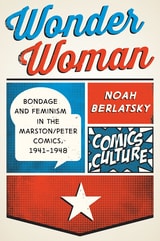
Comics expert Noah Berlatsky takes us on a wild ride through the Wonder Woman comics of the 1940s, vividly illustrating how Marston’s many quirks and contradictions, along with the odd disproportionate composition created by illustrator Harry Peter, produced a comic that was radically ahead of its time in terms of its bold presentation of female power and sexuality. Himself a committed polyamorist, Marston created a universe that was friendly to queer sexualities and lifestyles, from kink to lesbianism to cross-dressing. Written with a deep affection for the fantastically pulpy elements of the early Wonder Womancomics, from invisible jets to giant multi-lunged space kangaroos, the book also reveals how the comic addressed serious, even taboo issues like rape and incest.
Wonder Woman
New edition with full color illustrationsBerlatsky, Noah
Rutgers University Press, 2017
Comics expert Noah Berlatsky takes us on a wild ride through the Wonder Woman comics of the 1940s, vividly illustrating how Marston’s many quirks and contradictions, along with the odd disproportionate composition created by illustrator Harry Peter, produced a comic that was radically ahead of its time in terms of its bold presentation of female power and sexuality. Himself a committed polyamorist, Marston created a universe that was friendly to queer sexualities and lifestyles, from kink to lesbianism to cross-dressing. Written with a deep affection for the fantastically pulpy elements of the early Wonder Woman comics, from invisible jets to giant multi-lunged space kangaroos, the book also reveals how the comic addressed serious, even taboo issues like rape and incest.
Wonder Woman: Bondage and Feminism in the Marston/Peter Comics 1941-1948 reveals how illustrator and writer came together to create a unique, visionary work of art, filled with bizarre ambition, revolutionary fervor, and love, far different from the action hero symbol of the feminist movement many of us recall from television.
Wonderlands of the Avant-Garde
Technology and the Arts in Russia of the 1920sJulia Vaingurt
Northwestern University Press, 2013
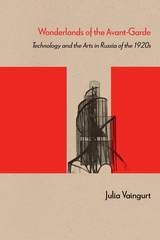
In postrevolutionary Russia, as the Soviet government pursued rapid industrialization, avant-garde artists declared their intent to serve the nascent state and to transform life in accordance with their aesthetic designs. Despite their utilitarian intentions, however, most avant-gardists rarely created works regarded as practical instruments of societal transformation. Exploring this paradox, Vaingurt claims that the artists’ fusion of technology and aesthetics prevented their creations from being fully conscripted into the arsenal of political hegemony. The purposes of avant-garde technologies, she contends, are contemplative rather than constructive. Looking at Meyerhold’s theater, Tatlin’s and Khlebnikov’s architectural designs, Mayakovsky’s writings, and other works from the period, Vaingurt offers an innovative reading of an exceptionally complex moment in the formation of Soviet culture.
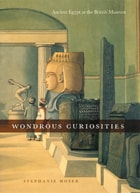
Wondrous Curiosities
Ancient Egypt at the British MuseumStephanie Moser
University of Chicago Press, 2006
When the British Museum opened its doors more than two centuries ago, scores of visitors waited eagerly outside for a first glimpse of ancient relics from Egypt, Greece, and Rome. Even today, in this age of satellite television and high-speed Internet access, museums maintain their unique allure, continuing to play a vital role in connecting us with little-known terrains and the deep mysteries of our historical past. That’s because, as Stephanie Moser argues in Wondrous Curiosities, museum displays don’t just transmit knowledge—they actually create it.
Based on her exploration of the British Museum’s world-famous collection of Egyptian antiquities, this pioneering study reveals the powerful role of museums in shaping our understanding of science, culture, and history. Drawing on guidebooks and archival documents, Moser demonstrates that this British exhibition of ancient Egyptian artifacts was central to the way we came to define the remarkable society that produced them. And she also reveals the specific strategies—such as using pattern and symmetry, juxtaposing different types of objects, and singling out particular items—that the British Museum and others used, and still use, in representing the past. With a wealth of illustrations and a detailed account of how the museum acquired and displayed its Egyptian collections, Wondrous Curiosities will fascinate curators and scholars of British history, Egyptology, art history, archaeology, and the history of science.
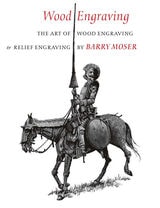
Wood Engraving
The Art of Wood Engraving and Relief EngravingBarry Moser
Brandeis University Press, 2021
Written and illustrated by master wood engraver Barry Moser, this primer on the art of wood engraving is filled with valuable knowledge including how to prepare a printing block; how to think in the medium’s properties of line, shape, and ink; and how to transfer a drawing onto a block. It also offers practical advice on which tools to use for a project and which ink works best. A highly illustrated guide to this art form, Wood Engraving will be useful to experienced and beginner engravers alike. This book features stunning examples of Moser’s art and skill to admire and inspire.
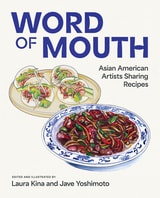
Word of Mouth
Asian American Artists Sharing RecipesLaura Kina
University of Arkansas Press, 2025
Conceived during the 2020 COVID-19 lockdown and the accompanying rise in anti-Asian bigotry, Word of Mouth: Asian American Artists Sharing Recipes is an artists’ cookbook featuring stories and artwork from twenty-three Asian American and Asian diaspora artists from across the United States, with contributions that range from Los Angeles–based performance artist Kristina Wong’s “Recipe for Political Action” to New Orleans–based painter Francis Wong’s family recipe for stir-fried Szechuan alligator.
Word of Mouth was first published as an online exhibition through the Virtual Asian American Art Museum. This print version features a new introduction by art historian Michelle Yee, expanded essays, and brand-new recipes. Each contribution is accompanied by an original illustration and enriched by the artist’s reflections on how their cuisine has been impacted by histories of war, migration, relocation, labor, or mixing.
A pandemic project turned illustrated cookbook, this unique collection disrupts genre expectations to celebrate how artists use food to nurture and sustain their diverse communities and artistic practices as well as to build connection during times of isolation, grief, and loss.
Wordsworth in His Major Lyrics
The Art and Psychology of Self-RepresentationLeon Waldoff
University of Missouri Press, 2001
Wordsworth in His Major Lyrics explores the identity, role, and subjectivity of the speaker in Wordsworth's finest and best-known longer lyrics—"Tintern Abbey," "Resolution and Independence," "Ode: Intimations of Immortality," and "Elegiac Stanzas." Because Wordsworth is the most autobiographical poet of the Romantic period, and perhaps in the English language, readers naturally take the speaker to be the poet himself or, as Wordsworth says in his prefaces and essays, "the poet in his own person."
Some readers allow for a fictional dimension in the characterization of the speaker and refer to him as a persona; others treat him as a biographical self, defined in literary, political, historical, or cultural terms. Leon Waldoff examines the critical issues posed by these different understandings of the speaker's identity and argues for a conception of Wordsworth's lyrical "I" that deals with the dramatic and psychological complexities of the speaker's act of self-representation.
Taking concepts from Freud and Winnicott, this book presents a psychoanalytic model for defining the speaker and conceptualizing his subjectivity. Waldoff suggests that the lyrical "I" in each poem is a transitional self of the poet. The poem offers, in the suspended moment and cultural space of lyrical form, a self-dramatization in which the speaker attempts to act out, in the sense of both performing and attempting to achieve, a reconstitution and transformation of the self.
In a series of close readings that provide formalistic and psychological analysis, the book shows that the major lyrics contain compelling evidence that Wordsworth devoted much of his poetic art to each speaker's act of self-dramatization. The various strategies that each speaker employs and the self- dramatizing character of his utterance are theorized and assimilated into an understanding of the subjectivity he represents.
Waldoff concludes that Wordsworth's lyrical "I" requires a conception of subjectivity that gives greater recognition to its individual, psychological dimensions and to the art of self-representation in each poem than recent Wordsworth criticism has provided. This important new work will be appreciated by anyone interested in Wordsworth or in Romantic poetry.
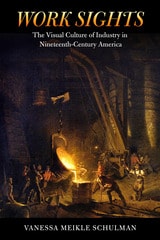
Work Sights
The Visual Culture of Industry in Nineteenth-Century AmericaVanessa Meikle Schulman
University of Massachusetts Press, 2015
Ranging across the fields of art history, visual studies, the history of technology, and American studies, Work Sights captures both the richness of nineteenth-century American visual culture and the extent to which Americans had begun to perceive their country as a modern nation connected by a web of interlocking technological systems.
Workers of the World, Enjoy!
Aesthetic Politics from Revolutionary Syndicalism to the Global Justice MovementKenneth H. Tucker, Jr.
Temple University Press, 2012
The aesthetic politics of social movements turn public life into a public stage, where mutual displays of performance often trump rational debate, and urban streets become sites of festivals and carnival. In his penetrating new book, Workers of the World, Enjoy!, Kenneth Tucker provides a new model for understanding social change in our image-saturated and aesthetically charged world. As emotional and artistic images inform our perceptions and evaluation of politics, art and performance often provide new and creative ways of understanding self and society.
Spanning the nineteenth, twentieth, and twenty-first centuries, Workers of the World, Enjoy! uses examples from major social movements that have dramatically changed the dominant capitalist society—often in the name of labor. Tucker investigates how class and culture develop as he raises questions about what it means for public life and social movements when politics and drama come together.
Tucker catalogues how aesthetic politics influences social movements—from French Revolutionary syndicalism and fascism to the selling of the President and the street theater of the contemporary global justice movement. He also discusses the work of political theorists including Jurgen Habermas, Jeffrey Alexander, and Nancy Fraser to critique the ways public sphere has been studied.
Working-Class Girls Don’t Become Artists
Looking at Art and ClassJanet Zandy
University of Illinois Press, 2026
Ambitious and original, Working-Class Girls Don’t Become Artists rewrites art history from a working-class perspective.
World Film Locations
AthensEdited by Anna Poupou, Afroditi Nikolaidou, and Eirini Sifaki
Intellect Books, 2014
Featuring both Greek and foreign productions from various genres and historical periods, the book ultimately works to establish connections between the various aesthetics of dominant representations of Athens.
World Film Locations
BarcelonaEdited by Helio San Miguel and Lorenzo J. Torres Hortelano
Intellect Books, 2013
World Film Locations
BeijingEdited by John Berra and Liu Yang
Intellect Books, 2012
World Film Locations
BerlinEdited by Susan Ingram
Intellect Books, 2012
World Film Locations
BostonEdited by Marcelline Block
Intellect Books, 2014
Many iconic American classics, blockbusters, romantic comedies, and legal thrillers, as well as films examining Boston’s criminal underside, particularly in juxtaposition to the city’s elitist high society, were filmed on location in the city’s streets and back lots. World Film Locations: Boston looks in depth into a highly select group of forty-six films such as Love Story, Good Will Hunting, The Friends of Eddy Coyle, and The Social Network, among many others, presented at the intersection of critical analysis and stunning visual critique (with material from the films themselves as well as photographs of the contemporary city locations). Featuring articles and film scene reviews written by a variety of leading contemporary film writers, critics, and scholars, this book is a multimedia resource that will find a welcome audience in movie lovers in Beantown and beyond.
World Film Locations
Buenos AiresEdited by Santiago Oyarzabal and Michael Pigott
Intellect Books, 2014
World Film Locations
ChicagoEdited by Scott Jordan Harris
Intellect Books, 2013
With World Film Locations: Chicago, critic Scott Jordan Harris takes readers on a cinematic tour of the city, featuring modern blockbusters and beloved classics. Along the way, scenes from almost fifty films made or set in the city are discussed, accompanied by full-color stills and interspersed with essays examining the city’s unique character onscreen. Among the contributors are Gordon Quinn, cofounder of Chicago’s Kartemquim Films; Elizabeth Weitzman, film critic for the New York Daily News; the BBC’s Samira Ahmed; and Steve James, director of the coming-of-age classic Hoop Dreams. For readers hoping to locate landmarks from favorite films, the book also includes detailed maps that point out key scenes.
A fun and fact-packed read, World Film Locations: Chicago will be welcomed by film fans and anyone planning a trip to the Windy City.
World Film Locations
ClevelandEdited by Alberto Zambenedetti
Intellect Books, 2016
This new entry in the World Film Locations series offers the first-ever extended look at Cleveland on screen. Richly illustrated with images from dozens of productions, it reveals Cleveland to be usefully chameleonic, appealing to some filmmakers for its modern downtown’s ability to mimic more prominent (and more expensive) cities, to others for the way its shuttered factories and decaying docks signify contemporary urban distress. With entries on such classics as The Fortune Cookie, The Deer Hunter, A Christmas Story, and Marvel’s The Avengers, as well as lesser-known films, the volume reveals Cleveland to be a far more compelling, and far more varied, on-screen presence than even most film buffs would expect.
Like all the books in this series, World Film Locations: Cleveland is designed to appeal to cinephiles and scholars alike, while also serving as a silver screen souvenir for those who make the city their home as well as for those who visit it.
World Film Locations
DublinEdited by Jez Conolly and Caroline Whelan
Intellect Books, 2011
World Film Locations
FlorenceEdited by Alberto Zambenedetti
Intellect Books, 2014
From the Duomo to the Uffizi gallery, Florence is filled with history, art, and culture. For those who crave a passport to this Tuscan capital, World Film Locations: Florence will take you there without you ever having to leave your library.
World Film Locations
GlasgowEdited by Nicola Balkind
Intellect Books, 2013
World Film Locations
HavanaEdited by Ann Marie Stock
Intellect Books, 2014
World Film Locations: Havana situates Havana as a modern city in prerevolutionary times, noting the architectural and cultural shifts evident during the revolution, and comments on recent reconfigurations of the city and its inhabitants in the wake of global forces. Among the forty-six scene reviews chosen to show the city in all its multifaceted glory, films such as Our Man in Havana, I Am Cuba, Hello Hemingway, Habana Blues and Chico and Rita are bookended by seven insightful essays. The essays look at the history of revolutionary cinema in Cuba and consider documentary films, from the Latin American Newsreel to avant-garde experimental work, including the island’s documentary tradition showcasing local faces and places that have paved the way for present-day media and audiovisual art. The essays also explore the multifaceted film culture of the capital, the cine club movement, historic cinemas and film venues around the city, the abundance of film festivals such as the International Festival of New Latin American Cinema, and film-themed cafeterias, restaurants, bookstores, and markets.
World Film Locations
HelsinkiEdited by Pietari Kääpä and Silja Laine
Intellect Books, 2013
World Film Locations
Hong KongEdited by Linda Chiu-Han Lai and Kimburley Wing-Yee Choi
Intellect Books, 2013
World Film Locations
IstanbulEdited by Özlem Köksal
Intellect Books, 2012
World Film Locations
Las VegasEdited by Marcelline Block
Intellect Books, 2011
World Film Locations
LiverpoolEdited by Jez Conolly and Caroline Whelan
Intellect Books, 2013