Results by title
5550 books match the query 'Biography & Autobiography' and 258 start with w
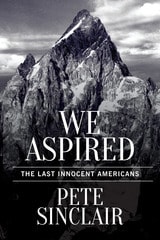
We Aspired
The Last Innocent AmericansPete Sinclair
University of Utah Press, 2017
Imbued with a sense of place, Pete Sinclair climbed mountains and rescued others trying the same. He thrived on the risky business of ascending sheer rock, of moving from one adrenaline-boosting moment to another. In this book he recounts his mountain-climbing and park ranger days from 1959 to 1970, a time some people call a golden era of climbing in America, a time when climbers knew one another and frequently gathered in Grand Teton National Park. There, Sinclair was the ranger in charge of mountain rescue, a job that, especially when it involved the North Face of Grand Teton, drew on all his young team’s climbing skills. Mixing adventure with personal reflection, Sinclair recounts expeditions taken with friends to scale mountains in Alaska, Mexico, and other parts of North America, as well as his work rescuing injured climbers in the Tetons. The book serves as a history of a past era in mountaineering as well as a meditation on what it all meant. Throughout the book, he challenges readers to consider their relationship with the western landscape. Originally published in 1993, We Aspired was a finalist for the Boardman-Tasker Award for Mountain Literature. The account of one famous rescue on the North Face of the Grand Teton is retold in The Grand Rescue, a film by independent Utah producer Jenny Wilson.
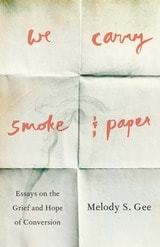
We Carry Smoke and Paper
Essays on the Grief and Hope of ConversionMelody S. Gee
University of Iowa Press, 2024
In essays that explore the parallels between conversion and language acquisition, isolated liturgies, cultural inheritances, stalled initiations, disrupted storytelling, and adoption, Gee examines conversion’s grief and hope, losses and gains, hauntings and promises. We Carry Smoke and Paper is a memoir about what we owe to those who sacrifice everything for us, and it is about the many conversions in a lifetime that turn our heads via whispers and shouts, calling us to ourselves.
We Defy Augury
Hélène Cixous
Seagull Books, 2020
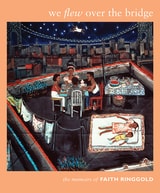
We Flew over the Bridge
The Memoirs of Faith RinggoldFaith Ringgold
Duke University Press, 2005
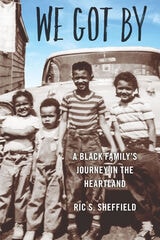
We Got By
A Black Family’s Journey in the HeartlandRic S. Sheffield
The Ohio State University Press, 2022
Spanning four generations and assessing the legacies of traumatic events (arrests, murders, suicide) that are inextricable from the racial dynamics of the small community his family called home, this gripping memoir is a heartfelt, clear-eyed, and rare chronicle of Black life in the rural Midwest. Experiencing the burden of racism among people who refused to accept that such a thing existed only made the isolation feel that much worse to Sheffield and his relatives. And yet, they overcame the obstacles and managed to persist: they got by.
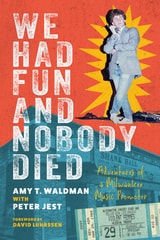
We Had Fun and Nobody Died
Adventures of a Milwaukee Music PromoterAmy T. Waldman
Wisconsin Historical Society Press, 2024
The entertaining and inspiring story of a stubbornly independent promoter and club owner
This irreverent biography provides a rare window into the music industry from a promoter’s perspective. From a young age, Peter Jest was determined to make a career in live music, and despite naysayers and obstacles, he did just that, bringing national acts to his college campus at UW–Milwaukee, booking thousands of concerts across Wisconsin and the Midwest, and opening Shank Hall, the beloved Milwaukee venue named after a club in the cult film This Is Spinal Tap.
This funny, nostalgia-inducing book details the lasting friendships Jest established over the years with John Prine, Arlo Guthrie, and Milwaukee’s own Violent Femmes, among others. It also shines a light into the seldom-seen world of music promotion, as Jest attempts to manage a turbulent band on the road, negotiates with agents, deals with fires (both real and metaphorical), struggles through a pandemic, and takes pleasure in presenting music of all kinds—from world-famous acts to up-and-coming local bands. In addition to photos of celebrated musicians, the book includes concert posters, tickets, and backstage passes documenting decades of rock, folk, and alternative shows that helped put Milwaukee on the live music map.
As the music industry has become dominated by profit-driven corporations, We Had Fun and Nobody Died chronicles the career of a one-of-a-kind independent promoter whose hardheadedness and love of music have helped him keep it real and make it in the music business for more than forty years.
"[An] adventure-filled biography of music promoter Peter Jest. . . . Reflecting decades of changes to the music business, We Had Fun and Nobody Died is a fascinating biography of a passionate promoter’s work to transform Milwaukee’s music scene."
—Foreword Reviews
“Amy Waldman and Peter Jest weave a thrilling tale of fanhood gone pro. Dreams followed, dragons slain, and the roof of a venerable venue repeatedly blown sky-high. We’re proud to have provided the name [for Shank Hall]; it took men and women of sterner stuff to do the heavy lifting.”
—Michael McKean, actor and comedian, This Is Spinal Tap
“We Had Fun and Nobody Died is a fantastic journey of a Midwest boy, his love of music, and his excitement to be part of it all.”
—Kevn Kinney, lead singer and guitarist of Drivin N Cryin
“Peter Jest’s story is one that conveys a winning combination of friendship, determination, and entrepreneurial insights that led him to a lifelong career in support of the live music industry and the community that comes together in common appreciation of it.”
—Shana Morrison, singer-songwriter
We Had Fun and Nobody Died
Adventures of a Milwaukee Music PromoterAmy T. Waldman
Wisconsin Historical Society Press, 2025
The entertaining and inspiring story of a stubbornly independent promoter and club owner
This irreverent biography provides a rare window into the music industry from a promoter’s perspective. From a young age, Peter Jest was determined to make a career in live music, and despite naysayers and obstacles, he did just that, bringing national acts to his college campus at UW–Milwaukee, booking thousands of concerts across Wisconsin and the Midwest, and opening Shank Hall, the beloved Milwaukee venue named after a club in the cult film This Is Spinal Tap.
This funny, nostalgia-inducing book details the lasting friendships Jest established over the years with John Prine, Arlo Guthrie, and Milwaukee’s own Violent Femmes, among others. It also shines a light into the seldom-seen world of music promotion, as Jest attempts to manage a turbulent band on the road, negotiates with agents, deals with fires (both real and metaphorical), struggles through a pandemic, and takes pleasure in presenting music of all kinds—from world-famous acts to up-and-coming local bands.
As the music industry has become dominated by profit-driven corporations, We Had Fun and Nobody Died chronicles the career of a one-of-a-kind independent promoter whose hardheadedness and love of music have helped him keep it real and make it in the music business for more than forty years.
"[An] adventure-filled biography of music promoter Peter Jest. . . . Reflecting decades of changes to the music business, We Had Fun and Nobody Died is a fascinating biography of a passionate promoter’s work to transform Milwaukee’s music scene."
—Foreword Reviews
“Amy Waldman and Peter Jest weave a thrilling tale of fanhood gone pro. Dreams followed, dragons slain, and the roof of a venerable venue repeatedly blown sky-high. We’re proud to have provided the name [for Shank Hall]; it took men and women of sterner stuff to do the heavy lifting.”
—Michael McKean, actor and comedian, This Is Spinal Tap
“We Had Fun and Nobody Died is a fantastic journey of a Midwest boy, his love of music, and his excitement to be part of it all.”
—Kevn Kinney, lead singer and guitarist of Drivin N Cryin
“Peter Jest’s story is one that conveys a winning combination of friendship, determination, and entrepreneurial insights that led him to a lifelong career in support of the live music industry and the community that comes together in common appreciation of it.”
—Shana Morrison, singer-songwriter
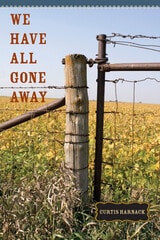
We Have All Gone Away
Curtis Harnack
University of Iowa Press, 1973
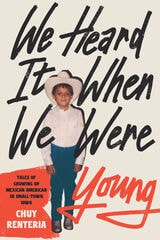
We Heard It When We Were Young
Renteria, Chuy
University of Iowa Press, 2021
Renteria looks past the public celebrations of diversity to dive into the private tensions of a community reflecting the changing American landscape. There are culture clashes, breakdancing battles, fistfights, quinceañeras, vandalism, adventures on bicycles, and souped-up lowriders, all set to an early 2000s soundtrack. Renteria and his friends struggle to find their identities and reckon with intergenerational trauma and racism in a town trying to do the same. A humorous and poignant reflection on coming of age, We Heard It When We Were Young puts its finger on a particular cultural moment at the turn of the millennium.
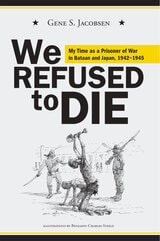
We Refused to Die
My time as a prisoner of war in Bataan and Japan, 1942-1945Gene S Jacobsen
University of Utah Press, 2004
In engaging, direct prose, Jacobsen’s three-and-a-half year experience as a prisoner of war takes the reader on a brutal and harrowing march through hatred and forgiveness, fortitude and freedom. We Refused to Die is an honest memoir that shines light on one of history’s darkest moments.
We Shall Bear Witness
Life Narratives and Human RightsEdited by Meg Jensen and Margaretta Jolly, Foreword by Mary Robinson
University of Wisconsin Press, 2014
In We Shall Bear Witness, editors Meg Jensen and Margaretta Jolly assemble moving personal accounts from those who have endured persecution, imprisonment, and torture; meditations on experiences of injustice and protest by creative writers and filmmakers; and innovative research on ways that digital media, commodification, and geopolitics are shaping what is possible to hear and say. The book’s primary sections—testimony, recognition, representation, and justice—evoke the key stages in turning experience into a human rights life story and attend to such diverse and varied arts as autobiography, documentary film, report, oral history, blog, and verbatim theater. The result is a groundbreaking book that sensitively examines how life and rights narratives have become so powerfully entwined. Also included is an innovative guide to teaching human rights and life narrative in the classroom.
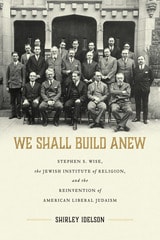
We Shall Build Anew
Stephen S. Wise, the Jewish Institute of Religion, and the Reinvention of American Liberal JudaismShirley Idelson
University of Alabama Press, 2022
Charting the reinvention of American Liberal Judaism through visionary leadership.
In 1922, Rabbi Stephen S. Wise, a leader of the Zionist movement, established the Jewish Institute of Religion (JIR), a nondenominational rabbinical seminary in New York City. Having already founded the thriving Free Synagogue movement and the American Jewish Congress, he intended to revolutionize American liberal Judaism. Wise believed mainstream American Jewish institutions had become outdated, and he championed a progressive Jewish nationalism that would fight alongside America’s leading proponents of social and economic justice.
We Shall Build Anew tells the little-known story of how Wise changed the trajectory of American Judaism for the next century. Through JIR, he trained a new cadre of young rabbis who shared his outlook, charged them with invigorating and reshaping Jewish life, and launched them into positions of leadership across the country. While Wise earned the ire of many mainstream Jewish leaders through his disregard for denominational distinctions, JIR became home to faculty and students of widely divergent religious and political viewpoints.
We Shall Build Anew is the first book dedicated exclusively to the history of the Jewish Institute of Religion. The story of Wise’s vision for American liberal Judaism is now more important than ever. As American Jewry becomes increasingly polarized around debates concerning religious doctrine as well as Zionism and Israel, the JIR model offers hope that progressives and conservatives, Zionists and non-Zionists, and Jews representing the full spectrum of religious life cannot only coexist but also work together in the name of a vibrant Judaism and a just and peaceful world.
We Should Soon Become Respectable
Nashville's Own Timothy DemonbreunElizabeth Elkins
Vanderbilt University Press, 2022
Lightly called a "fur trader," he came to the city to make his fortune and fame, much like songwriters today. Looking back, it would be easy to call Demonbreun, the son of French Canadian near-royalty and brother to two nuns, a spoiled child who did what he wanted, a classic-case misogynist and polygamist, a conceited adventurer. He was a man who conned the Spanish governor out of a war, carried on graceful correspondence with Thomas Jefferson and Alexander Hamilton, owned several slaves, may have served as a spy, and was a decorated veteran. He fought in the Revolutionary War, extraordinarily so it seems, given the number of land grants he received across Kentucky and Tennessee.
He's also known around Nashville as the guy who lived in a cave.
Author Elizabeth Elkins sorts through the legends and nails down the facts in order to present the true story of "Nashville's First Citizen."
We Should Soon Become Respectable
Nashville's Own Timothy DemonbreunElizabeth Elkins
Vanderbilt University Press, 2022
Lightly called a "fur trader," he came to the city to make his fortune and fame, much like songwriters today. Looking back, it would be easy to call Demonbreun, the son of French Canadian near-royalty and brother to two nuns, a spoiled child who did what he wanted, a classic-case misogynist and polygamist, a conceited adventurer. He was a man who conned the Spanish governor out of a war, carried on graceful correspondence with Thomas Jefferson and Alexander Hamilton, owned several slaves, may have served as a spy, and was a decorated veteran. He fought in the Revolutionary War, extraordinarily so it seems, given the number of land grants he received across Kentucky and Tennessee.
He's also known around Nashville as the guy who lived in a cave.
Author Elizabeth Elkins sorts through the legends and nails down the facts in order to present the true story of "Nashville's First Citizen."
We Take Our Cities with Us
A MemoirSorayya Khan
The Ohio State University Press, 2022
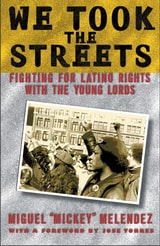
We Took the Streets
Fighting for Latino Rights with the Young LordsMiguel "Mickey" Melendez
Rutgers University Press, 0
In this memoir, Melendez describes with the unsparing eye of an insider the idealism, anger, and vitality of the Lords as they rose to become the most respected and powerful voice of Puerto Rican empowerment in the country. He also traces the internal ideological disputes that led the group, but not the mission, to fracture in 1972. Written with passion and compelling detail, We Took the Streets tells the story of how one group took on the establishment—and won.
In 1968 Miguel “Mickey” Melendez was a college student, developing pride in his Cuban and Puerto Rican cultural identity and becoming increasingly aware of the effects of social inequality on Latino Americans. Joining with other like-minded student activists, Melendez helped form the central committee of the New York branch of the Young Lords, one of the most provocative and misunderstood radical groups to emerge during the 1960s. Incorporating techniques of direct action and community empowerment, the Young Lords became a prominent force in the urban northeast. From their storefront offices in East Harlem, they defiantly took back the streets of El Barrio. In addition to running clothing drives, day-care centers, and food and health programs, they became known for their media-savvy tactics and bold actions, like the takeovers of the First People’s Church and Lincoln Hospital.
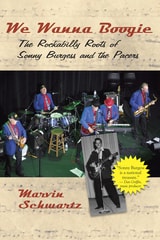
We Wanna Boogie
The Rockabilly Roots of Sonny Burgess and the PacersMarvin Schwartz
Butler Center for Arkansas Studies, 2014
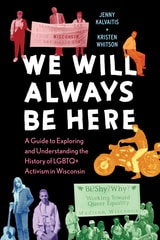
We Will Always Be Here
A Guide to Exploring and Understanding the History of LGBTQ+ Activism in WisconsinJenny Kalvaitis
Wisconsin Historical Society Press, 2021
We Will Always Be Here shines a light on powerful and often untold stories from Wisconsin’s history, featuring individuals across a wide spectrum of identities and from all corners of the state. The LGBTQ+ people, allies, and activists in this guide changed the world by taking steps that young people can take today—by educating themselves, telling their own stories, being true to themselves, building communities, and getting active. The aim of this celebratory book is not only to engage young people in Wisconsin’s LGBTQ+ history, but also to empower them to make positive change in the world.
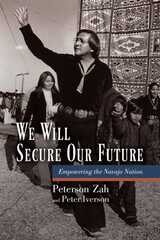
We Will Secure Our Future
Empowering the Navajo NationPeterson Zah and Peter Iverson
University of Arizona Press, 2012
And so began a career that took Zah to the presidency of the Navajo Nation. His life and accomplishments have exemplified the ongoing efforts by American Indian communities to gain greater control over their lives and lands. He has made important contributions in many areas, but education has always been one of his main priorities. Perhaps no one in the Southwest has done more than Peterson Zah to increase the recruitment, retention, and graduation of American Indian students from colleges and universities.
Zah's presentations to Peter Iverson's classes at Arizona State University, employed examples drawn from his own experiences. Students praised his thoughtful, honest and direct observations. He reinforced a central theme in Iverson's classesthat Indian history encompasses triumph as well as tragedy and victory as well as victimization.
This book grew out of Iverson's determination to share Zah's insights with a wider audience. The two met every few months to consider many subjects related to Zah's life. These sessions formed the foundation for this volume.
Part autobiography, part interview, and part conversation, Zah and Iverson's account touches on a wide range of overlapping topics, but two central themes prevail: education and empowerment. We Will Secure Our Future is a fascinating look into the life of a man who became a respected visionary and passionate advocate for his people.
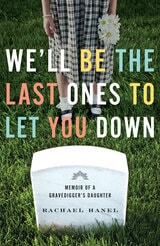
We'll Be the Last Ones to Let You Down
Memoir of a Gravedigger’s DaughterRachael Hanel
University of Minnesota Press, 2013
Rachael Hanel’s name was inscribed on a gravestone when she was eleven years old. Yet this wasn’t at all unusual in her world: her father was a gravedigger in the small Minnesota town of Waseca, and death was her family’s business. Her parents were forty-two years old and in good health when they erected their gravestone—Rachael’s name was simply a branch on the sprawling family tree etched on the back of the stone. As she puts it: I grew up in cemeteries.
And you don’t grow up in cemeteries—surrounded by headstones and stories, questions, curiosity—without becoming an adept and sensitive observer of death and loss as experienced by the people in this small town. For Rachael Hanel, wandering among tombstones, reading the names, and wondering about the townsfolk and their lives, death was, in many ways, beautiful and mysterious. Death and mourning: these she understood. But when Rachael’s father—Digger O’Dell—passes away suddenly when she is fifteen, she and her family are abruptly and harshly transformed from bystanders to participants. And for the first time, Rachael realizes that death and grief are very different.
At times heartbreaking and at others gently humorous and uplifting, We’ll Be the Last Ones to Let You Down presents the unique, moving perspective of a gravedigger’s daughter and her lifelong relationship with death and grief. But it is also a masterful meditation on the living elements of our cemeteries: our neighbors, friends, and families—the very histories of our towns and cities—and how these things come together in the eyes of a young girl whose childhood is suffused with both death and the wonder of the living.
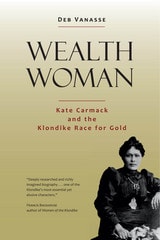
Wealth Woman
Kate Carmack and the Klondike Race for GoldDeb Vanasse
University of Alaska Press, 2016
In Wealth Woman, Deb Vanasse recounts Kate’s life from her early years on the frontier with George, through the history-making discovery of gold, and on to her subsequent fame, when she traveled alone down the West Coast through Washington and California, telling her story and fighting for her wealth, her family, and her reputation. Recovering the lost story of a true pioneer and a fiercely independent woman, Wealth Woman brings gold rush Alaska to life in all its drama and glory.
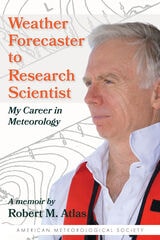
Weather Forecaster to Research Scientist
My Career in MeteorologyRobert M. Atlas
American Meteorological Society, 2022
As a young child, Robert M. Atlas would often look up at the sky, observe the clouds, and ask his parents questions about the weather. That early interest sparked a career in meteorology that took place during a period of rapid development in the field. Weather Forecaster to Research Scientist follows his decades-long career and his innovative research, which led to improvements in the understanding and prediction of extreme weather.
Atlas’s journey begins with his start as an apprentice forecaster for the US Weather Bureau during a time when satellite meteorology and operational numerical weather prediction were just in their infancy. Weather Forecaster to Research Scientist also traces his experiences as an operational forecaster in the US Air Force, discusses his pioneering work on ocean surface winds using satellites, and describes his leadership of scientific organizations within NASA and NOAA as well as his experiences teaching at several universities. An engaging account of a distinguished career, this book will appeal to students, educators, weather forecasters, scientists, and weather enthusiasts alike.
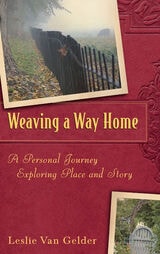
Weaving a Way Home
A Personal Journey Exploring Place and StoryLeslie Van Gelder
University of Michigan Press, 2008
An inquiry into how we engage with the world, and how solutions to environmental challenges can be found in the heart of our emotional relationships with places
"No one with a working heart will fail to be moved by Van Gelder. With passion and intelligence, she explores the way we story places and places story all life."
---Patrick Curry, Lecturer in Religious Studies, University of Kent, and author of Ecological Ethics: An Introduction and Defending Middle-Earth
"With grace and passion Leslie Van Gelder weaves together stories of her own encounters with an amazing variety of places---riverside meadows of Oxford, racially sundered Cyprus, fly-tormented Canadian muskeg, caves stroked by Paleolithic fingertips, derelict Coney Island, grasslands through which lion cubs follow the black tip of their mother’s tail---to show us how Place and Story are the warp and weft of our being as earth-dwellers."
---Tim Robinson, Folding Landscapes, and author of Connemara: Listening to the Wind
"Travel narrative, memoir, literary criticism, and anthropology fuse in this highly original and moving exploration of place and home."
---John Elder, author of Reading the Mountains of Home and Pilgrimage to Vallombrosa
"Van Gelder offers her most deeply personal stories as microcosmic examples of universal human experience, thus creating an empathic bond with her reader that conveys power and understanding simultaneously, and stimulates the reader's imagination toward reflection upon similarly personal stories of place. Van Gelder has modeled the relationship between story and place by telling placeful stories, and so has licensed the reader to do the same. Her writing throughout is rich and metaphoric. She is a gifted storyteller and a competent scholar, a combination to be treasured."
---Joseph W. Meeker, Professor Emeritus, College of Arts/Science, Union Institute and University, and author of The Spheres of Life, The Comedy of Survival, and Minding the Earth
Weaving a Way Home is an inquiry into the complex relationship between people, place, and story. In our memories and connections to a place, we are given one of the few opportunities to have deep relationships with place---relationships that cannot be described in words. Place can embody powerful emotions for us, and Leslie Van Gelder argues that we ourselves are places---geographical points possessing unique perspectives---that can feel displaced, replaced, or immovable. While the places of the external world can be accessed through maps and a good GPS system, our emotional landscapes are best reached through the sharing of stories.
In the tradition of writers Lewis Hyde, Barry Lopez, Peter Matthiessen, Joseph Meeker, Steven Mithen, Paul Shepard, Gary Snyder, and Terry Tempest Williams, Van Gelder uses both creative nonfiction narrative and evolutionary biological theory to explore complex terrain. Following Van Gelder's own travels, the book moves from the caves of the Dordogne lit only by the small beam of a flashlight, to an acacia thicket in Mozambique, to a black fly–infested bay inappropriately named Baie de Ha Ha in the inlands of Quebec, to the green line wrapped in barbed wire separating northern and southern Cyprus, to Abu Simbel's empty stone eyes in the Egyptian desert, and finally to the high road above Pelorus Sound on the rocky coasts of New Zealand. The author takes the reader to each place to create a storied landscape and explore new intellectual terrain. Van Gelder shows us that our collections of experiences, unique to us, can only be shared through the articulation of narrative.Weaving a Way Home will appeal to those deeply interested in knowing how we forge relationships with places and how that shapes who we are.
Jacket photographs: Garden gate: © iStockphoto.com/Richard Goerg. Iron fence: Christ Church Meadow in Oxford, Leslie Van Gelder.
Author photograph: Kevin Sharpe
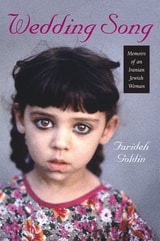
Wedding Song
Memoirs of an Iranian Jewish WomanFarideh Goldin
Brandeis University Press, 2004
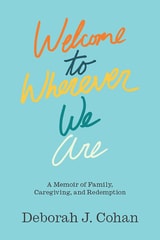
Welcome to Wherever We Are
A Memoir of Family, Caregiving, and RedemptionDeborah J. Cohan
Rutgers University Press, 2020
ESS Public Sociology Award
Recommended Book in Domestic Violence by DomesticShelters.org
How do you go about caregiving for an ill and elderly parent with a lifelong history of abuse and control, intertwined with expressions of intense love and adoration? How do you reconcile the resulting ambivalence, fear, and anger?
Welcome to Wherever We Are is a meditation on what we hold onto, what we let go of, how we remember others and ultimately how we’re remembered. Deborah Cohan shares her story of caring for her father, a man who was simultaneously loud, gentle, loving and cruel and whose brilliant career as an advertising executive included creating slogans like “Hey, how ‘bout a nice Hawaiian punch?” Wrestling with emotional extremes that characterize abusive relationships, Cohan shows how she navigated life with a man who was at once generous and affectionate, creating magical coat pockets filled with chocolate kisses when she was a little girl, yet who was also prone to searing, vicious remarks like “You’d make my life easier if you’d commit suicide.”
In this gripping memoir, Cohan tells her unique personal story while also weaving in her expertise as a sociologist and domestic abuse counselor to address broader questions related to marriage, violence, divorce, only children, intimacy and loss. A story most of us can relate to as we reckon with past and future choices against the backdrop of complicated family dynamics, Welcome to Wherever We Are is about how we might come to live our own lives better amidst unpredictable changes through grief and healing.
Questions for Discussion (https://d3tto5i5w9ogdd.cloudfront.net/wp-content/uploads/2020/05/11140346/Cohan_Discussion.docx)
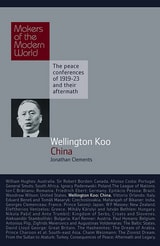
Wellington Koo
ChinaJonathan Clements
Haus Publishing, 2010
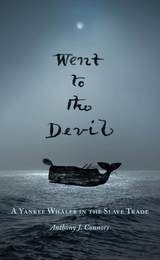
Went to the Devil
A Yankee Whaler in the Slave TradeAnthony J. Connors
University of Massachusetts Press, 2019
In this riveting biography, Anthony J. Connors explores this question by detailing not only the troubled, adventurous life of this man but also the turbulent times in which he lived. Set in an era of social and political fragmentation and impending civil war, when changes in maritime law and the economics of whaling emboldened slaving agents to target captains and their vessels for the illicit trade, Davoll's story reveals the deadly combination of greed and racial antipathy that encouraged otherwise principled Americans to participate in the African slave trade.
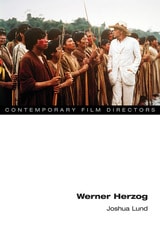
Werner Herzog
Joshua Lund
University of Illinois Press, 2020
Joshua Lund offers the first systematic interpretation of Werner Herzog's Americas-themed works, illuminating the director's career as a political filmmaker—a label Herzog himself rejects. Lund draws on materialist and post-colonial approaches to argue that Herzog's American work confronts us with the circulation, distribution, accumulation, application, and negotiation of power that resides, quietly, at the center of his films. By operating beyond conventional ideological categories, Herzog renders political ideas in radically unfamiliar ways while fearlessly confronting his viewers with questions of world-historical significance. His maddeningly opaque viewpoint challenges us to rethink discovery and conquest, migration and exploitation, resource extraction, slavery, and other foundational traumas of the contemporary human condition.
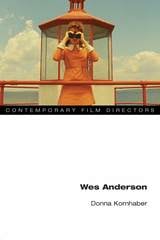
Wes Anderson
Donna Kornhaber
University of Illinois Press, 2017
Donna Kornhaber approaches Anderson's style as the necessary product of the narrative and thematic concerns that define his body of work. Using Anderson's focus on collecting, Kornhaber situates the director as the curator of his filmic worlds, a prime mover who artfully and conscientiously arranges diverse components into cohesive collections and taxonomies. Anderson peoples each mise-en-scéne in his ongoing ""Wesworld"" with characters orphaned, lost, and out of place amidst a riot of handmade clutter and relics. Within, they seek a wholeness and collective identity they manifestly lack, with their pain expressed via an ordered emotional palette that, despite being muted, cries out for attention. As Kornhaber shows, Anderson's films offer nothing less than a fascinating study in the sensation of belonging--told by characters who possess it the least.
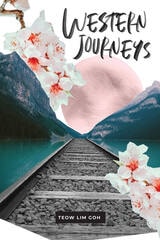
Western Journeys
Teow Lim Goh
University of Utah Press, 2022
In Western Journeys, Teow Lim Goh charts her journeys immigrating from Singapore and spending the last fifteen years living in and exploring the American West. Goh chronicles her lived experiences while building on the longer history of immigrants from Asia during the nineteenth and twentieth centuries, bringing new insights to places, the historical record, and memory. These vital essays consider how we access truth in the face of erasure. In exploring history, nature, politics, and art, Goh asks, “What does it mean for an immigrant to be at home?”
Looking beyond the captivating landscapes of the American West, Goh uncovers stories of the Chinese people who came to America during the era of Chinese Exclusion Act, as well as the stories of the Indigenous peoples who have been written out of popular narratives, and various others. She examines the links between the transcontinental railroad, the cowboy myth, and the anti-Chinese prejudice that persists today. These essays explore the early efforts to climb Colorado’s highest peaks, the massacre of Chinese miners in Rock Springs, Wyoming, and the increasingly destructive fire seasons in the West. Goh’s essays create a complex, varied, and sometimes contradictory story of people and landscapes, a tapestry of answers and questions.
Wet Earth and Dreams
A Narrative of Grief and RecoveryJane Lazarre
Duke University Press, 1998
As she contends with the pain and many indignities of her treatment for cancer, Lazarre realizes that successful medical treatment will only be part of her healing process. Her own illness becomes the vehicle for coming to terms with key moments of loss and grief—the death of a beloved therapist from breast cancer, her brother-in-law’s death from AIDS, a traumatic disappointment in her work life, and the unresolved pain of being a motherless child. The gift of Lazarre’s writing is her ability to transform her narratives of grief and loss into a story whose power to heal lies in its ability to penetrate the unconscious and give voice to the elusive truths hidden there. Through her writing, Lazarre is able to embrace grief—even her own inarticulate grief as a child—and find her way through the story to a restored sense of wholeness.
In Wet Earth and Dreams Jane Lazarre once again proves herself to be both companion and guide through some of the most difficult challenges life has to offer. As always, she draws strength not only from sustaining friendship and love, but also from her own faith in the power of storytelling to make bearable the seemingly unbearable. Lazarre’s bravely and beautifully written account of grief, illness, and death is at the last a celebration of the redemptive possibilities of the creative spirit.

What Doesn't Kill Me Makes Me Weirder and Harder to Relate To
A MemoirMary Lucia
University of Minnesota Press, 2025
An iconic rock DJ of the Twin Cities tells her harrowing story of being stalked while living her very public life
What’s it like to be in the public spotlight when it just might get you killed? For Mary Lucia, becoming a wildly popular rock DJ meant connecting with a multitude of fans through a shared love of music and deep cuts. But for one listener, that connection became a dangerous obsession, catapulting Lucia into the terrifying three-year nightmare that she chronicles in this raw, wry, and profoundly courageous memoir. With electrifying wit and anger, Lucia shares her experience of navigating constant terror while life absurdly goes on: interview rock stars, curate a radio show song list, judge high school battles of the band, kick a drug addiction cold turkey . . . all while fearing what might be waiting in her mailbox or who might be waiting on her front step or at her back door.
Lucia was no stranger to inappropriate or weird contact from fans, but things turned sinister when ten pounds of raw meat were delivered to her at work, followed by a steady stream of ominous letters, cards, packages, and messages. When the letters included threats to her dogs’ safety, she tried to get help, but without a name and return address on these communications there was nothing she could do. As the stalker’s actions escalated, Lucia felt more and more isolated. Police responding to her 911 calls were insensitive and dismissive, and even her friends implied that being stalked was just a hazard of her high-profile job and her high-energy personality. No one seemed to take seriously the danger she faced.
Inseparable from this ordeal is the story of how Mary Lucia became the notorious radio malcontent known by so many avid listeners. From the good, bad, and weird of growing up in her eccentric family to drugs, death, and dogs, Lucia finally shares her life on her own terms in What Doesn’t Kill Me Makes Me Weirder and Harder to Relate To. Applying her signature dark humor to her own traumatic experiences, Lucia’s memoir is idiosyncratic, bold, and—ironically—relatable.
Retail e-book files for this title are screen-reader friendly with images accompanied by short alt text and/or extended descriptions.
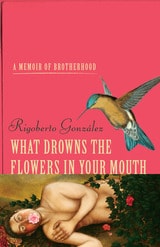
What Drowns the Flowers in Your Mouth
A Memoir of BrotherhoodRigoberto González
University of Wisconsin Press, 2018
Descending into a dark emotional space that compromises their mental and physical health, the brothers eventually find hope in aiding each other. This is an honest and revealing window into the complexities of Latino masculinity, the private lives of men, and the ways they build strength under the weight of grief, loss, and despair.
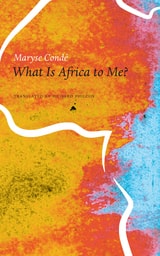
What Is Africa to Me?
Fragments of a True-to-Life AutobiographyMaryse Condé
Seagull Books, 2017
What Is Africa to Me? traces the late 1950s to 1968, chronicling Condé’s life in Sékou Touré’s Guinea to her time in Kwame N’Krumah’s Ghana, where she rubbed shoulders with Malcolm X, Che Guevara, Julius Nyerere, and Maya Angelou. Accusations of subversive activity resulted in Condé’s deportation from Ghana. Settling down in Sénégal, Condé ended her African years with close friends in Dakar, including filmmakers, activists, and Haitian exiles, before putting down more permanent roots in Paris.
Condé’s story is more than one of political upheaval, however; it is also the story of a mother raising four children as she battles steep obstacles, of a Guadeloupean seeking her identity in Africa, and of a young woman searching for her freedom and vocation as a writer. What Is Africa to Me? is a searing portrait of a literary genius—it should not be missed.

What Is Research?
Edited by Peter Miller
Bard Graduate Center, 2021
What is Research? includes conversations with theater director Annie Dorsen, biomedical researcher Elodie Ghedin, sculptor Tom Joyce, physicist Hideo Mabuchi, poet Campbell McGrath, photographer and filmmaker An-My Lê, neuroscientist Sheila Nirenberg, geochemist Terry Plank, and historian Marina Rustow, all of whom grapple with questions about the nature of research from their varied perspectives.
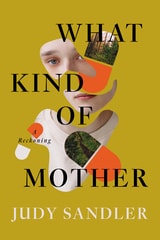
What Kind of Mother
A ReckoningJudy Sandler
West Virginia University Press, 2026
A mother’s memoir that reckons with her son’s descent into severe mental illness. What appears to be substance use disorder in high school later becomes a dual diagnosis as bipolar disorder emerges. Her son soon grows disillusioned with prescribed pharmaceuticals and participates in a residential treatment program that assists people in forgoing medication altogether. However, the program ultimately ejects him from the community for the very behaviors that the medication once managed. The book chronicles Sandler's initial denial of her truth, her painful awakening to mental illness in her family, and her eventual acceptance that she cannot save her son—only he can save himself.
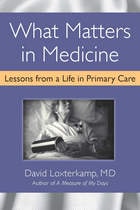
What Matters in Medicine
Lessons from a Life in Primary CareDavid Loxterkamp, MD
University of Michigan Press, 2013
Primary care has come into the limelight with the passage of the Patient Protection and Affordable Care Act, the unchecked and unsustainable rise in American health care expenditures, and the crest of Baby Boomers who are now Medicare-eligible and entering the most health care–intensive period of their lives. Yet how much is really known about primary care? What Matters in Medicine: Lessons from a Life in Primary Care is a look at the past, present, and future of general practice, which is not only the predecessor to the modern primary care movement, but its foundation. Through memoir and conversation, Dr. David Loxterkamp reflects on the heroes and role models who drew him to family medicine and on his many years in family practice in a rural Maine community, and provides a prescription for change in the way that doctors and patients approach their shared contract for good health and a happy life. This book will be useful to those on both sides of primary care, doctors and patients alike.
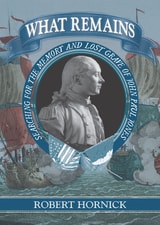
What Remains
Searching for the Memory and Lost Grave of John Paul JonesRobert Hornick
University of Massachusetts Press, 2017
John Paul Jones is now considered a Revolutionary War hero and the father of the American Navy, his defiant words “I have not yet begun to fight!” the epitome of courage under fire. It has not always been so. When the Revolutionary War ended, Jones's celebrity vanished. His death in Paris a decade later went unnoticed; he was buried in a foreign grave and forgotten by his fellow Americans.
In What Remains, Robert Hornick explores why Jones was forgotten, the subsequent recovery of his memory and remains, and the much delayed commemoration of his achievement. The book chronicles the efforts of the men and women who, in the nineteenth and early twentieth centuries, reconstructed Jones's legacy, searched for and finally found his lost grave, and returned both his physical remains and his memory to a place of honor. It also recounts the extraordinary moment when Theodore Roosevelt utilized Jones's commemoration to proclaim America a global power. What Remains offers a fascinating story of opportunists and evangelists: of politicians who needed Jones to advance their agendas, but also of fellow warriors committed to recovering one of their own from obscurity and shame.
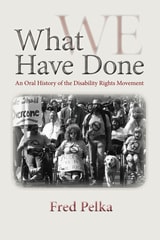
What We Have Done
An Oral History of the Disability Rights MovementFred Pelka
University of Massachusetts Press, 2012
“Nothing about us without us” has been a core principle of American disability rights activists for more than half a century. It represents a response by people with disabilities to being treated with scorn and abuse or as objects of pity, and to having the most fundamental decisions relating to their lives—where they would live; if and how they would be educated; if they would be allowed to marry or have families; indeed, if they would be permitted to live at all—made by those who were, in the parlance of the movement, “temporarily able-bodied.”
In What We Have Done: An Oral History of the Disability Rights Movement, Fred Pelka takes that slogan at face value. He presents the voices of disability rights activists who, in the period from 1950 to 1990, transformed how society views people with disabilities, and recounts how the various streams of the movement came together to push through the Americans with Disabilities Act of 1990, the most sweeping civil rights legislation since passage of the Civil Rights Act of 1964. Beginning with the stories of those who grew up with disabilities in the 1940s and '50s, the book traces how disability came to be seen as a political issue, and how people with disabilities—often isolated, institutionalized, and marginalized—forged a movement analogous to the civil rights, women's rights, and gay rights movements, and fought for full and equal participation in American society.
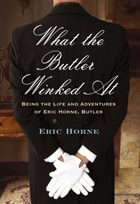
What the Butler Winked At
Being the Life and Adventures of Eric Horne, ButlerEric Horne
Westholme Publishing, 2011
A Memoir of the Real Downton Abbey Experience
Eric Horne served as a butler in some of the great English country manors from the 1860s until just after World War I, when many of the families whose heirs died in battle were forced to sell off their homes. Born in Southampton, Horne came from a humble family who valued education. Horne excelled in school and wished to go to sea, but lacking his parents’ permission, he instead ended up as a footboy for a local household. Over the years, Horne moved up in the service of the aristocracy: his goal was to become butler to the king of England, a position he very nearly secured. He did end up in the service of several distinguished households for many decades, and upon his retirement in 1922, he decided to write his memoir. Horne is a unique voice; not only did he have intimate contact with his employers and the household staff, he also possessed literary talent, so that his account provides authentic detail as well as shrewd—and often witty—views of the aristocracy, the servants, and their activities. Horne is not sentimental though; he does not think that he used his life wisely, having never learned a true trade. He reveals the plight of the servant class, where once a butler lost his employment—particularly following the devastation of World War I—he was likely to end up in a poorhouse, because employers did not usually provide pensions and servants were rarely able to save enough money to survive on their own. What the Butler Winked At is a fascinating and essential account of life in a country house during the height of the Victorian and Edwardian eras.
What's That Pig Outdoors?
A Memoir of DeafnessHenry Kisor
University of Illinois Press, 2010
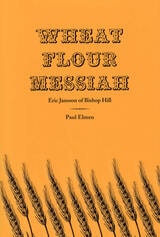
Wheat Flour Messiah
Eric Jansson of Bishop HillPaul Elmen
Southern Illinois University Press, 1997
Wheat Flour Messiah follows the career of Eric Jansson from his boyhood on a farm near Biskopskulla (Bishop’s Hill) in Sweden until his murder in Illinois by a crazed follower in 1850. He was an untutored but brilliant charismatic leader, who by sheer insolence and self-confidence defied both the Swedish state church and the secular government and persuaded some twelve hundred of his wheat flour customers to throw in their lot with him. The essence of his teaching was that anyone who so desired could receive the grace of God in such rich measure that he would instantly be freed of sin and live in angelic innocence from then on. This doctrine was an imperfectly understood version of Methodist perfectionism, held without Wesleyan safeguards, and it doomed his followers to civil war against the Lutheran church.
Jansson went north to Hälsingland in Sweden to sell wheat flour, but his deeper intention was to hold large religious services in the farmyards of followers. On three occasions he and his followers burned all the allegedly heretical books written by such men as Luther, Nohrborg, and Arndt, singing hymns while the flames "destroyed the works of the Devil." Jansson was jailed six times, and six times he was freed. After his last trial, as he was being escorted to jail, he escaped and later arranged passage to America. His disciples followed him in a series of Atlantic crossings during 1847–49 and settled the utopian colony of Bishop Hill, 150 miles west of Chicago. They built impressive buildings, plowed the virgin prairie, and began some successful industry making wagons and weaving rugs.
Two fateful events spelled the doom of this utopian dream. The first, the cholera epidemic of 1849,killed over two hundred of the colonists. The other was the arrival of John Root, who subsequently married Jansson’s cousin, Charlotte, and who, after a series of altercations with Jansson over Charlotte, shot him to death in Cambridge, Illinois. The colony did not long survive without its Prophet, and ten years later the utopian dream ended. Today Bishop Hill remains little changed from a century ago—a colorful memory of American beginnings, a vivid reminder of its fascinating past.
Dr. Elmen’s book tells for the first time the life story of a folk hero, Eric Jansson. The Bishop Hill Colony was clearly the lengthened shadow of this extraordinary man. Students of utopian colonies, teachers and students of American history and religious movements will find here a definitive account of this piece of the American past. Any reader interested in the American Dream will enjoy this account of a vanished people who thought they could find somewhere on earth a great, good place, and who had to learn after much suffering that one cannot express in waking reality the character of man in his dreams.
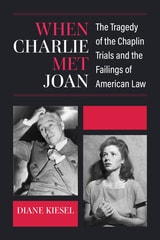
When Charlie Met Joan
The Tragedy of the Chaplin Trials and the Failings of American LawDiane Kiesel
University of Michigan Press, 2025
A 2026 PROSE Award Category Winner for Biography and Autobiography
Charlie Chaplin, the silent screen’s “Little Tramp,” was beloved by millions of movie fans until he starred in a series of salacious, real-life federal courtroom dramas. The 1944 trial was described by ace New York Daily News reporter Florabel Muir as “the best show in town.” The leading lady was a woman under contract to his studio—red-haired ingénue Joan Barry, Chaplin’s protégée and former mistress. Although he beat the federal criminal trial, Chaplin lost a paternity case and had to pay child support despite blood type evidence that proved he was not the child’s father.
A decade later during the Cold War, the U.S. government used the Barry trials as an excuse to bar the left-leaning, sexually adventurous, British-born comic from the country he had called home for forty years. Not only did these trials have a lasting impact on law; they also raise concerns about the power of celebrity, Cold War politics, the media frenzy surrounding high-profile court proceedings, and the sorry history of the casting couch. When Charlie Met Joan examines these trials from the perspective of both parties, asking whether Chaplin was unfairly persecuted by the government because of his left-leaning political beliefs, or if he should have been held more accountable for his cavalier treatment of Barry and other women in his life.
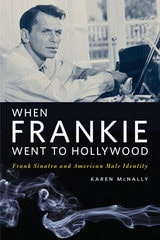
When Frankie Went to Hollywood
Frank Sinatra and American Male IdentityKaren McNally
University of Illinois Press, 2007
This first in-depth study of Frank Sinatra’s film career explores his iconic status in relation to his many performances in postwar Hollywood cinema. When Frankie Went to Hollywood considers how Sinatra’s musical acts, television appearances, and public commentary impacted his screen performances in Pal Joey, The Tender Trap, Some Came Running, The Man with the Golden Arm, and other hits. A lively discussion of sexuality, class, race, ethnicity, and male vulnerability in postwar American culture illuminates Karen McNally’s investigation into Sinatra’s cinematic roles and public persona. This entertainment luminary, she finds, was central in shaping debates surrounding definitions of American male identity in the 1940s and ’50s.
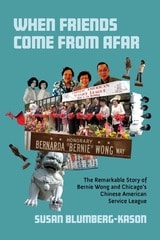
When Friends Come From Afar
The Remarkable Story of Bernie Wong and Chicago's Chinese American Service LeagueSusan Blumberg-Kason
University of Illinois Press, 2024
At once intimate and broad in scope, When Friends Come from Afar uses one woman’s life to illuminate a bedrock Chicago institution.
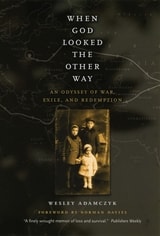
When God Looked the Other Way
An Odyssey of War, Exile, and RedemptionWesley Adamczyk
University of Chicago Press, 2004
Adamczyk was a young Polish boy when he was deported with his mother and siblings from their comfortable home in Luck to Soviet Siberia in May of 1940. His father, a Polish Army officer, was taken prisoner by the Red Army and eventually became one of the victims of the Katyn massacre, in which tens of thousands of Polish officers were slain at the hands of the Soviet secret police. The family's separation and deportation in 1940 marked the beginning of a ten-year odyssey in which the family endured fierce living conditions, meager food rations, chronic displacement, and rampant disease, first in the Soviet Union and then in Iran, where Adamczyk's mother succumbed to exhaustion after mounting a harrowing escape from the Soviets. Wandering from country to country and living in refugee camps and the homes of strangers, Adamczyk struggled to survive and maintain his dignity amid the horrors of war.
When God Looked the Other Way is a memoir of a boyhood lived in unspeakable circumstances, a book that not only illuminates one of the darkest periods of European history but also traces the loss of innocence and the fight against despair that took root in one young boy. It is also a book that offers a stark picture of the unforgiving nature of Communism and its champions. Unflinching and poignant, When God Looked the Other Way will stand as a testament to the trials of a family during wartime and an intimate chronicle of episodes yet to receive their historical due.
“A finely wrought memoir of loss and survival.”—Publishers Weekly
“Adamczyk’s unpretentious prose is well-suited to capture that truly awful reality.” —Andrew Wachtel, Chicago Tribune Books
“Mr. Adamczyk writes heartfelt, straightforward prose. . . . This book sheds light on more than one forgotten episode of history.”—Gordon Haber, New York Sun
“One of the most remarkable World War II sagas I have ever read. It is history with a human face.”—Andrew Beichman, Washington Times
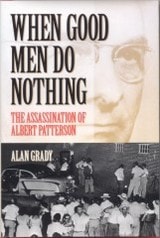
When Good Men Do Nothing
The Assassination Of Albert PattersonAlan Grady
University of Alabama Press, 2003
A true crime classic, the definitive account of the notorious 1954 assassination of Alabama Attorney General Albert Patterson
On June 18, 1954, just a few weeks after being elected Alabama's Attorney General, Albert Patterson was assassinated outside his law office in Phenix City, Alabama. His campaign promised hope and inspired reform to law-abiding citizens of Phenix City, which was notorious for organized crime, prostitution, gambling, bootlegging, and political corruption. Patterson's stance on cleaning up Phenix City had been met with threats and intimidation. With millions of dollars in illegal income and hundreds of political and professional careers at stake, the motive for his killing seemed apparent. The primary investigation surrounding Patterson's shooting focused on who pulled the trigger.
Alan Grady has exhaustively mined the state's original murder case files; the papers of John Patterson, Albert's son; records from the Office of Alabama Attorney General (who directed the murder investigation); the case files of the Alabama Department of Toxicology and Criminal Investigation; National Guard reports; and more than 30 interviews with eyewitnesses and interested parties.
Grady takes a complex story of multiple dimensions—a large cast of judicial, criminal, and political players; a web of alliances and allegiances; and a knotted sequence of investigative revelations and dead ends—and transforms it into a readable, incisive analysis of the powers and loyalties that governed, and corrupted to the core, the body politic of the state. Readers will be enthralled and educated by this authoritative account of the most compelling crime drama in Alabama during the 20th century.
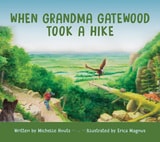
When Grandma Gatewood Took a Hike
Michelle Houts
Ohio University Press, 2016
It took her two tries, but in 1955, sixty-seven-year-old Emma “Grandma” Gatewood became the first woman to solo hike the entire length of the Appalachian Trail in one thru-hike. Gatewood, who left an abusive marriage after raising eleven children, has become a legend for those who hike the trail, and in her home state of Ohio, where she helped found the Buckeye Trail. In recent years, she has been the subject of a bestselling biography and a documentary film.
In When Grandma Gatewood Took a Hike, Michelle Houts brings us the first children’s book about her feat, which she accomplished without professional gear or even a tent. Houts chronicles the spirit of a seasoned outdoorswoman and mother of eleven whose grit and determination helped her to hike over two thousand miles. Erica Magnus’s vibrant illustrations capture the wild animals, people from all walks of life, and unexpected challenges that this strong-willed woman encountered on the journey she initially called a “lark.”
Children ages 4–10 will delight in this narrative nonfiction work as they accompany Emma Gatewood on the adventure of a lifetime and witness her transformation from grandmother to hiking legend, becoming “Grandma” to all.
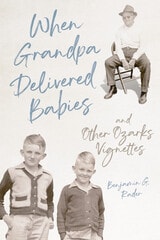
When Grandpa Delivered Babies and Other Ozarks Vignettes
Benjamin G. Rader
University of Illinois Press, 2024
An alluring blend of remembering and reflection, When Grandpa Delivered Babies and Other Ozarks Vignettes provides a vivid portrait of a fading time.
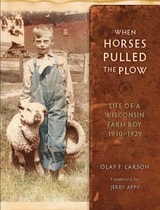
When Horses Pulled the Plow
Life of a Wisconsin Farm Boy, 1910–1929Olaf F. Larson
University of Wisconsin Press, 2011