Results by title
3388 books match the query 'Fiction' and 138 start with w
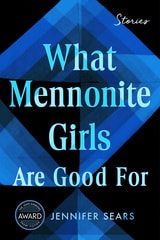
What Mennonite Girls Are Good For
Jennifer Sears
University of Iowa Press, 2025
A Debutiful Best Debut Short Story Collection of 2025
In these eleven stories, a Mennonite minister’s daughter moves from a youthful, exuberant understanding of her family’s faith toward religious doubt. Stumbling comically at times, Ruthie navigates life with and without the rules in which she’s been raised. Always physical, often sexual, Ruthie’s search for personal truth leads her from missionary outposts in Paraguay and Brazil to Mennonite towns in northern Indiana and central Kansas, a vandalized Native American site, women’s healthcare clinics, and lingerie shops on the secular, melancholy East Coast. Ultimately, these stories consider how faith and identity intertwine, the cost of abandoning one’s cultural heritage, and the complicated longing for return.
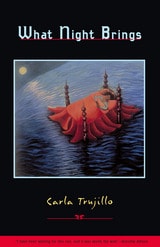
What Night Brings
Carla Trujillo
Northwestern University Press, 2003
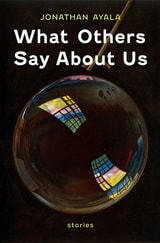
What Others Say About Us
StoriesJonathan Ayala
University of Arizona Press, 2027
A man is visited by his now famous ex-boyfriend, and he ponders a life that might have been. A new roommate destabilizes the close friendship between two twenty-somethings. A homesick immigrant plans an eightieth birthday party for the neighborhood grouch. A grisly crime sweeps up an unassuming history teacher, throwing him into the role of outcast.
El Paso serves as a backdrop for many of stories in this deeply human debut collection by Jonathan Ayala. Offering a portrait of contemporary gay Chicano lives, Ayala’s characters contend with the complexities found in navigating belonging, homecoming, falling in love, falling out of love, friendship, and what it means to be Mexican American in the United States today.
These thirteen emotionally rich, character-driven stories are filled with humor, tenderness, and insight into love, friendship, and community.
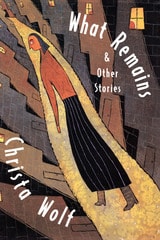
What Remains and Other Stories
Christa Wolf
University of Chicago Press, 1995
What Remains and Other Stories . . . is clear and farsighted. The eight heartfelt stories in the book show why she has been respected as a serious author since her 1968 novel, The Quest for Christa T. . . . Wolf uses her own experiences and observations to create universal themes about the controls upon human freedom.—Herbert Mitgang, New York Times
Christa Wolf has set herself nothing less than the task of exploring what it is to be a conscious human being alive in a moment of history.—Mary Gordon, New York Times Book Review
The simultaneous publication of these two volumes offers readers here a generous sampling of the short fiction, speeches and essays that Wolf has produced over the last three decades.—Mark Harman, Boston Globe
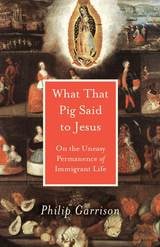
What That Pig Said to Jesus
On the Uneasy Permanence of Immigrant LifePhilip Garrison
University of Utah Press, 2017
Philip Garrison says his book of essays is “in praise of mixed feelings,” particularly the mixed feelings he and his neighbors have toward the places they came from. His neighborhood is the Columbia Plateau, one of many North American nodes of immigration. Following a meandering, though purposeful trail, Garrison catches hillbillies and newer Mexican arrivals in ambiguous, wary encounters on a set four hundred years in the making, built on a foundation of Native American displacement. Garrison is the product of the earlier surge of new arrivals: from the 1930s to the 1970s, those he calls hillbillies left such mid-nation states as Arkansas, Missouri, Oklahoma, Kansas, and the Dakotas for the West. The more recent wave, from 1990 to 2010, came mostly from the central plateau of Mexico. These are folks with whom Garrison communes in multiple ways. Anecdotes from sources as varied as pioneer diaries, railroad promotions, family Bibles, Wikipedia, and local gossip “portray the region's immigration as a kind of identity makeover, one that takes the form first of breakdown, then of reassembly, and finally of renewal.” Garrison’s mix of slangy memoir and anthropological field notes shines light on the human condition in today’s West.
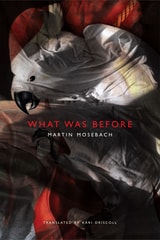
What Was Before
Martin Mosebach
Seagull Books, 2019
Set against the backdrop of Frankfurt’s affluent suburbs, this elliptical tale of coincidence and necessity unfolds through a series of masterly constructed vignettes, which gradually come together to form a scintillating portrait of the funny, tender, and destructive guises that love between two people can assume and the effect it has on everyone around them. Hailed in Germany as the first great social novel of the twenty-first century, What Was Before is an Elective Affinities for our time.
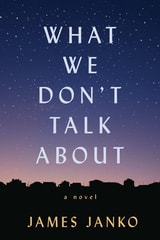
What We Don't Talk About
James Janko
University of Wisconsin Press, 2022
The town’s most adventurous woman, Cassie Zeul, is an outcast because she has no husband and takes an occasional lover. Her son, Gus, guided by Sister Damien, aspires to be a priest, but he is increasingly overwhelmed by his infatuation with Pat Lemkey—who is herself drawn to Jenny Biel, considered by many to be the most beautiful girl in town. Gus’s best friend, Fenza Ryzchik Jr., a somewhat notorious bully desperate for his father’s attention, hates “colored people,” doesn’t think he knows any, and is certain he can convince Jenny to marry him one day—without realizing that her devout mother has been passing for white her entire life. Events come to a head when a visiting nun from the South brings an African American friend with her to Midnight Mass one Christmas Eve.
The dreams and desires of these characters collide and intersect as they navigate life and coming of age in the rural Midwest. In Janko’s masterful hands, the darkness—of prejudice, privilege, and power—that they don’t even recognize threatens to overwhelm their lives and their plans for the future. This novel forces us, as well as its characters, to acknowledge the cost of hiding our true selves, and of judging others based on the color of their skin or the longing of their hearts.
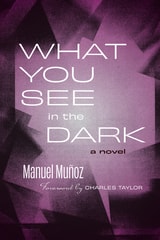
What You See in the Dark
A NovelManuel Muñoz and Charles Taylor
Northwestern University Press, 2025
A doomed love story unfolds alongside the production of Psycho in 1950s Bakersfield, California
Muñoz’s debut novel tells the story of Teresa, an aspiring singer too far away from Los Angeles to share the city’s glamour. In Dan Watson, the most desirable man in town, she believes she has found someone to help her realize those dreams. But when a famous actress arrives from Hollywood with a legendary director in tow, local gossip about Teresa and Dan turns to speculation about the celebrity visitors there to work on what will become an iconic, groundbreaking film of madness and murder at a roadside motel: Alfred Hitchcock’s Psycho. Framed by a foreword from film critic Charles Taylor, Muñoz’s haunting tale reflects “the slow winding down of everything that once seemed certain.”
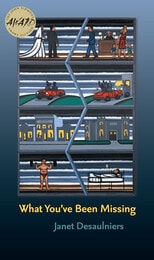
What You've Been Missing
Janet Desaulniers
University of Iowa Press, 2004
Vividly portraying the possible horrors and detours that can mark anyone’s life, Desaulniers beautifully captures the vast and often conflicting emotions that humans endure at times of loss and sorrow—loneliness, pain, desperation, desire. Yet this balletic push and pull of emotions will challenge, wound, and ultimately enlighten her characters, transporting them to a place beyond individual sorrow.
At times unbearably heartbreaking, What You’ve Been Missing is not just another set of stories about bad things happening to good people. At its heart, this award-winning collection is about people continuing to talk—rather than shutting down—as bad things happen to them. As the recently divorced Liza thinks in “The Good Fight”: “Words do ease us. They comfort us. Maybe they protect us in a way, rescue us from the agony of what our bodies feel.”
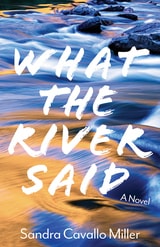
What the River Said
A Novelsandra cavallo miller
University of Nevada Press, 2021
In this riveting third book of the Dr. Abby Wilmore series, Dr. Abby returns to her medical clinic in Grand Canyon National Park. Happy to be reunited with her staff and her partner, Dr. John Pepper, Abby is back treating park visitors and personnel as well as local residents. However, a wave of heart attacks among apparently healthy hikers creates a new puzzle, and soon there are rumors of people using performance-enhancing drugs. Abby’s situation deteriorates when a new female friend suddenly disappears, and Abby berates herself for missing the woman’s depression.
As Abby struggles with the disappearance of her friend, Dr. Pepper is preoccupied by a mysterious threat from his past and becomes badly
injured in an apparent fall. While he recuperates, Abby takes over much of the clinic work while they provide a home for Pepper’s troubled teenage niece and an adopted stray dog.
Abby soon discovers that there is something more sinister behind the recent troubling events. In this exhilarating follow-up to The Color of Rock and Where Light Comes and Goes, Abby must learn to confront her past in order to stand up for the ones she loves.
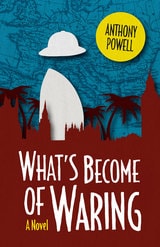
What's Become of Waring
A NovelAnthony Powell
University of Chicago Press, 2014
In What’s Become of Waring, Powell lampoons a world with which he was intimately acquainted: the inner workings of a small London publisher. But even as Powell eviscerates the publishers’ less than scrupulous plotting in his tale of wild coincidences, mistaken identity, and romance, he never strays to the far side of farce.
Written from a vantage point both high and necessarily narrow, Powell’s early novels nevertheless deal in the universal themes that would become a substantial part of his oeuvre: pride, greed, and what makes people behave as they do. Filled with eccentric characters and piercing insights, Powell’s work is achingly hilarious, human, and true.
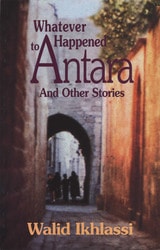
Whatever Happened to Antara?
And Other StoriesBy Walid Ikhlassi
University of Texas Press, 2004
Walid Ikhlassi evokes the individual's struggle for dignity and significance in the Syrian city of Aleppo during the French mandate of the forties and fifties. His characters' seeking of personal fulfillment parallels the struggle of the nation for self-definition. The changing political and cultural landscape of Syria challenges individuals in their attempts to live lives of integrity, as Ikhlassi provides analytical insights into the civil society of Syria, the axis of his writing.
From the boy Antara who personifies the Arab legend of a half-African slave warrior/hero to everyday middle-aged lovers, Ikhlassi's characters fight colonial oppression and corruption from the newly formed government. Foreign and internal forces challenge the evolution of a modern nation rooted in traditional Arab values. Its strong and determined men and women refuse to accept victimhood. The introduction by author and critic Elizabeth Warnock Fernea places the stories in their historical and literary context.
An avowed experimentalist, Ikhlassi portrays the modern human situation through techniques as widely divergent as realism, surrealism, interior monologue, and stream-of-consciousness. Selections of his work have been translated into English, Russian, French, German, Dutch, Armenian, and other languages.
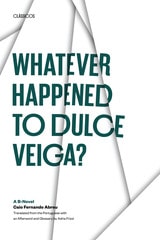
Whatever Happened to Dulce Veiga?
A B-NovelBy Caio Fernando Abreu
University of Texas Press, 2001
A forty-year-old Brazilian journalist reduced to living in a dilapidated building inhabited by a bizarre human fauna—fortune-tellers, transvestites, tango-loving Argentinean hustlers—is called upon to track down and write the story of Dulce Veiga, a famous singer who disappeared twenty years earlier on the eve of her first big show. Thus begins a mad race through an underground, nocturnal São Paulo among rock bands with eccentric names, feline reincarnations of Vita Sackville-West, ex-revolutionaries turned junkies, gay Pietas, echoes of Afro-Brazilian religions, and intimations of AIDS . . .
Constructed like a mystery, the novel unravels over a week, evoking a decadent and contaminated atmosphere in which the journalist's own search for meaning finds its expression in the elusive Dulce Veiga, who constantly appears to him as if in a dream, her arm pointing heavenward. Whatever Happened to Dulce Veiga? is a descent into the underworld of contemporary megalopolises where, like the inside of a huge TV, life intermingles with bits of music, film clips, and soap opera characters in a crazy and macabre dance, moving toward a possible catharsis.
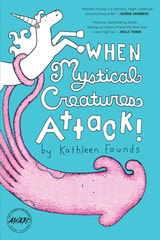
When Mystical Creatures Attack!
Kathleen Founds
University of Iowa Press, 2014
The lives of Janice, Cody, and Ms. Freedman are revealed through in-class essays, letters, therapeutic journal exercises, an advice column, a reality show television transcript, a diary, and a Methodist women’s fundraising cookbook. (Recipes include “Dark Night of the Soul Food,” “Render Unto Caesar Salad,” and “Valley of the Shadow of Death by Chocolate Cake.”) In “Virtue of the Month,” the ghost of Ms. Freedman’s mother argues that suicide is not a choice. In “The Un-Game,” Janice’s chain-smoking nursing home charge composes a dirty limerick. In “The Hall of Old-Testament Miracles,” wax figures of Bible characters come to life, hungry for Cody’s flesh.
Set against a South Texas landscape where cicadas hum and the air smells of taco stands and jasmine flowers, these stories range from laugh-out-loud funny to achingly poignant. This surreal, exuberant collection mines the dark recesses of the soul while illuminating the human heart.
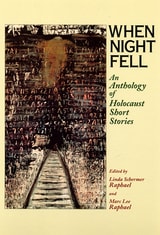
When Night Fell
An Anthology of Holocaust Short StoriesLinda Schermer Raphael and Marc Lee Raphael
Rutgers University Press, 1999
Both survivors of the Holocaust and those who were not there agree that it is impossible to tell what happened as the Nazi Final Solution was put into effect. No writing can adequately imagine the concentration camps, ghettos, and death camps. And that is precisely why writers must tell-and retell-what happened there.
In When Night Fell: An Anthology of Holocaust Short Stories, Linda Schermer Raphael and Marc Lee Raphael have collected twenty-six short stories that tell of the human toll of the Holocaust on those who survived its horrors, as well as later generations touched by its memory. The stories are framed by discussion of the current debate about who owns the Holocaust and who is entitled to speak about it.
Some of the stories included here are by internationally acclaimed authors. Others may be new to many readers. When Night Fell is a fitting memorial to this genocidal horror, putting eloquent voice to human endurance that is-almost-beyond words.
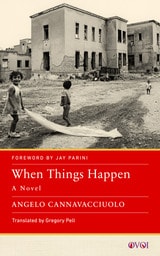
When Things Happen
A NovelAngelo Cannavacciuolo
Rutgers University Press, 2024
Michele Campo is living the bourgeois Italian dream. Now a speech pathologist in his forties, he resides in an expensive Naples home with his partner, Costanza, daughter of an upper-class family. Michele’s own family origins, however, are murkier. When he is assigned to work with five-year-old foster child Martina, he grows increasingly engrossed by her case, as his own buried family history slowly claws its way back to the surface. The first novel by acclaimed Italian writer Angelo Cannavacciuolo to be translated into English, When Things Happen tells a powerful and intriguing story of what we lose when we leave our origins behind. It presents a panoramic view of Neapolitan society unlike any in literature, revealing a city of extreme contrasts, with a glamorous center ringed by suburban squalor. Above all, it is a psychologically nuanced portrait of a man struggling to locate what he values in life and the poor vulnerable child who helps him find it.
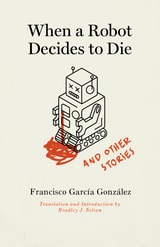
When a Robot Decides to Die and Other Stories
Francisco García González
Vanderbilt University Press, 2021
With a scholarly introduction by translator Bradley J. Nelson that introduces García González's oeuvre to contemporary readers and scholars of Spanish-language literature, this science fiction collection introduces Anglophones to this unique author.
García González turns a black mirror on contemporary society and its relation both to history and to the future. His insightfulness and relevance draw comparisons with Margaret Atwood, Neal Stephenson, and China Miéville, though his verbal economy and elegance are more akin to Cormac McCarthy, producing both disturbingly uncanny violence and unexpected comedy.
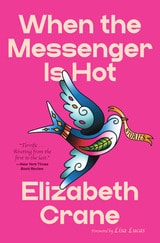
When the Messenger Is Hot
StoriesElizabeth Crane, foreword by Lisa Lucas
Northwestern University Press, 2026
A beloved, smart, and bold story collection surges back to life in a new print edition
Hailed as “revolutionary fiction,” When the Messenger Is Hot gleefully upends the short-story form, rendering the absurdities and possibilities of modern urban life with disarming humor and keen perception as Crane weaves through grief and womanhood. The women in Elizabeth Crane’s world are fierce and kind, damaged and optimistic. They are jilted lovers, absent daughters, twelve-steppers, and smart-asses, recovering from loss, addiction, or betrayal. From a woman who decides to live on the rooftop of her friend’s apartment (why not?), to a writer whose identity is compromised by the actress who portrays her, to a daughter who believes her deceased mother is still alive and living at the bus depot, these characters experience love and loss in a way that is both profoundly universal and uniquely theirs.
When the Rainbow Goddess Wept
Cecilia Manguerra Brainard
University of Michigan Press, 1999
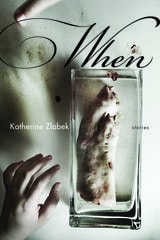
When
StoriesKatherine Zlabek
The Ohio State University Press, 2019
The atmospheric stories in When illuminate the customs of rural America, a part of this country that’s been asked to risk the best of itself in order to survive, revealing with humor and weight fears about wealth, worth, and the dignity of home.
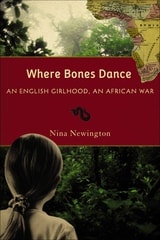
Where Bones Dance
An English Girlhood, An African WarNina Newington
University of Wisconsin Press, 2007
Stories are layered upon stories: Anna's grandmother tells stories about life as a white woman on the Gold Coast; the clairvoyant and closeted "Aunt" Elsie gives Anna a story of transformation to hold onto in the coming tumult of adolescence. Yet Where Bones Dance also spirals down to the stories that are not told—sexual abuse, the myth of benign colonialism, the chaos of postcolonial Africa. Sensual and fantastical by turns, this moving, funny, immensely readable book delivers an understanding of the interplay of sexuality, gender, race, and war that is sophisticated beyond the years of its intrepid narrator.
Best Books for General Audiences, selected by the American Association of School Librarians and the Public Library Association
Where I Must Go
A NovelAngela Jackson
Northwestern University Press, 2009
Lyrical, penetrating, and highly charged, this novel displays a delicately tuned sense of difference and belonging. Poet Angela Jackson brings her superb sense of language and of human possibility to the story of young Magdalena Grace, whose narration takes readers through both privilege and privation at the time of the American civil rights movement.
The novel moves from the privileged yet racially exclusive atmosphere of the fictional Eden University to the black neighborhoods of a Midwestern city and to ancestral Mississippi. Magdalena’s story includes a wide range of characters—black and white, male and female, favored with opportunity or denied it, the young in love and elders wise with hope. With and through each other, they struggle to understand the history they are living and making. With dazzling perceptiveness, Jackson’s narrator Magdalena tells of the complex interactions of people around her who embody the personal and the political at a crucial moment in their own lives and in the making of America.
Where Light Comes and Goes
A NovelSandra Cavallo Miller
University of Nevada Press, 2020
Book 2 in the Dr. Abby Wilmore Series
Where Light Comes and Goes brings back Dr. Abby Wilmore, the young family physician who was the protagonist of Miller’s first novel, The Color of Rock. Abby has accepted the directorship of a summer clinic in Yellowstone National Park where she hopes to expand her medical skills. She arrives to find herself working above the increasingly restless Yellowstone supervolcano, treating visitors, staff, and locals, all while evading the advances of a lecherous concession manager and maintaining a long-distance relationship with her partner who stays at the Grand Canyon Clinic. As tremors in the park escalate and the lakes seethe with bubbling gases, Abby learns that some-one is mysteriously killing the bison.
What follows is an engrossing mystery unfolding in a spectacular setting with rich, quirky, and endearing characters and unexpected plot turns. While an overworked Abby makes new friends among her clinic staff and patients, tension builds as the volcano seems to be moving closer to a major eruption and the bison killings become more frequent. Soon, Abby finds herself in mortal danger as the story races to a thrilling and unexpected conclusion.
Sandra Cavallo Miller demonstrated in The Color of Rock that she is a gifted storyteller. Where Light Comes and Goes deftly combines a gripping mystery set in the accurately depicted routine of a busy medical practice amid the wonders of Yellowstone’s magnificent scenery and wildlife. This is entertaining reading at its best.

Where Love Leaves Us
Renee Manfredi
University of Iowa Press, 1994
These nine superbly crafted stories, set primarily in Pittsburgh's Italian American neighborhoods, concentrate on families, on the poignant nature of father-daughter relationships, and on the fate of those who are refugees from their physical or spiritual communities. “Love is born only out of wreckage,” Manfredi's characters declare bravely. Her vigorous families are both the wrecking crews and the architects of the human foundation.
In “The Projectionist,” a displaced Sicilian is forced to confront the family he lost in war-torn Italy at the same time that his current family is disintegrating; his disillusionment with the American dream overwhelms him when his oldest daughter exchanges Old World values for the hippie-inspired climate of permissiveness. Ten-year-old Elena, in “Bocci,” takes the teachings of her strict Catholic upbringing to the extreme, and it is her devoutness that is cruelly used against her when violence compels her to reject becoming “a nun or a saint.” The father in “Tall Pittsburgh” sends his daughter to charm school at Sears, then enters her in a beauty pageant for tall women. Distraught in spite of her second-place win, he begins to relive his grief over the death of his beautiful wife.
Many of Manfredi's vital, luminous characters are outsiders, dispossessed by their inability to bridge the gap between the self and others, forced to deal with loss through death and lapse of faith, yet always managing to survive despite their place on the bewildering margins. Manfredi reveals an affirmation, finally, that hope is a permanent possession of every human spirit.
Where No Gods Came
Sheila O'Connor
University of Michigan Press, 2010
Where No Gods Came is a powerful look at assimilation and resilience and the sacrifices we all make to adapt. It's a potent reminder, too, of the tenacity and courage required of fragile families who endure on the edge. Faina McCoy triumphs as an unlikely—and unforgettable—heroine, a stubborn child who will survive to tell the tale.
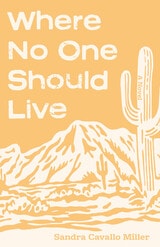
Where No One Should Live
A NovelSandra Cavallo Miller
University of Nevada Press, 2021

Where There's Smoke There's Dinner
Regina Carpenter
Parkhurst Brothers, Inc., 2012
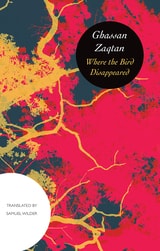
Where the Bird Disappeared
Ghassan Zaqtan
Seagull Books, 2018
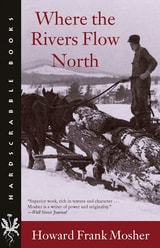
Where the Rivers Flow North
Howard Frank Mosher
University Press of New England, 2004
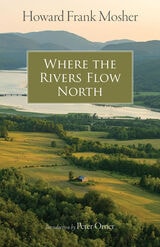
Where the Rivers Flow North
Howard Frank Mosher
Brandeis University Press, 2022
The stories of Where the Rivers Flow North are “superior work, rich in texture and character,” says the Wall Street Journal, and “the novella is brilliantly done.” That novella, the title story of the collection, was also made into a feature film starring Rip Torn and Michael J. Fox. These six stories, available again in this new edition, continue Howard Frank Mosher’s career-long exploration of Kingdom County, Vermont. “Within the borders of his fictional kingdom,” the Providence Journal has noted, “Mosher has created mountains and rivers, timber forests and crossroads villages, history and language. And he has peopled the landscape with some of the truest, most memorable characters in contemporary literature.” This new edition features a new introduction by novelist Peter Orner.
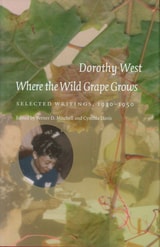
Where the Wild Grape Grows
Selected Writings, 1930–1950Dorothy West. Edited by Cynthia Davis and Verner D. Mitchell
University of Massachusetts Press, 2026
When Where the Wild Grape Grows was published in 2005 by the University of Massachusetts Press, it was the first book-length critical study of Dorothy West. Since then, the publication of more volumes on West and her circle testify to popular and academic interest in under-represented artists of the Harlem Renaissance, many of whom appeared first in West’s literary magazine, Challenge (1934-1937). Challenge included poems by West’s cousin Helene Johnson as well as by her friends Lucia Mae Pitts, Waring Cuney, Pauli Murray, Grace Walker, Mae Cowdery, Marcia Prendergast, and Bessie Calhoun Bird. West also published work by her romantic partner Marian Minus and by Juanita DeShields (the first Black Canadian graduate of McGill University) and the Trinidadian author Alfred Mendes. She included artwork by Mildred Jones and journalism by Eslanda Robeson and Dorothy Peterson. In addition to her editorial activities, West corresponded with important African American musicians including Maud Cuney Hare, Alberta Hunter, and Henry T. Burleigh, and with sculptors Augusta Savage and Richmond Barthé. Just as West mentored others, she was encouraged by such academic luminaries as Columbia Professors Blanche Colton Williams and Dorothy Scarborough, and by the controversial novelist Erskine Caldwell.
The new Introduction to Wild Grape will include fresh research on these individuals, many of whom formed part of West’s social and artistic circle. Lucia Pitts, for example, was a poet who served in the famous WAC (Women’s Army Corps) 6888th Battalion. The work of Marian Minus and Mae Cowdery has received critical attention recently and they also merit closer investigation. The Boston writer and musicologist Maud Cuney Hare was an artistic mentor to West; her cousin Waring Cuney was a close friend: both will receive more attention in the paperback edition. The artist Mildred Jones accompanied West and twenty other young African Americans to Russia in 1932 as participants in an ultimately aborted propaganda film on race relations in America; Jones studied with the important Russian Modernist painter Aleksandr Deyneka.
The original edition of Wild Grape cites two stories about West’s Russian experiences (penned under the pseudonym Mary Christopher in 1934), “Room in Red Square” and “Russian Correspondence,” but the volume does not include the actual stories. The stories are interesting because they shed light on West’s unrequited romance with Langston Hughes and her relationships with other members of the group, and they offer a unique perspective on daily life in the U.S.S.R. Both stories will be published in the new edition, along with a detailed discussion of new research about West’s visit to Russia.
A third uncollected story, “Cook” (1934), written by West under the pseudonym Jane Isaac will also be included. This story is extremely important to West’s oeuvre and her artistic development; it includes characters, themes, tropes, and plot lines that she expanded and developed in her two novels, The Living Is Easy (1948) and The Wedding (1995).
Since 2005, new material has been added to the West archive in Harvard’s Schlesinger Library. The section of Wild Grape devoted to West’s correspondence will include additional unpublished letters which underscore West’s dedication to African American art and culture.
The book includes the Benson-West family tree in Appendix II. Several scholars have expressed appreciation for this information which has not been published elsewhere; the chart will be updated to include the birth of several of West’s descendants.
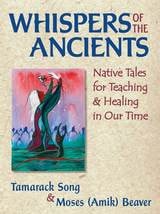
Whispers of the Ancients
Native Tales for Teaching and Healing in Our TimeTamarack Song and Moses (Amik) Beaver
University of Michigan Press, 2010
"Whispers of the Ancients helps us reconnect with the spirit of story that is a part of all our heritages. With respect for the wisdom of the past and with an eye toward the cross-cultural links that legends can make between us, Tamarack Song offers a gathering of tales and insightful comments that point the way back to the circle."
---Joseph Bruchac, author of more than 70 books for children and adults, including (with coauthor Michael J. Caduto) the best-selling Keepers of the Earth: Native American Stories and Environmental Activities for Children
It's easy to imagine yourself transported back to a time when an Elder might have told stories like those in Whispers of the Ancients around a glowing hearth. Thanks to Tamarack Song's storytelling skills, monsters, heroes, and shapeshifters come alive and open a doorway to the mysteries of life. Easily accessible to all ages, this is a book that speaks to each person at his or her own level of comprehension and need. It is as beautiful to read as it is to look at.
Stunning Aboriginal artwork by Moses (Amik) Beaver combines with provocative storytelling to renew, in all their traditional splendor, exceptional legends from around the world. Entertaining, profound, passionate, glorious---these are stories that illustrate and evoke themes common to everyone's life, with an ancient wisdom that helps the listener to cope with today's opportunities for tenderness, grief, passion, and irony.
Easily accessible to all ages, this is a book that speaks to each person at his or her own level of comprehension and need. It's as beautiful to read as it is to look at.
Tamarack Song has sought out the stories of the North African and Central Asian tribal peoples from whom he is descended, and he has listened to the tales of indigenous people from the tundra to the tropics. His books include Journey to the Ancestral Self, and he has contributed to Lois Einhorn's Forgiveness and Child Abuse. He is also a counselor, wilderness skills teacher, rites-of-passage guide, and founder of the Teaching Drum Outdoor School. Song lives in the Nicolet National Forest near Three Lakes, Wisconsin.
Moses (Amik) Beaver is an Ojibwe artist from the isolated fly-in community of Nibinamik (Summer Beaver), Ontario, three hundred miles north of Lake Superior. Grants from the Ontario Arts Council and other sources support his ongoing work with youth, and partial support for this book's illustrations comes from the District School Board of Nibinamik.
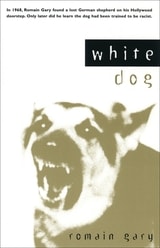
White Dog
Romain Gary
University of Chicago Press, 2004
Using the re-education of this adopted pet as a metaphor for the need to quash American racism, Gary develops a domestic crisis into a full-scale social allegory.
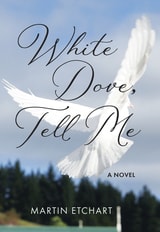
White Dove, Tell Me
A NovelMartin Etchart
University of Nevada Press, 2024
In the wake of this tragedy, Xabier learns that not only is the family ranch in jeopardy of foreclosure but his father’s death may not have been the accident it first appeared to be. Now, he must find a way to save his family’s ranch while unraveling the mysteries leading to his father’s death. Along the way, Xabier strives to adhere to his father’s memory and words—the invitation to stay true to who he is without losing his arima (soul).
In lyrical language that evokes the mythologies that have shaped the Etxeas’s worldview, White Dove, Tell Me speaks to the divided self that seeks to honor the family’s Basque heritage, while they strive for understanding in a new land.
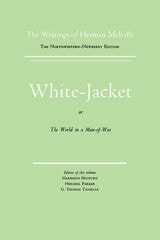
White Jacket, or The World in a Man-of-War
Volume Five, Scholarly EditionHerman Melville
Northwestern University Press, 1970
Already that same summer Melville had written Redburn, and he regarded the books as "two jobs, which I have done for money--being forced to it, as other men are to sawing wood." The reviewers were not as hard on White-Jacket as Melville himself was. The English liked its praise of British seamen. The Americans were more interested in Melville's attack on naval abuses, particularly flogging, and his advocacy of humanitarian causes. Soon Melville was acclaimed the best sea writer of the day.
Part autobiography, part epic fiction, White-Jacket remains a brilliantly imaginative social novel by one of the great writers of the sea. This text of the novel is an Approved Text of the Center for Editions of American Authors (Modern Language Association of America).
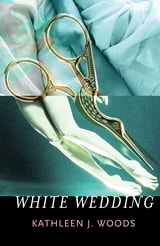
White Wedding
Kathleen J. Woods
University of Alabama Press, 2022
An enigmatic woman wanders from a pleasure mansion to a backyard wedding, upending the lives of everyone present
No one knows the woman at the wedding. Not the caterer, an easy target, succumbing to her advances. Not the pregnant bride or her tangled family, trying to spin a fairytale wedding under a melting hot summer sun. Not even the bride’s stepsister, Charlotte, who, in the middle of the night and despite her better judgment, allows this wandering wedding crasher into her car.
Crusted in dried blood and other bodily fluids, the woman exists in layers of sense and story, a nesting doll of pornographic tales in which fantasy and banality collide and blur. In this novel that is at once visceral, vivid, and spare, the uninvited guest gives each of those she meets what they want, whether they like it or not.
Here writhe distinct bodies in distinct ecstasies, echoing and defying inherited American narratives about gender, shame, and pleasure. With an edge of humor and horror, Woods explores if —and how—we consent to our own desires.
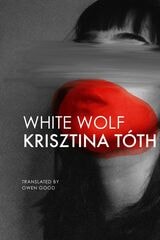
White Wolf
Sixteen StoriesKrisztina Tóth
Seagull Books, 2026
“Every home is a different story,” says one narrator in White Wolf while looking for her own childhood home. Every unhappy home is unhappy in its own way—and so are the stories in Krisztina Tóth’s new volume, in which the writer’s voice is darker and more radical than ever.
These are stories of trauma, oppression, submission, exclusion, stigma, and violence. Many of them tell of childhood abuses, unpunished crimes, lost children—suffering that goes without punishment, apology, and forgiveness. Her mostly nameless heroes are everywhere around us, stepping into the same elevator, running behind us on the staircase. Many of them are so wounded or tormented that they behave in strange ways. In White Wolf, Tóth observes these characters with acute sensitivity and attentiveness to detail.
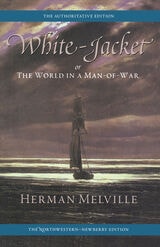
White-Jacket; or, The World in a Man-of-War
Volume FiveHerman Melville
Northwestern University Press, 2000
Already that same summer Melville had written Redburn, and he regarded the books as "two jobs, which I have done for money--being forced to it, as other men are to sawing wood." The reviewers were not as hard on White-Jacket as Melville himself was. The English liked its praise of British seamen. The Americans were more interested in Melville's attack on naval abuses, particularly flogging, and his advocacy of humanitarian causes. Soon Melville was acclaimed the best sea writer of the day.
Part autobiography, part epic fiction, White-Jacket remains a brilliantly imaginative social novel by one of the great writers of the sea. This text of the novel is an Approved Text of the Center for Editions of American Authors (Modern Language Association of America).
Whitehorn's Windmill
Kazys Boruta
Central European University Press, 2009

Who Do You Love
A NovelValerie Sayers
Northwestern University Press, 2011
Who Killed Bambi?
Monika Fagerholm, translated by Bradley Harmon
University of Wisconsin Press, 2026
Set in a fictional, affluent suburb of Helsinki, the main narrative follows Gusten Grippe, a successful realtor haunted by his role as one of the four teenage rapists—the only one to report the crime and admit his guilt. When, a decade afterward, an acquaintance plans to make a movie about what happened, Gusten attempts to atone for his past in the face of the community’s stoic silence and misguided consideration for reputation. Released at the height of the #MeToo movement and translated into a dozen languages, Who Killed Bambi? remains highly relevant in a world grappling with the ubiquity of sexual violence, toxic masculinity, and gender discrimination.
Who Occupies This House
A NovelKathleen Hill
Northwestern University Press, 2011
The narrator’s project, inspired at the outset by silences that extend backward to the untold story of the Famine, turns into a vast exploration of loss, inheritance, and the nature of memory. In a voice both stark and lyrical, the narrator calls up transformative, often tragic, moments in lives that have shaped her own. Remembering a past she never knew, she hopes to release from its sway the vanishing present.
Who Occupies This House is a strikingly beautiful account of the difficult reckoning with one’s family legacy that every adult faces. Punctuated by photographs and images that bring the narrative into sharp focus, it will draw comparisons to such divergent writers as W.G. Sebald and Kate O’Brien.
Who Paid for Modernism?
Art, Money, and the Fiction of Conrad, Joyce and LawrenceJoyce Piell Wexler
University of Arkansas Press, 1997
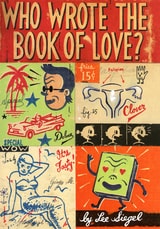
Who Wrote the Book of Love?
Lee Siegel
University of Chicago Press, 2005
Vignettes from the author's childhood provide the material for the construction of what is at once comic fiction, imaginative historical reportage, and an ironically nostalgic confession. The book evokes the tone and tempo of a decade during which America was blatantly happy, wholesome, and confident, and yet, at the same time, deeply fearful of communism and nuclear holocaust. Siegel recounts both the cheer and the paranoia of the period and the ways in which those sentiments informed wondering about sex and falling in love.
"Part of my plan," Mark Twain wrote in The Adventures of Tom Sawyer, "has been to try to pleasantly remind adults of what they once were themselves, and of how they felt and thought and talked." With the same motive, Lee Siegel has written what Twain might have composed had he been Jewish, raised in Beverly Hills in the 1950s, and joyously obsessed with sex and love.
Who if I Cry Out
By Gustavo Corção
University of Texas Press, 1967
Three months to live.
José Maria, a contemplative engineer in late middle age, and now a victim of leukemia, has received a death sentence from his doctor. His life has been a frustrating nonfulfillment of his early hopes, and his musings are many and varied as his life wanes.
The Brazilian writer Corção's remarkable novel is the diary of this thoughtful man facing the imminent prospect of death and trying to find the meaning of life—and of death—while evaluating his own existence.
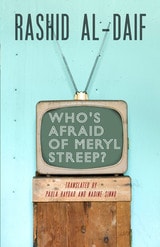
Who's Afraid of Meryl Streep?
By Rashid al-Daif Translated by Paula Haydar and Nadine Sinno
University of Texas Press, 2014
Rashid al-Daif’s provocative novel Who’s Afraid of Meryl Streep? takes an intimate look at the life of a recently married Lebanese man. Rashoud and his wife struggle as they work to negotiate not only their personal differences but also rapidly changing attitudes toward sex and marriage in Lebanese culture. As their fragile bond disintegrates, Rashoud finds television playing a more prominent role in his life; his wife uses the presence of a television at her parents’ house as an excuse to spend time away from her new home. Rashoud purchases a television in the hopes of luring his wife back home, but in a pivotal scene, he instead finds himself alone watching Kramer vs. Kramer. Without the aid of subtitles, he struggles to make sense of the film, projecting his wife’s behavior onto the character played by Meryl Streep, who captivates him but also frightens him in what he sees as an effort to take women’s liberation too far.
Who’s Afraid of Meryl Streep? offers a glimpse at evolving attitudes toward virginity, premarital sex, and abortion in Lebanon and addresses more universal concerns such as the role of love and lust in marriage. The novel has found wide success in Arabic and several European languages and has also been dramatized in both Arabic and French.
Whose World Is This?
Lee Montgomery
University of Iowa Press, 2007
In the story "We Americans," a woman abandoned by her husband grows so vulnerable, she internalizes TV news tragedies by developing hives in the shapes of foreign countries. In the title story, Hannah, a speed freak working the graveyard shift in a nursing home, falls in love with a quadriplegic who void of feelings in his limbs, feel things she cannot. In "Avalanche", an editor to movie stars in Beverly Hills struggles with how to reconcile her own story with the fairy-tale endings of celebrity culture.
Tender, poignant, and at times hilarious, the women in Whose World Is This? turn common notions of love, compassion, and tradition upside down as they show us how vulnerability, although dangerous, is what makes life astonishingly beautiful and reality strangely unreal.
Why I Don't Write Like Franz Kafka
William Wilson
University of Alabama Press, 2002
Why I Write?
And Other Early Prose PiecesBohumil Hrabal
Karolinum Press, 2019
—New Yorker
“A collection of formative fiction from a writer whose work has earned comparison with Joyce and Beckett. . . . Early work from a writer who merits a larger readership.”
—Kirkus Reviews
This collection of the earliest prose by one of literature’s greatest stylists captures, as scholar Arnault Maréchal put it, “the moment when Hrabal discovered the magic of writing.” Taken from the period when Bohumil Hrabal shifted his focus from poetry to prose, these stories—many written in school notebooks, typed and read aloud to friends, or published in samizdat—often showcase raw experiments in style that would define his later works. Others intriguingly utilize forms the author would never pursue again. Featuring the first appearance of key figures from Hrabal’s later writings, such as his real-life Uncle Pepin, who would become a character in his later fiction and is credited here as a coauthor of one piece, the book also contains stories that Hrabal would go on to cannibalize for some of his most famous novels. All together, Why I Write? offers readers the chance to explore this important nascent phase of Hrabal’s writing.
Expertly interpreted by award-winning Hrabal translator David Short, this collection comprises some of the last remaining prose works by Hrabal to be translated into English. A treasure trove for Hrabal devotees, Why I Write? allows us to see clearly why this great prose master was, as described by Czech writer and publisher Josef Škvorecký, “fundamentally a lyrical poet.”
Why Monkeys Live in Trees and Other Stories from Benin
Raouf Mama
Northwestern University Press, 2006
The Western African Republic of Benin (formerly Dahomey) is gifted with a great folktale tradition, one of the richest in the world. As pieces of oral literature and cultural history, these tales shed light on some of the values and beliefs as well as the customs and traditions of the people of Benin.