Results by title
1917 books match the query 'Law' and 64 start with w
Women, Gays, and the Constitution
The Grounds for Feminism and Gay Rights in Culture and LawDavid A. J. Richards
University of Chicago Press, 1998
Richards argues that both movements are extensions of rights-based dissent, rooted in antebellum abolitionist feminism that condemned both American racism and sexism. He sees the progressive role of such radical dissent as an emancipated moral voice in the American constitutional tradition. He examines the role of dissident African Americans, Jews, women, and homosexuals in forging alternative visions of rights-based democracy. He also draws special attention to Walt Whitman's visionary poetry, showing how it made space for the silenced and subjugated voices of homosexuals in public and private culture.
According to Richards, contemporary feminism rediscovers and elaborates this earlier tradition. And, similarly, the movement for gay rights builds upon an interpretation of abolitionist feminism developed by Whitman in his defense, both in poetry and prose, of love between men. Richards explores Whitman's impact on pro-gay advocates, including John Addington Symonds, Havelock Ellis, Edward Carpenter, Oscar Wilde, and André Gide. He also discusses other diverse writers and reformers such as Margaret Sanger, Franz Boas, Elizabeth Stanton, W. E. B. DuBois, and Adrienne Rich.
Richards addresses current controversies such as the exclusion of homosexuals from the military and from the right to marriage and concludes with a powerful defense of the struggle for such constitutional rights in terms of the principles of rights-based feminism.
Women, Money, and the Law
Nineteenth-Century Fiction, Gender, and the CourtsJoyce W. Warren
University of Iowa Press, 2005
Work and the Carceral State
Jon Burnett
Pluto Press, 2022
During 2019-20 in England and Wales, over 17 million hours of labor were carried out by more than 12,500 people incarcerated in prisons, while many people in immigration detention centers were also put to work. These people constitute a sub-waged, captive workforce who are frequently discarded by the state when done with.
Work and the Carceral State examines these forms of work as part of a broader exploration of the relationship between criminalization, criminal justice, immigration policy and labor, tracing their lineage through the histories of transportation and banishment, of houses of correction and prisons, to the contemporary production of work.
Criminalization has been used to enforce work and to discipline labor throughout the history of England and Wales. This book demands that we recognise the carceral state as operating at the frontier of labor control in the 21st century.
Workers against the City
The Fight for Free Speech in Hague v. CIODonald W. Rogers
University of Illinois Press, 2020
Clear-eyed and comprehensive, Workers against the City revises the view of a milestone case that continues to impact Americans' constitutional rights today.
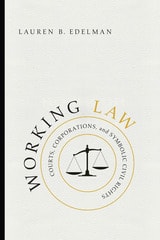
Working Law
Courts, Corporations, and Symbolic Civil RightsLauren B. Edelman
University of Chicago Press, 2016
One reason for the limited success of antidiscrimination policies, argues Lauren B. Edelman, is that the law regulating companies is broad and ambiguous, and managers therefore play a critical role in shaping what it means in daily practice. Often, what results are policies and procedures that are largely symbolic and fail to dispel long-standing patterns of discrimination. Even more troubling, these meanings of the law that evolve within companies tend to eventually make their way back into the legal domain, inconspicuously influencing lawyers for both plaintiffs and defendants and even judges. When courts look to the presence of antidiscrimination policies and personnel manuals to infer fair practices and to the presence of diversity training programs without examining whether these policies are effective in combating discrimination and achieving racial and gender diversity, they wind up condoning practices that deviate considerably from the legal ideals.
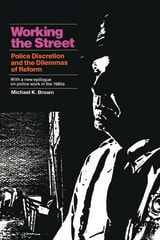
Working the Street
Police Discretion and the Dilemmas of ReformMichael K. Brown
Russell Sage Foundation, 1981

World Politics and International Law
Francis Anthony Boyle
Duke University Press, 1985
In the second part, the author dissects the Entebbe raid, where Israeli forces rescued a group of hostages being detained by hijackers at a Ugandan airport. His analysis shows the deficiencies of the international system in dealing with such a complex issue, where several contradictory principles of international law could be applied and were defended by various protagonists.
The third part starts with a parallel problem--the Iranian hostages crisis, where a group of U.S. officials found themselves in an unprecedented situation of being captured by a band of students. A critical analysis of the handling of this problem by the Carter Administration is followed by vignettes of other crises faced by the Administration and by its successor, the Reagan Administration. This part is less analytical and more prescriptive. The author is no long satisfied with pointing out what went wrong; instead, he departs from the usual hands-off policy of political scientists and tries to indicate how much better each situation could have been handled if the decision makers had been paying more attention to international law and international organizations. The theme is slowly developed that in the long run national interest is better served not by practicing power politics and relying on the use of threat of force but by strengthening those international institutions that can provide a neutral environment for first slowing down a crisis and then finding an equitable solution acceptable to most of the parties in conflict.
The value of this book lies primarily in giving the reader a real insight into several important issues of today that are familiar to most people only from newspaper headlines and television news. While not everybody can agree with all his criticisms of the mistakes of various governments, there is an honest attempt by the author to present issues impartially and to let the blame fall where it may. Being both an international lawyer and a political scientist, the author has had the advantage of combining the methodology of these two social sciences into a rich tapestry with some startling shades and tones.
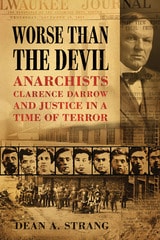
Worse than the Devil
Anarchists, Clarence Darrow, and Justice in a Time of TerrorDean A. Strang
University of Wisconsin Press, 2013
Largely overlooked for almost a century, the compelling story of this case emerges vividly in this meticulously researched book by Dean A. Strang. In its focus on a moment when patriotism, nativism, and terror swept the nation, Worse than the Devil exposes broad concerns that persist even today as the United States continues to struggle with administering criminal justice to newcomers and outsiders.
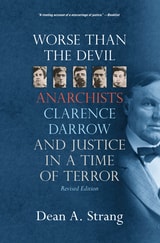
Worse than the Devil
Anarchists, Clarence Darrow, and Justice in a Time of TerrorDean A. Strang
University of Wisconsin Press, 2016
Wrestling with Diversity
Sanford Levinson
Duke University Press, 2003
Although most discussions of diversity have focused on race and ethnicity, Levinson is particularly interested in religious diversity and its implications. Why, he asks, do arguments for racial and ethnic diversity not also counsel a concern to achieve religious diversity within a student body? He considers the propriety of judges drawing on their religious views in making legal decisions and the kinds of questions Senators should feel free to ask nominees to the federal judiciary who have proclaimed the importance of their religion in structuring their own lives. In exploring the sense in which Sandy Koufax can be said to be a “Jewish baseball player,” he engages in broad reflections on professional identity. He asks whether it is desirable, or even possible, to subordinate merely "personal" aspects of one’s identity—religion, political viewpoints, gender—to the impersonal demands of the professional role. Wrestling with Diversity is a powerful interrogation of the assumptions and contradictions underlying public life in a multicultural world.
Wrestling with God
The Courts' Tortuous Treatment of ReligionPatrick M. Garry
Catholic University of America Press, 2006
Writing, Law, and Kingship in Old Babylonian Mesopotamia
Dominique Charpin
University of Chicago Press, 2010
Ancient Mesopotamia, the fertile crescent between the Tigris and Euphrates rivers in what is now western Iraq and eastern Syria, is considered to be the cradle of civilization—home of the Babylonian and Assyrian empires, as well as the great Code of Hammurabi. The Code was only part of a rich juridical culture from 2200–1600 BCE that saw the invention of writing and the development of its relationship to law, among other remarkable firsts.
Though ancient history offers inexhaustible riches, Dominique Charpin focuses here on the legal systems of Old Babylonian Mesopotamia and offers considerable insight into how writing and the law evolved together to forge the principles of authority, precedent, and documentation that dominate us to this day. As legal codes throughout the region evolved through advances in cuneiform writing, kings and governments were able to stabilize their control over distant realms and impose a common language—which gave rise to complex social systems overseen by magistrates, judges, and scribes that eventually became the vast empires of history books. Sure to attract any reader with an interest in the ancient Near East, as well as rhetoric, legal history, and classical studies, this book is an innovative account of the intertwined histories of law and language.
Wrong-Doing, Truth-Telling
The Function of Avowal in JusticeMichel Foucault
University of Chicago Press, 2014
Three years before his death, Michel Foucault delivered a series of lectures at the Catholic University of Louvain that until recently remained almost unknown. These lectures—which focus on the role of avowal, or confession, in the determination of truth and justice—provide the missing link between Foucault’s early work on madness, delinquency, and sexuality and his later explorations of subjectivity in Greek and Roman antiquity.
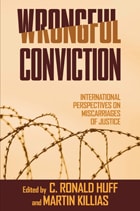
Wrongful Conviction
International Perspectives on Miscarriages of Justiceedited by C. Ronald Huff and Martin Killias
Temple University Press, 2009
Imperfections in the criminal justice system have long intrigued the general public and worried scholars and legal practitioners. In Wrongful Conviction, criminologists C. Ronald Huff and Martin Killias present an important collection of essays that analyzes cases of injustice across an array of legal systems, with contributors from North America, Europe and Israel. This collection includes a number of well-developed public-policy recommendations intended to reduce the instances of courts punishing innocents. It also offers suggestions for compensating more fairly those who are wrongfully convicted.