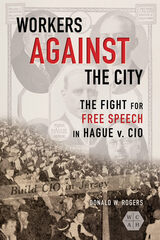
Workers against the City: The Fight for Free Speech in Hague v. CIO
University of Illinois Press, 2020
Cloth: 978-0-252-04346-8 | Paper: 978-0-252-08536-9 | eISBN: 978-0-252-05234-7 (standard)
Library of Congress Classification KF4772.R64 2020
Dewey Decimal Classification 342.730854
Cloth: 978-0-252-04346-8 | Paper: 978-0-252-08536-9 | eISBN: 978-0-252-05234-7 (standard)
Library of Congress Classification KF4772.R64 2020
Dewey Decimal Classification 342.730854
ABOUT THIS BOOK | AUTHOR BIOGRAPHY | REVIEWS | TOC
ABOUT THIS BOOK
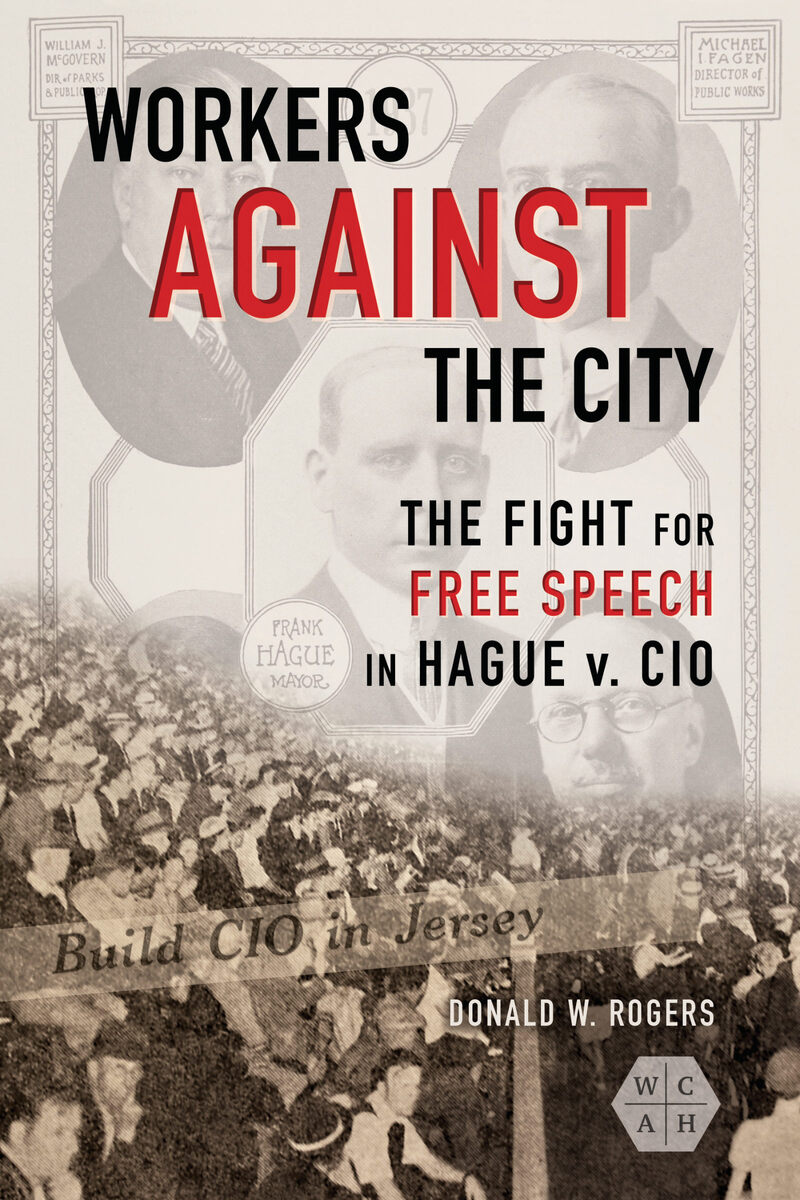
The 1939 Supreme Court decision Hague v. CIO was a constitutional milestone that strengthened the right of Americans, including labor organizers, to assemble and speak in public places. Donald W. Rogers eschews the prevailing view of the case as a morality play pitting Jersey City, New Jersey, political boss Frank Hague against the Committee for Industrial Organization (CIO) and allied civil libertarian groups. Instead, he draws on a wide range of archives and evidence to re-evaluate Hague v. CIO from the ground up. Rogers's review of the case from district court to the Supreme Court illuminates the trial proceedings and provides perspectives from both sides. As he shows, the economic, political, and legal restructuring of the 1930s refined constitutional rights as much as the court case did. The final decision also revealed that assembly and speech rights change according to how judges and lawmakers act within the circumstances of a given moment.
Clear-eyed and comprehensive, Workers against the City revises the view of a milestone case that continues to impact Americans' constitutional rights today.
Clear-eyed and comprehensive, Workers against the City revises the view of a milestone case that continues to impact Americans' constitutional rights today.
See other books on: Freedom of speech | Labor & Employment | Labor unions | Mayors | New Jersey
See other titles from University of Illinois Press