Results by title
1107 books match the query 'Memoirs' and 58 start with w
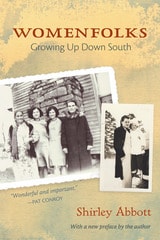
Womenfolks
Growing Up Down SouthShirley Abbott
University of Arkansas Press, 2017
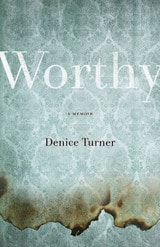
Worthy
A MemoirDenice Turner
University of Nevada Press, 2015
The story unfolds as Turner confronts a history that includes a Greek grandfather whose up-from-the-bootstraps legacy refuses to die, the ghosts of two suicidal uncles, and a Mormon shrink who claims to see her dead relatives. In the end, this is a memoir not just about loss, but about all of the fragile human bonds that are broken in pursuit of perfection.
Wry and extraordinarily candid, Worthy will appeal to readers interested in the dynamics of family heritage, Mormon doctrine, and the subtle corrosive costs of shame.
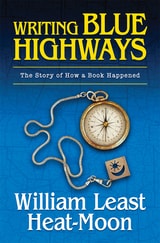
Writing BLUE HIGHWAYS
The Story of How a Book HappenedWillliam Least Heat-Moon
University of Missouri Press, 2023
Winner, Distinguished Literary Achievement, Missouri Humanities Council, 2015
The story behind the writing of the best-selling Blue Highways is as fascinating as the epic trip itself. More than thirty years after his 14,000-mile, 38-state journey, William Least Heat-Moon reflects on the four years he spent capturing the lessons of the road trip on paper—the stops and starts in his composition process, the numerous drafts and painstaking revisions, the depressing string of rejections by publishers, the strains on his personal relationships, and many other aspects of the toil that went into writing his first book. Along the way, he traces the hard lessons learned and offers guidance to aspiring and experienced writers alike. Far from being a technical manual, Writing Blue Highways: The Story of How a Book Happenedis an adventure story of its own, a journey of “exploration into the myriad routes of heart and mind that led to the making of a book from the first sorry and now vanished paragraph to the last words that came not from a graphite pencil but from a letterpress in Tennessee.”
Readers will not find a collection of abstract formulations and rules for writing; rather, this book gracefully incorporates examples from Heat-Moon’s own experience. As he explains, “This story might be termed an inadvertent autobiography written not by the traveler who took Ghost Dancing in 1978 over the byroads of America but by a man only listening to him. That blue-roadman hasn’t been seen in more than a third of a century, and over the last many weeks as I sketched in these pages, I’ve regretted his inevitable departure.” Filtered as the struggles of the “blue-roadman” are through the awareness of someone more than thirty years older with a half dozen subsequent books to his credit, the story of how his first book “happened” is all the more resonant for readers who may not themselves be writers but who are interested in the tricky balance of intuitive creation and self-discipline required for any artistic endeavor.
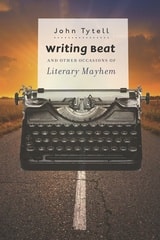
Writing Beat and Other Occasions of Literary Mayhem
John Tytell
Vanderbilt University Press, 2014
Approaching the history of post-war twentieth century American literature, and in particular the Beat literary movement of Kerouac, Ginsberg, Burroughs, and others, Tytell finds himself uniquely positioned as an eyewitness to many of these stories. In this book, he shares his insight with the reader. As he interviewed, drank, traveled, and survived countless moments with some of these literary legends, Tytell discovered much about the craft of nonfiction, biography, and the nature of history. Writing Beat demonstrates, through Tytell's growth as a professor and historian of the Beats, lessons learned and hazards encountered for those aspiring to become writers themselves.
As we approach the sixtieth anniversary of Allen Ginsberg's Howl, Writing Beat reminds us writers do not spring to life fully formed, and the struggle to get to literature can be a blast.
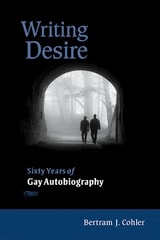
Writing Desire
Sixty Years of Gay AutobiographyBertram J. Cohler
University of Wisconsin Press, 2007
By contrasting the personal experience of these disparate writers, Cohler illustrates the social transformations that these men helped shape. Among Cohler's diverse subjects is Alan Helms, whose journey from Indiana to New York's gay society represents the passage of men who came of age in the 1950s and 1960s, when homosexuality was considered a hidden "disease." The liberating effects of Stonewall's aftermath are chronicled in the life of Arnie Kantrowitz, the prototypical activist for gay rights in the 1970s and the founder the Gay and Lesbian Alliance against Defamation. The artistic works of Tim Miller and Mark Doty evoke loss and shock during of the early stages of the AIDS epidemic in the 1980s. Cohler rounds out this collective group portrait by looking at the newest generation of writers in the Internet age via the blog of BrYaN, who did the previously unthinkable: he "outed" himself to millions of people.
A compelling mix of social history and personal biography, Writing Desire distills the experience of three generations of gay America.
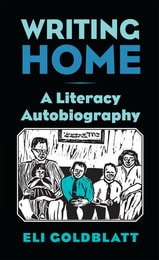
Writing Home
A Literacy AutobiographyEli Goldblatt
Southern Illinois University Press, 2012
Writing Resistance
Revolutionary Memoirs of Shlissel´burg Prison, 1884-1906Sarah J. Young
University College London, 2021
In 1884, sixty-eight prisoners convicted of terrorism and revolutionary activity were transferred to a new maximum-security prison at Shlissel´burg Fortress near St. Petersburg. Inhuman conditions in the prison caused severe mental and physical deterioration among the prisoners, and over half died. However, the survivors fought back to reform the prison and improve the inmates’ living conditions. Their memoirs enshrined their experience in revolutionary mythology and served as an indictment of the Tsarist autocracy’s loss of moral authority. This book features three of these memoirs—translated into English for the first time—as well as an introductory essay that analyzes the memoirs’ construction of a collective narrative of resilience, resistance, and renewal. The first extended study of these memoirs in English, this book uncovers an important episode in the history of political imprisonment. It will be of interest to scholars and students of the Russian revolution, carceral history, penal practice and behaviors, and prison and life writing.
Written in the Sky
Lessons of a Southern DaughterPatricia Foster
University of Alabama Press, 2023
In Written in the Sky: Lessons of a Southern Daughter, Patricia Foster presents a double portrait of place and family, a book of deeply personal essays that interrogate the legacy of racial tensions in the South, the constriction of caste and gender, and the ways race, class, and white privilege are entwined in her family story. After interviewing girls at Booker T. Washington High School in Tuskegee, Alabama, visiting the National Memorial for Peace and Justice in Montgomery, Alabama, and exploring Africatown in Plateau, Alabama, Patricia Foster was moved to reflect on the racial scars and crossroads in her southern past as well as to reckon with the intimate places of her own wounding and grief.
The story of place, she discovers, emerges not only from family histories and cultural traditions but also from wrestling with a culture’s irreconcilable ideas: the hard push to determine what matters. What matters to her are the shadow stories beneath our mythologies, the complicated and radiant narratives that must be excavated and reckoned with, stories that have no neat or binary resolution, stories full of luminous moments and riveting facts, and stories where the secrets hide. Written in the Sky presents the best of nonfiction storytelling: searingly honest portraits, dramatic encounters, and lyrical narratives that will interest teachers and students as well as social justice advocates, policymakers, and readers compelled by stories of awakening and the white-hot beauty of language.