Results by title
4743 books match the query 'Religion' and 139 start with w
Whose Sacrifice is the Eucharist? The Offering of Christ and His Church in Catholic and Methodist Theology
Stephen B. Sours
Catholic University of America Press, 2024
Why Are We Created
Increasing Our Understanding of Humanity's Purpose on EarthSir John Templeton
Templeton Press, 2003
While many books strive to stimulate thinking through provocative anecdotes and theories, Why Are We Created? takes a different path. It begins with a question and continues with a multitude of questions like these:
•What is the importance of recognizing the presence of the sacred within us and around us?•How can individuals create a purposeful and fruitful way of life?
•How does happiness relate to one's purpose?
Why God?
Explaining Religious PhenomenaRodney Stark
Templeton Press, 2017
Defining religion over the past century has, ironically, led to theories that exclude belief in God, proposing that all systems of thought concerning the meaning of life are religions. Of course, this makes it impossible to distinguish the village priest from the village atheist, or Communism from Catholicism. Worse yet, it makes all religious behavior irrational, presuming that, for example, people knowingly pray to an empty sky.
Renowned sociologist of religion Rodney Stark offers a comprehensive, decisive, God-centered theory of religion in his book, Why God: Explaining Religious Phenomena. While his intent is not to insist that God exists, Stark limits religions to systems of thought based on belief in supernatural beings—to Gods. With this God-focused theory, Stark explores the entire range of religious topics, including the rise of monotheism, the discovery of sin, causes of religious hostility and conflict, and the role of revelations.
Each chapter of Why God? builds a comprehensive framework, starting with the foundations of human motivations and ending with an explanation of why most people are religious. Stark ultimately settles what religion is, what it does, and why it is a universal feature of human societies.
Why God? is a much needed guide for anyone who wants a thorough understanding of religion and our relationship to it, as well as a firm refutation to those who think religion can exist without the divine.
Why I Am Not a Secularist
William E. Connolly
University of Minnesota Press, 2000
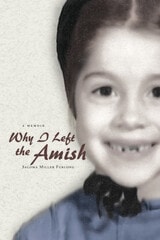
Why I Left the Amish
A MemoirSaloma Miller Furlong
Michigan State University Press, 2011
There are two ways to leave the Amish—one is through life and the other through death. When Saloma Miller Furlong’s father dies during her first semester at Smith College, she returns to the Amish community she had left twenty four years earlier to attend his funeral. Her journey home prompts a flood of memories. Now a mother with grown children of her own, Furlong recalls her painful childhood in a family defined by her father’s mental illness, her brother’s brutality, her mother’s frustration, and the austere traditions of the Amish—traditions Furlong struggled to accept for years before making the difficult decision to leave the community. In this personal and moving memoir, Furlong traces the genesis of her desire for freedom and education and chronicles her conflicted quest for independence. Eloquently told, Why I Left the Amish is a revealing portrait of life within—and without—this frequently misunderstood community.
Why I Stay 2
The Challenges of Discipleship for Contemporary Latter-day SaintsRobert A. Rees
Signature Books, 2021
Twenty-one women and men discuss what it is about Mormonism that keeps them part of the fold. Their deep, unique experiences make their individual travels even more compelling. Kimberly Applewhite Teitter, growing up in the South as a Black Latter-day Saint, often encountered well-meaning Latter-day Saints whose words messaged the idea that she was at some level an outsider or perhaps not as authentically Mormon as others in her congregation. Thus, she writes, “At the end of the day I’m still Black—still have felt the weight of proving that I represent the church I’ve fought so hard for my entire life.” Yet the very episodes that could have driven her from the church became lessons on the meaning of discipleship.
For Carol Lynn Pearson, staying boiled down to two reasons: “I find a great deal of love in this church,” and “where I do not find love, I have an opportunity to help create love.” The stories she shares illuminate that mantra. Mitch Mayne, an openly gay man, has faced many challenges by his decision to stay. “Most days, it seems I can’t be Mormon enough for my LDS community, and I can’t be gay enough for my LGBT fellows.” In his essay, he answers the question many have asked: “Why don’t you just leave the church?”

Why Niebuhr Now?
John Patrick Diggins
University of Chicago Press, 2011
Barack Obama has called him “one of my favorite philosophers.” John McCain wrote that he is “a paragon of clarity about the costs of a good war.” Andrew Sullivan has said, “We need Niebuhr now more than ever.” For a theologian who died in 1971, Reinhold Niebuhr is maintaining a remarkably high profile in the twenty-first century.
In Why Niebuhr Now? acclaimed historian John Patrick Diggins tackles the complicated question of why, at a time of great uncertainty about America’s proper role in the world, leading politicians and thinkers are turning to Niebuhr for answers. Diggins begins by clearly and carefully working through Niebuhr’s theology, which focuses less on God’s presence than his absence—and the ways that absence abets the all-too-human sin of pride. He then shows how that theology informed Niebuhr’s worldview, leading him to be at the same time a strong opponent of fascism and communism and a leading advocate for humility and caution in foreign policy.
Turning to the present, Diggins highlights what he argues is a misuse of Niebuhr’s legacy on both the right and the left: while neoconservatives distort Niebuhr’s arguments to support their call for an endless war on terror in the name of stopping evil, many liberal interventionists conveniently ignore Niebuhr’s fundamental doubts about power. Ultimately, Niebuhr’s greatest lesson is that, while it is our duty to struggle for good, we must at the same time be wary of hubris, remembering the limits of our understanding.
The final work from a distinguished writer who spent his entire career reflecting on America’s history and promise, Why Niebuhr Now? is a compact and perceptive book that will be the starting point for all future discussions of Niebuhr.
Why Read Pascal?
Paul J. Griffiths
Catholic University of America Press, 2021
Why Read Pavel Florensky?
John Burgess
Catholic University of America Press, 2024
Why the Science and Religion Dialogue Matters
Voices from the International Society for Science and ReligionFraser Watts
Templeton Press, 2006
•Munawar Anees on Islam
•B.V. Subbarayappa on Hinduism
•Trinh Xuan Thuan on Buddhism
•Heup Young Kim on Asian Christianity
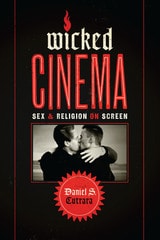
Wicked Cinema
Sex and Religion on ScreenBy Daniel Cutrara
University of Texas Press, 2014
From struggles over identity politics in the 1990s to current concerns about a clash of civilizations between Islam and Christianity, culture wars play a prominent role in the twenty-first century. Movies help to define and drive these conflicts by both reflecting and shaping cultural norms, as well as showing what violates those norms. In this pathfinding book, Daniel S. Cutrara employs queer theory, cultural studies, theological studies, and film studies to investigate how cinema represents and often denigrates religion and religious believers—an issue that has received little attention in film studies, despite the fact that faith in its varied manifestations is at the heart of so many cultural conflicts today.
Wicked Cinema examines films from the United States, Europe, and the Middle East, including Crimes and Misdemeanors, The Circle, Breaking the Waves, Closed Doors, Agnes of God, Priest, The Last Temptation of Christ, and Dogma. Central to all of the films is their protagonists’ struggles with sexual transgression and traditional belief systems within Christianity, Judaism, or Islam—a struggle, Cutrara argues, that positions believers as the Other and magnifies the abuses of religion while ignoring its positive aspects. Uncovering a hazardous web of ideological assumptions informed by patriarchy, the spirit/flesh dichotomy, and heteronormativity, Cutrara demonstrates that ultimately these films emphasize the “Otherness” of the faithful through a variety of strategies commonly used to denigrate the queer, from erasing their existence, to using feminization to make them appear weak, to presenting them as dangerous fanatics.
Wild Experiment
Feeling Science and Secularism after DarwinDonovan O. Schaefer
Duke University Press, 2022
William Blake and the Impossible History of the 1790s
Saree Makdisi
University of Chicago Press, 2003
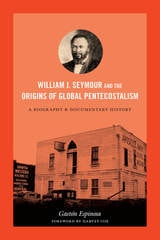
William J. Seymour and the Origins of Global Pentecostalism
A Biography and Documentary HistoryGastón Espinosa
Duke University Press, 2014
The 104 primary sources include all of Seymour's extant writings in full and without alteration and some of Parham's theological, social, and racial writings, which help explain why the two parted company. To capture the revival's diversity and global influence, this book includes Black, Latino, Swedish, and Irish testimonies, along with those of missionaries and leaders who spread Seymour's vision of Pentecostalism globally.

Winter Quarters
Maurine Ward
Utah State University Press, 2002
Volume 1, Life Writings of Frontier Women series, edited by Maureen Ursenbach Beecher
Mary Richard's journals and letters record a young woman's rare, but richly detailed view of life in the temporary Mormon pioneer communities in Iowa.
Wisdom Discourse and Torah in Second Temple Judaism
Challenging the Integration ParadigmJiseong James Kwon
SBL Press, 2025
Did wisdom literature in the Hebrew Bible develop over time from secular to religious, as many early modern scholars believed? Did it develop in reaction to historical events or out of conflict with other traditions, including Torah? In Wisdom Discourse and Torah in Second Temple Judaism, JiSeong James Kwon moves beyond this impasse by applying a discourse-critical method to intertextual readings of Proverbs, Ben Sira, the Wisdom of Solomon, Baruch, the Dead Sea Scrolls, and Deuteronomy. Kwon’s study reveals that wisdom literature maintained an independent identity and theological orientation distinct from the legal traditions of the Torah. Rather than wisdom being subsumed into legal material, Jewish intellectual production remained pluralistic in form, genre, and theological orientation throughout the Persian and Hellenistic periods.
Wisdom From World Religions
Pathways Toward Heaven On EarthJohn Marks Templeton
Templeton Press, 2002
Every religion acknowledges certain spiritual principles and records them in its sacred literature and traditions. This book curates these ancient teachings and shows how they apply to modern life with the help of parables, quotations, and commentaries.
By reading Wisdom from World Religions, people from all walks of life will be inspired to pursue their own spiritual growth and to contemplate questions central to our existence, such as how, through love and creativity, can we be agents of divinity on earth?
Uplifting and instructional, this is a book to be treasured, studied, and practiced.
Wisdom from the Late Bronze Age
Yoram Cohen
SBL Press, 2013
Wisdom in Bonaventure's <i>Hexameron</i>
Philosophical Problems, Theological SolutionsBenjamin Winter
Catholic University of America Press, 2024
Wisdom's Watch Upon the Hours
Suso Henry
Catholic University of America Press, 1994
Witchcraft Mythologies and Persecutions
Gábor Klaniczay
Central European University Press, 2008
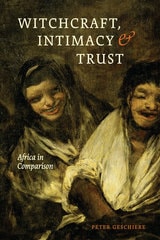
Witchcraft, Intimacy, and Trust
Africa in ComparisonPeter Geschiere
University of Chicago Press, 2013
Geschiere begins in the forests of southeast Cameroon with the Maka, who fear “witchcraft of the house” above all else. Drawing a variety of local conceptions of intimacy into a global arc, he tracks notions of the home and family—and witchcraft’s transgression of them—throughout Africa, Europe, Brazil, and Oceania, showing that witchcraft provides powerful ways of addressing issues that are crucial to social relationships. Indeed, by uncovering the link between intimacy and witchcraft in so many parts of the world, he paints a provocative picture of human sociality that scrutinizes some of the most prevalent views held by contemporary social science.
One of the few books to situate witchcraft in a global context, Witchcraft, Intimacy, and Trust is at once a theoretical tour de force and an empirically rich and lucid take on a difficult-to-understand spiritual practice and the private spaces throughout the world it so greatly affects.
Witchcraft, Magic, and Religion in Seventeenth-Century Massachusetts
Richard Weisman
University of Massachusetts Press, 1984
Witches, Whores, and Sorcerers
The Concept of Evil in Early IranBy S. K. Mendoza Forrest
University of Texas Press, 2011
Early Iranians believed evil had to have a source outside of God, which led to the concept of an entity as powerful and utterly evil as God is potent and good. These two forces, good and evil, which have always vied for superiority, needed helpers in this struggle. According to the Zoroastrians, every entity had to take sides, from the cosmic level to the microcosmic self.
One of the results of this battle was that certain humans were thought to side with evil. Who were these allies of that great Evil Spirit? Women were inordinately singled out. Male healers were forbidden to deal with female health disorders because of the fear of the polluting power of feminine blood. Female healers, midwives, and shamans were among those who were accused of collaborating with the Evil Spirit, because they healed women. Men who worked to prepare the dead were also suspected of secret evil. Evil even showed up as animals such as frogs, snakes, and bugs of all sorts, which scuttled to the command of their wicked masters.
This first comprehensive study of the concept of evil in early Iran uncovers details of the Iranian struggle against witchcraft, sorcery, and other "evils," beginning with their earliest texts.
With All Thine Heart
Love and the BibleStavans, Ilan
Rutgers University Press, 2010
Presented in an engaging, conversational format and touched with striking artwork, the textured dialogue between Stavans and Drache is meant to show how the Bible is a multidimensional text and one that, when considered over the course of history, still has the power to shape our world. The theme of love provides the connective tissue that binds this work.
Addressing a wide range of topics, from biblical archaeology and fundamentalism to Hollywood movies, lexicography, and the act of praying, With All Thine Heart suggests that the Hebrew Bible is a novel worth decoding patiently, such as one does with classics like Don Quixote de la Mancha, In Search of Lost Time, and Anna Karenina. Similar to the protagonists in these tales, biblical characters, although not shaped with the artistic nuance of modern literature, allow for astonishing insight. This exploration of love through the pages of the Bible—organized chronologically from Genesis to Exodus and followed by insightful meditations on the Song of Songs and the Book of Job—is a delightful intellectual and spiritual treat . . . Shema Ysrael!
With the Loyal You Show Yourself Loyal
Essays on Relationships in the Hebrew Bible in Honor of Saul M. OlyanT. M. Lemos
SBL Press, 2021
Contributors to this volume come together to honor the lifetime of work of Saul M. Olyan, Samuel Ungerleider Jr. Professor of Judaic Studies and Professor of Religious Studies at Brown University. Essays by his students, colleagues, and friends focus on and engage with his work on relationships in the Hebrew Bible, from the marking of status in relationships of inequality, to human family, friend, and sexual relationships, to relationships between divine beings. Contributors include Susan Ackerman, Klaus-Peter Adam, Rainer Albertz, Andrea Allgood, Debra Scoggins Ballentine, Bob Becking, John J. Collins, Stephen L. Cook, Ronald Hendel, T. M. Lemos, Nathaniel B. Levtow, Carol Meyers, Susan Niditch, Brian Rainey, Thomas Römer, Jordan D. Rosenblum, Rüdiger Schmitt, Jennifer Elizabeth Singletary, Kerry M. Sonia, Karen B. Stern, Stanley Stowers, Andrew Tobolowsky, Karel van der Toorn, Emma Wasserman, and Steven Weitzman.

With the World at Heart
Studies in the Secular TodayThomas A. Carlson
University of Chicago Press, 2019

Witness and Existence
Essays in Honor of Schubert M. OgdenEdited by Philip E. Devenish and George L. Goodwin
University of Chicago Press, 1989
Witness and Existence pays tribute to Ogden by bringing together essays by eminent scholars in New Testament studies and philosophical theology, two fields which directly reflect his methodological concerns and his substantive contributions. The book honors Ogden precisely by engaging the fundamental issues which Ogden himself has taken so seriously.
The first group of essays presents careful analyses of issues basic to the early Christian witness; the second group examines the credibility of the Christian claim about God in terms of human experience. The editors' introductory essay provides the first comprehensive analysis yet to appear of Ogden's theology. A complete bibliography of his published writings is included as an appendix.

Witness through Encounter
The Diplomacy of Benedict XVIBernard J. O'Connor
St. Augustine's Press, 2019
Appealing to dialogue is often just a safe way of referring to something negative, or at best blandly neutral: the avoidance of conflict, the denial of similarity, not stirring deep-seated disagreement, etc. When Bernard o’Connor says pope Benedict XVI facilitated dialogue, however, he means something quite positive, very much tangible and certainly transformative. In providing an account of the pope’s interactions with various groups of the international community, O’Connor attempts to convey Benedict XVI’s diplomacy as encounter, where even in the sphere of international relations exhortations to “dialogue” are invitations to see more clearly and be moved as much as move.
To dialogue is to embrace, revise perception such that our approaches to the great questions of our day are not simply shared but correct. As O’Connor writes, “Pope Benedict attempts to promote the outlook that a renewed emphasis upon objective, critical and structured philosophical reasoning positions practice, diplomatic and otherwise, to regain its lost foundation and framework. the quest for integrity, if nothing else, should motivate our fidelity to academic pursuit, to intellectual investigation, and to rigorous interdisciplinary inquiry. so influenced, practice will then reject what is arbitrary and be guided by what is time-tested and enduring.”
O’Connor illustrates true dialogue emerging from the encounter, and in turn provides scores of characteristics of this encounter as it unfolds in papal diplomacy. In providing scores of addresses and speeches to various bodies, O’Connor presents pope Benedict XVI as an example of effective diplomacy that treats the meetings on the world stage as engaging in true dialogue. encounter is the true basis of dialogue and one that allows it to open to what is truly a catalyst for change toward cooperation––witness, both personal and collective. As o’Connor shows, “where there is authentic encounter, as meeting in mutual trust, what arises is context for witness.” If authentic even the diplomatic encounter has the means to deepen and transform one’s being.
Witness Through Encounter intends to fulfill multiple needs. the diplomatic approach exemplified herein is singular and worthy of study among political scientists, sociologists, philosophers and diplomats eager to embrace a worldview that is more personal than simply humanistic. this work will also be useful in inter-religious settings. An additional advantage of O’Connor’s presentation of Benedict XVI’s diplomatic approach, his witness through encounter, is that it contains insight valuable to the scholar alongside the resources used.
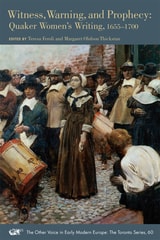
Witness, Warning, and Prophecy
Quaker Women's Writing, 1655-1700Edited by Teresa Feroli and Margaret Olofson Thickstun
Iter Press, 2018
The Other Voice in Early Modern Europe - The Toronto Series: Volume 60
Witnesses to Beatitude
Seven Romanian Greek Catholic Bishops Under CommunismFrancisca Băltăceanu
Catholic University of America Press, 2026
Wizards and Scientists
Explorations in Afro-Cuban Modernity and TraditionStephan Palmié
Duke University Press, 2002
Highlighting the ways that Afro-Cuban discourses serve as a means of moral analysis of social action, Palmié suggests that the supposedly irrational premises of Afro-Cuban religious traditions not only rival Western rationality in analytical acumen but are integrally linked to rationality itself. Afro-Cuban religion is as “modern” as nuclear thermodynamics, he claims, just as the Caribbean might be regarded as one of the world’s first truly “modern” locales: based on the appropriation and destruction of human bodies for profit, its plantation export economy anticipated the industrial revolution in the metropolis by more than a century. Working to prove that modernity is not just an aspect of the West, Palmié focuses on those whose physical abuse and intellectual denigration were the price paid for modernity’s achievement. All cultures influenced by the transcontinental Atlantic economy share a legacy of slave commerce. Nevertheless, local forms of moral imagination have developed distinctive yet interrelated responses to this violent past and the contradiction-ridden postcolonial present that can be analyzed as forms of historical and social analysis in their own right.
Wolves within the Fold
Religious Leadership and Abuses of PowerShupe, Anson
Rutgers University Press, 1998
The power of religion as a symbolic, salvationÐpromising enterprise resides in its authority to create and shape reality for believers and command their obedience. This power can inspire tremendous acts of human kindness, charity, compassion, and hope. But witch hunts, inquisitions, crusades, and pogroms show us how religious authority can be used for far darker purposes. This abuse of power by religious authorities at the expense of their followers is termed clergy malfeasance by editor Anson Shupe and examined by the contributors to Wolves within the Fold.
The essays provide an innovative examination of behavior that is sometimes illegal and always unethical, sometimes punished but often not. Topics range from a cultural study of Aum Shinrikyo, the Japanese apocalyptic group now infamous for releasing lethal gas into the Tokyo subway system, to a sociological analysis of financial scandals among evangelical religious groups. Groups analyzed include the Roman Catholic Church, Protestant denominations, televangelists, and the Hare Krishnas.
Woman in the Wilderness
Letters of Harriet Wood Wheeler, Missonary Wife, 1832-1892Nancy Bunge
Michigan State University Press, 2010
Harriet's letters reveal her experiences with actors and institutions that played pivotal roles in the history of American women: the nascent literate female work force at the mills in Lowell, Massachusetts; the Ipswich Female Seminary, which was one of the first schools for women teachers; women's associations, especially in churches; and the close and enduring ties that characterized women's relationships in the late nineteenth century.
Harriet's letters also provide an intimate view of the relationships between American Indians and Euro-Americans in the Great Lakes region, where she settled with her Christian missionary husband.
Womanism Rising
Edited by Layli Maparyan
University of Illinois Press, 2025
Maparyan organizes the contributions around five key ideas. The first section looks at womanist self-care as a life-saving strategy. The second examines healing the Earth as a prerequisite to healing ourselves. In Part Three, the essays illuminate how womanism’s politics of invitation provides a strategy for enlarging humanity’s circle of inclusion, while Part Four considers womanism as both a challenge and antidote to dehumanization. The final section delves into womanism’s potential for constructing worlds and futures. In addition, Maparyan includes a section of works by womanist visual artists.
Defiant and far-sighted, Womanism Rising takes readers on a journey into a new generation of concepts, ideas, and strategies for womanist studies.
Womanist Interpretations of the Bible
Expanding the DiscourseGay L. Byron
SBL Press, 2016
Expand the discourse and open the spheres of engagement to include new voices of scholars and bold, innovative interpretive approaches
This edited volume brings together cross-generational and cross-cultural readings of the Bible and other sacred sources by including scholars from the Caribbean, India, and Africa who have not traditionally fit into the narrow U.S., African American paradigm for understanding womanist biblical interpretation. The volume engages the reader in a wide range of interdisciplinary methods and perspectives, such as gender and feminist criticism, social-scientific methods, post-colonial and psychoanalytical theory that emphasize the inherently intersectional dynamics of race, ethnicity, and class at work in womanist thought and analysis.
Features
- Topics include the Black Lives Matter movement, domestic violence, and AIDS, while at the same time uncovering the roles of children, women, and other marginalized persons in biblical narratives
- Coverage of Hebrew Bible and New Testament texts, as well as Ifa spiritual narratives, Hindu scripture, and Ethiopic texts
- Responses from four respected womanist and feminist critics: Katherine Doob Sakenfeld, Emilie Townes, Layli (Phillips) Maparyan, and Sarojini Nadar
Women Embracing Islam
Gender and Conversion in the WestEdited by Karin van Nieuwkerk
University of Texas Press, 2006
Many Westerners view Islam as a religion that restricts and subordinates women in both private and public life. Yet a surprising number of women in Western Europe and America are converting to Islam. What attracts these women to a belief system that is markedly different from both Western Christianity and Western secularism? What benefits do they gain by converting, and what are the costs? How do Western women converts live their new Islamic faith, and how does their conversion affect their families and communities? How do women converts transmit Islamic values to their children? These are some of the questions that Women Embracing Islam seeks to answer.
In this vanguard study of gender and conversion to Islam, leading historians, sociologists, anthropologists, and theologians investigate why non-Muslim women in the United States, several European countries, and South Africa are converting to Islam. Drawing on extensive interviews with female converts, the authors explore the life experiences that lead Western women to adopt Islam, as well as the appeal that various forms of Islam, as well as the Nation of Islam, have for women. The authors find that while no single set of factors can explain why Western women are embracing Islamic faith traditions, some common motivations emerge. These include an attraction to Islam's high regard for family and community, its strict moral and ethical standards, and the rationality and spirituality of its theology, as well as a disillusionment with Christianity and with the unrestrained sexuality of so much of Western culture.
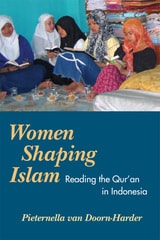
Women Shaping Islam
Reading the Qu'ran in IndonesiaPieternella van Doorn-Harder
University of Illinois Press, 2006
In Women Shaping Islam, Pieternella van Doorn-Harder explores the work of these contemporary women leaders, examining their attitudes toward the rise of radical Islamists; the actions of the authoritarian Soeharto regime; women's education and employment; birth control and family planning; and sexual morality. Ultimately, van Doorn-Harder reveals the many ways in which Muslim women leaders understand and utilize Islam as a significant force for societal change; one that ultimately improves the economic, social, and psychological condition of women in Indonesian society.
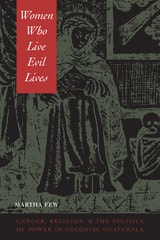
Women Who Live Evil Lives
Gender, Religion, and the Politics of Power in Colonial GuatemalaBy Martha Few
University of Texas Press, 2002
Women Who Live Evil Lives documents the lives and practices of mixed-race, Black, Spanish, and Maya women sorcerers, spell-casters, magical healers, and midwives in the social relations of power in Santiago de Guatemala, the capital of colonial Central America. Men and women from all sectors of society consulted them to intervene in sexual and familial relations and disputes between neighbors and rival shop owners; to counter abusive colonial officials, employers, or husbands; and in cases of inexplicable illness.
Applying historical, anthropological, and gender studies analysis, Martha Few argues that women's local practices of magic, curing, and religion revealed opportunities for women's cultural authority and power in colonial Guatemala. Few draws on archival research conducted in Guatemala, Mexico, and Spain to shed new light on women's critical public roles in Santiago, the cultural and social connections between the capital city and the countryside, and the gender dynamics of power in the ethnic and cultural contestation of Spanish colonial rule in daily life.
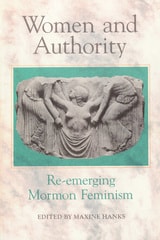
Women and Authority
Re-emerging Mormon FeminismHanks, Maxine
Signature Books, 1992
In 1842, founder Joseph Smith foresaw the LDS Women's Relief Society as "a kingdom of Priests," that he "would ordain them to preside over the society...just the Presidency preside over the church." Originally, the LDS Women's Relief Society paralleled the LDS men's priesthood quorums. Women were "ordained" to various positions, as well as set apart to be healers "with power to rebuke diseases."
In the 19th-century, Mormon theology also spoke of a Mother God, having "all power and glory" with the Father in Heaven. Mormon doctrine also hinted at the divine status of Eve, Mary, and Mary Magdalene.
The 19th-century Woman's Exponent, published by the LDS Women's Relief Society, editorialized in favor of "equal rights before the law, equal pay for equal work, equal political rights." The magazine's masthead read, "The Rights of the Women of Zion and the Rights of Women of All Nations."
One Relief Society founder, Sarah Kimball, referred to herself as "a woman's rights woman," while another leader, Bathsheba Smith, was called on a Relief Society mission in 1870 to preach "woman's rights" throughout southern Utah. According to the Woman's Exponent, a woman's place was not just "in the nursery" but "in the library, the laboratory, the observatory."
Women were encouraged to pursue formal education and career opportunities, study medicine and involve themselves in politics. Mormon women were assured that "when men see that women can exist without them, it will perhaps take a little of the conceit out of some of them."
Women who served inside LDS temples were termed "priestesses," while LDS Women's Relief Society president Eliza R. Snow was known as a "prophetess." Snow discouraged women from confiding their personal issues to male bishops, saying that such matters "should be referred to the Relief Society president and her counselors."
In 1875, LDS Women's Relief Society president, Emmeline B. Wells, could say with confidence: "Let woman speak for herself; she has the right of freedom of speech. Women are too slow in moving forward, afraid of criticism, of being called unwomanly, of being thought masculine. What of it? If men are so much superior to women, the nearer we come up to the manly standard the higher we elevate ourselves."
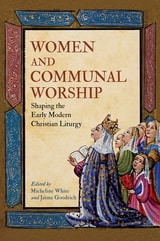
Women and Communal Worship
Shaping the Early Modern Christian LiturgyMicheline White
University of Delaware Press, 2027
Women and Communal Worship advances our understanding of early modern women by uncovering and analyzing Christian women’s engagement with liturgical and communal worship between 1500 and 1750. The Protestant attack on the medieval liturgy was at the heart of the Reformation and Counter-Reformation, but women’s contributions to those momentous changes have been largely overlooked as scholars have focused on women’s private devotional practices and texts. This collection of essays demonstrates that communal worship was vital to women of all confessional stripes. Although they could not generally lead the liturgy, women shaped public devotion in important ways, whether at the level of the local congregation, the household chapel, the convent, the court, or the national church. Communal worship is thus a key site for examining women’s textual, literary, social, and political agency.
Women and Mormonism
Historical and Contemporary PerspectivesEdited by Kate Holbrook and Matthew Bowman
University of Utah Press, 2016
This engaging and seminal volume employs a variety of sources—vivid primary documents, candid surveys, and illuminating oral histories—to explore the perspectives of Latter-day Saint (LDS) women. The expansive approach of this essay collection highlights an assortment of individuals, viewpoints, and challenges that ultimately invigorate our understanding of women and religion. Contributors include lay members and prominent scholars in multiple disciplines, including both LDS and non-LDS viewpoints.
Women and Religion in Medieval and Renaissance Italy
Edited by Daniel Bornstein and Roberto Rusconi
University of Chicago Press, 1996
These essays explore the involvement of women in religious life throughout northern and central Italy and trace the evolution of communities of pious women as they tried to achieve their devotional goals despite the strictures of the ecclesiastical hierarchy. The contributors examine relations between holy women, their devout followers, and society at large.
Including contributions from leading figures in a new generation of Italian historians of religion, this book shows how women were able to carve out broad areas of influence by carefully exploiting the institutional church and by astutely manipulating religious percepts.
Women and Weasels
Mythologies of Birth in Ancient Greece and RomeMaurizio Bettini
University of Chicago Press, 2013
Women and the Society of Biblical Literature
Nicole L. Tilford
SBL Press, 2019
Celebrate 125 years of women's history in the Society of Biblical Literature.
Fourteen years after eight male biblical scholars met in Philip Schaff's study to create the Society of Biblical Literature and Exegesis, the Society admitted its first woman, Anna Ely Rhoads, in 1894. Since Rhoads joined, the careers and lives of women in SBL have changed radically from those earliest members, whose careers were largely tied to the careers of their fathers or spouses and to institutions concerned with the education of young women. Current members now serve on editorial boards and committees; women present papers and publish books; they teach and mentor students. Leading women biblical scholars from around the world reflect on their experiences studying the Bible academically in the twentieth and twenty-first centuries. This volume is a valuable tool for scholars and students interested in the lives and experiences of women in academic fields, the history of the SBL, and developments in the academic study of the Bible.
Features
- An essay on the history of women in the SBL, tracing some of the struggles and accomplishments of the Society's earliest members
- More than twenty-five autobiographical reflections from former SBL presidents, Council members, editors, and active members
- Reflections from members who specialize in a variety of subdisciplines, representing a range of academic and alternative academic careers

Women at Work in the Deuteronomistic History
Mercedes L. García Bachmann
SBL Press, 2013
A thorough study of the socio-economic and literary contexts of women in the Deuteronomistic History
Mercedes L. García Bachmann examines the key texts in the Deuteronomistic History that mention women in service occupations: slaves and dependents, cooks, wet nurses, childcare givers, prostitutes, and scribes. The mostly anonymous women who performed this work for others are sometimes mentioned only in a single verse. Consequently, they often are as unrecognized in modern scholarship as they seem in the biblical text. García Bachmann shows that these women were honored not in relation to matters such as sexual purity or marital faithfulness but on account of the valuable service that they provided.
- A close examination of unnamed women
- A review of previous work in feminist, ancient Near Eastern, biblical, and social-scientific studies
- Extensive coverage of Hebrew terms used for women workers
Women in Early Christianity
Translations from Greek TextsPatricia Cox Miller
Catholic University of America Press, 2005

Women in the Vanishing Cloister
Organizational Decline in Catholic Religious Orders in the United StatesEbaugh, Helen Rose Fuchs
Rutgers University Press, 1993
To illustrate the problem, Ebaugh takes us into a declining order, here named the Sisters of Service. In 1990, only one candidate sought admission to the order, and the median age of members reached 70. While these demographic changes were occurring, the sisters adapted themselves to the reforms of Vatican II. The concept of a cloistered life faded. Nuns sought college degrees, gave up their habits, moved into apartments, and began to identify with the outside world. Vatican II further encouraged the nuns to democratize and decentralize. Many nuns accepted jobs that paid poorly but were consistent with their goal of social service. They identified with the feminist movement and in turn influenced it.
Ebaugh shows how declining orders have not followed the sociological model of organizational decline, one typically marked by centralized authority, a fear of risk taking, lack of direction, internal conflicts over turf, and low morale. Rather, they have established democratic structures, reduced internal positions in favor of committing resources to empowering the poor, abandoned security in favor of diversity in jobs and missions, minimized conflicts over scarce resources, and exhibited a sense of freedom rather than poor morale.
Although Ebaugh is convinced that Catholic orders in the U.S. will not continue for long, non-canonical communities of women and associate programs are growing. Dedicated women can perpetuate the mission and spirit of the order without becoming vowed members.
Women of Assur and Kanesh
Texts from the Archives of Assyrian MerchantsCécile Michel
SBL Press, 2020
Vivid sources for reconstructing the lives of Assyrian women
In this collection Cécile Michel translates into English texts related to wives and daughters of merchants and to their activities in nineteenth-century BCE Aššur and Kaneš. Discovered in excavations of the Old Assyrian private archives at Kültepe (ancient Kaneš) in Central Anatolia, these letters sent from Aššur reflect the preeminent role of Assyrian women within the family and in the domestic economy, as well as their contribution to long-distance trade. Contracts and other legal texts excavated at Kültepe attest to Assyrian and Anatolian women as parties in marriage and divorce contracts, last wills, loans, and purchase contracts. These unique finds paint a vivid portrait of women who aspire to be socially respected and provide a rare opportunity to reconstruct their daily lives as both businesswomen and housewives.
Features
- More than three hundred letters and documents transliterated and translated with commentary
- An overview of the study of women and gender in Assyriology
- A reconstruction of women's roles as textile producers, investors, and creditors within a long-distance commercial network
Cécile Michel is Senior Researcher at the National Center for Scientific Research (CNRS, France) and Professor at Hamburg University (Germany). She is a member of the international group of scholars in charge of the decipherment of the 23,000 tablets found at Kültepe (ancient Kaneš) and of the Kültepe archaeological team. She is the coeditor of and contributor to The Role of Women in Work and Society in the Ancient Near East (2016), Textile Terminologies from the Orient to the Mediterranean and Europe, 1000 BC to 1000 AD (2017), and Mathematics, Administrative and Economic Activities in Ancient Worlds (2020).
Women of Valor
Orthodox Jewish Troll Fighters, Crime Writers, and Rock Stars in Contemporary Literature and CultureKaren E. H. Skinazi
Rutgers University Press, 2018
Media portrayals of Orthodox Jewish women frequently depict powerless, silent individuals who are at best naive to live an Orthodox lifestyle, and who are at worst, coerced into it. Karen E. H. Skinazi delves beyond this stereotype in Women of Valor to identify a powerful tradition of feminist literary portrayals of Orthodox women, often created by Orthodox women themselves. She examines Orthodox women as they appear in memoirs, comics, novels, and movies, and speaks with the authors, filmmakers, and musicians who create these representations. Throughout the work, Skinazi threads lines from the poem “Eshes Chayil,” the Biblical description of an Orthodox “Woman of Valor.” This proverb unites Orthodoxy and feminism in a complex relationship, where Orthodox women continuously question, challenge, and negotiate Orthodox and feminist values. Ultimately, these women create paths that unite their work, passions, and families under the framework of an “Eshes Chayil,” a woman who situates religious conviction within her own power.