Results by title
4127 books match the query 'Science' and 128 start with w
When Science and Christianity Meet
Edited by David C. Lindberg and Ronald L. Numbers
University of Chicago Press, 2003
Who Knows
From Quine to a Feminist EmpiricismLynn Hankinson Nelson
Temple University Press, 1992
In the past fifteen years, feminist science critics have, for the most part, rejected empiricism because of its identification with positivism. Various assumptions of both empiricists and feminists, including the "tenet" that individualism is an essential element of empiricism, have led to the belief that feminist science criticism is not a part of science. This view continues the myth that science is an autonomous and apolitical activity. Building on the work of W.V.0. Quine, Lynn Nelson clears away these obstacles and establishes a framework for a much-needed dialogue between feminist science critics and other scientists and scholars about the nature of science. She makes a case for a feminist empiricism that retains a crucial role for experience, but separates empiricism from individualism.
Following Quine, Nelson argues that empiricism is a theory of evidence and is distinct from empiricist accounts of science that have been built on it. She urges feminists and empiricists to work together to develop a feminist empiricism, a view of science that can account for its obvious success in explaining and predicting experience and can encompass feminist insights into relationships among gender, politics, and science.
Basing her arguments on Quine’s non-foundationalist view that theories are bridges of our own construction, the author insists, as does Quine, that the construction of these bridges is constrained by experience. She determines that individualism is inconsistent with key Quinean positions and that empiricism can survive the demise of individualism. Clearly diverging from Quine, Nelson proposes the view that the evolving network of our theories does and should incorporate political views, including those shaped by, and shaping in turn, our experiences of gender.
Who Owns America?
Social Conflict over Property RightsEdited by Harvey M. Jacobs
University of Wisconsin Press, 1998
Land ownership by individual citizens is a cornerstone of American heritage and a centerpiece of the American dream. Thomas Jefferson called it the key to our success as a democracy. Yet the question of who owns America not only remains unanswered but is central to a fundamental conflict that can pit private property rights advocates against government policymakers and environmentalists.
Land use authority Harvey M. Jacobs has gathered a provocative collection of perspectives from eighteen contributors in the fields of law, history, anthropology, economics, sociology, forestry, and environmental studies. Who Owns America? begins with the popular view of land ownership as seen though the television show Bonanza! It examines public regulation of private land; public land management; the roles culture and ethnic values play in land use; and concludes with Jacobs’ title essay.
Who Owns America? is a powerful and illuminating exploration of the very terrain that makes us Americans. Its broad set of theoretical and historical perspectives will fascinate historians, environmental activists, policy makers, and all who care deeply about the land we share.

Who Rules the Waves?
Piracy, Overfishing and Mining the OceansDenise Russell
Pluto Press, 2010
With piracy raging in the Indian Ocean, international disputes over undersea oil and gas, and chronic overfishing, the oceans have rarely been subject to such varied and environmentally damaging conflict outside a world war. In Who Rules the Waves? Denise Russell gives us a rare insight into these issues and how they could be resolved.
International law states that a coastal country has territorial rights for 12 miles into the sea beyond its coastline, and economic rights for 200 miles, but in practice many countries have virtually no control over their own waters, and there is no international agency powerful enough to settle disputes. Russell provides a thorough examination of the politics of the sea, showing that without a radical change in ocean governance, accelerating climate change and overuse of the sea's resources is likely to have catastrophic effects.

Who Succeeds in Science?
The Gender DilemmaGerald Holton and Gerhard Sonnert
Rutgers University Press, 1995
Why don’t more women become scientists? And why do those who do become scientists often face more difficulties than their male counterparts? Every year, about a quarter of a million young men and women in the United States receive their first academic degree in science, mathematics, or engineering. A small fraction will eventually become research scientists. But many who start out with that goal fail to reach it––for reasons that may have less to do with their scientific ability than with their gender.
Drawing on a wealth of information (699 questionnaires and 200 interviews) from men and women who gave every promise of scientific achievement, Gerhard Sonnert and Gerald Holton illuminate the partly gender-driven dynamics of “the leaky scientific pipeline.” At the heart of this book are gripping personal life stories of ten women and ten men: half became highly successful scientists, the rest left research science. In their own voices, they talk candidly about their career paths, the obstacles and assists they encountered, the difficulties and rewards of attempting to combine a family life with a science career.
This highly readable analysis of the gender dimension in scientific careers––and its clear-headed advice––will be of great interest to everyone considering a career in science as well as to teachers, parents, and active scientists. Academics in sociology of science and gender studies as well as decision-makers in the areas of human resources and science policy will also welcome its discussions of general issues and policy recommendations.

Who's a Good Dog?
And How to Be a Better HumanJessica Pierce
University of Chicago Press, 2023
A guide to cultivating a shared life of joy and respect with our dogs.
Who’s a Good Dog? is an invitation to nurture more thoughtful and balanced relationships with our canine companions. By deepening our curiosity about what our dogs are experiencing, and by working together with them in a spirit of collaboration, we can become more effective and compassionate caregivers.
With sympathy for the challenges met by both dogs and their humans, bioethicist Jessica Pierce explores common practices of caring for dogs, including how we provide exercise, what we feed, how and why we socialize and train, and how we employ tools such as collars and leashes. She helps us both to identify potential sources of fear and anxiety in our dogs’ lives and to expand practices that provide physical and emotional nourishment. Who’s a Good Dog? also encourages us to think more critically about what we expect of our dogs and how these expectations can set everyone up for success or failure. Pierce offers resources to help us cultivate attentiveness and kindness, inspiring us to practice the art of noticing, of astonishment, of looking with fresh eyes at these beings we think we know so well. And more than this, she makes her findings relatable by examining facets of her relationship with Bella, the dog in her life. As Bella shows throughout, all dogs are good dogs, and we, as humans and dog guardians, could be doing a little bit better to get along with them and give them what they need.
Who's a Good Human?
Practical Exercises for Living Mindfully with DogsJessica Pierce
University of Chicago Press, 2026
Most dog books focus on how to change our companion’s behavior; very few ask how we might change our own.
This workbook and journal, created by ethicist, celebrated author, and dog guardian Jessica Pierce, helps readers learn to live more mindfully with their dogs. Across ten chapters filled with exercises grounded in behavioral science and contemplative practice, Pierce invites readers to mirror their dog’s movements, savor shared silence, examine the impulse to command, reflect on past relationships with dogs, and prepare for the inevitabilities of aging and loss. She teaches readers how to view their dogs with the care of a field biologist—keeping notes, mapping relationships, and generally observing to better understand the dog’s world. She also challenges long-held assumptions about traditional dog training and asks whether our methods truly serve our dogs or simply reassure us as humans.
Many readers of Pierce’s acclaimed earlier books asked for a practical guide to help them put ideas into daily practice. For both those readers and those new to her work, this workbook is her response: a human-training manual informed by science, ethics, and lived experience. Each chapter begins with a short introduction to orient the reader, followed by self-directed exercises, reflection prompts, and shared experiences from living with her dog, Bella. Annotated further-reading sections point to both accessible books and peer-reviewed research. With its blend of gentle guidance and intellectual rigor, this workbook helps readers cultivate a more curious, collaborative, and compassionate relationship with the dogs they love.
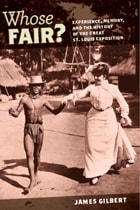
Whose Fair?
Experience, Memory, and the History of the Great St. Louis ExpositionJames Gilbert
University of Chicago Press, 2009
The 1904 St. Louis World’s Fair was a major event in early-twentieth-century America. Attracting millions of tourists, it exemplified the Victorian predilection for public spectacle. The Fair has long served as a touchstone for historians interested in American culture prior to World War I and has endured in the memories of generations of St. Louis residents and visitors. In Whose Fair? James Gilbert asks: what can we learn about the lived experience of fairgoers when we compare historical accounts, individual and collective memories, and artifacts from the event?
Exploring these differing, at times competing, versions of history and memory prompts Gilbert to dig through a rich trove of archival material. He examines the papers of David Francis, the Fair’s president and subsequent chief archivist; guidebooks and other official publications; the 1944 film Meet Me in St. Louis; diaries, oral histories, and other personal accounts; and a collection of striking photographs. From this dazzling array of sources, Gilbert paints a lively picture of how fairgoers spent their time, while also probing the ways history and memory can complement each other.
Why Birds Matter
Avian Ecological Function and Ecosystem ServicesEdited by Çagan H. Sekercioglu, Daniel G. Wenny, and Christopher J. Whelan
University of Chicago Press, 2016
The first book to approach ecosystem services from an ornithological perspective, Why Birds Matter asks what economic value we can ascribe to those services, if any, and how this value should inform conservation. Chapters explore the role of birds in such important ecological dynamics as scavenging, nutrient cycling, food chains, and plant-animal interactions—all seen through the lens of human well-being—to show that quantifying avian ecosystem services is crucial when formulating contemporary conservation strategies. Both elucidating challenges and providing examples of specific ecosystem valuations and guidance for calculation, the contributors propose that in order to advance avian conservation, we need to appeal not only to hearts and minds, but also to wallets.

Why Don't Jumbo Jets Flap Their Wings?
Flying Animals, Flying Machines, and How They Are DifferentDavid E. Alexander
Rutgers University Press, 2009
Why Don’t Jumbo Jets Flap Their Wings? offers a fascinating explanation of how nature and human engineers each arrived at powered flight. What emerges is a highly readable account of two very different approaches to solving the same fundamental problems of moving through the air, including lift, thrust, turning, and landing. The book traces the slow and deliberate evolutionary process of animal flight—in birds, bats, and insects—over millions of years and compares it to the directed efforts of human beings to create the aircraft over the course of a single century.
Among the many questions the book answers:
- Why are wings necessary for flight?
- How do different wings fly differently?
- When did flight evolve in animals?
- What vision, knowledge, and technology was needed before humans could learn to fly?
- Why are animals and aircrafts perfectly suited to the kind of flying they do?
David E. Alexander first describes the basic properties of wings before launching into the diverse challenges of flight and the concepts of flight aerodynamics and control to present an integrated view that shows both why birds have historically had little influence on aeronautical engineering and exciting new areas of technology where engineers are successfully borrowing ideas from animals.
Why Ecology Matters
Charles J. Krebs
University of Chicago Press, 2016
Highlighting key principles in ecology—from species extinction to the sun’s role in powering ecosystems—each chapter introduces a general question, illustrates that question with real-world examples, and links it to pressing ecological issues in which humans play a central role, such as the spread of invasive species, climate change, overfishing, and biodiversity conservation. While other introductions to ecology are rooted in complex theory, math, or practice and relegate discussions of human environmental impacts and their societal implications to sidebars and appendices, Why Ecology Matters interweaves these important discussions throughout. It is a book rooted in our contemporary world, delving into ecological issues that are perennial, timeless, but could not be more timely.
Why Evolution Works (and Creationism Fails)
Matt Young and Paul K. Strode
Rutgers University Press, 2009
Focusing on what other books omit, how science works and how pseudoscience works, Matt Young and Paul K. Strode demonstrate the futility of “scientific” creationism. They debunk the notion of intelligent design and other arguments that show evolution could not have produced life in its present form.
Concluding with a frank discussion of science and religion, Why Evolution Works (and Creationism Fails) argues that science by no means excludes religion, though it ought tocast doubt on certain religious claims that are contrary to known scientific fact.
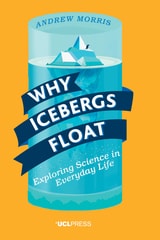
Why Icebergs Float
Exploring Science in Everyday LifeAndrew Morris
University College London, 2016

Why Intelligent Design Fails
A Scientific Critique of the New CreationismEdited by Matt Young and Taner Edis
Rutgers University Press, 2004
Is Darwinian evolution established fact, or a dogma ready to be overtaken by "intelligent design"? This is the debate raging in courtrooms and classrooms across the country.
Why Intelligent Design Fails assembles a team of physicists, biologists, computer scientists, mathematicians, and archaeologists to examine intelligent design from a scientific perspective. They consistently find grandiose claims without merit.
Contributors take intelligent design's two most famous claims--irreducible complexity and information-based arguments--and show that neither challenges Darwinian evolution. They also discuss thermodynamics and self-organization; the ways human design is actually identified in fields such as forensic archaeology; how research in machine intelligence indicates that intelligence itself is the product of chance and necessity; and cosmological fine-tuning arguments.
Intelligent design turns out to be a scientific mistake, but a mistake whose details highlight the amazing power of Darwinian thinking and the wonders of a complex world without design.
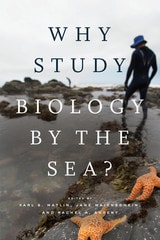
Why Study Biology by the Sea?
Edited by Karl S. Matlin, Jane Maienschein, and Rachel A. Ankeny
University of Chicago Press, 2020
From the Stazione Zoologica in Naples to the Marine Biological Laboratory in Woods Hole, the Amoy Station in China, or the Misaki Station in Japan, students and researchers at seaside research stations have long visited the ocean to investigate life at all stages of development and to convene discussions of biological discoveries. Exploring the history and current reasons for study by the sea, this book examines key people, institutions, research projects, organisms selected for study, and competing theories and interpretations of discoveries, and it considers different ways of understanding research, such as through research repertoires. A celebration of coastal marine research, Why Study Biology by the Sea? reveals why scientists have moved from the beach to the lab bench and back.

Why the Science and Religion Dialogue Matters
Voices from the International Society for Science and ReligionFraser Watts
Templeton Press, 2006
•Munawar Anees on Islam
•B.V. Subbarayappa on Hinduism
•Trinh Xuan Thuan on Buddhism
•Heup Young Kim on Asian Christianity
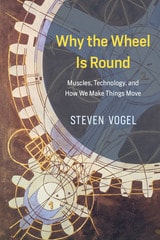
Why the Wheel Is Round
Muscles, Technology, and How We Make Things MoveSteven Vogel
University of Chicago Press, 2016
Steven Vogel combines his engineering expertise with his remarkable curiosity about how things work to explore how wheels and other mechanisms were, until very recently, powered by the push and pull of the muscles and skeletal systems of humans and other animals. Why the Wheel Is Round explores all manner of treadwheels, hand-spikes, gears, and more, as well as how these technologies diversified into such things as hand-held drills and hurdy-gurdies. Surprisingly, a number of these devices can be built out of everyday components and materials, and Vogel’s accessible and expansive book includes instructions and models so that inspired readers can even attempt to make their own muscle-powered technologies, like trebuchets and ballista.
Appealing to anyone fascinated by the history of mechanics and technology as well as to hobbyists with home workshops, Why the Wheel Is Round offers a captivating exploration of our common technological heritage based on the simple concept of rotation. From our leg muscles powering the gears of a bicycle to our hands manipulating a mouse on a roller ball, it will be impossible to overlook the amazing feats of innovation behind our daily devices.
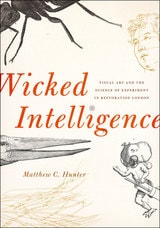
Wicked Intelligence
Visual Art and the Science of Experiment in Restoration LondonMatthew C. Hunter
University of Chicago Press, 2013
Wikipedia and the Politics of Openness
Nathaniel Tkacz
University of Chicago Press, 2014
But what does openness mean, and what would a political theory of openness look like? With Wikipedia and the Politics of Openness, Nathaniel Tkacz uses Wikipedia, the most prominent product of open organization, to analyze the theory and politics of openness in practice—and to break its spell. Through discussions of edit wars, article deletion policies, user access levels, and more, Tkacz enables us to see how the key concepts of openness—including collaboration, ad-hocracy, and the splitting of contested projects through “forking”—play out in reality.
The resulting book is the richest critical analysis of openness to date, one that roots media theory in messy reality and thereby helps us move beyond the vaporware promises of digital utopians and take the first steps toward truly understanding what openness does, and does not, have to offer.
Wild Experiment
Feeling Science and Secularism after DarwinDonovan O. Schaefer
Duke University Press, 2022
Wild Hope
On the Front Lines of Conservation SuccessAndrew Balmford
University of Chicago Press, 2012
Wild Ideas
David Rothenberg
University of Minnesota Press, 1995
A new view of what’s “wild,” and a new path for environmentalism.
At the very heart of American respect for nature, historically and philosophically, is the notion of the wild. This notion comes under scrutiny in Wild Ideas, a collection of essays that bring a fresh and refreshing perspective to the wilderness paradoxically at the center of our civilization.
Blending well-known and new voices, the volume surveys classical and romantic concepts of wilderness, from the scary to the sublime, and shows why neither serves us anymore. Instead, the authors argue for a “wild culture,” in which nature is not opposed to humanity, a mere matter of resources and consumers. A cogent reassessment of the ideas that drive the conservation movement, Wild Ideas points out a new direction for future environmentalism.Among the topics discussed are the confluence of wilderness, empire, and race in the United States; the way the ecology movement uses language; gendered views of the wilderness; maps and topology, and how they affect our view of the wild; healing by the wilderness experience; and the idea of an urban wilderness. Contributors: David Abram; Douglas Buege, U of Wisconsin; Denis Cosgrove, U of London; Robert Greenway, Sonoma State U; Ed Grumbine, Sierra Institute; Marvin Henberg, Linfield College; Irene Klaver, Montana State U; Andrew Light, U of Alberta; Lois Lorentzen, U of San Francisco; Max Oelschlaeger, U of North Texas; R. Murray Schafer; Tom Wolf.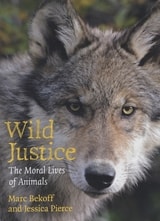
Wild Justice
The Moral Lives of AnimalsMarc Bekoff and Jessica Pierce
University of Chicago Press, 2009
Scientists have long counseled against interpreting animal behavior in terms of human emotions, warning that such anthropomorphizing limits our ability to understand animals as they really are. Yet what are we to make of a female gorilla in a German zoo who spent days mourning the death of her baby? Or a wild female elephant who cared for a younger one after she was injured by a rambunctious teenage male? Or a rat who refused to push a lever for food when he saw that doing so caused another rat to be shocked? Aren’t these clear signs that animals have recognizable emotions and moral intelligence? With Wild Justice Marc Bekoff and Jessica Pierce unequivocally answer yes.
Marrying years of behavioral and cognitive research with compelling and moving anecdotes, Bekoff and Pierce reveal that animals exhibit a broad repertoire of moral behaviors, including fairness, empathy, trust, and reciprocity. Underlying these behaviors is a complex and nuanced range of emotions, backed by a high degree of intelligence and surprising behavioral flexibility. Animals, in short, are incredibly adept social beings, relying on rules of conduct to navigate intricate social networks that are essential to their survival. Ultimately, Bekoff and Pierce draw the astonishing conclusion that there is no moral gap between humans and other species: morality is an evolved trait that we unquestionably share with other social mammals.
Sure to be controversial, Wild Justice offers not just cutting-edge science, but a provocative call to rethink our relationship with—and our responsibilities toward—our fellow animals.
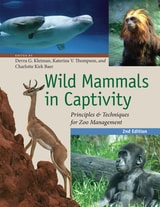
Wild Mammals in Captivity
Principles and Techniques for Zoo Management, Second EditionEdited by Devra G. Kleiman, Katerina V. Thompson, and Charlotte Kirk Baer
University of Chicago Press, 2010
Zoos, aquaria, and wildlife parks are vital centers of animal conservation and management. For nearly fifteen years, these institutions have relied on Wild Mammals in Captivity as the essential reference for their work. Now the book reemerges in a completely updated second edition. Wild Mammals in Captivity presents the most current thinking and practice in the care and management of wild mammals in zoos and other institutions. In one comprehensive volume, the editors have gathered the most current information from studies of animal behavior; advances in captive breeding; research in physiology, genetics, and nutrition; and new thinking in animal management and welfare.
In this edition, more than three-quarters of the text is new, and information from more than seventy-five contributors is thoroughly updated. The standard text for all courses in zoo biology, Wild Mammals in Captivity will, in its new incarnation, continue to be used by zoo managers, animal caretakers, researchers, and anyone with an interest in how to manage animals in captive conditions.
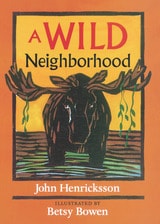
Wild Neighborhood
John Henricksson
University of Minnesota Press, 1997
An entertaining portrait of the creatures that share our place in the woods.
John Henricksson’s neighbors stop by to chat or to have a bite to eat or just to sit and watch. But in his Wild Neighborhood the visitors are the black bear, gray jay, timber wolf, owl, white-tailed deer, raven, and the moose.
A Wild Neighborhood is a collection of elegantly written essays about these creatures. From kitchen-table gossip about the black bear’s recent attempts to raid the bird feeder, to the retelling of Native American myths about the mischievous raven, Henricksson shows a love and understanding of the residents with whom he shares the narrow wedge of the Superior National Forest in northeastern Minnesota.Henricksson writes of the personal relationships that develop while living in the woods. He tells of the joy of helping a deer survive a tough winter and the mystery of animals he calls “ghosts”—species that are extinct or near extinct but still have a fleeting presence in the area. Award-winning artist Betsy Bowen, author of Antler, Bear, Canoe: A Northwoods Alphabet Year, beautifully depicts the denizens of the forest. Her twenty-four woodcuts reflect, often humorously, Henricksson’s respect for and love of northwoods creatures.This personal account of a vibrant community in the woods will appeal to readers of all ages and make a beautiful gift for everyone who has admired the creatures of his or her own wild neighborhood.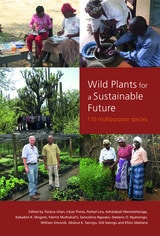
Wild Plants for a Sustainable Future
Edited by Tiziana Ulian, César Flores, Rafael Lira, Avhatakali Mamatsharaga, Kebadire K. Mogotsi, Patrick Muthoka, Samodimo Ngwako, Desterio O. Nyamongo, William Omondi, Abdoul K. Sanogo, Sidi Sanogo, and Efisio Mattana
Royal Botanic Gardens, Kew, 2018
The publication forms one of the main dissemination achievements of The MGU–Useful Plants Project, developed under Kew’s Millennium Seed Bank partnership, to conserve and use sustainably wild plants important for rural communities in Botswana, Kenya, Mali, South Africa, and Mexico. Institutional partners led the project in each country, involving rural communities, local authorities, and schools. A scientific approach was applied throughout.
The core of this book presents detailed species profiles of 110 plants selected for their importance to communities and livelihoods. The profiles are structured in a clear and consistent format, providing information on taxonomy and nomenclature, plant descriptions, fruit and seed structures, distribution, habitat, uses, known hazards and safety, conservation status, seed conservation, propagation, and trading, along with key references from the literature.
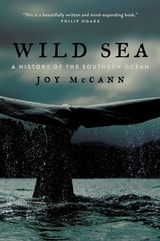
Wild Sea
A History of the Southern OceanJoy McCann
University of Chicago Press, 2019
So begins Joy McCann’s Wild Sea, the remarkable story of the world’s remote Southern, or Antarctic, Ocean. Unlike the Pacific, Atlantic, Indian, and Arctic Oceans with their long maritime histories, little is known about the Southern Ocean. This book takes readers beyond the familiar heroic narratives of polar exploration to explore the nature of this stormy circumpolar ocean and its place in Western and Indigenous histories. Drawing from a vast archive of charts and maps, sea captains’ journals, whalers’ log books, missionaries’ correspondence, voyagers’ letters, scientific reports, stories, myths, and her own experiences, McCann embarks on a voyage of discovery across its surfaces and into its depths, revealing its distinctive physical and biological processes as well as the people, species, events, and ideas that have shaped our perceptions of it. The result is both a global story of changing scientific knowledge about oceans and their vulnerability to human actions and a local one, showing how the Southern Ocean has defined and sustained southern environments and people over time.
Beautifully and powerfully written, Wild Sea will raise a broader awareness and appreciation of the natural and cultural history of this little-known ocean and its emerging importance as a barometer of planetary climate change.
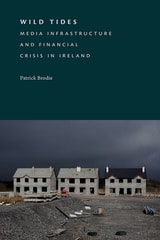
Wild Tides
Media Infrastructure and Financial Crisis in IrelandPatrick Brodie
Duke University Press, 2026
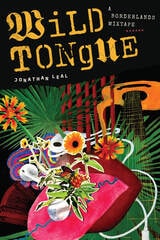
Wild Tongue
A Borderlands MixtapeJonathan Leal
Duke University Press, 2026
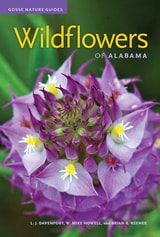
Wildflowers of Alabama
L. J. Davenport, W. Mike Howell, and Brian R. Keener
University of Alabama Press, 2027
A modern, beautifully illustrated guide revealing the hidden relationships, stories, and dazzling diversity of Alabama’s wildflowers across every corner of the state’s landscapes
Wildflowers of Alabama is a comprehensive, visually rich field guide to the state’s naturally occurring flowering plants, showcasing both familiar favorites and remarkable discoveries. Covering 125 plant families and more than 400 species, the book pairs clear, authoritative text with more than 500 color photographs that highlight the beauty, structure, and fine details of each plant across Alabama’s diverse ecosystems.
Organized using a modern, genetics-based classification system, this guide presents flowering plants according to their evolutionary relationships. Each family opens with an accessible overview, followed by detailed species accounts featuring botanical descriptions, insightful photographs, and contextual notes on names, natural history, and plant-human connections when available. A separate color key and native species list offer additional pathways for identification and discovery.
Building on decades of botanical expertise, authors L. J. Davenport, W. Mike Howell, and Brian R. Keener deliver an up-to-date, engaging resource that reflects the current state of plant science. More than a simple identification manual, Wildflowers of Alabama is an educational and inspiring celebration of the state’s extraordinary botanical diversity, designed for enthusiasts, students, and educators alike.
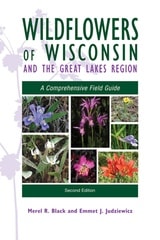
Wildflowers of Wisconsin and the Great Lakes Region
A Comprehensive Field GuideMerel R. Black and Emmet J. Judziewicz
University of Wisconsin Press, 2009
• more than 1,100 species from 459 genera in 100 families
• many rare and previously overlooked species
• 2,100 color photographs and 300 drawings
• Wisconsin distribution maps for almost all plants
• brief descriptions including distinguishing characteristics of the species
• Wisconsin status levels for each species of wildflower (native, invasive, endangered, etc.)
• derivation of Latin names.
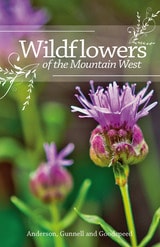
Wildflowers of the Mountain West
Richard M. Anderson, Jay Dee Gunnell, Jerry L. Goodspeed
Utah State University Press, 2012
Many recreational hikers have stopped along the trail to admire a wildflower only to wonder what, exactly, they are looking at. Wildflowers of the Mountain West is a useful field guide that makes flower identification easy for the general outdoor enthusiast.
Many available plant guides are too technical or cumbersome for non-specialists to embrace. Covering New Mexico, Colorado, Wyoming, Idaho, Utah, Nevada and Oregon, this book is perfect for the enthusiasts who has little botanical knowledge but would like to know more about the wildflowers they are seeing. Organized by flower color for easy reference, plant records include the common and scientific names, a description of typical characteristics, habitat information and distribution maps, look-alike species, color photographs, and informative commentary. In addition, the book provides a useful introduction to the Mountain West region, along with line drawings to illustrate basic flower parts, shapes, and arrangements; a glossary of common botanical terms; a quick search key; and an index.
The book is spiral-bound, making it easy to bring along while hiking, backpacking, or biking, and stunning full color photographs make visual confirmation of flower type simple and straightforward.
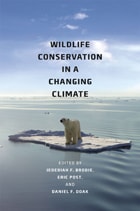
Wildlife Conservation in a Changing Climate
Edited by Jedediah F. Brodie, Eric S. Post, and Daniel F. Doak
University of Chicago Press, 2012
Wildlife in the Anthropocene
Conservation after NatureJamie Lorimer
University of Minnesota Press, 2015
Elephants rarely breed in captivity and are not considered domesticated, yet they interact with people regularly and adapt to various environments. Too social and sagacious to be objects, too strange to be human, too captive to truly be wild, but too wild to be domesticated—where do elephants fall in our understanding of nature?
In Wildlife in the Anthropocene, Jamie Lorimer argues that the idea of nature as a pure and timeless place characterized by the absence of humans has come to an end. But life goes on. Wildlife inhabits everywhere and is on the move; Lorimer proposes the concept of wildlife as a replacement for nature. Offering a thorough appraisal of the Anthropocene—an era in which human actions affect and influence all life and all systems on our planet— Lorimer unpacks its implications for changing definitions of nature and the politics of wildlife conservation. Wildlife in the Anthropocene examines rewilding, the impacts of wildlife films, human relationships with charismatic species, and urban wildlife. Analyzing scientific papers, policy documents, and popular media, as well as a decade of fieldwork, Lorimer explores the new interconnections between science, politics, and neoliberal capitalism that the Anthropocene demands of wildlife conservation.
Imagining conservation in a world where humans are geological actors entangled within and responsible for powerful, unstable, and unpredictable planetary forces, this work nurtures a future environmentalism that is more hopeful and democratic.
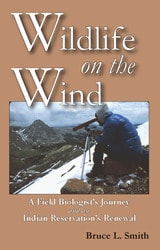
Wildlife on the Wind
A Field Biologist's Journey and an Indian Reservation's RenewalBruce L Smith
Utah State University Press, 2010
In the heart of Wyoming sprawls the ancient homeland of the Eastern Shoshone Indians, who were forced by the U.S. government to share a reservation in the Wind River basin and flanking mountain ranges with their historical enemy, the Northern Arapahos. Both tribes lost their sovereign, wide-ranging ways of life and economic dependence on decimated buffalo. Tribal members subsisted on increasingly depleted numbers of other big game—deer, elk, moose, pronghorn, and bighorn sheep. In 1978, the tribal councils petitioned the U.S. Fish and Wildlife Service to help them recover their wildlife heritage. Bruce Smith became the first wildlife biologist to work on the reservation. Wildlife on the Wind recounts how he helped Native Americans change the course of conservation for some of America's most charismatic wildlife.
Wildness
Relations of People and PlaceEdited by Gavin Van Horn and John Hausdoerffer
University of Chicago Press, 2017
This book charts a different path. Exploring how people can become attuned to the wild community of life and also contribute to the well-being of the wild places in which we live, work, and play, Wildness brings together esteemed authors from a variety of landscapes, cultures, and backgrounds to share their stories about the interdependence of everyday human lifeways and wildness. As they show, far from being an all or nothing proposition, wildness exists in variations and degrees that range from cultivated soils to multigenerational forests to sunflowers pushing through cracks in a city alley. Spanning diverse geographies, these essays celebrate the continuum of wildness, revealing the many ways in which human communities can nurture, adapt to, and thrive alongside their wild nonhuman kin.
From the contoured lands of Wisconsin’s Driftless region to remote Alaska, from the amazing adaptations of animals and plants living in the concrete jungle to indigenous lands and harvest ceremonies, from backyards to reclaimed urban industrial sites, from microcosms to bioregions and atmospheres, manifestations of wildness are everywhere. With this book, we gain insight into what wildness is and could be, as well as how it might be recovered in our lives—and with it, how we might unearth a more profound, wilder understanding of what it means to be human.
Wildness: Relations of People and Place is published in association with the Center for Humans and Nature, an organization that brings together some of the brightest minds to explore and promote human responsibilities to each other and the whole community of life. Visit the Center for Humans and Nature's Wildness website for upcoming events and a series of related short films.
William James at the Boundaries
Philosophy, Science, and the Geography of KnowledgeFrancesca Bordogna
University of Chicago Press, 2008
What was the goal of this unusual speech? Rather than an oddity, Francesca Bordogna asserts that the APA address was emblematic—it was just one of many gestures that James employed as he plowed through the barriers between academic, popular, and pseudoscience, as well as the newly emergent borders between the study of philosophy, psychology, and the “science of man.” Bordogna reveals that James’s trespassing of boundaries was an essential element of a broader intellectual and social project. By crisscrossing divides, she argues, James imagined a new social configuration of knowledge, a better society, and a new vision of the human self. As the academy moves toward an increasingly interdisciplinary future, William James at the Boundaries reintroduces readers to a seminal influence on the way knowledge is pursued.

William James, MD
Philosopher, Psychologist, PhysicianEmma K. Sutton
University of Chicago Press, 2023
William James is known as a nineteenth-century philosopher, psychologist, and psychical researcher. Less well-known is how his interest in medicine influenced his life and work, driving his ambition to change the way American society conceived of itself in body, mind, and soul. William James, MD offers an account of the development and cultural significance of James’s ideas and works, and establishes, for the first time, the relevance of medical themes to his major lines of thought.
James lived at a time when old assumptions about faith and the moral and religious possibilities for human worth and redemption were increasingly displaced by a concern with the medically “normal” and the perfectibility of the body. Woven into treatises that warned against humanity’s decline, these ideas were part of the eugenics movement and reflected a growing social stigma attached to illness and invalidism, a disturbing intellectual current in which James felt personally implicated. Most chronicles of James’s life have portrayed a distressed young man, who then endured a psychological or spiritual crisis to emerge as a mature thinker who threw off his pallor of mental sickness for good. In contrast, Emma K. Sutton draws on his personal correspondence, unpublished notebooks, and diaries to show that James considered himself a genuine invalid to the end of his days. Sutton makes the compelling case that his philosophizing was not an abstract occupation but an impassioned response to his own life experiences and challenges. To ignore the medical James is to misread James altogether.
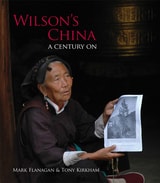
Wilson's China
A Century OnMark Flanagan and Tony Kirkham
Royal Botanic Gardens, Kew, 2009
Wilson’s China draws on Wilson’s writings and the authors’ own travels in the wild areas of China today to deliver a fascinating account of the pioneering botanist’s travels and adventures. Armed with copies of Wilson’s own glass-plate photos of turn-of-the-century Sichuan Province, Mark Flanagan and Tony Kirkham set out to retrace Wilson’s footsteps—and with the help of Chinese guides and local knowledge, they have created new versions of Wilson’s photos. The resulting then-and-now presentation offers fascinating insight into the widespread change—and remarkable continuity—in China over a century, and serves as an informative, appreciative homage to one of history’s greatest plant hunters.

Wily Violets and Underground Orchids
Revelations of a BotanistPeter Bernhardt
University of Chicago Press, 2003

Wind Power and Other Energy Options
David Rittenhouse Inglis
University of Michigan Press, 1978

Wind and Power in the Anthropocene
Dominic Boyer and Cymene Howe
Duke University Press, 2019
In his volume, Energopolitics, Boyer examines the politics of wind power and how it is shaped by myriad factors, from the legacies of settler colonialism and indigenous resistance to state bureaucracy and corporate investment. Drawing on interviews with activists, campesinos, engineers, bureaucrats, politicians, and bankers, Boyer outlines the fundamental impact of energy and fuel on political power. Boyer also demonstrates how large conceptual frameworks cannot adequately explain the fraught and uniquely complicated conditions on the Isthmus, illustrating the need to resist narratives of Anthropocenic universalism and to attend to local particularities.
In her volume, Ecologics, Howe narrates how an antidote to the Anthropocene became both failure and success. Tracking the development of what would have been Latin America's largest wind park, Howe documents indigenous people's resistance to the project and the political and corporate climate that derailed its renewable energy potential. Using feminist and more-than-human theories, Howe demonstrates how the dynamics of energy and environment cannot be captured without understanding how human aspirations for energy articulate with nonhuman beings, technomaterial objects, and the geophysical forces that are at the heart of wind and power.
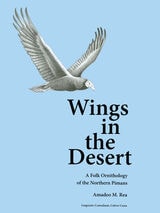
Wings in the Desert
A Folk Ornithology of the Northern PimansAmadeo M. Rea
University of Arizona Press, 2008
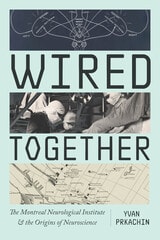
Wired Together
The Montreal Neurological Institute and the Origins of NeuroscienceYvan Prkachin
University of Chicago Press, 2026
Wired Together explains the rise of neuroscience by tracing the history of the Montreal Neurological Institute (MNI) and the men and women who transformed it into neuroscience’s most innovative and productive research site. Opened by neurosurgeon Wilder Penfield in 1934, the MNI pioneered the surgical treatment of epilepsy and transformed the operating theater into a new kind of scientific laboratory for investigating the functions of the brain. But more than that, the MNI became a crucial site for forming new interdisciplinary practices. These involved, as Yvan Prkachin puts it, wiring together new assemblies of physicians, surgeons, and scientists into a growing network that made possible the emergence of an interdisciplinary science of the brain.
Wired Together also traces how the MNI and its network of scientists spread this new interdisciplinary neuroscience to the rest of the world. Prkachin uncovers the surprising history of some of the most important neuroscientific organizations, discoveries, theories, and instruments from their beginnings in Montreal through the complex international networks of the post-war sciences. In doing so, he tells the stories of the most crucial and least understood characters from early neuroscience—such as Brenda Milner, Donald Hebb, Herbert Jasper, Molly Harrower, and David Hubel—as well as the surprising origins of scientific practices and ideas like sensory deprivation, multiple forms of memory, and artificial neural networks.
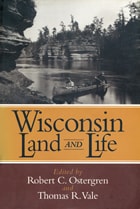
Wisconsin Land and Life
A Portrait of the StateRobert C. Ostergren
University of Wisconsin Press, 1997
These are images of Wisconsin's land and life, images that evoke a strong sense of place. This book, Wisconsin Land and Life, is an exploration of place, a series of original essays by Wisconsin geographers that offers an introduction to the state's natural environment, the historical processes of its human habitation, and the ways that nature and people interact to create distinct regional landscapes. To read it is to come away with a sweeping view of Wisconsin's geography and history: the glaciers that carved lakes and moraines; the soils and climate that fostered the prairies and great northern pine forests; the early Native Americans who began to shape the landscape and who established forest trails and river portages; the successive waves of Europeans who came to trade in furs, mine for lead and iron, cut the white pines, establish farms, work in the lumber and paper mills, and transform spent wheatfields into pasture for dairy cattle.
Readers will learn, too, about the platting and naming of Wisconsin's towns, the establishment of county and township governments, the growth of urban neighborhoods and parishes, the role of rivers, railroads, and religion in shaping the state's growth, and the controversial reforestation of the cutover lands that eventually transformed hardscrabble farms and swamps into a sportsman's paradise.
Abundantly illustrated with photos and maps, this book will richly reward anyone who wishes to learn more about the land and life of the place we know as Wisconsin.
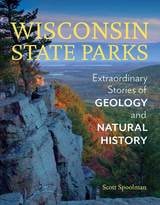
Wisconsin State Parks
Extraordinary Stories of Geology and Natural HistoryScott Spoolman
Wisconsin Historical Society Press, 2018
The impressive bluffs, valleys, waterfalls, and lakes of Wisconsin’s state parks provide more than beautiful scenery and recreational opportunities. They are windows into the distant past, offering clues to the dramatic events that have shaped the land over billions of years.
Author and former DNR journalist Scott Spoolman takes readers with him to twenty-eight parks, forests, and natural areas where evidence of the state’s striking geologic and natural history are on display. In an accessible storytelling style, Spoolman sheds light on the volcanoes that poured deep layers of lava rock over a vast area in the northwest, the glacial masses that flattened and molded the landscape of northern and eastern Wisconsin, mountain ranges that rose up and wore away over hundreds of millions of years, and many other bedrock-shaping phenomena. These stories connect geologic processes to the current landscape, as well as to the evolution of flora and fauna and development of human settlement and activities, for a deeper understanding of our state’s natural history.
The book includes a selection of detailed trail guides for each park, which hikers can take with them on the trail to view evidence of Wisconsin’s geologic and natural history for themselves.
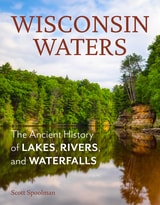
Wisconsin Waters
The Ancient History of Lakes, Rivers, and WaterfallsScott Spoolman
Wisconsin Historical Society Press, 2022
Wisconsin's Foundations
A Review of the State's Geology and Its Influence on Geography and Human ActivityGwen Schultz
University of Wisconsin Press, 2004
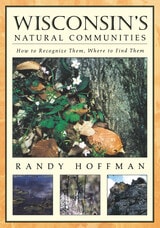
Wisconsin's Natural Communities
How to Recognize Them, Where to Find ThemRandy Hoffman
University of Wisconsin Press, 2002
Cattails grow in a marsh, pitcher plants grow in a bog, jewelweed grows in a swamp, right? Do sandhill cranes live among sandy hills? Frogs live near lakes and ponds, but can they live on prairies, too? What is a pine barrens, an oak opening, a calcareous fen?
Wisconsin’s Natural Communities is an invitation to discover, explore, and understand Wisconsin’s richly varied natural environment, from your backyard or neighborhood park to stunning public preserves.Part 1 of the book explains thirty-three distinct types of natural communities in Wisconsin—their characteristic trees, beetles, fish, lichens, butterflies, reptiles, mammals, wildflowers—and the effects of geology, climate, and historical events on these habitats. Part 2 describes and maps fifty natural areas on public lands that are outstanding examples of these many different natural communities: Crex Meadows, Horicon Marsh, Black River Forest, Maribel Caves, Whitefish Dunes, the Blue Hills, Avoca Prairie, the Moquah Barrens and Chequamegon Bay, the Ridges Sanctuary, Cadiz Springs, Devil’s Lake, and many others.
Intended for anyone who has a love for the natural world, this book is also an excellent introduction for students. And, it provides landowners, public officials, and other stewards of our environment with the knowledge to recognize natural communities and manage them for future generations.
Wisconsin's Weather and Climate
Joseph M. Moran
University of Wisconsin Press, 2003
Wisconsin's Weather and Climate is written for weather buffs, teachers, students, outdoor enthusiasts, and those working in fields, lakes, and forests for whom the weather is a daily force to be reckoned with. It examines the physical features of Wisconsin that shape the state’s climate—topography, mid-latitude location, and proximity to Lakes Superior and Michigan—and meteorological phenomena that affect climate, such as atmospheric circulation and air mass frequency. Authors Joseph M. Moran and Edward J. Hopkins trace the evolution of methods of weather observation and forecasting that are so important for agriculture and Great Lakes commerce, and they explain how Wisconsin scientists use weather balloons, radar, and satellites to improve forecasting and track climate changes. They take readers through the seasonal changes in weather in Wisconsin and give an overview of what past climate changes might tell us about the future.
Appendices provide climatic data for Wisconsin, including extremes of temperature, snowfall, and precipitation at selected stations in the state. The authors also list sources for further information.
Vignettes throughout the book provide fascinating weather lore:
o Why there are cacti in Wisconsin
o The famous Green Bay Packers–Dallas Cowboys "Ice Bowl" game of 1967
o The Army Signal Corps’ ban on the word tornado
o Advances in snow-making technology
o The decline of the Great Lakes ice industry