Results by title
8 books match the query 'Workshop'
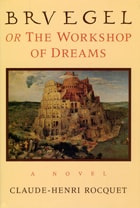
Bruegel, or the Workshop of Dreams
A NovelClaude-Henri Rocquet
University of Chicago Press, 1991
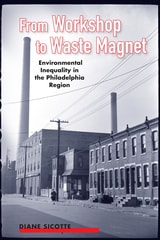
From Workshop to Waste Magnet
Environmental Inequality in the Philadelphia RegionSicotte, Diane
Rutgers University Press, 2016
In the Workshop of History
François Furet
University of Chicago Press, 1985
Furet views history as a field bounded at each end by two ideal types. One end is concerned with the history of periods and with the empiricism of "facts" rather than received ideas. At the other end is problem-oriented history, which substitutes for the supposed coherence of a "period" the analytical examination of a question. Furet's own work leans toward the second, more conceptually oriented kind of historiography. The essays in this volume, most of them never before published in English, illustrate the breadth of his approach. Furet's discussion ranges through Tocqueville's conceptual system to present-day America, from the origins of history in France to the Jewish experience in the late twentieth century. Among Furet's recurrent themes is the contention that the historian constructs the object or field of his research rather than receiving it from the past.
Polycentric Games and Institutions
Readings from the Workshop in Political Theory and Policy AnalysisMichael D. McGinnis, Editor
University of Michigan Press, 2000
The readings in this volume illustrate several varieties of institutional analysis. Each reading builds upon the foundation of game theory to address similar sets of questions concerning institutions and self-governance. The chapters in the first section lay out interrelated frameworks for analysis. Section two illustrates the normative component of institutions and their effects on human behavior. Readings in the following two sections detail how these frameworks have been applied to models of specific situations. Section five presents a modeling exercise exploring the functions of monitoring and enforcement, and the sixth section discusses approaches to the problems of complexity that confront individuals playing polycentric games. The final readings provide overviews of experimental research on the behavior of rational individuals.
Contributors include Arun Agrawal, Sue E. S. Crawford, Clark C. Gibson, Roberta Herzberg, Larry L. Kiser, Michael McGinnis, Stuart A. Marks, Elinor Ostrom, Vincent Ostrom, James Walker, Franz J. Weissing, John T. Williams, and Rick Wilson.
Michael McGinnis is Associate Professor, Department of Political Science and Co-Associate Director, Workshop in Political Theory and Policy Analysis, Indiana University.
Polycentric Governance and Development
Readings from the Workshop in Political Theory and Policy AnalysisMichael D. McGinnis, Editor
University of Michigan Press, 1999
The central insight of the research collected in the volume is this: much can be learned by a careful examination of the ways in which local communities have organized themselves to solve collective problems, achieve common aspirations, and resolve conflicts. The first two sections deal with efforts to manage water and other common-pool resources on a relatively small scale. Section three moves to the macro-level of analysis, with particular attention given to examples of constitutional order from Africa, while section four demonstrates that local organizations and informal networks can play essential roles in furthering democratization and development. The concluding section addresses issues at the national level, by linking the practical world of resource management and development policy to the abstract world of the policy analyst. This collection of essays is designed to illustrate how all the pieces fit together and to suggest connections among multiple levels and modes of analysis.
Contributors include Paula C. Baker, William Blomquist, Larry L. Kiser, Ronald J. Oakerson, Elinor Ostrom, Vincent Ostrom, Roger B. Parks, Stephen L. Percy, Charles M. Tiebout, Martha Vandivort, Robert Warren, Gordon P. Whitaker, and Rick Wilson.
Michael McGinnis is Associate Professor, Department of Political Science and Co-Associate Director, Workshop in Political Theory and Policy Analysis, Indiana University.
Polycentricity and Local Public Economies
Readings from the Workshop in Political Theory and Policy AnalysisMichael D. McGinnis, Editor
University of Michigan Press, 1999
The study of metropolitan political economies in the United States has provided much of the intellectual inspiration for the research of the Workshop in Political Theory and Policy Analysis at Indiana University. The readings collected in Polycentricity and Local Public Economies present an overview of the results of this research program on police services and metropolitan governance as well as enduring lessons for institutional analysis and public policy. Polycentricity and Local Public Economies presents both explorations of broad general concepts and specific empirical analyses. The many interactions between the two modes of analysis provide valuable insights for the reader. Readings in the first section cover basic theoretical concepts and analytical distinctions that apply to the study of institutions generally. The second section includes conceptual pieces specifically addressed to the nature of governance in metropolitan areas, while section three reports on a series of empirical studies of police performance. Section four again broadens the focus to highlight the overall organization of local public economies. The final section discusses conceptual advances that have continuing relevance for research and policy debates.Contributors include William Blomquist, Kathryn Firmin-Sellers, Roy Gardner, Dele Olowu, Elinor Ostrom, Vincent Ostrom, Amos Sawyer, Edella Schlager, Shui Yan Tang, Wai Fung Lam, and James S. Wunsch.
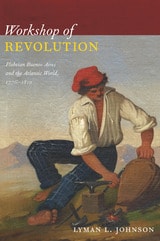
Workshop of Revolution
Plebeian Buenos Aires and the Atlantic World, 1776–1810Lyman L. Johnson
Duke University Press, 2011
Workshop of Silence
PoemsJean D’Amérique; Translated from French by Conor Bracken
Vanderbilt University Press, 2025
Though D’Amérique’s poems grow out of soils strewn with stones and splotched with blood, they also grow out of play, one of the more daring and dangerous modes there is (“being happy is worth the price” he says in “worth the price”). Produced in a bilingual edition, with a side-by-side translation by Conor Bracken as well as a critical introduction, Workshop of Silence preserves and approximates this spirit of play and scrutiny so that the sound of the translation bears as much semantic heft as the signifying content of the words. This leads, oftentimes, to choices that may seem odd or tangential, but ultimately highlight D’Amérique’s experimentation with the French language in and on poetic form—the puns, the intricate play of assonance and consonance, the rhymes and kennings, the lineation and inversions. These all serve to recalibrate a reader’s relationship with the language he is writing in, one that has been used for centuries to subjugate people throughout the Global South. The more we recognize language as a mighty and strange substance that can be manipulated to do weird things and to effect arbitrary outcomes, the more we can both revel in its potential and question what it has led us to take for granted.