Results by title
453 books match the query 'Wisconsin' and 73 start with w

Wisconsin
Our State CLASSROOM SET 1E spanish (w/eng SAG)Bobbie Malone
Wisconsin Historical Society Press, 0
"Wisconsin: Our State, Our Story" brings history to life! Thinking Like a Historian questions in each chapter encourage critical thinking. Scores of artifacts and documents invite students to become eyewitnesses to the past.
Lively, classroom-tested text will engross students. The rich content aligns with relevant, cross-curricular Wisconsin Model Academic Standards. The specially designed Teacher's Edition and Student Activity Guide provide additional tools to reach all learners.
Wisconsin
Our State CLASSROOM SET 1E spanish (w/spnsh SAG)Bobbie Malone
Wisconsin Historical Society Press, 2016
Classroom set includes 25 copies of the Spanish textbook (978-0-87020-512-5) PLUS 1 copy of the Teacher's Edition in English (978-0-87020-379-4) and 1 copy of the Student Activity Guide DVD in Spanish (978-0-87020-688-7)
Wisconsin
Our State CLASSROOM SET 2E engBobbie Malone
Wisconsin Historical Society Press, 0
Wisconsin
Our State CLASSROOM SET 2E spanishBobbie Malone
Wisconsin Historical Society Press, 0
"Wisconsin: Our State, Our Story" brings history to life! Thinking Like a Historian questions in each chapter encourage critical thinking. Scores of artifacts and documents invite students to become eyewitnesses to the past.
Lively, classroom-tested text will engross students. The rich content aligns with relevant, cross-curricular Wisconsin Model Academic Standards. The specially designed Teacher's Edition and Student Activity Guide provide additional tools to reach all learners.
Classroom set includes:
25 Student Textbooks,
1 Teacher’s Edition, and
1 Student Activity Guide disc
Wisconsin
Our State SAG 1E CD spanishBobbie Malone
Wisconsin Historical Society Press, 2014
"Wisconsin: Our State, Our Story" brings history to life! Thinking Like a Historian questions in each chapter encourage critical thinking. Scores of artifacts and documents invite students to become eyewitnesses to the past.
Lively, classroom-tested text will engross students. The rich content aligns with relevant, cross-curricular Wisconsin Model Academic Standards. The specially designed Teacher's Edition and Student Activity Guide provide additional tools to reach all learners.
Wisconsin
Our State SAG 1E eng: Student Activity GuideBobbie Malone
Wisconsin Historical Society Press, 2008
Wisconsin
Our State SAG 2E CD spanishBobbie Malone
Wisconsin Historical Society Press, 2017
"Wisconsin: Our State, Our Story" brings history to life! Thinking Like a Historian questions in each chapter encourage critical thinking. Scores of artifacts and documents invite students to become eyewitnesses to the past.
Lively, classroom-tested text will engross students. The rich content aligns with relevant, cross-curricular Wisconsin Model Academic Standards. The specially designed Teacher's Edition and Student Activity Guide provide additional tools to reach all learners.
Wisconsin
Our State SAG 2E engBobbie Malone
Wisconsin Historical Society Press, 2016
"Wisconsin: Our State, Our Story" brings history to life! Thinking Like a Historian questions in each chapter encourage critical thinking. Scores of artifacts and documents invite students to become eyewitnesses to the past.
Lively, classroom-tested text will engross students. The rich content aligns with relevant, cross-curricular Wisconsin Model Academic Standards. The specially designed Teacher's Edition and Student Activity Guide provide additional tools to reach all learners.
Wisconsin
Our State SAG 2E eng DIGITALBobbie Malone
Wisconsin Historical Society Press, 2016
"Wisconsin: Our State, Our Story" brings history to life! Thinking Like a Historian questions in each chapter encourage critical thinking. Scores of artifacts and documents invite students to become eyewitnesses to the past.
Lively, classroom-tested text will engross students. The rich content aligns with relevant, cross-curricular Wisconsin Model Academic Standards. The specially designed Teacher's Edition and Student Activity Guide provide additional tools to reach all learners.
Wisconsin
Our State TE 1EBobbie Malone
Wisconsin Historical Society Press, 2008
The Teacher's Edition provides educators with the background, literacy, and other skill-building strategies to teach "Wisconsin: Our State, Our Story" in both social studies and literacy classes.
"Wisconsin: Our State, Our Story" textbook promotes content-focused reading to address both social studies and language arts standards for the state of Wisconsin.
The Teacher's Edition draws on the research-based pedagogy in both literacy developmnent and in historical inquiry to help reach the many different levels of learners in today's classrooms.
Wisconsin
Our State TE 2EBobbie Malone
Wisconsin Historical Society Press, 2016
The Teacher's Edition provides educators with the background, literacy, and other skill-building strategies to teach "Wisconsin: Our State, Our Story" in both social studies and literacy classes.
"Wisconsin: Our State, Our Story" textbook promotes content-focused reading to address both social studies and language arts standards for the state of Wisconsin.
The Teacher's Edition draws on the research-based pedagogy in both literacy development and in historical inquiry to help reach the many different levels of learners in today's classrooms.
- Differentiated Learning Approaches The Teacher's Edition draws together and charts a compendium of literacy strategies, historical thinking skills, and differentiated learning approaches in the introductory section.
- Supports Both Literacy and History Learning Each of the early chapters focuses on a different literacy skill. Students have the opportunity to practice and master each skill as they progress through the textbook. Though each chapter differs in length, they all have the same components, so that students can learn to make connections. Major, overarching questions drive the content of each chapter.
- An Inquiry-Based History Approach Each topic is inquiry-based. Students quickly learn that the historian plays the role of detective: asking questions and amassing enough clues to put together a "picture" of some historical event or personality and to weave these into a sufficiently broad understanding.
Wisconsin
Our State TEXTBOOK 1E eng: Student textbookBobbie Malone
Wisconsin Historical Society Press, 2008
"Wisconsin: Our State, Our Story" brings history to life! Thinking Like a Historian questions in each chapter encourage critical thinking. Scores of artifacts and documents invite students to become eyewitnesses to the past.
Lively, classroom-tested text will engross students. The rich content aligns with relevant, cross-curricular Wisconsin Model Academic Standards. The specially designed Teacher's Edition and Student Activity Guide provide additional tools to reach all learners.
Wisconsin
Our State TEXTBOOK 1E spanishBobbie Malone
Wisconsin Historical Society Press, 2012
"Wisconsin: Our State, Our Story" brings history to life! Thinking Like a Historian questions in each chapter encourage critical thinking. Scores of artifacts and documents invite students to become eyewitnesses to the past.
Lively, classroom-tested text will engross students. The rich content aligns with relevant, cross-curricular Wisconsin Model Academic Standards. The specially designed Teacher's Edition and Student Activity Guide provide additional tools to reach all learners.
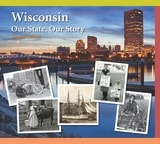
Wisconsin
Our State TEXTBOOK 2E engBobbie Malone
Wisconsin Historical Society Press, 2016
"Wisconsin: Our State, Our Story" brings history to life! Thinking Like a Historian questions in each chapter encourage critical thinking. Scores of artifacts and documents invite students to become eyewitnesses to the past.
Lively, classroom-tested text will engross students. The rich content aligns with relevant, cross-curricular Wisconsin Model Academic Standards. The specially designed Teacher's Edition and Student Activity Guide provide additional tools to reach all learners.
Wisconsin
Our State TEXTBOOK 2E spanishBobbie Malone
Wisconsin Historical Society Press, 2017
"Wisconsin: Our State, Our Story" brings history to life! Thinking Like a Historian questions in each chapter encourage critical thinking. Scores of artifacts and documents invite students to become eyewitnesses to the past.
Lively, classroom-tested text will engross students. The rich content aligns with relevant, cross-curricular Wisconsin Model Academic Standards. The specially designed Teacher's Edition and Student Activity Guide provide additional tools to reach all learners.
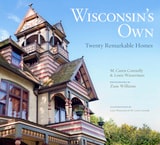
Wisconsin’s Own
Twenty Remarkable HomesM. Caren Connolly
Wisconsin Historical Society Press, 2010
Take an intimate journey through the family, history, and architecture of 20 residential treasures in Wisconsin’s Own by M. Caren Connolly and Louis Wasserman. Richly illustrated with the photography of Zane Williams and complemented by historical images and watercolors and line drawings, Wisconsin’s Own profiles the architectural history of state’s most remarkable residences built between 1854 and 1939. The houses are a mix of public and private homes that are representative of varied architectural styles, from an Italianate along the Mississippi River and an interpretation of a sixteenth-century northern Italian villa overlooking Lake Michigan to an Adirondack-style camp in the North Woods and a fourteen-bedroom Georgian Revival mansion on Lake Geneva. Frank Lloyd Wright’s Prairie School is, of course, represented as well with examples by Wright and his mentor Louis Sullivan.
Wisconsin’s Own tells the story of the considerable contribution that each of these historic homes have made to American residential architecture. It also answers the questions who built the house, what brought them to Wisconsin, why they selected that particular style, and how it is that this historic home still stands—and shines—today.
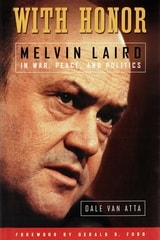
With Honor
Melvin Laird in War, Peace, and PoliticsVan Atta
University of Wisconsin Press, 2008
The first book ever to focus on Laird’s legacy, this authorized biography reveals his central and often unrecognized role in managing the crisis of national identity sparked by the Vietnam War—and the challenges, ethical and political, that confronted him along the way. Drawing on exclusive interviews with Laird, Henry Kissinger, Gerald Ford, and numerous others, author Dale Van Atta offers a sympathetic portrait of a man striving for open government in an atmosphere fraught with secrecy. Van Atta illuminates the inner workings of high politics: Laird’s behind-the-scenes sparring with Kissinger over policy, his decisions to ignore Nixon’s wilder directives, his formative impact on arms control and health care, his key role in the selection of Ford for vice president, his frustration with the country’s abandonment of Vietnamization, and, in later years, his unheeded warning to Donald Rumsfeld that “it’s a helluva lot easier to get into a war than to get out of one.”
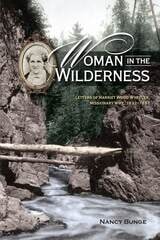
Woman in the Wilderness
Letters of Harriet Wood Wheeler, Missonary Wife, 1832-1892Nancy Bunge
Michigan State University Press, 2010
Harriet's letters reveal her experiences with actors and institutions that played pivotal roles in the history of American women: the nascent literate female work force at the mills in Lowell, Massachusetts; the Ipswich Female Seminary, which was one of the first schools for women teachers; women's associations, especially in churches; and the close and enduring ties that characterized women's relationships in the late nineteenth century.
Harriet's letters also provide an intimate view of the relationships between American Indians and Euro-Americans in the Great Lakes region, where she settled with her Christian missionary husband.
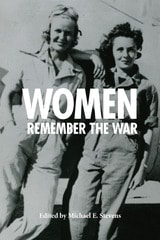
Women Remember the War, 1941-1945
Michael E. Stevens
Wisconsin Historical Society Press, 1993
Women Remember the War, 1941-1945 offers a brief introduction to the experiences of Wisconsin women in World War II through selections from oral history interviews in which women addressed issues concerning their wartime lives.
In this volume, more than 30 women describe how they balanced their more traditional roles in the home with new demands placed on them by the biggest global conflict in history. This book provides a rich mix of insights, incorporating the perspectives of workers in factories, in offices, and on farms as well as those of wives and mothers who found their work in the home. In addition, the volume contains accounts by women who served overseas in the military and the Red Cross. These accounts provide readers with a vivid picture of how women coped with the stresses created by their daily lives and by the additional burden of worrying about loved ones fighting overseas.
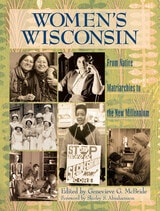
Women's Wisconsin
From Native Matriarchies to the New MillenniumEdited by Genevieve G. McBride
Wisconsin Historical Society Press, 2005
Women's Wisconsin: From Native Matriarchies to the New Millennium, a women's history anthology published on Women's Equality Day 2005, made history as the first single-source history of Wisconsin women. This unique tome features dozens of excerpts of articles as well as primary sources, such as women's letters, reminiscences, and oral histories, previously published over many decades in the Wisconsin Magazine of History and other Wisconsin Historical Society Press publications.
Editor and historian Genevieve G. McBride provides the contextual commentary and overarching analysis to make the history of Wisconsin women accessible to students, scholars, and lifelong learners.
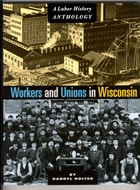
Workers and Unions in Wisconsin
A Labor History AnthologyDarryl Holter
Wisconsin Historical Society Press, 1999
Wisconsin accounts for about two percent of the nation's total population, but its contribution to the history of working people and social reform extends far beyond these numbers. In the early years of the twentieth century, Wisconsin became a veritable laboratory for social and political reform, producing such landmark legislation as workers' compensation, unemployment insurance, and other laws that became models for several states and helped shape federal labor policies. The study of the history of labor also began in Wisconsin when University of Wisconsin economics professor John R. Commons started to document the history of work and labor in America.
Workers and Unions in Wisconsin includes nearly one hundred selections covering the period from 1850 to 1990, illustrated by scores of historic photos, most of which have never before been reprinted. Editor Darryl Holter has included accounts of episodes that took place in more than twenty-five cities and towns in Wisconsin, including labor activities at such nationally known companies as Oscar Mayer, Kohler, Case, Allis-Chalmers, and Ray-O-Vac and workers as diverse as dairy farmers and university teaching assistants, lumberjacks and hosiery makers, municipal employees and paper mill workers. The result is a book that will fascinate and inform anyone interested in American labor history and economics, as well as in the personal stories that are part of any great societal change.
Working with Water
Wisconsin WaterwaysBobbie Malone and Jefferson J. Gray
Wisconsin Historical Society Press, 2001
"Water, water, everywhere . . ." Working with Water, the latest in the popular New Badger History series, teaches young readers about the many ways water has shaped Wisconsin’s history, from glaciers to stewardship. It touches on geography and hydrography; transportation networks of Indians and fur traders; the Erie Canal; shipwrecks, lighthouses, shipping, and shipbuilding; fishing, ricing, "pearling" (clamming), and cranberry cultivation; lumbering, milling, and papermaking; recreation, resorts, tourism, and environmentalism.
The companion Teacher’s Guide and Student Materials engages students in hands-on exploration. It highlights historical processes and encourages multiple learning styles.
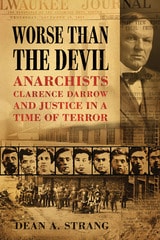
Worse than the Devil
Anarchists, Clarence Darrow, and Justice in a Time of TerrorDean A. Strang
University of Wisconsin Press, 2013
Largely overlooked for almost a century, the compelling story of this case emerges vividly in this meticulously researched book by Dean A. Strang. In its focus on a moment when patriotism, nativism, and terror swept the nation, Worse than the Devil exposes broad concerns that persist even today as the United States continues to struggle with administering criminal justice to newcomers and outsiders.