Results by title
2194 books match the query 'Women's Studies' and 222 start with w
Wildcat Women
Narratives of Women Breaking Ground in Alaska's Oil and Gas IndustryCarla Williams
University of Alaska Press, 2018

Willing and Unable
Doctors' Constraints in Abortion CareLori R. Freedman
Vanderbilt University Press, 2010
Structural barriers to the mainstream practice of abortion effectively institutionalize the buck-passing of abortion patients to abortion clinics. As the author notes, "Public-health-minded HMOs and physician practices could significantly change the world of abortion care if they stopped outsourcing it."
Drawing from forty in-depth interviews, the book presents a challenge to a commonly held assumption that physicians decide whether or not to provide abortion based on personal ideology. Physician narratives demonstrate how their choices around learning, doing, and even having abortions themselves disrupt the pro-choice/pro-life moral and political binary.
Winning Their Place
Arizona Women in Politics, 1883-1950Heidi J. Osselaer
University of Arizona Press, 2009
This landmark book chronicles for the first time the participation of Arizona women in the state’s early politics. Incorporating impressive original research, Winning Their Place traces the roots of the political participation of women from the territorial period to after World War II. Although women in Arizona first entered politics for traditional reasons—to reform society and protect women and children—they quickly realized that male politicians were uninterested in their demands. Most suffrage activists were working professional women, who understood that the work place discriminated against them. In Arizona they won the vote because they demanded rights as working women and aligned with labor unions and third parties that sympathized with their cause. After winning the vote, the victorious suffragists ran for office because they believed men could not and would not represent their interests.
Through this process, these Arizona women became excellent politicians. Unlike women in many other states, women in Arizona quickly carved out a place for themselves in local and state politics, even without the support of the reigning Democratic Party, and challenged men for county office, the state legislature, state office, Congress, and even for governor. This fascinating book reveals how they shattered traditional notions about “a woman’s place” and paved the way for future female politicians, including the “Fab Five” and countless others who have changed the course of Arizona history.
Wit, Virtue, and Emotion
British Women's Enlightenment RhetoricElizabeth Tasker Davis
Southern Illinois University Press, 2022
Women’s persuasion and performance in the Age of Enlightenment
Over a century before first-wave feminism, British women’s Enlightenment rhetoric prefigured nineteenth-century feminist arguments for gender equality, women’s civil rights, professional opportunities, and standardized education. Author Elizabeth Tasker Davis rereads accepted histories of seventeenth- and eighteenth-century British rhetoric, claiming a greater variety and power of women’s rhetoric. This recovery of British women’s performative and written roles as speakers, spectators, authors, and readers in diverse venues counters the traditional masculine model of European Enlightenment rhetoric. Davis broadens women’s Enlightenment rhetorics to include highly public venues such as theaters, clubs, salons, and debating societies, as well as the mediated sites of the periodical essay, the treatise on rhetorical theory, and women’s written proposals, plans, defenses and arguments for education. Through these sites, women’s rhetorical postures diverged from patriarchal prescriptions rather to deliver protofeminist persuasive performances of wit, virtue, and emotion.
Davis examines context, the effects of memory and gendering, and the cultural sites and media of women’s rhetoric to reveal a fuller ecology of British Enlightenment rhetoric. Each chapter covers a cultural site of women’s rhetorical practice—the court, the stage, the salon, and the printed page. Applying feminist rhetorical theory, Davis documents how women grasped their rhetorical ability in this historical moment and staged a large-scale transformation of British women from subalterns to a vocal counterpublic in British society.
With the Lapps in the High Mountains
A Woman among the Sami, 1907–1908Emilie Demant Hatt; Edited and translated by Barbara Sjoholm; Foreword by Hugh Beach
University of Wisconsin Press, 2013
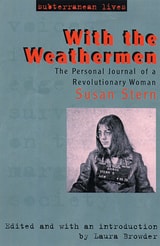
With the Weathermen
The Personal Journal of a Revolutionary WomanSusan Stern and Edited and with an introduction by Laura Browder
Rutgers University Press, 2007
The Weathermen--a U.S.-based, revolutionary splinter group of Students for a Democratic Society--advocated the overthrow of the government and capitalism, and toward that end, carried out a campaign of bombings, jailbreaks, and riots throughout the United States. In With the Weathermen Stern traces her involvement with this group, and her transformation from a shy, married graduate student into a go-go dancing, street-fighting "macho mama." In vivid and emotional language, she describes the attractions and difficulties of joining a collective radical group and in maintaining a position within it.
Stern's memoir offers a rich description of the raw and rough social dynamics of this community, from its strict demands to "smash monogamy," to its sometimes enforced orgies, and to the demeaning character assassination that was led by the group's top members. She provides a distinctly personal and female perspective on the destructive social functionality and frequently contradictory attitudes toward gender roles and women's rights within the New Left.
Laura Browder's masterful introduction situates Stern's memoir in its historical context, examines the circumstances of its writing and publication, and describes the book's somewhat controversial reception by the public and critics alike.
Wives Not Slaves
Patriarchy and Modernity in the Age of RevolutionsKirsten Sword
University of Chicago Press, 2021
Kirsten Sword’s richly researched history reconstructs the stories of wives who fled their husbands between the mid-seventeenth and early nineteenth centuries, comparing their plight with that of other runaway dependents. Wives not Slaves explores the links between local justice, the emerging press, and transatlantic political debates about marriage, slavery and imperial power. Sword traces the relationship between the distress of ordinary households, domestic unrest, and political unrest, shedding new light on the social changes imagined by eighteenth-century revolutionaries, and on the politics that determined which patriarchal forms and customs the new American nation would—and would not—abolish.
Wives, Mothers, and the Red Menace
Conservative Women and the Crusade against CommunismMary Brennan
University Press of Colorado, 2027
Brennan details the actions and experiences of prominent anti-communists Jean Kerr McCarthy, Margaret Chase Smith, Freda Utley, Doloris Thauwald Bridges, Elizabeth Churchill Brown, and Phyllis Stewart Schlafly. She describes the Cold War context in which these women functioned and the ways in which women saw communism as a very real danger to domestic security and American families. Millions of women, Brennan notes, expanded their notions of household responsibilities to include the crusade against communism. From writing letters and hosting teas to publishing books and running for political office, they campaigned against communism and, incidentally, discovered the power they had to effect change through activism.
Brennan reveals how the willingness of these deeply conservative women to leave the domestic sphere and engage publicly in politics evinces the depth of America's postwar fear of communism. She further argues that these conservative, anti-communist women pushed the boundaries of traditional gender roles and challenged assumptions about women as political players by entering political life to publicly promote their ideals.Wives, Mothers, and the Red Menace offers a fascinating analysis of gender and politics at a critical point in American history. Brennan's work will instigate discussions among historians, political scientists, and scholars of women's studies.
Wives, Slaves, and Servant Girls
Advertisements for Female Runaways in American Newspapers, 1770–1783Don N. Hagist
Westholme Publishing, 2007
In an age when individuals could be owned by others, people were lost and found just like other property. Indentured servants and slaves absconded from the custody of their masters, and their value prompted the masters to seek their return. Wives ran from abusive husbands or into the arms of another. Newspapers in the eighteenth and nineteenth centuries carried large numbers of advertisements offering rewards for the return of runaways or announcing the detention of fugitives. Each ad provided a description of the individual and often included some circumstances of their elopement. The overall effectiveness of these advertisements cannot be measured, but the sheer number of ads suggests they were perceived as useful tools by those who placed them. What could not have been known at the time was the substantial contribution to history that these ads make. The descriptive advertisements provide textual snapshots of thousands of individuals who would otherwise be lost to history, people whose names might not otherwise be recorded. In Wives, Slaves, and Servant Girls: Advertisements for Female Runaways in American Newspapers, 1770–1783, historian Don N. Hagist focuses on the American Revolutionary period to provide a striking portrait of a substantial but largely forgotten segment of the population. Comprised of four hundred advertisements presented chronologically, the volume provides invaluable descriptions of women’s clothes, footwear, jewelry, physical appearances, education, nationalities, occupations, and other details.
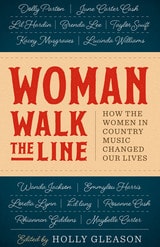
Woman Walk the Line
How the Women in Country Music Changed Our LivesBy Holly Gleason
University of Texas Press, 2017
Full-tilt, hardcore, down-home, and groundbreaking, the women of country music speak volumes with every song. From Maybelle Carter to Dolly Parton, k.d. lang to Taylor Swift—these artists provided pivot points, truths, and doses of courage for women writers at every stage of their lives. Whether it’s Rosanne Cash eulogizing June Carter Cash or a seventeen-year-old Taylor Swift considering the golden glimmer of another precocious superstar, Brenda Lee, it’s the humanity beneath the music that resonates.
Here are deeply personal essays from award-winning writers on femme fatales, feminists, groundbreakers, and truth tellers. Acclaimed historian Holly George Warren captures the spark of the rockabilly sensation Wanda Jackson; Entertainment Weekly’s Madison Vain considers Loretta Lynn’s girl-power anthem “The Pill”; and rocker Grace Potter embraces Linda Ronstadt’s unabashed visual and musical influence. Patty Griffin acts like a balm on a post-9/11 survivor on the run; Emmylou Harris offers a gateway through paralyzing grief; and Lucinda Williams proves that greatness is where you find it.
Part history, part confessional, and part celebration of country, Americana, and bluegrass and the women who make them, Woman Walk the Line is a very personal collection of essays from some of America’s most intriguing women writers. It speaks to the ways in which artists mark our lives at different ages and in various states of grace and imperfection—and ultimately how music transforms not just the person making it, but also the listener.
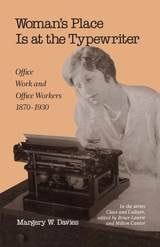
Woman'S Place Is At The Typewriter
Margery W. Davies
Temple University Press, 1984
Woman's Legacy
Essays on Race, Sex, and Class in American HistoryBettina Aptheker
University of Massachusetts Press, 1982
Woman's Legacy: Essays on Race, Sex, and Class in American History is a groundbreaking collection of essays by prominent feminist scholar and historian Bettina Aptheker. Emerging from her dissertation research, this work examines the interconnected systems of racial, sexual, and class oppression that have shaped the experiences of women in American history. Through careful historical analysis and feminist scholarship, Aptheker explores how race, sex, and class work together to form complex systems of domination and resistance in the American historical context. The essays investigate women's community roles, activism, and agency while centering the lived experiences of women, particularly Black women, across different historical periods. This seminal work contributes to African American women's history and feminist historiography, bridging women's studies with critical analysis of historical structures and social movements. An essential text for those interested in intersectional approaches to American history and women's studies.
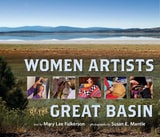
Women Artists of the Great Basin
Mary Lee Fulkerson
University of Nevada Press, 2017
Fulkerson and Mantle, longtime artists and residents of the Great Basin themselves, offer a behind-the-scenes intimate glimpse into these women’s lives and artwork—showing not only what they create, but why they create it. Too often overlooked, the women covered here prove there is much richness, life, and creativity in what has often been dismissed as a barren desert. Their stories of overcoming great obstacles unfold right alongside images of their art. Many circle outside the conventional world of galleries, museums, and art publications and have created varied paths to their success. They are indeed true originals, rooted in a land of unique geography, a stew of cultures, and stories like no other.
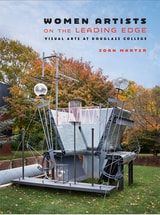
Women Artists on the Leading Edge
Visual Arts at Douglass CollegeJoan M. Marter
Rutgers University Press, 2020
How do students develop a personal style from their instruction in a visual arts program? Women Artists on the Leading Edge explores this question as it describes the emergence of an important group of young women artists from an innovative post-war visual arts program at Douglass College.
The women who studied with avant-garde artists at Douglas were among the first students in the nation to be introduced to performance art, conceptual art, Fluxus, and Pop Art. These young artists were among the first to experience new approaches to artmaking that rejected the predominant style of the 1950s: Abstract Expressionism. The New Art espoused by faculty including Robert Watts, Allan Kaprow, Roy Lichtenstein, Geoffrey Hendricks, and others advocated that art should be based on everyday life. The phrase “anything can be art” was frequently repeated in the creation of Happenings, multi-media installations, and video art. Experimental approaches to methods of creation using a remarkable range of materials were investigated by these young women. Interdisciplinary aspects of the Douglass curriculum became the basis for performances, videos, photography, and constructions. Sculpture was created using new technologies and industrial materials. The Douglass women artists included in this book were among the first to implement the message and direction of their instructors.
Ultimately, the artistic careers of these young women have reflected the successful interaction of students with a cutting-edge faculty. From this BA and MFA program in the Visual Arts emerged women such as Alice Aycock. Rita Myers, Joan Snyder, Mimi Smith, and Jackie Winsor, who went on to become lifelong innovators. Camaraderie was important among the Douglass art students, and many continue to be instructors within a close circle of associates from their college years. Even before the inception of the women’s art movement of the 1970s, these women students were encouraged to pursue professional careers, and to remain independent in their approach to making art. The message of the New Art was to relate one’s art production to life itself and to personal experiences. From these directions emerged a “proto-feminist” art of great originality identified with women’s issues. The legacy of these artists can be found in radical changes in art instruction since the 1950s, the promotion of non-hierarchical approaches to media, and acceptance of conceptual art as a viable art form.
Women Between Two Worlds
Midlife Reflections on Work and FamilyMyra Dinnerstein
Temple University Press, 1992
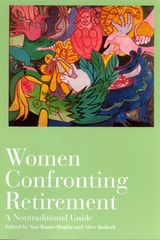
Women Confronting Retirement
A Nontraditional GuideEdited by Nan Bauer-Maglin and Alice Radosh
Rutgers University Press, 2003
Women Confronting Retirement showcases the voices of thirty-eight women from a wide range of professions, ages, and life situations as they confront the need to redefine who they are when they leave the workplace behind them. The women of the Baby Boom generation were the first to enter the professional world in large numbers, and the first to encounter the hazards of retirement. The contributors urge us to reach for new approaches to this major stage of life, to find new self-images, to balance meaningful work and creative play, and to work for the new public policies that support enhanced opportunities for retirement. Many of these women were involved in the key activist movements of the sixties and seventies, and their work often has been an extension of their social commitment. Defining themselves through their careers, they have challenged traditional models at every stage of their lives and are now being challenged by their own negative stereotypes about retirement.
The stories in this book compellingly chronicle the fears and hopes of women who have only begun to think about retirement, those who are in the process of retiring, some who have been retired for many years, and a few who have decided that retirement is not for them. They address issues such as identity, aging, creativity, family, and community. Unlike traditional “how-to” books, Women Confronting Retirement makes clear how individual the choices are, how there are no right and wrong answers to the many questions this uncharted stage of life poses for women of the Baby Boom generation, and those who follow. These women help us to explore the next steps with the same courage and questioning attitudes that they have brought to every aspect of their lives before they reached retirement age.
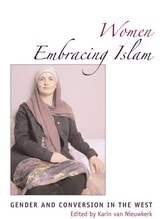
Women Embracing Islam
Gender and Conversion in the WestEdited by Karin van Nieuwkerk
University of Texas Press, 2006
Many Westerners view Islam as a religion that restricts and subordinates women in both private and public life. Yet a surprising number of women in Western Europe and America are converting to Islam. What attracts these women to a belief system that is markedly different from both Western Christianity and Western secularism? What benefits do they gain by converting, and what are the costs? How do Western women converts live their new Islamic faith, and how does their conversion affect their families and communities? How do women converts transmit Islamic values to their children? These are some of the questions that Women Embracing Islam seeks to answer.
In this vanguard study of gender and conversion to Islam, leading historians, sociologists, anthropologists, and theologians investigate why non-Muslim women in the United States, several European countries, and South Africa are converting to Islam. Drawing on extensive interviews with female converts, the authors explore the life experiences that lead Western women to adopt Islam, as well as the appeal that various forms of Islam, as well as the Nation of Islam, have for women. The authors find that while no single set of factors can explain why Western women are embracing Islamic faith traditions, some common motivations emerge. These include an attraction to Islam's high regard for family and community, its strict moral and ethical standards, and the rationality and spirituality of its theology, as well as a disillusionment with Christianity and with the unrestrained sexuality of so much of Western culture.
Women Escaping Violence
Empowerment through NarrativeElaine J. Lawless
University of Missouri Press, 2001
The statistics are alarming. Some say that once every nine minutes a woman in the United States is beaten by her spouse or partner. Others claim that once every four minutes a woman in the world is beaten by her spouse or partner. More women go to emergency rooms in the United States for injuries sustained at the hands of their spouses and partners than for all other injuries combined.
Shelters for battered women are filled beyond capacity every single day of the year. Despite the overwhelming evidence that violence in our homes is a daily reality, most of us are not willing to acknowledge this private violence or talk about it openly. Women Escaping Violence brings women's stories to the attention of the academy as well as the reading public. While we may be unwilling or unable to talk about the issue of battered women, many of us are ready to read what women have to say about their endangered lives.
Considerable scholarship is emerging in the area of domestic violence, including many self-help books about how to identify and escape abuse. Women Escaping Violence offers the unique view of battered women's stories told in their own words, as well as a feminist analysis of how these women use the power of narrative to transform their sense of self and regain a place within the larger society.
Lawless shares with the reader the heart-wrenching experiences of battered women who have escaped violence by fleeing to shelters with little more than a few items hastily shoved into a plastic bag, and often with small children in tow. The book includes women's stories as they are told and retold within the shelter, in the presence of other battered women and of caregivers. It analyzes the uses made of these narratives by those seeking to counsel battered women as well as by the women themselves.
Women Filmmakers of the African & Asian Diaspora
Decolonizing the Gaze, Locating SubjectivityGwendolyn Audrey Foster
Southern Illinois University Press, 1997
Black women filmmakers not only deserve an audience, Gwendolyn Audrey Foster asserts, but it is also imperative that their voices be heard as they struggle against Hollywood’s constructions of spectatorship, ownership, and the creative and distribution aspects of filmmaking.
Foster provides a voice for Black and Asian women in the first detailed examination of the works of six contemporary Black and Asian women filmmakers. She also includes a detailed introduction and a chapter entitled "Other Voices," documenting the work of other Black and Asian filmmakers.
Foster analyzes the key films of Zeinabu irene Davis, "one of a growing number of independent Black women filmmakers who are actively constructing [in the words of bell hooks] ‘an oppositional gaze’"; British filmmaker Ngozi Onwurah and Julie Dash, two filmmakers working with time and space; Pratibha Parmar, a Kenyan/Indian-born British Black filmmaker concerned with issues of representation, identity; cultural displacement, lesbianism, and racial identity; Trinh T. Minh-ha, a Vietnamese-born artist who revolutionized documentary filmmaking by displacing the "voyeuristic gaze of the ethnographic documentary filmmaker"; and Mira Nair, a Black Indian woman who concentrates on interracial identity.
Women Have Always Worked
A Concise HistoryAlice Kessler-Harris
University of Illinois Press, 2018
Women Lawyers and the Origins of Professional Identity in America
The Letters of the Equity Club, 1886 to 1890Virginia G. Drachman
University of Michigan Press, 1993
Women Living With Self-Injury
Jane Wegscheider Hyman
Temple University Press, 1999
In this book, author Jane Wegschneider sheds light on this misunderstood condition. Fifteen women talk about their battle with self-injury and explain how and why they repeatedly and deliberately injure themselves. Most admit they do it because it makes them feel high or safe. They also describe living with ceaseless shame, secrecy, and fear of discovery which could make them unemployable and ostracized. Candidly discussing their attempted and successful recoveries, they reveal the impact living with self-injury has on their day-to-day lives -- where they are competent workers, partners, friends, and mothers.
Hear the voices of these women as they speak to a public that generally sees self-injury as frightening, senseless, and repulsive. Concealing scars or other signs of injury is crucial for them and partly dictates their daily routines, choice of clothes, and the lies they tell to excuse any traces of injury. For these productive women who work outside of the home and often raise children, hiding self-injury is of paramount importance during their workdays and in their relationships with partners, families, and friends.
Hyman's approach is unique in that she not only talked to these women but also really listened to their stories -- something rare in the misunderstood realm of self-injury. Professionals, perplexed by self-injury, have not always tolerated its complexity. As a result those who injure themselves have remained shrouded in secrecy, isolation, and shame -- until now.
This book offers compassion as well as encouragement for recovery by making available the emotional experiences of sufferers in their own words. It is an important book for those who self-injure, their loved ones, anyone who knows of or suspects self-injury in a friend, and mental care professionals.
Women Make Horror
Filmmaking, Feminism, GenreAlison Peirse
Rutgers University Press, 2020
Winner of the the 2021 Best Edited Collection Award from BAFTSS
Winner of the 2021 British Fantasy Award in Best Non-Fiction
Finalist for the 2020 Bram Stoker Award® for Superior Achievement in Non-Fiction
Runner-Up for Book of the Year in the 19th Annual Rondo Halton Classic Horror Awards
“But women were never out there making horror films, that’s why they are not written about – you can’t include what doesn’t exist.”
“Women are just not that interested in making horror films.”
This is what you get when you are a woman working in horror, whether as a writer, academic, festival programmer, or filmmaker. These assumptions are based on decades of flawed scholarly, critical, and industrial thinking about the genre. Women Make Horror sets right these misconceptions. Women have always made horror. They have always been an audience for the genre, and today, as this book reveals, women academics, critics, and filmmakers alike remain committed to a film genre that offers almost unlimited opportunities for exploring and deconstructing social and cultural constructions of gender, femininity, sexuality, and the body.
Women Make Horror explores narrative and experimental cinema; short, anthology, and feature filmmaking; and offers case studies of North American, Latin American, European, East Asian, and Australian filmmakers, films, and festivals. With this book we can transform how we think about women filmmakers and genre.
Women Making Music
The Western Art Tradition, 1150-1950Edited by Jane Bowers and Judith Tick
University of Illinois Press, 1986
The first work of its kind, Women Making Music presents biographies of outstanding performers and composers, as well as analyses of women musicians as a class, and provides examples of music from all periods including medieval chant, Renaissance song, Baroque opera, German lieder, and twentieth-century composition. Unlike most standard historical surveys, the book not only sheds light upon the musical achievements of women, it also illuminates the historical contexts that shaped and defined those achievements.
Women Making War
Female Confederate Prisoners and Union Military JusticeThomas F. Curran
Southern Illinois University Press, 2020
During the American Civil War, more than four hundred women were arrested and imprisoned by the Union Army in the St. Louis area. The majority of these women were fully aware of the political nature of their actions and had made conscious decisions to assist Confederate soldiers in armed rebellion against the U.S. government. Their crimes included offering aid to Confederate soldiers, smuggling, spying, sabotaging, and, rarely, serving in the Confederate army. Historian Thomas F. Curran’s extensive research highlights for the first time the female Confederate prisoners in the St. Louis area, and his thoughtful analysis shows how their activities affected Federal military policy.
Early in the war, Union officials felt reluctant to arrest women and waited to do so until their conduct could no longer be tolerated. The war progressed, the women’s disloyal activities escalated, and Federal response grew stronger. Some Confederate partisan women were banished to the South, while others were held at Alton Military Prison and other sites. The guerilla war in Missouri resulted in more arrests of women, and the task of incarcerating them became more complicated.
The women’s offenses were seen as treasonous by the Federal government. By determining that women—who were excluded from the politics of the male public sphere—were capable of treason, Federal authorities implicitly acknowledged that women acted in ways that had serious political meaning. Nearly six decades before U.S. women had the right to vote, Federal officials who dealt with Confederate partisan women routinely referred to them as citizens. Federal officials created a policy that conferred on female citizens the same obligations male citizens had during time of war and rebellion, and they prosecuted disloyal women in the same way they did disloyal men.
The women arrested in the St. Louis area are only a fraction of the total number of female southern partisans who found ways to advance the Confederate military cause. More significant than their numbers, however, is what the fragmentary records of these women reveal about the activities that led to their arrests, the reactions women partisans evoked from the Federal authorities who confronted them, the impact that women’s partisan activities had on Federal military policy and military prisons, and how these women’s experiences were subsumed to comport with a Lost Cause myth—the need for valorous men to safeguard the homes of defenseless women.
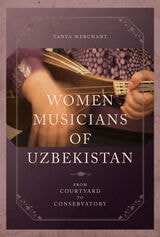
Women Musicians of Uzbekistan
From Courtyard to ConservatoryTanya Merchant
University of Illinois Press, 2015
Drawing on fieldwork and music study carried out between 2001 and 2014, Merchant challenges the Western idea of Central Asian women as sequestered and oppressed. Instead, she notes, Uzbekistan's women stand at the forefront of four prominent genres: maqom, folk music, Western art music, and popular music. Merchant's recounting of the women's experiences, stories, and memories underscores the complex role that these musicians and vocalists play in educational institutions and concert halls, street kiosks and the culturally essential sphere of wedding music. Throughout the book, Merchant ties nationalism and femininity to performances and reveals how the music of these women is linked to a burgeoning national identity.
Important and revelatory, Women Musicians of Uzbekistan looks into music's part in constructing gendered national identity and the complicated role of femininity in a former Soviet republic's national project.
Women Of Japan & Korea
Continuity and Changeedited by Joyce Gelb and Marian Lief Palley
Temple University Press, 1994
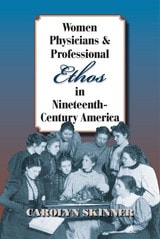
Women Physicians and Professional Ethos in Nineteenth-Century America
Carolyn Skinner
Southern Illinois University Press, 2014
Women physicians in nineteenth-century America faced a unique challenge in gaining acceptance to the medical field as it began its transformation into a professional institution. The profession had begun to increasingly insist on masculine traits as signs of competency. Not only were these traits inaccessible to women according to nineteenth-century gender ideology, but showing competence as a medical professional was not enough. Whether women could or should be physicians hinged mostly on maintaining their femininity while displaying the newly established standard traits of successful practitioners of medicine.
Women Physicians and Professional Ethos provides a unique example of how women influenced both popular and medical discourse. This volume is especially notable because it considers the work of African American and American Indian women professionals. Drawing on a range of books, articles, and speeches, Carolyn Skinner analyzes the rhetorical practices of nineteenth-century American women physicians. She redefines ethos in a way that reflects the persuasive efforts of women who claimed the authority and expertise of the physician with great difficulty.
Descriptions of ethos have traditionally been based on masculine communication and behavior, leaving women’s rhetorical situations largely unaccounted for. Skinner’s feminist model considers the constraints imposed by material resources and social position, the reciprocity between speaker and audience, the effect of one rhetor’s choices on the options available to others, the connections between ethos and genre, the potential for ethos to be developed and used collectively by similarly situated people, and the role ethos plays in promoting social change. Extending recent theorizations of ethos as a spatial, ecological, and potentially communal concept, Skinneridentifies nineteenth-century women physicians’ rhetorical strategies and outlines a feminist model of ethos that gives readers a more nuanced understanding of how this mode of persuasion operates for all speakers and writers.
Women Politics And Empowerment
Ann Bookman
Temple University Press, 1987
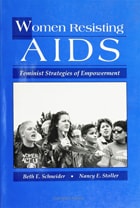
Women Resisting AIDS
Feminist Strategies of Empowermentedited by Beth E. Schneider and Nancy E. Stoller
Temple University Press, 1995
This collection of original essays discusses the increasingly rapid spread of AIDS among women, considering the varying experiences and responses of women of color, lesbians, and economically impoverished women. The essays range widely from policy assessments to case studies, focusing on women as sufferers, caretakers, policy activists, community organizers, and educators.
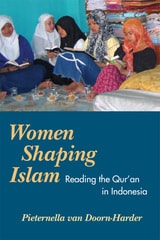
Women Shaping Islam
Reading the Qu'ran in IndonesiaPieternella van Doorn-Harder
University of Illinois Press, 2006
In Women Shaping Islam, Pieternella van Doorn-Harder explores the work of these contemporary women leaders, examining their attitudes toward the rise of radical Islamists; the actions of the authoritarian Soeharto regime; women's education and employment; birth control and family planning; and sexual morality. Ultimately, van Doorn-Harder reveals the many ways in which Muslim women leaders understand and utilize Islam as a significant force for societal change; one that ultimately improves the economic, social, and psychological condition of women in Indonesian society.
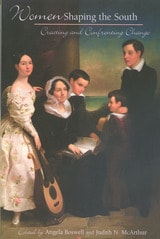
Women Shaping the South
Creating and Confronting ChangeEdited by Angela Boswell & Judith N. McArthur
University of Missouri Press, 2006
Shifting the focus to the local level, the authors demonstrate how women participated in creating change, even as they confronted conditions over which they had little power. In addition to exploring southern women’s lives, this collection shows how women shaped southern history. Using new and extensive primary research, each of these authors presents a new perspective on the important roles that women of different races and classes have played in transforming the South at some of its most crucial turning points, including post-Revolution, Civil War, Jim Crow era, World War I, and the civil rights movement.
Expanded from papers presented at the Sixth Southern Conference on Women’s History in Athens, Georgia, these essays reflect the depth and breadth of current vibrant research in southern women’s history and contribute exciting and important new scholarship to the field. Just as significant, the volume highlights the trends in southern women’s historical scholarship and points toward new directions for future scholars.
Women Singers in Global Contexts
Music, Biography, IdentityEdited by Ruth Hellier: Afterword by Ellen Koskoff
University of Illinois Press, 2016
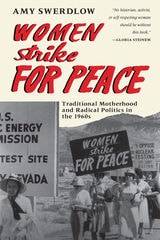
Women Strike for Peace
Traditional Motherhood and Radical Politics in the 1960sAmy Swerdlow
University of Chicago Press, 1993
Women Strike for Peace began on November 1, 1961, when thousands of white, middle-class women walked out of their kitchens and off their jobs in a one-day protest against Soviet and American nuclear policies. The protest led to a national organization of women who fought against nuclear arms and U.S. intervention in Vietnam. While maintaining traditional maternal and feminine roles, members of WSP effectively challenged national policies—defeating a proposal for a NATO nuclear fleet, withstanding an investigation by the House Committee on Un-American Activities, and sending one of its leaders to Congress as a peace candidate.
As a study of a dissident group grounded in prescribed female culture, and the struggle of its members to avoid being trapped within that culture, this book adds a crucial new dimension to women's studies. In addition, this account of WSP's success as a grass roots, nonhierarchical movement will be of great interest to historians, political scientists, and anyone interested in peace studies or conflict resolution.
"Swerdlow has re-created a unique piece of American political history, a chapter of the international peace movement, and an origin of the modern feminist movement. No historian, activist, or self-respecting woman should be without Women Strike for Peace. It shows not only how one group of women created change, but also how they inevitably changed themselves."—Gloria Steinem

Women Take Their Place in State Legislatures
The Creation of Women's CaucusesAnna Mitchell Mahoney
Temple University Press, 2019
How do women strategically make their mark on state legislatures? Anna Mitchell Mahoney’s book traces the development of women’s state legislative caucuses and the influence both gender and party have on women’s ability to organize collectively. She provides a comprehensive analysis of how and why women organize around their gender identity in state legislatures—or why they do not.
Women Take Their Place in State Legislatures includes a quantitative analysis of institutional-level variables and caucus existence in all 50 states. Case studies of caucus attempts in New Jersey, Colorado, Pennsylvania, and Iowa between 2006 and 2010 examine attempts at creating women’s caucuses that succeeded or failed, and why. Mahoney’s interviews with 180 state legislators and their staff explore the motivations of caucus creators and participants. Ultimately, she finds that women’s organizing is contextual; it demonstrates the dynamic nature of gender.
Mahoney also provides insights into broad questions regarding gendered institutions, collective action, and political party governance. Women Take Their Place in State Legislatures fills a lacuna in the evaluation of women in government.
Women Under Suspicion
Fraternization, Espionage, and Punishment in the Soviet Union During World War IIRegina Kazyulina
University of Wisconsin Press, 2025
Women Who Make a Fuss
The Unfaithful Daughters of Virginia WoolfIsabelle Stengers
University of Minnesota Press, 2014
Virginia Woolf, to whom university admittance had been forbidden, watched the universities open their doors. Though she was happy that her sisters could study in university libraries, she cautioned women against joining the procession of educated men and being co-opted into protecting a “civilization” with values alien to women. Now, as Woolf’s disloyal (unfaithful) daughters, who have professional positions in Belgian universities, Isabelle Stengers and Vinciane Despret, along with a collective of women scholars in Belgium and France, question their academic careers and reexamine the place of women and their role in thinking, both inside and outside the university. They urge women to heed Woolf’s cry—Think We Must—and to always make a fuss about injustice, cruelty, and arrogance.
Women Working Longer
Increased Employment at Older AgesEdited by Claudia Goldin and Lawrence F. Katz
University of Chicago Press, 2018
In Women Working Longer, editors Claudia Goldin and Lawrence F. Katz assemble new research that presents fresh insights on the phenomenon of working longer. Their findings suggest that education and work experience earlier in life are connected to women’s later-in-life work. Other contributors to the volume investigate additional factors that may play a role in late-life labor supply, such as marital disruption, household finances, and access to retirement benefits. A pioneering study of recent trends in older women’s labor force participation, this collection offers insights valuable to a wide array of social scientists, employers, and policy makers.

Women against Abortion
Inside the Largest Moral Reform Movement of the Twentieth CenturyKarissa Haugeberg
University of Illinois Press, 2017

Women among Women
Anthropological Perspectives on Female Age HierarchiesEdited by Jeanette Dickerson-Putman and Judith K. Brown: Foreword by Nancy Foner
University of Illinois Press, 1994
Women and American Socialism, 1870-1920
Mari Jo Buhle
University of Illinois Press, 1981
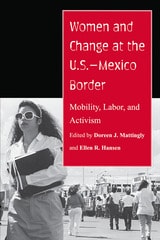
Women and Change at the U.S.–Mexico Border
Mobility, Labor, and ActivismEdited by Doreen J. Mattingly and Ellen R. Hansen
University of Arizona Press, 2006
Women and Comedy
Rewriting the British Theatrical TraditionSusan Carlson
University of Michigan Press, 1991
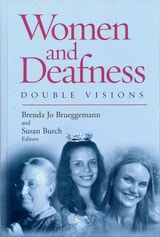
Women and Deafness
Double VisionsBrenda Jo Brueggemann
Gallaudet University Press, 2006
This new collection bridges two dynamic academic fields: Women’s Studies and Deaf Studies. The 14 contributors to this interdisciplinary volume apply research and methodological approaches from sociology, ethnography, literary/film studies, history, rhetoric, education, and public health to open heretofore unexplored territory.
Part One: In and Out of the Community addresses female dynamics within deaf schools; Helen Keller’s identity as a deaf woman; deaf women’s role in Deaf organizations; and whether or not the inequity in education and employment opportunities for deaf women is bias against gender or disability. Part Two: (Women’s) Authority and Shaping Deafness explores the life of 19th-century teacher Marcelina Ruis Y Fernandez; the influence of single, hearing female instructors in deaf education; the extent of women’s authority over oralist educational dictates during the 1900s; and a deaf daughter’s relationship with her hearing mother in the late 20th century.
Part Three: Reading Deaf Women considers two deaf sisters’ exceptional creative freedom from 1885 to 1920; the depictions of deaf or mute women in two popular films; a Deaf woman’s account of blending the public-private, deaf-hearing, and religious-secular worlds; how five Deaf female ASL teachers define “gender,” “feminism,” “sex,” and “patriarchy” in ASL and English; and 20th-century American Deaf beauty pageants that emphasize physicality while denying Deaf identity, yet also challenge mainstream notions of “the perfect body.”
Women and Dieting Culture
Inside a Commercial Weight Loss GroupKandi Stinson
Rutgers University Press, 2001
American women invest millions of dollars, as well as much time and energy, in a quest for a body that meets our culture’s standard of beauty—slenderness. Since we define a woman’s sexual attractiveness as essential to her social worth, it is no wonder that “fat is a feminist issue.”
Commercial weight loss organizations have come under attack from feminist scholars for perpetuating the very social values that cause women to obsess about their weight. In Women and Dieting Culture, sociologist Kandi Stinson asks how these values are transmitted and how the women who join such organizations actually think about their bodies and weight loss. As part of her research, Stinson fully participated in a national, commercial weight-loss organization as a paying member. Her acute analysis and sensitive insider’s portrayal vividly illustrate the central roles dieting and body image play in women’s lives.
As she experiences the program and interviews other members, Stinson discovers that the women view the causes and cures of being overweight according to five distinct, though often overlapping, concepts: self-help, work, religion, addiction, and feminism. Drawing extensively on the dieters’ own words, Stinson explores each of these concepts and outlines how they form interrelated patterns which, when analyzed, yield an exciting new perspective on the transmission of cultural values.
Armed with fresh insights into how women feel about weight and their bodies, Stinson finally ponders the question: Can one be a feminist and still wish to lose weight?
Women and Discourse in the Fiction of Marguerite Duras
Love, Legends, LanguageSusan D. Cohen
University of Massachusetts Press, 1993
One of the most famous living French writers, Marguerite Duras is renowned for her provocative and hauntingly beautiful works of fiction, drama, and cinema. This book offers the first comprehensive study of the narrative and stylistic characteristics of Duras's fiction. Susan D. Cohen examines the entire range of Duras's works, combining close textual analyses with a more general discussion of narrativity and its connections with gender, class, and race. The focus throughout is on language, representation, and difference, which Duras explores on every structural level.
Cohen shows how Duras's writings, even the controversial “erotic” works, expose and subvert the repression of women in traditional, dominant discourse and at the same time present an alternative, nonrepressive discursive model. She formulates a concept of creative “ignorance,” which she identifies as the generative principle of Duras's textual production and the approach to language it proposes. Cohen also explores the distinctive features of Duras's prose, describing how the writer achieves the ritual, legendary aura that characterizes her work.
Women and Experimental Filmmaking
Edited by Jean Petrolle and Virginia Wright Wexman
University of Illinois Press, 2005
The introduction sets out by addressing the basic difficulties of both historiography and definition before providing a historical overview of how these particular filmmakers have helped shape moviemaking traditions. The essays explore the major theoretical controversies that have arisen around the work of groundbreaking women such as Leslie Thornton, Su Friedrich, Nina Menkes, and Faith Hubley. With the filmmakers re-presentations of women's subjectivity ranging across film, video, digital media, ethnography, animation, and collage, Women and Experimental Filmmaking represents the full spectrum of genres, techniques, and modes. Taken together, these essays comprise a sustained analysis of the conjunction of aesthetics and politics in the work of both pioneer and contemporary experimental women filmmakers.
Women and Migration in the U.S.-Mexico Borderlands
A ReaderDenise A. Segura and Patricia Zavella, eds.
Duke University Press, 2007
This reader includes twenty-three essays—two of which are translated from the Spanish—that illuminate women’s engagement with diverse social and cultural challenges. One contributor critiques the statistical fallacy of nativist discourses within the United States that portray Chicana and Mexican women’s fertility rates as “out of control.” Other contributors explore the relation between sexual violence and women’s migration from rural areas to urban centers within Mexico, the ways that undocumented migrant communities challenge conventional notions of citizenship, and young Latinas’ commemorations of the late, internationally renowned singer Selena. Several essays address workplace intimidation and violence, harassment and rape by U.S. border patrol agents and maquiladora managers, sexual violence, and the brutal murders of nearly two hundred young women near Ciudad Juárez. This rich collection highlights both the structural inequities faced by Mexican women in the borderlands and the creative ways they have responded to them.
Contributors. Ernestine Avila, Xóchitl Castañeda, Sylvia Chant, Leo R. Chavez, Cynthia Cranford, Adelaida R. Del Castillo, Sylvanna M. Falcón, Gloria González-López, Maria de la Luz Ibarra, Jonathan Xavier Inda, Rosa Linda Fregoso, Jennifer S. Hirsch, Pierrette Hondagneu-Sotelo, Eithne Luibheid, Victoria Malkin, Faranak Miraftab, Olga Nájera-Ramírez, Norma Ojeda de la Peña, Deborah Paredez, Leslie Salzinger, Felicity Schaeffer-Grabiel, Denise A. Segura, Laura Velasco Ortiz, Melissa W. Wright, Patricia Zavella
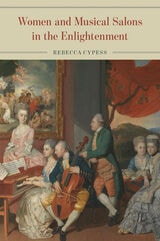
Women and Musical Salons in the Enlightenment
Rebecca Cypess
University of Chicago Press, 2022
In eighteenth-century Europe and America, musical salons—and the women who hosted and made music in them—played a crucial role in shaping their cultural environments. Musical salons served as a testing ground for new styles, genres, and aesthetic ideals, and they acted as a mediating force, bringing together professional musicians and their audiences of patrons, listeners, and performers. For the salonnière, the musical salon offered a space between the public and private spheres that allowed her to exercise cultural agency.
In this book, musicologist and historical keyboardist Rebecca Cypess offers a broad overview of musical salons between 1760 and 1800, placing the figure of the salonnière at its center. Cypess then presents a series of in-depth case studies that meet the salonnière on her own terms. Women such as Anne-Louise Brillon de Jouy in Paris, Marianna Martines in Vienna, Sara Levy in Berlin, Angelica Kauffman in Rome, and Elizabeth Graeme in Philadelphia come to life in multidimensional ways. Crucially, Cypess uses performance as a tool for research, and her interpretations draw on her experience with the instruments and performance practices used in eighteenth-century salons. In this accessible, interdisciplinary book, Cypess explores women’s agency and authorship, reason and sentiment, and the roles of performing, collecting, listening, and conversing in the formation of eighteenth-century musical life.
Women and New Hollywood
Gender, Creative Labor, and 1970s American CinemaAaron Hunter
Rutgers University Press, 2023
Women and New Hollywood revises our understanding of this important era in American film by examining the contributions that women made not only as directors, but also as screenwriters, editors, actors, producers, and critics. Including essays on film history, film texts, and the decade’s film theory and criticism, this collection showcases the rich and varied cinematic products of women’s creative labor, as well as the considerable barriers they faced. It considers both women working within and beyond the Hollywood film industry, reconceptualizing New Hollywood by bringing it into dialogue with other American cinemas of the 1970s. By valuing the many forms of creative labor involved in film production, this collection offers exciting alternatives to the auteurist model and new ways of appreciating the themes and aesthetics of 1970s American film.