Results by title
3745 books match the query 'Europe' and 113 start with w
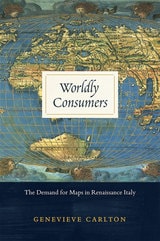
Worldly Consumers
The Demand for Maps in Renaissance ItalyGenevieve Carlton
University of Chicago Press, 2015
Drawing on a variety of sixteenth-century sources, including household inventories, epigrams, dedications, catalogs, travel books, and advice manuals, Worldly Consumers studies how individuals displayed different maps in their homes as deliberate acts of self-fashioning. One citizen decorated with maps of Bruges, Holland, Flanders, and Amsterdam to remind visitors of his military prowess, for example, while another hung maps of cities where his ancestors fought or governed, in homage to his auspicious family history. Renaissance Italians turned domestic spaces into a microcosm of larger geographical places to craft cosmopolitan, erudite identities for themselves, creating a new class of consumers who drew cultural capital from maps of the time.
Worldly Provincialism
German Anthropology in the Age of EmpireH. Glenn Penny and Matti Bunzl, Editors
University of Michigan Press, 2003
Furthermore, this volume calls for a more nuanced understanding of Germany's standing in postcolonial studies. In contrast to the prevailing view of German imperialism as a direct precursor to Nazi atrocities, this volume proposes a key insight that goes to the heart of German historiography: There is no clear trajectory to be drawn from the complex ideologies of imperial anthropology to the race science embraced by the Nazis. Instead of relying on a nineteenth-century explanation for twentieth-century crimes, this volume ultimately illuminates German ethnology and anthropology as local phenomena, best approached in terms of their own worldly provincialism.
H. Glenn Penny is Assistant Professor of History at the University of Missouri, Kansas City.
Matti Bunzl Assistant Professor of Anthropology and History at the University of Illinois at Urbana-Champaign.
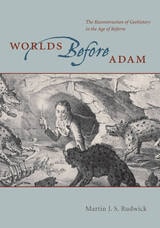
Worlds Before Adam
The Reconstruction of Geohistory in the Age of ReformMartin J. S. Rudwick
University of Chicago Press, 2008
The first detailed account of the reconstruction of prehuman geohistory, Martin J. S. Rudwick’s Worlds Before Adam picks up where his celebrated Bursting the Limits of Time leaves off. Here, Rudwick takes readers from the post-Napoleonic Restoration in Europe to the early years of Britain’s Victorian age, chronicling the staggering discoveries geologists made during the period: the unearthing of the first dinosaur fossils, the glacial theory of the last ice age, and the meaning of igneous rocks, among others. Ultimately, Rudwick reveals geology to be the first of the sciences to investigate the historical dimension of nature, a model that Charles Darwin used in developing his evolutionary theory.
Featuring an international cast of colorful characters, with Georges Cuvier and Charles Lyell playing major roles and Darwin appearing as a young geologist, Worlds Before Adam is a worthy successor to Rudwick’s magisterial first volume. Completing the highly readable narrative of one of the most momentous changes in human understanding of our place in the natural world, Worlds Before Adam is a capstone to the career of one of the world’s leading historians of science.
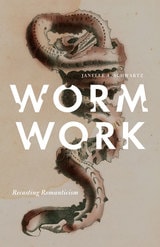
Worm Work
Recasting RomanticismJanelle A. Schwartz
University of Minnesota Press, 2012
Worms. Natural history is riddled with them. Literature is crawling with them. From antiquity to today, the ubiquitous and multiform worm provokes an immediate discomfort and unconscious distancing: it remains us against them in anthropocentric anxiety. So there is always something muddled, or dirty, or even offensive when talking about worms. Rehabilitating the lowly worm into a powerful aesthetic trope, Janelle A. Schwartz proposes a new framework for understanding such a strangely animate nature. Worms, she declares, are the very matter with which the Romantics rethought the relationship between a material world in constant flux and the human mind working to understand it.
Worm Work studies the lesser-known natural historical records of Abraham Trembley and his contemporaries and the familiar works of Erasmus Darwin, Charles Darwin, William Blake, Mary Shelley, and John Keats, to expose the worm as an organism that is not only reviled as a taxonomic terror but revered as a sign of great order in nature as well as narrative. This book traces a pattern of cultural production, a vermiculture that is as transformative of matter as it is of mind. It distinguishes decay or division as positive processes in Romantic era writings, compounded by generation or renewal and used to represent the biocentric, complex structuring of organicism.
Offering the worm as an archetypal figure through which to recast the evolution of a literary order alongside questions of taxonomy from 1740 to 1820 and on, Schwartz unearths Romanticism as a rich humus of natural historical investigation and literary creation.
Worthy of Freedom
Indenture and Free Labor in the Era of EmancipationJonathan Connolly
University of Chicago Press, 2024
In this book, historian Jonathan Connolly traces the normalization of indenture from its controversial beginnings to its widespread adoption across the British Empire during the nineteenth century. Initially viewed as a covert revival of slavery, indenture caused a scandal in Britain and India. But over time, economic conflict in the colonies altered public perceptions of indenture, now increasingly viewed as a legitimate form of free labor and a means of preserving the promise of abolition. Connolly explains how the large-scale, state-sponsored migration of Indian subjects to work on sugar plantations across Mauritius, British Guiana, and Trinidad transformed both the notion of post-slavery free labor and the political economy of emancipation.
Excavating legal and public debates and tracing practical applications of the law, Connolly carefully reconstructs how the categories of free and unfree labor were made and remade to suit the interests of capital and empire, showing that emancipation was not simply a triumphal event but, rather, a deeply contested process. In so doing, he advances an original interpretation of how indenture changed the meaning of “freedom” in a post-abolition world.
Worthy of Freedom
Indenture and Free Labor in the Era of EmancipationJonathan Connolly
University of Chicago Press, 2024
A study of Indian indentured labor in Mauritius, British Guiana, and Trinidad that explores the history of indenture’s normalization.
In this book, historian Jonathan Connolly traces the normalization of indenture from its controversial beginnings to its widespread adoption across the British Empire during the nineteenth century. Initially viewed as a covert revival of slavery, indenture caused a scandal in Britain and India. But over time, economic conflict in the colonies altered public perceptions of indenture, now increasingly viewed as a legitimate form of free labor and a means of preserving the promise of abolition. Connolly explains how the large-scale, state-sponsored migration of Indian subjects to work on sugar plantations across Mauritius, British Guiana, and Trinidad transformed both the notion of post-slavery free labor and the political economy of emancipation.
Excavating legal and public debates and tracing practical applications of the law, Connolly carefully reconstructs how the categories of free and unfree labor were made and remade to suit the interests of capital and empire, showing that emancipation was not simply a triumphal event but, rather, a deeply contested process. In so doing, he advances an original interpretation of how indenture changed the meaning of “freedom” in a post-abolition world.
Writing Cities
Exploring Early Modern Urban DiscourseJames S. Amelang
Central European University Press, 2020

Writing Faith
Text, Sign, and History in the Miracles of Sainte FoyKathleen Ashley and Pamela Sheingorn
University of Chicago Press, 1999
As Ashley and Sheingorn show, differing agendas shaped the miracle stories over time. The first author, Bernard of Angers, used his narratives to critique popular religion and to establish his own literary reputation, while the monks who continued the collection tried to enhance their monastery's prestige. Because these stories were rhetorical constructions, Ashley and Sheingorn argue, we cannot use them directly as sources of historical data. Instead, they demonstrate how analyzing representations common to groups of miracle stories—such as negative portrayals of Muslims on the eve of the Crusades—can reveal the traces of history.
Writing Habits
Historicism, Philosophy, and English Benedictine Convents, 1600–1800Jaime Goodrich
University of Alabama Press, 2021
The first in-depth examination of the texts produced in English Benedictine convents between 1600 and 1800.
After Catholicism became illegal in England during the sixteenth century, Englishwomen established more than twenty convents on the Continent that attracted thousands of nuns and served as vital centers of Catholic piety until the French Revolution. Today more than 1,000 manuscripts and books produced by, and for, the Benedictine convents are extant in European archives. Writing Habits: Historicism, Philosophy, and English Benedictine Convents, 1600–1800 provides the first substantive analysis of these works in order to examine how members of one religious order used textual production to address a major dilemma experienced by every English convent on the Continent: How could English nuns cultivate a cloistered identity when the Protestant Reformation had swept away nearly all vestiges of English monasticism?
Drawing on an innovative blend of methodologies, Jaime Goodrich contends that the Benedictines instilled a collective sense of spirituality through writings that created multiple overlapping communities, ranging from the earthly society of the convent to the transhistorical network of the Catholic Church. Because God resides at the heart of these communities, Goodrich draws on the works of Martin Buber, a twentieth-century Jewish philosopher who theorized that human community forms a circle, with each member acting as a radius leading toward the common center of God. Buber’s thought, especially his conception of the I-You framework for personal and spiritual relationships, illuminates a fourfold set of affiliations central to Benedictine textual production: between the nuns themselves, between the individual nun and God, between the convent and God, and between the convent and the Catholic public sphere. By evoking these relationships, the major genres of convent writing—administrative texts, spiritual works, history and life writing, and controversial tracts—functioned as tools for creating community and approaching God.
Through this Buberian reading of the cloister, Writing Habits recovers the works of Benedictine nuns and establishes their broader relevance to literary history and critical theory.
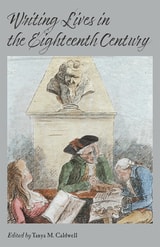
Writing Lives in the Eighteenth Century
Tanya M. Caldwell
Bucknell University Press, 2020
Published by Bucknell University Press. Distributed worldwide by Rutgers University Press.
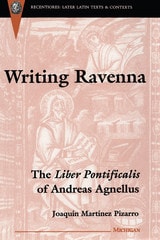
Writing Ravenna
The Liber Pontificalis of Andreas AgnellusJoaquin Martinez Pizarro
University of Michigan Press, 1995
Writing Ravenna is an attempt to deal with this work's literary significance and specifically with what it tells us about the creation and circulation of narrative in the Early Middle Ages. The book's first chapter analyzes the ways in which the local and international interests of the Ravenna clergy are reflected in the design, genre, and narrative rhetoric of the Liber. The second chapter characterizes the specific textuality, given that the Liber was composed for oral delivery. The final chapter offers translations of the four most interesting narrative sequences in the Liber, followed by full analyses of sources, narrative technique, and ideological aims.
Writing Ravenna will be of interest to a broad spectrum of scholars, including art historians, scholars of late antiquity and the Early Middle Ages, religious historians, and literary critics.
Joaquin Martinez Pizarro is Associate Professor of English, State University of New York at Stony Brook. He is also the author of A Rhetoric of the Scene: Dramatic Narrative in the Early Middle Ages.
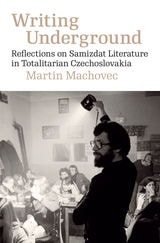
Writing Underground
Reflections on Samizdat Literature in Totalitarian CzechoslovakiaMartin Machovec
Karolinum Press, 2019
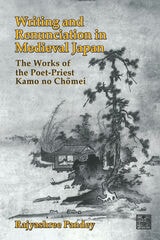
Writing and Renunciation in Medieval Japan
The Works of the Poet-Priest Kamo no ChomeiRajyashree Pandey
University of Michigan Press, 1998