Results by title
3388 books match the query 'Fiction' and 138 start with w
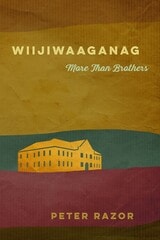
Wiijiwaaganag
More Than BrothersPeter Razor
Michigan State University Press, 2022
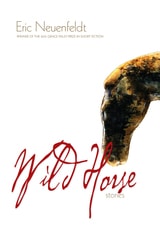
Wild Horse
StoriesEric Neuenfeldt
University of Massachusetts Press, 2016
An orphaned boy fights to keep the dilapidated home that contains the memory of his family. A sawyer's nephew scrambles to recall the skills of the trade in the wake of his uncle's death. A corrections teacher strains to give his son direction in a remote prison town after his addict mother deserts them. These stories create a portrait of the difficult decisions people must make in unforgiving surroundings and the consequences of the battle to press on.
Published in cooperation with Association of Writers and Writing Programs.
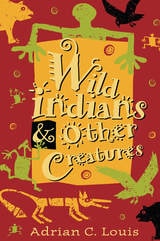
Wild Indians And Other Creatures
Adrian C. Louis
University of Nevada Press, 1997
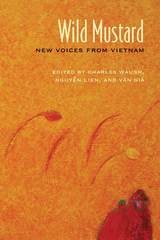
Wild Mustard
New Voices from VietnamEdited by Charles Waugh, Nguyen Lien, and Van Giá
Northwestern University Press, 2017
In the tradition of the "Under 40" collections popularized by magazines such as the New Yorker and Granta, but with greater stakes and greater differences between the previous generation of writers and this new one, Wild Mustard seeks to change how North American readers think of Vietnam. Escaping the common fixation on the Vietnam War and its aftermath, these stories reflect the movement and dynamism of the young Vietnamese who locate themselves amid the transnational encounters and proliferating identities of a global economy.
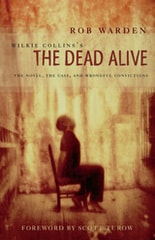
Wilkie Collins's The Dead Alive
The Novel, the Case, and Wrongful ConvictionsWilkie Collins
Northwestern University Press, 2005
Rob Warden, one of the nation's most eloquent and effective advocates for the wrongly convicted, reconsiders the facts of the Boorn case for what they can tell us about the systemic flaws that produced this first known miscarriage of justice-flaws that continue to riddle our system of justice today. A tale of false confessions and jailhouse snitches, of evidence overlooked, and justice more blinkered than blind, the Boorns' story reminds us of the perennial nature of the errors at the heart of American jurisprudence-and of the need to question and correct a system that regularly condemns the innocent.
William Warner's Syrinx
or, A Sevenfold HistoryWilliam Warner, edited with introduction and notes by Wallace A. Bacon
Northwestern University Press, 1950
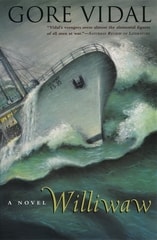
Williwaw
A NovelGore Vidal
University of Chicago Press, 2003

Windy McPherson's Son
Sherwood Anderson
University of Illinois Press, 1993

Wingless Flights
Appalachian Women in FictionDanny L. Miller
University of Wisconsin Press, 1996
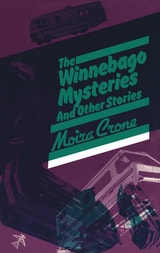
Winnebago Mysteries and Other Stories
Moira Crone
University of Alabama Press, 1982
In this collection of seven short stories, Moira Crone presents fresh writings about women, love, and strength. "Kudzu" is a tale of a girl's childhood in the stranglehold of American life. "The Brooklyn Lie" deals with a young woman's sexuality and body. The title story explores relationships and women's issues through a series of letters and narratives.
Winning the Game and Other Stories
Rubem Fonseca
Tagus Press, 2013
Winter Stories
Ingvild Rishøi
Seagull Books, 2018
Driven by a fundamental need to secure and protect relationships with loved ones, Rishøi’s characters stumble, fall, and climb to their feet again—even though the deck inevitably seems to be stacked against them. Seemingly minor snags in their best-laid plans carry the risk of undermining everything with potentially life-altering consequences. What these stories illustrate, however, is how small victories and the unexpected compassion of virtual strangers can have a far-reaching and profound impact. With empathy and sensitivity, the poetic sensibility of Rishøi’s literary voice beautifully illuminates the fragile vulnerability of the human condition. In a time when the level of skepticism and distrust between people is rising, these stories remind us of the humanity that unites us all.
Winter of Artifice
Three NovelettesAnaïs Nin
Ohio University Press, 2016
Swallow Press first published Winter of Artifice in 1945, following two vastly different versions from other presses. The book opens with a film star, Stella, studying her own, but alien, image on the screen. It ends in the Manhattan office of a psychoanalyst—the Voice—who, as he counsels patients suffering from the maladies of modern life, reveals himself as equally susceptible to them. The middle, title story explores one of Nin’s most controversial themes, that of a woman’s sexual relationship with her father. Elliptical, fragmented prose; unconventional structure; surrealistic psychic landscapes—Nin forged these elements into a style that engaged with the artistic concerns of her time but still registers as strikingly contemporary.
This reissue, accompanied by a new introduction by Laura Frost and the original engravings by Nin’s husband Ian Hugo, presents an important opportunity to consider anew the work of an author who laid the groundwork for later writers. Swallow Press’s Winter of Artifice represents a literary artist coming into her own, with the formal experimentation, thematic daring, and psychological intrigue that became her hallmarks.
With Blood in Their Eyes
Thomas Cobb
University of Arizona Press, 2013
Winner, Spur Award for Best Western Long Novel (Western Writers of America) and Southwest Book Award (Border Regional Library Association)
On February 10, 1918, John Power woke to the sound of bells and horses’ hooves. He was sharing a cabin near the family mine with his brother Tom and their father Jeff; hired man Tom Sisson was also nearby. Then gunfire erupted, and so began the day when the Power brothers engaged the Graham County Sheriff’s Department in the bloodiest shootout in Arizona history.
Now Thomas Cobb, author of Crazy Heart and Shavetail, has taken up the story in this powerful and meticulously researched nonfiction novel. What seems at first a simple tale of crime and pursuit takes on much greater meaning and complexity as the story traces the past lives of the main characters and interconnects them—all leading back to the deadly confrontation that begins the book. Cobb cunningly weaves the story of the Power brothers’ escape with flashbacks of the boys’ father’s life and his struggle to make a living ranching, logging, and mining in the West around the turn of the century. Deftly drawn characters and cleverly concealed motivations work seamlessly to blend a compelling family history with a desperate story of the brothers as they attempt to escape.
Grappling with themes of loyalty, masculinity, technology, and honor, this sweeping saga reveals the passion and brutality of frontier life in Arizona a hundred years ago. Richly authentic and beautifully written, With Blood in Their Eyes breathes dramatic new life into this nearly forgotten episode of the American West.

Within the Lighted City
Lisa Lenzo
University of Iowa Press, 1997
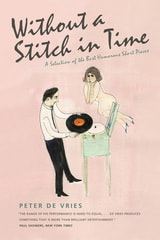
Without a Stitch in Time
A Selection of the Best Humorous Short PiecesPeter De Vries
University of Chicago Press, 1972
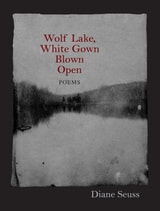
Wolf Lake, White Gown Blown Open
PoemsDiane Seuss
University of Massachusetts Press, 2010
Diane Seuss's poems grow out of the fertile soil of southwest Michigan, bursting any and all stereotypes of the Midwest and turning loose characters worthy of Faulkner in their obsession, their suffering, their dramas of love and sex and death. The first section of this collection pays homage to the poet's roots in a place where the world hands you nothing and promises less, so you are left to invent yourself or disappear. From there these poems both recount and embody repeated acts of defiant self-creation in the face of despair, loss, and shame, and always in the shadow of annihilation.
With darkly raucous humor and wrenching pathos, Seuss burrows furiously into liminal places of no dimension— state lines, lakes' edges, the space “between the m and the e in the word amen.” From what she calls “this place inbetween” come profane prayers in which "the sound of hope and the sound of suffering" are revealed to be “the same music played on the same instrument.”
Midway through this book, a man tells the speaker that beauty is that which has not been touched. This collection is a righteous and fierce counterargument: in the world of this imagination, beauty spills from that which has been crushed, torn, and harrowed. “We receive beauty,” Seuss writes, “as a nail receives / the hammer blow.” This is the poetry that comes only after the white dress has been blown open—the poetry of necessity, where a wild imagination is the only hope.
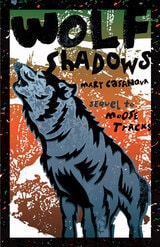
Wolf Shadows
Mary Casanova
University of Minnesota Press, 2013
In this sequel to Mary Casanova’s exciting Moose Tracks, twelve-year-old Seth is back for a new adventure. A debate is brewing in his northern Minnesota town over the growing wolf packs and the programs that are in place for their protection. Although he fears them, Seth can’t help but want to see the wolves thrive.
Seth’s feelings put him at odds with those who want to hunt wolves again—including his best friend Matt, whose family believes that the wolf population poses a serious threat to their livestock. Torn between his love of animals and his best friend, Seth is unsure of what to do. When Matt commits a horrible act of violence, Seth angrily abandons him in the woods, unaware that a blizzard is on the way. Now Seth must try to rescue his friend—but will he be able to save their friendship?
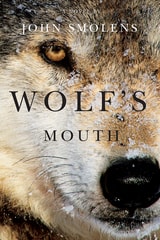
Wolf's Mouth
John Smolens
Michigan State University Press, 2016
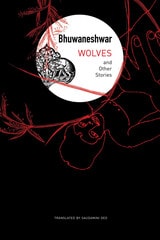
Wolves
and Other StoriesBhuwaneshwar
Seagull Books, 2020
This new collection includes all of Bhuwaneshwar’s twelve published short stories, none of which have been translated into English before now. Cinematic and peerless, these tales combine images, sketches, sounds, fragments, dialogues, and frame-narrative techniques of Indian folktales, ultimately creating a montage of modern Indian psyche not found in any other work of Hindi literature. Nearly a century old, Bhuwaneshwar’s stories read like they were written in modern day, dealing with questions and anxieties that continue to haunt and reappear, much like his iconic wolves, in the twenty-first century.
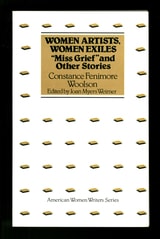
Women Artists, Women Exiles
"Miss Grief" and Other Stories by Constance Fenimore WoolsonEdited by Joan Myers Weimar
Rutgers University Press, 1988
Woolson's early stories are witty and incisive critiques of those conventions of literary Romanticism that encode women's marginality. Set in the wilderness that surrounded the Great Lakes, these stories revise male literary texts to clear a space where women's voices can be heard.
In a group of stories set in the post-Civil War south, women artists are shown as exiles both away from their homes and from themselves. One superb tale, "Felipa," pairs a repressed woman artist with a wild child who rejects both patriarchal religion and approved heterosexual behavior. Woolson here explores the possibility of a collaboration between female wildness and female form of control.
Stories written during Woolson's years in Europe confront woman artists with successful male writers and critics who resemble Henry James. These carefully crafted stories reflect James's mixed impact on women artists: as a model literary realist and as a subtle denigrator of women's talent.
Joan Weimar's introduction uses unpublished letters to reconstruct and interpret Wool's life and her probable suicide. It places Woolson in the male and female literary traditions of her time and offers extended analysis of the stories.
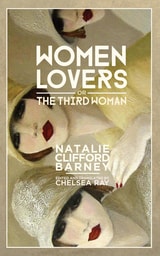
Women Lovers, or The Third Woman
Natalie Clifford Barney, Edited and translated by Chelsea Ray, Introduction by Melanie C. Hawthorne
University of Wisconsin Press, 2016
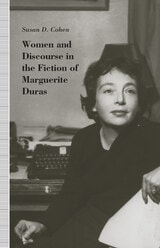
Women and Discourse in the Fiction of Marguerite Duras
Love, Legends, LanguageSusan D. Cohen
University of Massachusetts Press, 1993
One of the most famous living French writers, Marguerite Duras is renowned for her provocative and hauntingly beautiful works of fiction, drama, and cinema. This book offers the first comprehensive study of the narrative and stylistic characteristics of Duras's fiction. Susan D. Cohen examines the entire range of Duras's works, combining close textual analyses with a more general discussion of narrativity and its connections with gender, class, and race. The focus throughout is on language, representation, and difference, which Duras explores on every structural level.
Cohen shows how Duras's writings, even the controversial “erotic” works, expose and subvert the repression of women in traditional, dominant discourse and at the same time present an alternative, nonrepressive discursive model. She formulates a concept of creative “ignorance,” which she identifies as the generative principle of Duras's textual production and the approach to language it proposes. Cohen also explores the distinctive features of Duras's prose, describing how the writer achieves the ritual, legendary aura that characterizes her work.
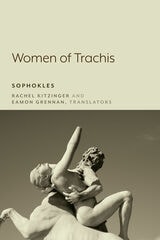
Women of Trachis
Rachel Kitzinger
Lever Press, 2021

Women on a Journey
Between Baghdad and LondonBy Haifa Zangana
University of Texas Press, 2006
Exiled, displaced, tortured, and grieving—each of the five Iraqi women whose lives and losses come to us through Haifa Zangana's skillfully wrought novel is searching in her own way for peace with a past that continually threatens to swallow up the present.
Majda, the widow of a former Ba'ath party official who was killed by the government he served. Adiba, a political dissident tortured under Saddam Hussein's regime. Um Mohammed, a Kurdish refugee who fled her home for political asylum. Iqbal, a divorced mother whose family in Iraq is suffering the effects of Western economic sanctions. And Sahira, the wife of a Communist politician, struggling with his disillusionment and her own isolation. Bound to one another by a common Iraqi identity and a common location in 1990s London, these women come together across differences in politics, ethnic and class background, age, and even language. In narrating the friendship that develops among them, Zangana captures their warmth and humor as well as their sadness, their feelings of despair along with their search for hope, their sense of uprootedness, and their yearnings for home.
Weaving between the women's memories of Iraq—nostalgic and nightmarish—and their lives as exiles in London, Zangana's novel gives voice to the richness and complexity of Iraqi women's experiences. Through their stories, the novel represents a powerful critique of the violence done to ordinary people by those who hold power both in Iraq and in the West.
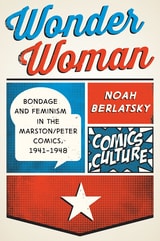
Wonder Woman
Bondage and Feminism in the Marston/Peter Comics, 1941-1948Berlatsky, Noah
Rutgers University Press, 2015
Comics expert Noah Berlatsky takes us on a wild ride through the Wonder Woman comics of the 1940s, vividly illustrating how Marston’s many quirks and contradictions, along with the odd disproportionate composition created by illustrator Harry Peter, produced a comic that was radically ahead of its time in terms of its bold presentation of female power and sexuality. Himself a committed polyamorist, Marston created a universe that was friendly to queer sexualities and lifestyles, from kink to lesbianism to cross-dressing. Written with a deep affection for the fantastically pulpy elements of the early Wonder Womancomics, from invisible jets to giant multi-lunged space kangaroos, the book also reveals how the comic addressed serious, even taboo issues like rape and incest.
Wonder Woman
New edition with full color illustrationsBerlatsky, Noah
Rutgers University Press, 2017
Comics expert Noah Berlatsky takes us on a wild ride through the Wonder Woman comics of the 1940s, vividly illustrating how Marston’s many quirks and contradictions, along with the odd disproportionate composition created by illustrator Harry Peter, produced a comic that was radically ahead of its time in terms of its bold presentation of female power and sexuality. Himself a committed polyamorist, Marston created a universe that was friendly to queer sexualities and lifestyles, from kink to lesbianism to cross-dressing. Written with a deep affection for the fantastically pulpy elements of the early Wonder Woman comics, from invisible jets to giant multi-lunged space kangaroos, the book also reveals how the comic addressed serious, even taboo issues like rape and incest.
Wonder Woman: Bondage and Feminism in the Marston/Peter Comics 1941-1948 reveals how illustrator and writer came together to create a unique, visionary work of art, filled with bizarre ambition, revolutionary fervor, and love, far different from the action hero symbol of the feminist movement many of us recall from television.

Wonderful Girl
Aimee La Brie
University of North Texas Press, 2007
Words Are Something Else
David Albahari
Northwestern University Press, 1996
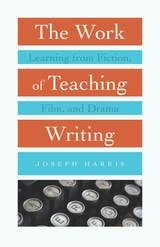
Work of Teaching Writing
Learning from Fiction, Film, and DramaJoseph Harris
Utah State University Press, 2020
Each chapter examines a fictional representation of writing classes—as portrayed in Dead Poets Society, Up the Down Staircase, Educating Rita, Push, and more—and shifts the conversation from how these works portray teachers to how they dramatize the actual work of teaching. Harris considers scenes of instruction from different stages of the writing process and depictions of students and teachers at work together to highlight the everyday aspects of teaching writing.
In the writing classroom the ideas of teachers come to life in the work of their students. The Work of Teaching Writing shows what fiction, film, and drama can convey about the moment of exchange between teacher and student as they work together to create new insights into writing. It will interest both high school and undergraduate English teachers, as well as graduate students and scholars in composition and rhetoric, literary studies, and film studies.
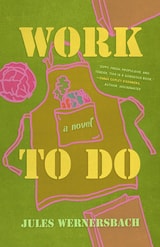
Work to Do
Jules Wernersbach
University of Iowa Press, 2026
When Eleanor founded Guadalupe Street Co-op in the early 1980s, she was in her mid-twenties and madly in love with her girlfriend, Meg. Together, they envisioned an idyllic grocery store owned by its workers and customers.
Forty years later, Guadalupe Street Co-op is an iconic Austin business with a loyal customer base, an antiquated business model, and a disgruntled staff. Roz, one of the store’s senior managers, is too caught up stalking her ex-wife online to notice that her girlfriend, Molly, is plotting with her coworkers to unionize. Roz also doesn’t see that Molly is not-so-secretly in a situationship with Randy, the dairy manager leading their collective.
Unfolding over the course of a single week during Texas hurricane season, Work to Do pings between the co-op’s first year and present day, as the unionization bid reaches fever pitch. The wind howls, the power goes out, and water creeps through the front door as questions of who owns the grocery store and who has a right to its future are posed. And will the workers ever be paid enough to buy the organic groceries they shelve?
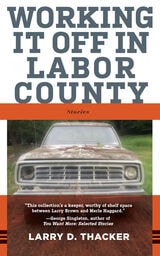
Working It Off in Labor County
StoriesLarry D. Thacker
West Virginia University Press, 2021
“It seems like everybody but people from here are sure about what we’re about, and they make money being wrong about it.” The residents of Labor County, a fictional small community in the mountains of southeastern Kentucky, may be short on cash, but they are rich in creativity and tirelessly inventive as they concoct new schemes to make ends meet, settle old scores, and work off their debts to society and, in a way, to themselves.
A zealous history professor is caught stealing from the local museum in protest of petty theft; an arsonist strikes it lucky—twice; a skilled leatherworker saddles a turkey and finds a rider; an angel aspires to be a punk rock Roller Derby princess; a grieving artist carves a miracle into a roadside rock face; and affable Uncle Archie produces a seemingly unending supply of new and bizarre items to display in his Odditorium.
More than a collection of tales, Working It Off in Labor County assembles memorable characters who recur across these seventeen linked stories, sharing in one another’s struggles and stumbling upon humor and mystery, the grotesque and the divine, each in many forms.
Woven on the Loom of Time
Stories by Enrique Anderson-ImbertSelected and translated by Carleton Vail and Pamela Edwards-Mondragón
University of Texas Press, 1990
Writing
Marguerite Duras
University of Minnesota Press, 2011
Writing, one of Marguerite Duras’s last works, is a meditation on the process of writing and on her need for solitude in order to do it. In the five short pieces collected in this volume, she explores experiences that had an emotional impact on her and that inspired her to write. These vary from the death of a pilot in World War II, to the death of a fly, to an art exhibition. Two of the pieces were made into documentary films, and one was originally a short film. Both autobiographical and fictional, like much of her work, Writing displays Duras’s unique worldview and sensitive insight in her simple and poetic prose.
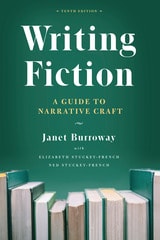
Writing Fiction, Tenth Edition
A Guide to Narrative CraftJanet Burroway, with Elizabeth Stuckey-French, and Ned Stuckey-French
University of Chicago Press, 2019
A creative writer’s shelf should hold at least three essential books: a dictionary, a style guide, and Writing Fiction. Janet Burroway’s best-selling classic is the most widely used creative writing text in America, and for more than three decades it has helped hundreds of thousands of students learn the craft. Now in its tenth edition, Writing Fiction is more accessible than ever for writers of all levels—inside or outside the classroom.
This new edition continues to provide advice that is practical, comprehensive, and flexible. Burroway’s tone is personal and nonprescriptive, welcoming learning writers into the community of practiced storytellers. Moving from freewriting to final revision, the book addresses “showing not telling,” characterization, dialogue, atmosphere, plot, imagery, and point of view. It includes new topics and writing prompts, and each chapter now ends with a list of recommended readings that exemplify the craft elements discussed, allowing for further study. And the examples and quotations throughout the book feature a wide and diverse range of today’s best and best-known creators of both novels and short stories.
This book is a master class in creative writing that also calls on us to renew our love of storytelling and celebrate the skill of writing well. There is a very good chance that one of your favorite authors learned the craft with Writing Fiction. And who knows what future favorite will get her start reading this edition?
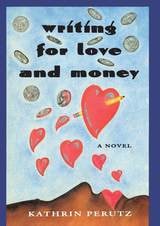
Writing for Love and Money
A NovelKathrin Perutz
University of Arkansas Press, 1991

Www.Here I Am
Russell Stannard
Templeton Press, 2002
•Does belief in God play a part in that?
•Do you believe in evolution—that you came from animals?
•Do you think there is life on other planets?
•If so, does that make human beings less important?
•Do the world religions contradict each other, or are they simply talking about the same God in somewhat different ways?
•How should belief in an afterlife affect the way you live this life?
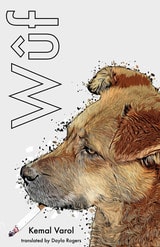
Wûf
By Kemal Varol; translated by Dayla Rogers
University of Texas Press, 2020
Told through the voice of a canine narrator, Wûf is a surrealist wartime love story set in Turkey in the 1990s. The novel follows Mikasa, a street dog who recounts a tale of tragic wartime love at a kennel where he finds solace in storytelling and cigarettes. A book that took the Turkish literary world by storm, Kemal Varol’s Wûf tackles universal themes of love and loss with both humor and pathos. Translated by PEN/Heim Award winner Dayla Rogers, the novel renders in English a one-of-a-kind love story with a narrator its readers won’t soon forget.