Results by title
43 books match the query 'Walking'
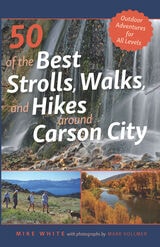
50 of the Best Strolls, Walks, and Hikes Around Carson City
Mike White
University of Nevada Press, 2020
One of the area’s foremost experts on the outdoors, Mike White, author of 50 of the Best Strolls, Walks, and Hikes Around Reno, returns with a new guidebook dedicated to Carson City and its surrounding areas in northern Nevada. With over three hundred days of sunshine a year, this capital city’s parks, trails, lakes, and soaring peaks provide the perfect attractions for residents and visitors alike. This guide provides readers with the most precise information for a wide range of detailed paths and trails throughout the greater Carson City region and includes interesting sidebars about human and natural history for each trip.
From Virginia City and the Carson River on the east to the Sierra Nevada mountains to the west, this comprehensive guidebook offers the most complete guide for walkers, joggers, and hikers. Whether you are looking for a short and easy stroll on a city path or an extended hike along the Tahoe Rim Trail, this is your all-inclusive resource for your next outdoor adventure.
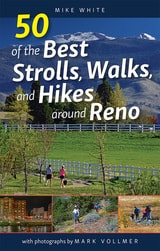
50 of the Best Strolls, Walks, and Hikes around Reno
Mike White
University of Nevada Press, 2017
Reno, Nevada is one of the best communities in the nation for outdoor recreational opportunities. With over three hundred days of sunshine a year, the weather beckons residents and visitors alike to step outside and enjoy a casual stroll in a city park, a stiff climb to the top of one of the area’s surrounding mountains, or just about anything in between. White offers the most complete guide for walkers, joggers, runners, and hikers to the best paths and trails in the greater Reno-Sparks region.
This guide provides readers the most complete and detailed information for each excursion, from the Truckee River corridor to the Northern Valleys, including lakes, parks, trails, and mountains. Whether you are looking for a short and easy stroll on a paved path along one of the city’s greenbelts, or an extended hike into the mountains of the Mount Rose wilderness, this is your all-inclusive resource. White is one of the area’s foremost experts on the outdoors, and he includes interesting sidebars about human and natural history for each trip. This is a guide for anyone who enjoys a stroll, walk, or hike in and around Northern Nevada’s premier outdoor playgrounds.
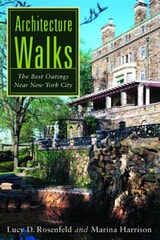
Architecture Walks
The Best Outings Near New York CityRosenfeld, Lucy D
Rutgers University Press, 2010
Early colonial saltboxes, as-yet-unfinished contemporary structures on college campuses, nineteenth-century follies, Gilded Age palaces, lighthouses, windmills, romantic ruins-- the pages of this delightful book, filled with adventures, treat readers to sites within approximately two hours' driving time from New York City. With book in hand readers will marvel at college campuses, small villages, planned and utopian communities, National Historic Sites, castles and forts, churches and temples of architectural interest, and even a Buddhist monastery, all in Connecticut, New York, New Jersey, the eastern edge of Pennsylvania, and Delaware.
By including descriptions of architectural styles, suggestions for special adventures, and lists of jaunts arranged by architect or designer, architectural style, and particular types of sites, Rosenfeld and Harrison help make day trips even more enjoyable. Whether explorers or armchair adventurers, readers of all ages will find something that captures their interest in the nearly one hundred sites and forty photos included in Architecture Walks.
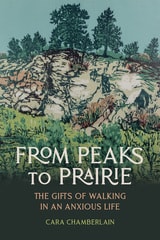
From Peaks to Prairie
The Gifts of Walking in an Anxious LifeCara Chamberlain
Oregon State University Press, 2026
Along twenty-nine trails near Yellowstone National Park, Cara Chamberlain leads readers on a journey of perseverance, drawing lessons from human and natural history. She reflects on being diagnosed with generalized anxiety disorder (GAD) and obsessive-compulsive disorder (OCD) and explores how walking helps manage anxiety, opening rich pathways of perception.
In From Peaks to Prairie, Chamberlain examines her personal life, family history, and struggles as she encounters animals and plants of Montana and Wyoming. Each essay is an episode mingling the past with the present, combining sightings of bears, birds, and wildflowers with memories of her Utah childhood and family. She observes, “I walk. It’s the way I’ve found not to eliminate GAD and OCD, as I used to long to do, but to live with them.” Mountains and prairies offer strength and nurture those who need them. It is on their paths that Chamberlain finds clarity.
History Walks in New Jersey
Rosenfeld, Lucy D
Rutgers University Press, 2006
Whether you are an amateur historian, a weekend walker, or a teacher planning a class trip, this book will be an essential resource for ideas and information. Walks include the Kingston Loop, a long canal where George Washington, pen in hand, composed his post-Revolutionary War speech, "Farewell Orders to the Armies of the United States." Also included is a mountain walk that traces Native American Leni-Lenape history and one that wends its way into an old Moravian village in the town of Hope. A pirate cove, stops on the Underground Railroad, a Civil War cemetery, and the sites of duels, mines, canals, architectural innovations, estates and resorts, centuries-old agricultural and fishing settlements, and the Hindenburg crash are all here.
Each walk includes directions, information on tours, a brief history, and suggestions for additional places to visit in the area. Whether a New Jersey native or a visitor to the Garden State, readers will enjoy going beyond the highways and suburban towns to learn about history while discovering the state's natural beauty.
Human Nature
A Walking History of the Himalayan LandscapeThomas Bell
Haus Publishing, 2025
Combining travelogue, folklore, literature, art, and anthropology, this work explores the human and natural geography of the Himalayas and offers a nuanced portrait of life over the centuries in one of the world’s most enigmatic regions.
In Human Nature, Thomas Bell embarks on four walks through the Himalayas, each in a different season, to explore the interplay between the land and the people who call it home. Bell’s decades in Nepal give him an unusual perspective that bridges the gap between insider and outsider. The stories he recounts touch on themes from religion to ecology and political economy, and span from prehistory to the present day. He also deftly examines the impact of British imperialism and the growing external pressures on the environment. Accompanied by Bell’s striking photographs and maps, Human Nature is a magnificently written account that spans big ideas and real lives. Erudite, intimate, and evocative, this is essential reading for anyone seeking to understand the relationship between communities and their environments.
In Search of Portland
Exploring a Transforming CityBrian Libby
Oregon State University Press, 2026
“A good walking tour is not just about individual stops but the total experience of moving along a city’s streets, taking in a variety of neighborhoods, buildings, shops, parks, public art, and bridges: a chance to be the grand marshal in your own parade,” writes Brian Libby in the introduction of In Search of Portland. Starting from his 1997 home, the Empire Apartments at Southwest Eleventh Avenue and Jefferson Street, Libby shares one hundred fascinating points of interest through personal reflection, interviews, and anecdotal history.
The six excursions exploring Portland’s downtown, Old Town, and Pearl District not only focus on the city’s important landmarks and hidden gems but showcase an evolving city’s resilience and heart. Alongside his own experiences, Libby reveals how luminaries like Humphrey Bogart, Mark Rothko, Gus Van Sant, Vera Katz, and Bill Walton appreciated the City of Roses. From Pioneer Courthouse Square to the Crystal Ballroom, each location in the book celebrates the spirit of place in addition to its architecture.
More than a book about buildings, In Search of Portland reveals the stories behind the built landscape, the people, and the history that have created modern Portland.
Of Walking in Ice
Munich-Paris, 23 November–14 December 1974Werner Herzog
University of Minnesota Press, 2015
In late November 1974, filmmaker Werner Herzog received a phone call from Paris delivering some terrible news. German film historian, mentor, and close friend Lotte Eisner was seriously ill and dying. Herzog was determined to prevent this and believed that an act of walking would keep Eisner from death. He took a jacket, a compass, and a duffel bag of the barest essentials, and wearing a pair of new boots, set off on a three-week pilgrimage from Munich to Paris through the deep chill and snowstorms of winter.
Of Walking in Ice is Herzog’s beautifully written, much-admired, yet often-overlooked diary account of that journey. Herzog documents everything he saw and felt on his quest to his friend’s bedside, from poetic descriptions of the frozen landscape and harsh weather conditions to the necessity of finding shelter in vacant or abandoned houses and the intense loneliness of his solo excursion.
Includes, for the first time, Werner Herzog’s 1982 “Tribute to Lotte Eisner” upon her receipt of the Helmut Käutner Prize
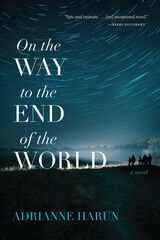
On the Way to the End of the World
A NovelAdrianne Harun
Acre Books, 2023
As the Cuban Missile Crisis eases, President Kennedy is casting around for a demonstration of American prowess when one of his Cabinet unearths an old mandate that US Marines be fit enough to walk fifty miles in twenty hours. Perfect! Kennedy decides to throw down the gauntlet to “today’s Marines,” but before he knows it, he’s sparked a wild fad. The entire country has answered the call, it seems, and for a few crazed winter weeks, masses of Americans will embark on their own arduous Big Walks—the “JFK 50-Milers.”
Yet in tiny Humtown—an isolated mill town in the Pacific Northwest—not everyone who shows up for a hastily organized Big Walk is motivated by patriotism. Not Helen Hubka, an inveterate gossip; not the suicidal Caroline, who months earlier lost her beloved husband during the Storm of the Century. Not ex-soldier/fisherman Jaspar Goode, nor the unknown man in their midst, a collared priest who seems to shift identities at will. Certainly not Avis, a battered teenager running from her terrifying brother . . . with a stolen town treasure. And when the walkers stumble upon the abandoned car of a missing young mother, they rekindle a mystery that soon reverberates among them, exposing hidden truths, talents, and alliances.
Splendidly imagined, with prose that sings on the page, On the Way to the End of the World is an adventure story riven with secrets, a national fairy tale twisted into a whodunit.
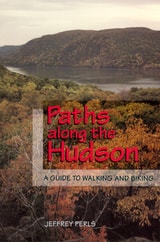
Paths Along The Hudson
A Guide to Walking and BikingPerls, Jeffrey
Rutgers University Press, 1999
Whether you are an ardent hiker or prefer to enjoy the great outdoors from your living-room armchair, Jeffrey Perls has written the essential guidebook on one of the most majestic natural areas of the eastern United States-the Hudson River.
From the rugged topography of the Hudson Highlands Gorge to the crowded towers of Manhattan, the Hudson has been an inspiration for poets, writers, artists, and countless others who have enjoyed the many wonders of the river. The area surrounding the Hudson abounds in history. It’s played a pivotal part in our country's development, from its strategic role in the American Revolution to its heritage as the nation’s primary entry point for immigrants to this country. The river also supports an incredibly rich diversity of flora and fauna, from the bald eagle to the short-nosed sturgeon.
Perls brings together the culture, history, nature, and recreational activities along the Hudson River in one convenient guide book. He not only maps out walks and bike trails, both urban and rural, but also introduces readers to the landscape, geology, history, and culture of the Hudson Valley region. Perls provides a practical and geographically comprehensive guide to exploring the area on foot and by bike. The trail routes bring readers as close to the river as possible and guides them to rewarding vistas, nature preserves, and historic landmarks. It’s a useful guide for visitors to the Hudson region and local residents as it acquaints them to the natural treasures to be found in their own backyards.
Peregrinations
Walking in American LiteratureAmy T Hamilton
University of Nevada Press, 2018
The land of the United States is defined by vast distances encouraging human movement and migration on a grand scale. Consequently, American stories are filled with descriptions of human bodies walking through the land.
In Peregrinations, Amy T. Hamilton examines stories told by and about Indigenous American, Euroamerican, and Mexican walkers. Walking as a central experience that ties these texts together—never simply a metaphor or allegory—offers storytellers and authors an elastic figure through which to engage diverse cultural practices and beliefs including Puritan and Catholic teachings, Diné and Anishinaabe oral traditions, Chicanx histories, and European literary traditions.
Hamilton argues that walking bodies alert readers to the ways the physical world—more-than-human animals, trees, rocks, wind, sunlight, and human bodies—has a hand in creating experience and meaning. Through material ecocriticism, a reading practice attentive to historical and ongoing oppressions, exclusions, and displacements, she reveals complex layerings of narrative and materiality in stories of walking human bodies.
This powerful and pioneering methodology for understanding place and identity, clarifies the wide variety of American stories about human relationships with the land and the ethical implications of the embeddedness of humans in the more-than-human world.
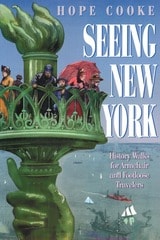
Seeing New York
History Walks for Armchair and Footloose TravelersHope Cooke
Temple University Press, 1995
Since the 1700s, various ethnic and immigrant groups have been shifting and negotiating their place in New York City. Hope Cooke also struggled to find a "correlation of space" and "sense of belonging" when she returned to the city after spending her adult life living in a place in the Himalayas, the Queen of Sikkim (a tiny kingdom near Nepal). Abroad for so long, she returned with an urgent need to rediscover this city, to "find her way home."
It was not always a comfortable journey for Cooke: "On the days I felt secure, Manhattan's maelstrom was pure energy. On shaky days, the boundlessness made me yearn for limits, or, failing that, at least a vantage point." The book that has emerged is an entertaining and integrated account of New York City's social history, architecture, physical space, and culture. Starting with the American Indian settlements and the early days when the southern-most tip of Manhattan held little more than a bleak outpost of Dutch fur traders, Cooke tracks the economic development and journeys north, from the Village's beginnings as a refuge from dreaded summer fevers to the present day Dominican enclave of Washington Heights.
Written for armchair enthusiasts and walkabout adventurers, this book travels fourteen of the city's distinct and significant neighborhoods. Cooke's guide will make a historical sleuth out of local residents and tourists alike. Her off-the-beaten-path insights and witty observations help decode the urban landscape and reveal how social changes have reworked the city's terrain. Enhancing the narrative are 140 illustrations, including old engravings, maps, and current photographs.
In the series Critical Perspectives on the Past, edited by Susan Porter Benson, Stephen Brier, and Roy Rosenzweig.
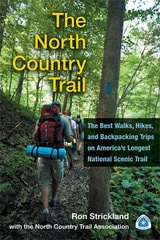
The North Country Trail
The Best Walks, Hikes, and Backpacking Trips on America’s Longest National Scenic TrailRon Strickland with the North Country Trail Association
University of Michigan Press, 2013
The North Country Trail is the longest of America’s eleven congressionally designated National Scenic Trails. Winding through seven states—New York, Pennsylvania, Ohio, Michigan, Wisconsin, Minnesota, and North Dakota—the NCT’s 4,600 miles attract more than one million visitors annually. These hikers are treated to a smorgasbord of Upper Midwest hiking featuring everything from urban strolls to backcountry adventure through mountains, rivers, prairies, and shoreline. This book is the definitive guide for NCT hikers—whether first-timers, seasoned backpackers, or any level in between—who wish to maximize their experience on this splendid trail.
In addition to a full overview of the trail’s tread in each state, the guide describes in detail forty of the NCT’s premier segments, with helpful information including easy-to-read trail descriptions, physical and navigation difficulties, trail highlights, hiking tips, and precise maps incorporating the latest GPS technology.
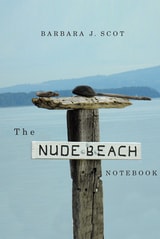
The Nude Beach Notebook
Barbara J. Scot
Oregon State University Press, 2014
Scot uses long, meditative walks on the “clothing optional” beach of the idyllic Sauvie Island near Portland, Oregon, to explore family responsibility, time’s passage, and faith. She weaves entries from her notebook—a record of the island’s wildlife, descriptions of the “Odd Ones” she encounters on the beach, and stories about the native people who once lived on the river—with the main narrative, tracing her search for her brother, her close friendship with a fellow writer, and daily life on the houseboat moorage where she lives.
The Nude Beach Notebook highlights the importance of place as a means for exploring and interpreting one’s own story. In the end, Scot’s walks on Sauvie Island lead to her own redemptive journey. She considers the uses of fiction and non-fiction in memory and in writing, the brevity and beauty of human existence, and the inscrutable, enduring mystery of death.
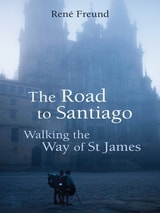
The Road to Santiago
Walking the Way of St JamesRené Freund
Haus Publishing, 2016
As René Freund learns, when you reach the edge of the European continent having walked along the Way of St. James—which pilgrims of former times thought to be the end of the world—only then do you realize that the old pilgrim’s saying is true: the journey does not end in Santiago. The journey begins in Santiago. In this vivid travelogue, Freund not only introduces us to the overwhelming natural beauty he encountered along the way, but also shares his experience of reaching his physical and psychological limits during the arduous journey.
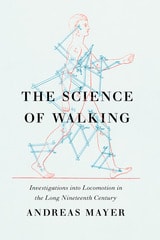
The Science of Walking
Investigations into Locomotion in the Long Nineteenth CenturyAndreas Mayer
University of Chicago Press, 2020
Looking back at more than a century of locomotion research, Mayer charts, for the first time, the rise of scientific endeavors to control and codify locomotion and analyzes their social, political, and aesthetic ramifications throughout the long nineteenth century. In an engaging narrative that weaves together science and history, Mayer sets the work of the most important representatives of the physiology of locomotion—including Wilhelm and Eduard Weber and Étienne-Jules Marey—in their proper medical, political, and artistic contexts. In tracing the effects of locomotion studies across other cultural domains, Mayer reframes the history of the science of walking and gives us a deeper understanding of human movement.
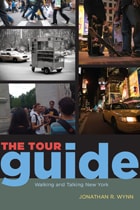
The Tour Guide
Walking and Talking New YorkJonathan R. Wynn
University of Chicago Press, 2011
Everyone wants to visit New York at least once. The Big Apple is a global tourist destination with a dizzying array of attractions throughout the five boroughs. The only problem is figuring out where to start—and that’s where the city’s tour guides come in.
These guides are a vital part of New York’s raucous sidewalk culture, and, as The Tour Guide reveals, the tours they offer are as fascinatingly diverse—and eccentric—as the city itself. Visitors can take tours that cover Manhattan before the arrival of European settlers, the nineteenth-century Irish gangs of Five Points, the culinary traditions of Queens, the culture of Harlem, or even the surveillance cameras of Chelsea—in short, there are tours to satisfy anyone’s curiosity about the city’s past or present. And the guides are as intriguing as the subjects, we learn, as Jonathan R. Wynn explores the lives of the people behind the tours, introducing us to office workers looking for a diversion from their desk jobs, unemployed actors honing their vocal skills, and struggling retirees searching for a second calling. Matching years of research with his own experiences as a guide, Wynn also lays bare the grueling process of acquiring an official license and offers a how-to guide to designing and leading a tour.
Touching on the long history of tour-giving across the globe as well as the ups and downs of New York’s tour guide industry in the wake of 9/11, The Tour Guide is as informative and insightful as the chatty, charming, and colorful characters at its heart.
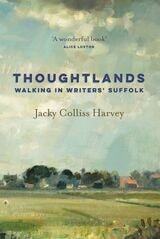
Thoughtlands
Walking in Writers' SuffolkJacky Colliss Harvey
Haus Publishing, 2026
The first book of its kind to map writers, walks, and writing within the Suffolk landscape.
This is a book about walking and writing: about walkers who wrote and writers who walk. It is about the circuit that exists between mind and feet, and about landscapes that exist both physically in front of you and in a line of words. And since all this walking and writing and thinking must have somewhere to take place, it is also a book about Suffolk, the author’s birthplace, and how writers have used and responded to its unmistakable magic.
Colliss Harvey travels from west to east, from chalk plain to crag, from velvety farmlands muffled by leaves to deafening shingle and uncompromising sea. She walks in excellent company—her fellow writers range from Daniel Defoe and Robert Louis Stevenson to Patricia Highsmith, P. D. James, Ronald Blythe, and Ruth Rendell. They include the poets George Crabbe and Robert Bloomfield; literary greats Wilkie Collins, George Orwell, and W. G. Sebald, who found a new native land here; and those born in Suffolk, such as M. R. James and Edward Fitzgerald.
The walks can be followed on foot with this book in a backpack, for those moments when walking gives way to reading, or from within the deep comfort of a favorite armchair. A bit of the writer’s notebook, a little of the memoir, and a dash of the love letter, Thoughtlands is a one-of-a-kind literary journey and an unparalleled exploration of the Suffolk landscape.
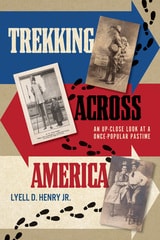
Trekking across America
An Up-Close Look at a Once-Popular PastimeLyell D. Jr. Henry
University of Iowa Press, 2024
As competitive walking faded, a new kind of spectacle walking, which had also begun in the late 1860s, came to full flower. Between 1890 and 1930, hundreds of men, women, even children and entire families were on the nation’s roads and railroad tracks trekking between widely separated points, sometimes moving in unusual ways such as on roller skates or by walking barefooted, backward, on stilts, or while rolling a hoop. To finance their attention-seeking journeys, many sold souvenir postcards. The public usually found these performers entertaining, but public officials and newspaper editors often denounced them as nuisances or frauds. Tapping vintage postcards and old newspaper articles, this is the first book to bring back to view this once-familiar feature of American life.
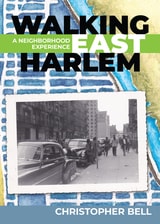
Walking East Harlem
A Neighborhood ExperienceChristopher Bell
Rutgers University Press, 2025
Now East Harlem native Christopher Bell takes you on a tour of his beloved neighborhood. He takes you on three separate walking tours, each visiting a different part of East Harlem and each full of stories about its theaters, museums, art spaces, schools, community centers, churches, mosques, and synagogues. You’ll also learn about the famous people who lived in El Barrio, such as actress Cecily Tyson, opera singer Marian Anderson, portrait artist Alice Neel, incomparable poet Julia De Burgos, and King of Latin Music Tito Puente.
Lavishly illustrated with over fifty photos, Walking East Harlem points out not only the many architectural and cultural landmarks in the neighborhood but also the historical buildings that have since been demolished. Whether you are a tourist or a resident, this guide will give you a new appreciation for El Barrio’s exciting history, cultural diversity, and continued artistic vibrancy.
Walking Home Ground
In the Footsteps of Muir, Leopold, and DerlethRobert Root
Wisconsin Historical Society Press, 2017
When longtime author Robert Root moves to a small town in southeast Wisconsin, he gets to know his new home by walking the same terrain traveled by three Wisconsin luminaries who were deeply rooted in place—John Muir, Aldo Leopold, and August Derleth. Root walks with Muir at John Muir State Natural Area, with Leopold at the Shack, and with Derleth in Sac Prairie; closer to home, he traverses the Ice Age Trail, often guided by such figures as pioneering scientist Increase Lapham. Along the way, Root investigates the changes to the natural landscape over nearly two centuries, and he chronicles his own transition from someone on unfamiliar terrain to someone secure on his home ground.In prose that is at turns introspective and haunting, Walking Home Ground inspires us to see history’s echo all around us: the parking lot that once was forest; the city that once was glacier. "Perhaps this book is an invitation to walk home ground," Root tells us. "Perhaps, too, it’s a time capsule, a message in a bottle from someone given to looking over his shoulder even as he tries to examine the ground beneath his feet."
Walking On Sand
The Story of an Immigrant Son and the Forgotten Art of Public ServiceRocco C Siciliano
University of Utah Press, 2004
Rocco C. Siciliano broke new ground as the first Italian-American to serve in the White House as an assistant to the president, Dwight D. Eisenhower. At 31, "Ike’s Youngest" attained a prominence not suggested in his humble beginnings in Salt Lake City, Utah. But his upbringing in the Mormon-dominated community, where he balanced the heritage of his striving immigrant parents with his own aspirations for success, prepared him for a wide variety of service. This service includes leading a special weapons platoon in the 10th Mountain Division in World War II, bringing Martin Luther King Jr. to meet with President Eisenhower, and becoming a recognized business leader in California.
Siciliano used his expertise in labor, personnel management, and business to contribute substantively to the J. Paul Getty Center, the Los Angeles Philharmonic Association, the Committee for Economic Development, and the "Volcker" Commission on Public Service, among others.
The variety of Siciliano’s experiences reinvigorates our understanding of the forgotten art of public service. Walking on Sand emphasizes the role that public service can play for corporations, communities, states, and the nation. This story is a gift from the Greatest Generation to the many people who serve America today and will serve her tomorrow.
Walking Towards Walden
A Pilgrimage in Search of PlaceJohn Hanson Mitchell
University Press of New England, 2015
Walking Trails of Eastern and Central Wisconsin
Bob Crawford
University of Wisconsin Press, 1997
A companion to the popular Walking Trails of Southern Wisconsin, this book describes more than 200 trails in 72 locations throughout five of the state's major regions. Bob Crawford provides maps and detailed instructions to make the trails easy to locate.
With each trail description you'll find:
* details about the route and terrain, as well as geographical, biological, or historical features of interest;
* regulations including open days and hours, and rules regarding dogs, trail bikes, cross-country skiing, and other activities;
* information about available restrooms, drinking water, nature centers, and other facilities at the site;
* a description assessing degree of difficulty—slope, width, maintenance, and other such factors—and a helpful rating of "walkability" on a scale from 1 to 5.
The only comprehensive guide to hiking locations in the eastern part of the state, this book also provides lists of trail locations that include playground equipment for kids and picnic facilities for those who want to make a day trip of their hiking outing. Appendices spotlight trails that boast historical significance, ice age features, picnic areas, and cross-country skiing opportunities.
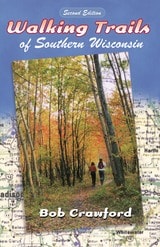
Walking Trails of Southern Wisconsin
Bob Crawford
University of Wisconsin Press, 2000
Take a walk on the wild side with the completely updated version of this popular guide.
This edition now includes coverage of Lafayette and Vernon counties, plus new information on more trails, including ones at Avoca Prairie Savanna State Natural Area, Wildcat Mountain State Park, and Blackhawk Lake Recreational Area. Author Bob Crawford has also revised eleven trail maps in nine counties and updated material throughout the book, which now describes more than 150 trails at more than sixty locations.
These trails wind across southern Wisconsin—into forests and along shores, over glacial formations and around Native American earthworks—and showcase some of the most beautiful and interesting walking trails in the nation. Walking Trails of Southern Wisconsin retains its handy, pocket-sized format plus all the other features that made the first edition so successful:
• details about routes and terrain plus geographical, biological, or historical features of interest
• regulations including open days and hours, and rules regarding dogs, trail bikes, cross-country skiing, and other activities
• information about available restrooms, drinking water, nature centers, and other facilities at the site
• a description assessing degree of difficulty—slope, width, maintenance, and other such factors—and a helpful rating of “walkability” on a scale from 1 to 5
Crawford also provides information about nearby parks, preserves, glacial formations, historical sites, tourist attractions, and other points of interest for those who want to turn a hike into a day trip or weekend outing. Staying fit was never so easy nor so much fun.
Walking a City's History
Mexico City from the Sixteenth Century to the PresentMauricio Tenorio-Trillo
University of Chicago Press, 2026
Walking a City’sHistory is both a richly documented panoramic view of Mexico City’s long history and an intimate essay on its social and cultural fabric. In this book, Mauricio Tenorio-Trillo uses his expertise as a historian and his talents as a storyteller to bring the city to life.
Using influential moments in Mexico City’s history from the Battle of Tenochtitlán in 1521 to the present, Tenorio-Trillo illustrates the capital’s transformations against a national and global background. Walking a City’s History offers an original, unique perspective on the social, architectural, artistic, and political dimensions of Mexico City, guided by chronicles, literary works, historical accounts, and the author’s own lifetime of walks through the city.

Walking in Art Education
Ecopedagogical and A/r/tographical Encounters.Edited by Nicole Rallis, Ken Morimoto, Michele Sorensen, Valerie Triggs, and Rita Irwin
Intellect Books, 2024
In Walking in Art Education, authors explore walking and a/r/tography in their local contexts. As a result, the book finds that kinship and relationality are significant themes that permeate across a/r/tographic practices focused on ecopedagogy and learning with the land. These walking practices serve as ecopedagogical moments that attune us to human-land and more-than-human relationships, while also moving us past Western-centric understandings of land and place. More than this, the book situates this work in a/r/tographic practices taking up walking as one method for engagement.
Walking in Cities
Quotidian Mobility as Urban Theory, Method, and PracticeEvrick Brown
Temple University Press, 2015
Walking connects the rhythms of urban life to the configuration of urban spaces. As the contributors and editors show in Walking in Cities, walking also reflects the systematic inequalities that order contemporary urban life. Walking has different meanings because it can be a way of temporarily “taking possession” of urban space, or it can make the relatively powerless more vulnerable to crime. The essays in Walking in Cities explore how walking intersects with sociological dimensions such as gender, race and ethnicity, social class, and power.
Various chapters explorethe flâneuse, or female urban drifter, in Tehran’s shopping malls; Hispanic neighborhoods in New York, San Diego, and El Paso; and the intra-neighborhood and inter-class dynamics of gentrification in Greenpoint, Brooklyn.The essays in Walking in Cities provide important lessons about urban life.
Walking on Fire
The Shaping Force of Emotion in Writing DramaJim Linnell
Southern Illinois University Press, 2011
Walking on Fire opens up new conversations about content and emotion for writers and offers exciting answers to the questions of why we make drama and why we connect to it. Linnell’s userfriendly theory and passionate approach create a framework for understanding the links between the writer’s work in creating the text, the text itself, and the audience’s engagement.
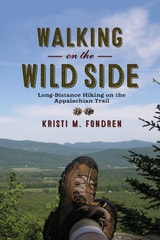
Walking on the Wild Side
Long-Distance Hiking on the Appalachian TrailFondren, Kristi M
Rutgers University Press, 2015
The most famous long-distance hiking trail in North America, the 2,181-mile Appalachian Trail—the longest hiking-only footpath in the world—runs along the Appalachian mountain range from Georgia to Maine. Every year about 2,000 individuals attempt to “thru-hike” the entire trail, a feat equivalent to hiking Mount Everest sixteen times. In Walking on the Wild Side, sociologist Kristi M. Fondren traces the stories of forty-six men and women who, for their own personal reasons, set out to conquer America’s most well known, and arguably most social, long-distance hiking trail.
In this fascinating in-depth study, Fondren shows how, once out on the trail, this unique subculture of hikers lives mostly in isolation, with their own way of acting, talking, and thinking; their own vocabulary; their own activities and interests; and their own conception of what is significant in life. They tend to be self-disciplined, have an unwavering trust in complete strangers, embrace a life of poverty, and reject modern-day institutions. The volume illuminates the intense social intimacy and bonding that forms among long-distance hikers as they collectively construct a long-distance hiker identity. Fondren describes how long-distance hikers develop a trail persona, underscoring how important a sense of place can be to our identity, and to our sense of who we are. Indeed, the author adds a new dimension to our understanding of the nature of identity in general.
Anyone who has hiked—or has ever dreamed of hiking—the Appalachian Trail will find this volume fascinating. Walking on the Wild Side captures a community for whom the trail is a sacred place, a place to which they have become attached, socially, emotionally, and spiritually.
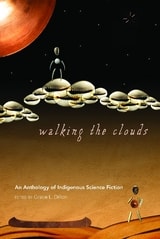
Walking the Clouds
An Anthology of Indigenous Science FictionEdited by Grace L. Dillon
University of Arizona Press, 2012
In this first-ever anthology of Indigenous science fiction Grace Dillon collects some of the finest examples of the craft with contributions by Native American, First Nations, Aboriginal Australian, and New Zealand Maori authors. The collection includes seminal authors such as Gerald Vizenor, historically important contributions often categorized as "magical realism" by authors like Leslie Marmon Silko and Sherman Alexie, and authors more recognizable to science fiction fans like William Sanders and Stephen Graham Jones. Dillon's engaging introduction situates the pieces in the larger context of science fiction and its conventions.
Organized by sub-genre, the book starts with Native slipstream, stories infused with time travel, alternate realities and alternative history like Vizenor's "Custer on the Slipstream." Next up are stories about contact with other beings featuring, among others, an excerpt from Gerry William's The Black Ship. Dillon includes stories that highlight Indigenous science like a piece from Archie Weller's Land of the Golden Clouds, asserting that one of the roles of Native science fiction is to disentangle that science from notions of "primitive" knowledge and myth. The fourth section calls out stories of apocalypse like William Sanders' "When This World Is All on Fire" and a piece from Zainab Amadahy's The Moons of Palmares. The anthology closes with examples of biskaabiiyang, or "returning to ourselves," bringing together stories like Eden Robinson's "Terminal Avenue" and a piece from Robert Sullivan's Star Waka.
An essential book for readers and students of both Native literature and science fiction, Walking the Clouds is an invaluable collection. It brings together not only great examples of Native science fiction from an internationally-known cast of authors, but Dillon's insightful scholarship sheds new light on the traditions of imagining an Indigenous future.
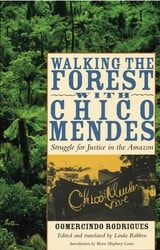
Walking the Forest with Chico Mendes
Struggle for Justice in the AmazonBy Gomercindo Rodrigues, Edited and translated by Linda Rabben
University of Texas Press, 2007
A close associate of Chico Mendes, Gomercindo Rodrigues witnessed the struggle between Brazil's rubber tappers and local ranchers—a struggle that led to the murder of Mendes. Rodrigues's memoir of his years with Mendes has never before been translated into English from the Portuguese. Now, Walking the Forest with Chico Mendes makes this important work available to new audiences, capturing the events and trends that shaped the lives of both men and the fragile system of public security and justice within which they lived and worked.
In a rare primary account of the celebrated labor organizer, Rodrigues chronicles Mendes's innovative proposals as the Amazon faced wholesale deforestation. As a labor unionist and an environmentalist, Mendes believed that rain forests could be preserved without ruining the lives of workers, and that destroying forests to make way for cattle pastures threatened humanity in the long run. Walking the Forest with Chico Mendes also brings to light the unexplained and uninvestigated events surrounding Mendes's murder.
Although many historians have written about the plantation systems of nineteenth-century Brazil, few eyewitnesses have captured the rich rural history of the twentieth century with such an intricate knowledge of history and folklore as Rodrigues.
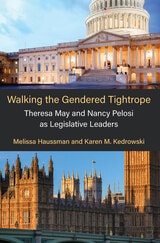
Walking the Gendered Tightrope
Theresa May and Nancy Pelosi as Legislative LeadersMelissa Haussman and Karen M. Kedrowski
University of Michigan Press, 2023
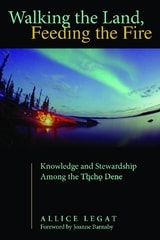
Walking the Land, Feeding the Fire
Knowledge and Stewardship Among the Tlicho DeneBy Allice Legat; Foreword by Joanne Barnaby
University of Arizona Press, 2012
In the Dene worldview, relationships form the foundation of a distinct way of knowing. For the Tlicho Dene, indigenous peoples of Canada's Northwest Territories, as stories from the past unfold as experiences in the present, so unfolds a philosophy for the future. Walking the Land, Feeding the Fire vividly shows how—through stories and relationships with all beings—Tlicho knowledge is produced and rooted in the land.
Tlicho-speaking people are part of the more widespread Athapaskan-speaking community, which spans the western sub-arctic and includes pockets in British Columbia, Alberta, California, and Arizona. Anthropologist Allice Legat undertook this work at the request of Tlicho Dene community elders, who wanted to provide younger Tlicho with narratives that originated in the past but provide a way of thinking through current critical land-use issues. Legat illustrates that, for the Tlicho Dene, being knowledgeable and being of the land are one and the same.
Walking the Land, Feeding the Fire marks the beginning of a new era of understanding, drawing both connections to and unique aspects of ways of knowing among other Dene peoples, such as the Western Apache. As Keith Basso did with his studies among the Western Apache in earlier decades, Legat sets a new standard for research by presenting Dene perceptions of the environment and the personal truths of the storytellers without forcing them into scientific or public-policy frameworks. Legat approaches her work as a community partner—providing a powerful methodology that will impact the way research is conducted for decades to come—and provides unique insights and understandings available only through traditional knowledge.
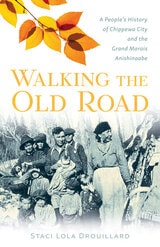
Walking the Old Road
A People's History of Chippewa City and the Grand Marais AnishinaabeStaci Lola Drouillard
University of Minnesota Press, 2019
The story of a once vibrant, now vanished off-reservation Ojibwe village—and a vital chapter of the history of the North Shore
“We do this because telling where you are from is just as important as your name. It helps tie us together and gives us a strong and solid place to speak from. It is my hope that the stories of Chippewa City will be heard, shared, and remembered, and that the story of Chippewa City and the Grand Marais Chippewa will continue to grow. By being a part of the living narrative, Bimaadizi Aadizookaan, together we can create a new story about what was, what is, and, ultimately, what will be.” —from the Prologue
At the turn of the nineteenth century, one mile east of Grand Marais, Minnesota, you would have found Chippewa City, a village that as many as 200 Anishinaabe families called home. Today you will find only Highway 61, private lakeshore property, and the one remaining village building: St. Francis Xavier Church. In Walking the Old Road, Staci Lola Drouillard guides readers through the story of that lost community, reclaiming for history the Ojibwe voices that have for so long, and so unceremoniously, been silenced.
Blending memoir, oral history, and narrative, Walking the Old Road reaches back to a time when Chippewa City, then called Nishkwakwansing (at the edge of the forest), was home to generations of Ojibwe ancestors. Drouillard, whose own family once lived in Chippewa City, draws on memories, family history, historical analysis, and testimony passed from one generation to the next to conduct us through the ages of early European contact, government land allotment, family relocation, and assimilation.
Documenting a story too often told by non-Natives, whether historians or travelers, archaeologists or settlers, Walking the Old Road gives an authentic voice to the Native American history of the North Shore. This history, infused with a powerful sense of place, connects the Ojibwe of today with the traditions of their ancestors and their descendants, recreating the narrative of Chippewa City as it was—and is and forever will be—lived.
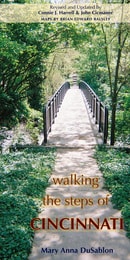
Walking the Steps Of Cincinnati
A Guide to the Queen City’s Scenic and Historic SecretsMary Anna DuSablon
Ohio University Press, 2014
Walking the Steps of Cincinnati: A Guide to the Queen City’s Scenic and Historic Secrets is a revised and updated version of Mary Anna DuSablon’s original guidebook, first published in 1998. This new edition describes and maps thirty-four walks of varying lengths and levels of difficulty around the neighborhoods of Cincinnati, following scenic or historic routes and taking in many of the city’s more than four hundred sets of steps. Some of these walks follow the same routes laid out by DuSablon in the first edition of the guide; others have been revised to reflect changes in the city and its neighborhoods, the physical condition of the steps, and the scenic views of Cincinnati that they afford; and still others are altogether new.
In writing their descriptions of the walks, authors Connie J. Harrell and John Cicmanec have retraced each path and taken all new photographs of the steps as well as architectural and natural landmarks along the way. Cartographer Brian Balsley has drawn a fresh set of maps, and Roxanne Qualls, vice-mayor of Cincinnati, has graciously written a new foreword.
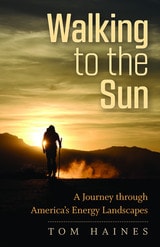
Walking to the Sun
A Journey through America's Energy LandscapesTom Haines
University Press of New England, 2018
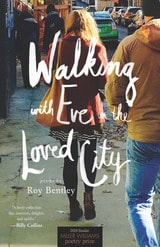
Walking with Eve in the Loved City
PoemsRoy Bentley
University of Arkansas Press, 2018
Finalist, 2018 Miller Williams Poetry Prize
Walking with Eve in the Loved City is an ambitious collection. Using a variety of male figures—Jeff Goldblum, Ringo Starr, the poet’s uncle Billy, to name a few—these poems skillfully interrogate masculinity and its cultural artifacts, searching for a way to reconcile reverence for the father figure with a crisis of faith about the world as run by men. And yet, despite the gravity of the subjects these poems engage, this is a hopeful, frequently funny book that encourages the reader to look deeply at the world, and then to laugh if she can.
Roy Bentley often accomplishes this work through a careful balancing of honesty and misdirection, as when in the poem “Can’t Help Falling in Love” the real drama of the narrative—the appearance of an affair between the speaker’s father and a drive-in restaurant carhop—operates as a backdrop for the eight-year-old speaker’s puerile attraction to the woman; or when the vampire Nosferatu (a frequent figure in the poems) materializes in a trailer park, his immortality becoming a lens through which to process the speaker’s righteous anger about wealth and poverty.
God too features prominently—as does doubt. Drawing from the vernacular of his childhood, Bentley accesses the simultaneous austerity and lyrical opulence of the King James Bible to invent stories in which the last note struck is often a call to pay kinder attention. More than anything, these poems serve as humanistic advocates, using the power of narrative—film, interview, imagination, memoir—to highlight how people matter.
Walking with Eve in the Loved City invites the reader to join in this watching and witnessing, to take part in renewing how we see.
Walking with Jesus Christ
Catholic and Evangelical Visions of the Moral LifeSteven Hoskins
Saint Paul Seminary Press, 2023
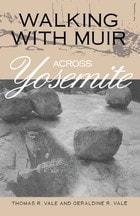
Walking with Muir across Yosemite
Thomas R. Vale
University of Wisconsin Press, 1998
Illustrated with drawings by John Muir and drawings and photos by the Vales, Walking with Muir across Yosemite emphasizes that current visitors to Yosemite—indeed to any national park—can still experience the solitude, wildness, and romanticism of nature. They believe, however, that this modern exploration would benefit from a national parks policy that actively promotes nature study and encourages a more profound interaction between humans and the natural world.
Walking, Writing and Performance
Autobiographical Texts by Deirdre Heddon, Carl Lavery and Phil SmithEdited by Roberta Mock
Intellect Books, 2009
This collection charts three projects by performers who generate autobiographical writing by walking through inspirational landscapes. Included in the book are the full texts of The Crab Walks and Crab Steps Aside by Phil Smith, Mourning Walk by Carl Lavery, and Tree by Deirdre Heddon, each accompanied by photographs and contextual essays. Taken together or separately, the work of all three artist-scholars raises important issues about memory, the ethics of autobiographical performance, ritual, life writing, and site-specific performance.

Walking
A NovellaThomas Bernhard
University of Chicago Press, 2003
Thomas Bernhard is “one of the masters of contemporary European fiction” (George Steiner); “one of the century’s most gifted writers” (Newsday); “a virtuoso of rancor and rage” (Bookforum). And although he is favorably compared with Franz Kafka, Samuel Beckett, and Robert Musil, it is only in recent years that he has gained a devoted cult following in America.
A powerful, compact novella, Walking provides a perfect introduction to the absurd, dark, and uncommonly comic world of Bernhard, showing a preoccupation with themes—illness and madness, isolation, tragic friendships—that would obsess Bernhard throughout his career. Walking records the conversations of the unnamed narrator and his friend Oehler while they walk, discussing anything that comes to mind but always circling back to their mutual friend Karrer, who has gone irrevocably mad. Perhaps the most overtly philosophical work in Bernhard’s highly philosophical oeuvre, Walking provides a penetrating meditation on the impossibility of truly thinking.
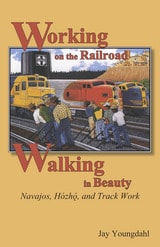
Working on the Railroad, Walking in Beauty
Navajos, Hozho, and Track WorkJay Youngdahl
Utah State University Press, 2011
For over one hundred years, Navajos have gone to work in significant numbers on Southwestern railroads. As they took on the arduous work of laying and anchoring tracks, they turned to traditional religion to anchor their lives.
Jay Youngdahl, an attorney who has represented Navajo workers in claims with their railroad employers since 1992 and who more recently earned a master's in divinity from Harvard, has used oral history and archival research to write a cultural history of Navajos' work on the railroad and the roles their religious traditions play in their lives of hard labor away from home.