Results by title
28164 books match the query 'History' and 1118 start with w
War on War
Lenin, the Zimmerwald Left, and the Origins of Communist InternationalismR. Craig Nation
Duke University Press, 1989
War without Bodies
Framing Death from the Crimean to the Iraq WarMartin Danahay
Rutgers University Press, 2022
Analyzing poetry, photographs, video and video games the book illustrates the ways in which war was framed in these different historical contexts. It examines the cultural assumptions that influenced the reception of images of war and discusses how death and damage to bodies was made acceptable to the public. War Without Bodies aims to heighten awareness of how acceptance of war is coded into texts and how active resistance to such hidden messages can help prevent future unnecessary wars.
War's Waste
Rehabilitation in World War I AmericaBeth Linker
University of Chicago Press, 2011
War, Genocide, and Justice
Cambodian American Memory WorkCathy J. Schlund-Vials
University of Minnesota Press, 2012
In the three years, eight months, and twenty days of the Khmer Rouge’s deadly reign over Cambodia, an estimated 1.7 million Cambodians perished as a result of forced labor, execution, starvation, and disease. Despite the passage of more than thirty years, two regime shifts, and a contested U.N. intervention, only one former Khmer Rouge official has been successfully tried and sentenced for crimes against humanity in an international court of law to date. It is against this background of war, genocide, and denied justice that Cathy J. Schlund-Vials explores the work of 1.5-generation Cambodian American artists and writers.
Drawing on what James Young labels “memory work”—the collected articulation of large-scale human loss—War, Genocide, and Justice investigates the remembrance work of Cambodian American cultural producers through film, memoir, and music. Schlund-Vials includes interviews with artists such as Anida Yoeu Ali, praCh Ly, Sambath Hy, and Socheata Poeuv. Alongside the enduring legacy of the Killing Fields and post-9/11 deportations of Cambodian American youth, artists potently reimagine alternative sites for memorialization, reclamation, and justice. Traversing borders, these artists generate forms of genocidal remembrance that combat amnesic politics and revise citizenship practices in the United States and Cambodia.
Engaged in politicized acts of resistance, individually produced and communally consumed, Cambodian American memory work represents a significant and previously unexamined site of Asian American critique.
War, Judgment, and Memory in the Basque Borderlands, 1914-1945
Sandra Ott
University of Nevada Press, 2008
War, Peace, and Prosperity in the Name of God
The Ottoman Role in Europe's Socioeconomic EvolutionMurat Iyigun
University of Chicago Press, 2015
War, Peace, and Prosperity in the Name of God turns the focus on the “big three monotheisms”—Judaism, Islam, and Christianity—to consider these questions. Chronicling the relatively rapid spread of the Abrahamic religions among the Old World, Murat Iyigun shows that societies that adhered to a monotheistic belief in that era lasted longer, suggesting that monotheism brought some sociopolitical advantages. While the inherent belief in one true god meant that these religious communities had sooner or later to contend with one another, Iyigun shows that differences among them were typically strong enough to trump disagreements within. The book concludes by documenting the long-term repercussions of these dynamics for the organization of societies and their politics in Europe and the Middle East.
War, Women, and Druids
Eyewitness Reports and Early Accounts of the Ancient CeltsBy Philip Freeman
University of Texas Press, 2002
"The ancient Celts capture the modern imagination as do few other people of classical times. Naked barbarians charging the Roman legions, Druids performing sacrifices of unspeakable horror, women fighting beside their men and even leading armies—these, along with stunning works of art, are the images most of us call to mind when we think of the Celts," observes Philip Freeman. "And for the most part, these images are firmly based in the descriptions handed down to us by the Greek and Roman writers."
This book draws on the firsthand observations and early accounts of classical writers to piece together a detailed portrait of the ancient Celtic peoples of Europe and the British Isles. Philip Freeman groups the selections (ranging from short statements to longer treatises) by themes—war, feasting, poetry, religion, women, and the Western Isles. He also presents inscriptions written by the ancient Celts themselves. This wealth of material, introduced and translated by Freeman to be especially accessible to students and general readers, makes this book essential reading for everyone fascinated by the ancient Celts.
Warfare and Diplomacy in Pre-Colonial West Africa
Robert S. Smith
University of Wisconsin Press, 1989
Warfare and the Dynamics of Political Control
Edited by Brian R. Billman
University of Arizona Press, 2025
Warfare and the Dynamics of Political Control draws on a wealth of interdisciplinary perspectives to explore how conflict shapes the establishment and maintenance of political institutions, from small-scale societies to expansive empires. The book examines the material and ideological factors that drive warfare, the organization of combatants, the ways leaders use violence to consolidate power, and how groups resist political domination in times of conflict. By posing critical questions about the efficacy of strategies and the varied outcomes of conflict-driven power struggles, this volume offers profound insights into the dynamics of political control throughout history.
Bringing together case studies from diverse regions and time periods, Warfare and the Dynamics of Political Controlilluminates the multifaceted nature of political violence. The volume includes discussions of human sacrifice, slave-taking, ideological signaling, and military strategy and tactics. The case studies reveal how different forms of political violence influence societal structures. From the fortifications of the Māori in New Zealand to the city walls of early historic India, each contribution provides a detailed analysis of how warfare has been used to both to challenge and to establish political hierarchies. Featuring examples from small foraging communities to large empires across various regions and time periods, the book offers a wide-ranging exploration of how different groups have used and resisted political violence.
This essential work contributes to our understanding of the intersections between conflict and political power, making it a vital resource for scholars of anthropology, archaeology, political science, and history.
Warfare and the Fall of a Fortified Center
Archaeological Investigations at AguatecaTakeshi Inomata
Vanderbilt University Press, 2006
VIMA Series #3
Warfare in Cultural Context
Practice, Agency, and the Archaeology of ViolenceEdited by Axel E. Nielsen and William H. Walker
University of Arizona Press, 2009
However, contributors argue, this model-and-evidence approach has given rise to multiple competing hypotheses and ambiguity rather than to full, coherent explanations of what turns out to be surprisingly complex acts of war. The chapters in Warfare in Cultural Context contend that agency and culture, inherited values and dispositions (such as religion and other cultural practices), beliefs, and institutions are always woven into the conduct of war.
This revealing book focuses on the ways that specific people construed their interests and life projects, and their problems and possibilities, and consequently chose among alternative courses of action. Using archaeological and ethnohistorical data from various parts of the world, the contributors explore the multiple avenues for the cultural study of warfare that these ideas make possible. Contributions focus on cultural aspects of warfare in Mesoamerica, South America, North America, and Southeast Asia. Case studies include warfare among the Maya, Inca, southwestern Pueblos, Mississippian cultures, and the Enga of Papua New Guinea.

Warfare, Ritual, and Symbol in Biblical and Modern Contexts
Brad E. Kelle
SBL Press, 2014
New perspectives on Israelite warfare for biblical studies, military studies, and social theory
Contributors investigate what constituted a symbol in war, what rituals were performed and their purpose, how symbols and rituals functioned in and between wars and battles, what effects symbols and rituals had on insiders and outsiders, what ways symbols and rituals functioned as instruments of war, and what roles rituals and symbols played in the production and use of texts.
Features:
- Thirteen essays examine war in textual, historical, and social contexts
- Texts from the Hebrew Bible are read in light of ancient Near Eastern texts and archaeology
- Interdisciplinary studies make use of contemporary ritual and social theory
Warhol's Working Class
Pop Art and EgalitarianismAnthony E. Grudin
University of Chicago Press, 2017
Having propelled himself from an impoverished childhood in Pittsburgh to the heights of Madison Avenue, Warhol knew both sides of this equation: the intense appeal that popular culture held for working-class audiences and the ways in which the advertising industry hoped to harness this appeal in the face of growing middle-class skepticism regarding manipulative marketing. Warhol was fascinated by these promises of egalitarian individualism and mobility, which could be profound and deceptive, generative and paralyzing, charged with strange forms of desire. By tracing its intersections with various forms of popular culture, including film, music, and television, Grudin shows us how Warhol’s work disseminated these promises, while also providing a record of their intricate tensions and transformations.
Wari Imperialism in Middle Horizon Peru
Katharina J. Schreiber with a foreword by Jeffrey R. Parsons
University of Michigan Press, 1992
Warless Societies and the Origin of War
Raymond C. Kelly
University of Michigan Press, 2000
Kelly addresses fundamental questions concerning the trinity of interrelationship between human nature, war, and the constitution of society: Is war a primordial and pervasive feature of human existence or a set of practices that arose at a certain time in our recent prehistoric past? Are there peaceful societies in which war is absent and, if so, what are they like and how do they differ from warlike societies? Do the critical differentiating features pertain to child-rearing practices, to modes of conflict resolution, to social and economic inequality, to resource competition, or to the constitution of social groups?
As the conclusions of such an inquiry are central to our conceptions of human nature, the book will interest a wide range of readers, from those curious about the origins of collective violence to those studying the roles social institutions play in society.
Raymond C. Kelly is Professor of Anthropology, University of Michigan.
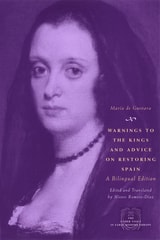
Warnings to the Kings and Advice on Restoring Spain
A Bilingual EditionMaría de Guevara
University of Chicago Press, 2007
Guevara’s provocative writings call on Spanish women to bear the responsibility equally with men for restoring Spain’s power in Europe and elsewhere. The collection also includes examples of Guevara’s shorter writings that exemplify her ability to speak on matters of state, network with dignitaries, and govern family affairs. Witty, ironic, and rhetorically sophisticated, Guevara’s essays provide a fresh perspective on the possibilities for women in the public sphere in seventeenth-century Spain.
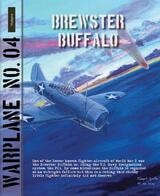
Warplane 04
Brewster BuffaloNico Braas
Amsterdam University Press, 2017
This book presents an overview of the development and operational use of the Buffalo with many photos including a number not published before.
Warplane 05
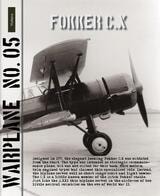
Fokker C.XEdwin Hoogschagen
Amsterdam University Press, 2017
The C.X is a little-known member of the Dutch Fokker stable. Just like the D.XXI this biplane served in the air forces of two little neutral countries on the eve of World War II. Both fought gallantly in a war of David versus Goliath proportions, and the complete operational history of the type spans a total of 25 years. In retrospect, the C.X was the last fighting biplane type built by Fokker and the company's last pre-war military type to survive.
Warplane 06
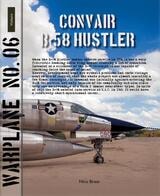
Convair B-58 HustlerNico Braas
Amsterdam University Press, 2017
However, problems occurred during the development process and costs risings went so out of control that the whole project was almost cancelled a few times. Strategic Air Command was initially against ordering the B-58 for service, not only because of its complexity but also since they saw no advantage of a Mach 2 bomber over other types. Despite this the B-58 entered service at S.A.C. in 1960. It would have a relatively short operational career.
Warplane 07
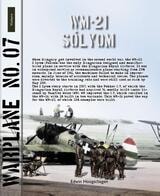
Weis WM.21 SólyomEdwin Hoogschagen
Amsterdam University Press, 2017
The Sólyom story starts in 1927, with the Fokker C.V, of which the Hungarian Royal Airforce had acquired 76, mostly built under license by Manfred Weiss (WM). WM improved the C.V, which resulted in the WM-16, with 18 built in two variants. This WM-16 paved the way for the WM-21, of which 128 examples were built.
Warplane Plus 01
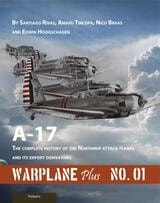
A17 - The Complete History of the Northrop Attack Planes and Its Export DerivativesSantiago Rivas
Amsterdam University Press, 2023
This book offers an overview of an iconic aeroplane. The authors, all specialists in their field, have compiled a comprehensive story and gathered more than 350 photographs, colour profiles and maps, thus offering a fascinating view at an aircraft type linking the ‘Golden Age of aviation’ days with the dark years of World War Two.
Warring Genealogies
Race, Kinship, and the Korean WarJoo Ok Kim
Temple University Press, 2022
Warring Genealogies examines the elaboration of kinships between Chicano/a and Asian American cultural production, such as the 1954 proxy adoption of a Korean boy by Leavenworth prisoners. Joo Ok Kim considers white supremacist expressions of kinship—in prison magazines, memorials, U.S. military songbooks—as well as critiques of such expressions in Chicana/o and Korean diasporic works to conceptualize racialized formations of kinship emerging from the Korean War.
Warring Genealogies unpacks writings by Rolando Hinojosa (Korean Love Songs, The Useless Servants) and Luis Valdez (I Don’t Have to Show You No Stinking Badges, Zoot Suit) to show the counter-representations of the Korean War and the problematic depiction of the United States as a benevolent savior. Kim also analyzes Susan Choi’s The Foreign Student as a novel that proposes alternative temporalities to dominant Korean War narratives. In addition, she examines Chicano military police procedurals, white supremacist women’s organizations, and the politics of funding Korean War archives.
Kim’s comparative study Asian American and Latinx Studies makes insightful connections about race, politics, and citizenship to critique the Cold War conception of the “national family.”
Warring Souls
Youth, Media, and Martyrdom in Post-Revolution IranRoxanne Varzi
Duke University Press, 2006
Highlighting trends that belie the government’s claim that Islamic values have taken hold—including rising rates of suicide, drug use, and sex outside of marriage—Varzi argues that by concentrating on images and the performance of proper behavior, the government’s campaign to produce model Islamic citizens has affected only the appearance of religious orthodoxy, and that the strictly religious public sphere is partly a mirage masking a profound crisis of faith among many Iranians. Warring Souls is a powerful account of contemporary Iran made more vivid by Varzi’s inclusion of excerpts from the diaries she maintained during her research and from journal entries written by Iranian university students with whom she formed a study group.
Warring Visions
Photography and VietnamThy Phu
Duke University Press, 2021
Warring over Valor
How Race and Gender Shaped American Military Heroism in the Twentieth and Twenty-First CenturiesWendt, Simon
Rutgers University Press, 2019
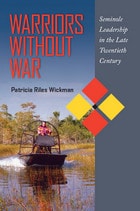
Warriors Without War
Seminole Leadership in the Late Twentieth CenturyPatricia Riles Wickman
University of Alabama Press, 2012
Warriors Without War takes readers beneath the placid waters of the Seminole’s public image and into the fascinating depths of Seminole society and politics.

Warriors and Scholars
A Modern War ReaderPeter B. Lane
University of North Texas Press, 2005
Warriors for Social Justice and Equality
Maria Jimenez of Houston and Mexican American ActivismLinda J. Quintanilla
University of North Texas Press, 2025
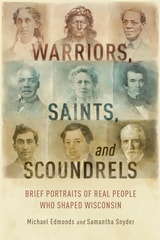
Warriors, Saints, and Scoundrels
Brief Portraits of Real People Who Shaped WisconsinMichael Edmonds
Wisconsin Historical Society Press, 2017
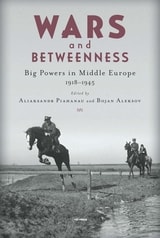
Wars and Betweenness
Big Powers and Middle Europe, 1918-1945Aliaksandr Piahanau
Central European University Press, 2020
The region between the Baltic and the Black Sea was marked by a set of crises and conflicts in the 1920s and 1930s, demonstrating the diplomatic, military, economic or cultural engagement of France, Germany, Russia, Britain, Italy and Japan in this highly volatile region, and critically damaging the fragile post-Versailles political arrangement. The editors, in naming this region as "Middle Europe" seek to revive the symbolic geography of the time and accentuate its position, situated between Big Powers and two World Wars.
The ten case studies in this book combine traditional diplomatic history with a broader emphasis on the geopolitical aspects of Big-Power rivalry to understand the interwar period. The essays claim that the European Big Powers played a key role in regional affairs by keeping the local conflicts and national movements under control and by exploiting the region's natural resources and military dependencies, while at the same time strengthening their prestige through cultural penetration and the cultivation of client networks.
The authors, however, want to avoid the simplistic view that the Big Powers fully dominated the lesser players on the European stage. The relationship was indeed hierarchical, but the essays also reveal how the "small states" manipulated Big-Power disagreements, highlighting the limits of the latters' leverage throughout the 1920s and the 1930s.
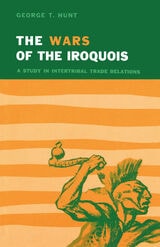
Wars of the Iroquois
A Study in Intertribal Trade RelationsGeorge T. Hunt
University of Wisconsin Press, 1960
George T. Hunt’s classic 1940 study of the Iroquois during the middle and late seventeenth century presents warfare as a result of depletion of natural resources in the Iroquois homeland and tribal efforts to assume the role of middlemen in the fur trade between the Indians to the west and the Europeans.

Wars, Parties and Nationalism
Essays on the Politics and Society of Nineteenth-century Latin AmericaEdited by Eduardo Posada-Carbo
University of London Press, 1995
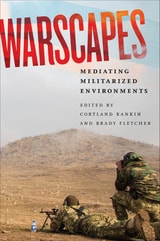
Warscapes
Mediating Militarized EnvironmentsCortland Rankin
Rutgers University Press, 2026
What do we see when we look at a battlefield? How do we come to understand environments as battlefields in the first place? What happens to our perception of war when we focus on the physical spaces of conflict? Warscapes is the first collection to pursue answers to such questions by considering the relationship between war, environment, and media along three lines: imagined geographies of control that prefigure environments as spaces of war; representations of resistance to occupation and ecocidal violence; and elemental reframings of archives and cultural memories of war. This book offers novel perspectives on historical conflict environments while also examining how hypothetical spaces of conflict are imagined. Deploying theoretical perspectives gleaned from film and media studies, ecocriticism, environmental history, urban studies, and postcolonial/decolonial studies, among others, authors highlight an international spectrum of 21st-century fiction films and television series, documentaries, and video installations that challenge how we look at war.
Warship 14
Dutch Leander Frigate Van SpeijkJantinus Mulder
Amsterdam University Press, 2023
Warship 1
Cruiser HNLMS TrompJantinus Mulder
Amsterdam University Press, 2012
Warship 3
Frigate HNLMS Jacob van HeemskerckRindert van Zinderen Bakker
Amsterdam University Press, 2017
Warship 4
Frigate USS ClarkRindert van Zinderen Bakker
Amsterdam University Press, 0
Warship 5
Protected Cruiser GelderlandJantinus Mulder
Amsterdam University Press, 0
Warship 6
Destroyer HMCS HaidaRindert van Zinderen Bakker
Amsterdam University Press, 0
Nowadays she is the only surviving Tribal-class destroyer out of 27 units that were constructed between 1937-1945 for the Royal Navy, Royal Australian Navy, and the Royal Canadian Navy.
Wartime Shipyard
A STUDY IN SOCIAL DISUNITYKatherine Archibald
University of Illinois Press, 2006
An eye-opening first-hand account of life in a WWII shipyard from a woman's perspective
In 1942, Katherine Archibald, a graduate student at Berkeley, left the halls of academe to spend two years working in a nearby Oakland shipyard. She arrived with a host of preconceptions about the American working class, race relations and the prospect for their improvement, and wartime unity. Her experience working in a shipyard where women were seen as intruders, where "Okies" and black migrants from the South were regarded with barely-disguised hatred, and where trade unions preferred protecting their turf to defending workers' rights, threw much of her liberal faith into doubt.
Archibald's 1947 book about her experiences, Wartime Shipyard: A Study in Social Disunity, remains a classic account of life and labor on the home front. This new edition includes an introduction written by historians Eric Arnesen and Alex Lichtenstein, who explore Archibald's work in light of recent scholarship on women and African Americans in the wartime workplace.

Wartime Washington
The Civil War Letters of Elizabeth Blair LeeEdited by Virginia Jeans Laas
University of Illinois Press, 1991
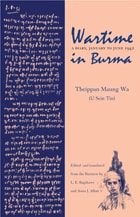
Wartime in Burma
A Diary, January to June 1942Theippan Maung Wa
Ohio University Press, 2009
This diary, begun after the Japanese attack on Pearl Harbor and covering the invasion of Burma up to June 1942, is a moving account of the dilemmas faced by the well-loved and prolific Burmese author Theippan Maung Wa (a pseudonym of U Sein Tin) and his family. At the time of the Japanese invasion, U Sein Tin was deputy secretary in the Ministry of Home and Defense Affairs. An Oxford-trained member of the Indian Civil Service, working for the British administration on the eve of the invasion, he lived with his wife and three small children in Rangoon.
Wartime in Burma is a stirring memoir that presents a personal account of U Sein Tin’s feelings about the war, his anxiety for the safety of his family, the bombing of Rangoon, and what happened to them during the next six chaotic months of the British retreat. The author and his family leave Rangoon to live in a remote forest in Upper Burma with several other Burmese civil servants, their staff, and valuable possessions—rich pickings for robbers. His diary ends abruptly on June 5, his forty-second birthday; U Sein Tin was murdered on June 6 by a gang of Burmese bandits. The diary pages, scattered on the floor of the house, were rescued by his wife and eventually published in Burma in 1966. What survives is a unique account that shines new light on the military retreat from Burma.
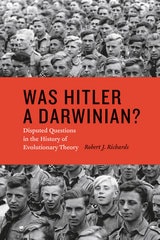
Was Hitler a Darwinian?
Disputed Questions in the History of Evolutionary TheoryRobert J. Richards
University of Chicago Press, 2013

Was This Heaven?
A Self-Portrait of Iowa on Early PostcardsLyell D. Jr. Henry
University of Iowa Press, 1995
In the early decades of the twentieth century, Iowans all across the Hawkeye State succumbed to the nationwide craze for exchanging photographic postcards, mailing each other thousands of images—serious and whimsical—of Uncle Bob and Baby Dora, the Sunday school outing, train wrecks, the Fourth of July celebration, the merchants' carnival, the record-setting blizzard following the bin-busting harvest, the new courthouse, Ackley's Sauer-Kraut Band. Now, thanks to the generosity of David A. Wilson, whose ample collection of photographic cards would be the envy of those early Iowans, Lyell Henry has organized more than two hundred postcards into eight reflective chapters that create a beguiling collective portrait of Iowa life and culture from 1905 to 1919.

Wash and Be Healed
The Water-Cure Movement and Women's HealthSusan E. Cayleff
Temple University Press, 1991
In a century characterized by dramatic health-care remedies—bloodletting, purging, and leeching, for example—hydropathy was one of the most celebrated alternative forms of medical care. Unlike these other cures, however, hydropathy, which entailed various applications of cold water, also staunchly advocated the reformation of such personal habits as diet, exercise, dress, and way of life. Susan E. Cayleff explores the relationship between this fascinating sect of nineteenth-century medicine and the women who took the cure.
Wash and Be Healed investigates the theories, practices, medical and social philosophies, institutions, and the most prominent proponents of the water-cure movement and studies them in relation to the diverse reform networks of the nineteenth century. Documenting the popularity and importance of hydropathy among female activists, Cayleff argues that the water-cure movement was overpowered by allopathic (or orthodox) medicine which viewed hydropathy as a crackpot therapeutic largely because of its close association with nineteenth-century social activism. The book gives us an alternative view of social and sexual relationships which should contribute to the growing awareness among scholars that the history of health and healing must be more than the history of allopathic medicine.
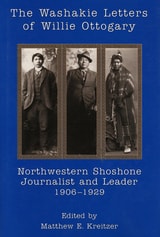
Washakie Letters Of Willie Ottogary
Matthew Kreitzer
Utah State University Press, 2000
Writings by American Indians from the early twentieth century or earlier are rare. Willie Ottogary's letters have the distinction of being firsthand reports of an Indian community's ongoing social life by a community member and leader. The Northwestern Shoshone residing at the Washakie colony in northern Utah descended from survivors of the Bear River Massacre. Most had converted to the Mormon Church and remained in northern Utah rather than moving to a federal Indian reservation. For over twenty years, local newspapers in Utah and southern Idaho regularly published letters from Ottogary reporting happenings-personal milestones and health crises, comings and goings, social events, economic conditions and activities, efforts at political redress-at Washakie and other Shoshone communities in the intermountain West.
Matthew Kreitzer compiled and edited the letters of Ottogary and added historical commentary and appendices, biographical data on individuals Ottogary mentioned, and eighty-five rare historical photographs. Written in a vernacular English and printed unedited in the newspapers, the letters describe a society in cultural transition and present Ottogary's distinctively Shoshone point of view on anything affecting his people. Thus, they provide an unusual picture of Shoshone life through a critical period, a time when many Indian communities reached a historical nadir. While the letters unflinchingly report the many difficulties and challenges the Shoshone faced, they portray a vital and dynamic society, whose members led full lives and actively pursued their own interests. Ottogary lobbied constantly for Shoshone rights, forging alliances with Shoshone throughout the region, visiting Washington D.C., advocating legislation, and participating in Goshute-Western Shoshone draft resistance during World War I.

Washington Gladden
Prophet of the Social GospelJacob H. Dorn
The Ohio State University Press, 1966
Gladden was one of the first among clergymen to respond to the intellectual and social currents that arose to challenge traditional modes of Protestant thought and social action. By the end of the nineteenth century, when both liberal theology and the Social Gospel had, in a sense, triumphed as the dominant forces in American Protestantism, he had achieved recognition as one of the earliest, most constant, and most influential exponents of both movements. He was, in addition, one of their chief popularizers; and his copious writings—some forty books and hundreds of articles—represent classic examples of the liberal, socially-conscious Protestantism that distinguished his age.
Mr. Dorn has provided the first comprehensive study of Gladden’s spectacular career. He traces his life and its influences from his birth in Pennsylvania to his long and successful pastorate at the First Congregational Church in Columbus, Ohio, where he gained national fame in stormy encounters with such prominent figures as the redoubtable Billy Sunday and his wife “Ma,” and for his lucid and vigorous positions on national issues such as the “tainted money” controversy that brought him into conflict with Standard Oil.
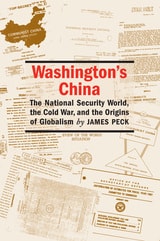
Washington's China
The National Security World, the Cold War, and the Origins of GlobalismJames L. Peck
University of Massachusetts Press, 2006
This book addresses a central question about the Cold War that has never been adequately resolved. Why did the United States go to such lengths not merely to “contain” the People's Republic of China but to isolate it from all diplomatic, cultural, and economic ties to other nations? Why, in other words, was American policy more hostile to China than to the Soviet Union, at least until President Nixon visited China in 1972?
The answer, as set out here, lies in the fear of China's emergence as a power capable of challenging the new Asian order the United States sought to shape in the wake of World War II. To meet this threat, American policymakers fashioned an ideology that was not simply or exclusively anticommunist, but one that aimed at creating an integrated, cooperative world capitalism under U.S. leadership—an ideology, in short, designed to outlive the Cold War.
In building his argument, James Peck draws on a wide variety of little-known documents from the archives of the National Security Council and the CIA. He shows how American officials initially viewed China as a “puppet” of the Soviet Union, then as “independent junior partner” in a Sino-Soviet bloc, and finally as “revolutionary model” and sponsor of social upheaval in the Third World. Each of these constructs revealed more about U.S. perceptions and strategic priorities than about actual shifts in Chinese thought and conduct. All were based on the assumption that China posed a direct threat not just to specific U.S. interests and objectives abroad but to the larger vision of a new global order dominated by American economic and military power. Although the nature of “Washington's China” may have changed over the years, Peck contends that the ideology behind it remains unchanged, even today.
Washington's War 1779
Benjamin Lee Huggins
Westholme Publishing, 2018
Despite great limits of money and manpower, George Washington sought to wage an aggressive war in 1779. He launched the Sullivan–Clinton campaign against Britain’s Iroquois allies in upstate New York, and in response to British attacks up the Hudson River and against coastal Connecticut, he authorized raids on British outposts at Stony Point and Paulus Hook. But given power by Congress to plan and execute operations with the French on a continental scale, Washington planned his boldest campaign. When it appeared that the French would bring a fleet and an army to America, and supported by intelligence from his famed “Culper” spy network, the American commander proposed a joint Franco-American attack on the bastion of British power in North America—New York City—to capture its garrison. Such a blow, he hoped, would end the war in 1779.
Based on extensive primary source material, Washington’s War 1779, by historian Benjamin Lee Huggins, describes Washington’s highly detailed plans and extensive preparations for his potentially decisive Franco-American campaign to defeat the British at New York in the fall of 1779. With an emphasis on Washington's generalship in that year—from strategic and operational planning to logistics to diplomacy—and how it had evolved since the early years of the war, the book also details the other offensive operations in 1779, including the attacks in upstate New York, Stony Point, and Paulus Hook. Although the American and French defeat at Savannah, Georgia, prevented Washington from carrying out his New York offensive, Washington gained valuable experience in planning for joint operations that would help him win at Yorktown two years later.

Waste Works
Vital Politics in Urban GhanaBrenda Chalfin
Duke University Press, 2023