Results by title
2285 books match the query 'Women' and 321 start with w
Women Take Their Place in State Legislatures
The Creation of Women's CaucusesAnna Mitchell Mahoney
Temple University Press, 2019
How do women strategically make their mark on state legislatures? Anna Mitchell Mahoney’s book traces the development of women’s state legislative caucuses and the influence both gender and party have on women’s ability to organize collectively. She provides a comprehensive analysis of how and why women organize around their gender identity in state legislatures—or why they do not.
Women Take Their Place in State Legislatures includes a quantitative analysis of institutional-level variables and caucus existence in all 50 states. Case studies of caucus attempts in New Jersey, Colorado, Pennsylvania, and Iowa between 2006 and 2010 examine attempts at creating women’s caucuses that succeeded or failed, and why. Mahoney’s interviews with 180 state legislators and their staff explore the motivations of caucus creators and participants. Ultimately, she finds that women’s organizing is contextual; it demonstrates the dynamic nature of gender.
Mahoney also provides insights into broad questions regarding gendered institutions, collective action, and political party governance. Women Take Their Place in State Legislatures fills a lacuna in the evaluation of women in government.

Women Times Three
Writers, Detectives, ReadersKathleen Gregory Klein
University of Wisconsin Press, 1995
The eleven essays concentrate new attention on the trio of reader, writer, and text when all three are modified by the terms “woman” and “mystery.”
Women Under Suspicion
Fraternization, Espionage, and Punishment in the Soviet Union During World War IIRegina Kazyulina
University of Wisconsin Press, 2025
Women Warriors in Early Modern Spain
A Tribute to Barbara MujicaSusan L. Fischer
University of Delaware Press, 2019
Published by University of Delaware Press. Distributed worldwide by Rutgers University Press.
Women Warriors in Romantic Drama
Wendy C. Nielsen
University of Delaware Press, 2013
Women Warriors in Romantic Drama examines a recurring figure that appears in French, British, and German drama between 1789 and 1830: the woman warrior. The term itself, “woman warrior,” refers to quasi-historical female soldiers or assassins. Women have long contributed to military campaigns as canteen women. Camp followers ranged from local citizenry to spouses and prostitutes, and on occasion, women assisted men in combat. However, the woman warrior is a romantic figure, meaning a fanciful ideal, despite the reality of women’s participation in select scenes of the French Revolution and the Napoleonic Wars. The central claim of this book is the woman warrior is a way for some women writers (Olympe de Gouges, Christine Westphalen, Karoline von Günderrode, and Mary Robinson) to explore the case for extending citizenship to women. This project focuses primarily on theater for the reason that the stage simulates the public world that female dramatists and their warriors seek to inhabit. Novels and poetry clearly belong to the realm of fiction, but when audiences see women fighting onstage, they confront concrete visions of impossible women. I examine dramas in the context of their performance and production histories in order to answer why so many serious dramas featuring women warriors fail to find applause, or fail to be staged at all. Dramas about women warriors seem to sometimes contribute to the argument for female citizenship when they take the form of tragedy, because the deaths of female protagonists in such plays often provoke consideration about women’s place in society.
Consequently, where we find women playing soldiers in various entertainment venues, farce and satire often seem to dominate, although this book points to some exceptions. Censorship and audience demand for comedies made producing tragedies difficult for female playwrights, who battled additional obstacles to fashioning their careers. I compare male (Edmund Eyre, Heinrich von Kleist) and female writers’ dramatizations of the woman warrior. This analysis shows that the difficult project of getting audiences to take women warriors seriously resembles women writers’ struggles to enter the ostensibly male domains of tragedy and the public sphere.
Published by University of Delaware Press. Distributed worldwide by Rutgers University Press.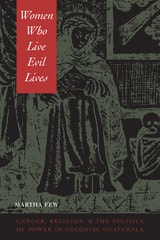
Women Who Live Evil Lives
Gender, Religion, and the Politics of Power in Colonial GuatemalaBy Martha Few
University of Texas Press, 2002
Women Who Live Evil Lives documents the lives and practices of mixed-race, Black, Spanish, and Maya women sorcerers, spell-casters, magical healers, and midwives in the social relations of power in Santiago de Guatemala, the capital of colonial Central America. Men and women from all sectors of society consulted them to intervene in sexual and familial relations and disputes between neighbors and rival shop owners; to counter abusive colonial officials, employers, or husbands; and in cases of inexplicable illness.
Applying historical, anthropological, and gender studies analysis, Martha Few argues that women's local practices of magic, curing, and religion revealed opportunities for women's cultural authority and power in colonial Guatemala. Few draws on archival research conducted in Guatemala, Mexico, and Spain to shed new light on women's critical public roles in Santiago, the cultural and social connections between the capital city and the countryside, and the gender dynamics of power in the ethnic and cultural contestation of Spanish colonial rule in daily life.
Women Who Make a Fuss
The Unfaithful Daughters of Virginia WoolfIsabelle Stengers
University of Minnesota Press, 2014
Virginia Woolf, to whom university admittance had been forbidden, watched the universities open their doors. Though she was happy that her sisters could study in university libraries, she cautioned women against joining the procession of educated men and being co-opted into protecting a “civilization” with values alien to women. Now, as Woolf’s disloyal (unfaithful) daughters, who have professional positions in Belgian universities, Isabelle Stengers and Vinciane Despret, along with a collective of women scholars in Belgium and France, question their academic careers and reexamine the place of women and their role in thinking, both inside and outside the university. They urge women to heed Woolf’s cry—Think We Must—and to always make a fuss about injustice, cruelty, and arrogance.
Women Writing the Academy
Audience, Authority, and TransformationGesa E. Kirsch. Foreword by John Trimbur
Southern Illinois University Press, 1993
Women Writing the Academy is based on an extensive interview study by Gesa E. Kirsch that investigates how women in different academic disciplines perceive and describe their experiences as writers in the university.
Kirsch’s study focuses on the writing strategies of successful women writers, their ways of establishing authority, and the kinds of audiences they address in different disciplinary settings. Based on multiple interviews with thirty-five women from five different disciplines (anthropology, education, history, nursing, and psychology) and four academic ranks (seniors, graduate students, and faculty before and after tenure), this is the first book to systematically explore the academic context in which women write and publish.
While there are many studies in literary criticism on women as writers of fiction, there has not been parallel scholarship on women as writers of professional discourse, be it inside or outside the academy. Through her research, for example, Kirsch found that women were less likely than their male counterparts to think of their work as sufficiently significant to write up and submit for publication, tended to hold on to their work longer than men before sending it out, and were less likely than men to revise and resubmit manuscripts that had been initially rejected.
This book is significant in that it investigates a new area of research— gender and writing—and in doing so brings together findings on audience, authority, and gender.

Women against Abortion
Inside the Largest Moral Reform Movement of the Twentieth CenturyKarissa Haugeberg
University of Illinois Press, 2017

Women among Women
Anthropological Perspectives on Female Age HierarchiesEdited by Jeanette Dickerson-Putman and Judith K. Brown: Foreword by Nancy Foner
University of Illinois Press, 1994
Women and Alcohol in a Highland Maya Town
Water of Hope, Water of SorrowBy Christine Eber
University of Texas Press, 1995
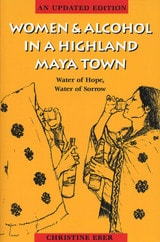
Healing roles and rituals involving alcohol are a major source of power and identity for women and men in Highland Chiapas, Mexico, where abstention from alcohol can bring a loss of meaningful roles and of a sense of community. Yet, as in other parts of the world, alcohol use sometimes leads to abuse, whose effects must then be combated by individuals and the community.
In this pioneering ethnography, Christine Eber looks at women and drinking in the community of San Pedro Chenalhó to address the issues of women’s identities, roles, relationships, and sources of power. She explores various personal and social strategies women use to avoid problem drinking, including conversion to Protestant religions, membership in cooperatives or Catholic Action, and modification of ritual forms with substitute beverages.
The book’s women-centered perspective reveals important data on women and drinking not reported in earlier ethnographies of Highland Chiapas communities. Eber’s reflexive approach, blending the women’s stories, analyses, songs, and prayers with her own and other ethnographers’ views, shows how Western, individualistic approaches to the problems of alcohol abuse are inadequate for understanding women’s experiences with problem and ritual drinking in a non-Western culture.
In a new epilogue, Christine Eber describes how events of the last decade, including the Zapatista uprising, have strengthened women's resolve to gain greater control over their lives by controlling the effects of alcohol in the community.
Women and American Socialism, 1870-1920
Mari Jo Buhle
University of Illinois Press, 1981
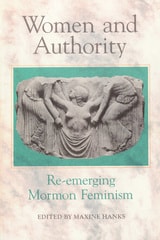
Women and Authority
Re-emerging Mormon FeminismHanks, Maxine
Signature Books, 1992
In 1842, founder Joseph Smith foresaw the LDS Women's Relief Society as "a kingdom of Priests," that he "would ordain them to preside over the society...just the Presidency preside over the church." Originally, the LDS Women's Relief Society paralleled the LDS men's priesthood quorums. Women were "ordained" to various positions, as well as set apart to be healers "with power to rebuke diseases."
In the 19th-century, Mormon theology also spoke of a Mother God, having "all power and glory" with the Father in Heaven. Mormon doctrine also hinted at the divine status of Eve, Mary, and Mary Magdalene.
The 19th-century Woman's Exponent, published by the LDS Women's Relief Society, editorialized in favor of "equal rights before the law, equal pay for equal work, equal political rights." The magazine's masthead read, "The Rights of the Women of Zion and the Rights of Women of All Nations."
One Relief Society founder, Sarah Kimball, referred to herself as "a woman's rights woman," while another leader, Bathsheba Smith, was called on a Relief Society mission in 1870 to preach "woman's rights" throughout southern Utah. According to the Woman's Exponent, a woman's place was not just "in the nursery" but "in the library, the laboratory, the observatory."
Women were encouraged to pursue formal education and career opportunities, study medicine and involve themselves in politics. Mormon women were assured that "when men see that women can exist without them, it will perhaps take a little of the conceit out of some of them."
Women who served inside LDS temples were termed "priestesses," while LDS Women's Relief Society president Eliza R. Snow was known as a "prophetess." Snow discouraged women from confiding their personal issues to male bishops, saying that such matters "should be referred to the Relief Society president and her counselors."
In 1875, LDS Women's Relief Society president, Emmeline B. Wells, could say with confidence: "Let woman speak for herself; she has the right of freedom of speech. Women are too slow in moving forward, afraid of criticism, of being called unwomanly, of being thought masculine. What of it? If men are so much superior to women, the nearer we come up to the manly standard the higher we elevate ourselves."
Women and Borderline Personality Disorder
Symptoms and StoriesWirth-Cauchon, Janet
Rutgers University Press, 2000
At the beginning of the twentieth century, “hysteria” was a medical or psychiatric diagnosis applied primarily to women. In fact, the term itself comes from the Greek, meaning “wandering womb.” We have since learned, however, that this diagnosis evolved from certain assumptions about women’s social roles and mental characteristics, and is no longer in use.
The modern equivalent of hysteria, however, may be borderline personality disorder, defined as “a pervasive pattern of instability of self-image, interpersonal relationships, and mood, beginning in early adulthood and present in a variety of contexts.” This diagnosis is applied to women so much more often than to men that feminists have begun to raise important questions about the social, cultural, and even the medical assumptions underlying this “illness.” Women are said to be “unstable” when they may be trying to reconcile often contradictory and conflicting social expectations.
In Women and Borderline Personality Disorder, Janet Wirth-Cauchon presents a feminist cultural analysis of the notions of “unstable” selfhood found in case narratives of women diagnosed with borderline personality disorder. This exploration of contemporary post-Freudian psychoanalytic notions of the self as they apply to women’s identity conflicts is an important contribution to the literature on social constructions of mental illness in women and feminist critiques of psychiatry in general.
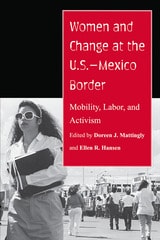
Women and Change at the U.S.–Mexico Border
Mobility, Labor, and ActivismEdited by Doreen J. Mattingly and Ellen R. Hansen
University of Arizona Press, 2006
Women and Comedy
Rewriting the British Theatrical TraditionSusan Carlson
University of Michigan Press, 1991
Women and Communal Worship
Shaping the Early Modern Christian LiturgyMicheline White
University of Delaware Press, 2027
Women and Communal Worship advances our understanding of early modern women by uncovering and analyzing Christian women’s engagement with liturgical and communal worship between 1500 and 1750. The Protestant attack on the medieval liturgy was at the heart of the Reformation and Counter-Reformation, but women’s contributions to those momentous changes have been largely overlooked as scholars have focused on women’s private devotional practices and texts. This collection of essays demonstrates that communal worship was vital to women of all confessional stripes. Although they could not generally lead the liturgy, women shaped public devotion in important ways, whether at the level of the local congregation, the household chapel, the convent, the court, or the national church. Communal worship is thus a key site for examining women’s textual, literary, social, and political agency.
Women and Deafness
Double VisionsBrenda Jo Brueggemann
Gallaudet University Press, 2006
This new collection bridges two dynamic academic fields: Women’s Studies and Deaf Studies. The 14 contributors to this interdisciplinary volume apply research and methodological approaches from sociology, ethnography, literary/film studies, history, rhetoric, education, and public health to open heretofore unexplored territory.
Part One: In and Out of the Community addresses female dynamics within deaf schools; Helen Keller’s identity as a deaf woman; deaf women’s role in Deaf organizations; and whether or not the inequity in education and employment opportunities for deaf women is bias against gender or disability. Part Two: (Women’s) Authority and Shaping Deafness explores the life of 19th-century teacher Marcelina Ruis Y Fernandez; the influence of single, hearing female instructors in deaf education; the extent of women’s authority over oralist educational dictates during the 1900s; and a deaf daughter’s relationship with her hearing mother in the late 20th century.
Part Three: Reading Deaf Women considers two deaf sisters’ exceptional creative freedom from 1885 to 1920; the depictions of deaf or mute women in two popular films; a Deaf woman’s account of blending the public-private, deaf-hearing, and religious-secular worlds; how five Deaf female ASL teachers define “gender,” “feminism,” “sex,” and “patriarchy” in ASL and English; and 20th-century American Deaf beauty pageants that emphasize physicality while denying Deaf identity, yet also challenge mainstream notions of “the perfect body.”
Women and Dieting Culture
Inside a Commercial Weight Loss GroupKandi Stinson
Rutgers University Press, 2001
American women invest millions of dollars, as well as much time and energy, in a quest for a body that meets our culture’s standard of beauty—slenderness. Since we define a woman’s sexual attractiveness as essential to her social worth, it is no wonder that “fat is a feminist issue.”
Commercial weight loss organizations have come under attack from feminist scholars for perpetuating the very social values that cause women to obsess about their weight. In Women and Dieting Culture, sociologist Kandi Stinson asks how these values are transmitted and how the women who join such organizations actually think about their bodies and weight loss. As part of her research, Stinson fully participated in a national, commercial weight-loss organization as a paying member. Her acute analysis and sensitive insider’s portrayal vividly illustrate the central roles dieting and body image play in women’s lives.
As she experiences the program and interviews other members, Stinson discovers that the women view the causes and cures of being overweight according to five distinct, though often overlapping, concepts: self-help, work, religion, addiction, and feminism. Drawing extensively on the dieters’ own words, Stinson explores each of these concepts and outlines how they form interrelated patterns which, when analyzed, yield an exciting new perspective on the transmission of cultural values.
Armed with fresh insights into how women feel about weight and their bodies, Stinson finally ponders the question: Can one be a feminist and still wish to lose weight?
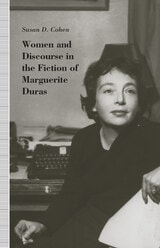
Women and Discourse in the Fiction of Marguerite Duras
Love, Legends, LanguageSusan D. Cohen
University of Massachusetts Press, 1993
One of the most famous living French writers, Marguerite Duras is renowned for her provocative and hauntingly beautiful works of fiction, drama, and cinema. This book offers the first comprehensive study of the narrative and stylistic characteristics of Duras's fiction. Susan D. Cohen examines the entire range of Duras's works, combining close textual analyses with a more general discussion of narrativity and its connections with gender, class, and race. The focus throughout is on language, representation, and difference, which Duras explores on every structural level.
Cohen shows how Duras's writings, even the controversial “erotic” works, expose and subvert the repression of women in traditional, dominant discourse and at the same time present an alternative, nonrepressive discursive model. She formulates a concept of creative “ignorance,” which she identifies as the generative principle of Duras's textual production and the approach to language it proposes. Cohen also explores the distinctive features of Duras's prose, describing how the writer achieves the ritual, legendary aura that characterizes her work.
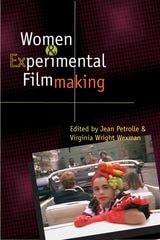
Women and Experimental Filmmaking
Edited by Jean Petrolle and Virginia Wright Wexman
University of Illinois Press, 2005
The introduction sets out by addressing the basic difficulties of both historiography and definition before providing a historical overview of how these particular filmmakers have helped shape moviemaking traditions. The essays explore the major theoretical controversies that have arisen around the work of groundbreaking women such as Leslie Thornton, Su Friedrich, Nina Menkes, and Faith Hubley. With the filmmakers re-presentations of women's subjectivity ranging across film, video, digital media, ethnography, animation, and collage, Women and Experimental Filmmaking represents the full spectrum of genres, techniques, and modes. Taken together, these essays comprise a sustained analysis of the conjunction of aesthetics and politics in the work of both pioneer and contemporary experimental women filmmakers.
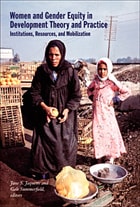
Women and Gender Equity in Development Theory and Practice
Institutions, Resources, and MobilizationJane S. Jaquette and Gale Summerfield, eds.
Duke University Press, 2006
Highlighting key institutional issues, contributors analyze the two approaches that dominate the field: women in development (WID) and gender and development (GAD). They assess the results of gender mainstreaming, the difficulties that development agencies have translating gender rhetoric into equity in practice, and the conflicts between gender and the reassertion of indigenous cultural identities. Focusing on resource allocation, contributors explore the gendered effects of land privatization, the need to challenge cultural traditions that impede women’s ability to assert their legal rights, and women’s access to bureaucratic levers of power. Several essays consider women’s mobilizations, including a project to provide Internet access and communications strategies to African NGOs run by women. In the final essay, Irene Tinker, one of the field’s founders, reflects on the interactions between policy innovation and women’s organizing over the three decades since women became a focus of development work. Together the contributors bridge theory and practice to point toward productive new strategies for women and gender in development.
Contributors. Maruja Barrig, Sylvia Chant, Louise Fortmann, David Hirschmann, Jane S. Jaquette, Diana Lee-Smith, Audrey Lustgarten, Doe Mayer, Faranak Miraftab, Muadi Mukenge, Barbara Pillsbury, Amara Pongsapich, Elisabeth Prügl, Kirk R. Smith, Kathleen Staudt, Gale Summerfield, Irene Tinker, Catalina Hinchey Trujillo
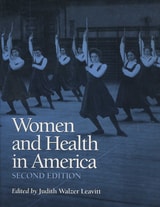
Women and Health in America, 2nd Ed.
Historical ReadingsJudith W. Leavitt
University of Wisconsin Press, 1999
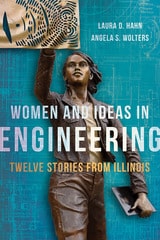
Women and Ideas in Engineering
Twelve Stories from IllinoisLaura D. Hahn, Angela S. Wolters
University of Illinois Press, 2018
Women and Knowledge in Mesoamerica
From East L.A. to AnahuacPaloma Martinez-Cruz
University of Arizona Press, 2011
The few works looking at the knowledge of women in Mesoamerica generally examine only the written—even academic—world, accessible only to the most elite segments of (customarily male) society. These works have consistently excluded the essential repertoire and performed knowledge of women who think and work in ways other than the textual. And while two of the book’s chapters critique contemporary novels, Martinez-Cruz also calls for the exploration of non-textual knowledge transmission. In this regard, the book's goals and methods are close to those of performance scholarship and anthropology, and these methods reveal Mesoamerican women to be public intellectuals. In Women and Knowledge in Mesoamerica, fieldwork and ethnography combine to reveal women healers as models of agency.
Her multidisciplinary approach allows Martinez-Cruz to disrupt Euro-based intellectual hegemony and to make a case for the epistemic authority of Native women. Written from a Chicana perspective, this study is learned, personal, and engaging for anyone who is interested in the wisdom that prevailing analytical cultures have deemed “unintelligible.” As it turns out, those who are unacquainted with the sometimes surprising extent and depth of wisdom of indigenous women healers simply haven’t been looking in the right places—outside the texts from which they have been consistently excluded.
Women and Laughter in Medieval Comic Literature
Lisa Perfetti
University of Michigan Press, 2003
This study is the first to investigate women's laughter as a particular kind of "talking back" to medieval discourse on women, the subject of recent feminist medievalist studies. Female characters openly embrace women's laughter, associated with the body and castigated for its unruliness in conduct literature. Acknowledging that comic works were grounded in antifeminist traditions and that their female characters were in fact targets of laughter for male authors, this study argues that female characters who laugh and tell jokes also offer traces of how women might have used their laughter to respond to negative pronouncements about women in medieval culture. Both laughable and laughing, the female protagonists studied in this book will engage modern readers with their witty, sometimes bawdy jokes, allowing us to imagine the pleasures that medieval comic literature, so often labeled misogynous, offered to women as well as to men.
Lisa Perfetti is Assistant Professor of French, Muhlenberg College.
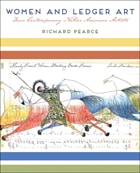
Women and Ledger Art
Four Contemporary Native American ArtistsRichard Pearce
University of Arizona Press, 2013
Women and Ledger Art calls attention to the extraordinary achievements of these strong women who have chosen to express themselves through ledger art. Author Richard Pearce foregrounds these contributions by focusing on four contemporary women ledger artists: Sharron Ahtone Harjo (Kiowa), Colleen Cutschall (Oglala Lakota), Linda Haukaas (Sicangu Lakota), and Dolores Purdy Corcoran (Caddo). Pearce spent six years in continual communication with the women, learning about their work and their lives. Women and Ledger Art examines the artists and explains how they expanded Plains Indian history.
With 46 stunning images of works in various mediums—from traditional forms on recovered ledger pages to simulated quillwork and sculpture, Women in Ledger Art reflects the new life these women have brought to an important transcultural form of expression.
Women and Men in Late Eighteenth-Century Egypt
By Afaf Lutfi al-Sayyid Marsot
University of Texas Press, 1995
In the late eighteenth century, decentralized and chaotic government in Egypt allowed women a freedom of action that has not been equaled until recent times. Delving extensively into archival sources, Afaf Marsot presents the first comprehensive picture of women's status and opportunities in this period.
Marsot makes important connections between forms of government, economic possibilities, and gender relations, showing how political instability allowed women to acquire property, independent of males, as a hedge against political uncertainty. She traces the linkages that women formed among themselves and with the ulama (non-Ottoman native elites) who aided and supported them. The book concludes with a comparison of women's status in the nineteenth century, when the introduction of European institutions that did not recognize their legal existence marginalized women, causing them to have to rely on men as major breadwinners. These important findings about the relationship between forms of government and the status of women will be of interest to a wide audience.
Women and Migration in the U.S.-Mexico Borderlands
A ReaderDenise A. Segura and Patricia Zavella, eds.
Duke University Press, 2007
This reader includes twenty-three essays—two of which are translated from the Spanish—that illuminate women’s engagement with diverse social and cultural challenges. One contributor critiques the statistical fallacy of nativist discourses within the United States that portray Chicana and Mexican women’s fertility rates as “out of control.” Other contributors explore the relation between sexual violence and women’s migration from rural areas to urban centers within Mexico, the ways that undocumented migrant communities challenge conventional notions of citizenship, and young Latinas’ commemorations of the late, internationally renowned singer Selena. Several essays address workplace intimidation and violence, harassment and rape by U.S. border patrol agents and maquiladora managers, sexual violence, and the brutal murders of nearly two hundred young women near Ciudad Juárez. This rich collection highlights both the structural inequities faced by Mexican women in the borderlands and the creative ways they have responded to them.
Contributors. Ernestine Avila, Xóchitl Castañeda, Sylvia Chant, Leo R. Chavez, Cynthia Cranford, Adelaida R. Del Castillo, Sylvanna M. Falcón, Gloria González-López, Maria de la Luz Ibarra, Jonathan Xavier Inda, Rosa Linda Fregoso, Jennifer S. Hirsch, Pierrette Hondagneu-Sotelo, Eithne Luibheid, Victoria Malkin, Faranak Miraftab, Olga Nájera-Ramírez, Norma Ojeda de la Peña, Deborah Paredez, Leslie Salzinger, Felicity Schaeffer-Grabiel, Denise A. Segura, Laura Velasco Ortiz, Melissa W. Wright, Patricia Zavella
Women and Mormonism
Historical and Contemporary PerspectivesEdited by Kate Holbrook and Matthew Bowman
University of Utah Press, 2016
This engaging and seminal volume employs a variety of sources—vivid primary documents, candid surveys, and illuminating oral histories—to explore the perspectives of Latter-day Saint (LDS) women. The expansive approach of this essay collection highlights an assortment of individuals, viewpoints, and challenges that ultimately invigorate our understanding of women and religion. Contributors include lay members and prominent scholars in multiple disciplines, including both LDS and non-LDS viewpoints.
Women and Music in Cross-Cultural Perspective
Edited by Ellen Koskoff
University of Illinois Press, 1989
Women and Music in the Age of Austen
Linda Zionkowski
Bucknell University Press, 2024
Published by Bucknell University Press. Distributed worldwide by Rutgers University Press.
Women and Musical Salons in the Enlightenment
Rebecca Cypess
University of Chicago Press, 2022
In eighteenth-century Europe and America, musical salons—and the women who hosted and made music in them—played a crucial role in shaping their cultural environments. Musical salons served as a testing ground for new styles, genres, and aesthetic ideals, and they acted as a mediating force, bringing together professional musicians and their audiences of patrons, listeners, and performers. For the salonnière, the musical salon offered a space between the public and private spheres that allowed her to exercise cultural agency.
In this book, musicologist and historical keyboardist Rebecca Cypess offers a broad overview of musical salons between 1760 and 1800, placing the figure of the salonnière at its center. Cypess then presents a series of in-depth case studies that meet the salonnière on her own terms. Women such as Anne-Louise Brillon de Jouy in Paris, Marianna Martines in Vienna, Sara Levy in Berlin, Angelica Kauffman in Rome, and Elizabeth Graeme in Philadelphia come to life in multidimensional ways. Crucially, Cypess uses performance as a tool for research, and her interpretations draw on her experience with the instruments and performance practices used in eighteenth-century salons. In this accessible, interdisciplinary book, Cypess explores women’s agency and authorship, reason and sentiment, and the roles of performing, collecting, listening, and conversing in the formation of eighteenth-century musical life.

Women and National Development
The Complexities of ChangeEdited by Wellesley Editorial Committee
University of Chicago Press, 1978
Women and Networks in Nineteenth-Century Japan
Edited by Bettina GRAMLICH-OKA, Anne WALTHALL, MIYAZAKI Fumiko, and SUGANO Noriko
University of Michigan Press, 2020
Most of the essays in this volume are by Japanese scholars; their inclusion here provides either an introduction to their work or the opportunity to explore their scholarship further. Because women are often invisible in historical documentation, the authors use a range of sources (such as diaries, letters, and legal documents) to reconstruct the familial, neighborhood, religious, political, work, and travel networks that women maintained, constructed, or found themselves in, sometimes against their will. In so doing, most but not all of the authors try to decenter historical narratives built on men’s activities and men’s occupational and status-based networks, and instead recover women’s activities in more localized groupings and personal associations.
Women and New Hollywood
Gender, Creative Labor, and 1970s American CinemaAaron Hunter
Rutgers University Press, 2023
Women and New Hollywood revises our understanding of this important era in American film by examining the contributions that women made not only as directors, but also as screenwriters, editors, actors, producers, and critics. Including essays on film history, film texts, and the decade’s film theory and criticism, this collection showcases the rich and varied cinematic products of women’s creative labor, as well as the considerable barriers they faced. It considers both women working within and beyond the Hollywood film industry, reconceptualizing New Hollywood by bringing it into dialogue with other American cinemas of the 1970s. By valuing the many forms of creative labor involved in film production, this collection offers exciting alternatives to the auteurist model and new ways of appreciating the themes and aesthetics of 1970s American film.
Women and Politics in Latin America
Craske, Nikki
Rutgers University Press, 1999
This book provides a comprehensive view of women's political participation in Latin America. Focusing on the latter half of the twentieth century, it examines five different arenas of action and debate: political institutions, workplaces, social movements, revolutions, and feminisms. Nikki Craske explores the ways in which women have become more effective in the public arena as the context of politics has altered.
Craske demonstrates how gender relations shape political institutions and practices while simultaneously being shaped by them. She examines the moments when women's action has challenged received ideas, and had a significant impact on the political life of Latin American nations. Women remain heavily underrepresented in political lie, despite their important role in popular movements against authoritarianism, Craske states, and posits that the economy is a substantial constraint on women's political participation. This powerful book analyzes the gains made since the 1950s while scrutinizing the challenges and difficulties which still constrain women's political participation.
Women and Politics in Uganda
Aili Mari Tripp
University of Wisconsin Press, 2000
Tripp explores why the women’s movement grew so dramatically in such a short time after the National Resistant Movement took over in 1986. Unlike many African countries where organizations and institutions are controlled by a ruling party or regime, the Ugandan women’s movement gained its momentum by remaining autonomous.
Women and Politics in the Age of the Democratic Revolution
Harriet B. Applewhite and Darline G. Levy, Editors
University of Michigan Press, 1993
Women and Politics
An International PerspectiveVicky Randall
University of Chicago Press, 1988
Women and Power in Argentine Literature
Stories, Interviews, and Critical EssaysBy Gwendolyn Díaz
University of Texas Press, 2007
The astonishing talent of Argentine women writers belies the struggles they have faced—not merely as overlooked authors, but as women of conviction facing oppression. The patriarchal pressures of the Perón years, the terror of the Dirty War, and, more recently, the economic collapse that gripped the nation in 2001 created such repressive conditions that some writers, such as Luisa Valenzuela, left the country for long periods. Not surprisingly, power has become an inescapable theme in Argentine women's fiction, and this collection shows how the dynamics of power capture not only the political world but also the personal one. Whether their characters are politicians and peasants, torturers and victims, parents and children, or lovers male and female, each writer explores the effects of power as it is exercised by or against women.
The fifteen writers chosen for Women and Power in Argentine Literature include famous names such as Valenzuela, as well as authors anthologized for the first time, most notably María Kodama, widow of Jorge Luis Borges. Each chapter begins with a "verbal portrait," editor Gwendolyn Díaz's personal impression of the author at ease, formed through hours of conversation and interviews. A biographical essay and critical commentary follow, with emphasis on the work included in this anthology. Díaz's interviews, translated from Spanish, and finally the stories themselves—only three of which have been previously published in English—complete the chapters. The extraordinary depth of these chapters reflects the nuanced, often controversial portrayals of power observed by Argentine women writers. Inspiring as well as insightful, Women and Power in Argentine Literature is ultimately about women who, in Díaz's words, "choose to speak their truth regardless of the consequences."
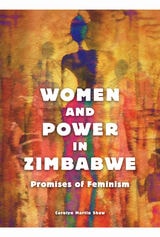
Women and Power in Zimbabwe
Promises of FeminismCarolyn Martin Shaw
University of Illinois Press, 2015
Using history, literature, participant observation, and interviews, Carolyn Martin Shaw surveys Zimbabwean feminisms from the colonial era to today. She examines how actions as clearly disparate as baking scones for self-protection, carrying guns in the liberation, and feeling morally superior to men represent sources of female empowerment. She also presents the ways women across Zimbabwean society--rural and urban, professional and domestic--accommodated or confronted post-independence setbacks. Finally, Shaw offers perspectives on the ways contemporary Zimbabwean women depart from the prevailing view that feminism is a Western imposition having little to do with African women.
The result of thirty years of experience, Women and Power in Zimbabwe addresses the promises of feminism and femininity for generations of African women.
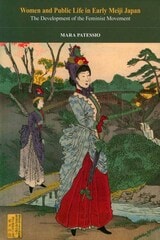
Women and Public Life in Early Meiji Japan
The Development of the Feminist MovementMara Patessio
University of Michigan Press, 2011
Women and Regulation
Challenging the Status QuoEdited by Sara R. Rinfret and Michelle C. Pautz
Temple University Press, 2026
Are female food safety inspectors treated differently than men? What do women contribute to the creation and implementation of public policy in the United States? The editors of and contributors to Women in Regulation, all experts in public policy and public administration, analyze the role women (and stakeholders) play in bureaucracies in environmental, budgetary, and other sectors of the U.S. federal, state, and local governments, plus relevant examples from around the world.
Women in Regulation examines the impact of regulatory policy delegation, as well as the actors and processes involved in administrative rulemaking, compliance, and implementation. The book considers representative bureaucracy, organizational stereotypes, emotional labor, and advancement barriers to argue why studying women and regulation is of value. Regulatory case studies focus on topics ranging from water and energy to executive leadership. Chapters also include reflective exercises and prompts for classroom engagement that challenge readers to consider implications for regulatory policy in the future.
Amplifying the underheard voices in policy and implementation, Women in Regulation provides a more holistic picture of regulatory practices.
Contributors: Saman Afshan, Ashley English, Katherine Hoener, Nicole Humphrey, Ekaterina Levintova, Li-Yin Liu, Sean McCandless, Bruce D. McDonald III, Denise Scheberle, Natalie L. Smith, Manuel P. Teodoro, and the editors
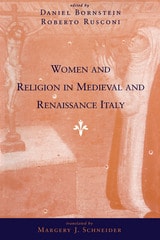
Women and Religion in Medieval and Renaissance Italy
Edited by Daniel Bornstein and Roberto Rusconi
University of Chicago Press, 1996
These essays explore the involvement of women in religious life throughout northern and central Italy and trace the evolution of communities of pious women as they tried to achieve their devotional goals despite the strictures of the ecclesiastical hierarchy. The contributors examine relations between holy women, their devout followers, and society at large.
Including contributions from leading figures in a new generation of Italian historians of religion, this book shows how women were able to carve out broad areas of influence by carefully exploiting the institutional church and by astutely manipulating religious percepts.

Women and Rhetoric between the Wars
Ann George, M. Elizabeth Weiser, and Janet Zepernick
Southern Illinois University Press, 2013
In Women and Rhetoric between the Wars, editors Ann George, M. Elizabeth Weiser, and Janet Zepernick have gathered together insightful essays from major scholars on women whose practices and theories helped shape the field of modern rhetoric. Examining the period between World War I and World War II, this volume sheds light on the forgotten rhetorical work done by the women of that time. It also goes beyond recovery to develop new methodologies for future research in the field.
Collected within are analyses of familiar figures such as Jane Addams, Amelia Earhart, Helen Keller, and Bessie Smith, as well as explorations of less well known, yet nevertheless influential, women such as Zitkala-Ša, Jovita González, and Florence Sabin. Contributors evaluate the forces in the civic, entertainment, and academic scenes that influenced the rhetorical praxis of these women. Each essay presents examples of women’s rhetoric that move us away from the “waves” model toward a more accurate understanding of women’s multiple, diverse rhetorical interventions in public discourse. The collection thus creates a new understanding of historiography, the rise of modern rhetorical theory, and the role of women professionals after suffrage. From celebrities to scientists, suffragettes to academics, the dynamic women of this volume speak eloquently to the field of rhetoric studies today.
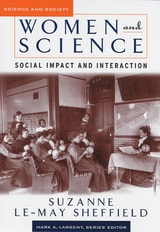
Women and Science
Social Impact and InteractionSuzanne Le-May Sheffield
Rutgers University Press, 0
For generations, aspiring women scientists have looked to Marie Curie, the famed Nobel Prize–winning chemist, for inspiration. But what lesson, exactly, are they to draw from her example? Marie Curie was exceptional, but she was ordinary as well. She faced all the trials and tribulations shared by women of her time; furthermore, she had to contend with the barriers against women’s wider participation in educational institutions, in scientific practice, and professional attainments and rewards. Indeed, her struggles and failures tell us more about the fate of women in the sciences, historically, than her achievements ever will.
From Maria Winkelman’s discovery of the comet of 1702 to the Nobel Prize–winning work of twentieth-century scientist Barbara McClintock, women have played a central role in modern science. Their successes have not come easily, nor have they been consistently recognized. This important book examines the challenges and barriers women scientists have faced and chronicles their achievements as they struggled to attain recognition for their work in the male-dominated world of modern science. As the only comprehensive textbook to examine women’s participation in, and portrayal by, Western science from the scientific revolution to the present, Women and Science is an essential teaching and reference tool for students in both the history of science and women’s studies.
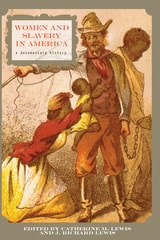
Women and Slavery in America
A Documentary HistoryCatherine M. Lewis
University of Arkansas Press, 2011
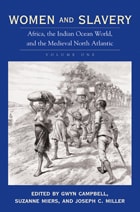
Women and Slavery, Volume One
Africa, the Indian Ocean World, and the Medieval North AtlanticGwyn Campbell
Ohio University Press, 2007
Women enslaved in the Americas came to bear highly gendered reputations among whites—as “scheming Jezebels,” ample and devoted “mammies,” or suffering victims of white male brutality and sexual abuse—that revealed more about the psychology of enslaving than about the courage and creativity of the women enslaved. These strong images of modern New World slavery contrast with the equally expressive virtual invisibility of the women enslaved in the Old—concealed in harems, represented to meddling colonial rulers as “wives” and “nieces,” taken into African families and kin-groups in subtlely nuanced fashion.
Women and Slavery presents papers developed from an international conference organized by Gwyn Campbell.
Volume 1 Contributors: Sharifa Ahjum, Richard B. Allen, Katrin Bromber, Gwyn Campbell, Catherine Coquery-Vidrovitch, Jan-Georg Deutsch, Timothy Fernyhough, Philip J. Havik, Elizabeth Grzymala Jordan, Martin A. Klein, George Michael La Rue, Paul E. Lovejoy, Fred Morton, Richard Roberts, Kirsten A. Seaver
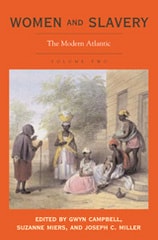
Women and Slavery, Volume Two
The Modern AtlanticGwyn Campbell
Ohio University Press, 2008
Women enslaved in the Americas came to bear highly gendered reputations among whites—as “scheming Jezebels,” ample and devoted “mammies,” or suffering victims of white male brutality and sexual abuse—that revealed more about the psychology of enslaving than about the courage and creativity of the women enslaved. These strong images of modern New World slavery contrast with the equally expressive virtual invisibility of the women enslaved in the Old—concealed in harems, represented to meddling colonial rulers as “wives” and “nieces,” taken into African families and kin-groups in subtlely nuanced fashion.
Volume 2 Contributors: Henrice Altin,k Laurence Brown, Myriam Cottias, Laura F. Edwards, Richard Follett, Tara Inniss, Barbara Krauthamer, Joseph C. Miller, Bernard Moitt, Kenneth Morgan, Claire Robertson, Marsha Robinson, Felipe Smith, and Mariza de Carvalho Soares.