Results by title
8812 books match the query 'Political Science' and 354 start with w

When the Senate Worked for Us
The Invisible Role of Staffers in Countering Corporate LobbiesMichael Pertschuk
Vanderbilt University Press, 2017
What has remained untold is the major behind-the-scenes contribution of entrepreneurial Congressional staff, who planted the seeds of public interest bills in their bosses' minds and maneuvered to counteract the influence of lobbyists to pass laws in consumer protection, public health, and other policy arenas crying out for effective government regulation. They infuriated Nixon's advisor, John Ehrlichman, who called them "bumblebees," a name they wore as a badge of honor.
For his insider account, Pertschuk draws on many interviews, as well as his fifteen years serving on the staff of the Senate Commerce Committee that Senator Warren Magnuson chaired and as the committee's Democratic Staff Director. That committee became, in Ralph Nader's words, "the Grand Central Station for consumer protection advocates."
When the Stakes Are High
Deterrence and Conflict among Major PowersVesna Danilovic
University of Michigan Press, 2002

When the State Fails
Studies on Intervention in the Sierra Leone Civil WarTunde Zack-Williams
Pluto Press, 2012
Compared with Iraq, Afghanistan and Kosovo, the recent western intervention in Sierra Leone has been largely forgotten. When the State Fails rectifies this, providing a comprehensive and critical analysis of the intervention.
The civil war in Sierra Leone began in 1991 and was declared officially over in 2002 after UK, UN and regional African military intervention. Some claimed it as a case of successful humanitarian intervention. The authors in this collection provide an informed analysis of the impact of the intervention on democracy, development and society in Sierra Leone. The authors take a particularly critical view of the imposition of neoliberalism after the conflict.
As NATO intervention in Libya shows the continued use of external force in internal conflicts, When the State Fails is a timely book for all students and scholars interested in Africa and the question of ‘humanitarian intervention’.

Whenever Two or More Are Gathered
Relationship as the Heart of Ethical DiscourseMichael M. Harmon and O. C. McSwite
University of Alabama Press, 2011
A Scholarly Exploration of How Relationships Shape Moral Understanding.
Whenever Two or More Are Gathered focuses on the critical role of ethics and moral responsibility in the field of public administration. Michael M. Harmon and O. C. McSwite posit that administrative ethics, as presently conceived and practiced, is largely a failure, incapable of delivering on its original promise of effectively regulating official conduct in order to promote the public interest. They argue that administrative ethics is compromised at its very foundations by two core assumptions: that human beings act rationally and that language is capable of conveying clear, stable, and unambiguous principles of ethical conduct.
The result is the illusion that values, principles, and rules of ethical conduct can be specified in workably clear ways, in particular, through their formalization in official codes of ethics; that people are capable of comprehending and responding to them as they are intended; and that the rewards and punishments attached to them will be effective in structuring daily behavior.
In a series of essays that draw on both fiction and film, as well as the disciplines of pragmatism, organizational theory, psychoanalysis, structural linguistics, and economics, Harmon and McSwite make their case for human relationship as the proper foundation of administrative ethics. “Exercising responsible ethical practice requires attaining a special kind of relationship with other people. Relationship is how the pure freedom that resides in the human psyche—for ethical choice, creativity, or original action of any type—can be brought into the structured world of human social relations without damaging or destroying it.” Furthermore, they make the case for dropping the term “ethics” in favor of the term “responsibility,” as “responsibility accentuates the social [relational] nature of moral action.”
Where Are All the Good Jobs Going?
What National and Local Job Quality and Dynamics Mean for U.S. WorkersHarry J. Holzer
Russell Sage Foundation, 2011
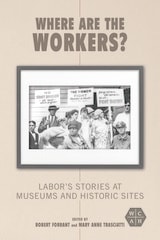
Where Are the Workers?
Labor's Stories at Museums and Historic SitesEdited by Robert Forrant and Mary Anne Trasciatti
University of Illinois Press, 2022
A wide-ranging blueprint for change, Where Are the Workers? shows how working-class perspectives can expand our historical memory and inform and inspire contemporary activism.
Contributors: Jim Beauchesne, Rebekah Bryer, Rebecca Bush, Conor Casey, Rachel Donaldson, Kathleen Flynn, Elijah Gaddis, Susan Grabski, Amanda Kay Gustin, Karen Lane, Rob Linné, Erik Loomis, Tom MacMillan, Lou Martin, Scott McLaughlin, Kristin O’Brassill-Kulfan, Karen Sieber, and Katrina Windon

Where Currents Meet
Frontiers of Memory in Post-Soviet Fiction of Kharkiv, UkraineTanya Zaharchenko
Central European University Press, 2016
Where Currents Meet, Tanya Zaharchenko’s path-breaking study of literature and cultural memory, moves decisively beyond the simplistic view of a post-Soviet Ukraine divided between east and west. It positions the Ukrainian and Russian components of cultural experience in the country’s east as elements of a complex continuum. Combining insights from memory studies and border studies, Zaharchenko analyzes a generation of younger riters in the city of Kharkiv—a “doubletake generation” that came of age at the time of the Soviet Union’s collapse and now revisits this experience through fiction. In the works of Serhiy Zhadan, Andreĭ Krasniashchikh, Yuri Tsaplin, Oleh Kotsarev, and others the author reveals how borderlands and frontiers, both geographical and conceptual, acquire zonal qualities of their own as these writers navigate the historical legacy they have inherited.
Where Did the Party Go?
William Jennings Bryan, Hubert Humphrey, and the Jeffersonian LegacyJeff Taylor
University of Missouri Press, 2006
Where FDI Goes in Decentralized Authoritarian Countries
The Politics of Taiwanese Site Selection for Investment in Mainland ChinaKelan Lu
University of Michigan Press, 2023
Among all the decentralized authoritarian countries, China is distinctive not only because of its emergence as one of the largest foreign direct investment (FDI) recipient countries with one of the highest levels of fiscal decentralization, but also because of the combination of its fiscal decentralization and the cadre promotion system as incentive institutions for attracting FDI inflows. China is an important case to empirically investigate the impact of fiscal autonomy on adversarial investment because it has become the largest investment destination of its long-term adversary, Taiwan, with Taiwanese FDI being among the largest FDI in mainland China. Given the special role played by local Chinese governments in attracting and hosting Taiwanese FDI, it is important to study the differences between where Taiwanese FDI and other FDI goes.
Given the uniqueness of the China case and that of Taiwanese investment in mainland China, this book explores the following questions. What determines where FDI goes in authoritarian countries like China? Fiscal decentralization has been argued to be a driving force of skyrocketing FDI inflows in China due to its impact on local governments’ incentives. However, is the impact of fiscal autonomy on FDI monolithic with the dynamically changing levels of FDI inflows at the lower administrative levels in China, especially with its special cadre management system? Does the impact of fiscal decentralization on FDI strengthen or weaken or stay the same when attracting FDI inflows from adversarial states? And what are the implications of such adversarial investment—especially as it diffuses from coastal cities to the interior regions, or from key cities to peripheral regions—of decentralized authoritarian countries targeted by this investment?

Where Rivers Meet the Sea
The Political Ecology of WaterStephanie Kane
Temple University Press, 2012
Where fresh water appears to be abundant and generally accessible, chronic pollution may be relatively ignored as a public issue. Yet there are those whose lives, livelihoods, and traditions are touched directly by the destructive albeit essential relationship between humans and water.
In her passionate and persuasively argued Where Rivers Meet the Sea, Stephanie Kane compares two cities and nations—Salvador, Brazil and Buenos Aires, Argentina—as she tells the stories of those who organize in the streets, petition the courts, and challenge their governments to implement and enforce existing laws designed to protect springs, lakes, harbors, and rivers.
Illuminating the complex and distinctive cultural forces in the South Atlantic that shape conflicts and collaborations pertaining to particular waterfront settings, Kane shows the dilemmas, inventiveness, and persistence that provide the foundation for environmental and social justice movements writ large.
Where Women Run
Gender and Party in the American StatesKira Sanbonmatsu
University of Michigan Press, 2010
“Kira Sanbonmatsu has done a masterful job of linking the representation of women in elective office to the activities of party organizations in the states. She combines qualitative and quantitative data to show how women are navigating the campaign process to become elected leaders and the changing role of party organizations in their recruitment and election. It is a significant contribution to the study of representative democracy.”
--Barbara Burrell, Northern Illinois University
“Sanbonmatsu has produced an excellent study that will invigorate research on the role of political parties and the recruitment of women candidates. Using a variety of methods and data sources, she has crafted a tightly constructed, clearly argued, and exceedingly well-written study. A commendable and convincing job.”
--Gary Moncrief, Boise State University
“Sanbonmatsu offers important insights in two neglected areas of American politics: the role of political parties in recruiting candidates and the continued under-representation of women in elected office. Connecting the two subjects through careful qualitative and statistical methods, insightful interpretation of the literature and interesting findings, the book is a significant new addition to scholarship on parties, gender, and political recruitment.”
--Linda Fowler, Dartmouth College
Kira Sanbonmatsu is Associate Professor of Political Science at Rutgers University and Senior Scholar at the Eagleton Institute of Politics’ Center for American Women and Politics (CAWP). She was previously associate professor at Ohio State University. She is the author of Democrats, Republicans, and the Politics of Women’s Place.
Where the Wires End
Stories from the Digital DivideChristopher Ali
University of Chicago Press, 0
The stories of those without access to broadband services—and an urgent call for their connection.
The average American will spend years of their lives online. For many, the Internet is life, facilitating employment, education, commerce, and connection. But imagine students who only have online access in the early hours of the morning, when the sun is down, and the Internet traffic is low. Imagine living through a pandemic without Internet access because you can’t afford the monthly subscription. Imagine a first responder unable to find a strong enough signal to seek life-saving services. In this eye-opening book, communications scholar Christopher Ali shares such stories—and calls for policymakers, broadband companies, and governments to connect these communities with meaningful, affordable broadband.
It may seem unthinkable that tens of millions of people across the country are unable to access the Internet because of a lack of infrastructure; a computer; affordable broadband subscription options; or training, support, and skills. These people, some who are still using dial-up connections, are part of what is often called “the digital divide.” Where the Wires End brings them into the broadband policy conversation, incorporating interviews, surveys, focus groups, and field visits with individuals, communities, and organizations across the country, from inner-city Pittsburgh to the Hoopa Valley Indian Reservation in California. Ali focuses on the stories of those without access to broadband and those who work to get them attention and connection. He then links these stories to ongoing policy issues, demonstrating how we all benefit from a more empathetic approach to broadband policy that is digitally equitable, inclusive, and ultimately, more successful.
Which Side Are You On?
The Harlan County Coal Miners, 1931-39John W. Hevener. Foreword by Robert Gipe
University of Illinois Press, 1978
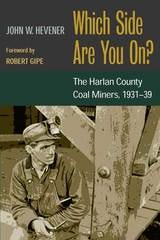
Depression-era Harlan County, Kentucky, was the site of one of the most bitter and protracted labor disputes in American history. The decade-long conflict between miners and the coal operators who adamantly resisted unionization has been immortalized in folksong by Florence Reece and Aunt Molly Jackson, contemplated in prose by Theodore Dreiser and Sherwood Anderson, and long been obscured by popular myths and legends.
John W. Hevener separates the fact from the legend in his Weatherford Award-winning investigation of Harlan's civil strife, now available for the first time in paperback. In Which Side Are You On? Hevener attributes the violence–-including the deaths of thirteen union miners–-to more than just labor conflict, viewing Harlan's troubles as sectional economic conflict stemming from the county's rapid industrialization and social disorganization in the preceding decade.
Detailing the dimensions of unionization and the balance of power spawned by New Deal labor policy after government intervention, Which Side Are You On? is the definitive analysis of Harlan's bloody decade and a seminal contribution to American labor history.

Which Socialism, Whose Detente?
West European Communism and the Czechoslovak Crisis of 1968Maud Bracke
Central European University Press, 2007
Which Way Goes Capitalism?
In Search of Adequate Policies in a Dramatically Changing WorldDaniel Daianu
Central European University Press, 2009
While Waiting for Rain
Community, Economy, and Law in a Time of ChangeJohn Henry Schlegel
University of Michigan Press, 2022
What might a sensible community choose to do if its economy has fallen apart and becoming a ghost town is not an acceptable option? Unfortunately, answers to this question have long been measured against an implicit standard: the postwar economy of the 1950s. After showing why that economy provides an implausible standard—made possible by the lack of economic competition from the European and Asian countries, winners or losers, touched by the war—John Henry Schlegel attempts to answer the question of what to do.
While Waiting for Rain first examines the economic history of the United States as well as that of Buffalo, New York: an appropriate stand-in for any city that may have seen its economy start to fall apart in the 1960s, 70s, and 80s. It makes clear that neither Buffalo nor the United States as a whole has had an economy in the sense of “a persistent market structure that is the fusion of an understanding of economic life with the patterns of behavior within the economic, political, and social institutions that enact that understanding” since both economies collapsed. Next, this book builds a plausible theory of how economic growth might take place by examining the work of the famous urbanist, Jane Jacobs, especially her book Cities and the Wealth of Nations. Her work, like that of many others, emphasizes the importance of innovation for economic growth, but is singular in its insistence that such innovation has to come from local resources. It can neither be bought nor given, even by well-intentioned political actors. As a result Americans generally, as well as locally, are like farmers in the midst of a drought, left to review their resources and wait. Finally, it returns to both the local Buffalo and the national economies to consider what these political units might plausibly do while waiting for an economy to emerge.
Whispering Truth to Power
Everyday Resistance to Reconciliation in Postgenocide RwandaSusan Thomson
University of Wisconsin Press, 2013
“Reveals the lengths [to which] the current government has gone to restructure all spaces of Rwandan society, and how Rwandans continue to resist this state interference in their everyday lives.”—Ethnic and Racial Studies
“Thomson’s elegant research is praiseworthy and her arguments are forthright. . . . This important publication will be of great value to scholars of Rwanda and genocide as well as students of reconciliation politics and transitional justice.”—Human Rights Quarterly
“Sobering and disturbing. . . . The peasant peoples’ resistance to official policies of national unity and reconciliation emerged because these national schemes do not reflect the peasants’ own lived realities and experiences of state power, genocide, and day-to-day living within their communities. Instead, these official policies disrupt everyday life and endanger existing networks of mutual support and dependence.”—Canadian Journal of Development Studies
Outstanding Academic Title, Choice Magazine
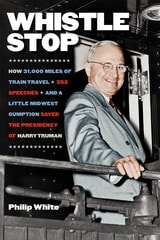
Whistle Stop
How 31,000 Miles of Train Travel, 352 Speeches, and a Little Midwest Gumption Saved the Presidency of Harry TrumanPhilip White
University Press of New England, 2015

White Burgers, Black Cash
Fast Food from Black Exclusion to ExploitationNaa Oyo A. Kwate
University of Minnesota Press, 2023
The long and pernicious relationship between fast food restaurants and the African American community
- James Beard Foundation: James Beard Media Award for Reference, History, and Scholarship — Winner
- Urban Affairs Association Best Book in Urban Affairs — Winner
- Association for Humanist Sociology Betty and McClung Lee Book Award — Winner
- Black Caucus of the American Library Association — Honor, Nonfiction category
- Museum of African American History Stone Book Award — Shortlist
- Business History Conference: Hagley Prize — Finalist
- Association for the Study of Food and Society: ASFS Book Award — Winner
- Society for the Study of Social Problems: Eduardo Bonilla-Silva Outstanding Book Award — Winner
- Foreword: INDIES — Silver winner, History category
Today, fast food is disproportionately located in Black neighborhoods and marketed to Black Americans through trgeted advertising. But throughout much of the twentieth century, fast food was developed specifically for White urban and suburban customers, purposefully avoiding Black spaces. In White Burgers, Black Cash, Naa Oyo A. Kwate traces the evolution in fast food from the early 1900s to the present, from its long history of racist exclusion to its current damaging embrace of urban Black communities.
Fast food has historically been tied to the country’s self-image as the land of opportunity and is marketed as one of life’s simple pleasures, but a more insidious history lies at the industry’s core. White Burgers, Black Cash investigates the complex trajectory of restaurant locations from a decided commitment to Whiteness to the disproportionate densities that characterize Black communities today. Kwate expansively charts fast food’s racial and spatial transformation and centers the cities of Chicago, New York City, and Washington, D.C., in a national examination of the biggest brands of today, including White Castle, KFC, Burger King, McDonald’s, and more.
Deeply researched, compellingly told, and brimming with surprising details, White Burgers, Black Cash reveals the inequalities embedded in America’s popular national food tradition.
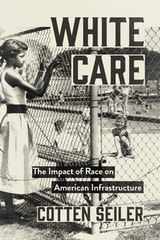
White Care
The Impact of Race on American InfrastructureCotten Seiler
University of Chicago Press, 2026
Infrastructure delivers to its users a range of benefits, from health, safety, and sanitation to mobility, energy, and education. It is, as Cotten Seiler argues, how modern states show care for their populations. White Care recounts the rise and fall of public infrastructure in the United States, unearthing its origins as an investment in those Americans deemed most highly evolved, showing the political stakes of its desegregation, and accounting for its current state of dilapidation.
From the late nineteenth century through much of the twentieth, government investments in physical (“hard”) and social (“soft”) infrastructure constituted a regime of care that Seiler calls “custodial liberalism.” This regime achieved legitimacy with the New Deal, which conferred upon white citizens a bounty of life-enhancing public works. But custodial liberalism began to unravel in the postwar decades, as Americans of color gained access to public schools, housing, swimming pools, parks, and other sites from which they had long been excluded. As the infrastructural commons were desegregated, white Americans withdrew from the social compact that had empowered them and turned toward neoliberalism, with its program of austerity and privatization. This racialized renunciation has deprived everyone—including themselves—of a cleaner, greener, healthier, safer, more affordable, and more functional environment.
White House Operations
The Johnson PresidencyBy Emmette S. Redford; and Richard T. McCulley
University of Texas Press, 1986
The relation of White House assistants to the president, their appropriate role in the governmental process, and the most effective means for organizing and managing the White House have been subjects of both public concern and academic dispute. White House Operations addresses these and related questions by providing the first thorough analysis of how the thirty-sixth president managed his staff. By grounding their study in original documents from the Lyndon B. Johnson Presidential Library, the authors lift the veil of secrecy that clouds the inner workings of the White House. The result is an insightful elaboration of the complex, extensive, and diverse roles of White House aides—and av fascinating look at such key White House figures as McGeorge Bundy, Joseph Califano, Bill Moyers, George Reedy, Walt Rostow, Lawrence O’Brien, and Johnson himself.
This exploration of Johnson’s highly personalized White House operations provides far-reaching implications for the nature of effective presidential management. The comprehensive analysis of the range of work done under Johnson and the unique nature of White House assistance leads the authors to a strong and vigorous assertion for a positive role for the White House staff that clashes sharply with the thrust of many recommendations for reorganizing the presidency. Redford and McCulley convincingly demonstrate that management of the White House staff and other parts of the president’s advisory system will remain crucial for successful presidential performance.
The book is the fifth volume in a series designed to provide a comprehensive administrative history of the Johnson presidency. The book will be of interest to the informed general reader, presidential scholars, political scientists, U.S. historians, and students of public management and will be an important addition to academic library collections.

White Market Drugs
Big Pharma and the Hidden History of Addiction in AmericaDavid Herzberg
University of Chicago Press, 2020
These markets are widely acknowledged but no one has explained how they became so central to the medical system in a nation famous for its “drug wars”—until now. Drawing from federal, state, industry, and medical archives alongside a wealth of published sources, Herzberg re-connects America’s divided drug history, telling the whole story for the first time. He reveals that the driving question for policymakers has never been how to prohibit the use of addictive drugs, but how to ensure their availability in medical contexts, where profitability often outweighs public safety. Access to white markets was thus a double-edged sword for socially privileged consumers, even as communities of color faced exclusion and punitive drug prohibition. To counter this no-win setup, Herzberg advocates for a consumer protection approach that robustly regulates all drug markets to minimize risks while maintaining safe, reliable access (and treatment) for people with addiction.
Accomplishing this requires rethinking a drug/medicine divide born a century ago that, unlike most policies of that racially segregated era, has somehow survived relatively unscathed into the twenty-first century.
By showing how the twenty-first-century opioid crisis is only the most recent in a long history of similar crises of addiction to pharmaceuticals, Herzberg forces us to rethink our most basic ideas about drug policy and addiction itself—ideas that have been failing us catastrophically for over a century.
White Men Challenging Racism
35 Personal StoriesCooper Thompson, Emmett Schaefer, and Harry Brod
Duke University Press, 2003
Ranging in age from twenty-six to eighty-six, the men whose stories are presented here include some of the elder statesmen of antiracism work as well as members of the newest generation of activists. They come from across the United States—from Denver, Nashville, and San Jose; rural North Carolina, Detroit, and Seattle. Some are straight; some are gay. A few—such as historian Herbert Aptheker, singer/songwriter Si Kahn, Stetson Kennedy (a Klan infiltrator in the 1940s), and Richard Lapchick (active in organizing the sports community against apartheid)—are relatively well known; most are not. Among them are academics, ministers, police officers, firefighters, teachers, journalists, union leaders, and full-time community organizers. They work with Latinos and African-, Asian-, and Native-Americans. Many ground their work in spiritual commitments. Their inspiring personal narratives—whether about researching right-wing groups, organizing Central American immigrants, or serving as pastor of an interracial congregation—connect these men with one another and with their allies in the fight against racism in the United States.
All authors’ royalties go directly to fund antiracist work. To read excerpts from the book, please visit http://www.whitemenchallengingracism.com/
White-Collar Government
The Hidden Role of Class in Economic Policy MakingNicholas Carnes
University of Chicago Press, 2013
With White-Collar Government, Nicholas Carnes answers this question with a resounding—and disturbing—yes. Legislators’ socioeconomic backgrounds, he shows, have a profound impact on both how they view the issues and the choices they make in office. Scant representation from among the working class almost guarantees that the policymaking process will be skewed toward outcomes that favor the upper class. It matters that the wealthiest Americans set the tax rates for the wealthy, that white-collar professionals choose the minimum wage for blue-collar workers, and that people who have always had health insurance decide whether or not to help those without. And while there is no one cause for this crisis of representation, Carnes shows that the problem does not stem from a lack of qualified candidates from among the working class. The solution, he argues, must involve a variety of changes, from the equalization of campaign funding to a shift in the types of candidates the parties support.
If we want a government for the people, we have to start working toward a government that is truly by the people. White-Collar Government challenges long-held notions about the causes of political inequality in the United States and speaks to enduring questions about representation and political accountability.
Whither China?
Intellectual Politics in Contemporary ChinaXudong Zhang, ed.
Duke University Press, 2001
The contributors to Whither China? describe how, instead of spearheading the popular-mandated and state-sanctioned project of modernization, intellectuals now find themselves caught amid rapidly changing structures of economic, social, political, and cultural relations that are both global in nature and local in an irreducibly political sense. Individual essays interrogate the space of Chinese intellectual production today, lay out the issues at stake, and cover major debates and discursive interventions from the 1990s. Those who write within the Chinese context are joined by Western observers of contemporary Chinese cultural and intellectual life. Together, these two groups undertake a truly international intellectual struggle not only to interpret but to change the world.
Contributors. Rey Chow, Zhiyuan Cui, Michael Dutton, Gan Yang, Harry Harootunian, Peter Hitchcock, Rebecca Karl, Louisa Schein, Wang Hui, Wang Shaoguang, Xudong Zhang
Whither Opportunity?
Rising Inequality, Schools, and Children's Life ChancesGreg J. Duncan
Russell Sage Foundation, 2012

Who Benefits from the Nonprofit Sector?
Edited by Charles T. Clotfelter
University of Chicago Press, 1992
Who Cleans the Park?
Public Work and Urban Governance in New York CityJohn Krinsky and Maud Simonet
University of Chicago Press, 2017
In Who Cleans the Park? John Krinsky and Maud Simonet explain that the work of maintaining parks has intersected with broader trends in welfare reform, civic engagement, criminal justice, and the rise of public-private partnerships. Welfare-to-work trainees, volunteers, unionized city workers (sometimes working outside their official job descriptions), staff of nonprofit park “conservancies,” and people sentenced to community service are just a few of the groups who routinely maintain parks. With public services no longer being provided primarily by public workers, Krinsky and Simonet argue, the nature of public work must be reevaluated. Based on four years of fieldwork in New York City, Who Cleans the Park? looks at the transformation of public parks from the ground up. Beginning with studying changes in the workplace, progressing through the public-private partnerships that help maintain the parks, and culminating in an investigation of a park’s contribution to urban real-estate values, the book unearths a new urban order based on nonprofit partnerships and a rhetoric of responsible citizenship, which at the same time promotes unpaid work, reinforces workers’ domination at the workplace, and increases the value of park-side property. Who Cleans the Park? asks difficult questions about who benefits from public work, ultimately forcing us to think anew about the way we govern ourselves, with implications well beyond the five boroughs.
Who Counts?
The Politics of Census-Taking in Contemporary AmericaMargo Anderson
Russell Sage Foundation, 2001
Who Deliberates?
Mass Media in Modern DemocracyBenjamin I. Page
University of Chicago Press, 1996
Page shows how the New York Times presented a restricted set of opinions on whether to go to war with Iraq, shutting out discussion of compromises favored by many Americans. He then examines the media's negative reaction to the Bush administration's claim that riots in Los Angeles were caused by welfare programs. Finally, he shows how talk shows overcame the elite media's indifference to widespread concern about Zoe Baird's hiring of illegal aliens. Page's provocative conclusion identifies the conditions under which media outlets become political actors and actively shape and limit the ideas and information available to the public.
Arguing persuasively that a diversity of viewpoints is essential to true public deliberation, this book will interest students of American politics, communications, and media studies.
Who Deserves to Die?
Constructing the Executable SubjectAustin Sarat
University of Massachusetts Press, 2011
How do we select those who will be subject to capital punishment? How do we identify the worst of the worst and decide who among them can and should be executed? Today these questions are more pressing than they have ever been. As the number of people sentenced to death and executed declines in the United States, those who are executed stand out as distinctive kinds of criminals, distinctive kinds of people. Does a death sentence affirm or deny their humanity? Is such a sentence an act of revenge or a carefully calculated act of justice?
These are more than questions for policy and law. They are one way of getting a handle on how our culture understands what makes life worth preserving and of delving into its complex calculus of punishment and retribution. Who Deserves to Die? brings together a distinguished group of death penalty scholars to assess the forms of legal subjectivity and legal community that are supported and constructed by the doctrines and practices of punishment by death in the United States. They help us understand what we do and who we become when we decide who is fit for execution.
In addition to the editors, contributors include Vanessa Barker, Thomas L. Dumm, Daniel Markel, Linda Meyer, Ruth A. Miller, Ravit Reichman, Susan R. Schmeiser, Mateo Taussig-Rubbo, and Robert Weisberg.
Who Freed the Slaves?
The Fight over the Thirteenth AmendmentLeonard L. Richards
University of Chicago Press, 2015
The real story, however, is much more complicated—and dramatic—than that. With Who Freed the Slaves?, distinguished historian Leonard L. Richards tells the little-known story of the battle over the Thirteenth Amendment, and of James Ashley, the unsung Ohio congressman who proposed the amendment and steered it to passage. Taking readers to the floor of Congress and the back rooms where deals were made, Richards brings to life the messy process of legislation—a process made all the more complicated by the bloody war and the deep-rooted fear of black emancipation. We watch as Ashley proposes, fine-tunes, and pushes the amendment even as Lincoln drags his feet, only coming aboard and providing crucial support at the last minute. Even as emancipation became the law of the land, Richards shows, its opponents were already regrouping, beginning what would become a decades-long—and largely successful—fight to limit the amendment’s impact.
Who Freed the Slaves? is a masterwork of American history, presenting a surprising, nuanced portrayal of a crucial moment for the nation, one whose effects are still being felt today.
Who Gets Represented?
Peter K. Enns
Russell Sage Foundation, 2011
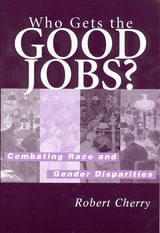
Who Gets the Good Jobs?
Combating Race and Gender DisparitiesCherry, Robert
Rutgers University Press, 2001
Racial and gender employment inequalities are alive and well today. In 2000, the U.S. government offered $508 million to settle more than one thousand lawsuits brought against the federally funded Voice of America by female workers. At the same time, African American employees of Coca-Cola sued their employer, citing the large number of minorities in low-paying jobs, with just a handful at top levels. Even Alan Greenspan has urged firms to eliminate the “distortions that arise as a result of discrimination.”
The political agenda regarding this issue is polarized. Many conservative economists claim that financial considerations have led businesses to hire minorities because such practices increase profits. In opposition, many liberal economists believe businesses will hire minorities only if forced to do so by equal employment opportunity policies. Robert Cherry bridges these two positions, arguing that there is some truth to the positive effect of the profit motive, but that market forces alone are not enough to eliminate employment and earnings disparities.
Cherry surveys the political and economic forces that influenced labor market practices in the nineteenth and twentieth centuries, focusing on the employment barriers African Americans, women, and immigrants encounter. He then assesses the effects of 1960s civil rights legislation and finds that improvements have been substantial, primarily for college-educated African Americans and women; therefore, he recommends that equal employment opportunity policies be strengthened. Cherry demonstrates how the promotion of full employment can further the advancement of working-class African Americans and women.
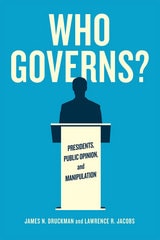
Who Governs?
Presidents, Public Opinion, and ManipulationJames N. Druckman and Lawrence R. Jacobs
University of Chicago Press, 2015
Melding big debates about democratic theory with existing research on American politics and innovative use of the archives of three modern presidents—Johnson, Nixon, and Reagan—Druckman and Jacobs deploy lively and insightful analysis to show that the conventional model of representative democracy bears little resemblance to the actual practice of American politics. The authors conclude by arguing that polyarchy and the promotion of accelerated citizen mobilization and elite competition can improve democratic responsiveness. An incisive study of American politics and the flaws of representative government, this book will be warmly welcomed by readers interested in US politics, public opinion, democratic theory, and the fecklessness of American leadership and decision-making.
Who Guards the Guardians and How
Democratic Civil-Military RelationsEdited by Thomas C. Bruneau and Scott D. Tollefson
University of Texas Press, 2006
The continued spread of democracy into the twenty-first century has seen two-thirds of the almost two hundred independent countries of the world adopting this model. In these newer democracies, one of the biggest challenges has been to establish the proper balance between the civilian and military sectors. A fundamental question of power must be addressed—who guards the guardians and how?
In this volume of essays, contributors associated with the Center for Civil-Military Relations in Monterey, California, offer firsthand observations about civil-military relations in a broad range of regions including Latin America, Africa, Asia, and Eastern Europe. Despite diversity among the consolidating democracies of the world, their civil-military problems and solutions are similar—soldiers and statesmen must achieve a deeper understanding of one another, and be motivated to interact in a mutually beneficial way. The unifying theme of this collection is the creation and development of the institutions whereby democratically elected civilians achieve and exercise power over those who hold a monopoly on the use of force within a society, while ensuring that the state has sufficient and qualified armed forces to defend itself against internal and external aggressors. Although these essays address a wide variety of institutions and situations, they each stress a necessity for balance between democratic civilian control and military effectiveness.
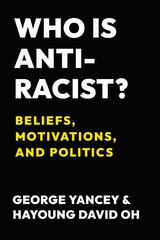
Who Is Antiracist?
Beliefs, Motivations, and PoliticsGeorge Yancey and Hayoung Oh
Temple University Press, 2025
Who Is Antiracist? provides a systematic approach to understanding the motivations and intentions of racial progressives as well as the impact of political ideology on antiracism. The authors discuss the theoretical origins of contemporary antiracism and review key works of antiracism to piece together the characteristics that define it. They also create the Antiracism Attitude Scale to explore the demographic makeup and social views of those who support the type of antiracism popularized in the United States.
Acknowledging that antiracism faces powerful challenges in fully obtaining the goals articulated by its proponents, Who Is Antiracist? enlightens us about the continuing racial conflict in our society and warns against the risk of antiracism becoming just a proxy for ordinary party politics.
Who Leads Whom?
Presidents, Policy, and the PublicBrandice Canes-Wrone
University of Chicago Press, 2005
Analyzing the actions of modern presidents ranging from Eisenhower to Clinton, Brandice Canes-Wrone demonstrates that presidents' involvement of the mass public, by putting pressure on Congress, shifts policy in the direction of majority opinion. More important, she also shows that presidents rarely cater to the mass citizenry unless they already agree with the public's preferred course of action. With contemporary politics so connected to the pulse of the American people, Who Leads Whom? offers much-needed insight into how public opinion actually works in our democratic process. Integrating perspectives from presidential studies, legislative politics, public opinion, and rational choice theory, this theoretical and empirical inquiry will appeal to a wide range of scholars of American political processes.
Who Owns Culture?
Appropriation and Authenticity in American LawScafidi, Susan
Rutgers University Press, 2005
While claims of authenticity or quality may prompt some consumers to seek cultural products at their source, the communities of origin are generally unable to exclude copyists through legal action. Like other works of unincorporated group authorship, cultural products lack protection under our system of intellectual property law. But is this legal vacuum an injustice, the lifeblood of American culture, a historical oversight, a result of administrative incapacity, or all of the above?
Who Owns Culture? offers the first comprehensive analysis of cultural authorship and appropriation within American law. From indigenous art to Linux, Susan Scafidi takes the reader on a tour of the no-man's-land between law and culture, pausing to ask: What prompts us to offer legal protection to works of literature, but not folklore? What does it mean for a creation to belong to a community, especially a diffuse or fractured one? And is our national culture the product of Yankee ingenuity or cultural kleptomania?
Providing new insights to communal authorship, cultural appropriation, intellectual property law, and the formation of American culture, this innovative and accessible guide greatly enriches future legal understanding of cultural production.
Who Really Makes Environmental Policy?
Creating and Implementing Environmental Rules and RegulationsEdited by Sara R. Rinfret
Temple University Press, 2021
The United States Congress appears to be in perpetual gridlock on environmental policy, notes Sara Rinfret, editor of the significant collection, Who Really Makes Environmental Policy? As she and her contributors explain, however, most environmental policy is not made in the halls of Congress. Instead, it is created by agency experts in federal environmental agencies and it is implemented at the state level. These individuals have been delegated the authority to interpret vague congressional legislation and write rules—and these rules carry the same weight as congressional law.
Who Really Makes Environmental Policy? brings together top scholars to provide an explanation of rulemaking processes and regulatory policy, and to show why this context is important for U.S. environmental policy. Illustrative case studies about oil and gas regulations in Colorado and the regulation of coal ash disposal in southeastern states apply theory to practice. Ultimately, the essays in this volume advance our understanding of how U.S. environmental policy is made and why understanding regulatory policy matters for its future.
Who Rules the Waves?
Piracy, Overfishing and Mining the OceansDenise Russell
Pluto Press, 2010
With piracy raging in the Indian Ocean, international disputes over undersea oil and gas, and chronic overfishing, the oceans have rarely been subject to such varied and environmentally damaging conflict outside a world war. In Who Rules the Waves? Denise Russell gives us a rare insight into these issues and how they could be resolved.
International law states that a coastal country has territorial rights for 12 miles into the sea beyond its coastline, and economic rights for 200 miles, but in practice many countries have virtually no control over their own waters, and there is no international agency powerful enough to settle disputes. Russell provides a thorough examination of the politics of the sea, showing that without a radical change in ocean governance, accelerating climate change and overuse of the sea's resources is likely to have catastrophic effects.
Who Runs?
The Masculine Advantage in Candidate EmergenceSarah Oliver and Meredith Conroy
University of Michigan Press, 2020
Meredith Conroy and Sarah Oliver focus on the candidate emergence process (recruitment, perceived qualifications, and ambition), and investigate the affects of individuals’ gender personality on these variables to improve theories of women’s underrepresentation in government. They argue that since politics and masculinity are congruent, we should observe more precise variation in the candidate emergence process along gender differences, than along sex differences in isolation. Individuals who are more masculine will be more likely to be recruited, perceive of themselves as qualified, and express political ambition, than less masculine individuals. This differs from studies that look at sex differences, because it accepts that some women defy gender norms and break into politics. By including a measure of gender personality we can more fully grapple with women’s progress in American politics, and consider whether this progress rests on masculine behaviors and attributes. Who Runs? The Masculine Advantage in Candidate Emergence explores this possibility and the potential ramifications.
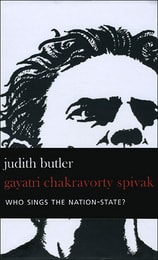
Who Sings the Nation-State?
Language, Politics, BelongingJudith Butler and Gayatri Chakravorty Spivak
Seagull Books, 2007
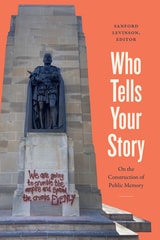
Who Tells Your Story
On the Construction of Public MemorySanford Levinson, editor
Duke University Press, 2026
Contributors: Zachary Bray, Deborah R. Gerhardt, Emily Bradley Greenfield, Randall Kennedy, Aleksandra Kuczyńska-Zonik, Larysa Kurylas, Sanford Levinson, Kimberly Probolus, Kermit Roosevelt III, Anna Saunders, Bruce Scates, Richard C. Schragger, and Agata Tatarenko
Who Wants to Run?
How the Devaluing of Political Office Drives PolarizationAndrew B. Hall
University of Chicago Press, 2019
Andrew B. Hall argues that we have missed one of the most important reasons for this ideological gulf: the increasing reluctance of moderate citizens to run for office. While political scientists, journalists, and pundits have largely focused on voters, worried that they may be too partisan, too uninformed to vote for moderate candidates, or simply too extreme in their own political views, Hall argues that our political system discourages moderate candidates from seeking office in the first place. Running for office has rarely been harder than it is in America today, and the costs dissuade moderates more than extremists. Candidates have to wage ceaseless campaigns, dialing for dollars for most of their waking hours while enduring relentless news and social media coverage. When moderate candidates are unwilling to run, voters do not even have the opportunity to send them to office. To understand what is wrong with our legislatures, then, we need to ask ourselves the question: who wants to run? If we want more moderate legislators, we need to make them a better job offer.
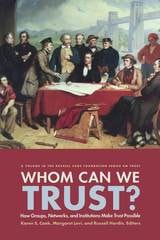
Whom Can We Trust?
How Groups, Networks, and Institutions Make Trust PossibleKaren S. Cook
Russell Sage Foundation, 2009
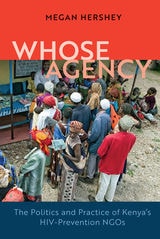
Whose Agency
The Politics and Practice of Kenya's HIV-Prevention NGOsMegan Hershey
University of Wisconsin Press, 2019
By focusing on one particular type of NGO—those organized to help prevent the spread and transmission of HIV in Kenya—Megan Hershey interrogates the ways these organizations achieve (or fail to achieve) their planned outcomes. Along the way, she examines the slippery slope that is often used to define “success” based on meeting donor-set goals versus locally identified needs. She also explores the complex network of bureaucratic requirements at both the national and local levels that affect the delicate relationships NGOs have with the state. Drawing on extensive, original quantitative and qualitative research, Whose Agency serves as a much-needed case study for understanding the strengths and shortcomings of participatory development and community engagement.
Whose America?
Culture Wars in the Public SchoolsJonathan Zimmerman
University of Chicago Press, 2022
Critical Race Theory. The 1619 Project. Mask mandates. As the headlines remind us, American public education is still wracked by culture wars. But these conflicts have shifted sharply over the past two decades, marking larger changes in the ways that Americans imagine themselves. In his 2002 book, Whose America?, Zimmerman predicted that religious differences would continue to dominate the culture wars. Twenty years after that seminal work, Zimmerman has reconsidered: arguments over what American history is, what it means, and how it is taught have exploded with special force in recent years. In this substantially expanded new edition, Zimmerman meditates on the history of the culture wars in the classroom—and on what our inability to find common ground might mean for our future.
Whose America?
Culture Wars in the Public SchoolsJonathan Zimmerman
University of Chicago Press, 2022
In this expanded edition of his 2002 book, Zimmerman surveys how battles over public education have become conflicts at the heart of American national identity.
Critical Race Theory. The 1619 Project. Mask mandates. As the headlines remind us, American public education is still wracked by culture wars. But these conflicts have shifted sharply over the past two decades, marking larger changes in the ways that Americans imagine themselves. In his 2002 book, Whose America?, Zimmerman predicted that religious differences would continue to dominate the culture wars. Twenty years after that seminal work, Zimmerman has reconsidered: arguments over what American history is, what it means, and how it is taught have exploded with special force in recent years. In this substantially expanded new edition, Zimmerman meditates on the history of the culture wars in the classroom—and on what our inability to find common ground might mean for our future.
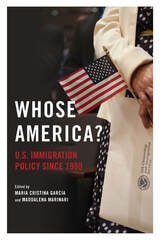
Whose America?
U.S. Immigration Policy since 1980Edited by Maria Cristina Garcia and Maddalena Marinari
University of Illinois Press, 2023
Up-to-date yet rooted in history, Whose America? provides a sophisticated account of recent immigration policy while mapping the ideological struggle to answer an essential question: which people have the right to make America their home or refuge?
Contributors: Leisy Abrego, Carl Bon Tempo, Julio Capó, Jr., Carly Goodman, Julia Rose Kraut, Monique Laney, Carl Lindskoog, Yael Schacher, and Elliott Young