Results by title
2194 books match the query 'Women's Studies' and 222 start with w
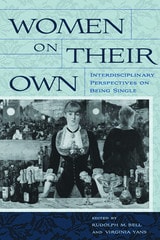
Women on Their Own
Interdisciplinary Perspectives on Being SingleEdited by Rudolph M. Bell and Virginia Yans
Rutgers University Press, 2007
Modern American culture has raised generations of women who believed that their true and most important role in society was to get married and have children. Anything short of this role was considered abnormal, unfulfilling, and suspect. This female stereotype has been exploited and perpetuated by some key films in the late 40's and early 50's. But more recently we have seen a shift in the cultural view of the spinster. The erosion of the traditional nuclear family, as well as a larger range of acceptable life choices, has caused our perceptions of unmarried women to change. The film industry has reflected this shift with updated stereotypes that depict this cultural trend. The shift in the way we perceive spinsters is the subject of current academic research which shows that a person's perception of particular societal roles influences the amount of stress or depression they experience when in that specific role. Further, although the way our culture perceives spinsters and the way the film industry portrays them may be evolving, we still are still left with a negative stereotype.
Themes of choice and power have informed the lives of single women in all times and places. When considered at all in a scholarly context, single women have often been portrayed as victims, unhappily subjected to forces beyond their control. This collection of essays about "women on their own" attempts to correct that bias, by presenting a more complex view of single women in nineteenth- and twentieth-century United States and Europe.
Topics covered in this book include the complex and ambiguous roles that society assigns to widows, and the greater social and financial independence that widows have often enjoyed; widow culture after major wars; the plight of homeless, middle-class single women during the Great Depression; and comparative sociological studies of contemporary single women in the United States, Britain, Ireland, and Cuba.
Composed of papers presented to the Rutgers Center for Historical Analysis project on single women, this collection incorporates the work of specialists in anthropology, art history, history, and sociology. It is deeply connected with the emerging field of singleness studies (to which the RCHA has contributed an Internet-based bibliography of more than 800 items). All of the essays are new and have not been previously published.

Women on a Journey
Between Baghdad and LondonBy Haifa Zangana
University of Texas Press, 2006
Exiled, displaced, tortured, and grieving—each of the five Iraqi women whose lives and losses come to us through Haifa Zangana's skillfully wrought novel is searching in her own way for peace with a past that continually threatens to swallow up the present.
Majda, the widow of a former Ba'ath party official who was killed by the government he served. Adiba, a political dissident tortured under Saddam Hussein's regime. Um Mohammed, a Kurdish refugee who fled her home for political asylum. Iqbal, a divorced mother whose family in Iraq is suffering the effects of Western economic sanctions. And Sahira, the wife of a Communist politician, struggling with his disillusionment and her own isolation. Bound to one another by a common Iraqi identity and a common location in 1990s London, these women come together across differences in politics, ethnic and class background, age, and even language. In narrating the friendship that develops among them, Zangana captures their warmth and humor as well as their sadness, their feelings of despair along with their search for hope, their sense of uprootedness, and their yearnings for home.
Weaving between the women's memories of Iraq—nostalgic and nightmarish—and their lives as exiles in London, Zangana's novel gives voice to the richness and complexity of Iraqi women's experiences. Through their stories, the novel represents a powerful critique of the violence done to ordinary people by those who hold power both in Iraq and in the West.
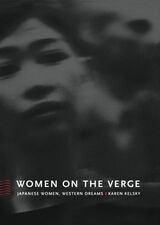
Women on the Verge
Japanese Women, Western DreamsKaren Kelsky
Duke University Press, 2001
In exploring the promises, limitations, and contradictions of these “occidental longings,” Women on the Verge exposes the racial and erotic politics of transnational mobility. Kelsky shows how female cosmopolitanism recontextualizes the well-known Western male romance with the Orient: Japanese women are now the agents, narrating their own desires for the “modern” West in ways that seem to defy Japanese nationalism as well as long-standing relations of power not only between men and women but between Japan and the West. While transnational movement is not available to all Japanese women, Kelsky shows that the desire for the foreign permeates many Japanese women’s lives. She also reveals how this feminine allegiance to the West—and particularly to white men—can impose its own unanticipated hegemonies of race, sexuality, and capital.
Combining ethnography and literary analysis, and bridging anthropology and cultural studies, Women on the Verge will also appeal to students and scholars of Japan studies, feminism, and global culture.
Women's Activism and Feminist Agency in Mozambique and Nicaragua
Jennifer Leigh Disney
Temple University Press, 2009
In Women's Activism and Feminist Agency in Mozambique and Nicaragua, Jennifer Leigh Disney investigates the contours of women’s emancipation outside the framework of liberal democracy and a market economy. She interviews 146 women and men in the two countries to explore the comparative contribution of women’s participation in subsistence and informal economies, political parties and civil society organizations. She also discusses military struggles against colonialism and imperialism in fostering feminist agency to provide a fascinating look at how each movement evolved and how it changed in a post-revolutionary climate.
Women's Activism in Latin America and the Caribbean
Engendering Social Justice, Democratizing CitizenshipEdited and with an introduction by Elizabeth Maier and Nathalie Lebon
Rutgers University Press, 2010
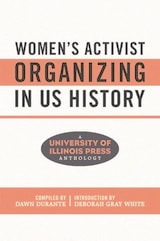
Women's Activist Organizing in US History
A University of Illinois Press AnthologyCompiled by Dawn Durante; Introduction by Deborah Gray White
University of Illinois Press, 2022
Insightful and provocative, Women’s Activist Organizing in US History draws on both classic texts and recent bestsellers to reveal the breadth of activism by women in the United States in the nineteenth and twentieth centuries.
Contributors: Daina Ramey Berry, Melinda Chateauvert, Tiffany M. Gill, Nancy A. Hewitt, Treva B. Lindsey, Anne Firor Scott, Charissa J. Threat, Anne M. Valk, Lara Vapnek, and Deborah Gray White
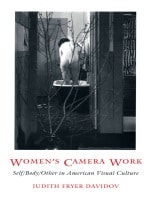
Women's Camera Work
Self/Body/Other in American Visual CultureJudith Fryer Davidov
Duke University Press, 1998
Women’s Camera Work ranges from American women’s photographic practices during the nineteenth and early twentieth centuries to a study of landscape photography. Using contemporary cultural studies discourse to critique influential male-centered historiography and the male-dominated art world, Davidov exhibits the work of these women; tells their absorbing stories; and discusses representations of North American Indians, African Americans, Asian Americans, and the migrant poor. Evaluating these photographers’ distinct contributions to constructions of Americanness and otherness, she helps us to discover the power of reading images closely, and to learn to see through these women’s eyes.
In presenting one of the most important strands of American photography, this richly illustrated book will interest students of American visual culture, women’s studies, and general readers alike.
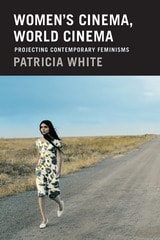
Women's Cinema, World Cinema
Projecting Contemporary FeminismsPatricia White
Duke University Press, 2015
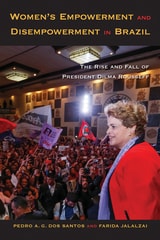
Women's Empowerment and Disempowerment in Brazil
The Rise and Fall of President Dilma RousseffPedro A. G. dos Santos and Farida Jalalzai
Temple University Press, 2021
In 2010, Dilma Rousseff was the first woman to be elected President in Brazil. She was re-elected in 2014 before being impeached in 2016 for breaking budget laws. Her popularity and controversy both energized and polarized the country. In Women’s Empowerment and Disempowerment in Brazil, dos Santos and Jalalzai examine Rousseff’s presidency and what it means for a woman to hold (and lose) the country’s highest power.
The authors examine the ways Rousseff exercised dominant authority and enhanced women’s political empowerment. They also investigate the extent her gender played a role in the events of her presidency, including the political and economic crises and her ensuing impeachment. Emphasizing women’s political empowerment rather than representation, the authors assess the effects of women executives to more directly impact female constituencies—how they can empower women by appointing them to government positions; make policies that advance women’s equality; and, through visibility, create greater support for female politicians despite rampant sexism.
Women’s Empowerment and Disempowerment in Brazil uses Rousseff’s presidency as a case study to focus on the ways she succeeded and failed in using her authority to empower women. The authors’ findings have implications throughout the world.

Women's Experimental Cinema
Critical FrameworksRobin Blaetz, ed.
Duke University Press, 2007
The contributors examine the work of Marie Menken, Joyce Wieland, Gunvor Nelson, Yvonne Rainer, Carolee Schneemann, Barbara Rubin, Amy Greenfield, Barbara Hammer, Chick Strand, Marjorie Keller, Leslie Thornton, Abigail Child, Peggy Ahwesh, Su Friedrich, and Cheryl Dunye. The essays highlight the diversity in these filmmakers’ forms and methods, covering topics such as how Menken used film as a way to rethink the transition from abstract expressionism to Pop Art in the 1950s and 1960s, how Rubin both objectified the body and investigated the filmic apparatus that enabled that objectification in her film Christmas on Earth (1963), and how Dunye uses film to explore her own identity as a black lesbian artist. At the same time, the essays reveal commonalities, including a tendency toward documentary rather than fiction and a commitment to nonhierarchical, collaborative production practices. The volume’s final essay focuses explicitly on teaching women’s experimental films, addressing logistical concerns (how to acquire the films and secure proper viewing spaces) and extending the range of the book by suggesting alternative films for classroom use.
Contributors. Paul Arthur, Robin Blaetz, Noël Carroll, Janet Cutler, Mary Ann Doane, Robert A. Haller, Chris Holmlund, Chuck Kleinhans, Scott MacDonald, Kathleen McHugh, Ara Osterweil, Maria Pramaggiore, Melissa Ragona, Kathryn Ramey, M. M. Serra, Maureen Turim, William C. Wees
Women's History in Global Perspective, Volume 1
Edited by Bonnie G. Smith
University of Illinois Press, 2004
The American Historical Association's Committee on Women Historians commissioned some of the pioneering figures in women's history to prepare essays in their respective areas of expertise. Volume 1 of the three-volume series addresses the comparative themes that the editors and contributors see as central to understanding women's history around the world. Authors like Margaret Strobel, Alice Kessler-Harris, and Mrinalini Sinha provide overviews of the theory and practice of women's and gender history and analyze family history, nationalism, and work. Editor Bonnie G. Smith rounds out the collection with essays on religion, race, ethnicity, and the different varieties of feminism.
Authoritative and wide-ranging, Women's History in Global Perspective, Volume 1, offers an invaluable resource on the thought and methods of a generation's leading figures in feminist scholarship.
Contributors: Marjorie Bingham, Julia Clancy-Smith, Susan Kent, Alice Kessler-Harris, Mary Jo Maynes, Pamela Scully, Mrinalini Sinha, Margaret Strobel, and Ann B. Waltner
Women's History in Global Perspective, Volume 2
Edited by Bonnie G. Smith
University of Illinois Press, 2005
In Volume 2 of Women's History in Global Perspective, Bonnie G. Smith curates more essays by pioneering thinkers on issues that have shaped the history of women, this time with a focus on particular places and particular eras. The collection examines women from prehistory to ancient civilizations in Egypt, Israel, India, and beyond; a survey of women history in China, Japan, and Korea; women and gender in South and South East Asia; medieval women; women and gender in Colonial Latin America; and the history of women in the United States to 1865.
Inclusive and wide-ranging, Women's History in Global Perspective, Volume 2, offers an invaluable collection of feminist scholarship on overlooked and marginalized topics.
Contributors: Judith M. Bennett, Kathleen Brown, Brady Hughes, Sarah Shaver Hughes, Susan Mann, Barbara N. Ramusack, and Ann Twinam.
Women's History in Global Perspective, Volume 3
Edited by Bonnie G. Smith
University of Illinois Press, 2005
The concluding volume of Women's History in Global Perspective discusses contemporary trends in gender and women's history. Bonnie G. Smith edits essays that include women and gender in the history of sub-Saharan Africa and Middle Eastern women since the rise of Islam. Other contributors offer a transnational approach to women in early and modern Europe; look at women's history in Russia and the Soviet Union; discuss the national period in Latin American women's history; and provide a global perspective on women in North American history after 1865.
Contributors: Bonnie S. Anderson, Ellen Dubois, Barbara Engel, Cheryl Johnson-Odim, Nikki R. Keddie, Asunción Lavrin, and Judith P. Zinsser
Women's Labor in the Global Economy
Speaking in Multiple VoicesHarley, Sharon
Rutgers University Press, 2007
Globalization is not a new phenomenon; women throughout the world have been dealing with the circumstances and consequences of an international economy long before the advent of the transnational corporate conglomerate. However, in a mercenary example of the tried clich "the more things change, the more they stay the same," women-particularly those of color-continue to be relegated to the lowest rung of the occupational ladder, where their indispensable contributions to global market capitalism are downplayed or invalidated completely through the perpetuation of stereotypes and the denial of access to better job opportunities and resources.
How women of color around the world adapt and challenge the economic, political, and social effects of globalization is the subject of this broad-minded and incisive anthology. From Mexico, Jamaica, Ghana, Zimbabwe, and Sri Lanka, to immigrant and non-immigrant communities in the United States-the women documented in these essays are agricultural and factory workers, artists and entrepreneurs, mothers and activists. Their stories bear stark witness to how globalization continues to develop new sites and forms of exploitation, while its apparent victims continue to be women, men, and children of color.
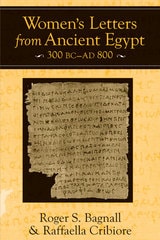
Women's Letters from Ancient Egypt, 300 BC-AD 800
Roger S. Bagnall and Raffaella Cribiore
University of Michigan Press, 2015
More than three hundred letters written in Greek and Egyptian by women in Egypt in the millennium from Alexander the Great to the Arab conquest survive on papyrus and pottery. These letters were written by women from various walks of life and shed light on critical social aspects of life in Egypt after the pharaohs. Roger S. Bagnall and Raffaella Cribiore collect the best preserved of these letters in translation and set them in their paleographic, linguistic, social, and economic contexts. As a result, Women's Letters from Ancient Egypt, 300 BC-AD 800, provides a sense that these women's habits, interests, and means of expression were a product more of their social and economic standing than of specifically gender-related concerns or behavior.
Women's Letters from Ancient Egypt, 300 BC-AD 800, takes the reader through theoretical discussions about the handwriting and language of the letters, the education and culture of the writers, and the writers' everyday concerns and occupations, as well as comparing these letters to similar letters from later historical periods. For each letter, discussion focuses on handwriting, language, and content; in addition, numerous illustrations help the reader to see the variety of handwritings. Most of this material has never been available in English translation before, and the letters have never previously been considered as a single body of material.
Women's Movements in Twentieth-Century Taiwan
Doris Chang
University of Illinois Press, 2008
This book is the first in English to consider women's movements and feminist discourses in twentieth-century Taiwan. Doris T. Chang examines the way in which Taiwanese women in the twentieth century selectively appropriated Western feminist theories to meet their needs in a modernizing Confucian culture. She illustrates the rise and fall of women's movements against the historical backdrop of the island's contested national identities, first vis-à-vis imperial Japan (1895-1945) and later with postwar China (1945-2000).
In particular, during periods of soft authoritarianism in the Japanese colonial era and late twentieth century, autonomous women's movements emerged and operated within the political perimeters set by the authoritarian regimes. Women strove to replace the "Good Wife, Wise Mother" ideal with an individualist feminism that meshed social, political, and economic gender equity with the prevailing Confucian family ideology. However, during periods of hard authoritarianism from the 1930s to the 1960s, the autonomous movements collapsed.
The particular brand of Taiwanese feminism developed from numerous outside influences, including interactions among an East Asian sociopolitical milieu, various strands of Western feminism, and even Marxist-Leninist women's liberation programs in Soviet Russia. Chinese communism appears not to have played a significant role, due to the Chinese Nationalists' restriction of communication with the mainland during their rule on post-World War II Taiwan.
Notably, this study compares the perspectives of Madame Chiang Kai-shek, whose husband led as the president of the Republic of China on Taiwan from 1949 to 1975, and Hsiu-lien Annette Lu, Taiwan's vice president from 2000 to 2008. Delving into period sources such as the highly influential feminist monthly magazine Awakening as well as interviews with feminist leaders, Chang provides a comprehensive historical and cross-cultural analysis of the struggle for gender equality in Taiwan.
Women's Organizations and Democracy in South Africa
Contesting AuthorityShireen Hassim
University of Wisconsin Press, 2006
The transition to democracy in South Africa was one of the defining events in twentieth-century political history. The South African women’s movement is one of the most celebrated on the African continent. Shireen Hassim examines interactions between the two as she explores the gendered nature of liberation and regime change. Her work reveals how women’s political organizations both shaped and were shaped by the broader democratic movement. Alternately asserting their political independence and giving precedence to the democratic movement as a whole, women activists proved flexible and remarkably successful in influencing policy. At the same time, their feminism was profoundly shaped by the context of democratic and nationalist ideologies. In reading the last twenty-five years of South African history through a feminist framework, Hassim offers fresh insights into the interactions between civil society, political parties, and the state.
Hassim boldly confronts sensitive issues such as the tensions between autonomy and political dependency in feminists’ engagement with the African National Congress (ANC) and other democratic movements, and black-white relations within women’s organizations. She offers a historically informed discussion of the challenges facing feminist activists during a time of nationalist struggle and democratization.
Winner, Victoria Schuck Award for best book on women and politics, American Political Science Association
“An exceptional study, based on extensive research. . . . Highly recommended.”—Choice
“A rich history of women’s organizations in South African . . . . [Hassim] had observed at first hand, and often participated in, much of what she described. She had access to the informants and private archives that so enliven the narrative and enrich the analysis. She provides a finely balanced assessment.”—Gretchen Bauer, African Studies Review

Women's Political Activism in Palestine
Peacebuilding, Resistance, and SurvivalSophie Richter-Devroe
University of Illinois Press, 2018
Richter-Devroe's ethnographic approach draws from revealing in-depth interviews and participant observation in Palestine. The result: a forceful critique of mainstream conflict resolution methods and the failed woman-to-woman peacebuilding projects so lauded around the world. The liberal faith in dialogue as core of "the political" and the assumption that women's "nurturing" nature makes them superior peacemakers, collapse in the face of past and ongoing Israeli state violences.
Instead, women confront Israeli settler colonialism directly and indirectly in their popular and everyday acts of resistance. Richter-Devroe's analysis zooms in on the intricate dynamics of daily life in Palestine, tracing the emergent politics that women articulate and practice there. In shedding light on contemporary gendered "politics from below" in the region, the book invites a rethinking of the workings, shapes, and boundaries of the political.
Women's Science
Learning and Succeeding from the MarginsMargaret A. Eisenhart and Elizabeth Finkel
University of Chicago Press, 1998
Women's Science offers a dramatic counterpoint not only to these findings but also to the related, narrow assumption that "real science" only occurs in research and laboratory investigation. This book describes women engaged with science or engineering at the margins: an innovative high school genetics class; a school-to-work internship for prospective engineers, an environmental action group, and a nonprofit conservation agency. In these places—where people use or rely on science for public, social, or community purposes—the authors found a remarkably high proportion of women. Moreover, these women were successful at learning and using technical knowledge, they advanced in roughly equal percentages to men, and they generally enjoyed their work.
Yet, even in these more marginal workplaces, women had to pay a price. Working outside traditional laboratories, they enjoy little public prestige and receive significantly less financial compensation. Although most employers claimed to treat men and women equally, women in fact only achieved success when they acted like male professionals.
Women's Science is an original and provocative contribution that expands our conception of scientific practice as it reconfigures both women's role in science and the meaning of science in contemporary society.
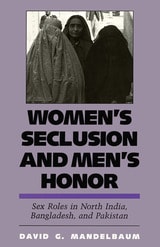
Women's Seclusion and Men's Honor
Sex Roles in North India, Bangladesh, and PakistanDavid G. Mandelbaum
University of Arizona Press, 1988

Women's Studies for the Future
Foundations, Interrogations, PoliticsEdited by Elizabeth Lapovsky Kennedy and Agatha Beins
Rutgers University Press, 2005
Established as an academic field in the 1970s, women’s studies is a relatively young but rapidly growing area of study. Not only has the number of scholars working in this subject expanded exponentially, but women’s studies has become institutionalized, offering graduate degrees and taking on departmental status in many colleges and universities. At the same time, this field—formed in the wake of the feminist movement—is finding itself in a precarious position in what is now often called a “post-feminist” society. This raises challenging issues for faculty, students, and administrators. How must the field adjust its goals and methods to continue to affect change in the future?
Bringing together essays by newcomers as well as veterans to the field, this essential volume addresses timely questions including:
- Without a unitary understanding of the subject, woman, what is the focus of women’s studies?
- How can women’s studies fulfill the promise of interdisciplinarity?
- What is the continuing place of activism in women’s studies?
- What are the best ways to think about, teach, and act upon the intersections of race, class, gender, disability, nation, and sexuality?
Offering innovative models for research and teaching and compelling new directions for action, Women’s Studies for the Future ensures the continued relevance and influence of this developing field.
Women's Studies on Its Own
A Next Wave Reader in Institutional ChangeRobyn Wiegman, ed.
Duke University Press, 2002
Since the 1970s, Women's Studies has grown from a volunteerist political project to a full-scale academic enterprise. Women's Studies on Its Own assesses the present and future of the field, demonstrating how institutionalization has extended a vital, ongoing intellectual project for a new generation of scholars and students.
Women’s Studies on Its Own considers the history, pedagogy, and curricula of Women’s Studies programs, as well as the field’s relation to the managed university. Both theoretically and institutionally grounded, the essays examine the pedagogical implications of various divisions of knowledge—racial, sexual, disciplinary, geopolitical, and economic. They look at the institutional practices that challenge and enable Women’s Studies—including interdisciplinarity, governance, administration, faculty review, professionalism, corporatism, fiscal autonomy, and fiscal constraint. Whether thinking about issues of academic labor, the impact of postcolonialism on Women’s Studies curricula, or the relation between education and the state, the contributors bring insight and wit to their theoretical deliberations on the shape of a transforming field.
Contributors. Dale M. Bauer, Kathleen M. Blee, Gloria Bowles, Denise Cuthbert, Maryanne Dever, Anne Donadey, Laura Donaldson, Diane Elam, Susan Stanford Friedman, Judith Kegan Gardiner, Inderpal Grewal, Sneja Gunew, Miranda Joseph, Caren Kaplan, Rachel Lee, Devoney Looser, Jeanette McVicker, Minoo Moallem, Nancy A. Naples, Jane O. Newman, Lindsey Pollak, Jean C. Robinson, Sabina Sawhney, Jael Silliman, Sivagami Subbaraman, Robyn Warhol, Marcia Westkott, Robyn Wiegman, Bonnie Zimmerman
Women's Studies on the Edge
Joan Wallach Scott, ed.
Duke University Press, 2008
The contributors to Women’s Studies on the Edge embrace feminism not as a set of prescriptions but as a critical stance, one that seeks to interrogate and disrupt prevailing systems of gender. Refusing to perpetuate and protect orthodoxies, they ask tough questions about the impact of institutionalization on the once radical field of women’s studies; about the ongoing difficulties of articulating women’s studies with ethnic, queer, and race studies; and about the limits of liberal concepts of emancipation for understanding non-Western women. They also question the viability of continuing to ground women’s studies in identity politics authorized by personal experience. The multiple interpretations in Women’s Studies on the Edge sometimes overlap and sometimes stand in opposition to one another. The result is a collection that embodies the best aspects of critique: the intellectual and political stance that the contributors take to be feminism’s ethos and its aim.
Contributors
Wendy Brown
Beverly Guy-Sheftall
Evelynn M. Hammonds
Saba Mahmood
Biddy Martin
Afsaneh Najmabadi
Ellen Rooney
Gayle Salamon
Joan Wallach Scott
Robyn Wiegman
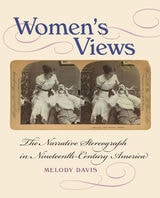
Women's Views
The Narrative Stereograph in Nineteenth-Century AmericaMelody Davis
University of Massachusetts Press, 2015
In this remarkable book, Melody Davis analyzes the underexamined genre of narrative stereoviews and their audiences. Because stereoviews were created for and marketed primarily to middle-class women in domestic settings, Davis argues that they represent one of the best sources for addressing the flow of historical change in women's lives. By analyzing dozens of stereoviews—including depictions of gender stereotypes, power dynamics, comical or sentimental situations, and scenes of both serious and playful innuendo—Davis energetically spins a broad history of the real social, sexual, and economic changes in the lives of American women. Her close reading and rich contextualization of these compelling vernacular objects bridge the gaps between the private viewing that took place within the home and the outside world of consumption and power that women were gradually entering.
Illustrated with more than one hundred stereographs and including a three-dimensional viewer, this book will appeal to readers with an interest in U.S. women's history, the history of photography, visual and cultural studies, and American studies.
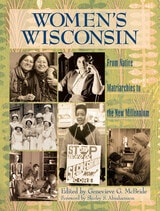
Women's Wisconsin
From Native Matriarchies to the New MillenniumEdited by Genevieve G. McBride
Wisconsin Historical Society Press, 2005
Women's Wisconsin: From Native Matriarchies to the New Millennium, a women's history anthology published on Women's Equality Day 2005, made history as the first single-source history of Wisconsin women. This unique tome features dozens of excerpts of articles as well as primary sources, such as women's letters, reminiscences, and oral histories, previously published over many decades in the Wisconsin Magazine of History and other Wisconsin Historical Society Press publications.
Editor and historian Genevieve G. McBride provides the contextual commentary and overarching analysis to make the history of Wisconsin women accessible to students, scholars, and lifelong learners.

Women's Words
Essay on French SingularityMona Ozouf
University of Chicago Press, 1997
Ozouf uses the woman's portrait, traditionally a male genre, to portray ten French women of letters whose lives span the period from the eve of the French Revolution to the resurgence of the feminist movement in the late twentieth century. She studies the letters and memoirs of Mme du Deffand, Mme de Charrière, Mme Roland, Mme de Staël, Mme de Rémusat, George Sand, Hubertine Auclert, Colette, Simone Weil, and Simone de Beauvoir. Rejecting the male constructions of femininity typical of this genre, Ozouf restores these women's voices in order to study their own often-conflicted attitudes toward education, marriage, motherhood, sex, and work, as well as the dilemma of writing in a literary world that did not support women's work.
Ozouf claims that a uniquely French feminism informed these women's lives, one that stems from the great egalitarian spirit of the French Revolution and is more tolerant of difference than its American counterparts. She argues that as a result, modern French culture has not isolated women from men in the same ways as American and British cultures have done.

Women's Work in Post-war Italy
An Oral and Filmic HistoryFlora Derounian
Intellect Books, 2023
Women’s Work in Post-War Italy explores women’s labor following World War II and Italy’s new republic. War and national reconstruction have typically been framed as masculine undertakings in Italy, but Flora Derounian shifts that frame to investigate the labor that Italian women were doing at this critical time of political, social, and ideological change, as well as how it was viewed by society and by women workers themselves. Drawing on original oral history interviews, Derounian compares women’s own words with the very different ways they were pictured in film, giving voice to the under-represented, and exposing the profound difference that work made to women’s lives.

Women, Autobiography, Theory
A ReaderEdited by Sidonie A. Smith and Julia Watson
University of Wisconsin Press, 1998
Women, Autobiography, Theory is the first comprehensive guide to the burgeoning field of women’s autobiography, drawing into one volume the most significant theoretical discussions on women’s life writing of the last two decades.
The authoritative introduction by Sidonie Smith and Julia Watson surveys writing about women’s lives from the women’s movement of the late 1960s to the present. It also relates theoretical positions in women’s autobiography studies to postmodern, poststructuralist, postcolonial, and feminist analyses.
The essays from thirty-nine prominent critics and writers include many considered classics in this field. They explore narratives across the centuries and from around the globe, including testimonios, diaries, memoirs, letters, trauma accounts, prison narratives, coming-out stories, coming-of-age stories, and spiritual autobiographies. A list of more than two hundred women’s autobiographies and a comprehensive bibliography of critical scholarship in women’s autobiography provide invaluable information for scholars, teachers, and readers.
Women, Gays, and the Constitution
The Grounds for Feminism and Gay Rights in Culture and LawDavid A. J. Richards
University of Chicago Press, 1998
Richards argues that both movements are extensions of rights-based dissent, rooted in antebellum abolitionist feminism that condemned both American racism and sexism. He sees the progressive role of such radical dissent as an emancipated moral voice in the American constitutional tradition. He examines the role of dissident African Americans, Jews, women, and homosexuals in forging alternative visions of rights-based democracy. He also draws special attention to Walt Whitman's visionary poetry, showing how it made space for the silenced and subjugated voices of homosexuals in public and private culture.
According to Richards, contemporary feminism rediscovers and elaborates this earlier tradition. And, similarly, the movement for gay rights builds upon an interpretation of abolitionist feminism developed by Whitman in his defense, both in poetry and prose, of love between men. Richards explores Whitman's impact on pro-gay advocates, including John Addington Symonds, Havelock Ellis, Edward Carpenter, Oscar Wilde, and André Gide. He also discusses other diverse writers and reformers such as Margaret Sanger, Franz Boas, Elizabeth Stanton, W. E. B. DuBois, and Adrienne Rich.
Richards addresses current controversies such as the exclusion of homosexuals from the military and from the right to marriage and concludes with a powerful defense of the struggle for such constitutional rights in terms of the principles of rights-based feminism.
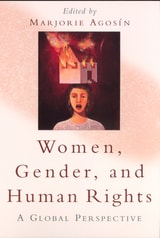
Women, Gender, and Human Rights
A Global PerspectiveAgosín, Marjorie
Rutgers University Press, 2001
The 1948 United Nations Universal Declaration of Human Rights expresses the credo that all human beings are created free and equal. But not until 1995 did the United Nations declare that women’s rights to be human rights, and bring gender issues into the global arena for the first time. The subordination of indigenous and minority women, ethnic cleansing, and the struggle for reproductive rights are some of the most pressing issues facing women worldwide.
Women, Gender, and Human Rights is the first collection of essays that encompass a global perspective on women and a wide range of issues, including political and domestic violence, education, literacy, and reproductive rights. Most of the articles were written expressly for this volume by internationally known experts in the fields of government, bioethics, medicine, public affairs, literature, history, anthropology, law, and psychology.
Women, Gender, and Technology
Edited by Mary Frank Fox, Deborah G. Johnson, and Sue V. Rosser
University of Illinois Press, 2006
An interdisciplinary investigation of the co-creation of gender and technology
Each of the ten chapters in Women, Gender, and Technology explores a different aspect of how gender and technology work--and are at work--in particular domains, including film narratives, reproductive technologies, information technology, and the profession of engineering. The volume's contributors include representatives of over half a dozen different disciplines, and each provides a novel perspective on the foundational idea that gender and technology co-create one another. Together, their articles provide a window on to the rich and complex issues that arise in the attempt to understand the relationship between these profoundly intertwined notions.

Women, History, and Theory
The Essays of Joan KellyJoan Kelly
University of Chicago Press, 1986
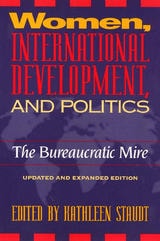
Women, International Development
And Politicsedited by Kathleen Staudt
Temple University Press, 1997
At the same time, non-governmental organizations have continued to expand a policy agenda with a concern for women, thanks to the Fourth World Congress on Women and a series of United Nations-affiliated meetings leading up to the one on population and development in Cairo in 1994 and, most important, the Beijing Conference in December 1995, attended by 50,000 people.
Two new essays and a new conclusion reflect the upsurge of interest in women and development since 1990. An introductory essay by Sally Baden and Anne Marie Goetz focuses on the conflict over the term "gender" at the Beijing Conference and the continuing divisions between conservative women and feminists and also between representatives of the North and South.
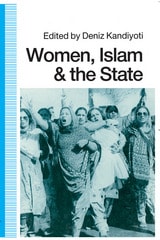
Women, Islam and the State
Deniz Kandiyoti
Temple University Press, 1991

Women, Money, and the Law
Nineteenth-Century Fiction, Gender, and the CourtsJoyce W. Warren
University of Iowa Press, 2005

Women, Power, and Dissent in the Hills of Carolina
Mary K. Anglin
University of Illinois Press, 2002
Women, Power, and Dissent in the Hills of Carolina is a unique and impassioned exploration of gender, labor, and resistance in western North Carolina. Based on eight months of field research in a mica manufacturing plant and the surrounding rural community, as well as oral histories of women who worked in mica houses in the early twentieth century, this landmark study canvasses the history of the mica industry and the ways it came to be organized around women's labor.
Mary K. Anglin's investigation of working women's lives in the plant she calls "Moth Hill Mica Company" reveals the ways women have contributed to household and regional economies for more than a century. Without union support or recognition as skilled laborers, these women developed alternate strategies for challenging the poor working conditions, paltry wages, and corporate rhetoric of Moth Hill. Utilizing the power of memory and strong family and community ties, as well as their own interpretations of gender and culture, the women have found ways to "boss themselves."
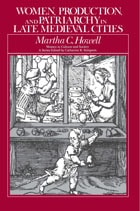
Women, Production, and Patriarchy in Late Medieval Cities
Martha C. Howell
University of Chicago Press, 1986
Women, State, and Party in Eastern Europe
Sharon L. Wolchik and Alfred Meyer, eds.
Duke University Press, 1985

Women, Violence and War
Wartime Victimization of Refugees in the BalkansVesna Nikolic-Ristanovic
Central European University Press, 2000
Based on interviews with seventy women refugees, Women, Violence and War is a book about war as it is seen, lived and interpreted by women who were citizens of the former Yugoslavia.
Many of the accounts portray the horrific experiences the victims had to face and the book addresses issues of sexual, physical and psychological violence, as well as problems of confinement, upheaval and family separation. In a completely new insight the book dispels the myth that many of the women were peasants, and shows that in fact they were educated, middle-class women with independent careers. The study also depicts how some of the victims attempt to come to terms with the aftermath of wartime abuse.
This probing, accurate and unique investigation of victimization is an unparalleled volume that presents a completely new perspective maintaining that violence against women in war is not independent of peace-time victimization and the imbalance of power between sexes.
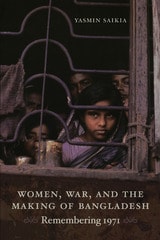
Women, War, and the Making of Bangladesh
Remembering 1971Yasmin Saikia
Duke University Press, 2011
Women, Work, and Activism
Chapters of an Inclusive History of Labor in the Long Twentieth CenturyEloisa Betti
Central European University Press, 2022
The thirteen critical and well-documented chapters of Women, Work and Activism examine women’s labor struggle from late nineteenth-century Portuguese mutual societies to Yugoslav peasant women’s work in the 1930s, and from the Catalan labor movement under the Franco dictatorship to workplace democracy in the United States. The authors portray women's labor activism in a wide variety of contexts. This includes spontaneous resistance to masculinist trade unionism, the feminist engagement of women workers, the activism of communist wives of workers, and female long-distance migration, among others. The chapters address the gendered involvement of working people in multiple and often precarious and unstable labor relations and in unpaid labor, as well as the role of the state and other institutions in shaping the history of women’s labor.
The book is an innovative contribution to both the new labor history and feminist history. It fully integrates the conceptual advances made by gender historians in the study of labor activism, driving home critiques of Eurocentric historiographies of labor to Europe while simultaneously contributing to an inclusive history of women’s labor-related activism wherever to be found. Examining women’s activism in male-dominated movements and institutions, and in women’s networks and organizations, the authors make a case for a new direction in gender history.
Women, Work, and Worship in Lincoln's Country
The Dumville Family LettersEdited by Anne M. Heinz and John P. Heinz
University of Illinois Press, 2016
Women, the State, and Welfare
Edited by Linda Gordon
University of Wisconsin Press, 1990
Womenfolks
Growing Up Down SouthShirley Abbott
University of Arkansas Press, 2017

Women’s Bookscapes in Early Modern Britain
Reading, Ownership, CirculationLeah Knight, Micheline White, and Elizabeth Sauer, Editors
University of Michigan Press, 2018
Women in 16th- and 17th-century Britain read, annotated, circulated, inventoried, cherished, criticized, prescribed, and proscribed books in various historically distinctive ways. Yet, unlike that of their male counterparts, the study of women’s reading practices and book ownership has been an elusive and largely overlooked field.
In thirteen probing essays, Women’s Bookscapesin Early Modern Britain brings together the work of internationally renowned scholars investigating key questions about early modern British women’s figurative, material, and cultural relationships with books. What constitutes evidence of women’s readerly engagement? How did women use books to achieve personal, political, religious, literary, economic, social, familial, or communal goals? How does new evidence of women’s libraries and book usage challenge received ideas about gender in relation to knowledge, education, confessional affiliations, family ties, and sociability? How do digital tools offer new possibilities for the recovery of information on early modern women readers?
The volume’s three-part structure highlights case studies of individual readers and their libraries; analyses of readers and readership in the context of their interpretive communities; and new types of scholarly evidence—lists of confiscated books and convent rules, for example—as well as new methodologies and technologies for ongoing research. These essays dismantle binaries of private and public; reading and writing; female and male literary engagement and production; and ownership and authorship.
Interdisciplinary, timely, cohesive, and concise, this collection’s fresh, revisionary approaches represent substantial contributions to scholarship in early modern material culture; book history and print culture; women’s literary and cultural history; library studies; and reading and collecting practices more generally.

Women’s Perspectives on Human Security
Violence, Environment, and SustainabilityRichard Matthew; Patricia A. Weitsman; Gunhild Hoogensen Gjørv; Nora Davis; Tera Dornfeld
Ohio University Press, 2020
Violent conflict, climate change, and poverty present distinct threats to women worldwide. Importantly, women are leading the way creating and sharing sustainable solutions.
Women’s security is a valuable analytical tool as well as a political agenda insofar as it addresses the specific problems affecting women’s ability to live dignified, free, and secure lives. First, this collection focuses on how conflict impacts women’s lives and well-being, including rape and gendered constructions of ethnicity, race, and religion. The book’s second section looks beyond the scope of large-scale violence to examine human security in terms of environmental policy, food, water, health, and economics.
Multidisciplinary in scope, these essays from new and established contributors draw from gender studies, international relations, criminology, political science, economics, sociology, biological and ecological sciences, and planning.
Women’s Work
How Culinary Cultures Shaped Modern SpainRebecca Ingram
Vanderbilt University Press, 2022
We are living in a moment in which famous chefs, Michelin stars, culinary techniques, and gastronomical accolades attract moneyed tourists to Spain from all over the world. This has prompted the Spanish government to declare its cuisine as part of Spanish patrimony. Even with this widespread global attention, we know little about how Spanish cooking became a litmus test for demonstrating Spain's modernity and, relatedly, the roles ascribed to the modern Spanish women responsible for daily cooking.
Efforts to articulate a new, modern Spain infiltrated writing in multiple genres and media. Women's Work offers a sharp reading of diverse sources, placed in their historical context, that yields a better understanding of the roles of food within an inherently uneven modernization process. Further, author Rebecca Ingram's perceptive critique reveals the paradoxical messages women have navigated, even in texts about a daily practice that shaped their domestic and work lives. Women's Work posits that this is significant because of the degree to which domestic activities, including cooking, occupied women's daily lives, even while issues like their fitness as citizens and participation in the public sphere were hotly debated. At the same time, progressive intellectuals from diverse backgrounds began to invoke Spanish cooking and eating as one measure of Spanish modernity.
Women's Work shows how culinary writing engaged these debates and reached women at the site of much of their daily labor—the kitchen—and, in this way, shaped their thinking about their roles in modernizing Spain.
Women’s Work
Making Dance in Europe before 1800Edited by Lynn Matluck Brooks
University of Wisconsin Press, 2007
Through dance, women asserted power in spheres largely dominated by men: the court, the theater, and the church. As women’s dance worlds intersected with men’s, their lives and visions were supported or opposed, creating a complex politics of creative, spiritual, and political expression. From a women’s religious order in the thirteenth-century Low Countries that used dance as a spiritual rite of passage to the salon culture of eighteenth-century France where dance became an integral part of women’s cultural influence, the writers in this volume explore the meaning of these women’s stories, performances, and dancing bodies, demonstrating that dance is truly a field across which women have moved with finesse and power for many centuries past.
Wonder Woman
Bondage and Feminism in the Marston/Peter Comics, 1941-1948Berlatsky, Noah
Rutgers University Press, 2015
Comics expert Noah Berlatsky takes us on a wild ride through the Wonder Woman comics of the 1940s, vividly illustrating how Marston’s many quirks and contradictions, along with the odd disproportionate composition created by illustrator Harry Peter, produced a comic that was radically ahead of its time in terms of its bold presentation of female power and sexuality. Himself a committed polyamorist, Marston created a universe that was friendly to queer sexualities and lifestyles, from kink to lesbianism to cross-dressing. Written with a deep affection for the fantastically pulpy elements of the early Wonder Womancomics, from invisible jets to giant multi-lunged space kangaroos, the book also reveals how the comic addressed serious, even taboo issues like rape and incest.
Wonder Woman
New edition with full color illustrationsBerlatsky, Noah
Rutgers University Press, 2017
Comics expert Noah Berlatsky takes us on a wild ride through the Wonder Woman comics of the 1940s, vividly illustrating how Marston’s many quirks and contradictions, along with the odd disproportionate composition created by illustrator Harry Peter, produced a comic that was radically ahead of its time in terms of its bold presentation of female power and sexuality. Himself a committed polyamorist, Marston created a universe that was friendly to queer sexualities and lifestyles, from kink to lesbianism to cross-dressing. Written with a deep affection for the fantastically pulpy elements of the early Wonder Woman comics, from invisible jets to giant multi-lunged space kangaroos, the book also reveals how the comic addressed serious, even taboo issues like rape and incest.
Wonder Woman: Bondage and Feminism in the Marston/Peter Comics 1941-1948 reveals how illustrator and writer came together to create a unique, visionary work of art, filled with bizarre ambition, revolutionary fervor, and love, far different from the action hero symbol of the feminist movement many of us recall from television.