Results by title
5550 books match the query 'Biography & Autobiography' and 258 start with w
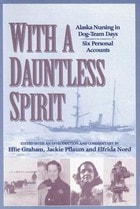
With a Dauntless Spirit
Alaska Nursing in Dog-Team Days.Effie Graham
University of Alaska Press, 2003
With a Dauntless Spirit compiles a unique collection of journals, letters, and memoirs that give immediacy and vitality to the lives of these women. They ventured with a sense of duty and compassion to deliver much-needed medical services before the technical, medical, and social changes brought to Alaska by World War II and later by statehood. Despite physical hardships and emotional isolation, the spirit of these women is reflected in the adventurous, dramatic, and even joyous tone of their narratives. The arctic tests the character of many newcomers, and the nurses recount the very personal challenges that demanded choices and actions that ran contrary to their earlier socialization. Their personal sagas also have significant historical dimensions. They depict the major cultural encounters of their era that were to have such a profound impact on Alaska's future-with Native peoples, prospectors, aviation pioneers, and arctic explorers.
This collection was selected from personal and archival sources by Alaska nurse educators and historians, who provide background and commentary, a brief biography of each person, and historical photos and maps of the nurses' lives and work. With a Dauntless Spirit is a readable and engrossing account that makes an important and overdue contribution to Alaska history and women's history.
With a Southern Accent
Viola Goode Liddell
University of Alabama Press, 1982
Two generations of Alabamians will welcome the reappearance of this classic: those who loved it when it was published to national acclaim in 1948 and who have missed it during the many years it has been out of print, and those who have enjoyed Viola Goode Liddell’s follow-up success, A Place of Springs, and eagerly seek more from her pen.
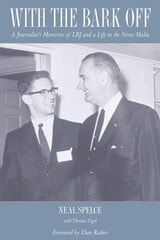
With the Bark Off
A Journalist’s Memories of LBJ and a Life in the News MediaNeal Spelce with Thomas Zigal
University of Texas Press, 2021
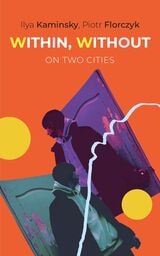
Within, Without
On Two CitiesIlya Kaminsky and Piotr Florczyk
Seagull Books, 2026
Within, Without: On Two Cities presents two essays by Eastern European–born poets and translators, Ilya Kaminsky and Piotr Florczyk, now based in the United States. Revisiting their respective hometowns—Odesa and Kraków—they grapple with questions of history, identity, and belonging. What does it mean for an immigrant or refugee to return? Can one ever truly go back to a homeland that has since been transformed? Kaminsky and Florczyk chart a path forward by embracing the complexities of their transnational and translingual identities, as artists and as human beings.
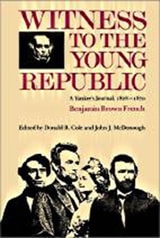
Witness to the Young Republic
A Yankee’s Journal, 1828–1870Benjamin Brown. French
University Press of New England, 2002
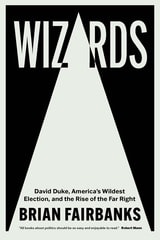
Wizards
David Duke, America's Wildest Election, and the Rise of the Far RightBrian Fairbanks
Vanderbilt University Press, 2022
A surging Republican populist.
The Democrat, hounded by corruption allegations; the Republican, dogged by business failures and ties to white supremacists.
The Republican turned out thousands of screaming supporters for speeches blaming illegal immigrants and crime on the Democrats, and the Democrat plummeted in the polls.
Sound familiar?
The '91 Louisiana Governor's race was supposed to be forgettable. But when former KKK Grand Wizard David Duke shocked the nation by ousting incumbent Republican Governor Buddy Roemer in the primary, the world took notice. Democrat Edwin Edwards, a former three-term governor and two-time corruption defendant, was left alone to face Duke in the general election—and he was going to lose.
Then a little-known state committeewoman stepped in with evidence of Duke's nefarious past. Could her evidence be enough to sway the minds of fired-up voters, or would Louisiana welcome a far-right radical into the highest office in the state?
Journalist Brian Fairbanks explores how the final showdown between Duke and Edwards in November 1991 led to a major shift in our national politics, as well as the rise of the radical right and white supremacist groups, and how history repeated itself in the 2016 presidential election. The story of these political "wizards," almost forgotten by history, remains eerily prescient and disturbingly relevant, and a compulsive page-turner.
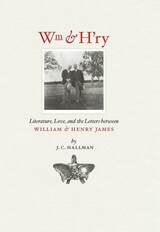
Wm & H'ry
Literature, Love, and the Letters between Wiliam and Henry JamesJ. C. Hallman
University of Iowa Press, 2013
William and Henry James served as each other’s muse and critic. For instance, the event of the death of Mrs. Sands illustrates what H’ry never stated: even if the “matter” of his fiction was light, the minds behind it lived and died as though it was very heavy indeed. He seemed to best understand this himself only after Wm fully fleshed out his system. “I can’t now explain save by the very fact of the spell itself . . . that [Pragmatism] cast upon me,” H’ry wrote in 1907. “All my life I have . . . unconsciously pragmatised.”
Wm was never able to be quite so gracious in return. In 1868, he lashed out at the “every day” elements of two of H’ry’s early stories, and then explained: “I have uttered this long rigmarole in a dogmatic manner, as one speaks, to himself, but of course you will use it merely as a mass to react against in your own way, so that it may serve you some good purpose.” He believed he was doing H’ry a service as he criticized a growing tendency toward “over-refinement” or “curliness” of style. “I think it ought to be of use to you,” he wrote in 1872, “to have any detailed criticism fm even a wrong judge, and you don’t get much fm. any one else.” For the most part, H’ry agreed. “I hope you will continue to give me, when you can, your free impression of my performance. It is a great thing to have some one write to one of one’s things as if one were a 3d person & you are the only individual who will do this.”
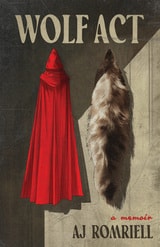
Wolf Act
AJ Romriell
University of Wisconsin Press, 2025
Through linked personal essays crafted in lyric, fabulist, and fragmented forms, Wolf Act charts a young man’s transformation. Weaving together wolfish fairy tales and mythology, Mormon theology and practice, piercings and tattoos, cave explorations, ghost stories, and more, Romriell explores a childhood of hiding, a familial reckoning, a religious exodus, and an effort to understand one’s life as worth saving—even when the meaning of the word “saving” must be reimagined.

Wolfgang Amadeus Mozart
A BiographyPiero Melograni
University of Chicago Press, 2006
This year marks the 250th anniversary of the birth of Wolfgang Amadeus Mozart, one of the most enduringly popular and celebrated composers to have ever lived. His substantial oeuvre contains works that are considered to be among the most exquisite pieces of symphonic, chamber, and choral music ever written. His operas too cast a long shadow over those staged in their wake. And since his untimely death in 1791, he remains an enigmatic figure—the subject of fascination for aficionados and novices alike.
Piero Melograni here offers a wholly readable account of Mozart’s remarkable life and times. This masterful biography proceeds from the young Mozart’s earliest years as a Wunderkind—the child prodigy who traveled with his family to perform concerts throughout Europe—to his formative years in Vienna, where he fully absorbed the artistic and intellectual spirit of the Enlightenment, to his deathbed, his unfinished Requiem, and the mystery that still surrounds his burial. Melograni’s deft use of Mozart’s letters throughout confers authority and vitality to his recounting, and his expertise brings Mozart’s eighteenth-century milieu evocatively to life. Written with a gifted historian’s flair for narrative and unencumbered by specialized analyses of Mozart’s music, Melograni’s is the most vivid and enjoyable biography available.
At a time when music lovers around the world are paying honor to Mozart and his legacy, Wolfgang Amadeus Mozart will be welcomed by his enthusiasts—or anyone wishing to peer into the mind of one of the greatest composers ever known.
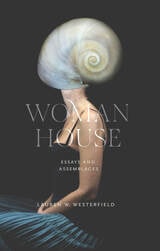
Woman House
Essays and AssemblagesLauren W. Westerfield
University of Massachusetts Press, 2026
Winner of the National Indie Excellence Award in Memoir and the National Indie Excellence Awards Juror's Choice Prize
A compelling and inventive memoir exploring how pain and pleasure are passed down through generations of women
For years, Lauren W. Westerfield looked back at her childhood as an imaginative playscape lovingly crafted by her artist mother. But in truth, theirs was always a fraught relationship, close yet turbulent. It wouldn’t be until her mid-twenties that Westerfield would learn that her mother was assaulted while living as a single woman in 1970s Los Angeles, or until her mid-thirties when caretaking for her now chronically ill mother during pandemic lockdown would reveal how that earlier incident and its ripple effects had shaped both their lives.
The essays and assemblages in this book plumb the depths of two women’s experiences, exploring the pain and pleasure they find in their bodies, in culture, and in their own art. Violence, beauty, and love reverberate and dissipate and shape the forms and psyches of these two profoundly connected family members. At once raw and refined, narrative and lyrical, nostalgic and blunt, the stories and images presented here explore Westerfield’s life—from childhood to adulthood—passing through innocence, self-discovery and familial tethers. In unpacking her mother’s history and the complexities of their relationship, Westerfield finds herself confronted with her own story: one grounded in a yearning for agency and individuation, of a body and mind groomed to be at odds with one another, of a feminist politics examining deeply rooted patriarchal understandings of beauty, control, and power.
Part memoir, part critical sense-making, part reckoning with family, identity, illness, addiction, art, and inheritance, Woman House draws on diverse inspirations in an attempt to recontextualize the female body—in danger, in pleasure, in portraiture, in proximity, in resistance—and challenge the structures that silence and restrict female expression.
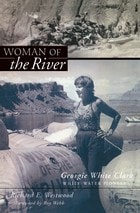
Woman Of The River
Georgie White Clark, Whitewater PioneerRichard Westwood
Utah State University Press, 1997
Georgie White Clark-adventurer, raconteur, eccentric--first came to know the canyons of the Colorado River by swimming portions of them with a single companion. She subsequently hiked and rafted portions of the canyons, increasingly sharing her love of the Colorado River with friends and acquaintances. At first establishing a part-time guide service as a way to support her own river trips, she went on to become perhaps the canyons' best-known river guide, introducing their rapids to many others-on the river, via her large-capacity rubber rafts, and across the nation, via magazine articles and movies. Georgie Clark saw the river and her sport change with the building of Glen Canyon Dam, enormous increases in the popularity of river running, and increased National Park Service regulation of rafting and river guides. Adjusting, though not always easily, to the changes, she helped transform an elite adventure sport into a major tourist activity.

Woman at Work
The Autobiography of Mary Anderson as told to Mary N. WinslowMary Anderson
University of Minnesota Press, 1951
Woman in Levi's
Eulalia Bourne
University of Arizona Press, 1967
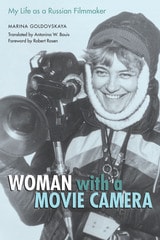
Woman with a Movie Camera
My Life as a Russian FilmmakerBy Marina Goldovskaya
University of Texas Press, 2006
Marina Goldovskaya is one of Russia's best-known documentary filmmakers. The first woman in Russia (and possibly the world) to combine being a director, writer, cinematographer, and producer, Goldovskaya has made over thirty documentary films and more than one hundred programs for Russian, European, Japanese, and American television. Her work, which includes the award-winning films The House on Arbat Street, The Shattered Mirror, and Solovky Power, has garnered international acclaim and won virtually every prize given for documentary filmmaking.
In Woman with a Movie Camera, Goldovskaya turns her lens on her own life and work, telling an adventurous, occasionally harrowing story of growing up in the Stalinist era and subsequently documenting Russian society from the 1960s, through the Thaw and Perestroika, to post-Soviet Russia. She recalls her childhood in a Moscow apartment building that housed famous filmmakers, being one of only three women students at the State Film School, and working as an assistant cameraperson on the first film of Andrei Tarkovsky, Russia's most celebrated director. Reviewing her professional filmmaking career, which began in the 1960s, Goldovskaya reveals her passion for creating films that presented a truthful picture of Soviet life, as well as the challenges of working within (and sometimes subverting) the bureaucracies that controlled Russian film and television production and distribution. Along the way, she describes a host of notable figures in Russian film, theater, art, and politics, as well as the technological evolution of filmmaking from film to video to digital media.
A compelling portrait of a woman who broke gender and political barriers, as well as the eventful four decades of Russian history she has documented, Woman with a Movie Camera will be fascinating reading for a wide audience.
Women Of The Apache Nation
Voices Of TruthH. Henrietta Stockel
University of Nevada Press, 1993
Stockel sheds light on some of the mysteries surrounding traditional and contemporary Chiricahua Apache culture. Each of the women interviewed emphasizes the importance of storytelling and ritual in preserving Apache heritage. Many ceremonies are still practiced today. In this book, the voices of the Chiricahua women are heard, individually and collectively, describing their history, its effects on them today, and their lives and their hopes for the future.
Women Remember the War, 1941-1945
Michael E. Stevens
Wisconsin Historical Society Press, 1993
Women Remember the War, 1941-1945 offers a brief introduction to the experiences of Wisconsin women in World War II through selections from oral history interviews in which women addressed issues concerning their wartime lives.
In this volume, more than 30 women describe how they balanced their more traditional roles in the home with new demands placed on them by the biggest global conflict in history. This book provides a rich mix of insights, incorporating the perspectives of workers in factories, in offices, and on farms as well as those of wives and mothers who found their work in the home. In addition, the volume contains accounts by women who served overseas in the military and the Red Cross. These accounts provide readers with a vivid picture of how women coped with the stresses created by their daily lives and by the additional burden of worrying about loved ones fighting overseas.
Women Surrounded by Water
A MemoirPatricia Coral
The Ohio State University Press, 2024
Women Writing Plays
Three Decades of the Susan Smith Blackburn PrizeEdited by Alexis Greene
University of Texas Press, 2006
Women's playwriting burgeoned in the United States and the United Kingdom as part of the feminist movement of the 1970s. Ever since, playwriting women have been embracing new subjects, experimenting with form, and devising new ways of looking at the world. To honor their achievements and inspire future endeavors, the Susan Smith Blackburn Prize was established in memory of an American actor, journalist, and feminist who died of breast cancer. In the nearly three decades of the award's existence, more than three hundred English-speaking women playwrights have been finalists for the Blackburn Prize in recognition of their work, including such prominent writers as Marsha Norman, Cheryl L. West, Wendy Wasserstein, Caryl Churchill, Paula Vogel, and Suzan-Lori Parks.
This volume offers a comprehensive overview of women's playwriting, as well as a celebration of the Susan Smith Blackburn Prize. It combines critical essays, playwrights' memoirs, and conversations and interviews with playwrights to explore how women's playwriting evolved in relation to the women's movement and how it continues to map new territory and find fresh modes of expression. The majority of contributors to this volume—playwrights, arts journalists, and theater critics—have had some connection to the Blackburn Prize, either as award recipients, play readers, or judges. The memoirs, conversations, and interviews come from some of the finest women playwrights of the last three decades. These dramatists offer fascinating insight into the playwriting art, theatrical careers, and women's goals in writing for the theater.
Women and Ideas in Engineering
Twelve Stories from IllinoisLaura D. Hahn, Angela S. Wolters
University of Illinois Press, 2018
Women and the Society of Biblical Literature
Nicole L. Tilford
SBL Press, 2019
Celebrate 125 years of women's history in the Society of Biblical Literature.
Fourteen years after eight male biblical scholars met in Philip Schaff's study to create the Society of Biblical Literature and Exegesis, the Society admitted its first woman, Anna Ely Rhoads, in 1894. Since Rhoads joined, the careers and lives of women in SBL have changed radically from those earliest members, whose careers were largely tied to the careers of their fathers or spouses and to institutions concerned with the education of young women. Current members now serve on editorial boards and committees; women present papers and publish books; they teach and mentor students. Leading women biblical scholars from around the world reflect on their experiences studying the Bible academically in the twentieth and twenty-first centuries. This volume is a valuable tool for scholars and students interested in the lives and experiences of women in academic fields, the history of the SBL, and developments in the academic study of the Bible.
Features
- An essay on the history of women in the SBL, tracing some of the struggles and accomplishments of the Society's earliest members
- More than twenty-five autobiographical reflections from former SBL presidents, Council members, editors, and active members
- Reflections from members who specialize in a variety of subdisciplines, representing a range of academic and alternative academic careers
Women in Print
Essays on the Print Culture of American Women from the Nineteenth and Twentieth CenturiesEdited by James P. Danky and Wayne A. Wiegand
University of Wisconsin Press, 2006
Women readers, editors, librarians, authors, journalists, booksellers, and others are the subjects in this stimulating new collection on modern print culture. The essays feature women like Marie Mason Potts, editor of Smoke Signals, a mid-twentieth century periodical of the Federated Indians of California; Lois Waisbrooker, publisher of books and journals on female sexuality and women's rights in the decades after the Civil War; and Elizabeth Jordan, author of two novels and editor of Harper's Bazaar from 1900 to 1913. The volume presents a complex and engaging picture of print culture and of the forces that affected women's lives in the nineteenth and twentieth centuries.
Published in collaboration among the University of Wisconsin Press, the Center for the History of Print Culture in Modern America (a joint program of the University of Wisconsin–Madison and the Wisconsin Historical Society), and the University of Wisconsin–Madison General Library System Office of Scholarly Communication.
Women in Texas Music
Stories and SongsBy Kathleen Hudson
University of Texas Press, 2007
Across the state and across a wide variety of musical genres, women are making their mark on Texas music. Some have become international superstars, while others are just starting to make their voices heard. But every woman who goes out and plays her music proves that "baring one's heart and soul takes courage, and Texas women artists have a lot of courage," as Lloyd Maines observes in the opening interview of this book. To pay tribute to these dedicated musicians and to capture their unique perspectives on what it means to be a woman in the music business, Kathleen Hudson has spent many years interviewing Texas women musicians for the Texas Heritage Music Foundation.
In Women in Texas Music, Hudson lets us listen in on conversations with thirty-nine musical artists, including Emily Robison, Terri Hendrix, Lee Ann Womack, Rosie Flores, Betty Buckley, Marcia Ball, Lavelle White, and Bobbie Nelson. Hudson encourages and allows the women to tell their own stories as she delves into their life journeys, creative processes, and the importance of writing and performing music, be it blues, rock, country, folk, jazz, or pop. The interviews are warm and open, like good friends sharing the lessons that a life of playing music has taught them.
What emerges from this collection is a solid sense of the strength and integrity that women bring to and gain from Texas music. Everyone who cares about music and culture in Texas will want to join the conversation.
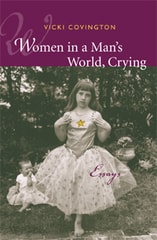
Women in a Man's World, Crying
EssaysVicki Covington
University of Alabama Press, 2002
This thoughtful, engaging collection examines resilience, identity, and inequality in the modern workplace produced by one of the nation's most observant and incisive writers.
This collection of warm, heartfelt essays from award-winning novelist Vicki Covington chronicles the multitude of "in between" moments in the writer's life. These are her stolen moments in between the writing of four novels-Gathering Home, Bird of Paradise, Night Ride Home, and The Last Hotel for Women; in between coauthoring the edgy memoir Cleaving: The Story of a Marriage with her husband Dennis Covington; in between raising two daughters; in between her husband's struggle with cancer and the author's own heart attack; in between a life full of trials and triumphs, disappointments and celebrations - moments that, as Covington demonstrates here, are always rich and revealing.
In the title essay, the author questions why all seven middle-class women who live on her street confess at a neighborhood cookout that in the past 48 hours each of them has cried. In "A Southern Thanksgiving," Covington reflects on the "family dance" that is Thanksgiving in the South: "In the North they put their crazy family members in institutions, but in the South we put them in the living room for everyone to enjoy." In "My Mother's Brain," the author recounts the onset of Alzheimer's in her mother and how, with the spread of the disease, an untapped vein of love is revealed.
Some of these essays were written as weekly newspaper columns for the Birmingham News. Others were written for specific literary occasions, such as the First Annual Eudora Welty Symposium. They are divided into six thematic sections: "Girls and Women," "Neighborhood," "Death," "The South," "Spiritual Matters," and “Writing.”
Throughout, as Covington casts her candid, attentive eye on a situation, confusion yields to comprehension, fear flourishes into faith, and anger flows into understanding. In memorializing the small moments of her life, she finds that they are far from peripheral; indeed, they are central to a life full of value and meaning.
Women's Professional Lives in Rhetoric and Composition
Choice, Chance, and SerendipityEdited by Elizabeth A. Flynn and Tiffany Bourelle
The Ohio State University Press, 2018
This collection, edited by Elizabeth A. Flynn and Tiffany Bourelle, contributes to the valuable work of chronicling the professional and personal lives of women in academia. Through its line-up of contributors from diverse backgrounds, locations, and career paths, Women’s Professional Lives in Rhetoric and Composition showcases the voices of multiple scholars occupying a multitude of different roles in the profession: from prestigious professors emeritae and endowed chairs to assistant professors starting their careers to an independent scholar to part-time faculty.
The collection sets itself apart from other volumes not just in its diversity of perspectives but also by speaking against linear stories of success in the profession—sharing moments of shame and failure, showing how the personal and professional often intertwine and influence one another, and ultimately revealing how choice, chance, serendipity, and kairos have all played a role in the lives of its contributors. In focusing on this convergence, Women’s Professional Lives in Rhetoric and Composition offers a more nuanced picture of the professional and intellectual trajectories of women in rhetoric and composition.
Women, Autobiography, Theory
A ReaderEdited by Sidonie A. Smith and Julia Watson
University of Wisconsin Press, 1998
Women, Autobiography, Theory is the first comprehensive guide to the burgeoning field of women’s autobiography, drawing into one volume the most significant theoretical discussions on women’s life writing of the last two decades.
The authoritative introduction by Sidonie Smith and Julia Watson surveys writing about women’s lives from the women’s movement of the late 1960s to the present. It also relates theoretical positions in women’s autobiography studies to postmodern, poststructuralist, postcolonial, and feminist analyses.
The essays from thirty-nine prominent critics and writers include many considered classics in this field. They explore narratives across the centuries and from around the globe, including testimonios, diaries, memoirs, letters, trauma accounts, prison narratives, coming-out stories, coming-of-age stories, and spiritual autobiographies. A list of more than two hundred women’s autobiographies and a comprehensive bibliography of critical scholarship in women’s autobiography provide invaluable information for scholars, teachers, and readers.
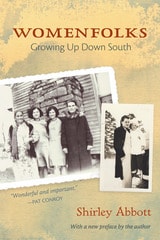
Womenfolks
Growing Up Down SouthShirley Abbott
University of Arkansas Press, 2017
Woodrow Wilson
USABrian Morton
Haus Publishing, 2008
Woody Guthrie, American Radical
Will Kaufman
University of Illinois Press, 2011
Woody on Rye
Jewishness in the Films and Plays of Woody AllenEdited by Vincent Brook and Marat Grinberg
Brandeis University Press, 2013
Word Warrior
Richard Durham, Radio, and FreedomSonja D. Williams
University of Illinois Press, 2015
In Word Warrior, award-winning radio producer Sonja D. Williams draws on archives and hard-to-access family records, as well as interviews with family and colleagues like Studs Terkel and Toni Morrison, to illuminate Durham's astounding career. Durham paved the way for black journalists as a dramatist and a star investigative reporter and editor for the pioneering black newspapers the Chicago Defender and Muhammed Speaks. Talented and versatile, he also created the acclaimed radio series Destination Freedom and Here Comes Tomorrow and wrote for popular radio fare like The Lone Ranger. Incredibly, his energies extended still further--to community and labor organizing, advising Chicago mayoral hopeful Harold Washington, and mentoring generations of activists.
Incisive and in-depth, Word Warrior tells the story of a tireless champion of African American freedom, equality, and justice during an epoch that forever changed a nation.
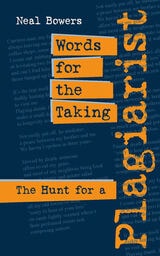
Words for the Taking
The Hunt for a PlagiaristNeal Bowers
Southern Illinois University Press, 2007
In January 1992, poet Neal Bowers received a phone call that changed his life. He learned his poems had been stolen and published under another name. Bowers hired a copyright lawyer and a private detective, and they began the agonizing hunt to track down the person who stole his creative work.
Bowers was dealing with more than the theft of words. He uncovered the plagiarist’s unsavory past when he found convicted child molester David Jones, who published the poems using the name David Sumner.
Determined to hold the plagiarist accountable, Bowers is drawn into a bizarre game of catch-me-if-you-can. His odyssey introduces him to the legal system and a sympathetic female detective, reveals the reactions of fellow poets, and provokes a flood of nationwide publicity and a deluge of letters from strangers interested in the case. Letters from Bowers’s attorney to Jones and phone conversations between the two produce unsatisfactory results. In the end, the plagiarist is not punished, and Bowers deals with the loss of friends, derision from his colleagues, and trouble in his marriage.
Words for the Taking: The Hunt for a Plagiarist, first published in 1997, is as much a commentary on our cultural view of plagiarism as it is a real-life detective story. Bowers’s wry and disturbing account of being the victim of a serial plagiarist offers unexpected twists and startling revelations. This updated edition presents a final consideration of the bizarre case and remains the only book to offer a personal account of the effects of plagiarism.
Ten years after the original publication, Neal Bowers finds his life as a writer altered in ways he could never have foreseen. His responses to the series of events show his vulnerability as an artist and his adjustment to being a victim. In a new chapter, Bowers describes his renewed quest in 2006 for a resolution and explains why he chose to give up writing poetry.
This beautifully written case study about the discovery and attempted resolution of an intellectual crime will appeal to academicians and general readers alike who care about language, the state of poetry, and intellectual property in contemporary America.
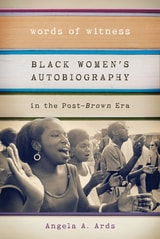
Words of Witness
Black Women's Autobiography in the Post-<i>Brown</i> EraAngela A. Ards
University of Wisconsin Press, 2015
Exploring works by the critically acclaimed June Jordan and Edwidge Danticat, as well as by popular and emerging authors such as Melba Beals, Rosemary Bray, and Eisa Davis, Ards demonstrates how each text asserts countermemories to official—and often nostalgic—understandings of the civil rights and Black Power movements. She situates each writer as activist-citizen, adopting and remaking particular roles—warrior, “the least of these,” immigrant, hip-hop head—to crystallize a range of black feminist responses to urgent but unresolved political issues.
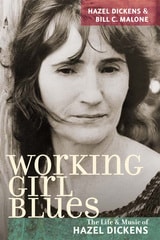
Working Girl Blues
The Life and Music of Hazel DickensHazel Dickens and Bill C. Malone
University of Illinois Press, 2007
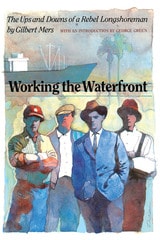
Working the Waterfront
The Ups and Downs of a Rebel LongshoremanBy Gilbert Mers
University of Texas Press, 1988
"Somebody said, 'History is written by the winners. The losers have nothing to say.' This book is by one of the losers, a bit player, not the star of the drama." So begins Gilbert Mers in these personal recollections of forty-two years on the Texas waterfront as longshoreman and radical union activist. But far from having "nothing to say," Mers reveals himself as a thoughtful philosopher of democratic ideals and eloquent agitator for union reform. He challenges the conventional wisdom that the leader is more valuable than the led. He contends that long tenure in positions of power dulls the union officer's working-class instincts. Always one to row against the current, Mers believes the union exists for the benefit of its members!
This is primary material of the best kind, vivid and evocative, and Mers, in his eighties at the time of writing the book, is an unusually vigorous and articulate spokesman for a democratic and humane unionism.
Whether he is describing the sweaty, dangerous and back-breaking work of loading cotton bales into the hold of an outbound ship or the gut-gripping tension of a face-to-face encounter with Texas Rangers bent on "law and order," Mers writes with the voice and conscience of the rank-and-file worker. He paints the waterfront world as it was, and perhaps still is—full of danger, humor, dignity in demoralizing circumstances, frustration, struggle, and sometimes hope—and tells his story with such wry humanity that even those who disagree with his destination will enjoy the ride.
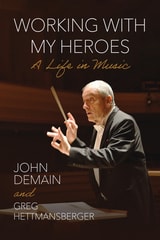
Working with My Heroes
A Life in MusicJohn L. DeMain and Greg Hettmansberger
University of Wisconsin Press, 2026
A Grammy and Tony Award–winning conductor, John DeMain has been a fixture of Madison, Wisconsin, for more than three decades, serving as music director of the Madison Symphony Orchestra and artistic director of the Madison Opera. Before and since then, he has been an internationally recognized conductor, equally at home in the worlds of classical music, opera, and Broadway.
In Working with My Heroes, written with the late Greg Hettmansberger, DeMain recounts incredible experiences—from his days studying piano in Youngstown, Ohio, to his years as an undergraduate and graduate student at Julliard, to his early jobs in summer stock productions, to numerous acclaimed productions—without ever losing sight of the wonder and awe he felt as a young musician first learning his way in the world. With warmth and humor, he provides valuable insight into the business of music making, while also sharing behind-the-scenes stories of entertaining situations he found himself in throughout the years—from playing piano at a gangster’s wedding to an unexpected dressing room encounter with a Broadway star to conducting an opera with circus elephants.
DeMain has had many career-defining moments behind the podium, conducting world premieres of Leonard Bernstein’s A Quiet Place, John Adams’s Nixon in China, and Jeanine Tesoro’s Blue, as well as the U.S. premiere of Philip Glass’s Akhnaten, among others. He guest-conducted symphonies and operas in New York, Chicago, Los Angeles, and elsewhere. DeMain cemented his reputation with the 1976 Houston Grand Opera performances of George and Ira Gershwin’s Porgy and Bess, establishing its stature as a quintessentially American opera. The singers, musicians, and composers DeMain has worked with over the past six decades are a veritable Who’s Who of American classical music. This memoir places readers by his side, allowing them to experience all the wonders and joy of a life spent making music.
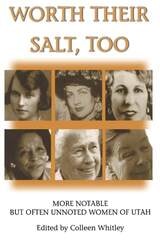
Worth Their Salt Too
More Notable But Often Unnoted Women of UtahColleen Whitley
Utah State University Press, 2000
Worthy
A MemoirDenice Turner
University of Nevada Press, 2015
The story unfolds as Turner confronts a history that includes a Greek grandfather whose up-from-the-bootstraps legacy refuses to die, the ghosts of two suicidal uncles, and a Mormon shrink who claims to see her dead relatives. In the end, this is a memoir not just about loss, but about all of the fragile human bonds that are broken in pursuit of perfection.
Wry and extraordinarily candid, Worthy will appeal to readers interested in the dynamics of family heritage, Mormon doctrine, and the subtle corrosive costs of shame.
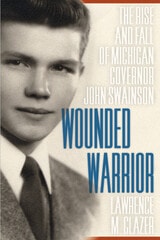
Wounded Warrior
The Rise and Fall of Michigan Governor John SwainsonLawrence M. Glazer
Michigan State University Press, 2010
Few people today remember John Swainson. As a teenage soldier he lost both legs in a WWII landmine explosion. Back in the United States, following a meteoric political rise in the Michigan State Senate, Swainson was elected as Michigan's youngest governor since Stevens T. Mason.
In 1970 Swainson was elected to the Michigan Supreme Court, becoming one of the few public officials to have served in the legislative, executive, and judicial branches of state government. Then, in 1957, he was indicted on federal charges of bribery and perjury, and convicted of lying to a federal grand jury. Forced to leave the state Supreme Court and disbarred from practicing law, he became a pariah, sinking into depression and alcoholism. He virtually disappeared from public view.
Lawrence M. Glazer re-examines the FBI's investigation of Swainson and delves into his 1975 trial in detail. He reveals new information from eye-witnesses who never testified and, in a poignant coda, relates the little-known story of Swainson's rehabilitation and return to public life as a historian.
Wright Morris - American Writers 69
University of Minnesota Pamphlets on American WritersLeon Howard
University of Minnesota Press, 1968
Wright Morris - American Writers 69 was first published in 1968. Minnesota Archive Editions uses digital technology to make long-unavailable books once again accessible, and are published unaltered from the original University of Minnesota Press editions.
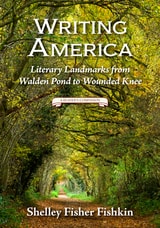
Writing America
Literary Landmarks from Walden Pond to Wounded Knee (A Reader's Companion)Fishkin, Shelley Fisher
Rutgers University Press, 2015
American novelist E.L. Doctorow once observed that literature “endows places with meaning.” Yet, as this wide-ranging new book vividly illustrates, understanding the places that shaped American writers’ lives and their art can provide deep insight into what makes their literature truly meaningful.
Published on the eve of the 50th anniversary of the Historic Preservation Act, Writing America is a unique, passionate, and eclectic series of meditations on literature and history, covering over 150 important National Register historic sites, all pivotal to the stories that make up America, from chapels to battlefields; from plantations to immigration stations; and from theaters to internment camps. The book considers not only the traditional sites for literary tourism, such as Mark Twain’s sumptuous Connecticut home and the peaceful woods surrounding Walden Pond, but also locations that highlight the diversity of American literature, from the New York tenements that spawned Abraham Cahan’s fiction to the Texas pump house that irrigated the fields in which the farm workers central to Gloria Anzaldúa’s poetry picked produce. Rather than just providing a cursory overview of these authors’ achievements, acclaimed literary scholar and cultural historian Shelley Fisher Fishkin offers a deep and personal reflection on how key sites bore witness to the struggles of American writers and inspired their dreams. She probes the global impact of American writers’ innovative art and also examines the distinctive contributions to American culture by American writers who wrote in languages other than English, including Yiddish, Chinese, and Spanish.
Only a scholar with as wide-ranging interests as Shelley Fisher Fishkin would dare to bring together in one book writers as diverse as Gloria Anzaldúa, Nicholas Black Elk, David Bradley, Abraham Cahan, S. Alice Callahan, Raymond Chandler, Frank Chin, Elizabeth Cook-Lynn, Countee Cullen, Frederick Douglass, Paul Laurence Dunbar, Jessie Fauset, William Faulkner, F. Scott Fitzgerald, Allen Ginsberg, Jovita González, Rolando Hinojosa, Langston Hughes, Zora Neale Hurston, Lawson Fusao Inada, James Weldon Johnson, Erica Jong, Maxine Hong Kingston, Irena Klepfisz, Nella Larsen, Emma Lazarus, Sinclair Lewis, Genny Lim, Claude McKay, Herman Melville, N. Scott Momaday, William Northup, John Okada, Miné Okubo, Simon Ortiz, Américo Paredes, John P. Parker, Ann Petry, Tomás Rivera, Wendy Rose, Morris Rosenfeld, John Steinbeck, Harriet Beecher Stowe, Henry David Thoreau, Mark Twain, Yoshiko Uchida, Tino Villanueva, Nathanael West, Walt Whitman, Richard Wright, Hisaye Yamamoto, Anzia Yezierska, and Zitkala-Ša.
Leading readers on an enticing journey across the borders of physical places and imaginative terrains, the book includes over 60 images, and extended excerpts from a variety of literary works. Each chapter ends with resources for further exploration. Writing America reveals the alchemy though which American writers have transformed the world around them into art, changing their world and ours in the process.
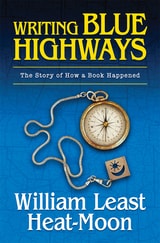
Writing BLUE HIGHWAYS
The Story of How a Book HappenedWillliam Least Heat-Moon
University of Missouri Press, 2023
Winner, Distinguished Literary Achievement, Missouri Humanities Council, 2015
The story behind the writing of the best-selling Blue Highways is as fascinating as the epic trip itself. More than thirty years after his 14,000-mile, 38-state journey, William Least Heat-Moon reflects on the four years he spent capturing the lessons of the road trip on paper—the stops and starts in his composition process, the numerous drafts and painstaking revisions, the depressing string of rejections by publishers, the strains on his personal relationships, and many other aspects of the toil that went into writing his first book. Along the way, he traces the hard lessons learned and offers guidance to aspiring and experienced writers alike. Far from being a technical manual, Writing Blue Highways: The Story of How a Book Happenedis an adventure story of its own, a journey of “exploration into the myriad routes of heart and mind that led to the making of a book from the first sorry and now vanished paragraph to the last words that came not from a graphite pencil but from a letterpress in Tennessee.”
Readers will not find a collection of abstract formulations and rules for writing; rather, this book gracefully incorporates examples from Heat-Moon’s own experience. As he explains, “This story might be termed an inadvertent autobiography written not by the traveler who took Ghost Dancing in 1978 over the byroads of America but by a man only listening to him. That blue-roadman hasn’t been seen in more than a third of a century, and over the last many weeks as I sketched in these pages, I’ve regretted his inevitable departure.” Filtered as the struggles of the “blue-roadman” are through the awareness of someone more than thirty years older with a half dozen subsequent books to his credit, the story of how his first book “happened” is all the more resonant for readers who may not themselves be writers but who are interested in the tricky balance of intuitive creation and self-discipline required for any artistic endeavor.
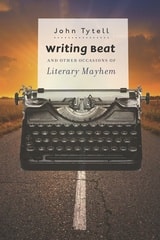
Writing Beat and Other Occasions of Literary Mayhem
John Tytell
Vanderbilt University Press, 2014
Approaching the history of post-war twentieth century American literature, and in particular the Beat literary movement of Kerouac, Ginsberg, Burroughs, and others, Tytell finds himself uniquely positioned as an eyewitness to many of these stories. In this book, he shares his insight with the reader. As he interviewed, drank, traveled, and survived countless moments with some of these literary legends, Tytell discovered much about the craft of nonfiction, biography, and the nature of history. Writing Beat demonstrates, through Tytell's growth as a professor and historian of the Beats, lessons learned and hazards encountered for those aspiring to become writers themselves.
As we approach the sixtieth anniversary of Allen Ginsberg's Howl, Writing Beat reminds us writers do not spring to life fully formed, and the struggle to get to literature can be a blast.
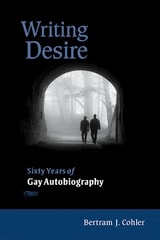
Writing Desire
Sixty Years of Gay AutobiographyBertram J. Cohler
University of Wisconsin Press, 2007
By contrasting the personal experience of these disparate writers, Cohler illustrates the social transformations that these men helped shape. Among Cohler's diverse subjects is Alan Helms, whose journey from Indiana to New York's gay society represents the passage of men who came of age in the 1950s and 1960s, when homosexuality was considered a hidden "disease." The liberating effects of Stonewall's aftermath are chronicled in the life of Arnie Kantrowitz, the prototypical activist for gay rights in the 1970s and the founder the Gay and Lesbian Alliance against Defamation. The artistic works of Tim Miller and Mark Doty evoke loss and shock during of the early stages of the AIDS epidemic in the 1980s. Cohler rounds out this collective group portrait by looking at the newest generation of writers in the Internet age via the blog of BrYaN, who did the previously unthinkable: he "outed" himself to millions of people.
A compelling mix of social history and personal biography, Writing Desire distills the experience of three generations of gay America.
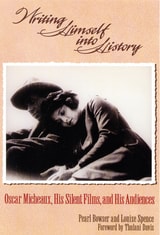
Writing Himself Into History
Oscar Micheaux, His Silent Films, and His AudiencesBowser, Pearl
Rutgers University Press, 2000
Winner of the 2001 Kraszna-Krausz Moving Image Book Awards | Winner of the Theatre Library Association Award
Writing Himself Into History is an eagerly anticipated analysis of the career and artistry surrounding the legendary Black filmmaker Oscar Micheaux. With the exception of Spike Lee, Micheaux is the most famous—and prolific—African American film director. Between 1918 and 1948 he made more than 40 “race pictures,” movies made for and about African Americans. A man of immense creativity, he also wrote seven novels.
Pearl Bowser and Louise Spence concentrate here on the first decade of Micheaux’s career, when Micheaux produced and directed more than twenty silent features and built a reputation as a controversial and maverick entrepreneur. Placing his work firmly within his social and cultural milieu, they also examine Micheaeux’s family and life. The authors provide a close textual analysis of his surviving films (including The Symbol of the Unconquered, Within Our Gates, and Body and Soul), and highlight the rivalry between studios, dilemmas of assimilation versus separatism, gender issues, and class. In Search of Oscar Micheaux also analyzes Micheaux’s career as a novelist in relation to his work as a filmmaker.
This is a much-awaited book that is especially timely as interest in Micheaux’s work increases.
Writing Home
A Literacy AutobiographyEli Goldblatt
Southern Illinois University Press, 2012
Writing Home
A Quaker Immigrant on the Ohio Frontier; the Letters of Emma Botham AldersonDonald Ingram Ulin
Bucknell University Press, 2020
Introductions and notes situate the letters in relation to their critical, biographical, literary, and historical contexts. Editor Donald Ulin discusses the relationship between Alderson’s letters and her sister Mary Howitt’s Our Cousins in Ohio (1849), a remarkable instance of transatlantic literary collaboration.
Writing Home offers an unparalleled opportunity for studying immigrant correspondence due to Alderson’s unusually well-documented literary and religious affiliations. The notes and introductions provide background on nearly all the places, individuals, and events mentioned in the letters.
Published by Bucknell University Press. Distributed worldwide by Rutgers University Press.
Writing Mormon History 2
Authors' Stories Behind Their WorksGeisner, Joseph W.
Signature Books, 2024
Like its predecessor, Writing Mormon History, this book delves into the captivating narratives of multiple historians as they unfold the backstories of their various publishing endeavors. The authors detail their journeys in crafting influential books, articles, newspaper pieces, and anthologies that have significantly shaped our comprehension of Mormon history. Beyond the polished final products that readers typically encounter, the book explores the driving forces compelling authors to explore their topics and the sacrifices they make along the way.
The volume invites readers to ponder the motivations that fuel an author’s commitment to rigorous research and writing, and sheds light on the substantial time, ranging from minutes to long hours, invested in the sources they cite. Through these narratives, readers gain an appreciation for the dedication and passion that goes into the making of historical scholarship.
Whether you're an avid historian, a student of history, a scholar, or an aspiring author, Writing Mormon History 2 offers an important glimpse into the minds of these writers. This anthology provides a unique opportunity to connect with the human stories behind the academic works that have left an indelible mark on our understanding of Mormon history.
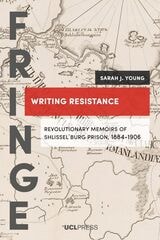
Writing Resistance
Revolutionary Memoirs of Shlissel´burg Prison, 1884-1906Sarah J. Young
University College London, 2021
In 1884, sixty-eight prisoners convicted of terrorism and revolutionary activity were transferred to a new maximum-security prison at Shlissel´burg Fortress near St. Petersburg. Inhuman conditions in the prison caused severe mental and physical deterioration among the prisoners, and over half died. However, the survivors fought back to reform the prison and improve the inmates’ living conditions. Their memoirs enshrined their experience in revolutionary mythology and served as an indictment of the Tsarist autocracy’s loss of moral authority. This book features three of these memoirs—translated into English for the first time—as well as an introductory essay that analyzes the memoirs’ construction of a collective narrative of resilience, resistance, and renewal. The first extended study of these memoirs in English, this book uncovers an important episode in the history of political imprisonment. It will be of interest to scholars and students of the Russian revolution, carceral history, penal practice and behaviors, and prison and life writing.
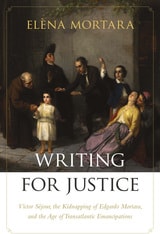
Writing for Justice
Victor Séjour, the Kidnapping of Edgardo Mortara, and the Age of Transatlantic EmancipationsElèna Mortara
Dartmouth College Press, 2015