Results by title
22279 books match the query 'Social Science' and 963 start with w
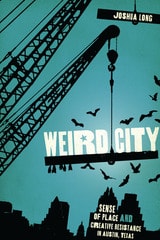
Weird City
Sense of Place and Creative Resistance in Austin, TexasBy Joshua Long
University of Texas Press, 2010
Austin, Texas, at the beginning of the twenty-first century, is experiencing one of the most dynamic periods in its history. Wedged between homogenizing growth and a long tradition of rebellious nonconformity, many Austinites feel that they are in the midst of a battle for the city's soul.
From this struggle, a movement has emerged as a form of resistance to the rapid urban transformation brought about in recent years: "Keep Austin Weird" originated in 2000 as a grassroots expression of place attachment and anti-commercialization. Its popularity has led to its use as a rallying cry for local business, as a rhetorical tool by city governance, and now as the unofficial civic motto for a city experiencing rapid growth and transformation.
By using "Keep Austin Weird" as a central focus, Joshua Long explores the links between sense of place, consumption patterns, sustainable development, and urban politics in Austin. Research on this phenomenon considers the strong influence of the "Creative Class" thesis on Smart Growth strategies, gentrification, income inequality, and social polarization made popular by the works of Richard Florida. This study is highly applicable to several emerging "Creative Cities," but holds special significance for the city considered the greatest creative success story, Austin.
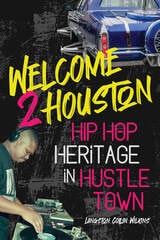
Welcome 2 Houston
Hip Hop Heritage in Hustle TownLangston Collin Wilkins
University of Illinois Press, 2023
A vivid journey through a southern hip hop bastion, Welcome 2 Houston offers readers an inside look at a unique musical culture.

Welcome Home, Boys!
Military Victory Parades in New York City 1899-1946Sebastian Jobs
Campus Verlag, 2012
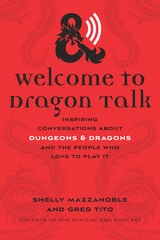
Welcome to Dragon Talk
Inspiring Conversations about Dungeons & Dragons and the People Who Love to Play ItShelly Mazzanoble
University of Iowa Press, 2022
Shelly and Greg recount some of their most inspiring interviews and illuminate how their guests use the core tenets of the game in everyday life. An A-list actor defends D&D by baring his soul (and his muscles) on social media. A teacher in a disadvantaged district in Houston creates a D&D club that motivates students to want to read and think analytically. A writer and live-streamer demonstrates how D&D–inspired communication breaks barriers and empowers people of color. Readers will see why Dungeons & Dragons has remained such a pop culture phenomenon and how it has given this disparate and growing community the inspiration to flourish and spread some in-game magic into the real world.
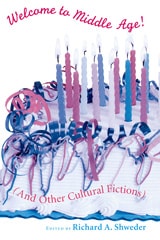
Welcome to Middle Age!
(And Other Cultural Fictions)Edited by Richard A. Shweder
University of Chicago Press, 1998
In this volume, anthropologists, behavioral scientists, and historians explore topics ranging from the Western ideology of "midlife decline" to cultural representations of mature adulthood that operate without the category of middle age. The result is a fascinating, panoramic collection that explores the myths surrounding and the representations of mature adulthood and of those years in the life span from thirty to seventy.
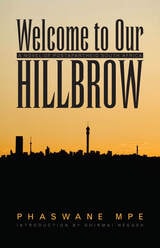
Welcome to Our Hillbrow
A Novel of Postapartheid South AfricaPhaswane Mpe
Ohio University Press, 2011
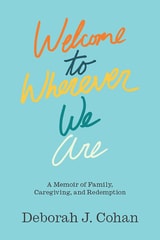
Welcome to Wherever We Are
A Memoir of Family, Caregiving, and RedemptionDeborah J. Cohan
Rutgers University Press, 2020
ESS Public Sociology Award
Recommended Book in Domestic Violence by DomesticShelters.org
How do you go about caregiving for an ill and elderly parent with a lifelong history of abuse and control, intertwined with expressions of intense love and adoration? How do you reconcile the resulting ambivalence, fear, and anger?
Welcome to Wherever We Are is a meditation on what we hold onto, what we let go of, how we remember others and ultimately how we’re remembered. Deborah Cohan shares her story of caring for her father, a man who was simultaneously loud, gentle, loving and cruel and whose brilliant career as an advertising executive included creating slogans like “Hey, how ‘bout a nice Hawaiian punch?” Wrestling with emotional extremes that characterize abusive relationships, Cohan shows how she navigated life with a man who was at once generous and affectionate, creating magical coat pockets filled with chocolate kisses when she was a little girl, yet who was also prone to searing, vicious remarks like “You’d make my life easier if you’d commit suicide.”
In this gripping memoir, Cohan tells her unique personal story while also weaving in her expertise as a sociologist and domestic abuse counselor to address broader questions related to marriage, violence, divorce, only children, intimacy and loss. A story most of us can relate to as we reckon with past and future choices against the backdrop of complicated family dynamics, Welcome to Wherever We Are is about how we might come to live our own lives better amidst unpredictable changes through grief and healing.
Questions for Discussion (https://d3tto5i5w9ogdd.cloudfront.net/wp-content/uploads/2020/05/11140346/Cohan_Discussion.docx)
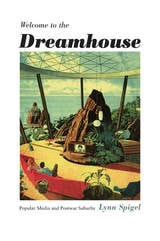
Welcome to the Dreamhouse
Popular Media and Postwar SuburbsLynn Spigel
Duke University Press, 2001
The volume considers not only how the media portrayed suburban family life, but also how both middle-class ideals and a perceived division between private and public worlds helped to shape the visual forms, storytelling practices, and reception of postwar media and consumer culture. Spigel also explores those aspects of suburban culture that media typically render invisible. She looks at the often unspoken assumptions about class, nation, ethnicity, race, and sexual orientation that underscored both media images (like those of 1960s space missions) and social policies of the mass-produced suburb. Issues of memory and nostalgia are central in the final section as Spigel considers how contemporary girls use television reruns as a source for women’s history and then analyzes the current nostalgia for baby boom era family ideals that runs through contemporary images of new household media technologies.
Containing some of Spigel’s well-known essays on television’s cultural history as well as new essays on a range of topics dealing with popular visual culture, Welcome to the Dreamhouse is important reading for students and scholars of media and communications studies, popular culture, American studies, women’s studies, and sociology.
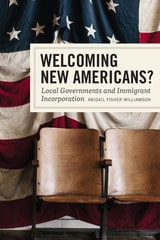
Welcoming New Americans?
Local Governments and Immigrant IncorporationAbigail Fisher Williamson
University of Chicago Press, 2018
Abigail Fisher Williamson explores why and how local governments across the country are taking steps to accommodate immigrants, sometimes despite serious political opposition. Drawing on case studies of four new immigrant destinations—Lewiston, Maine; Wausau, Wisconsin; Elgin, Illinois; and Yakima, Washington—as well as a national survey of local government officials, she finds that local capacity and immigrant visibility influence whether local governments take action to respond to immigrants. State and federal policies and national political rhetoric shape officials’ framing of immigrants, thereby influencing how municipalities respond. Despite the devolution of federal immigration enforcement and the increasingly polarized national debate, local officials face on balance distinct legal and economic incentives to welcome immigrants that the public does not necessarily share. Officials’ efforts to promote incorporation can therefore result in backlash unless they carefully attend to both aiding immigrants and increasing public acceptance. Bringing her findings into the present, Williamson takes up the question of whether the current trend toward accommodation will continue given Trump’s anti-immigrant rhetoric and changes in federal immigration policy.
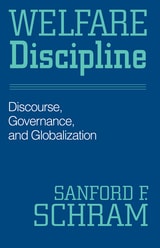
Welfare Discipline
Discourse, Governance and GlobalizationSanford F. Schram
Temple University Press, 2005
In Welfare Discipline, Schram argues that it is time to take stock of the new forms of welfare and to develop even better methods to understand them. He argues for a more contextualized approach to examining welfare policy, from the use of the idea of globalization to justify cutbacks, to the increasing employment of U.S. policy discourse overseas, to the development of asset-based approaches to helping the poor.
Stressing the importance of understanding the ways we talk about welfare, how we study it, and, critically, what we do not discuss and why, Schram offers recommendations for making welfare policy both just and effective.
Welfare Reform and Political Theory
Lawrence M. Mead
Russell Sage Foundation, 2005
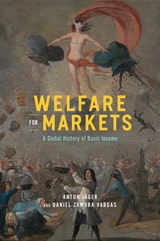
Welfare for Markets
A Global History of Basic IncomeAnton Jäger and Daniel Zamora Vargas
University of Chicago Press, 2023
A sweeping intellectual history of the welfare state’s policy-in-waiting.
The idea of a government paying its citizens to keep them out of poverty—now known as basic income—is hardly new. Often dated as far back as ancient Rome, basic income’s modern conception truly emerged in the late nineteenth century. Yet as one of today’s most controversial proposals, it draws supporters from across the political spectrum.
In this eye-opening work, Anton Jäger and Daniel Zamora Vargas trace basic income from its rise in American and British policy debates following periods of economic tumult to its modern relationship with technopopulist figures in Silicon Valley. They chronicle how the idea first arose in the United States and Europe as a market-friendly alternative to the postwar welfare state and how interest in the policy has grown in the wake of the 2008 credit crisis and COVID-19 crash.
An incisive, comprehensive history, Welfare for Markets tells the story of how a fringe idea conceived in economics seminars went global, revealing the most significant shift in political culture since the end of the Cold War.

Well-Being and Creative Careers
What Makes You Happy Can Also Make You SickMark Deuze
Intellect Books, 2025
The media and creative industries thrive on passion, but that passion often comes at a cost. Behind the glamour of journalism, filmmaking, games, music, advertising, and online content creation lies a growing crisis—one of burnout, anxiety, substance abuse, and exhaustion. Why do so many creative professionals report feeling both deeply fulfilled and profoundly unwell?
Mark Deuze investigates the systemic issues that make creative work both exhilarating and unsustainable. Drawing on extensive research and in-depth interviews with media professionals, he notes the hidden downsides of doing what you love and offers a candid analysis of how workplace structures, high workloads, and perceived injustices contribute to mental and physical distress.
But this book is not just about what’s broken; it’s about what can be done. Deuze provides a roadmap for rethinking the culture of creative industries and offers strategies for balancing passion with sustainability. A practical resource for media scholars and those navigating the highs and lows of a creative career, this work challenges us to imagine a healthier future for our labor of love.
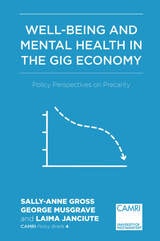
Well-Being and Mental Health in the Gig Economy
Policy Perspectives on PrecaritySally-Anne Gross, George Musgrave and Laima Janciute
University of Westminster Press, 2018
A response is needed to the numerous issues spurred by the expansion of the gig economy, where flexible patterns of employment prevail in contrast to permanent jobs. In this context of the exponential growth of the digital economy and underlying business models the largest nationwide study of its kind into the impact of the working conditions in the UK music industry ‘Can Music Make You Sick?’ has been conducted by MusicTank/University of Westminster.
This research suggests the need to consider the future of work not only from an economic or employment law perspective but from a mental health one too. What are the psychological implications of precarious work and how are factors such as financial instability, the feedback economy and personal relationships reflected in mental health outcomes or connected to the business relationships most musicians and other gig economy participants work under?
Authors Sally-Anne Gross, George Musgrave and Laima Janciute consider which policy measures may help or harm gig economy workers including the taxation of self-employed workers, a universal basic income, education around mental health issues and access to mental health support.
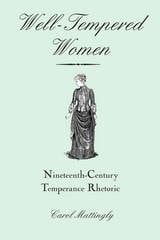
Well-Tempered Women
Nineteenth-Century Temperance RhetoricCarol Mattingly
Southern Illinois University Press, 2000
In this richly illustrated study, Carol Mattingly examines the rhetoric of the temperance movement, the largest political movement of women in the nineteenth century.
Tapping previously unexplored sources, Mattingly uncovers new voices and different perspectives, thus greatly expanding our knowledge of temperance women in particular and of nineteenth-century women and women's rhetoric in general. Her scope is broad: she looks at temperance fiction, newspaper accounts of meetings and speeches, autobiographical and biographical accounts, and minutes of national and state temperance meetings.
The women's temperance movement was first and foremost an effort by women to improve the lives of women. Twentieth-centuty scholars often dismiss temperance women as conservative and complicit in their own oppression. As Mattingly demonstrate, however, the opposite is true: temperance women made purposeful rhetorical choices in their efforts to improve the lives of women. They carefully considered the life circumstances of all women and sought to raise consciousness and achieve reform in an effective manner. And they were effective, gaining legal, political, and social improvements for women as they became the most influential and most successful group of women reformers in the nineteenth and early twentieth centuries.
Mattingly finds that, for a large number of women who were unhappy with their status in the nineteenth century, the temperance movement provided an avenue for change. Examining the choices these women made in their efforts to better conditions for women, Mattingly looks first at oral rhetoric among nineteenth-century temperance women. She examines the early temperance speeches of activists like Susan B. Anthony and Elizabeth Cady Stanton, who later chose to concentrate their effort in the suffrage organizations, and those who continued to work on behalf of women primarily through the temperance topic, such as Amelia Bloomer and Clarina Howard Nichols. Finally, she examines the rhetoric of members of the Woman’s Christian Temperance Union—the largest organization of women in the nineteenth century.
Mattingly then turns to the rhetoric from perspectives outside those of mainstream, middle-class women. She focuses on racial conflicts and alliances as an increasingly diverse membership threatened the unity and harmony in the WCTU. Her primary source for this discussion is contemporary newspaper accounts of temperance speeches.
Fiction by temperance writers also proves to be a fertile source for Mattingly's investigation. Insisting on greater equality between men and women, this fiction candidly portrayed injustice toward women. Through the temperance issue, Mattingly discovers, women could broach otherwise clandestine topics openly. She also finds that many of the concerns of nineteenth-century temperance women are remarkably similar to concerns of today’s feminists.
Wellbeing Economics
How and Why Economics Needs to ChangeNicky Pouw
Amsterdam University Press, 2020
In 'Wellbeing Economics' Nicky Pouw puts forward a new framework that places human wellbeing at the centre, instead of economic growth. She postulates ten reasons why economics should change to remain a relevant discipline and develops a Wellbeing Economic Matrix (WEM) to implement this approach. In doing so, it is one of the first economics books that 'rethinks the economy' from head to tail.
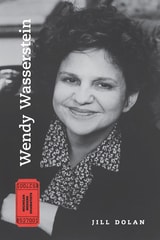
Wendy Wasserstein
Jill Dolan
University of Michigan Press, 2017
Wendy Wasserstein provides a critical introduction and a feminist reappraisal of the significant plays of one of the most famous contemporary American women playwrights. Following a biographical introduction, chapters address each of her important plays, situating Wasserstein’s work in the history of the US feminist movement and in a historical moment in which women artists continue to struggle for recognition.
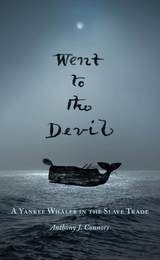
Went to the Devil
A Yankee Whaler in the Slave TradeAnthony J. Connors
University of Massachusetts Press, 2019
In this riveting biography, Anthony J. Connors explores this question by detailing not only the troubled, adventurous life of this man but also the turbulent times in which he lived. Set in an era of social and political fragmentation and impending civil war, when changes in maritime law and the economics of whaling emboldened slaving agents to target captains and their vessels for the illicit trade, Davoll's story reveals the deadly combination of greed and racial antipathy that encouraged otherwise principled Americans to participate in the African slave trade.
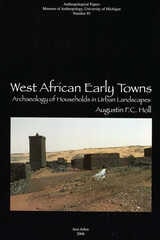
West African Early Towns
Archaeology of Households in Urban LandscapesAugustin F. C. Holl
University of Michigan Press, 2006

West Germany under Construction
Politics, Society, and Culture in the Adenauer EraRobert G. Moeller, Editor
University of Michigan Press, 1997
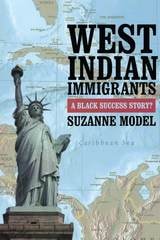
West Indian Immigrants
A Black Success Story?Suzanne Model
Russell Sage Foundation, 2008
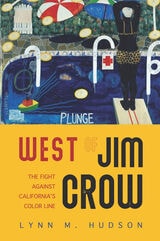
West of Jim Crow
The Fight against California's Color LineLynn M. Hudson
University of Illinois Press, 2020
Lynn M. Hudson deepens our understanding of the practices that African Americans in the West deployed to dismantle Jim Crow in the quest for civil rights prior to the 1960s. Faced with institutionalized racism, black Californians used both established and improvised tactics to resist and survive the state's color line. Hudson rediscovers forgotten stories like the experimental all-black community of Allensworth, the California Ku Klux Klan's campaign of terror against African Americans, the bitter struggle to integrate public swimming pools in Pasadena and elsewhere, and segregationists' preoccupation with gender and sexuality.
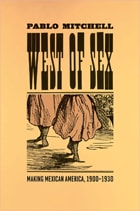
West of Sex
Making Mexican America, 1900-1930Pablo Mitchell
University of Chicago Press, 2012
Sex can be an oppressive force, a tool to shame, divide, and control a population. But it can also be a force for change, for the legal and physical challenge of inequity and injustice. In West of Sex, Pablo Mitchell uses court transcripts and criminal cases to provide the first coherent picture of Mexican-American sexuality at the turn of the twentieth century, and a truly revelatory look at sexual identity in the borderlands.
As Mexicans faced a rising tide of racial intolerance in the American West, some found cracks in the legal system that enabled them to assert their rights as full citizens, despite institutional hostility. In these chapters, Mitchell offers a rare glimpse into the inner workings of ethnicity and power in the United States, placing ordinary Mexican women and men at the center of the story of American sex, colonialism, and belonging.
Other chapters discuss topics like prostitution, same-sex intimacy, sexual violence, interracial romance, and marriage with an impressive level of detail and complexity. Written in vivid and accessible prose, West of Sex offers readers a new vision of sex and race in American history.
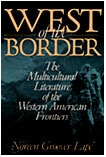
West of the Border
The Multicultural Literature of the Western American FrontiersNoreen Groover Lape
Ohio University Press, 2000
Expanding the scope of American borderland and frontier literary scholarship, West of the Border examines the writings of nineteenth- and turn-of-the-century Native, African, Asian, and Anglo American frontier writers. This book views frontiers as “human spaces” where cultures make contact as it considers multicultural frontier writers who speak from “west of the border.”
James P. Beckwourth, a half-black fur trader; Sarah Winnemucca Hopkins, a Paiute translator; Salishan author Mourning Dove; Cherokee novelist John Rollin Ridge; Sui Sin Far, an Anglo-Chinese short story writer, and her sister, romance novelist Onoto Watanna; and Mary Austin, a white southwestern writer- each of these intercultural writers faces a rite of passage into a new social order. Their writings negotiate their various frontier ordeals: the encroachment of pioneers on the land; reservation life; assimilation; Christianity; battles over territories and resources; exclusion; miscegenation laws; and the devastation of the environment.
In West of the Border, Noreen Groover Lape raises issues inherent in American pluralism today by broaching timely concerns about American frontier politics, conceptualizing frontiers as intercultural contact zones, and expanding the boundaries of frontier literary studies by giving voice to minority writers.
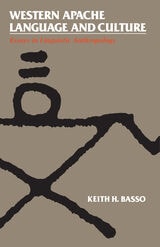
Western Apache Language and Culture
Essays in Linguistic AnthropologyKeith H. Basso
University of Arizona Press, 1990
CONTENTS
The Western Apache Classificatory Verb System: A Semantic Analysis
Semantic Aspects of Linguistic Acculturation
A Western Apache Writing System: The Symbols of Silas John
"Wise Words" of the Western Apache: Metaphor and Semantic Theory
"To Give Up on Words": Silence in Western Apache Culture
"Stalking With Stories": Names, Places, and Moral Narratives among the Western Apache
"Speaking with Names": Language and Landscapes among the Western Apache
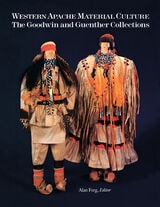
Western Apache Material Culture
The Goodwin and Guenther CollectionsAlan Ferg
University of Arizona Press, 1987
"This book will surely appeal not only to those who are interested in the Apache, material culture studies, or the potential of Native American museum resources as cultural and historical documents, but also to those who are concerned with the way humans adapted to the environment and thus 'utilized their world so well.'" —African Arts
"It is a remarkably beautiful and detailed catalog of the Goodwin and Guenther collections of Wester Apache artiffacts in the Arizona State Musuem—and a lot more! . . . A section of thirty-two color photographs by award-winning photographer Helga Teiwes is the delectable frosting on this rich and satisfying cake." —Journal of Arizona History
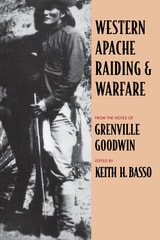
Western Apache Raiding and Warfare
From the Notes of Grenville Goodwin; Edited by Keith Basso
University of Arizona Press, 1971
Western Apache Witchcraft
Keith H. Basso
University of Arizona Press, 1969
Western Ceramic Traditions
Prehistoric and Historic Native American Ceramics of the Western U.S.Edited by Suzanne Griset
University of Utah Press, 2021
This volume is dedicated to studies of plainwares—the undecorated ceramics that make up the majority of prehistoric ceramic assemblages worldwide. Early analyses of ceramics focused on changes in decorative design elements to establish chronologies and cultural associations. With the development of archaeometric techniques that allow direct dating of potsherds and identification of their elemental composition and residues, plainwares now provide a new source of information about the timing, manufacture, distribution, and use of ceramics.
This book investigates plainwares from the far west, stretching into the Great Basin and the northwestern and southwestern edges of Arizona. Contributors use and explain recent analytical methods, including neutron activation, electron microprobe analysis, and thin-section optical mineralogy. They examine native ceramic traditions and how they were influenced by the Spanish mission system, and they consider the pros and cons of past approaches to ware typology, presenting a vision of how plainware analysis can be improved by ignoring the traditional “typological” approach of early ceramicists working with decorated wares.
This work provides a much-needed update to plainware studies, with new hypotheses and data that will help set the stage for future research.
Western Fictions, Black Realities
Meanings of Blackness and ModernitiesIsabel Soto
Michigan State University Press, 2012
This anthology interrogates two salient concepts in studying the black experience. Ushered in with the age of New World encounters, modernity emerged as brutal and complex, from its very definition to its manifestations. Equally challenging is blackness, which is forever dangling between the range of uplifting articulations and insidious degradation. The essays in Western Fictions address the conflicting confluences of these two terms. Questioning Eurocentric and mainstream American interpretations, they reveal the diverse meanings of modernities and blackness from a wide range of milieus of the black experience. Interdisciplinary and wide-ranging in thematic and epochal scope, they use theoretical and empirical studies of a range of subjects to demonstrate that, indeed, blackness is relevant for understanding modernities and vice versa.
Western Journeys
Teow Lim Goh
University of Utah Press, 2022
In Western Journeys, Teow Lim Goh charts her journeys immigrating from Singapore and spending the last fifteen years living in and exploring the American West. Goh chronicles her lived experiences while building on the longer history of immigrants from Asia during the nineteenth and twentieth centuries, bringing new insights to places, the historical record, and memory. These vital essays consider how we access truth in the face of erasure. In exploring history, nature, politics, and art, Goh asks, “What does it mean for an immigrant to be at home?”
Looking beyond the captivating landscapes of the American West, Goh uncovers stories of the Chinese people who came to America during the era of Chinese Exclusion Act, as well as the stories of the Indigenous peoples who have been written out of popular narratives, and various others. She examines the links between the transcontinental railroad, the cowboy myth, and the anti-Chinese prejudice that persists today. These essays explore the early efforts to climb Colorado’s highest peaks, the massacre of Chinese miners in Rock Springs, Wyoming, and the increasingly destructive fire seasons in the West. Goh’s essays create a complex, varied, and sometimes contradictory story of people and landscapes, a tapestry of answers and questions.
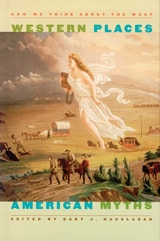
Western Places, American Myths
How We Think About The WestGary J. Hausladen
University of Nevada Press, 2006
In Western Places, American Myths: How We Think About the West, geographer Gary J. Hausladen brings together leading scholars to consider how popular perceptions about the West contribute to our understanding of the region’s geography. Topics include ranching, gambling, cinema, the National Park System, and the roles of minorities in Western expansion. The essays are divided into three sections. “Continuity and Change” addresses themes that are relevant to the entire region including the relationship between the American West and the academic field of historical geography. In part two, “Enduring Regional Voices,” the essays depart from predominantly white Euro-American male interpretations to study other perspectives, namely those of women, Mormons, Mexican Americans, and Native Americans. “The West as Visionary Place” investigates the culture of the region.
Drawing from diverse media, contributors explore various images and their contributions to our understanding about the American West. In the final chapter, key western movies are used to examine the issues of settlement and utopianism, as well as empire and territorial expansion. As a collection, these twelve essays reflect the eclectic nature of Western scholarship, examining diverse topics—some historical, some contemporary—from sometimes conflicting perspectives, with widely divergent scope and voices. Western Places, American Myths brings together geography, history, popular culture, and a comprehensive view of the region, bridging the humanities and social sciences.
Western Pueblo Identities
Regional Interaction, Migration, and TransformationAndrew I. Duff
University of Arizona Press, 2002
Using comparative data from the Upper Little Colorado and Zuni regions, Duff demonstrates differences in patterns of interaction within and between regions with different population densities. He then links these differences to such factors as occupational history, immigrant populations, the negotiation of social identities, and the emergence of new ritual systems. Following abandonments in the Four Corners area in the late 1200s, immigrants with different historical backgrounds occupied many Western Pueblo regions—in contrast to the Hopi and Zuni regions, which had more stable populations and deeper historical roots.
Duff uses chemical analyses of ceramics to document exchange among several communities within these regions, showing that people in less densely settled regions were actively recruited by residents of the Hopi and Zuni regions to join their settlements. By the time of the arrival of the Spaniards, two distinct social and territorial groups—the Hopi and Zuni peoples—had emerged from this scattering of communities. Duff's new interpretations, along with new data on ceramic exchange patterns, suggest that interaction is a better way to measure identity than more commonly used criteria. His work offers new perspectives on the role of ritual in social organization and on identity formation in Pueblo IV society and is rich in implications for the study of other sedentary, middle-range societies.

Wet Earth and Dreams
A Narrative of Grief and RecoveryJane Lazarre
Duke University Press, 1998
As she contends with the pain and many indignities of her treatment for cancer, Lazarre realizes that successful medical treatment will only be part of her healing process. Her own illness becomes the vehicle for coming to terms with key moments of loss and grief—the death of a beloved therapist from breast cancer, her brother-in-law’s death from AIDS, a traumatic disappointment in her work life, and the unresolved pain of being a motherless child. The gift of Lazarre’s writing is her ability to transform her narratives of grief and loss into a story whose power to heal lies in its ability to penetrate the unconscious and give voice to the elusive truths hidden there. Through her writing, Lazarre is able to embrace grief—even her own inarticulate grief as a child—and find her way through the story to a restored sense of wholeness.
In Wet Earth and Dreams Jane Lazarre once again proves herself to be both companion and guide through some of the most difficult challenges life has to offer. As always, she draws strength not only from sustaining friendship and love, but also from her own faith in the power of storytelling to make bearable the seemingly unbearable. Lazarre’s bravely and beautifully written account of grief, illness, and death is at the last a celebration of the redemptive possibilities of the creative spirit.

Wet
On Painting, Feminism, and Art CultureMira Schor
Duke University Press, 1997
Bridging the gap between art practice, artwork, and critical theory, Wet includes some of Schor’s most influential essays that have made a significant contribution to debates over essentialism. Articles range from discussions of contemporary women artists Ida Applebroog, Mary Kelly, and the Guerrilla Girls, to "Figure/Ground," an examination of utopian modernism’s fear of the "goo" of painting and femininity. From the provocative "Representations of the Penis," which suggests novel readings of familiar images of masculinity and introduces new ones, to "Appropriated Sexuality," a trenchant analysis of David Salle’s depiction of women, Wet is a fascinating and informative collection.
Complemented by over twenty illustrations, the essays in Wet reveal Schor’s remarkable ability to see and to make others see art in a radically new light.
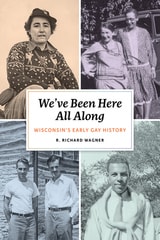
We’ve Been Here All Along
Wisconsin’s Early Gay HistoryR. Richard Wagner
Wisconsin Historical Society Press, 2019
In We’ve Been Here All Along, R. Richard Wagner draws on historical research and materials from his own extensive archive to uncover previously hidden stories of gay Wisconsinites. This book honors their legacy and confirms that they have been foundational to the development and evolution of the state since its earliest days

Whale Snow
Iñupiat, Climate Change, and Multispecies Resilience in Arctic AlaskaChie Sakakibara
University of Arizona Press, 2014
Using multispecies ethnography, Whale Snow explores how everyday the relatedness of the Iñupiat of Arctic Alaska and the bowhead whale forms and transforms “the human” through their encounters with modernity. Whale Snow shows how the people live in the world that intersects with other beings, how these connections came into being, and, most importantly, how such intimate and intense relations help humans survive the social challenges incurred by climate change. In this time of ecological transition, exploring multispecies relatedness is crucial as it keeps social capacities to adapt relational, elastic, and resilient.
In the Arctic, climate, culture, and human resilience are connected through bowhead whaling. In Whale Snow we see how climate change disrupts this ancient practice and, in the process, affects a vital expression of Indigenous sovereignty. Ultimately, though, this book offers a story of hope grounded in multispecies resilience.
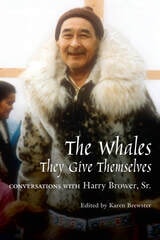
Whales, They Give Themselves
Conversations with Harry Brower, Sr.Karen Brewster
University of Alaska Press, 2004
Brower was deeply committed to Native culture, and his life history is a moving expression of the Inupiaq way of life. He was also influential in traditionally non-Native arenas in which Native and non-Native values sometimes collided. Acting as a mediator between Inupiaq whalers and non-Native scientists, Brower communicated a vast understanding of bowhead whales and whaling that became the basis for a scientific research program and helped protect Inupiaq subsistence whaling. He was a central architect of the Arctic Slope Regional Corporation boundaries, and served for over twenty years as a consultant to scientists at the Naval Arctic Research Laboratory. Brower's role in this collaborative research serves as one of the earliest and best examples of how scientists and Native experts can work together to advance knowledge. Such approaches are now promoted by researchers around the world.
The Whales, They Give Themselves not only conveys Brower's life story, but also is a cross-cultural journey of wisdom and friendship. Whereas academic oral historians once strove to erase the presence of the interviewer in the name of objectivity, Brewster recognizes the influence her specific relationship with Brower had on the way he narrated his life. This volume is a major contribution to our understanding of northern peoples, and a testament to the immense value of collaborative oral history.

What About Mozart? What About Murder?
Reasoning From CasesHoward S. Becker
University of Chicago Press, 2014
Becker draws on a lifetime of sociological research and wisdom to show, in helpful detail, how to use a variety of kinds of cases to build sociological knowledge. With his trademark conversational flair and informal, personal perspective Becker provides a guide that researchers can use to produce general sociological knowledge through case studies. He champions research that has enough data to go beyond guesswork and urges researchers to avoid what he calls “skeleton cases,” which use fictional stories that pose as scientific evidence. Using his long career as a backdrop, Becker delivers a winning book that will surely change the way scholars in many fields approach their research.

What Adolescents Ought to Know
Sexual Health Texts in Early Twentieth-Century AmericaJennifer Burek Pierce
University of Massachusetts Press, 2011
In 1901, Dr. Alfred Fournier committed an act both simple and revolutionary: he wrote ForOur Sons, When They Turn 18, a sexual and reproductive health treatise based on his clinical work at a leading Paris hospital. If this booklet aided adolescent understanding of health, it also encouraged reformers around the world to publish. By 1913, countless works on venereal disease prevention were available to adolescents.
During this period, authors wrestled with how to make still-developing scientific information available to a reader also in the process of maturing. What would convince a young person to avoid acting on desire? What norms should be employed in these arguments, when social and legal precedents warned against committing ideas about sex to print? How, in other words, could information about sex be made both decent and compelling? Health reformers struggled with these challenges as doctors' ability to diagnose diseases such as syphilis outpaced the production of medicines that could restore health. In this context, information represented the best and truest prophylactic. When publications were successful, from the perspective of information dissemination, they were translated and distributed worldwide.
What Adolescents Ought to Know explores the evolution of these printed materials—from a single tract, written by a medical researcher and given free to anyone, to a thriving commercial enterprise. It tells the story of how sex education moved from private conversation to purchased text in early twentieth-century America.

What Color Is the Sacred?
Michael Taussig
University of Chicago Press, 2009
Over the past thirty years, visionary anthropologist Michael Taussig has crafted a highly distinctive body of work. Playful, enthralling, and whip-smart, his writing makes ingenious connections between ideas, thinkers, and things. An extended meditation on the mysteries of color and the fascination they provoke, What Color Is the Sacred? is the next step on Taussig’s remarkable intellectual path.
Following his interest in magic and surrealism, his earlier work on mimesis, and his recent discussion of heat, gold, and cocaine in My Cocaine Museum,this book uses color to explore further dimensions of what Taussig calls “the bodily unconscious” in an age of global warming. Drawing on classic ethnography as well as the work of Benjamin, Burroughs, and Proust, he takes up the notion that color invites the viewer into images and into the world. Yet, as Taussig makes clear, color has a history—a manifestly colonial history rooted in the West’s discomfort with color, especially bright color, and its associations with the so-called primitive. He begins by noting Goethe’s belief that Europeans are physically averse to vivid color while the uncivilized revel in it, which prompts Taussig to reconsider colonialism as a tension between chromophobes and chromophiliacs. And he ends with the strange story of coal, which, he argues, displaced colonial color by giving birth to synthetic colors, organic chemistry, and IG Farben, the giant chemical corporation behind the Third Reich.
Nietzsche once wrote, “So far, all that has given colour to existence still lacks a history.” With What Color Is the Sacred? Taussig has taken up that challenge with all the radiant intelligence and inspiration we’ve come to expect from him.

What Comes after Entanglement?
Activism, Anthropocentrism, and an Ethics of ExclusionEva Haifa Giraud
Duke University Press, 2019
What Do Gay Men Want?
An Essay on Sex, Risk, and SubjectivityDavid M. Halperin
University of Michigan Press, 2010
“Compelling, timely, and provocative. The writing is sleek and exhilarating. It doesn’t waste time telling us what it will do or what it has just done—it just does it.”
—Don Kulick, Professor of Anthropology, New York University
How we can talk about sex and risk in the age of barebacking—or condomless sex—without invoking the usual bogus and punitive clichés about gay men’s alleged low self-esteem, lack of self-control, and other psychological “deficits”? Are there queer alternatives to psychology for thinking about the inner life of homosexuality? What Do Gay Men Want? explores some of the possibilities.
Unlike most writers on the topic of gay men and risky sex, David Halperin liberates gay male subjectivity from psychology, demonstrating the insidious ways in which psychology’s defining opposition between the normal and the pathological subjects homosexuality to medical reasoning and revives a whole set of unexamined moral assumptions about “good” sex and “bad” sex.
In particular, Halperin champions neglected traditions of queer thought, including both literary and popular discourses, by drawing on the work of well-known figures like Jean Genet and neglected ones like Marcel Jouhandeau. He shows how the long history of of gay men’s uses of “abjection” can offer an alternative, nonmoralistic model for thinking about gay male subjectivity, something which is urgently needed in the age of barebacking.
Anyone searching for nondisciplinary ways to slow the spread of HIV/AIDS among gay men—or interested in new modes of thinking about gay male subjectivity—should read this book.
David M. Halperin is W. H. Auden Collegiate Professor of the History and Theory of Sexuality, Professor of English, Professor of Women’s Studies, Professor of Comparative Literature, and Adjunct Professor of Classical Studies at the University of Michigan.

What Does It Mean to Grow Old?
Reflections from the HumanitiesThomas R. Cole and Sally Gadow, eds.
Duke University Press, 1986
What Drowns the Flowers in Your Mouth
A Memoir of BrotherhoodRigoberto González
University of Wisconsin Press, 2018
Descending into a dark emotional space that compromises their mental and physical health, the brothers eventually find hope in aiding each other. This is an honest and revealing window into the complexities of Latino masculinity, the private lives of men, and the ways they build strength under the weight of grief, loss, and despair.
What Employers Want
Job Prospects for Less-Educated WorkersHarry J. Holzer
Russell Sage Foundation, 1996

What Gender Is, What Gender Does
Judith Roof
University of Minnesota Press, 2016
What Gender Is, What Gender Does provides a forceful new paradigm for considering genders. With depth and insight, Judith Roof argues that genders are much more than binary. And they are constantly morphing: they are conscious and unconscious, simultaneously conventional and idiosyncratic. At any moment, more than one gender dynamic is at work in any individual.
Roof’s interpretation of genders isn’t content with either biological duality or endlessly open performativity, and what results is a nuanced and surprising representation of gender—an account that captures the complexities of lived experience as well as lived ideology. For Roof, genders are interacting sets of operations that link individual desires to multiple, shifting manifestations of sociocultural positioning and self-presentation. Thus, “to gender” is to signal, mask, suggest, mislead, and simplify the uncontainable chaos of desires characteristic of subjects but roundly contained by society.
Drawing illustrative material from contemporary popular culture productions, including My Big Fat Greek Wedding, Spider-Man, Shrek, Shallow Hal, Sex and the City, Bridesmaids, Bond films, and “bromance” movies, What Gender Is, What Gender Does demonstrates how the persistent conflation of gender and sexual difference is, on the one hand, a simple taxonomic urge and, on the other, a cover that offers the security of identity in place of the frustrations and fears of the real asymmetries of personal power dynamics.
What Goes Around Comes Around
edited by Kimberly J. Lau, Peter Tokofsky, and Stephen Winick
Utah State University Press, 2004
What Had Happened Was
Therí Alyce Pickens
Duke University Press, 2025
What If?
Twenty-Two Scenarios in Search of ImagesVilém Flusser
University of Minnesota Press, 2022
An imagination of possibilities, of miscalculations, of futures off-kilter
“Probability is a chimera, its head is true, its tail a suggestion. Futurologists attempt to compel the head to eat the tail (ouroboros). Here, though, we will try to wag the tail.” —Vilém Flusser
Two years after his Vampyroteuthis Infernalis, the philosopher Vilém Flusser engaged in another thought experiment: a collection of twenty-two “scenarios for the future” to be produced as computer-generated media, or technical images, that would break the imaginative logjam in conceiving the social, political, and economic future of the universe. What If? is not just an “impossible journey” to which Flusser invites us in the first scenario; it functions also as a distorting mirror held up to humanity.
Flusser’s disarming scenarios of an Anthropocene fraught with nightmares offer new visions that range from the scientific to the fantastic to the playful and whimsical. Each essay reflects our present sense of understanding the world, considering the exploitation of nature and the dangers of global warming, overpopulation, and blind reliance on the promises of scientific knowledge and invention. What If? offers insight into the radical futures of a slipstream Anthropocene that have much to do with speculative fiction, with Flusser’s concept of design as “crafty” or slippery, and with art and the immense creative potential of failure versus reasonable, “good” computing or calculability. As such, the book is both a warning and a nudge to imagine what we may yet become and be.