Results by title
8812 books match the query 'Political Science' and 354 start with w

Wobblies of the World
A Global History of the IWWEdited by Peter Cole, David Struthers, and Kenyon Zimmer
Pluto Press, 2017
Founded in 1905, Chicago's Industrial Workers of the World (IWW) is a union unlike any other. With members affectionately called "Wobblies" and an evolutionary and internationalist philosophy and tactics, it rapidly grew across the world. Considering the history of the IWW from an international perspective for the first time, Wobblies of the World brings together a group of leading scholars to present a lively collection of accounts from thirteen diverse countries, revealing a fascinating story of anarchism, syndicalism, and socialism. Chapters include:
*”A Cosmopolitan Crowd”: Transnational Anarchists, the IWW and the American Radical Press by Kenyon Zimmer
*Living Social Dynamite: Early Twentieth-Century IWW-South Asia Connections by Tariq Khan
*IWW Internationalism and Interracial Organizing in the Southwestern United States by David M. Struthers
*Spanish Anarchists and Maritime Workers in the IWW by Bieito Alonso
*The IWW and the Dilemmas of Labor Internationalism by Wayne Thorpe
*Wobblies Down Under: The IWW in Australia by Verity Burgmann
*Ki Nga Kaimahi Maori ('To All Maori Workers'): The New Zealand IWW and the Maori by Mark Derby
*Patrick Hodgens Hickey and the IWW: A Transnational Relationship by Peter Clayworth
*Edith Frenette: A Transnational Radical Life by Heather Mayer
*Tom Barker and Revolutionary Europe by Paula de Angelis
*P. J. Welinder and “American Syndicalism” in Interwar Sweden by Johan Pries
*Tramp, Tramp, Tramp: The Songs of Joe Hill Around the World by Bucky Halker
*And much, much more!
Drawing on many important figures of the movement—Har Dayal, James Larkin, William D. "Big Bill" Haywood, Enrique Flores Magón, and more—the contributors describe how the IWW and its ideals spread, exploring the crucial role the IWW played in industries such as shipping, mining, and agriculture.
Ultimately, the book illuminates Wobblie methods of organizing, forms of expression, practices, and transnational issues, offering a fascinating alternative history of the group

Wobblies on the Waterfront
Interracial Unionism in Progressive-Era PhiladelphiaPeter Cole
University of Illinois Press, 2007

Women Adrift
Independent Wage Earners in Chicago, 1880-1930Joanne J. Meyerowitz
University of Chicago Press, 1988
"Brilliant. . . . Gracefully written, and mercifully free from the jargon that often plagues social history, this book is a welcome addition to literature in women's, urban, and black history."—Ann Schofield, American Historical Review
"Meyerowitz provides a splendid portrait of her subjects. . . . She deserves praise for her demographic spadework, sensitive analysis, and engaging style. This is a valuable and rewarding book."—Nancy Woloch, Journal of American History
"A state-of-the-art product of the new women's history. . . . Meyerowitz's work is an extremely useful contribution, a corrective to over-concentration on women in family, an opening to new ways of looking at single women."—Linda Gordon, Women's Review of Books
"Women Adrift not only brings together many of the most exciting insights of women's history in recent years, but Meyerowitz's particular angle on issues of work, family, sexuality, mass culture and relationships among women also encourages us to rethink these insights."—Ileen A. DeVault, Historian
Women Confronting Retirement
A Nontraditional GuideEdited by Nan Bauer-Maglin and Alice Radosh
Rutgers University Press, 2003
Women Confronting Retirement showcases the voices of thirty-eight women from a wide range of professions, ages, and life situations as they confront the need to redefine who they are when they leave the workplace behind them. The women of the Baby Boom generation were the first to enter the professional world in large numbers, and the first to encounter the hazards of retirement. The contributors urge us to reach for new approaches to this major stage of life, to find new self-images, to balance meaningful work and creative play, and to work for the new public policies that support enhanced opportunities for retirement. Many of these women were involved in the key activist movements of the sixties and seventies, and their work often has been an extension of their social commitment. Defining themselves through their careers, they have challenged traditional models at every stage of their lives and are now being challenged by their own negative stereotypes about retirement.
The stories in this book compellingly chronicle the fears and hopes of women who have only begun to think about retirement, those who are in the process of retiring, some who have been retired for many years, and a few who have decided that retirement is not for them. They address issues such as identity, aging, creativity, family, and community. Unlike traditional “how-to” books, Women Confronting Retirement makes clear how individual the choices are, how there are no right and wrong answers to the many questions this uncharted stage of life poses for women of the Baby Boom generation, and those who follow. These women help us to explore the next steps with the same courage and questioning attitudes that they have brought to every aspect of their lives before they reached retirement age.
Women Legislators in Central America
Politics, Democracy, and PolicyBy Michelle A. Saint-Germain and Cynthia Chavez Metoyer
University of Texas Press, 2008
During the years between 1980 and 1999, in the midst of war and economic crisis, a record number of women were elected to national legislatures in Central American republics. Can quantitative increases in the presence of elected women in Central America produce qualitative political changes?
In this detailed study, Michelle A. Saint-Germain and Cynthia Chavez Metoyer explore the reasons for this unprecedented political rise of women, and what effect it has had on the region. Focusing on Costa Rica, El Salvador, Guatemala, Honduras, and Nicaragua, the authors analyze national and regional indicators to evaluate various hypotheses concerning the reasons for women's electoral success in the region, as well as to make comparisons with findings from other world regions. They find that the election of more women depends on three things: the presence of a crisis, a pool of politically experienced women, and a culture of gender consciousness. They also compare the characteristics of Central American women legislators to women in other national legislatures around the world.
The authors document how elected women have used their policy-making power to begin to change the lives of all Central Americans, women and men alike. In more than seventy-five in-depth, personal interviews, these women legislators reflect on their lives, political careers, and gender identities in their own words, providing deep insights into recent events in this region.

Women March for Peace
Black Radical Women’s Anti-Korean War ActivismDenise Lynn
University of Massachusetts Press, 2025
The Korean War is commonly known as the “forgotten war” because it supposedly had little impact on American culture in comparison to World War II or the American War in Vietnam. Yet from 1950–1953, the conflict produced vigorous anti-war activism, particularly among Black radical women. Informed by their experiences with racism and misogyny within the US, these women were convinced that peace was not just the absence of military aggression, but that it required the liberation of the most oppressed, including the end of capitalist exploitation of women and People of Color and the return of self-determination to colonized peoples—themes that later anti-war activists would echo and develop. Whether or not the Korean War has ever truly been forgotten, the visionary activism of these women has been largely overlooked.
In Women March for Peace, Denise Lynn examines the lives of seven Black women—Louise Thompson Patterson, Claudia Jones, Charlotta Bass, Shirley Graham Du Bois, Eslanda Robeson, Lorraine Hansberry, and Beulah Richardson—and their resistance to domestic and foreign US policies during the height of anticommunist hysteria. While much peace scholarship focuses on the threat of nuclear conflict, Lynn instead explores how these women connected issues of civil rights at home with international military campaigns, highlights the hypocrisy of containment policies that sought to secure the freedom and rights for Koreans when US citizens were still oppressed. Lynn traces their peace advocacy through their personal papers, local and national articles, Progressive Party documents, and global conventions. Women March for Peace recovers the radical activism of these Black women to understand a crucial chapter in the fight against American imperialism and white supremacy.
Women Of Japan & Korea
Continuity and Changeedited by Joyce Gelb and Marian Lief Palley
Temple University Press, 1994

Women Take Their Place in State Legislatures
The Creation of Women's CaucusesAnna Mitchell Mahoney
Temple University Press, 2019
How do women strategically make their mark on state legislatures? Anna Mitchell Mahoney’s book traces the development of women’s state legislative caucuses and the influence both gender and party have on women’s ability to organize collectively. She provides a comprehensive analysis of how and why women organize around their gender identity in state legislatures—or why they do not.
Women Take Their Place in State Legislatures includes a quantitative analysis of institutional-level variables and caucus existence in all 50 states. Case studies of caucus attempts in New Jersey, Colorado, Pennsylvania, and Iowa between 2006 and 2010 examine attempts at creating women’s caucuses that succeeded or failed, and why. Mahoney’s interviews with 180 state legislators and their staff explore the motivations of caucus creators and participants. Ultimately, she finds that women’s organizing is contextual; it demonstrates the dynamic nature of gender.
Mahoney also provides insights into broad questions regarding gendered institutions, collective action, and political party governance. Women Take Their Place in State Legislatures fills a lacuna in the evaluation of women in government.
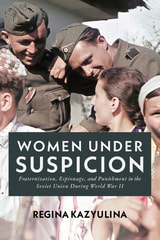
Women Under Suspicion
Fraternization, Espionage, and Punishment in the Soviet Union During World War IIRegina Kazyulina
University of Wisconsin Press, 2025
Women and American Socialism, 1870-1920
Mari Jo Buhle
University of Illinois Press, 1981

Women and National Development
The Complexities of ChangeEdited by Wellesley Editorial Committee
University of Chicago Press, 1978
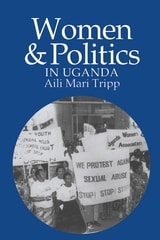
Women and Politics in Uganda
Aili Mari Tripp
University of Wisconsin Press, 2000
Tripp explores why the women’s movement grew so dramatically in such a short time after the National Resistant Movement took over in 1986. Unlike many African countries where organizations and institutions are controlled by a ruling party or regime, the Ugandan women’s movement gained its momentum by remaining autonomous.
Women and Politics in the Age of the Democratic Revolution
Harriet B. Applewhite and Darline G. Levy, Editors
University of Michigan Press, 1993
Women and Regulation
Challenging the Status QuoEdited by Sara R. Rinfret and Michelle C. Pautz
Temple University Press, 2026
Are female food safety inspectors treated differently than men? What do women contribute to the creation and implementation of public policy in the United States? The editors of and contributors to Women in Regulation, all experts in public policy and public administration, analyze the role women (and stakeholders) play in bureaucracies in environmental, budgetary, and other sectors of the U.S. federal, state, and local governments, plus relevant examples from around the world.
Women in Regulation examines the impact of regulatory policy delegation, as well as the actors and processes involved in administrative rulemaking, compliance, and implementation. The book considers representative bureaucracy, organizational stereotypes, emotional labor, and advancement barriers to argue why studying women and regulation is of value. Regulatory case studies focus on topics ranging from water and energy to executive leadership. Chapters also include reflective exercises and prompts for classroom engagement that challenge readers to consider implications for regulatory policy in the future.
Amplifying the underheard voices in policy and implementation, Women in Regulation provides a more holistic picture of regulatory practices.
Contributors: Saman Afshan, Ashley English, Katherine Hoener, Nicole Humphrey, Ekaterina Levintova, Li-Yin Liu, Sean McCandless, Bruce D. McDonald III, Denise Scheberle, Natalie L. Smith, Manuel P. Teodoro, and the editors

Women and Stepfamilies
Voices of Anger and Loveedited by Nan Bauer Maglin and Nancy Schniedewind
Temple University Press, 1990

Women and War
Jean Bethke Elshtain
University of Chicago Press, 1995

Women and Welfare
Theory and Practice in the United States and EuropeHirschmann, Nancy J
Rutgers University Press, 2001
The social welfare state is believed by many to be one of the great achievements of Western democracy in the twentieth century. It institutionalized for the first time a collective commitment to improving individual life chances and social well-being. However, as we move into a new century, the social welfare state everywhere has come under increasing pressure, raising serious doubts about its survival.
Featuring essays by experts from a variety of fields, including law, comparative politics, sociology, economics, cultural studies, philosophy, and political theory, Women and Welfare represents an interdisciplinary, multimethodological and multicultural feminist approach to recent changes in the welfare system of Western industrialized nations. The broad perspective, from the philosophical to the quantitative, provides an excellent overview of the subject and the most recent scholarly literature. The volume offers a crosscultural analysis of welfare “reform” in the 1990s, visions of what a “woman-friendly” welfare state requires, and an examination of theoretical and policy questions feminists and concerned others should be asking.
Women and Work
Feminism, Labour, and Social ReproductionSusan Ferguson
Pluto Press, 2019
Feminism is once again on the political agenda. Across the world women are taking to the streets to protest unfair working conditions, abortion laws, and sexual violence. They are demanding decent wages, better schools and free childcare.
But why do some feminists choose to fight for more women CEOs, while others fight for a world without CEOs?
To understand these divergent approaches, Susan Ferguson looks at the ideas that have inspired women to protest, exploring the ways in which feminists have placed work at the center of their struggle for emancipation. Two distinct trajectories emerge: “equality feminism” and “social reproduction feminism.” Ferguson argues that socialists have too often embraced the “liberal” tendencies of equality feminism, while neglecting the insights of social reproduction feminism. Engaging with feminist anti-work critiques, She proposes that women's emancipation depends upon a radical reimagining of all labor and advocates for a renewed social reproduction framework as a powerful basis for an inclusive feminist politics. Chapters here include;
*The Rational-Humanist Roots of Equality Feminism
*Socialist Feminism: Two Approaches to Understanding Women's Work
*Equal Work for and against Capital
*Anti-Racist Feminism and Women's Work
*A Political Economy of 'Women's Work': Producing Patriarchal Capitalism
*Renewing Social Reproduction Feminism
*The Social Reproduction Strike: Life-Making Beyond Capitalism
Women and Work offers a timely and important look at the intersectionality of feminism and workers rights. Scholars and students will both find valuable insights into the history of feminist theory and social movement.

Women and the Ideal Society
Plato's "Republic" and Modern Myths of GenderBluestone Natalie Harris
University of Massachusetts Press, 1987

Women and the Media in Capitalism and Socialism
An Ecofeminist InquiryEdited by Martina Topic
Intellect Books, 2023
Women and the Media in Capitalism and Socialism examines the news media in capitalist, socialist, and mixed governments to understand the position of women—both their work as journalists and their perception by readers and viewers. Drawing on case studies from around the world, the contributors ask: Who creates the news about women? Who is empowered to act as a news source? And what is the impact? The contributors then apply these questions to an array of examples, including sports journalists in the United Kingdom, reports about violence against women in Spain, news creation in Nigeria, and media representation of female politicians in Croatia.
Grounded in ecofeminism, the volume argues that women hold unequal positions in both capitalist and socialist societies and that these imbalances can only be erased through structural changes. This exciting international collaboration contributes to research on women in the media and grows our understanding of how gender inequities are experienced in different political economies.

Women for President
Media Bias in Eight CampaignsErika Falk
University of Illinois Press, 2007
When Hillary Clinton announced her 2008 bid for president she was the Democratic front-runner. Despite this, she received less coverage than Barack Obama, who trailed her in the polls. Such a disparity is indicative of the gender bias the media has demonstrated in covering women candidates since the first woman ran for America’s highest office in 1872. Tracing the campaigns of eight women who ran for president through 2004--Victoria Woodhull, Belva Lockwood, Margaret Chase Smith, Shirley Chisholm, Patricia Schroeder, Lenora Fulani, Elizabeth Dole, and Carol Moseley Braun--Erika Falk finds little progress in the fair treatment of women candidates. A thorough comparison of the women’s campaigns to those of their male opponents reveals a worrisome trend of sexism in press coverage--a trend that still persists today.
While women have been elected to the highest offices in countries such as England, Germany, and India, the idea that a woman could be president of the United States provokes scoffs and ridicule. The press portrays female candidates as unviable, unnatural, and incompetent, and often ignores or belittles women instead of reporting their ideas and intent. Since voters learn most details about presidential candidates through media outlets, Falk asserts that this prevailing bias calls into question the modern democratic assumption that men and women have comparable access to positions of power.
Women for President
Media Bias in Nine CampaignsErika Falk
University of Illinois Press, 2010
Newly updated to examine Hillary Clinton's formidable 2008 presidential campaign, Women for President analyzes the gender bias the media has demonstrated in covering women candidates since the first woman ran for America's highest office in 1872. Tracing the campaigns of nine women who ran for president through 2008--Victoria Woodhull, Belva Lockwood, Margaret Chase Smith, Shirley Chisholm, Patricia Schroeder, Lenora Fulani, Elizabeth Dole, Carol Moseley Braun, and Hillary Clinton--Erika Falk finds little progress in the fair treatment of women candidates. The press portrays female candidates as unviable, unnatural, and incompetent, and often ignores or belittles women instead of reporting their ideas and intent. This thorough comparison of men's and women's campaigns reveals a worrisome trend of sexism in press coverage--a trend that still persists today.
Women in 1900
Gateway to the Political Economy of the 20th CenturyChristine E. Bose
Temple University Press, 2001
Women in Agriculture
Professionalizing Rural Life in North America and Europe, 1880-1965Linda M. Ambrose and Joan M. Jensen
University of Iowa Press, 2017
The contributors to Women in Agriculture examine how rural women’s expertise was disseminated and how it was received. Through these essays, readers meet subversively lunching ladies in Ontario and African American home demonstration agents in Arkansas. The rural sociologist Emily Hoag made a place for women at the US Department of Agriculture as well as in agricultural research. Canadian rural reformer Madge Watt, British radio broadcaster Mabel Webb, and US ethnobotanists Mary Warren English and Frances Densmore developed new ways to share and preserve rural women’s knowledge. These and the other women profiled here updated and expanded rural women’s roles in shaping their communities and the broader society. Their stories broaden and complicate the history of agriculture in North America and Western Europe.
Contributors:
Linda M. Ambrose, Maggie Andrews, Cherisse Branch-Jones, Joan M. Jensen, Amy McKinney, Anne Moore, Karen Sayer, Margreet van der Burg, Nicola Verdon
Women in Contemporary Mexican Politics
By Victoria E. Rodríguez
University of Texas Press, 2003
Since the mid-1980s, a dramatic opening in Mexico's political and electoral processes, combined with the growth of a new civic culture, has created unprecedented opportunities for women and other previously repressed or ignored groups to participate in the political life of the nation. In this book, Victoria Rodríguez offers the first comprehensive analysis of how Mexican women have taken advantage of new opportunities to participate in the political process through elected and appointed office, nongovernmental organizations, and grassroots activism.
Drawing on scores of interviews with politically active women conducted since 1994, Rodríguez looks at Mexican women's political participation from a variety of angles. She analyzes the factors that have increased women's political activity: from the women's movement, to the economic crises of the 1980s and 1990s, to increasing democratization, to the victory of Vicente Fox in the 2000 presidential election. She maps out the pathways that women have used to gain access to public life and also the roadblocks that continue to limit women's participation in politics, especially at higher levels of government. And she offers hopeful, yet realistic predictions for women's future participation in the political life of Mexico.
Women in Politics in the American City
Myra Holman
Temple University Press, 2014
This book provides the first comprehensive evaluation of the influence of gender on the behavior of mayors and city council members in the United States. Holman considers the effects of gender in local, urban politics and analyzes how a leader's gender does-and does not-influence policy preferences, processes, behavior, and outcomes.
Holman effectively uses original survey data to evaluate policy attitudes, combined with observations of city council meetings and interviews with leaders and community members. In doing so, she demonstrates the importance of considering the gender of leaders in local office.
Women in Politics in the American City emphasizes that the involvement of women in local politics does matter and that it has significant consequences for urban policy as well as state and local democracy.

Women in Revolutionary Paris, 1789-1795
Edited and translated by Darlene Gay Levy, Harriet Branson Applewhite, and Mary Durham Johnson
University of Illinois Press, 1979
"This unique collection of documents will be a boon to teachers of history and to scholars of the French Revolution. . . . Recommended."
-- Library Journal
Women in the Club
Gender and Policy Making in the SenateMichele L. Swers
University of Chicago Press, 2013
In the run-up to the 2012 presidential election, Democrats and Republicans were locked in a fierce battle for the female vote. Democrats charged Republicans with waging a “war on women,” while Republicans countered that Democratic policies actually undermined women’s rights. The women of the Senate wielded particular power, planning press conferences, appearing on political programs, and taking to the Senate floor over gender-related issues such as workplace equality and reproductive rights.
The first book to examine the impact of gender differences in the Senate, Women in the Club is an eye-opening exploration of how women are influencing policy and politics in this erstwhile male bastion of power. Gender, Michele L. Swers shows, is a fundamental factor for women in the Senate, interacting with both party affiliation and individual ideology to shape priorities on policy. Women, for example, are more active proponents of social welfare and women’s rights. But the effects of gender extend beyond mere policy preferences. Senators also develop their priorities with an eye to managing voter expectations about their expertise and advancing their party’s position on a given issue. The election of women in increasing numbers has also coincided with the evolution of the Senate as a highly partisan institution. The stark differences between the parties on issues pertaining to gender have meant that Democratic and Republican senators often assume very different roles as they reconcile their policy views on gender issues with the desire to act as members of partisan teams championing or defending their party’s record in an effort to reach various groups of voters.
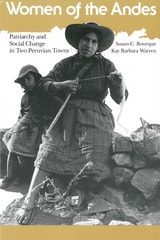
Women of the Andes
Patriarchy and Social Change in Two Peruvian TownsSusan C. Bourque and Kay Barbara Warren
University of Michigan Press, 1981
Pilar is a capable, energetic merchant in the small, Peruvian highland settlement of Chiuchin. Genovena, an unmarried day laborer in the same town, faces an impoverished old age without children to support her. Carmen is the wife of a prosperous farmer in the agricultural community of Mayobamba, eleven thousand feet above Chiuchin in the Andean sierra. Mariana, a madre soltera—single mother—without a husband or communal land of her own, also resides in Mayobamba.
These lives form part of an interlocking network that the authors carefully examine in Women of the Andes. In doing so, they explore the riddle of women’s structural subordination by analyzing the social, political, and economic realities of life in Peru. They examine theoretical explanations of sexual hierarchies against the backdrop of life histories. The result is a study that pinpoints the mechanisms perpetuating sexual repression and traces the impact of social change and national policy on women’s lives.
Women on the Defensive
Living through Conservative TimesSylvia Bashevkin
University of Chicago Press, 1998
Prevailing accounts of the fate of women's movements in that decade ascribe their hardships to a postfeminist ideology or the result of a "backlash" against women, particularly in America. Sylvia Bashevkin's study excavates, however, a much more complex situation. By identifying the policies and goals held in common by feminists in all three countries and tracing their collision course with the conservative policies of the three administrations, she is able to document setbacks but also some progress, despite the right-of-center leaders. She also challenges the assumption that organized interests in the United States are less vulnerable in hard times than those in parliamentary systems, finding that the elections of Ronald Reagan, Brian Mulroney, and Margaret Thatcher had similar effects on both sides of the Atlantic. Her comparative analysis reveals that the policies of current leaders, while marginally better than their predecessors, will not allow women and women's movements to regain lost ground.
Organized thematically, rather than by country, Women on the Defensive describes the difficult relationship between feminists and conservatives during a time of bitter ideological and policy battles when the vibrant social movements of the 1960s and 1970s were seriously threatened.
Women on the Polish Labor Market
Henryk Domanski
Central European University Press, 2001
Women's Activism and Feminist Agency in Mozambique and Nicaragua
Jennifer Leigh Disney
Temple University Press, 2009
In Women's Activism and Feminist Agency in Mozambique and Nicaragua, Jennifer Leigh Disney investigates the contours of women’s emancipation outside the framework of liberal democracy and a market economy. She interviews 146 women and men in the two countries to explore the comparative contribution of women’s participation in subsistence and informal economies, political parties and civil society organizations. She also discusses military struggles against colonialism and imperialism in fostering feminist agency to provide a fascinating look at how each movement evolved and how it changed in a post-revolutionary climate.
Women's Activist Organizing in US History
A University of Illinois Press AnthologyCompiled by Dawn Durante; Introduction by Deborah Gray White
University of Illinois Press, 2022
Insightful and provocative, Women’s Activist Organizing in US History draws on both classic texts and recent bestsellers to reveal the breadth of activism by women in the United States in the nineteenth and twentieth centuries.
Contributors: Daina Ramey Berry, Melinda Chateauvert, Tiffany M. Gill, Nancy A. Hewitt, Treva B. Lindsey, Anne Firor Scott, Charissa J. Threat, Anne M. Valk, Lara Vapnek, and Deborah Gray White
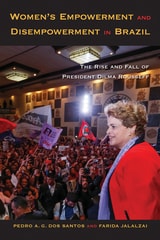
Women's Empowerment and Disempowerment in Brazil
The Rise and Fall of President Dilma RousseffPedro A. G. dos Santos and Farida Jalalzai
Temple University Press, 2021
In 2010, Dilma Rousseff was the first woman to be elected President in Brazil. She was re-elected in 2014 before being impeached in 2016 for breaking budget laws. Her popularity and controversy both energized and polarized the country. In Women’s Empowerment and Disempowerment in Brazil, dos Santos and Jalalzai examine Rousseff’s presidency and what it means for a woman to hold (and lose) the country’s highest power.
The authors examine the ways Rousseff exercised dominant authority and enhanced women’s political empowerment. They also investigate the extent her gender played a role in the events of her presidency, including the political and economic crises and her ensuing impeachment. Emphasizing women’s political empowerment rather than representation, the authors assess the effects of women executives to more directly impact female constituencies—how they can empower women by appointing them to government positions; make policies that advance women’s equality; and, through visibility, create greater support for female politicians despite rampant sexism.
Women’s Empowerment and Disempowerment in Brazil uses Rousseff’s presidency as a case study to focus on the ways she succeeded and failed in using her authority to empower women. The authors’ findings have implications throughout the world.
Women's Labor in the Global Economy
Speaking in Multiple VoicesHarley, Sharon
Rutgers University Press, 2007
Globalization is not a new phenomenon; women throughout the world have been dealing with the circumstances and consequences of an international economy long before the advent of the transnational corporate conglomerate. However, in a mercenary example of the tried clich "the more things change, the more they stay the same," women-particularly those of color-continue to be relegated to the lowest rung of the occupational ladder, where their indispensable contributions to global market capitalism are downplayed or invalidated completely through the perpetuation of stereotypes and the denial of access to better job opportunities and resources.
How women of color around the world adapt and challenge the economic, political, and social effects of globalization is the subject of this broad-minded and incisive anthology. From Mexico, Jamaica, Ghana, Zimbabwe, and Sri Lanka, to immigrant and non-immigrant communities in the United States-the women documented in these essays are agricultural and factory workers, artists and entrepreneurs, mothers and activists. Their stories bear stark witness to how globalization continues to develop new sites and forms of exploitation, while its apparent victims continue to be women, men, and children of color.
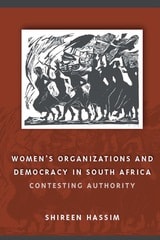
Women's Organizations and Democracy in South Africa
Contesting AuthorityShireen Hassim
University of Wisconsin Press, 2006
The transition to democracy in South Africa was one of the defining events in twentieth-century political history. The South African women’s movement is one of the most celebrated on the African continent. Shireen Hassim examines interactions between the two as she explores the gendered nature of liberation and regime change. Her work reveals how women’s political organizations both shaped and were shaped by the broader democratic movement. Alternately asserting their political independence and giving precedence to the democratic movement as a whole, women activists proved flexible and remarkably successful in influencing policy. At the same time, their feminism was profoundly shaped by the context of democratic and nationalist ideologies. In reading the last twenty-five years of South African history through a feminist framework, Hassim offers fresh insights into the interactions between civil society, political parties, and the state.
Hassim boldly confronts sensitive issues such as the tensions between autonomy and political dependency in feminists’ engagement with the African National Congress (ANC) and other democratic movements, and black-white relations within women’s organizations. She offers a historically informed discussion of the challenges facing feminist activists during a time of nationalist struggle and democratization.
Winner, Victoria Schuck Award for best book on women and politics, American Political Science Association
“An exceptional study, based on extensive research. . . . Highly recommended.”—Choice
“A rich history of women’s organizations in South African . . . . [Hassim] had observed at first hand, and often participated in, much of what she described. She had access to the informants and private archives that so enliven the narrative and enrich the analysis. She provides a finely balanced assessment.”—Gretchen Bauer, African Studies Review

Women's Political Activism in Palestine
Peacebuilding, Resistance, and SurvivalSophie Richter-Devroe
University of Illinois Press, 2018
Richter-Devroe's ethnographic approach draws from revealing in-depth interviews and participant observation in Palestine. The result: a forceful critique of mainstream conflict resolution methods and the failed woman-to-woman peacebuilding projects so lauded around the world. The liberal faith in dialogue as core of "the political" and the assumption that women's "nurturing" nature makes them superior peacemakers, collapse in the face of past and ongoing Israeli state violences.
Instead, women confront Israeli settler colonialism directly and indirectly in their popular and everyday acts of resistance. Richter-Devroe's analysis zooms in on the intricate dynamics of daily life in Palestine, tracing the emergent politics that women articulate and practice there. In shedding light on contemporary gendered "politics from below" in the region, the book invites a rethinking of the workings, shapes, and boundaries of the political.
Women's Political Voice
How Women are Transforming the Practice and Study of PoliticsJanet Flammang
Temple University Press, 1997
This book accomplishes four major tasks:
*It provides a comprehensive critical history of the changing research on politics and the changing nature of the political science discipline.
*It analyzes the course of women's political activism in the United States.
*It develops a rich case study of women's politics in Northern California's Silicon Valley, an area once nicknamed "the feminist capital of the nation."
*It examines coalitions and divisions within the women's movement with sensitivity to minority politics, as in the chapter subtitled, "The Hard Work of Sisterhood."
Women's Political Voice record the transformative politics of the women's movement and, simultaneously, urges political scientists to ask new questions and to adopt new methods.
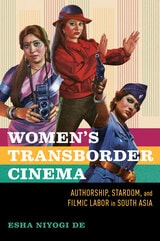
Women's Transborder Cinema
Authorship, Stardom, and Filmic Labor in South AsiaEsha Niyogi De
University of Illinois Press, 2024
Can we write women’s authorial roles into the history of industrial cinema in South Asia? How can we understand women’s creative authority and access to the film business infrastructure in this postcolonial region? Esha Niyogi De draws on rare archival and oral sources to explore these questions from a uniquely comparative perspective, delving into examples of women holding influential positions as stars, directors, and producers across the film industries in India, Pakistan, and Bangladesh.
De uses film tropes to examine the ways women directors and film entrepreneurs claim creative control within the contexts of anti-colonial nationalism and global capitalism. The region’s fictional cinemas have become staging grounds for postcolonialism, with colonial and local hierarchies merged into new imperial formations. De’s analysis shows how the gendered intersections of inequity and opportunity shape women’s fiction filmmaking while illuminating the impact of state and market formations on the process.
Innovative and essential, Women’s Transborder Cinema examines the works of South Asia’s women filmmakers from a regional perspective.
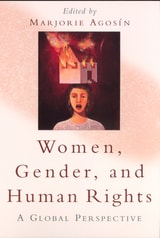
Women, Gender, and Human Rights
A Global PerspectiveAgosín, Marjorie
Rutgers University Press, 2001
The 1948 United Nations Universal Declaration of Human Rights expresses the credo that all human beings are created free and equal. But not until 1995 did the United Nations declare that women’s rights to be human rights, and bring gender issues into the global arena for the first time. The subordination of indigenous and minority women, ethnic cleansing, and the struggle for reproductive rights are some of the most pressing issues facing women worldwide.
Women, Gender, and Human Rights is the first collection of essays that encompass a global perspective on women and a wide range of issues, including political and domestic violence, education, literacy, and reproductive rights. Most of the articles were written expressly for this volume by internationally known experts in the fields of government, bioethics, medicine, public affairs, literature, history, anthropology, law, and psychology.
Women, International Development
And Politicsedited by Kathleen Staudt
Temple University Press, 1997
At the same time, non-governmental organizations have continued to expand a policy agenda with a concern for women, thanks to the Fourth World Congress on Women and a series of United Nations-affiliated meetings leading up to the one on population and development in Cairo in 1994 and, most important, the Beijing Conference in December 1995, attended by 50,000 people.
Two new essays and a new conclusion reflect the upsurge of interest in women and development since 1990. An introductory essay by Sally Baden and Anne Marie Goetz focuses on the conflict over the term "gender" at the Beijing Conference and the continuing divisions between conservative women and feminists and also between representatives of the North and South.

Women, Politics and Change
Louise A. Tilly
Russell Sage Foundation, 1990
Women, Power, and Dissent in the Hills of Carolina
Mary K. Anglin
University of Illinois Press, 2002
Women, Power, and Dissent in the Hills of Carolina is a unique and impassioned exploration of gender, labor, and resistance in western North Carolina. Based on eight months of field research in a mica manufacturing plant and the surrounding rural community, as well as oral histories of women who worked in mica houses in the early twentieth century, this landmark study canvasses the history of the mica industry and the ways it came to be organized around women's labor.
Mary K. Anglin's investigation of working women's lives in the plant she calls "Moth Hill Mica Company" reveals the ways women have contributed to household and regional economies for more than a century. Without union support or recognition as skilled laborers, these women developed alternate strategies for challenging the poor working conditions, paltry wages, and corporate rhetoric of Moth Hill. Utilizing the power of memory and strong family and community ties, as well as their own interpretations of gender and culture, the women have found ways to "boss themselves."

Women, Violence and War
Wartime Victimization of Refugees in the BalkansVesna Nikolic-Ristanovic
Central European University Press, 2000
Based on interviews with seventy women refugees, Women, Violence and War is a book about war as it is seen, lived and interpreted by women who were citizens of the former Yugoslavia.
Many of the accounts portray the horrific experiences the victims had to face and the book addresses issues of sexual, physical and psychological violence, as well as problems of confinement, upheaval and family separation. In a completely new insight the book dispels the myth that many of the women were peasants, and shows that in fact they were educated, middle-class women with independent careers. The study also depicts how some of the victims attempt to come to terms with the aftermath of wartime abuse.
This probing, accurate and unique investigation of victimization is an unparalleled volume that presents a completely new perspective maintaining that violence against women in war is not independent of peace-time victimization and the imbalance of power between sexes.
Women, Work, and Activism
Chapters of an Inclusive History of Labor in the Long Twentieth CenturyEloisa Betti
Central European University Press, 2022
The thirteen critical and well-documented chapters of Women, Work and Activism examine women’s labor struggle from late nineteenth-century Portuguese mutual societies to Yugoslav peasant women’s work in the 1930s, and from the Catalan labor movement under the Franco dictatorship to workplace democracy in the United States. The authors portray women's labor activism in a wide variety of contexts. This includes spontaneous resistance to masculinist trade unionism, the feminist engagement of women workers, the activism of communist wives of workers, and female long-distance migration, among others. The chapters address the gendered involvement of working people in multiple and often precarious and unstable labor relations and in unpaid labor, as well as the role of the state and other institutions in shaping the history of women’s labor.
The book is an innovative contribution to both the new labor history and feminist history. It fully integrates the conceptual advances made by gender historians in the study of labor activism, driving home critiques of Eurocentric historiographies of labor to Europe while simultaneously contributing to an inclusive history of women’s labor-related activism wherever to be found. Examining women’s activism in male-dominated movements and institutions, and in women’s networks and organizations, the authors make a case for a new direction in gender history.
Women’s Perspectives on Human Security
Violence, Environment, and SustainabilityRichard Matthew; Patricia A. Weitsman; Gunhild Hoogensen Gjørv; Nora Davis; Tera Dornfeld
Ohio University Press, 2020
Violent conflict, climate change, and poverty present distinct threats to women worldwide. Importantly, women are leading the way creating and sharing sustainable solutions.
Women’s security is a valuable analytical tool as well as a political agenda insofar as it addresses the specific problems affecting women’s ability to live dignified, free, and secure lives. First, this collection focuses on how conflict impacts women’s lives and well-being, including rape and gendered constructions of ethnicity, race, and religion. The book’s second section looks beyond the scope of large-scale violence to examine human security in terms of environmental policy, food, water, health, and economics.
Multidisciplinary in scope, these essays from new and established contributors draw from gender studies, international relations, criminology, political science, economics, sociology, biological and ecological sciences, and planning.
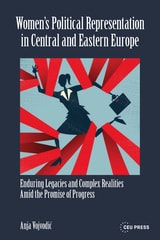
Women’s Political Representation in Central and Eastern Europe
Enduring Legacies and Complex Realities Amid the Promise of ProgressAnja Vojvodic
Central European University Press, 2026

Woody Guthrie, American Radical
Will Kaufman
University of Illinois Press, 2011

Words Were Bullets and Seeds
Literature, Intellectuals, and Revolution in Angola and Mozambique, 1961–1986Tom Stennett
University of Michigan Press, 2027
Words Were Bullets and Seeds examines the literary and political writings of Mozambican and Angolan Marxist intellectuals that performed crucial roles in the organizations that have come to dominate postcolonial Mozambique and Angola: Frelimo and the MPLA. Tom Stennett draws on archival materials from Portugal, Angola, Mozambique, Cape Verde, Tanzania, and the United Kingdom to reframe our understanding of Angolan and Mozambican liberation struggles through an analysis of the political poetry in Portuguese written by leading intellectuals of the movements. Stennett argues that traditional political forms—speeches, party literature, manifestos—demand a close textual analysis that is sensitive to aesthetics and the specific ways in which Angolan and Mozambican revolutionaries engaged with political idioms and theories such as Négritude, African socialism, Pan-Africanism, and Marxism. Words Were Bullets and Seeds leverages literary texts as historical sources with insights into political ideological struggles to provide a nuanced understanding of Mozambican and Angolan postcolonial debates.

Words to Our Now
Imagination and DissentThomas Glave
University of Minnesota Press, 2007
In these lyrical and powerful essays, Thomas Glave draws on his experiences as a politically committed, gay Jamaican American to deliver a condemnation of the prejudices, hatreds, and inhumanities that persist in the United States and elsewhere. Exposing the hypocrisies of liberal multiculturalism, Glave offers instead a politics of heterogeneity in which difference informs the theory and practice of democracy. At the same time, he experiments with language to provide a model of creative writing as a tool for social change. From the death of black gay poet Essex Hemphill to the revelations of abuse at Abu Ghraib, Glave puts forth an ethical understanding of human rights to make vital connections across nations, races, genders, and sexualities.
Thomas Glave is assistant professor of English at SUNY Binghamton. He is author of Whose Song? and Other Stories.