Results by title
8113 books match the query 'Literary Criticism' and 16 start with y
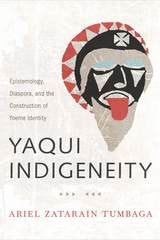
Yaqui Indigeneity
Epistemology, Diaspora, and the Construction of Yoeme IdentityAriel Zatarain Tumbaga
University of Arizona Press, 2018
Tumbaga examines colonial documents and nineteenth-century political literature that produce a Yaqui warrior mystique and reexamines the Mexican Revolution through indigenous culture. He delves into literary depictions of Yaqui battalions by writers like Martín Luis Guzmán and Carlos Fuentes and concludes that they conceal Yaqui politics and stigmatize Yaqui warriorhood, as well as misrepresent frequently performed deer dances as isolated exotic events.
Yaqui Indigeneity draws attention to a community of Chicana/o writers of Yaqui descent: Chicano-Yaqui authors such as Luis Valdez, Alma Luz Villanueva, Miguel Méndez, Alfredo Véa Jr., and Michael Nava, who possess a diaspora-based indigenous identity. Their writings rebut prior colonial and Mexican depictions of Yaquis—in particular, Véa’s La Maravilla exemplifies the new literary tradition that looks to indigenous oral tradition, religion, and history to address questions of cultural memory and immigration.
Using indigenous forms of knowledge, Tumbaga shows the important and growing body of literary work on Yaqui culture and history that demonstrates the historical and contemporary importance of the Yaqui nation in Mexican and Chicana/o history, politics, and culture.
Yeats and the Logic of Formalism
Vereen M. Bell
University of Missouri Press, 2006
Yeats's Shakespeare
Rupin W. Desai
Northwestern University Press, 1971

Yeats
An Annual of Critical and Textual Studies, Volume XII, 1994Richard J. Finneran, Editor
University of Michigan Press, 1996
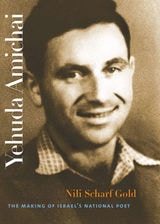
Yehuda Amichai
The Making of Israel's National PoetNili Scharf Gold
Brandeis University Press, 2008
Yes, There Will Be Singing
Marilyn Krysl
University of Michigan Press, 2014
Yosano Akiko and The Tale of Genji
G. G. Rowley
University of Michigan Press, 2000
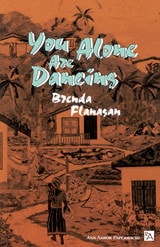
You Alone Are Dancing
Brenda Flanagan
University of Michigan Press, 1996
Rape, the devastation of Hurricane Flora, a child's tragic death, and an indifferent and corrupt government are some of the numerous problems challenging the people of Rosehill. Set on the fictional island of Santabella and spanning three years, You Alone Are Dancing follows the life of young Beatrice Salandy, balancing her ambitions, obligations, and love for Sonny Allen. Determined to create his own opportunities, Sonny leaves Rosehill for the United States in a swirl of promises and expectations. Beatrice remains on Rosehill, sharing her neighbors' struggle, adding their pain to her own, but sharing as well their music and their laughter, their history and their allegiance to it. Like Santabella, set in an indifferent blue sea, Rosehill is part of a larger neglected Caribbean society, and Beatrice must learn to negotiate its tides and ebbs, overcome its storm and ensure its lulls, as she peruses what has to be done. She succeeds--but at a price that changes her life forever, as it does that of Sonny and all of Rosehill. "In Brenda Flanagan's novel, You Alone Are Dancing, there's talk and talk, the life-long dance of talk--it's lyrical, raucous, sorrowful, vibrant, inventive. And there you are, on the island, in the midst and mix of it all. What the best musicians do with wood and brass and air, Brenda Flanagan does with words--she gives them voice and life." --Janet Kauffman, author of Places in the World a Woman Could Walk.
You Are a Ghost
Katherine Guinness
University of Minnesota Press, 2027
A ghost story where you are the ghost
What if the ghost haunting the present is you? In You Are a Ghost, Katherine Guinness offers a provocative new theory of “negative hauntology,” arguing that ghostliness is not a metaphor but the defining condition of life under late capitalism. Through compelling readings of films such as The Sixth Sense, Ghost, Beetlejuice, and The Others, alongside television, immersive performance, and contemporary art about platform surveillance and automated intelligence, Guinness reveals how today’s culture reflects a world where futurity, agency, and even humanity have already been lost.
Yet, rather than ending in nihilism, You Are a Ghost imagines a new form of collective consciousness grounded in our shared condition. Bold, accessible, and deeply original, this book rethinks social death, capitalism, and political solidarity, offering readers a new way to understand contemporary culture—and how to haunt it.
Retail e-book files for this title are screen-reader friendly.
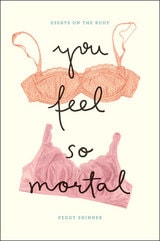
You Feel So Mortal
Essays on the BodyPeggy Shinner
University of Chicago Press, 2014
Over the course of twelve essays, Shinner holds a mirror up to the complex desires, fears, confusions, and mysteries that shape our bodily perceptions. Driven by the collision between herself and the larger world, she examines her feet through the often-skewed lens of history to understand what makes them, in the eyes of some, decidedly Jewish; considers bras, breasts, and the storied skills of the bra fitter; asks, from the perspective of a confused and grieving daughter, what it means to cut the body open; and takes a reeling time-trip through myth, culture, and history to look at women’s hair in ancient Rome, Laos, France, Syria, Cuba, India, and her own past. Some pieces investigate the body under emotional or physical duress, while others use the body to consider personal heritage and legacy. Throughout, Shinner writes with elegance and assurance, weaving her wide-ranging thoughts into a firm and fascinating fabric.
Turning the category of body books on, well, its ear, You Feel So Mortal offers a probing view of our preoccupation with the body that is both idiosyncratic and universal, leaving us with the deep satisfaction of our shared humanity.
You Must Revise Your Life
William Stafford
University of Michigan Press, 1987

You're Only Young Twice
Children's Literature and FilmTim Morris
University of Illinois Press, 2000
Moving from classic texts (The Secret Garden, Goodnight Moon) to ephemera (the Hardy Boys, Goosebumps, and Harry Potter series), from the printed page to the silver screen (Willie Wonka, Jumanji, 101 Dalmatians, Beethoven), Tim Morris employs his experience as a parent and teacher to interrogate children's culture and reveal its conflicting messages.
Books and films for children--favorites accepted as wholesome fare for impressionable young minds --do not always teach straightforward lessons. Instead, they reflect the anxieties of the times and the desires of adults. At the heart of many a children's classic lies power, often expressed through racism, sexism, or violence. Under Morris's gaze, revered animal stories like Black Beauty turn into litanies of abuse; fantasies of childhood like Big are revealed as patriarchal struggles.
You're Only Young Twice redirects the focus on children's literature, asking not "What messages should children receive?" but "What messages do adults actually send?" For example, Morris recounts his own childhood confusion upon viewing Peter Pan, with its queenish, inept pirate and a grown woman (Mary Martin) in tights who pretends to be a crowing boy.
Morris shatters our long-held assumptions and challenges our best intentions, demonstrating how children's literature and films lay bare a troubled and troubling worldview.
Young Lions
How Jewish Authors Reinvented the American War NovelLeah Garrett
Northwestern University Press, 2015
Finalist, 2015 National Jewish Book Awards in the American Jewish Studies category
Winner, 2017 AJS Jordan Schnitzer Book Award in the category of Modern Jewish History and Culture: Africa, Americas, Asia, and Oceania
Young Lions: How Jewish Authors Reinvented the American War Novel shows how Jews, traditionally castigated as weak and cowardly, for the first time became the popular literary representatives of what it meant to be a soldier and what it meant to be an American. Revisiting best-selling works ranging from Norman Mailer’s The Naked and the Dead to Joseph Heller’s Catch-22, and uncovering a range of unknown archival material, Leah Garrett shows how Jewish writers used the theme of World War II to reshape the American public’s ideas about war, the Holocaust, and the role of Jews in postwar life. In contrast to most previous war fiction these new “Jewish” war novels were often ironic, funny, and irreverent and sought to teach the reading public broader lessons about liberalism, masculinity, and pluralism.
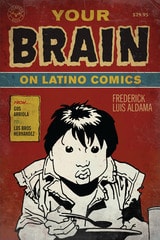
Your Brain on Latino Comics
From Gus Arriola to Los Bros HernandezBy Frederick Luis Aldama
University of Texas Press, 2009
Though the field of comic book studies has burgeoned in recent years, Latino characters and creators have received little attention. Putting the spotlight on this vibrant segment, Your Brain on Latino Comics illuminates the world of superheroes Firebird, Vibe, and the new Blue Beetle while also examining the effects on readers who are challenged to envision such worlds.
Exploring mainstream companies such as Marvel and DC as well as rising stars from other segments of the industry, Frederick Aldama provides a new reading of race, ethnicity, and the relatively new storytelling medium of comics themselves. Overview chapters cover the evolution of Latino influences in comics, innovations, and representations of women, demonstrating Latino transcendence of many mainstream techniques. The author then probes the rich and complex ways in which such artists affect the cognitive and emotional responses of readers as they imagine past, present, and future worlds.
Twenty-one interviews with Latino comic book and comic strip authors and artists, including Laura Molina, Frank Espinosa, and Rafael Navarro, complete the study, yielding captivating commentary on the current state of the trade, cultural perceptions, and the intentions of creative individuals who shape their readers in powerful ways.
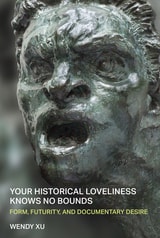
Your Historical Loveliness Knows No Bounds
Form, Futurity, and Documentary DesireWendy Xu
University of Michigan Press, 2025
Not an overview or primer, least of all the final word, this free-ranging exploration of contemporary poetry considers larger questions of belonging, diaspora, the violence of language, the allure of the past, genre, witness, and form. It returns to memorable touchstone texts in the author’s life with renewed curiosity about their inner workings. Essays move with restless curiosity across topics, bringing them into conversation with poetry, from considering depictions of Christ in Pier Paolo Pasolini’s The Gospel According to St. Matthew, to the ecstatic illegible texts of Henri Michaux, discomfiting likenesses of agoraphobia and political imprisonment, and the epistolary trouble of fan-mail. Xu is drawn to poetry works of radical hybridity alongside personal experiences of formal intensity, as an immigrant daughter, a parentified child, an occasional agoraphobe, and a writer. Your Historical Loveliness Knows No Bounds is a tour of poetic influences and the futures they’ve made possible.
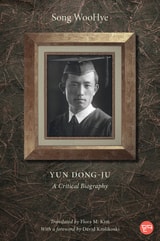
Yun Dong-ju
A Critical BiographySong WooHye
Rutgers University Press, 2026
Historian and novelist Song WooHye chronicles the life of Yun Dong-ju (1917-1945), one of the most beloved and important poets in the modern Korean literary canon, widely considered Korea's "National Poet". Beginning with the history of the North Gando region (now Yanbian, China), where Yun was born, and ending with facts behind the publication of his only and posthumous poetry collection, Sky, Wind, Star, and Poem, this critical biography elucidates who Yun Dong-ju really was, with factual descriptions of the bleak and turbulent period of Japan’s colonization of Korea.
While first working on the book in the 1980s, Song had interviewed the poet’s surviving relatives and friends, most of whom have since passed away. Without her interviews, these important first-hand accounts would have been lost. Song had an added advantage of an “insider,” as she is a niece of Song Mong-gyu, who was the poet’s first cousin and inseparable friend for life. Incorporating newly discovered materials and using interviews with the beloved poet's family and friends, this biography is the most comprehensive, definitive biography of Yun Dong-ju to date, now available in English for the first time.
This book is published with the support of the Literature Translation Institute of Korea (LTI Korea).