Results by title
2817 books match the query 'Nature' and 11 start with y
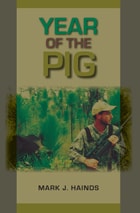
Year of the Pig
Hunting Feral HogsMark J. Hainds
University of Alabama Press, 2011
Exploring the ecology, culture, and challenge of America’s most controversial wild hogs.
What happens when a conservation-minded forester decides to spend an entire year hunting feral hogs across ten states? You get a book that’s equal parts adventure, ecology, and laugh-out-loud grit. In Year of the Pig, Mark J. Hainds straps on rifles, bows, and even a knife (yes, really) to tackle one of North America’s most destructive invasive species. Along the way, he delivers unforgettable stories from Alabama swamps to Hawaiian volcanoes, mixing adrenaline with insight into why pigs are an ecological nightmare and a hunter’s dream.
In it real-world and armchair hunters will find:
• Authentic Adventures: Belly-crawling through privet thickets, stalking pigs in palmetto jungles, and chasing razorbacks in the Ozarks.
• Ecological Wisdom: Learn how hogs impact forests, farms, and fragile ecosystems—and why hunting them matters.
• Humor & Humanity: From near-misses to triumphs, Hainds’ candid storytelling will keep you grinning (and maybe craving barbecue).
Hunters seeking real-world thrills, conservationists fighting invasive species, outdoor enthusiasts who savor gritty tales, and anyone who enjoys a good laugh with their environmental education. Perfect for reading—or gifting to that friend who thinks “hog hunting” is just a Southern stereotype. Spoiler: It’s not.
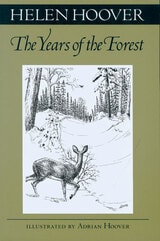
Years Of The Forest
Helen Hoover
University of Minnesota Press, 1999
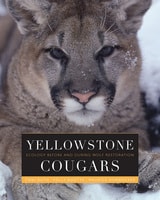
Yellowstone Cougars
Ecology before and during Wolf RestorationToni K. Ruth
University Press of Colorado, 2018
Of practical importance, Yellowstone Cougars addresses the management and conservation of multiple carnivores in increasingly human-dominated landscapes. The authors move beyond a single-species approach to cougar management and conservation to one that considers multiple species, which was impossible to untangle before wolf reestablishment in the Yellowstone area provided biologists with this research opportunity.
Yellowstone Cougars provides objective scientific data at the forefront of understanding cougars and large carnivore community structure and management issues in the Greater Yellowstone Ecosystem, as well as in other areas where wolves and cougars are reestablishing. Intended for an audience of scientists, wildlife managers, conservationists, and academics, the book also sets a theoretical precedent for writing about competition between carnivorous mammals.
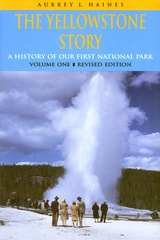
Yellowstone Story, Revised Edition, Volume I
A History of Our First National ParkAubrey L. Haines
University Press of Colorado, 1996
The Yellowstone Park Act
Approved March 1, 1872
Be it enacted by the Senate and House of Representatives of the United States of America in Congress assembled, That the tract of land in the Territories of Montana and Wyoming, lying near the headwaters of the Yellowstone river . . . is hereby reserved and withdrawn from settlement, occupancy, or sale under the laws of the United States, and dedicated and set apart as a public park or pleasuring-ground for the benefit and enjoyment of the people.
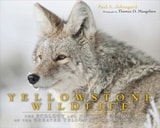
Yellowstone Wildlife
Ecology and Natural History of the Greater Yellowstone EcosystemPaul A. Johnsgard, Photographs by Thomas D. Mangelsen
University Press of Colorado, 2013
From charismatic megafauna like elk, bison, wolves, bighorn sheep, and grizzly bears, to smaller mammals like bats, pikas, beavers, and otters, to some of the 279 species of birds, Johnsgard describes the behavior of animals throughout the seasons, with sections on what summer and autumn mean to the wildlife of the park, especially with the intrusion of millions of tourists each year. Enhanced by Mangelsen’s wildlife photography, Yellowstone Wildlife reveals the beauty and complexity of these species’ intertwined lives and that of Yellowstone’s greater ecosystem.
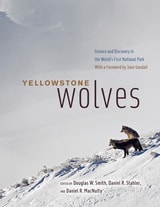
Yellowstone Wolves
Science and Discovery in the World's First National ParkEdited by Douglas W. Smith, Daniel R. Stahler, and Daniel R. MacNulty
University of Chicago Press, 2020
Here, for the first time in a single book, is the incredible story of the wolves’ return to Yellowstone National Park as told by the very people responsible for their reintroduction, study, and management. Anchored in what we have learned from Yellowstone, highlighting the unique blend of research techniques that have given us this knowledge, and addressing the major issues that wolves still face today, this book is as wide-ranging and awe-inspiring as the Yellowstone restoration effort itself. We learn about individual wolves, population dynamics, wolf-prey relationships, genetics, disease, management and policy, newly studied behaviors and interactions with other species, and the rippling ecosystem effects wolves have had on Yellowstone’s wild and rare landscape. Perhaps most importantly of all, the book also offers solutions to ongoing controversies and debates.
Featuring a foreword by Jane Goodall, beautiful images, a companion online documentary by celebrated filmmaker Bob Landis, and contributions from more than seventy wolf and wildlife conservation luminaries from Yellowstone and around the world, Yellowstone Wolves is a gripping, accessible celebration of the extraordinary Yellowstone Wolf Project—and of the park through which these majestic and important creatures once again roam.
Yellowstone
A Wilderness BesiegedRichard A. Bartlett
University of Arizona Press, 1985
"Without question the best and most thought-provoking volume on America's first national park that has been written in the last half-century." —Journal of the West
"Broad ranging, informative, thoughtful, and simply fun to read." —Western Historical Quarterly
"...written in warm and human terms. It documents that good can triumph over greed, that man himself can overcome his tendency toward exploitation and follow his better self toward conservation and concern." --USA Today
Yerkes Observatory, 1892-1950
The Birth, Near Death, and Resurrection of a Scientific Research InstitutionDonald E. Osterbrock
University of Chicago Press, 1996
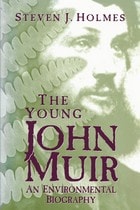
Young John Muir
An Environmental BiographySteven J. Holmes
University of Wisconsin Press, 1999
From his childhood in Scotland and Wisconsin through his young adulthood in the Midwest and Canada, Muir struggled—often without success—to find a place for himself both in nature and in society. Far from granting comfort, the natural world confronted the young Muir with a full range of practical, emotional, and religious conflicts. Only with the help of his family, his religion, and the extraordinary power of nature itself could Muir in his late twenties find a welcoming vision of nature as home—a vision that would shape his lifelong environmental experience, most immediately in his transformative travels through the South and to the Yosemite Valley.
More than a biography, The Young John Muir is a remarkable exploration of the human relationship with wilderness. Accessible and engaging, the book will appeal to anyone interested in the individual struggle to come to terms with the power of nature.
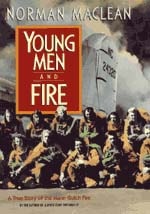
Young Men and Fire
Norman Maclean
University of Chicago Press, 1992
Young Men and Fire won the National Book Critics Circle Award in 1992.
"A magnificent drama of writing, a tragedy that pays tribute to the dead and offers rescue to the living.... Maclean's search for the truth, which becomes an exploration of his own mortality, is more compelling even than his journey into the heart of the fire. His description of the conflagration terrifies, but it is his battle with words, his effort to turn the story of the 13 men into tragedy that makes this book a classic."—from New York Times Book Review Editor's Choice, Best Books of 1992
"A treasure: part detective story, part western, part tragedy, part elegy and wholly eloquent ghost story in which the dead and the living join ranks cheerfully, if sometimes eerily, in a search for truth and the rest it brings."—Joseph Coates, Chicago Tribune
"An astonishing book. In compelling language, both homely and elegant, Young Men and Fire miraculously combines a fascinating primer on fires and firefighting, a powerful, breathtakingly real reconstruction of a tragedy, and a meditation on writing, grief and human character.... Maclean's last book will stir your heart and haunt your memory."—Timothy Foote, USA Today
"Beautiful.... A dark American idyll of which the language can be proud."—Robert M. Adams, The New York Review of Books
"Young Men and Fire is redolent of Melville. Just as the reader of Moby Dick comes to comprehend the monstrous entirety of the great white whale, so the reader of Young Men and Fire goes into the heart of the great red fire and comes out thoroughly informed. Don't hesitate to take the plunge."—Dennis Drabelle, Washington Post Book World
"Young Men and Fire is a somber and poetic retelling of a tragic event. It is the pinnacle of smokejumping literature and a classic work of 20th-century nonfiction."—John Holkeboer, The Wall Street Journal
"Maclean is always with the brave young dead. . . . They could not have found a storyteller with a better claim to represent their honor. . . . A great book."—James R. Kincaid, New York Times Book Review
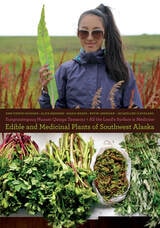
Yungcautnguuq Nunam Qainga Tamarmi/All the Land's Surface is Medicine
Edible and Medicinal Plants of Southwest AlaskaAnn Fienup-Riordan
University of Alaska Press, 2020