Results by title
3785 books match the query 'Poetry' and 27 start with y
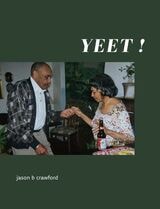
YEET!
jason b. crawford
Omnidawn, 2025
Following the traditions of Eve L. Ewing, Rio Cortez, and Douglas Kearney, jason b. crawford’s YEET! envisions the Black community lifted off the earth and set free towards the stars. These poems ask what a free Black people would look like and how we might achieve such a thing. This collection presents a new take on Afrofuturism and utopianism. Rather than looking to a future of technological change, it steps years ahead to show how people are happier once they are no longer owned. These poems speak to racism, gun violence, colonization, global warming, flight, joy, friendship, and noise. This is a book about creating new worlds without the systems of supremacy that held down the old one.
YEET! is the winner of the 2023 Omnidawn 1st/2nd Poetry Book Contest, chosen by Sawako Nakasayu.
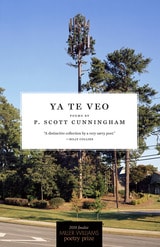
Ya Te Veo
PoemsP. Scott Cunningham
University of Arkansas Press, 2018
Finalist, 2018 Miller Williams Poetry Prize
Ya Te Veo takes as its title the name of a mythical tree that eats people. Like the branches of that tree, the poems in this book seem to capture and nourish themselves on a diverse cast of would-be passers-by, drawing their life-force from the resulting synthesis of characters. Among the seized are poets and painters alongside musicians from Garth Brooks to Wu-Tang Clan to the composer Morton Feldman, whose mysterious personality serves as a backdrop in many poems for meditations on intimacy, ethics, and anxiety.
As the phrase “ya te veo” (“I see you”) implies, this is a book interested in revealing what we think is hidden, in questioning the gap inside all of us, a gap between what we feel and what we say and do, making space for our many contradictions.
Like the works of Feldman, these poems focus and recede, experimenting with form in order to accomplish a state of deep concentration. They impersonate sonnets, ghazals, terza rima, monologues, translations, and freestyles, but inexactly, embracing failed imitation as an opportunity to remix the familiar.

Yaguareté White
PoemsDiego Báez
University of Arizona Press, 2024
The son of a Paraguayan father and a mother from Pennsylvania, Báez grew up in central Illinois as one of the only brown kids on the block—but that didn’t keep him from feeling like a gringo on family visits to Paraguay. Exploring this contradiction as it weaves through experiences of language, self, and place, Báez revels in showing up the absurdities of empire and chafes at the limits of patrimony, but he always reserves his most trenchant irony for the gaze he turns on himself.
Notably, this raucous collection also wrestles with Guaraní, a state-recognized Indigenous language widely spoken in Paraguay. Guaraní both structures and punctures the book, surfacing in a sequence of jokes that double as poems, and introducing but leaving unresolved ambient questions about local histories of militarism, masculine bravado, and the outlook of the campos. Cutting across borders of every kind, Báez’s poems attempt to reconcile the incomplete, contradictory, and inconsistent experiences of a speaking self that resides between languages, nations, and generations.
Yaguareté White is a lyrical exploration of Paraguayan American identity and what it means to see through a colored whiteness in all of its tangled contradictions.
Year We Studied Women
Bruce Snider
University of Wisconsin Press, 2003
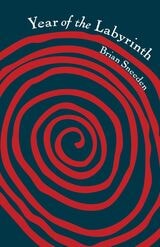
Year of the Labyrinth
Brian Sneeden
Carnegie Mellon University Press, 2026
In this folk-horror pastoral, poet Brian Sneeden threads paths of myth and ritual, fatherhood and climate collapse, ghost stories and grief.
Described by Kiki Petrosino as “a beautiful invasion,” Year of the Labyrinth draws upon Sneeden’s experiences as a translator and multilingual writer working in language preservation to explore boundaries between speech and ritual, myth and ecology. “In these fiercely imagined poems,” Petrosino writes, “our speaker passes between seemingly fixed physical and conceptual worlds—human/animal, past/present, forest/field. This voice finds lyric power in liminal spaces—in ‘the pollen line’ and ‘a change of wind.’ With the speaker, we travel through mirrors to places where you might grasp an animal if only ‘by the curve of its name,’ and where ‘a bird that ha[s]n’t yet been invented’ may sing. This poet’s imagination makes porous the landscapes we thought were familiar.” Kelly Link, in her judge’s citation for the Barthelme Prize, writes: “How wonderful it is, the marriage of economy and the arcane, as if a story could be a kind of lozenge that, slipped under the tongue, estranges us from our idea of how both life and language work. Every sentence has the effect of an acupuncturist’s needle, small pricks that let in strange energy.”
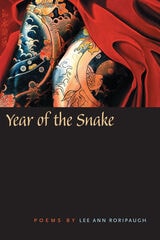
Year of the Snake
Lee Ann Roripaugh
Southern Illinois University Press, 2004
In her second collection of poems, Lee Ann Roripaugh probes themes of mixed-race female identities, evoking the molting processes of snakes and insects who shed their skins and shells as an ongoing metaphor for transformation of self. Intertwining contemporary renditions of traditional Japanese myths and fairy tales with poems that explore the landscape of childhood and early adolescence, she blurs the boundaries between myth and memory, between real and imagined selves. This collection explores cultural, psychological, and physical liminalities and exposes the diasporic arc cast by first-generation Asian American mothers and their second-generation daughters, revealing a desire for metamorphosis of self through time, geography, culture, and myth.
Yeats's Shakespeare
Rupin W. Desai
Northwestern University Press, 1971
Yeats
An Annual of Critical and Textual Studies, Volume XII, 1994Richard J. Finneran, Editor
University of Michigan Press, 1996

Yes Thorn
Amy Munson
Tupelo Press, 2016
Yes, There Will Be Singing
Marilyn Krysl
University of Michigan Press, 2014
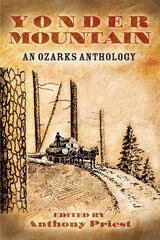
Yonder Mountain
An Ozarks AnthologyAnthony Priest
University of Arkansas Press, 2013
You Are Here
Paul Breslin
Northwestern University Press, 2000
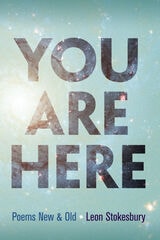
You Are Here
Poems New & OldLeon Stokesbury
University of Arkansas Press, 2016
Winnowed from a distinguished career, then distilled, then polished and winnowed again, the poems in You Are Here are Leon Stokesbury’s best from fifty years of published work.
The selections from his earlier volumes are as fully realized as one would expect from the winner of the AWP Poetry Competition and the Poets’ Prize. But it is in Stokesbury’s new work, collected under the heading “These Days,” that he reveals something completely different. From a carnival sideshow to Hitchcock’s Mount Rushmore, from John Keats’s backyard to the miseries of a failed crematorium operator, every turned page divulges a particular we didn’t see coming. You Are Here is like a sideshow of this modern world, even when we discover, amazed, our selves looking back at us.
“Why do we still only stand here?” Stokesbury asks in one of his earliest salvos. The poems in this collection give such varied answers that readers will have no idea what the next page holds, only that they will find themselves somewhere new.
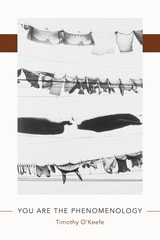
You Are the Phenomenology
Timothy O'Keefe
University of Massachusetts Press, 2018
You Are the Phenomenology is a cross-genre book—a blend of poetry, songs, lyric prose, and invented forms—that explores the everyday junctures of perception, compassion, and multiplicity. How might our powers of association create shared experiences without distorting the contexts from which those experiences emerge?
One of the volume's innovative forms is a poetic series called “Quadrilaterals”—four-line poems that present the reader with various ways to leap associative gaps:
Quadrilateral : Pinch in Your Heel
Soars the mackled sound, kites ago :
A Polish boy thinks with accordions, adopts a stammer :
When were we first older than we wanted to be :
That was our city, our chisel, the corbeil from which we ate.
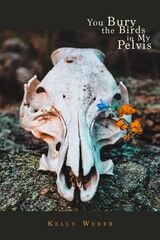
You Bury the Birds in My Pelvis
Kelly Weber
Omnidawn, 2023
Set against a rural plains landscape of gas stations, wind, and roadkill bones littering the highways, You Bury the Birds in My Pelvis is a love letter to the nonbinary body as a site of both queer platonic intimacy and chronic illness. Looking at art and friendship, Kelly Weber’s poems imagine alternatives to x-rays, pathologizing medical settings, and other forms of harm. Considering the meeting place of radiological light and sunlit meadows, the asexual speaker’s body, and fox skeletons, these poems imagine possible forms of love. With the body caught in medical crisis and ecological catastrophe, Weber questions how to create a poetry fashioned both despite and out of endings.
You Bury the Birds in My Pelvis explores forms with plainspoken prose poems with a mix of short poems and longer lyric sections that navigate insurance systems and complicated rural relationships to queerness.
You Bury the Birds in My Pelvis is the winner of the 2022 Omnidawn 1st/2nd Poetry Book Contest, chosen by Mary Jo Bang.
You Can Tell the Horse Anything
Mary A. Koncel
Tupelo Press, 2003
You Darling Thing
Monica Ferrell
Four Way Books, 2018
You Don’t Have to Go to Mars for Love
Yona Harvey
Four Way Books, 2020

You Haven't Asked About My Wedding or What I Wore
Poems of Courtship on the American FrontierJana Harris
University of Alaska Press, 2014
For thirty years poet Jana Harris researched the diaries and letters of North American pioneer women. While the names and experiences of the authors varied, Harris found one story often connected them: their most powerful memories were of courtships and weddings. They dreamed of having a fine wedding while they spent their lives hauling water, scrubbing floors, and hoping for admirers. Many married men they hardly knew.
Based on primary research of nineteenth-century frontier women, Harris uses her compelling poetry to resurrect a forgotten history. She captures the hope, anxiety, anger, and despair of these women through a variety of characters and poetic strategies, while archival photographs give faces to the names and details to the settings. Harris’s meticulous research and stirring words give these pioneer women a renewed voice that proves the timelessness of the hopes and fears of love and marriage.
You Must Revise Your Life
William Stafford
University of Michigan Press, 1987
You Will Hear Thunder
Anna Akhmatova
Ohio University Press, 2017
You Will Hear Thunder
Anna Akhmatova
Ohio University Press, 2017

You Work Tomorrow
An Anthology of American Labor Poetry, 1929-41John Marsh, Editor
University of Michigan Press, 2007
---Nicholas Coles, University of Pittsburgh
---Alan Wald, University of Michigan
You, Beast
PoemsNick Lantz
University of Wisconsin Press, 2017
Your Historical Loveliness Knows No Bounds
Form, Futurity, and Documentary DesireWendy Xu
University of Michigan Press, 2025
Not an overview or primer, least of all the final word, this free-ranging exploration of contemporary poetry considers larger questions of belonging, diaspora, the violence of language, the allure of the past, genre, witness, and form. It returns to memorable touchstone texts in the author’s life with renewed curiosity about their inner workings. Essays move with restless curiosity across topics, bringing them into conversation with poetry, from considering depictions of Christ in Pier Paolo Pasolini’s The Gospel According to St. Matthew, to the ecstatic illegible texts of Henri Michaux, discomfiting likenesses of agoraphobia and political imprisonment, and the epistolary trouble of fan-mail. Xu is drawn to poetry works of radical hybridity alongside personal experiences of formal intensity, as an immigrant daughter, a parentified child, an occasional agoraphobe, and a writer. Your Historical Loveliness Knows No Bounds is a tour of poetic influences and the futures they’ve made possible.
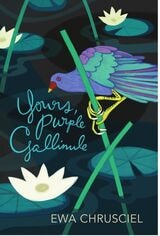
Yours, Purple Gallinule
Ewa Chrusciel
Omnidawn, 2022
Ewa Chrusciel’s fourth book in English, Yours, Purple Gallinule, playfully explores health and illness as they are culturally constructed. Using research into clinical understandings of mental afflictions and their treatments through history, Chrusciel maps various diagnostics onto an array of bird species. A lyrical satire, the book is a reflection on a society that tends to over-diagnose, misdiagnose, and over-medicate. These poems pose questions about what it means to be unique and to accept pain and suffering as a fact of life.
On the pages of Yours, Purple Gallinule, we encounter birds, a poet, and a psychiatrist. The psychiatrist undergoes a series of conversions as she realizes that the point is not to classify thoughtlessly, but to “make music instead”—to dwell in astonishment. Birds evade the anthropomorphizing intentions of the human protagonists as the psychiatrist and the poet eventually become one. The anthropomorphizing goes in reverse, and the human being becomes more avian. Like the dove in the biblical Noah’s ark story, the bird proclaims a new covenant, with a twig in its beak and a message: “We are all mad; some more than others, but no one is spared the affliction. And the madder we are, the more sacred.”
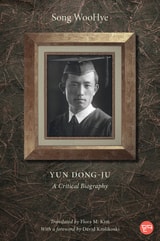
Yun Dong-ju
A Critical BiographySong WooHye
Rutgers University Press, 2026
Historian and novelist Song WooHye chronicles the life of Yun Dong-ju (1917-1945), one of the most beloved and important poets in the modern Korean literary canon, widely considered Korea's "National Poet". Beginning with the history of the North Gando region (now Yanbian, China), where Yun was born, and ending with facts behind the publication of his only and posthumous poetry collection, Sky, Wind, Star, and Poem, this critical biography elucidates who Yun Dong-ju really was, with factual descriptions of the bleak and turbulent period of Japan’s colonization of Korea.
While first working on the book in the 1980s, Song had interviewed the poet’s surviving relatives and friends, most of whom have since passed away. Without her interviews, these important first-hand accounts would have been lost. Song had an added advantage of an “insider,” as she is a niece of Song Mong-gyu, who was the poet’s first cousin and inseparable friend for life. Incorporating newly discovered materials and using interviews with the beloved poet's family and friends, this biography is the most comprehensive, definitive biography of Yun Dong-ju to date, now available in English for the first time.
This book is published with the support of the Literature Translation Institute of Korea (LTI Korea).